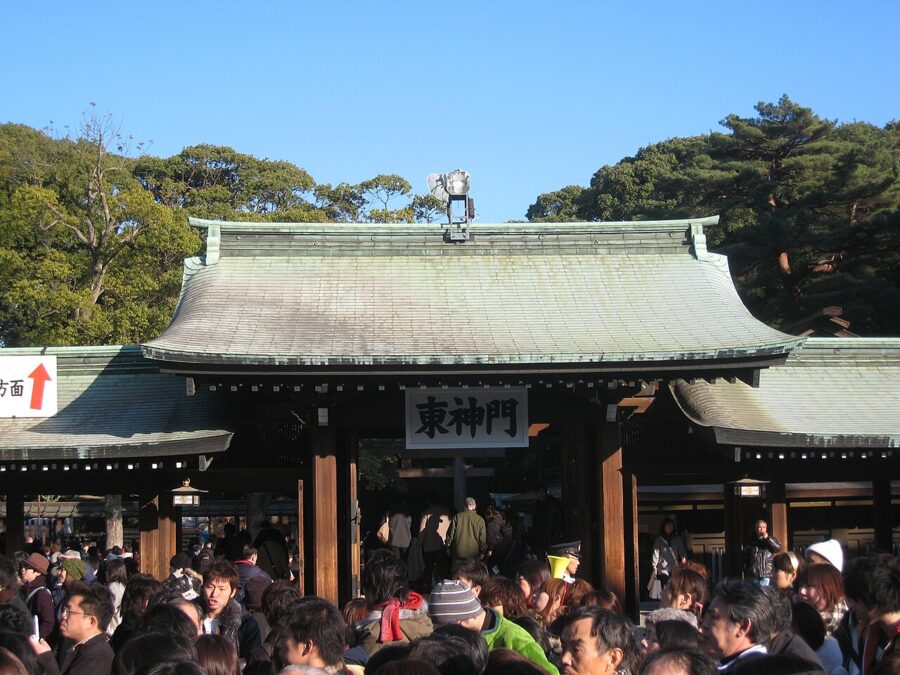
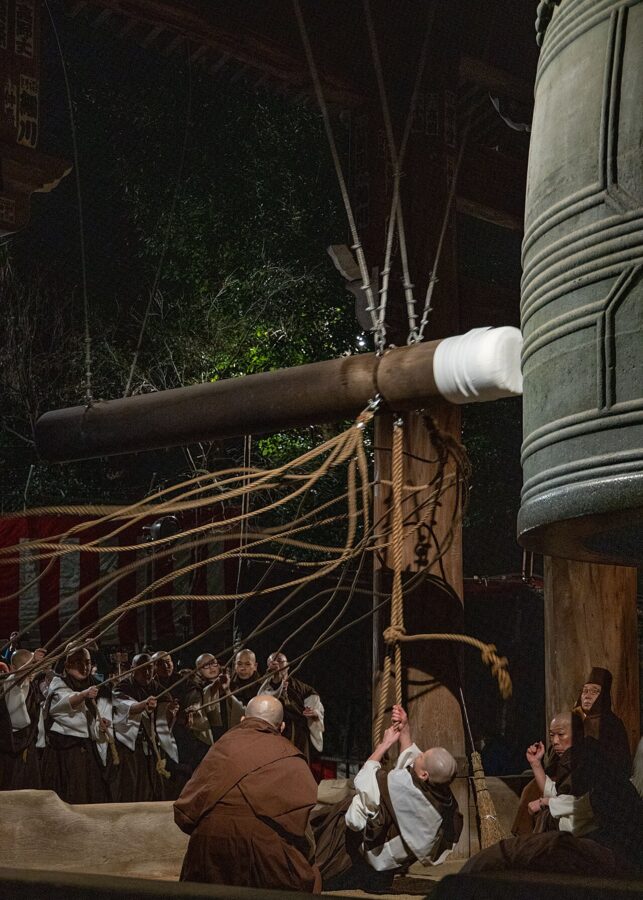
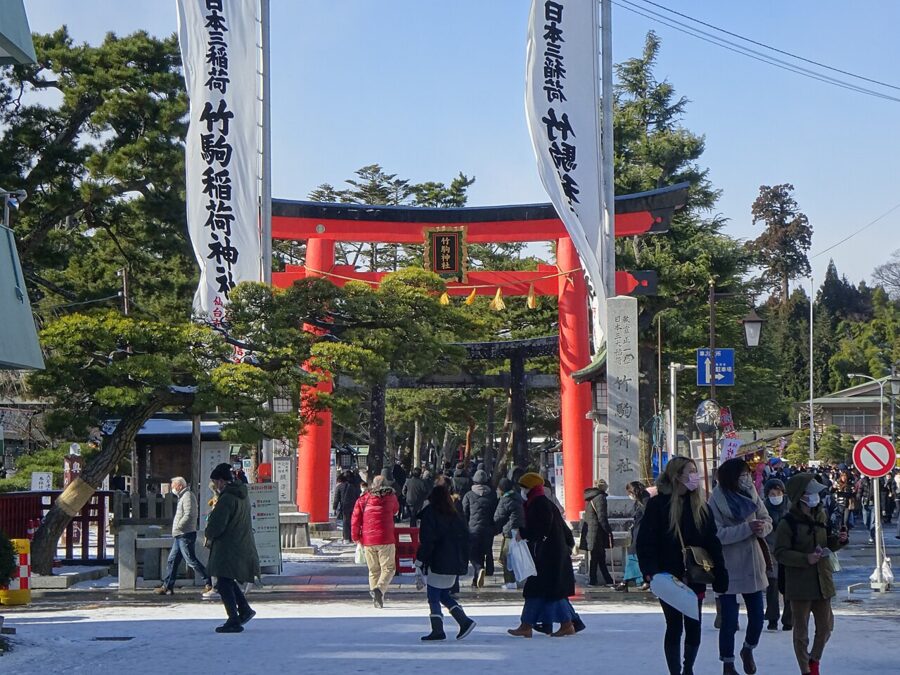
Late on 31 December, the great bell at Chion-in in Kyoto takes the first of its 108 strokes, and across the city the shrine queues are already moving. The walk those people are making has a name that hides nothing: hatsumōde (初詣). 初 is first, 詣 is a visit to a shrine or temple. The first visit.
Most Japanese traditions are named like that. The words are plain labels, often two characters long, and once you can read the characters you know what people are doing before you see them do it. Read them one at a time, and the customs come apart into their pieces.
In this article
Names that say what they are
Japanese writing lets a custom carry its definition on its back. New Year is o-shōgatsu (お正月): 正月 is the proper month, the first of the year, and the お is the polite prefix Japanese puts on things it handles with care. Tea gets it, money gets it, and so do o-mikuji, o-mamori and o-bon.
The plainness can mislead, because a custom can be older than its word. The Nihon Kokugo Daijiten‘s oldest printed example of hatsumōde is a haiku of 1931. Before that the usual practice was a night spent at the local shrine from New Year’s Eve, or a visit to a shrine in the year’s lucky direction. The railways helped make it a crowd: Keikyū, one of Tokyo’s private lines, opened in January 1899 as the Daishi Electric Railway, built to carry worshippers to the temple Kawasaki Daishi.
What you wear: kimono and yukata
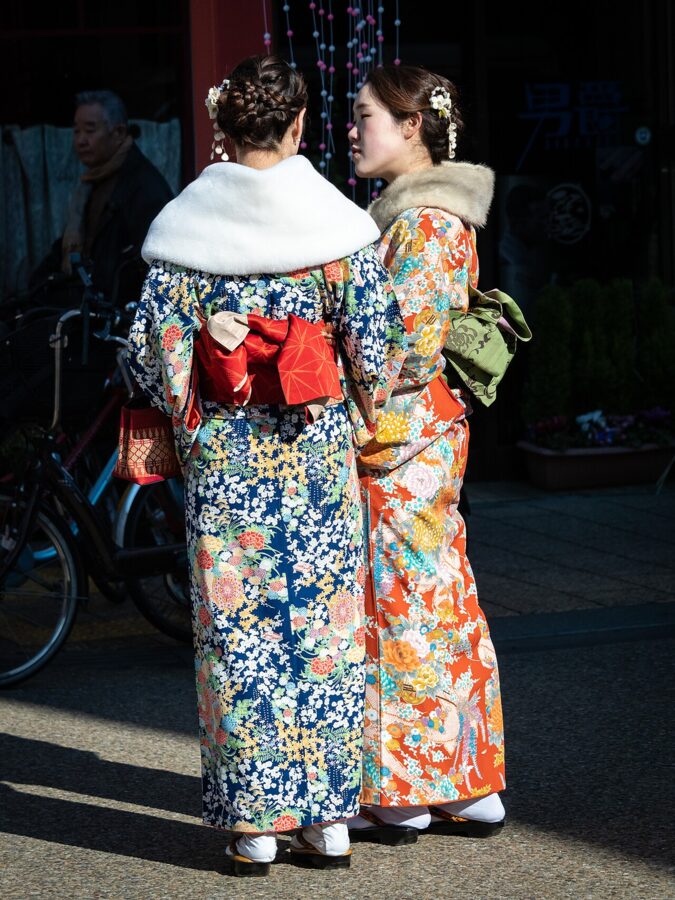
The kimono is the plainest name of all: 着 to wear and 物 thing, a thing to wear. It meant any clothes for a thousand years and narrowed to the Japanese robe only once Western clothes arrived and needed telling apart.
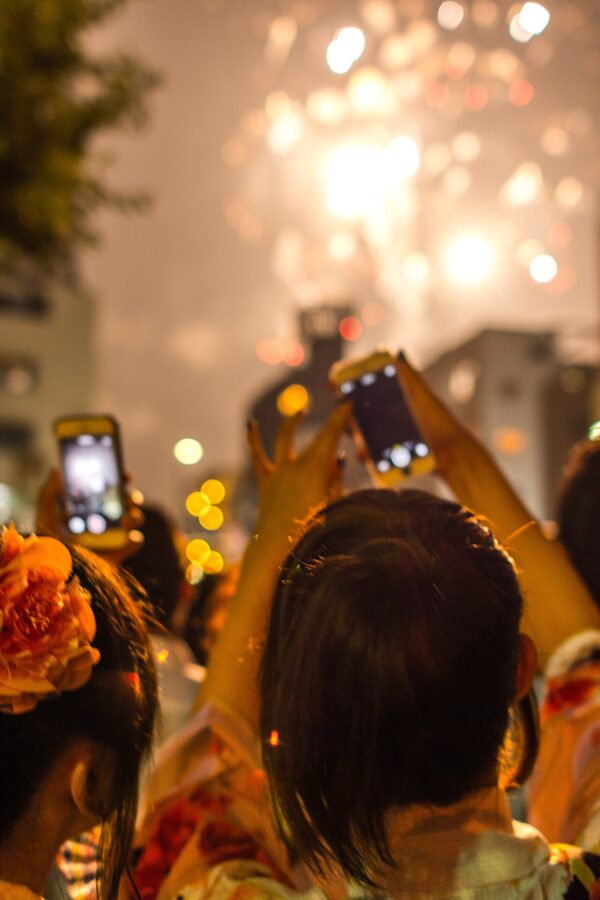
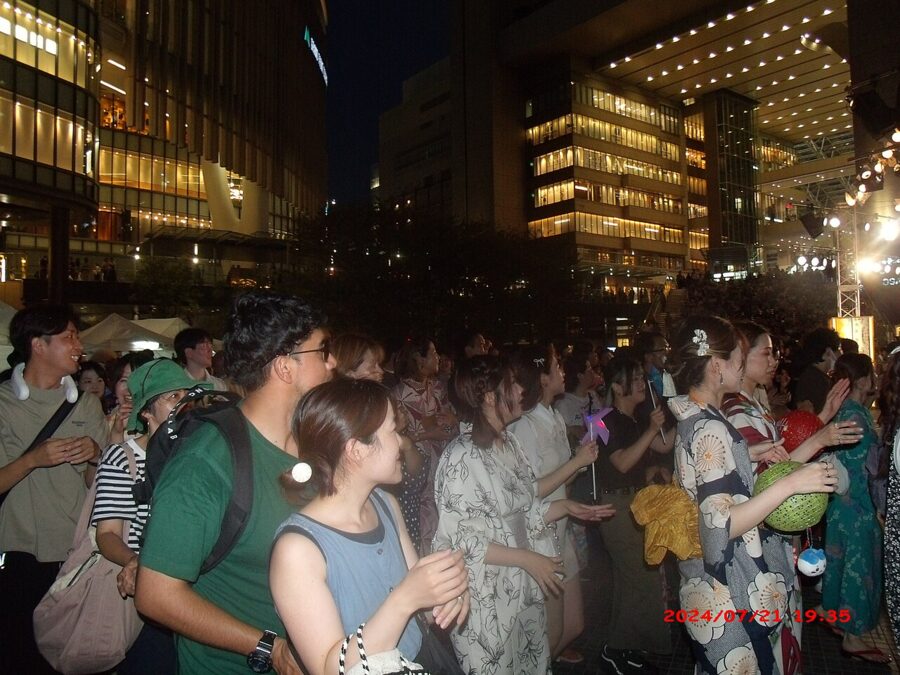
Yukata (浴衣) is a contraction of yukatabira, 湯帷子, an unlined robe (katabira) for hot water (yu), worn in the steam bath and after it. The characters now used, 浴 bathe and 衣 garment, keep that meaning, though the cotton robe left the bathhouse long ago. Dictionaries file it as a summer season word, and people wear it to fireworks and bon dances, or after the bath at an inn, which is where it began.
Where you pray: jinja and tera
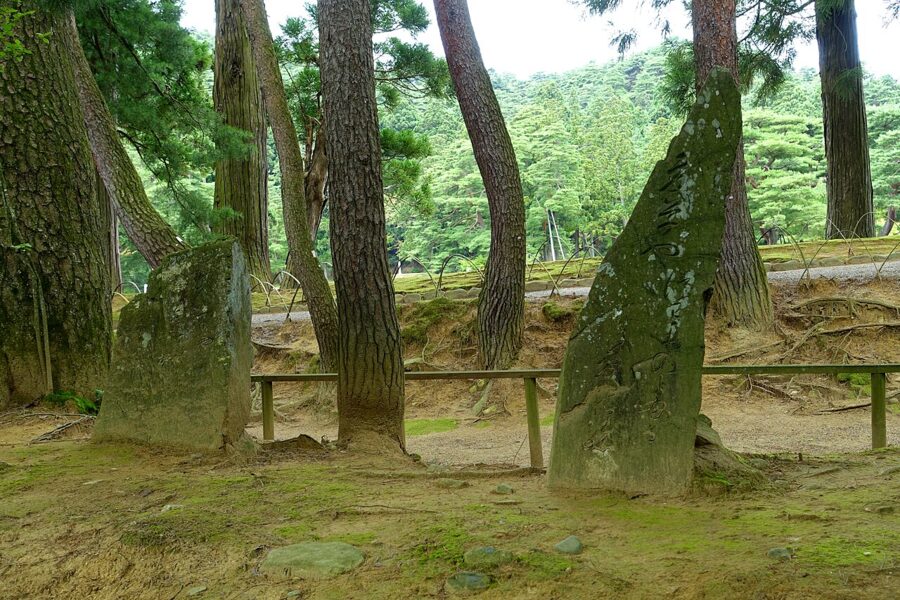
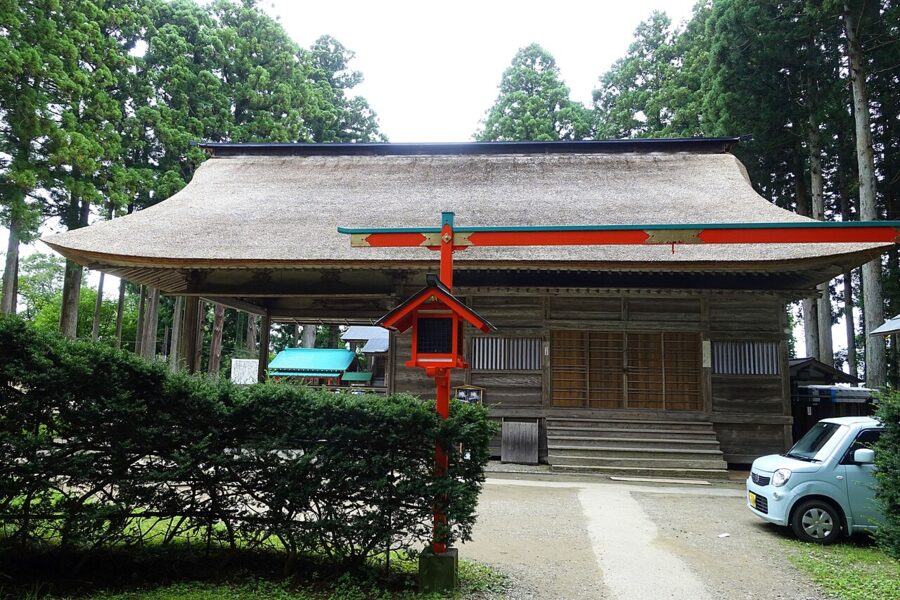
Japan keeps two kinds of holy building, and the words never mix. A Shinto shrine is a jinja (神社); a Buddhist temple is a tera (寺), or -ji and -dera at the end of a name. The Agency for Cultural Affairs’ religious statistics counted about 84,000 Shinto and 77,000 Buddhist religious corporations at the end of 2024, most of them a single shrine or temple. Most families use both: the shrine for births, weddings and New Year, the temple for funerals and the dead.
Jinja, miya and yashiro
神 is a god, a kami; 社 is the shrine, an altar (示) beside earth (土), a god of the soil. The older native words are yashiro, the same 社, and miya (宮), honourable house. Endings such as -gū (宮) and -taisha (大社), great shrine, mark shrines of special rank or age, such as Ise Jingū and Izumo Taisha.
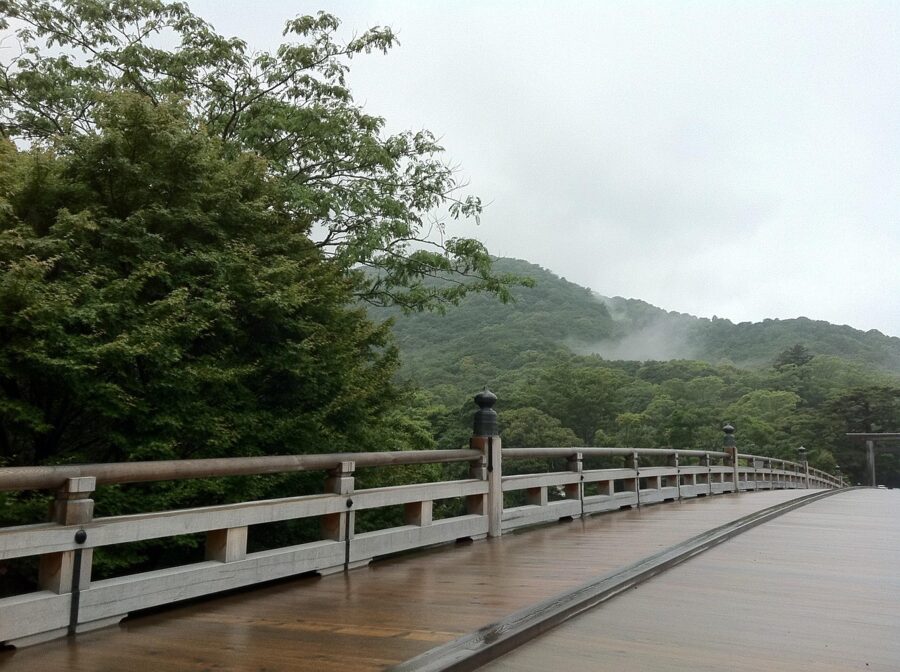
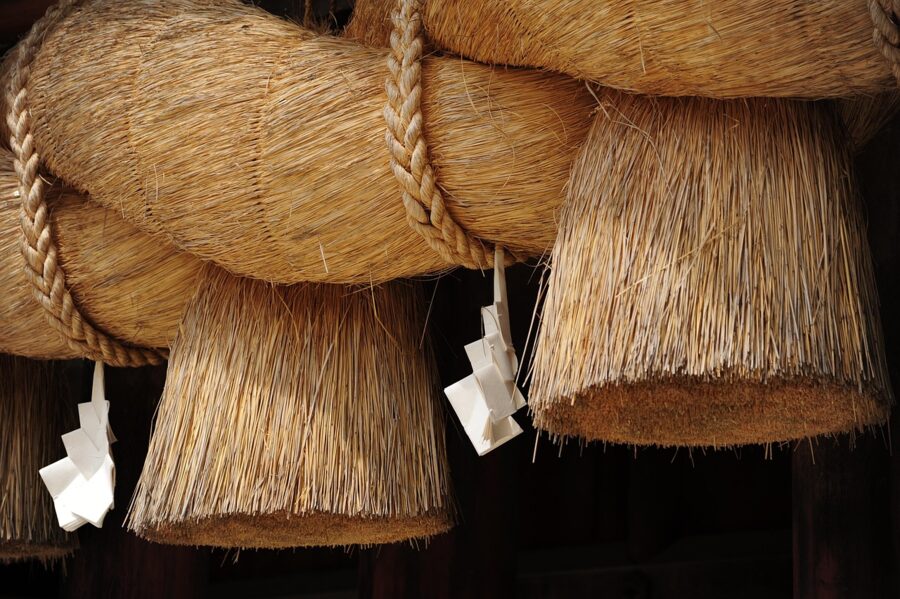
The sign that you are on a god’s ground is the shimenawa (注連縄), a rope of twisted rice straw hung with zigzag paper. It marks off sacred space, and at New Year a smaller one goes over house doors to keep bad things out.
Tera, and the temple’s -ji
Tera is a borrowed word, though nobody is sure from where. The Daijisen gives two candidates: an old Korean word for a place of worship, or the Pali thera, an elder monk. The character 寺 first named a government office in China, and it is read ji at the end of a temple’s name, as in Kinkaku-ji or Sensō-ji.
Japanese map symbols tell the two apart: a torii for a shrine, the manji (卍) for a temple. On the ground, look at the gate: a temple’s has a roof.
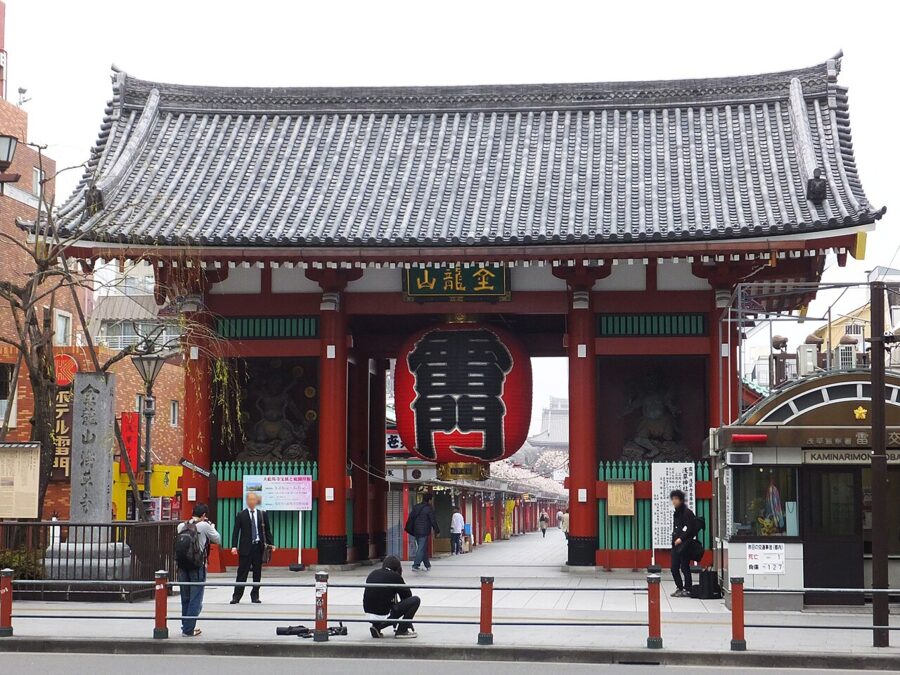
Torii: a place for birds
Written 鳥居, the shrine gate is “bird” and “to be, to stay”. The Nihon Kokugo Daijiten says it is thought to have been the perch of chickens offered to the gods, and gives that as tradition rather than fact; other derivations exist and none is settled. Its oldest example is an inventory of 922 from Ōtori Shrine in Izumi, whose name means great bird.
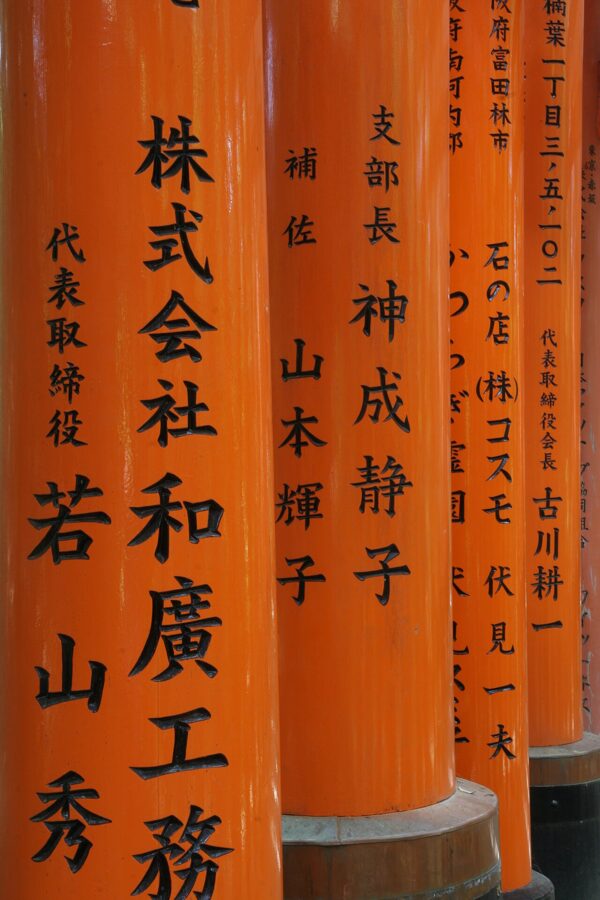
Most torii are the myōjin kind, with a curved top beam over a second one; the plain, straight shinmei kind is the other family. At Fushimi Inari in Kyoto, the thousands of vermilion gates are gifts, each painted with its donor’s name.
Temizu and the clap
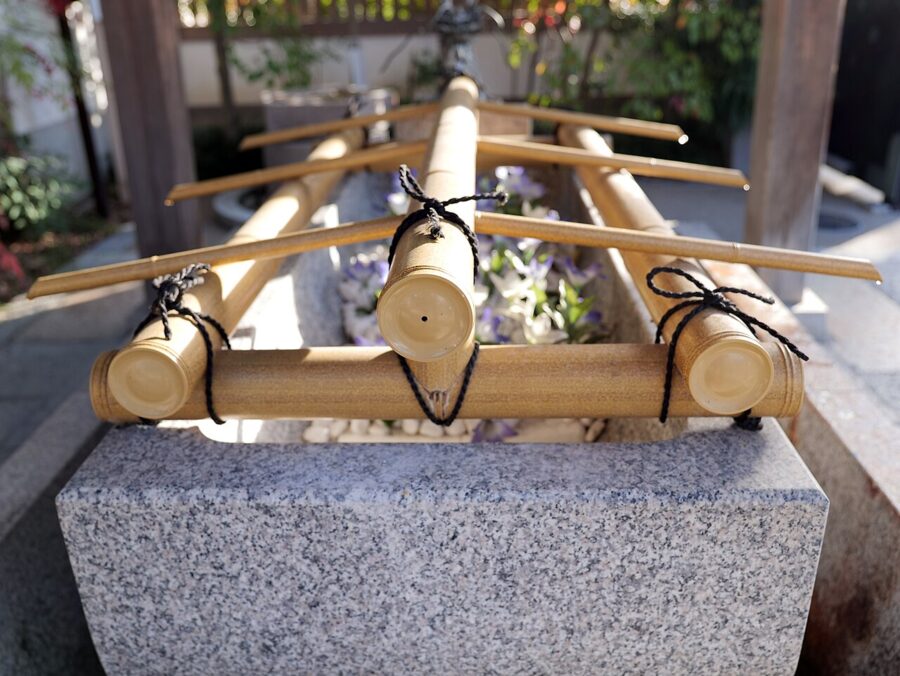
Inside the gate is a stone basin under a roof, the chōzuya or temizuya (手水舎). Temizu is hand water, 手 and 水: you rinse the left hand, the right, then the mouth from your cupped palm, never from the ladle. The word also came to mean a trip to the toilet, from the washing of hands afterwards.
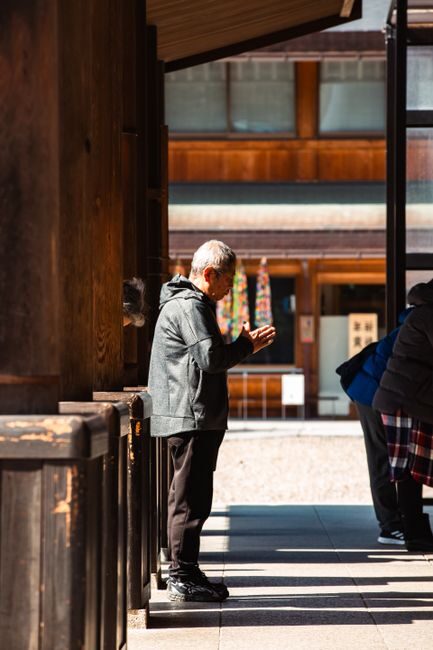
At the hall, most shrines ask for two bows, two claps and one bow. The clap is kashiwade (柏手), “oak hand”, and the Daijisen suggests why: it is probably a copying error for 拍手, hakushu, clapping, and the two characters differ only in their left-hand part, 木 for 扌. The dictionaries give both spellings. Izumo Taisha keeps its own count, with four claps.
Omikuji and omamori
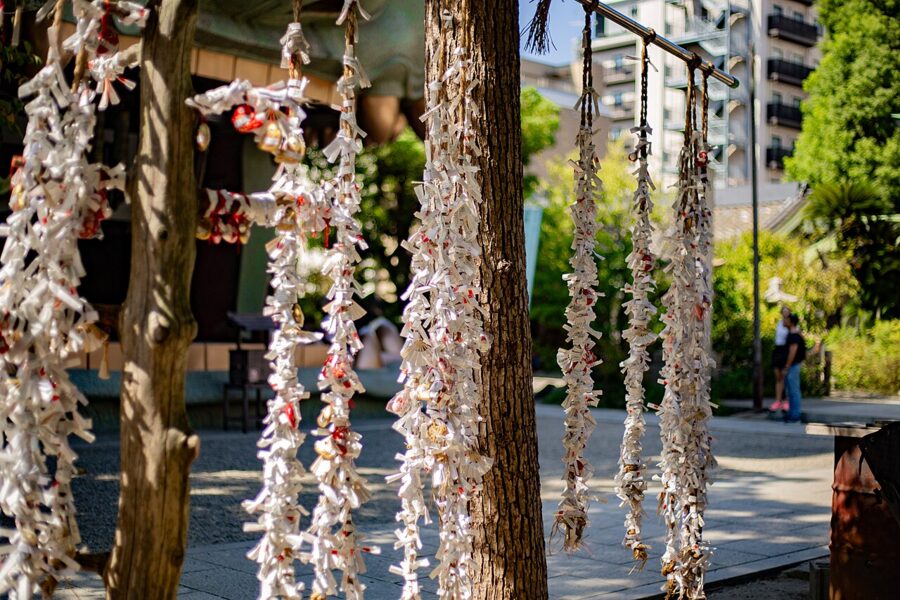
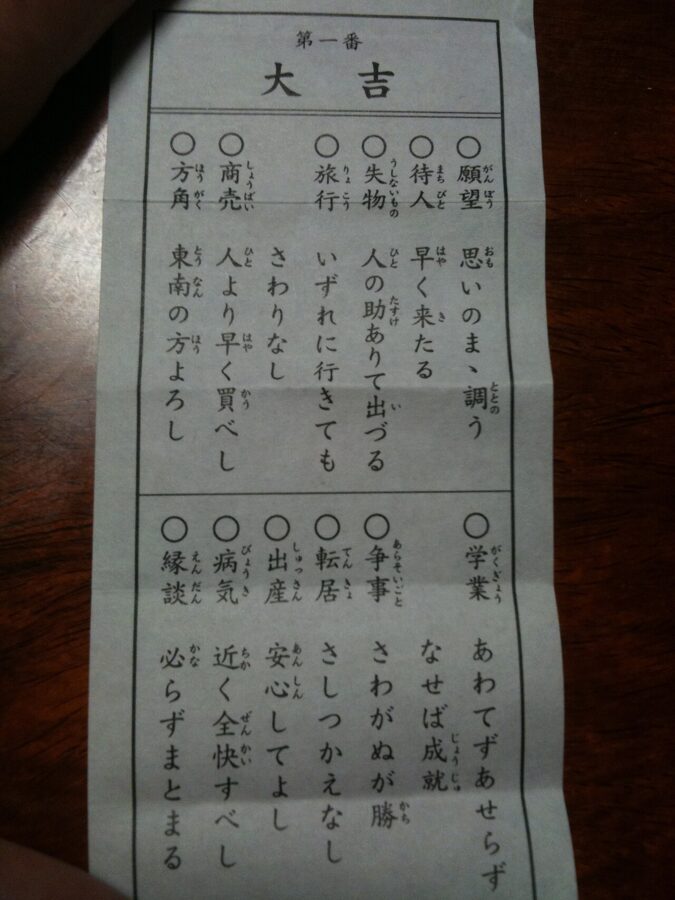
Omikuji is usually written 御神籤: two honorifics, 御 and 神, on kuji, a lot. You shake a numbered stick out of a box and receive a fortune graded from daikichi (大吉), great luck, down to kyō (凶), bad luck. The Heibonsha encyclopedia dates the box-and-stick form to no earlier than the Middle Ages. A bad fortune is tied up at the shrine and left behind; many people keep a good one.
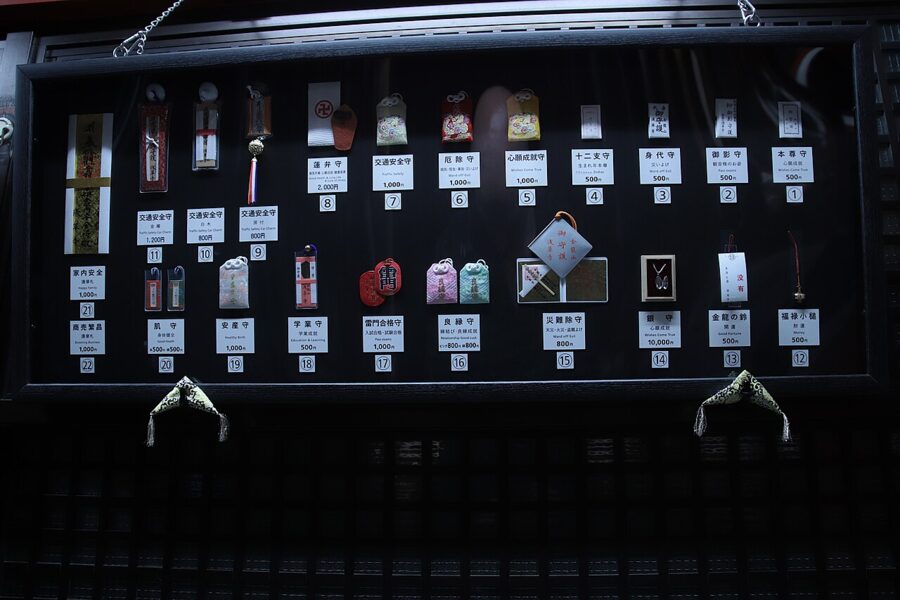
Omamori (御守) is simply protection, from mamoru, to guard. The Nihon Kokugo Daijiten describes the older kind: little mallets or gourds of mulberry wood at the belt, or a bag of beans sewn on a child’s back. Today they come in brocade bags labelled with their purpose: traffic safety, exams, safe birth. Charms for en-musubi (縁結び), tying the knot of fate, usually carry that word rather than either of the kanji for love.
What you hang or carry for luck
The ema (絵馬) is a picture horse. The dictionary history runs like this: in early times live horses were given to the gods, then horses of wood, clay or paper, and from the Heian period painted ones; later the pictures stopped being horses at all. The small plaques you buy and write on today are a late Edo habit. At Yushima Tenmangu in Tokyo, a shrine to the scholar Sugawara no Michizane, the racks fill each winter with entrance-exam wishes.
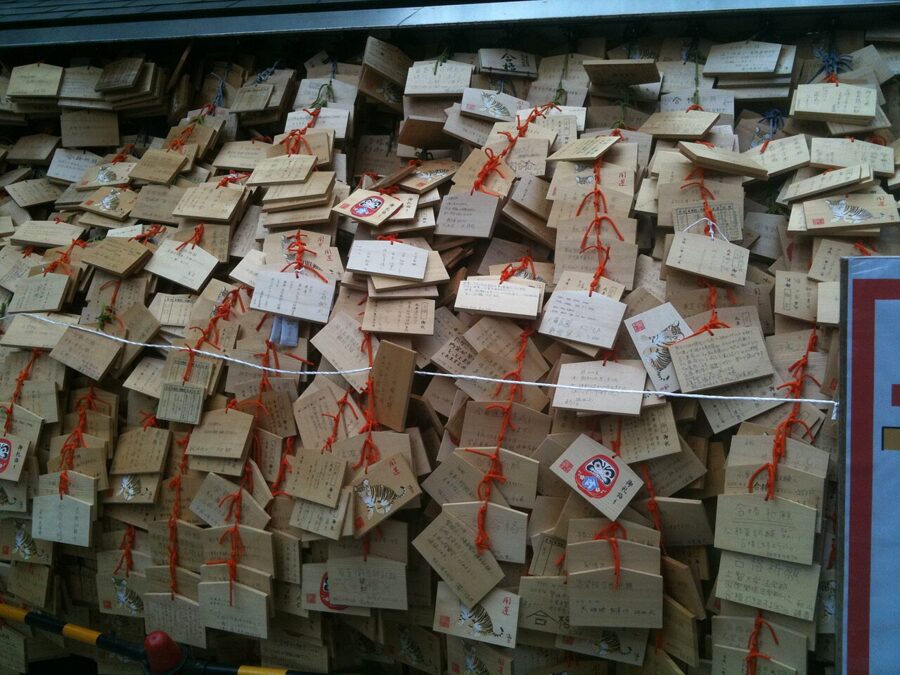
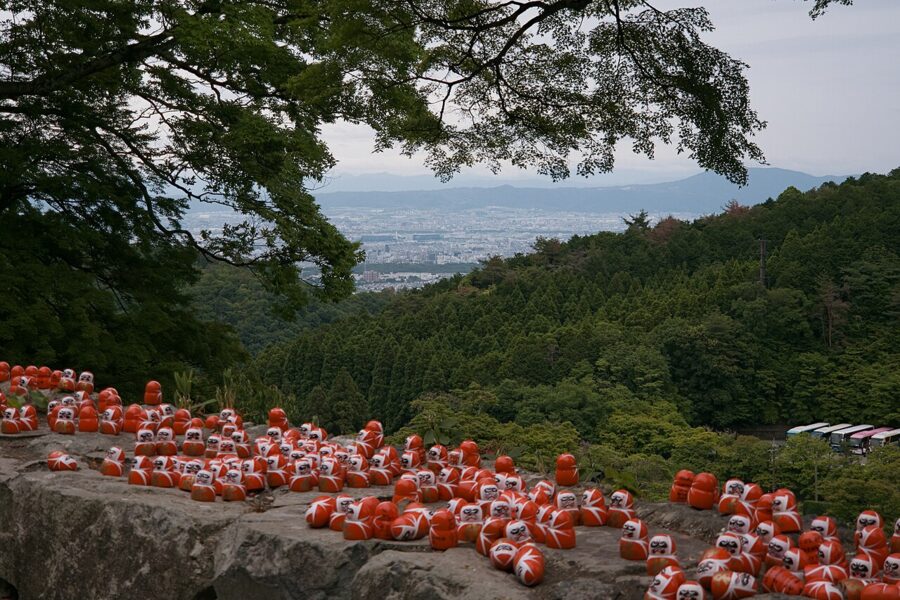
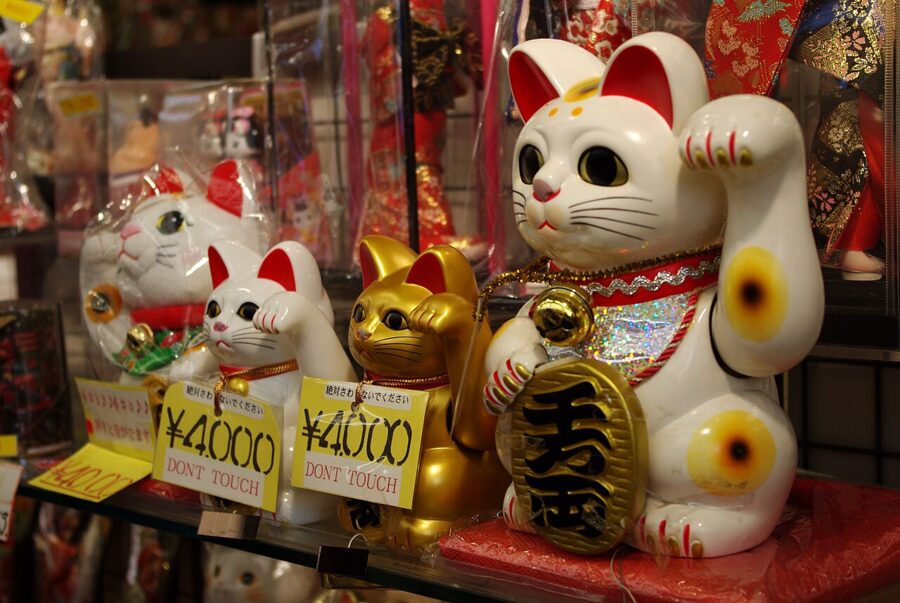
Daruma (達磨) is Bodhidharma, the monk who brought Zen to China, made into a legless red doll that rights itself when knocked over; you paint in one eye when you make a wish and the other when it comes true. Maneki-neko (招き猫) is a description: maneku, to beckon, and neko, cat. A Japanese beckon is palm down, which is why the cat seems to wave.
The turn of the year
The calendar of customs is nenjū gyōji (年中行事), events within the year, and it turns on the New Year. Most of Japan now keeps these dates on the solar calendar, with the old lunar habits showing at the edges.
Omisoka: the great last day
Ōmisoka (大晦日) is the great misoka, and misoka was the thirtieth, the last day of a lunar month. Its old twin, ōtsugomori, comes from tsukigomori, the moon hiding, since a lunar month ended in darkness. Both names, in the dictionaries, now mean one day only: the last of the year.
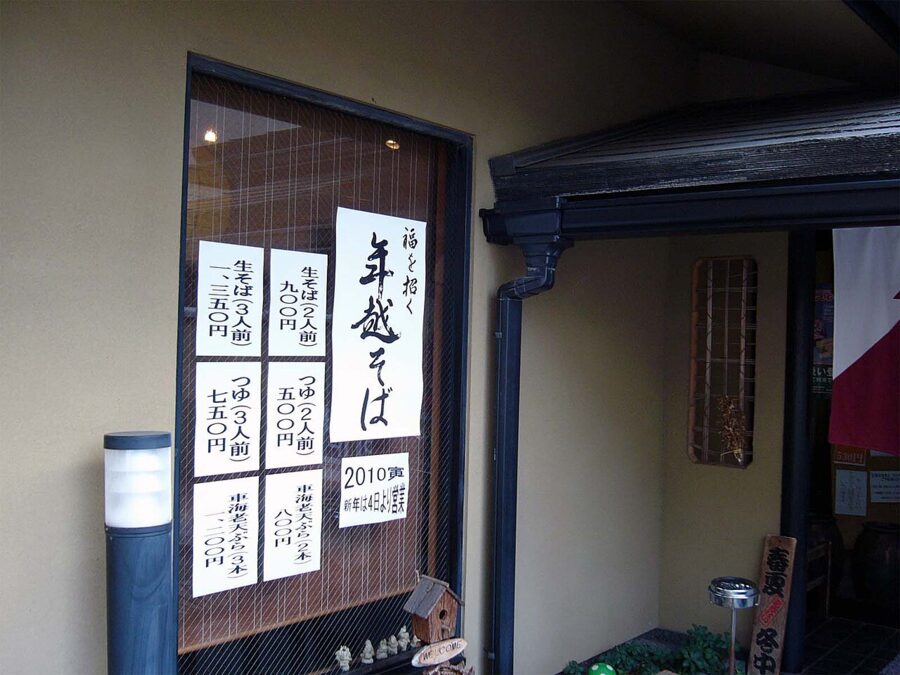
Families eat toshikoshi soba (年越し蕎麦), year-crossing noodles: long for a long life, by the usual explanation, and easy to bite through, so the year’s bad luck is cut off with them. At midnight the temples ring joya no kane, the bell of the night that removes the old year, 108 strokes for the 108 worldly desires of Buddhist teaching.
Shogatsu: pine at the gate, mirrors on the shelf
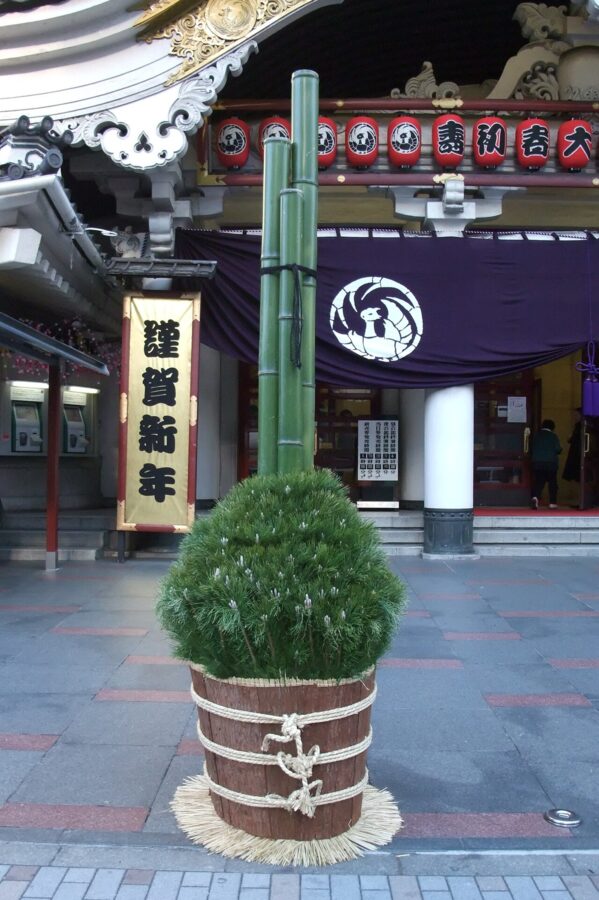
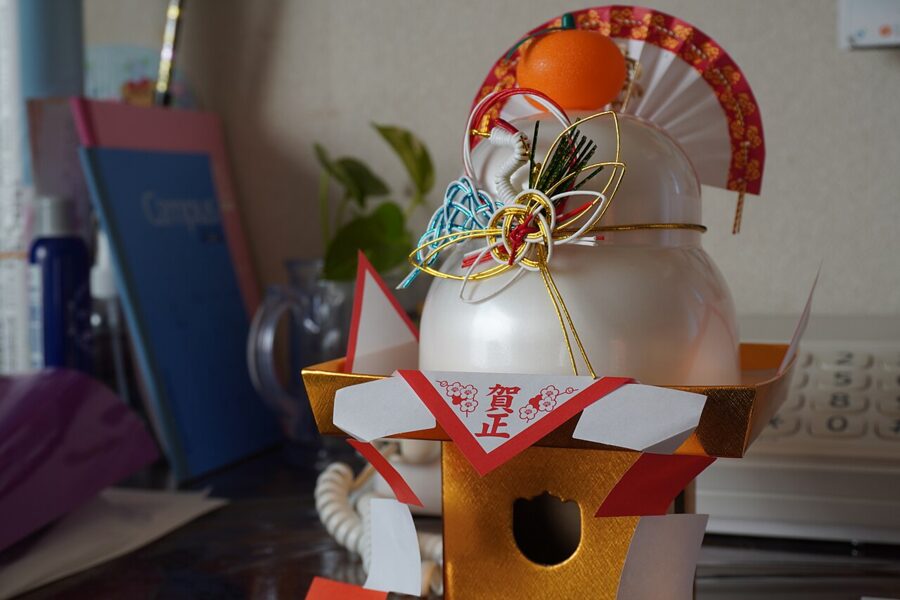
The decorations go up before the year turns, and their names describe them. Kadomatsu (門松) is gate pine: pines, usually with cut bamboo since the Middle Ages, set at the door as a place for the year god, toshigami, to come down. Kagami mochi (鏡餅) is mirror rice cake, two flat rounds of pounded rice stacked like the round bronze mirrors kept at shrines, topped with a bitter orange.
The first dream of the year, hatsuyume (初夢), is luckiest if it shows Mount Fuji, then a hawk, then an aubergine. Children open envelopes of otoshidama (お年玉), New Year money. The Daijisen reads toshidama as the year’s gift, and it once meant any New Year present: in the Edo period, the Heibonsha encyclopedia says, samurai gave swords, merchants fans and doctors pills.
Osechi: food for the seasonal node
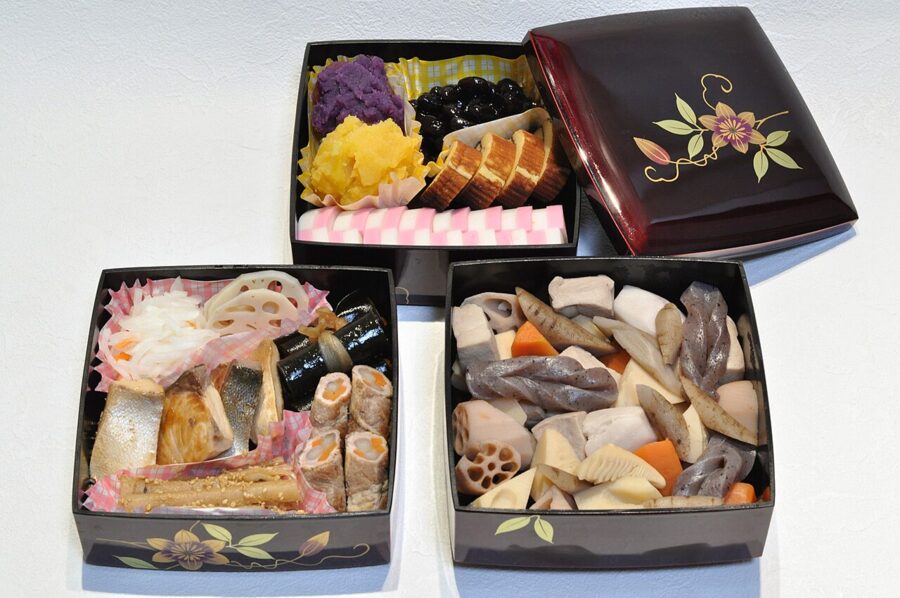
Osechi (御節) is short for o-sechiku, the offerings for a sechi (節), a node or joint in the year. The Japanese Britannica notes that osechi once meant the food of every seasonal festival and now means the New Year boxes alone. Each dish in the tiered lacquer jūbako is a pun or a wish: herring roe for many children, black beans for working mame, diligently, dried sardines for a good harvest. It is cooked before the year turns so the kitchen can rest, and it is the grandest meal of home washoku.
The rites of the seasons
Five of the old festival days are the gosekku (五節句), on odd-numbered days of odd months: 7 January, 3 March, 5 May, 7 July and 9 September. Spring has one more custom named for what you do: hanami (花見), flower viewing, under the sakura.
Setsubun: dividing the seasons
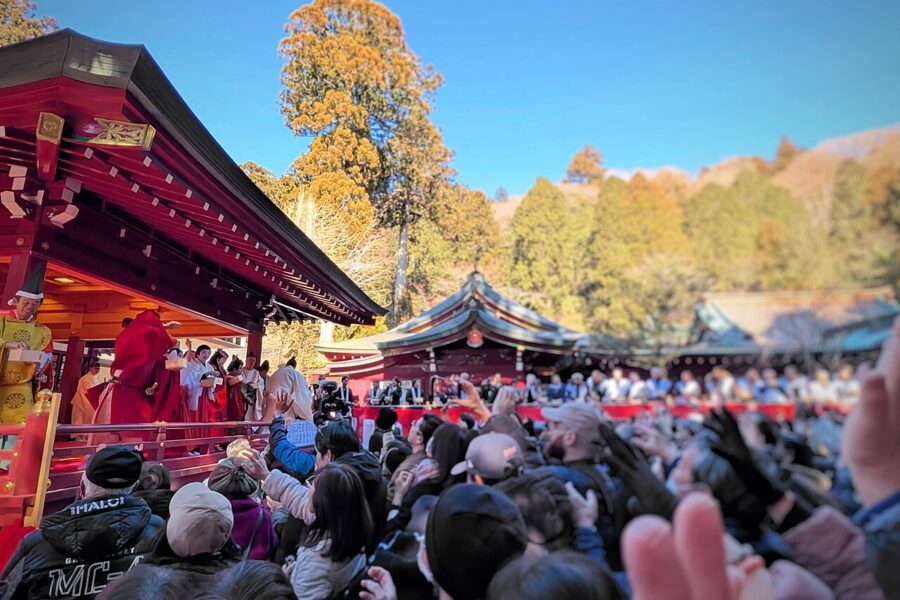
Setsubun (節分) is the division of the seasons, and it once fell four times a year, on the eve of each season’s start among the 24 solar terms. Only the eve of spring kept the name, because spring was once the start of the year. The Nihon Kokugo Daijiten says the night keeps year-end rites like those of ōmisoka. Its demon-chasing comes from tsuina (追儺), a court exorcism first held in 706 that faded at court and survived at shrines and temples as the bean-throwing.
People throw roasted soybeans, mamemaki (豆撒き), shouting oni wa soto, fuku wa uchi, demons out, luck in, and eat one bean for each year of their age, or one more. A sardine head on a holly sprig at the door keeps demons away. The thick sushi roll eaten in silence facing the year’s lucky direction, ehōmaki (恵方巻), is an Osaka habit that the Daijisen says spread nationwide only around 2000, on the shelves of convenience stores.
Hinamatsuri: the festival of little dolls
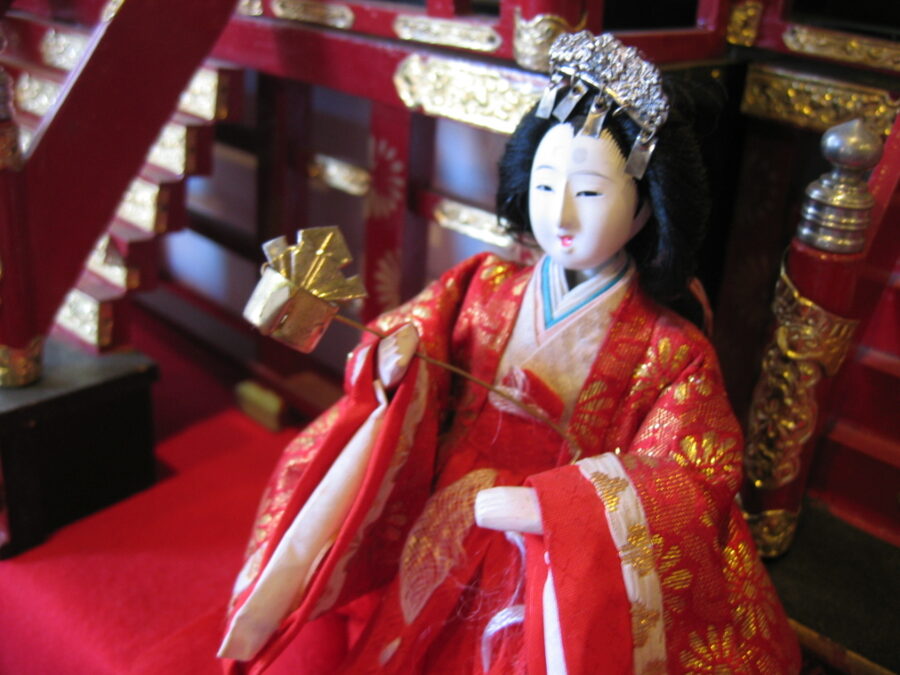
Hina (雛) means small, a chick, and by extension a little doll, so hinamatsuri (雛祭) is the festival of little dolls, on 3 March, also called momo no sekku, the peach festival. The tiered displays of emperor, empress and court are younger than they look: the Nipponica encyclopedia finds the first court records around 1630 and the festival settled from the 1660s, reaching the countryside only after Meiji.
The root is older and plainer. Paper dolls once took on a person’s impurities and were floated away down a river, and in Mochigase, Tottori, nagashi-bina (流し雛), floating dolls, are still set on the water on the old third day of the third month.
Tanabata: the weaving shelf
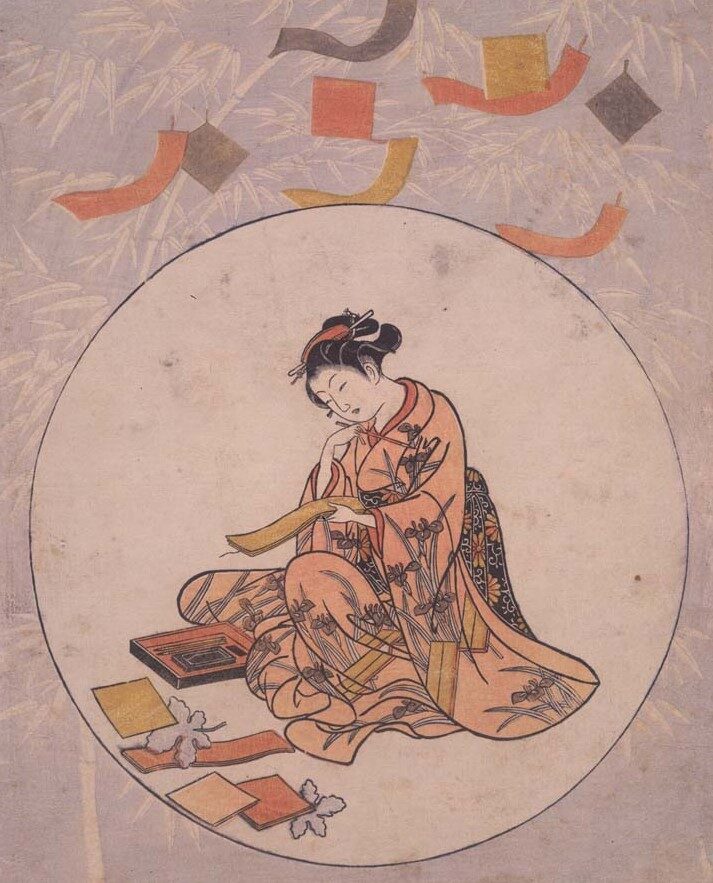
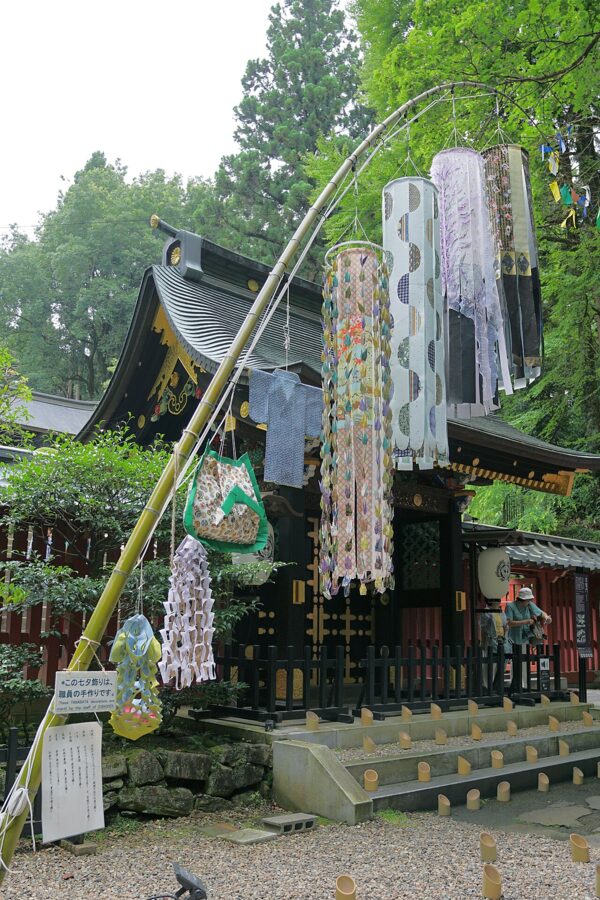
Here is a name that does not say what it is. 七夕 means the seventh evening, the night of 7 July when the Weaver Star (Vega) crosses the Milky Way to meet the Herdsman (Altair), a Chinese story already in the Man’yōshū. The reading tanabata belongs to a different word, 棚機, a loom on a shelf. The folklorist Orikuchi Shinobu traced it to a native rite in which a maiden waited for a god in a weaving hut by the water, and the encyclopedias report that as his theory.
The Chinese festival asked the weaver for skill in needlework; Japan added poems, and from the Edo period wishes written on tanzaku (短冊), narrow paper strips, hung on bamboo. Many places keep the date a month late, nearer the old lunar season. The Sendai Tanabata festival ran on 6 to 8 August in 2026.
Obon: a word from Sanskrit
Obon is the polite form of bon, short for urabon (盂蘭盆). Most dictionaries take it as a sound-spelling of the Sanskrit ullambana, hanging upside down, the torment a monk’s dead mother suffered until his offerings freed her; the Daijisen notes that other explanations exist. The court first held it in 606, by tradition, and made it an annual rite in 733.
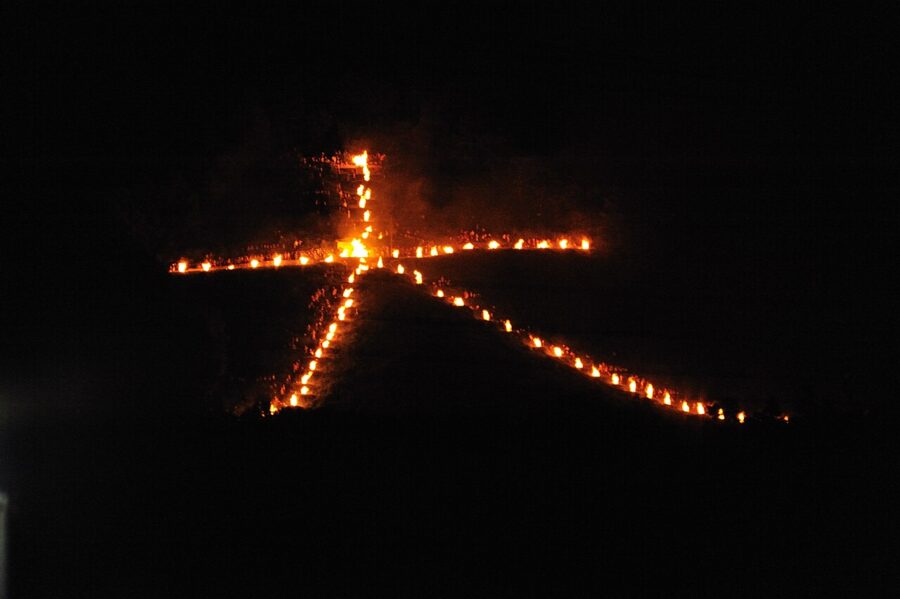
For four days, usually 13 to 16 August, the dead come home. Families light a welcome fire, set offerings on a spirit shelf, visit the graves and light a sending-off fire at the end. The evening dance is bon odori (盆踊り), and in Kyoto the farewell fires burn as huge characters and shapes on five hills on the night of 16 August, the Gozan Okuribi.
Tsukimi: moon viewing
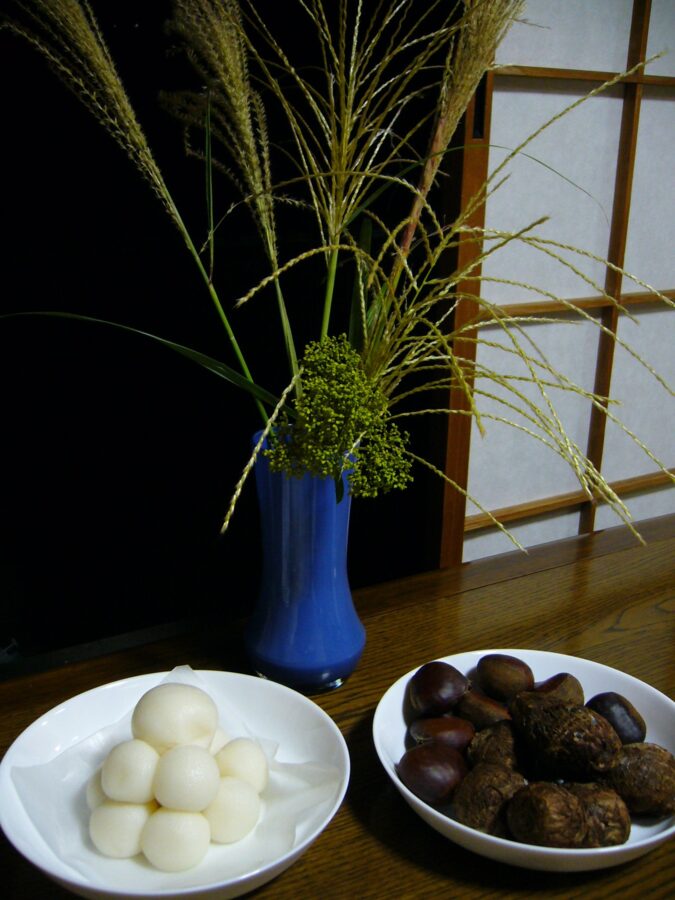
Tsukimi (月見) is moon looking, tied in the dictionaries to two nights: jūgoya (十五夜), the fifteenth night of the eighth lunar month, and jūsan’ya, the thirteenth night of the ninth. On the solar calendar jūgoya moves between mid-September and early October. The offerings are pampas grass, white dumplings, taro and chestnuts, which is why the first moon is also the taro moon. On a menu, tsukimi means an egg yolk cracked onto soba or udon, round and yellow as the moon.
The arts of the way: -do
道 is a road, one of the second-year kyōiku kanji, read michi alone and dō in compounds. Put after the name of an art, it turns a skill into a discipline followed for life, with schools, ranks and teachers. Several of these names are newer than the arts: the Nihon Kokugo Daijiten says 華道 arose in the Edo period, when Confucian thought stressed self-cultivation.
Sado, the way of tea
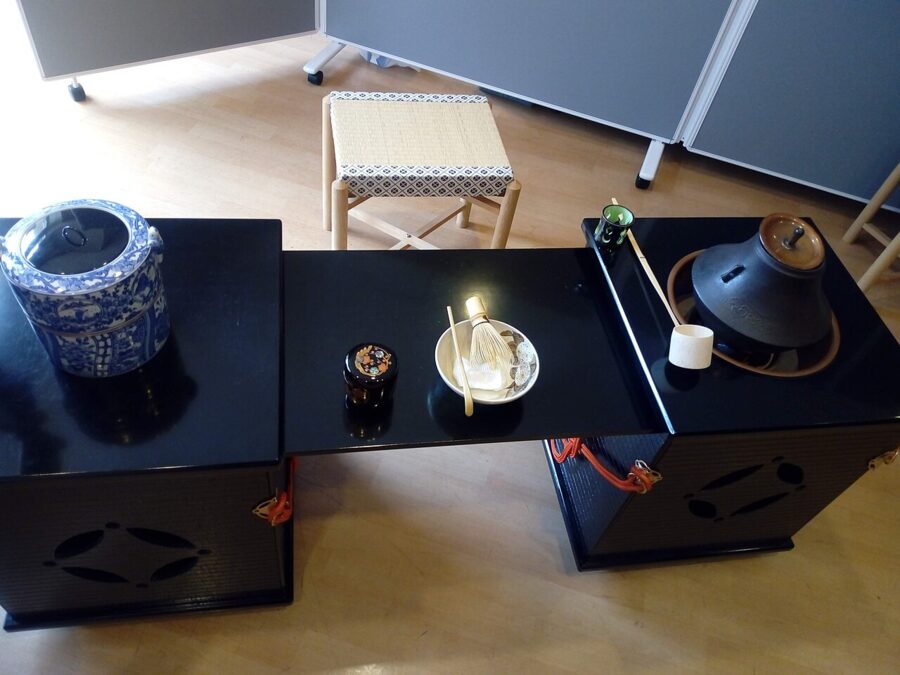
茶道 is read sadō or chadō, and the Daijisen notes that sadō is the usual reading now. It began with the tea rituals of Kamakura-period Zen temples; Murata Jukō started the style, Takeno Jōō refined it and Sen no Rikyū completed it as wabicha, the tea of wabi, quiet austerity. The tea is matcha, whisked, and the older everyday name for the gathering is chanoyu, hot water for tea.
Kado and ikebana
Kadō (華道) is the way of flowers; the everyday word is ikebana (生け花), from ikeru, to keep alive, first found in a flower manual of 1445. The Nihon Kokugo Daijiten describes every style, standing, thrown-in and the rest, as cut branches and flowers set to show a shape.
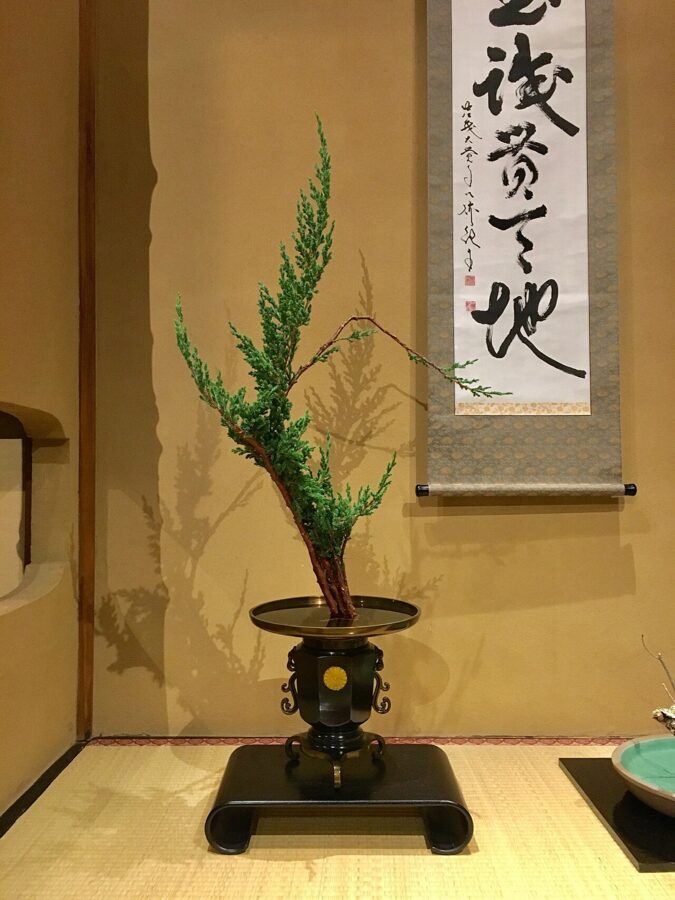
Shodo, the way of writing
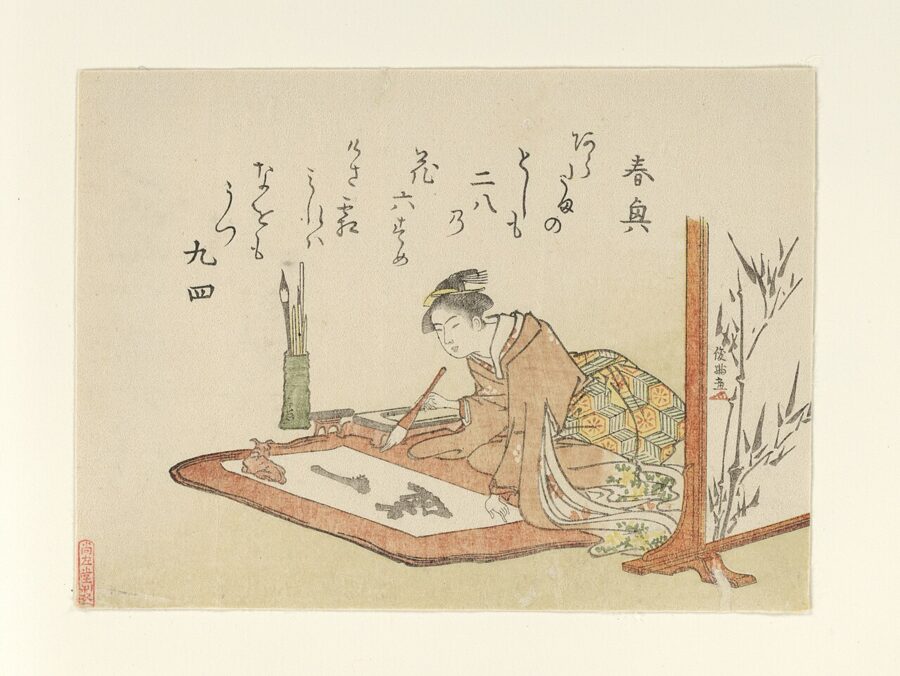
Shodō (書道) is the way of writing with a brush. It came from China and changed course in the Heian period, when kana let Japanese poems run in flowing lines no Chinese model showed. Every school pupil still does it, and on 2 January many households write kakizome (書初め), the first writing of the year.
Kendo, the way of the sword
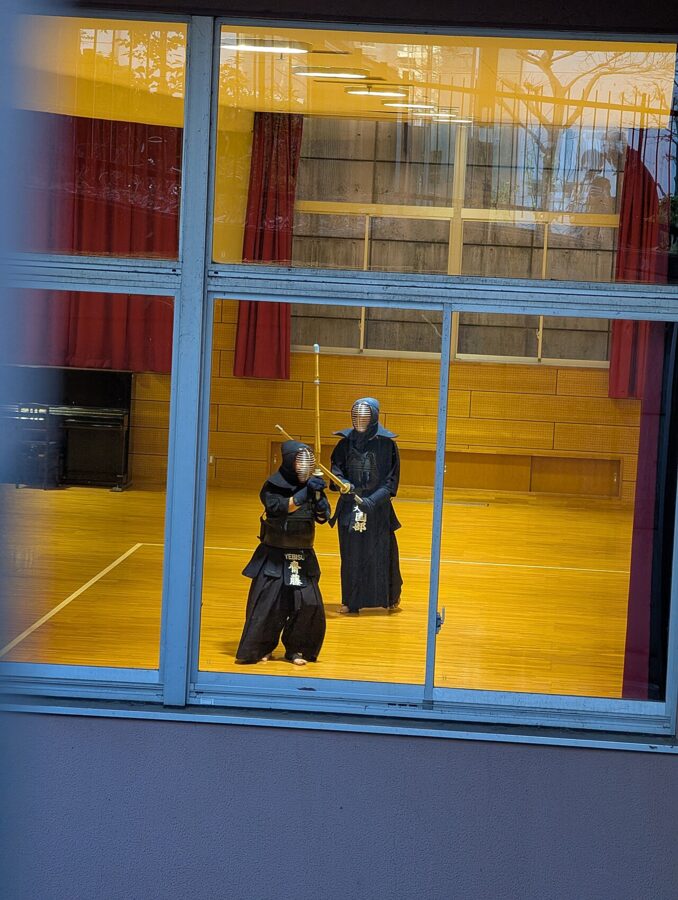
Sword fighting was kenjutsu, sword technique, then gekken, striking with swords, in the Meiji era. Japanese encyclopedias record that kendō (剣道) took over in the Taishō era, and from the early Shōwa era almost no other word was used. It is fought in armour with a split-bamboo sword, the shinai, and a match begins and ends with a bow.
Haiku
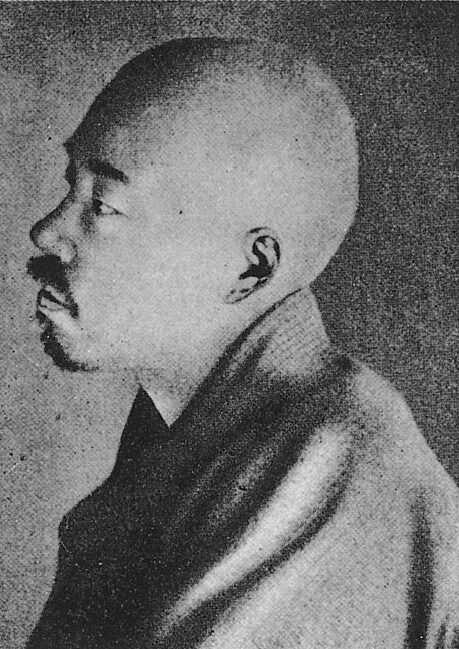
Haiku (俳句) is short for haikai no ku, a verse of haikai, the comic linked poetry of the Edo period; Bashō’s single verses were hokku, opening stanzas. The dictionaries credit Masaoka Shiki, from the late 1880s and 1890s, with making haiku the name for a free-standing poem of 5, 7 and 5 sounds. By rule it carries a kigo (季語), a season word, which is why the dictionaries mark yukata as summer and ōmisoka as winter.
Noh and kabuki
Nō (能) means ability, talent. The theatre was sarugaku no nō, the performance of sarugaku, until the short form won, and Kan’ami and his son Zeami shaped it around 1400. It is masked, slow and sung, on a roofed square stage of cypress.
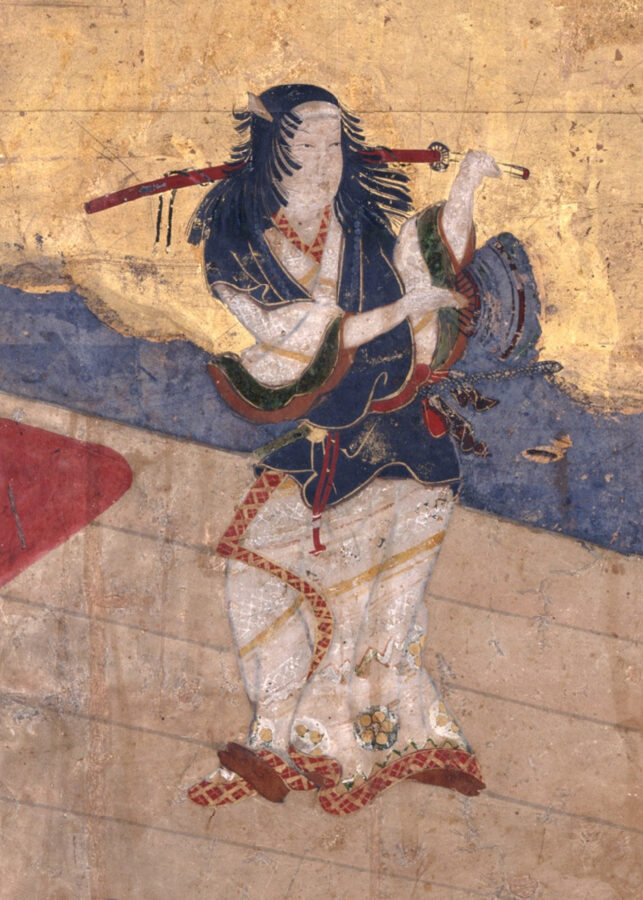
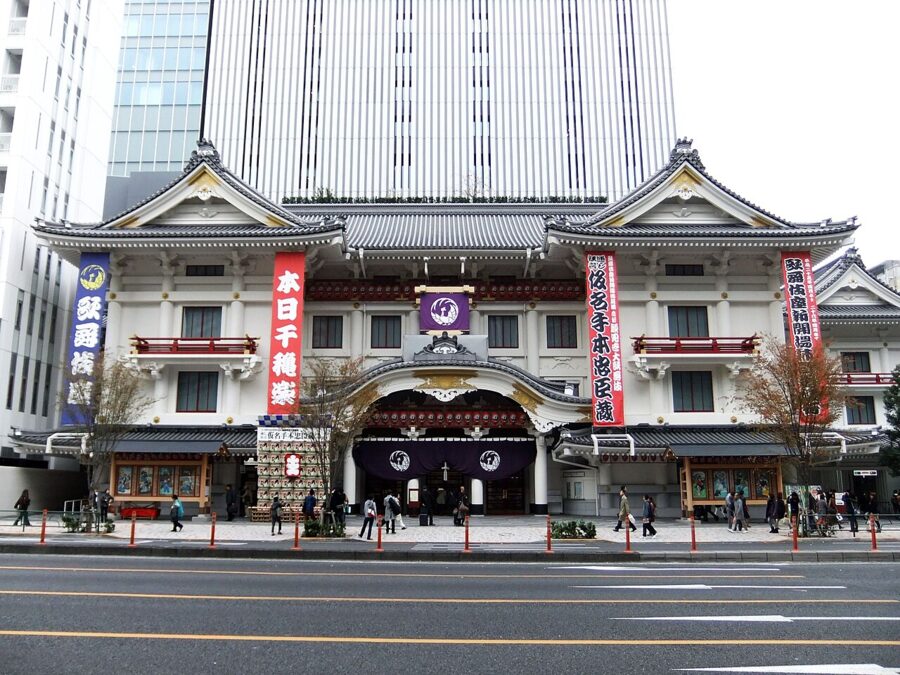
Kabuki began as a verb. Kabuku meant to lean, to slant, and so to dress and behave outlandishly; the people who did it were kabukimono. The Nihon Kokugo Daijiten dates the theatre to Izumo no Okuni’s dances in Kyoto around 1603. The characters 歌舞伎, song, dance and skill, were chosen later for their sound, and they happen to describe the show.
Everyday customs
Ojigi: the bow
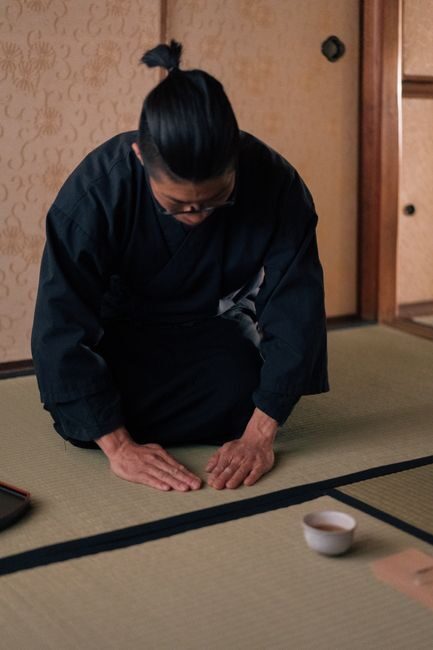
Ojigi (お辞儀) is the polite form of jigi, and the dictionary’s first senses are a greeting and, separately, declining out of politeness. 辞 is to decline, 儀 is ceremony; the bow carries both. A nod in passing is eshaku (会釈); business-manners courses usually teach two deeper bows beyond it, at about 30 and 45 degrees.
Shoes off at the genkan
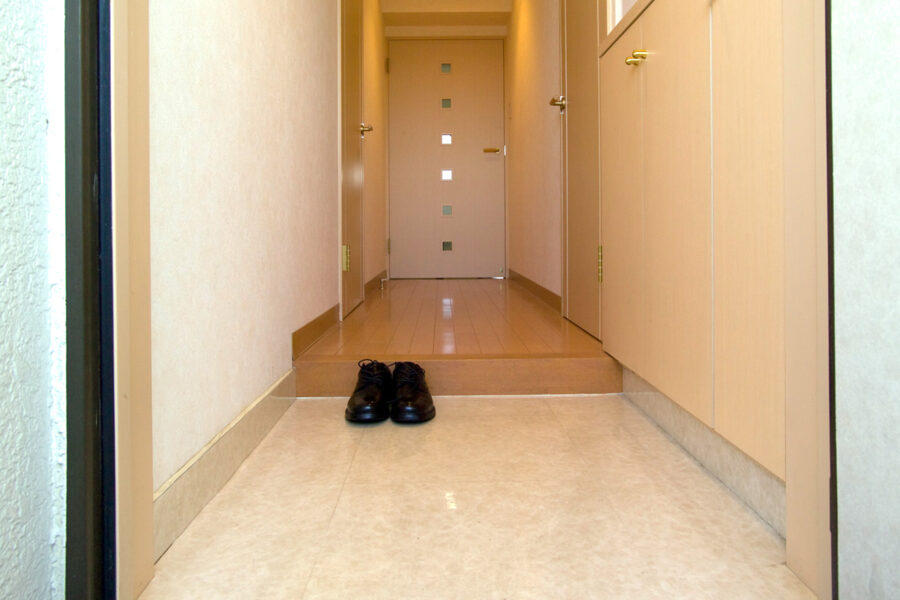
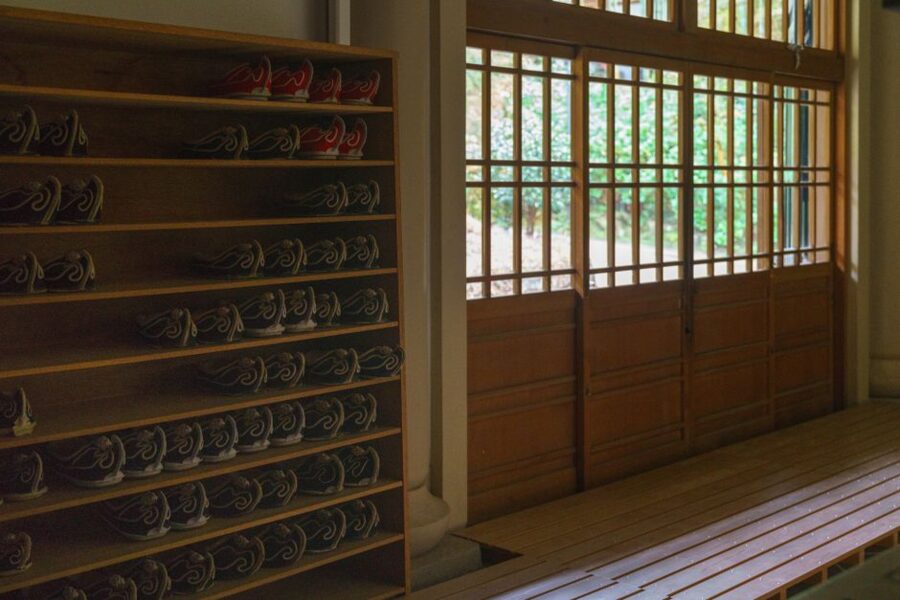
The entrance hall is the genkan (玄関), and the word began in Zen. The Nihon Kokugo Daijiten gives its first sense as the barrier, 関, into the profound way, 玄, then the gate of a Zen temple, then the formal entrance of a samurai house; in the Edo period a village headman needed permission to build one. Today every flat has a genkan: a small sunken floor where shoes come off before you step up into the house, toes turned to the door.
Omiyage, noshi and furoshiki
Omiyage (お土産) is the gift you bring back from a trip or carry to someone’s home, and 土産 is a reading the characters cannot give you: read by sound, they are dosan, a local product. The encyclopedias list several origins for miyage and settle on none; the most widely held is miyake (宮笥), a vessel received from a god at a shrine.
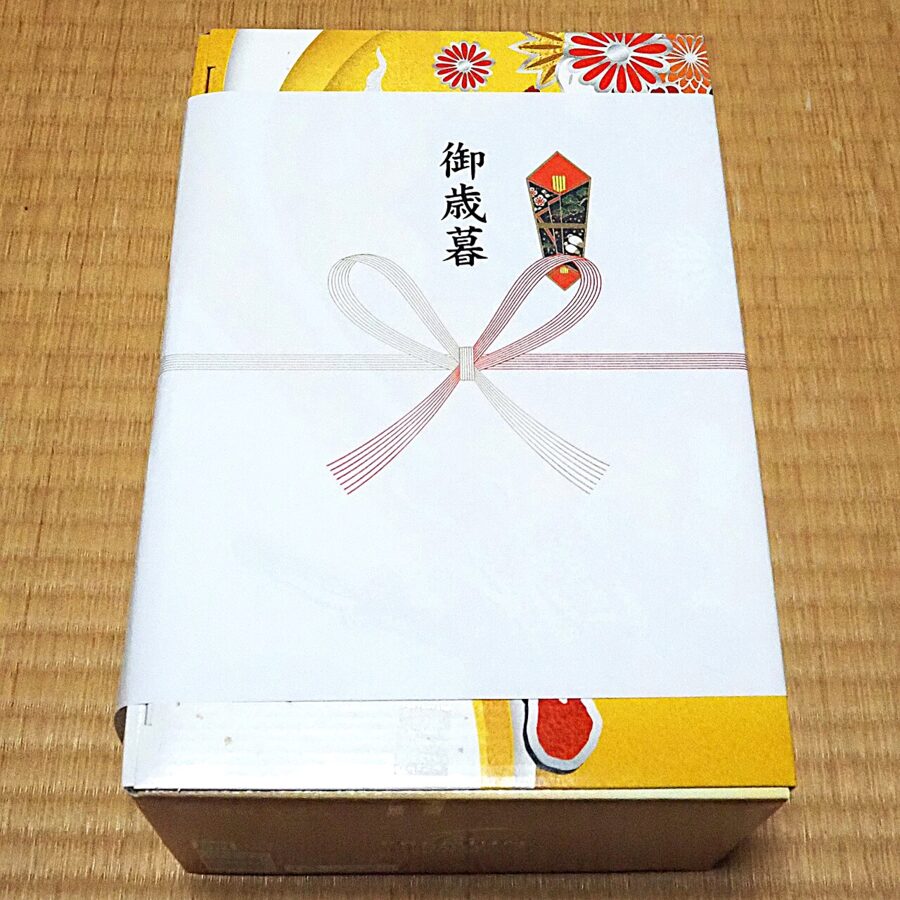
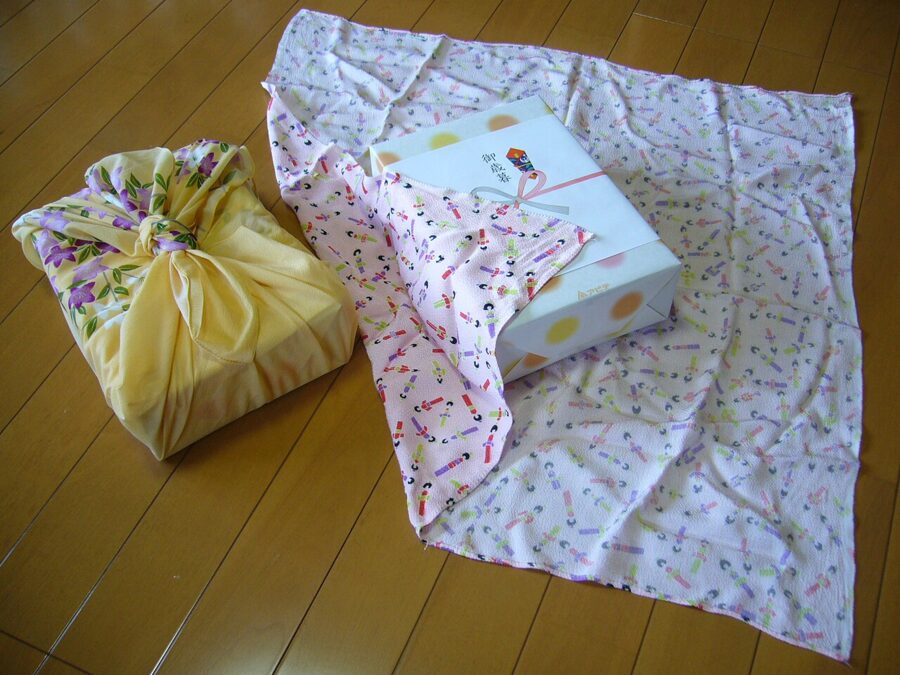
Formal gifts carry a noshi (熨斗), short for noshi-awabi, abalone sliced thin, stretched and dried. A strip of it once went with every celebratory gift; now it is a small folded emblem printed on the wrapping, beside the tied mizuhiki cords. Gifts carried by hand often go in a furoshiki (風呂敷), a bath spread: a square cloth from the Edo bathhouses, where you wrapped your clothes in it and stood on it to dress.
Itadakimasu and gochisosama
Before a meal people say itadakimasu (いただきます), from itadaku (頂く): to put on top of the head. 頂 is the crown of the head, and behind the word is the gesture of raising something you have been given above your head in thanks. It became the humble verb for receiving, and before food it thanks whoever, and whatever, made the meal.
After the meal comes gochisōsama deshita (ご馳走様でした). 馳 and 走 both mean to run: a feast was the running about it took to gather food for a guest.
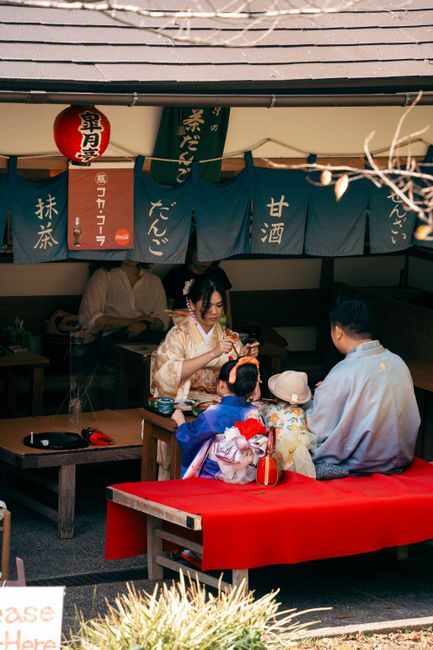
On the first morning of the year, stand in any shrine queue and the word is everywhere, on station posters and on the banners by the gate: 初詣, first visit. Read it, and you know what you are doing before you reach the front.