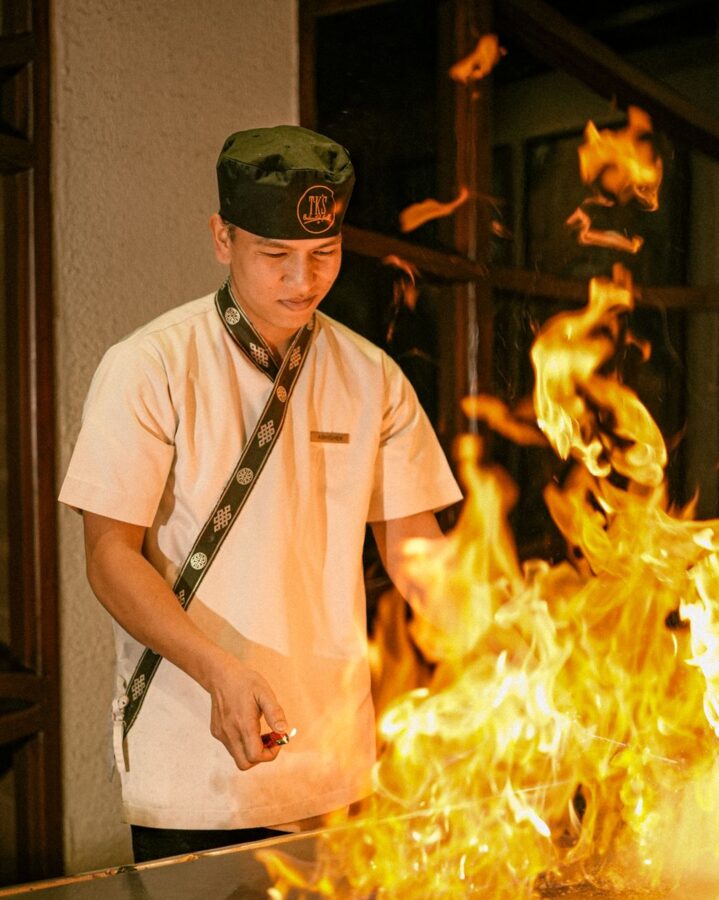
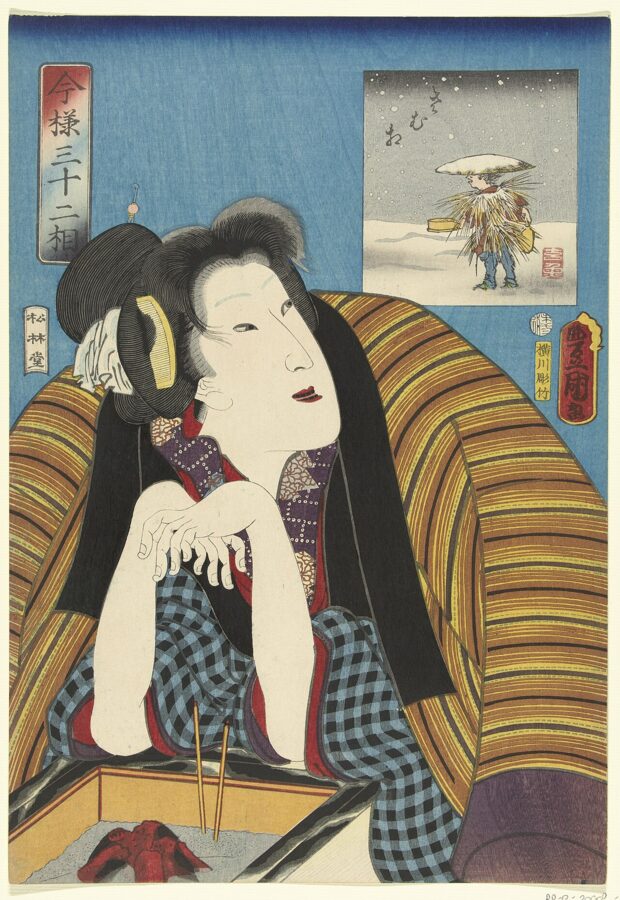
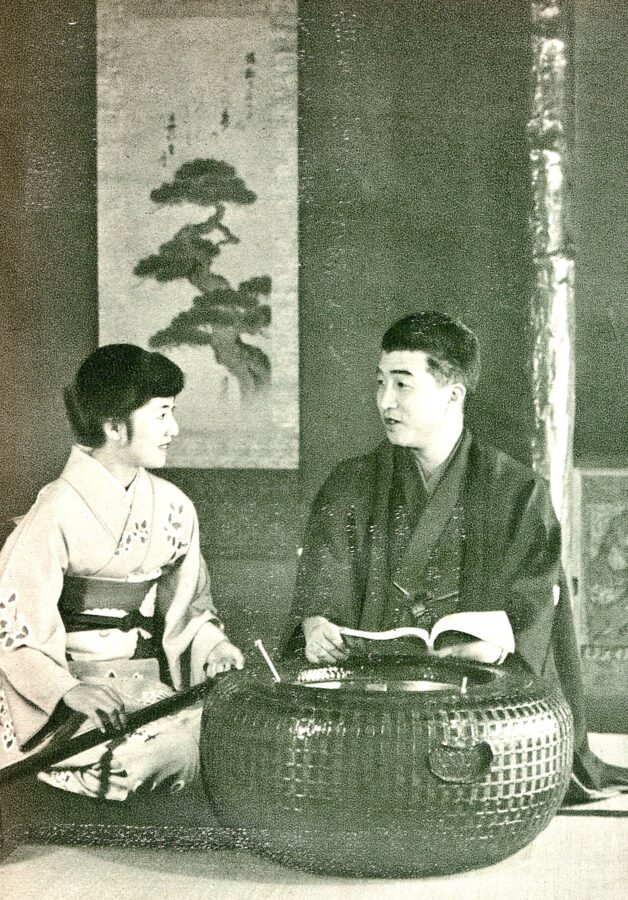
In an American strip mall, “hibachi” means a chef at a steel griddle, strangers on stools and a tower of onion rings on fire. Say the word to a Japanese grandmother and she pictures a heavy bowl of ash, a few coals glowing in the middle, an iron kettle ticking on top, and four pairs of hands held flat over the warmth on a January evening.
Only one of them is using the word the way Japanese does. Hibachi (火鉢) is two characters, 火, fire, and 鉢, a bowl, and for some nine hundred years it meant exactly that: a container of ash and charcoal that kept a cold room bearable.
In this article
火 and 鉢: reading the word
火 is among the first kanji any Japanese child writes: four strokes, on the kyōiku kanji list for grade 1, read カ (ka) in Chinese-style compounds and ひ (hi) on its own. It is the fire in Tuesday, 火曜日.
鉢, read ハチ (hachi), has travelled further. It began as a sound-spelling of the Sanskrit pātra, a Buddhist monk’s begging bowl, which the Daijisen still gives as its first meaning. From there it spread to any open vessel deeper than a plate: uekibachi (植木鉢), a flowerpot, or takuhatsu (托鉢), a monk’s alms round. It has nothing to do with the hachi that means eight, 八.
Joined, the second word voices its first sound, a habit called rendaku (連濁): hi plus hachi gives hibachi, as hana plus hi gives hanabi, fireworks.
Older names, and the Pillow Book
The Nihon Kokugo Daijiten finds 火鉢 first in the Gōke Shidai, a court ceremonial of about 1111. Older names lasted alongside it: hioke (火桶), a round wooden fire tub, and hibitsu (火櫃) or subitsu (炭櫃), a square fire chest.
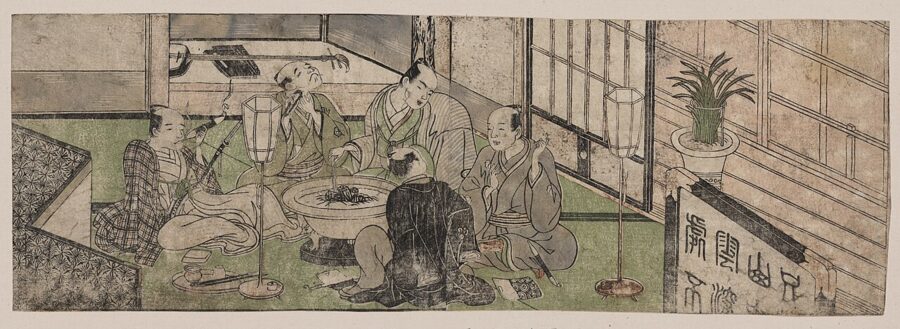
Heian palaces had no hearths in their formal rooms, because smoke and soot would have ruined the screens, so courtiers warmed themselves at tubs of embers. Sei Shōnagon ends the opening of The Pillow Book, around 1000, with one. Winter is best at dawn, she says, with fires hurried into life; by noon the cold slackens, “and the fire in the hioke goes to white ash, which is not nice at all.”
Irori, kotatsu, shichirin
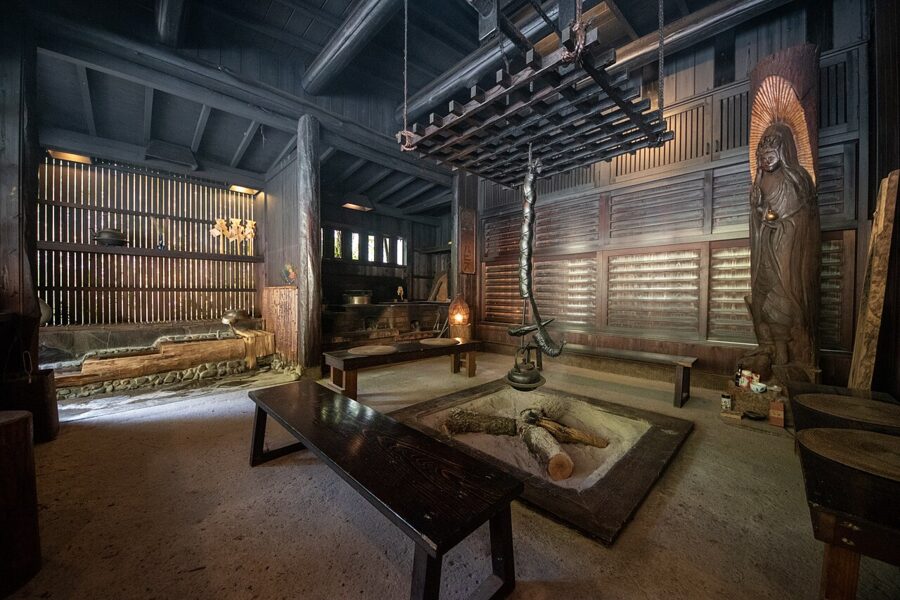
Three neighbours are easy to mix up. The irori (囲炉裏) is a square hearth sunk into a farmhouse floor, burning wood under a hanging pot. The kotatsu (炬燵) is a heat source under a quilted low table, for your legs. The shichirin (七輪) is a small clay cooking stove, of which more below.
Round, square and long: the brazier itself
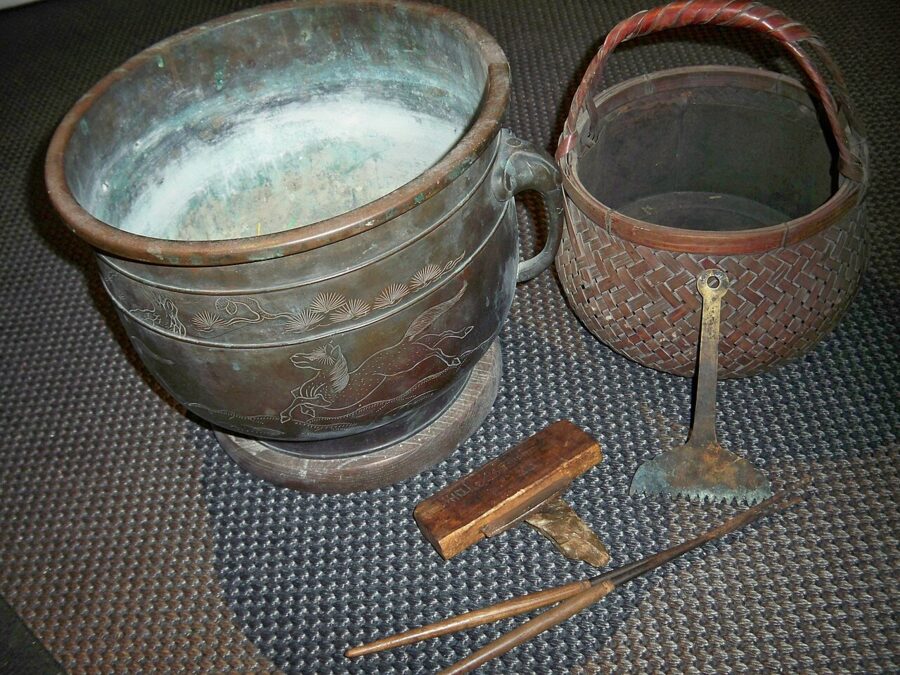
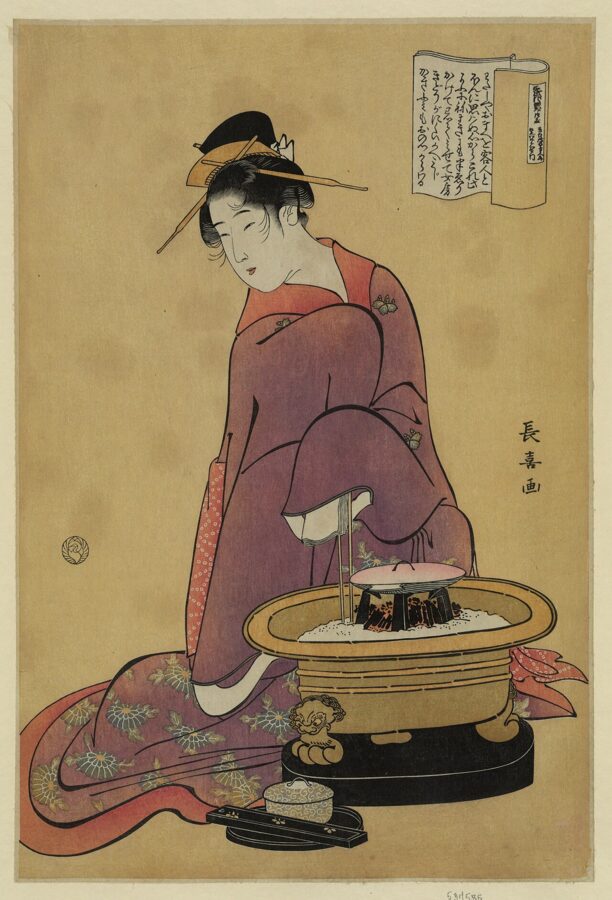
A hibachi is any container holding ash deep enough to bury charcoal in. Heibonsha’s encyclopaedia sorts them by material: wood, bent into a hoop or hollowed from paulownia or zelkova, with a copper liner inside; metal, mostly bronze or brass, sometimes on lion’s feet; and ceramic, a round pot on a wooden stand.
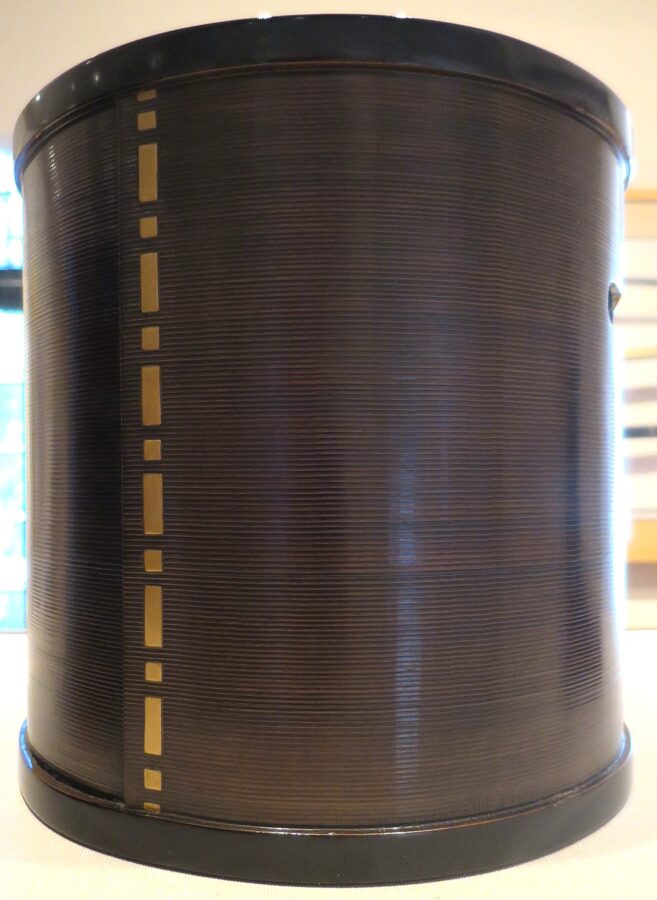
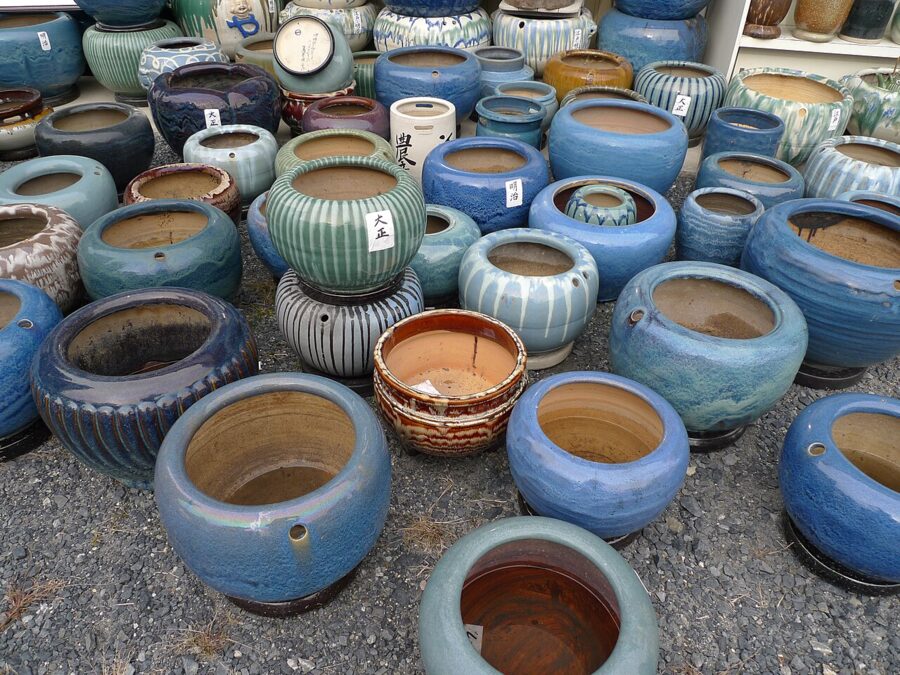
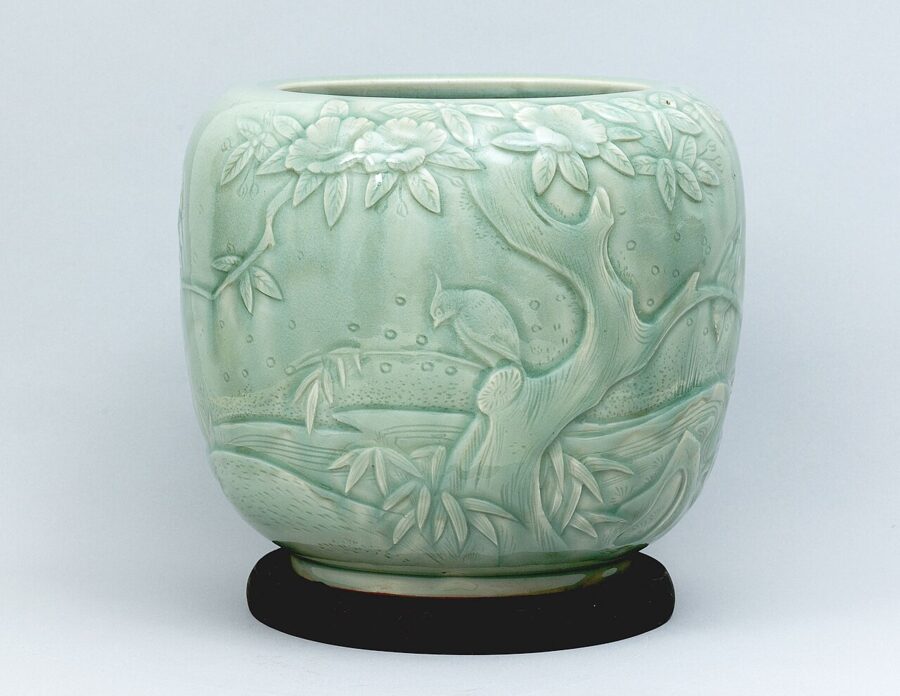
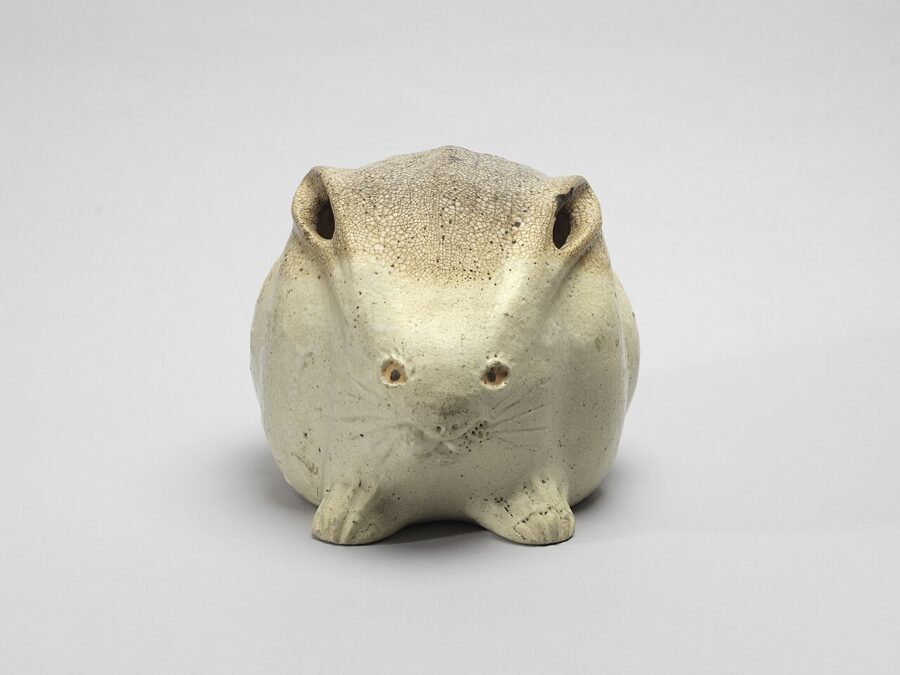
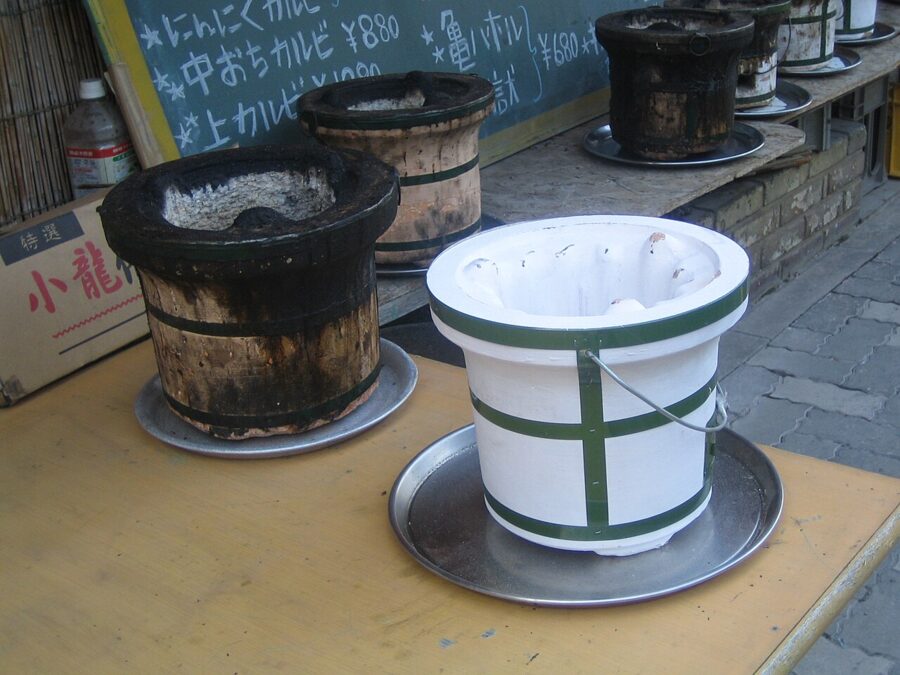
Small hand-warmers were teaburi (手焙り), “hand roasters”, some with a handle for carrying. Shops kept tall ceramic ones for customers on benches. Some were just for fun.
The naga-hibachi
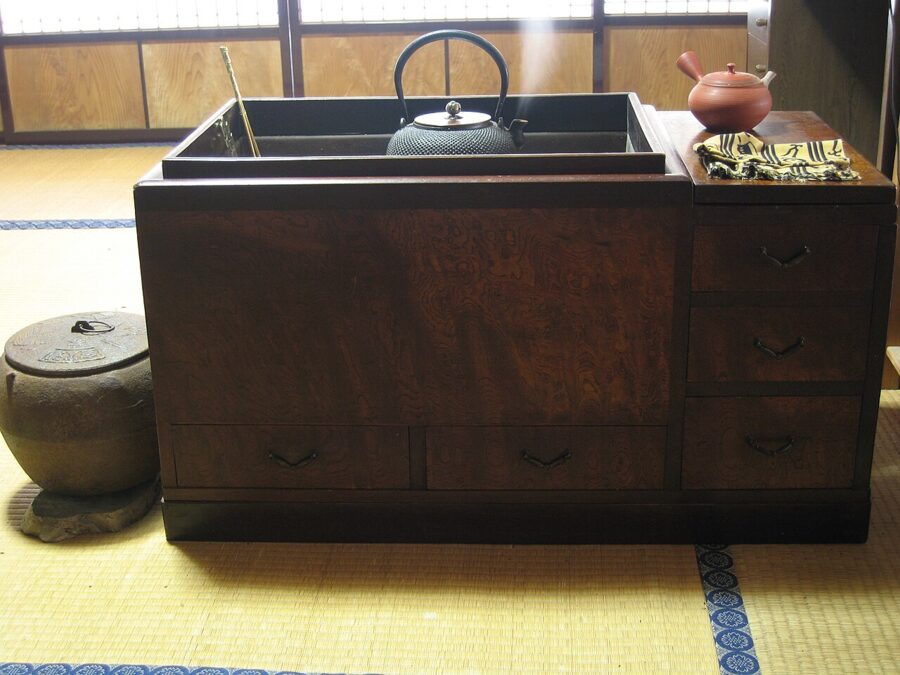
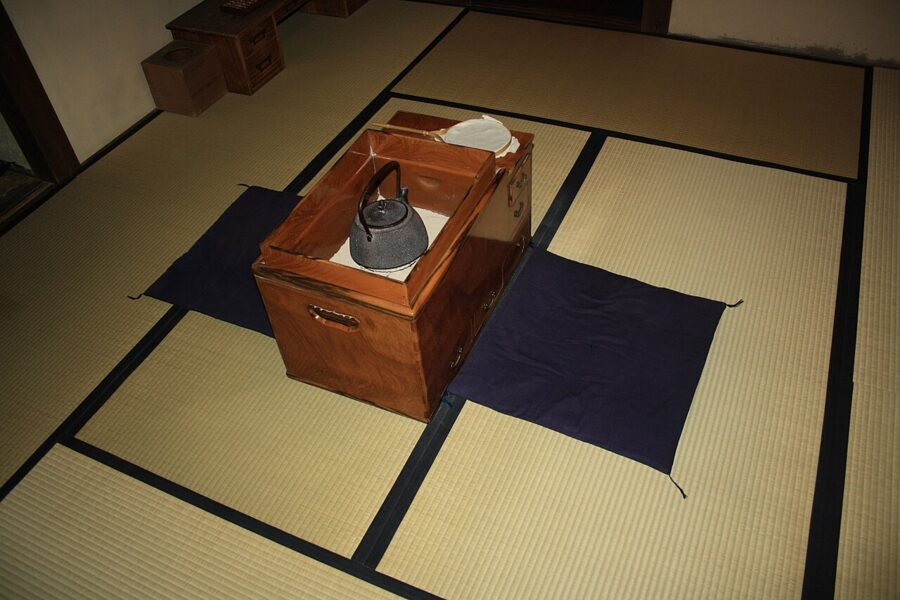
The great piece of furniture was the naga-hibachi (長火鉢), the long hibachi. The Nipponica encyclopaedia gives the usual size as about 60 by 36 by 33 cm, in zelkova or oak. Drawers on the right sit under a loose board, the nekoita (猫板), the cat board; on the left, beside the coals, a copper pot called a dōko (銅壺) kept water hot and warmed sake.
It spread through the cities from the 1790s, and held the middle of urban family life, as the irori did in the country, until the early 1950s.
Ash, charcoal and the kettle
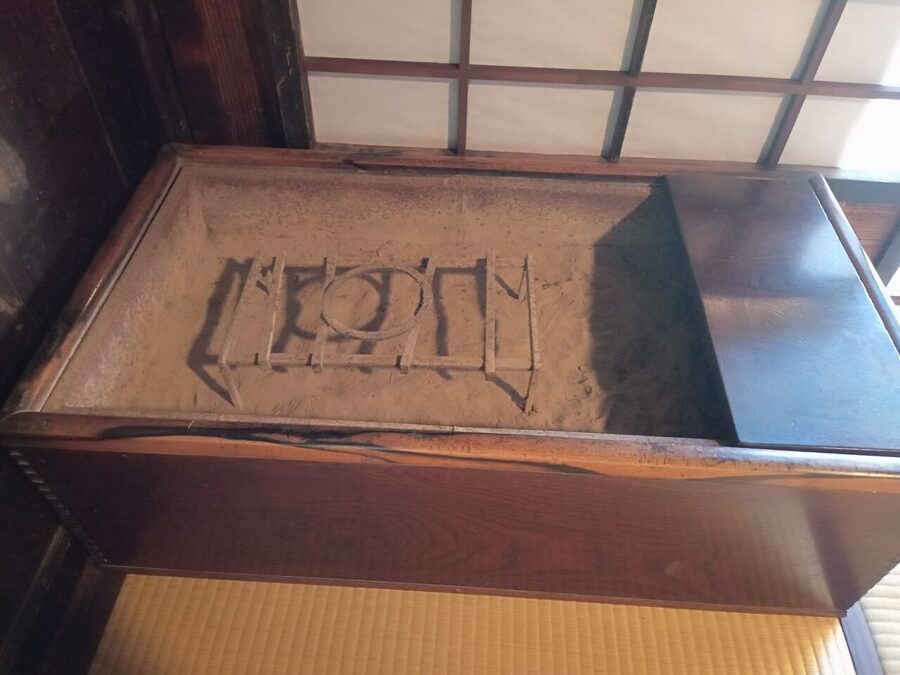
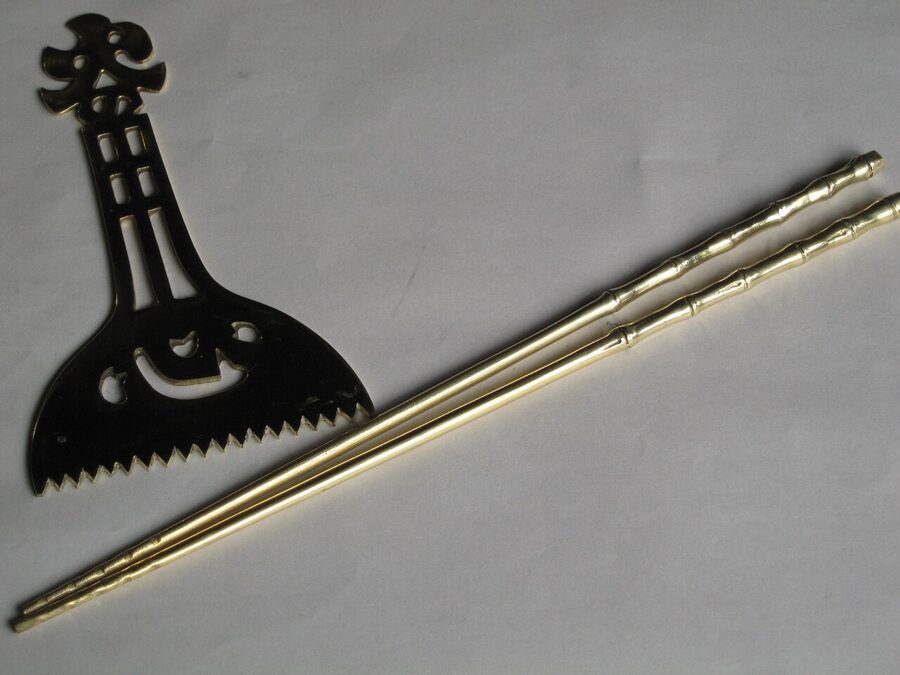
The ash is what makes it work. A deep, dry bed insulates the bowl and lets you bank the fire: bury the charcoal and it smoulders; rake it out and it flares. Hibashi (火箸), metal chopsticks, move the coals, and a hai-narashi (灰均し), a flat toothed blade, smooths the ash.
Over the coals stands the gotoku (五徳), a ring on three or four legs that holds the kettle. The Nihon Kokugo Daijiten finds it in a tea diary of 1586 and gives an older name, kanawa, metal ring. Gotoku means “five virtues”, and why a trivet got the name the dictionaries do not say; its outline also became one of the kamon, the family crests.
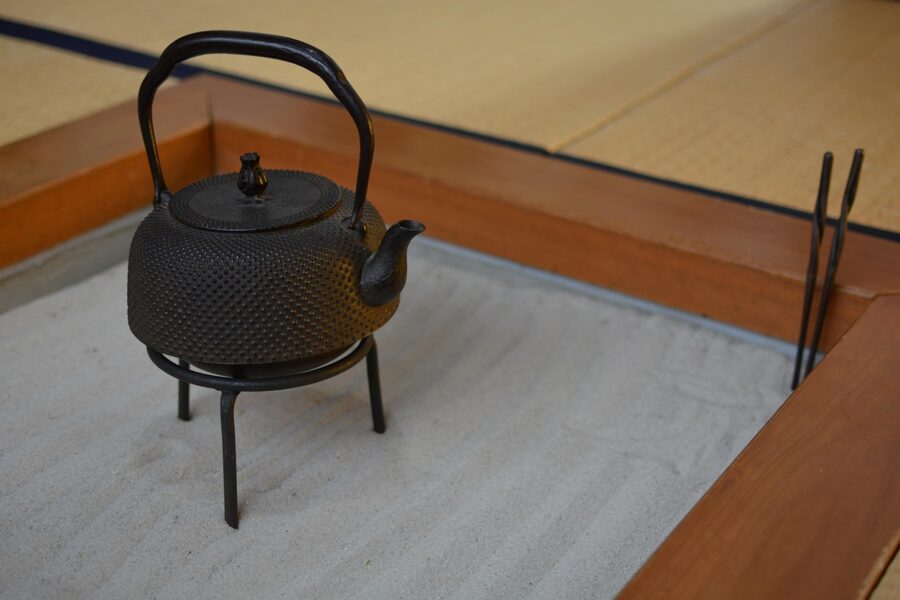
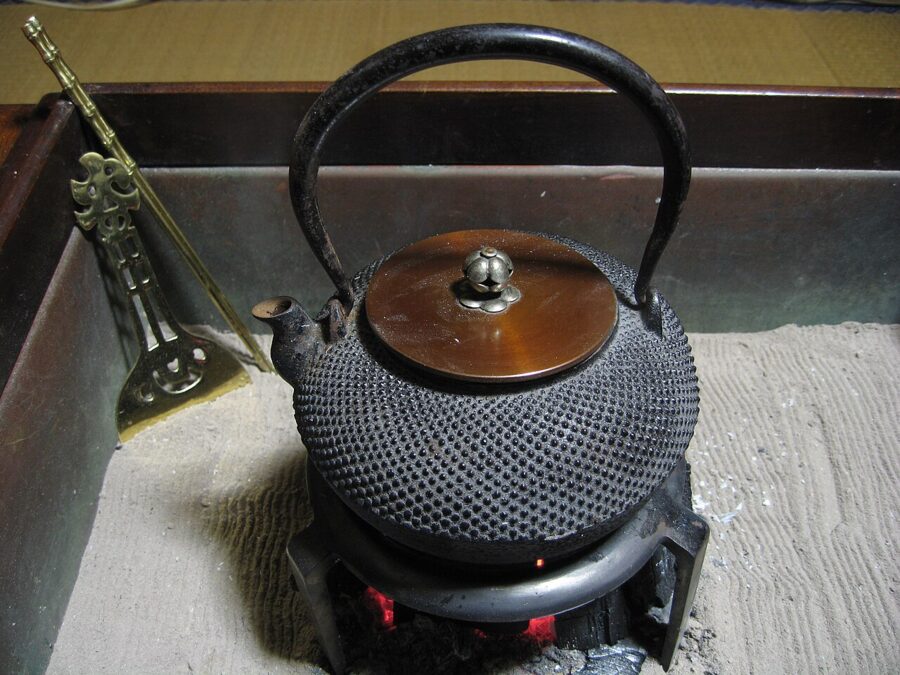
The fuel was charcoal, never wood, which is why the hibachi could live indoors. Nipponica notes that charcoal began as a smelting fuel; Edo-period cities, short of firewood and unwilling to put up with smoke, made it the household heat of Japan.
Hands, tea, sake and a rice cake
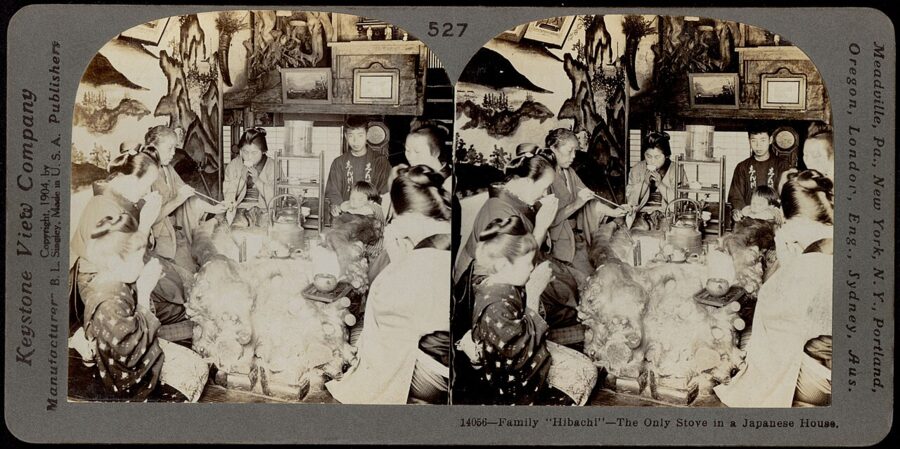
A hibachi does not heat a room. It heats whoever sits closest, which is why every picture of one shows people leaning in. The kettle made tea all day, the copper pot warmed sake, and a wire net over the coals toasted a slice of mochi.
The Heian court used its fire tubs from the tenth month to the third and put them away in the fourth, and hibachi is still a winter word in haiku, filed among the seasons beside snow and the kotatsu. The Daijisen quotes the poet Shōzan: kyaku satte / nazuru hibachi ya / hitorigoto, “the guest gone, I stroke the hibachi, and talk to myself.”
The danger
Charcoal makes no smoke but plenty of carbon monoxide, and Nipponica counts that among the hibachi’s faults. The gas binds to blood about 300 times more readily than oxygen, as its entry on the poisoning explains, and headache and dizziness come first. Draughty old houses usually got away with it. Britannica’s Japanese edition lists airtight modern buildings among the reasons the hibachi fell out of use, so if you ever light one, open a window.
Out of the sitting room
Gas, kerosene and electric heaters, the electric kotatsu and the price of charcoal squeezed it out together. Japan’s 1957 economic white paper already reported household demand for charcoal flat in 1956 because of substitute fuels.
That report put charcoal production in 1956 at 1.95 million tonnes. The Forestry Agency puts 2023 at 20,000 tonnes, about one hundredth, and credits that year’s small rise to restaurants. Japanese charcoal now goes under grills, not kettles.
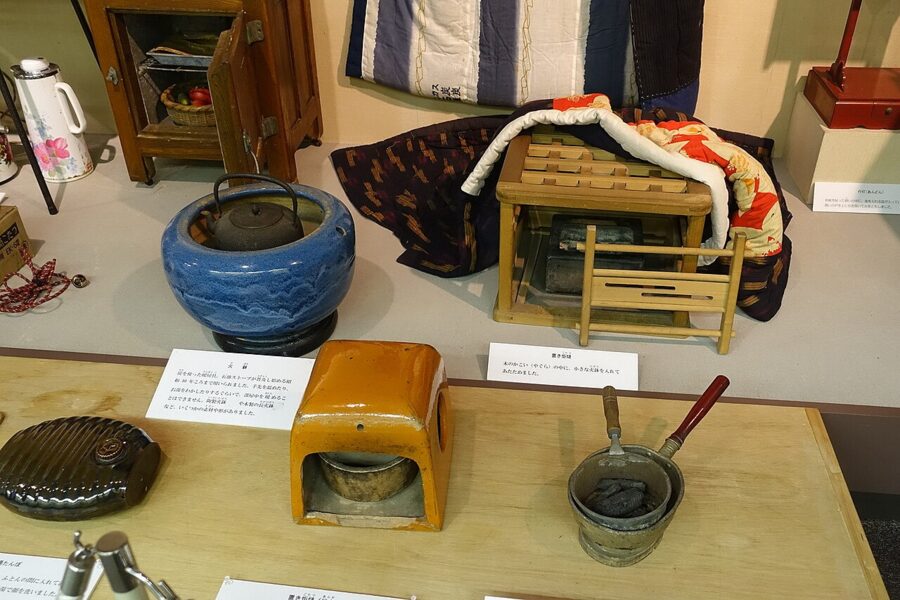
What survives is mostly furniture. The Nihon Bunka Iroha Jiten says the hibachi is now used mainly as an interior piece that sets off a tatami room, which is usually what you are looking at in a ryokan.
How the word crossed the Pacific
English took the word early; dictionaries date it to the 1860s or around 1870, when Western visitors found a brazier in every Japanese house. For a century, in English, a hibachi was what it was in Japan.
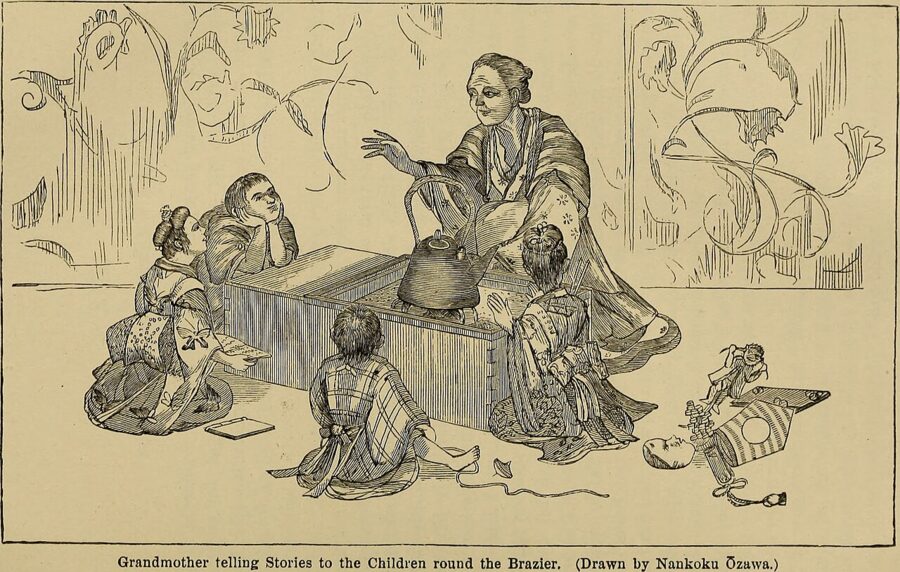
Then the meaning drifted toward cooking. By the 1960s, to judge by the grills museums have kept, an American hibachi was a small cast-iron charcoal grill for a balcony or a beach. It was at least still a box of coals.
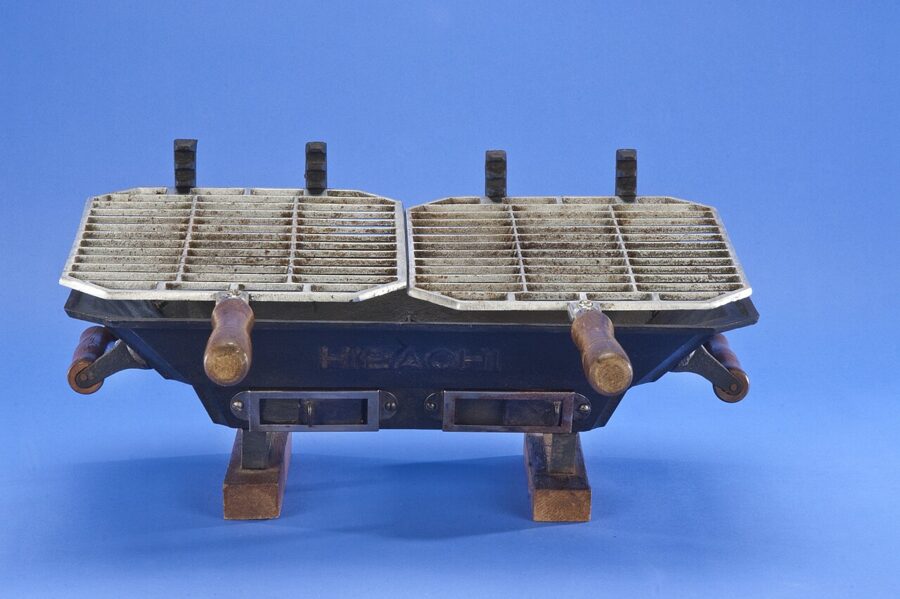
The second shift came in 1964. Rocky Aoki, son of a Tokyo coffee-shop owner, opened a restaurant at 61 West 56th Street in Manhattan with a Japanese farmhouse interior and chefs cooking at griddle tables in front of the diners. He named it Benihana after his parents’ coffee shop; 紅花 is the safflower, once grown for red dye. The cooking was teppanyaki, but “hibachi” stuck to the griddle, the meal and every restaurant that copied it.
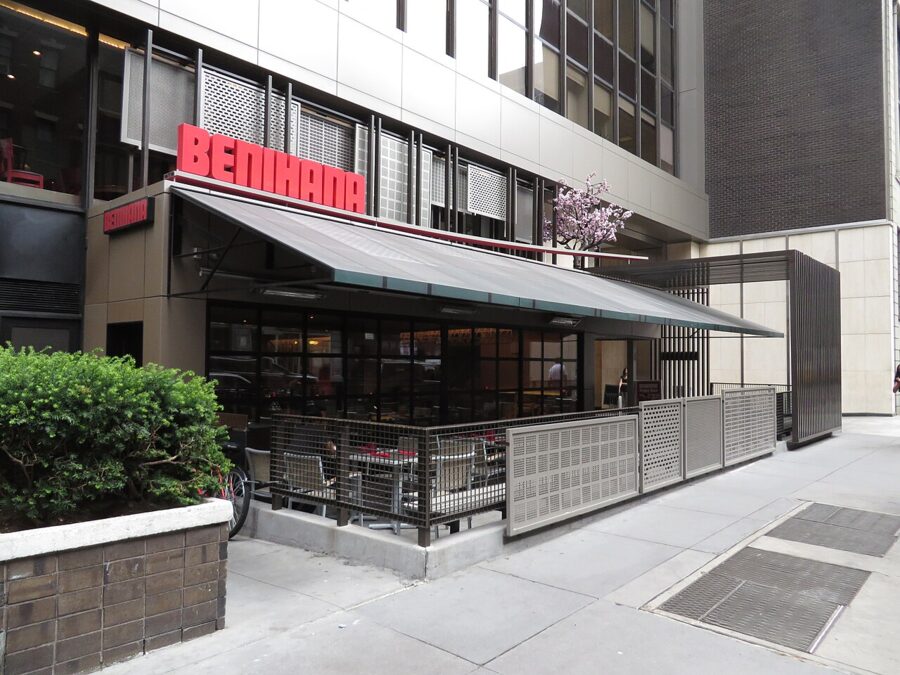
Benihana uses both words today: “hibachi chicken” on the menu, teppanyaki for the chefs’ show. The linguist Victor Mair set out the three American senses on Language Log: the charcoal grill, the griddle cooking, and the griddle itself, the last two virtually unknown in Japan.
So is hibachi Japanese or Chinese? The word is Japanese, from a Sanskrit bowl by way of Chinese characters, and the griddle show is Japanese too, made for foreign diners in Kobe and New York. A Japanese visitor reading “hibachi” on an American menu hears “brazier”.
What Japan calls the American hibachi
| In American English | The Japanese name | What it is |
|---|---|---|
| Hibachi restaurant, hibachi grill | teppanyaki (鉄板焼き) | Food cooked on a steel plate in front of you |
| Hibachi (small charcoal grill) | shichirin (七輪) | A clay charcoal stove with a grill net |
| Robata grill | robatayaki (炉端焼き) | Fish and vegetables grilled over a hearth by a cook |
| Japanese barbecue | yakiniku (焼肉) | Meat you grill yourself at the table |
| (none) | hibachi (火鉢) | A charcoal brazier for heating |
Teppanyaki
鉄 is iron, 板 a plate, and 焼き the “grilled” ending that runs through Japanese food. The dictionaries define teppanyaki as meat, seafood and vegetables grilled on a hot iron plate and eaten on the spot.
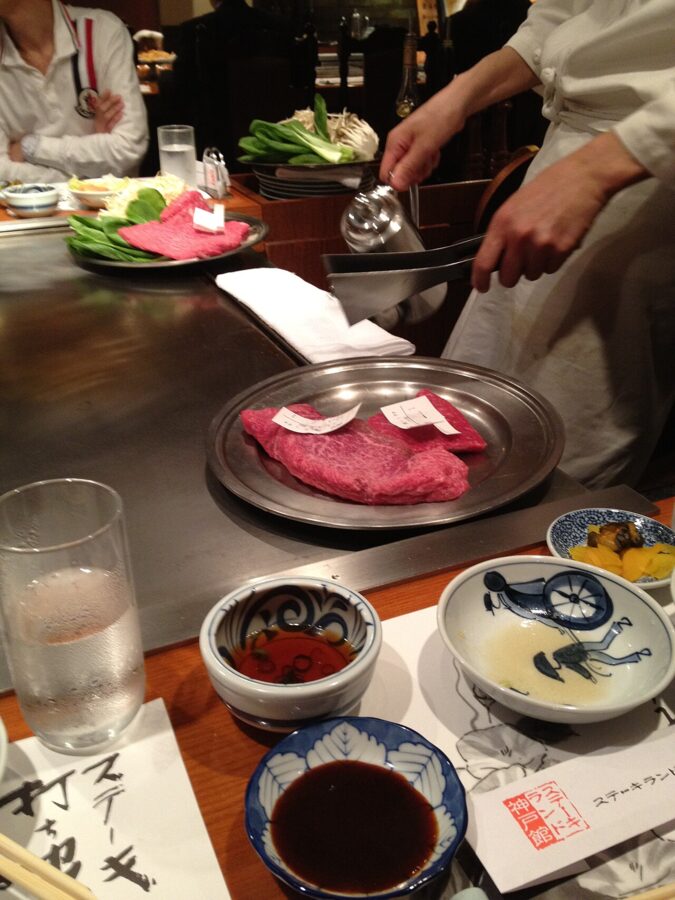
The restaurant version has a documented birthplace. As Misono tells its history, Fujioka Shigetsugu opened an okonomiyaki restaurant in Kobe in 1945 on a griddle from a shipyard. Dancers brought in Occupation soldiers, he grilled Tajima beef steaks for them on the same plate, and the cooking became the show. The steel dome chefs drop over the meat began, Misono says, as a frying pan flipped over a steak to stop fat spitting on the Americans.
Misono also says the word “teppanyaki” first reached English through an American reporter’s interview. It opened in Tokyo in 1960 and Osaka in 1962, before Benihana.
Shichirin
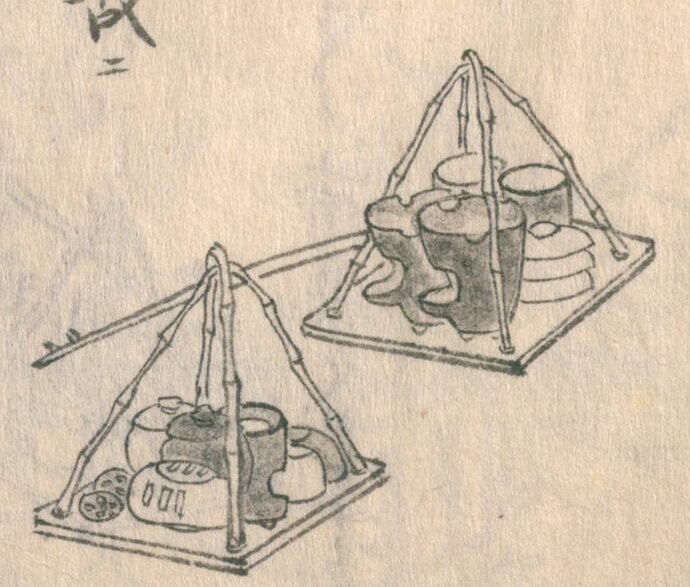
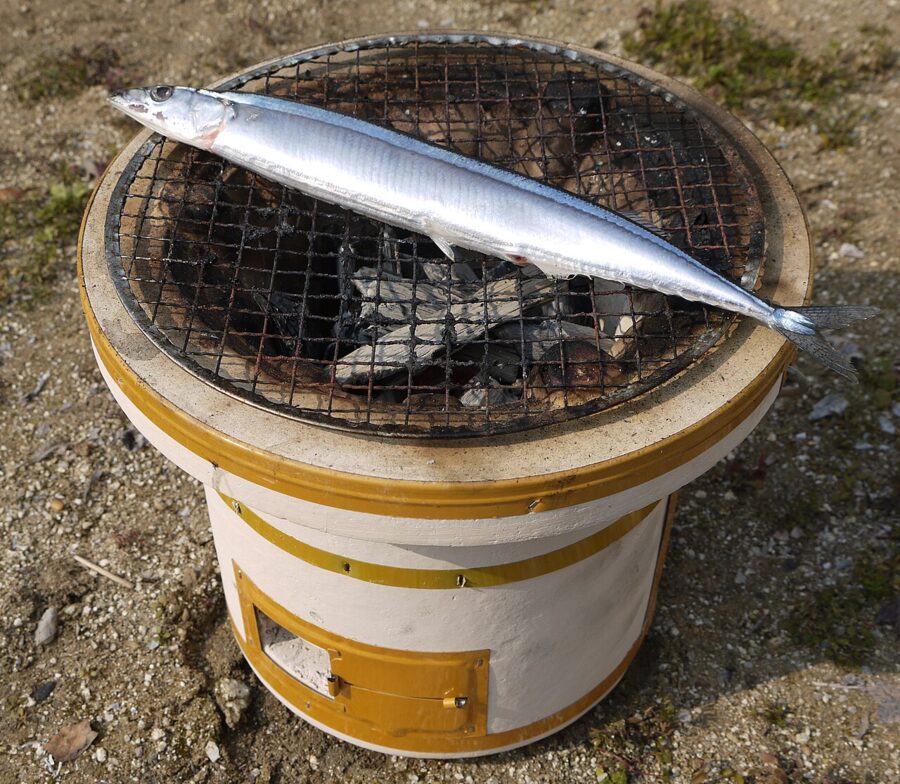
The shichirin is the clay stove Americans would call a hibachi grill, and its name is a price tag. 七 is seven and rin (厘) a thousandth of a yen; the dictionaries explain, after the Edo-period Wakun no Shiori, that seven rin of charcoal was enough to cook on it. Heibonsha records another account, a grate with seven kinds of ring, which would suit the spelling 七輪, “seven wheels”. In Kansai it was kanteki, from a word for a hot temper, because it flared so fast.
It spread from the mid-Edo period and was in every household by Meiji. Today it lives at the yakiniku table and in the back yard in autumn, when the saury comes in.
Robatayaki
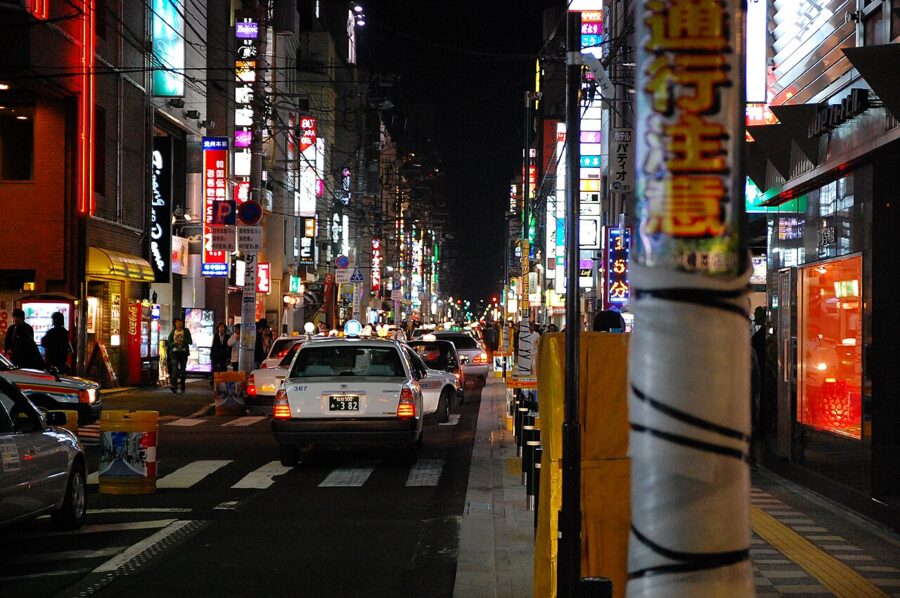
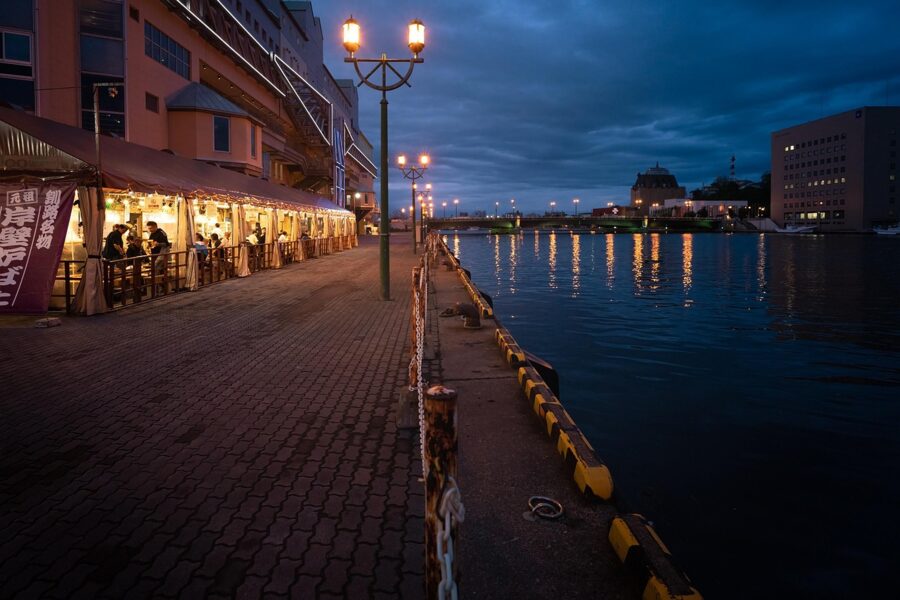
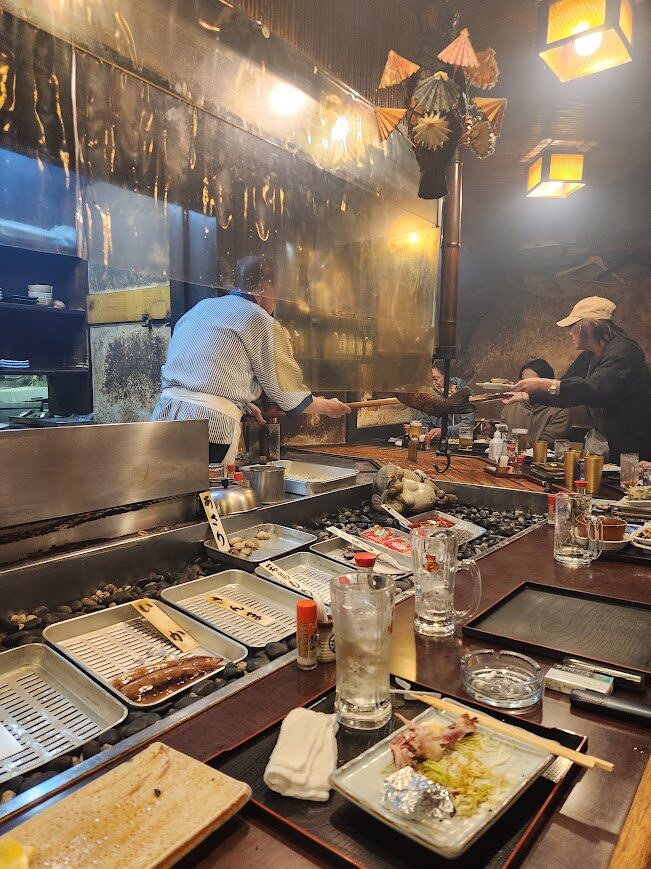
炉端 (robata) is the side of the hearth, so robatayaki is fireside grilling: fish, meat and vegetables cooked over a charcoal hearth in front of you and served across the counter. It is the nearest thing in Japan to the American show, but the theatre is in the grilling.
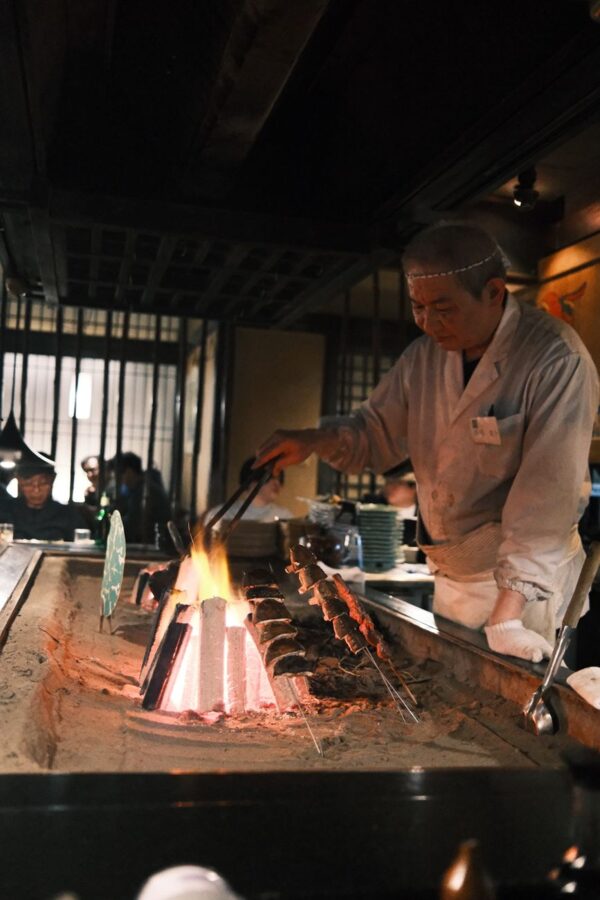
Sendai usually gets the credit for the first robata restaurant, in its Kokubunchō drinking quarter after the war. Kushiro, on Hokkaido‘s Pacific coast, calls itself the birthplace, tracing its robata to a shop opened in the late 1950s. I have not found a record that settles it.
Yakiniku
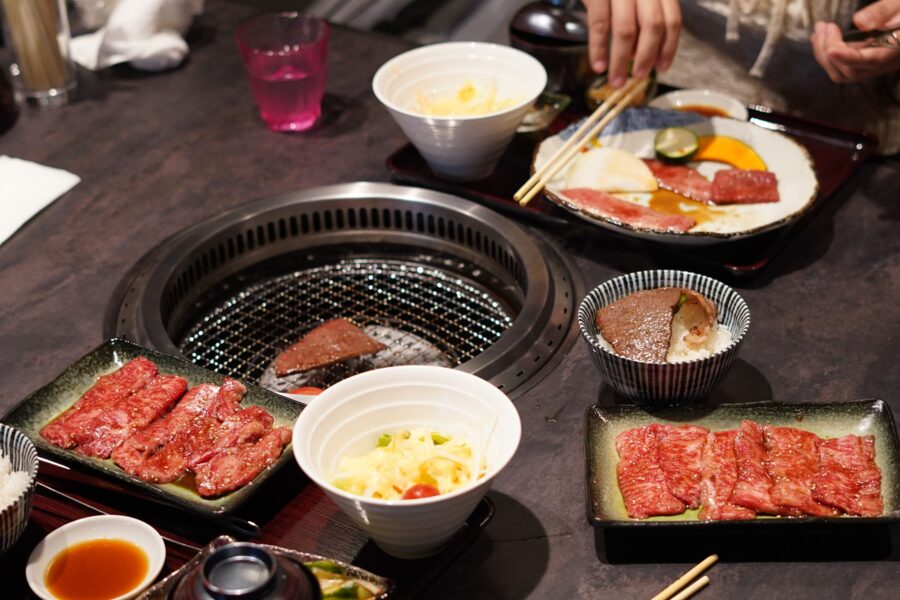
焼肉 is simply “grilled meat”. The Nihon Kokugo Daijiten finds it in an 1872 Western cookery book by Kanagaki Robun, glossing baked minced mutton. Today it means beef and offal grilled at the table by the diners, over gas or in a shichirin. Nobody performs; you burn the first piece and learn.
At a teppanyaki counter in Japan
A good teppanyaki restaurant in Japan feels closer to a sushi counter than a birthday party. The chef works a long steel plate in front of a few guests, and the meal is a set course: a starter, seafood and vegetables, a salad, the steak, rice or garlic rice with pickles and miso soup, then dessert. Nobody throws shrimp at you.
Prices follow the beef. At Misono in Kobe, as of November 2026, the cheapest lunch, a 100 g wagyu fillet set, costs ¥8,250 (about $55) with tax. A 150 g A4 wagyu loin course is ¥12,100 (about $80) and the Kobe beef version ¥25,300 (about $165), with 10% service added in the evening. The Kobe restaurant serves 11:30 to 14:30 and 17:00 to 22:00, closed 30 December to 3 January; go at lunch.
Two questions Americans ask have Japanese answers. The best meat is wagyu loin or fillet, graded A4 or A5. And you can do it at home: a heavy steel plate on a gas ring does the teppan’s job, and a shichirin on the back step does the charcoal’s, as long as it stays outside.
Where to see an old hibachi
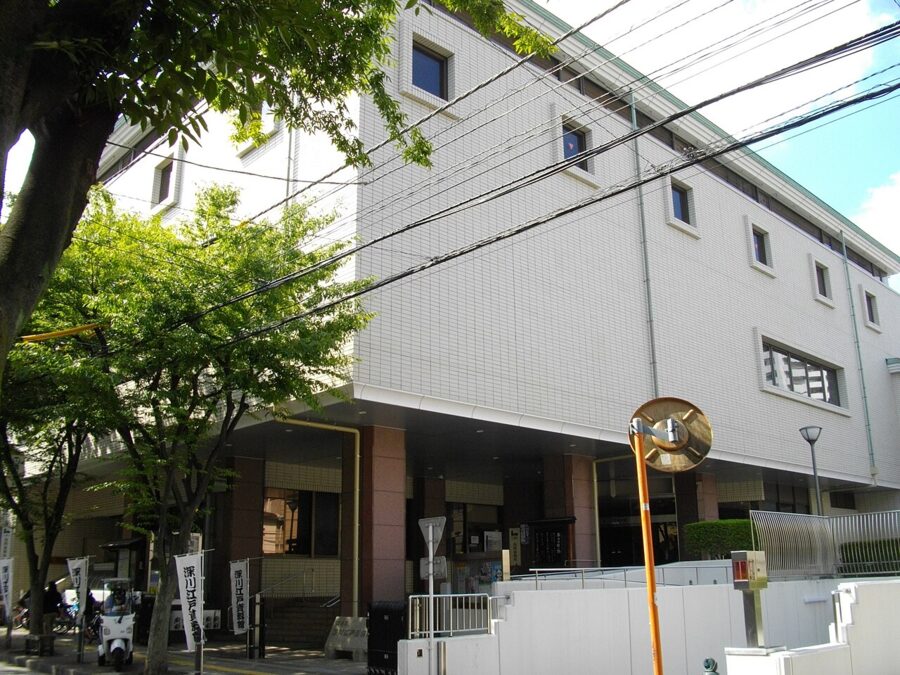
The best place is a museum you can walk into. The Fukagawa Edo Museum in Kōtō ward rebuilds a street of Fukagawa in the 1830s at full size, shops, a boatman’s inn and a back-alley tenement, and lets you take your shoes off and step inside. The braziers sit where they would have been, cushions drawn up.
- 9:30 to 17:00, last entry 16:30; closed second and fourth Mondays (unless a holiday) and 29 December to 3 January; galleries closed 21 December 2026 for an exhibit change.
- Adults ¥500 (about $3), school pupils ¥100, as of November 2026.
- Three minutes from exit A3 of Kiyosumi-shirakawa station.
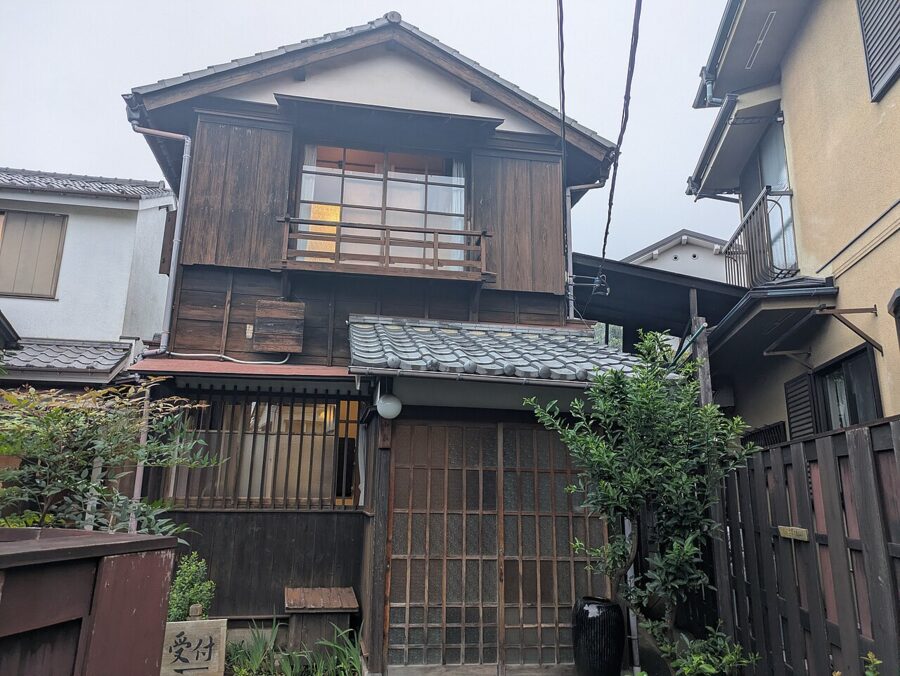
For the 20th century, the Showa no Kurashi Museum in Ōta ward is the Koizumi family’s house of 1951, shown with its belongings. Koizumi Kazuko, the furniture historian who wrote Heibonsha’s hibachi entry, is the name behind it. It opens Fridays, weekends and holidays, 10:00 to 17:00, eight minutes’ walk from Kugahara or Shimomaruko stations; the cash admission was revised in April 2026, so check it before you go.
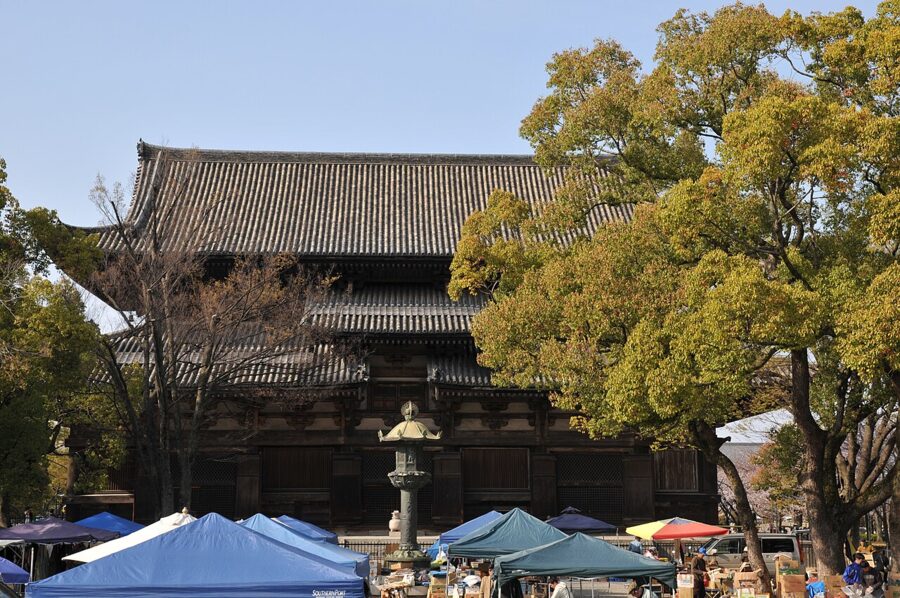
To buy one, go to a market. The Oedo Antique Market fills the plaza of the Tokyo International Forum by Yūrakuchō station twice a month, 9:00 to 16:00, with over 250 dealers and free entry; the next dates are 12 and 20 December 2026. In Kyoto, the Kōbō-ichi at Tō-ji on the 21st of every month brings close to 1,000 stalls. Ceramic hibachi are heavy, so think about your luggage first.
Ask for “hibachi” in Kobe and you will be sent to an antique shop. Ask for teppanyaki and you get the steak, the steel and the chef. The fire bowl is at the back of the antique shop, full of old ash, waiting for someone to put a kettle on it.