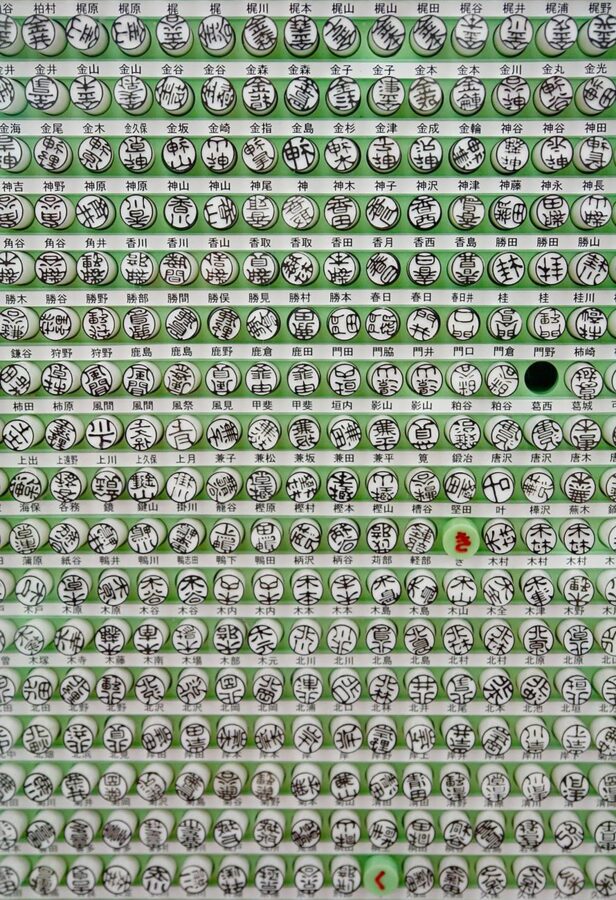
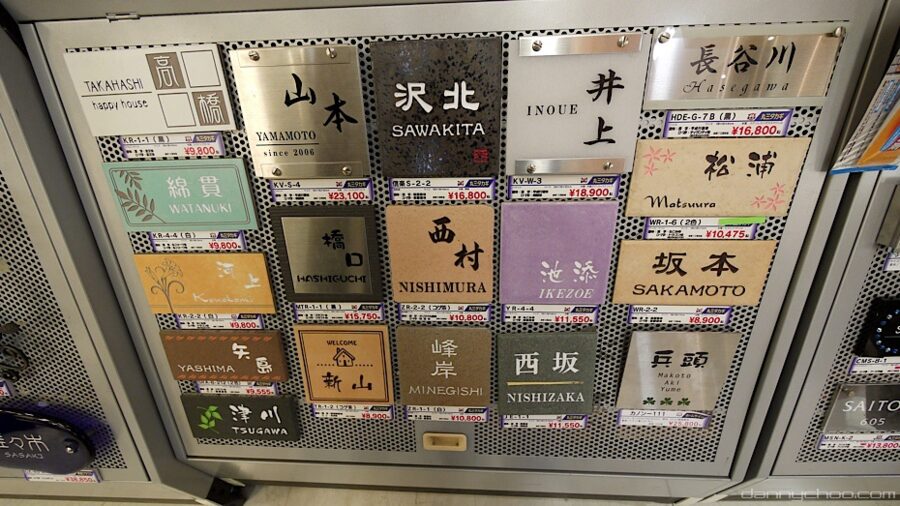
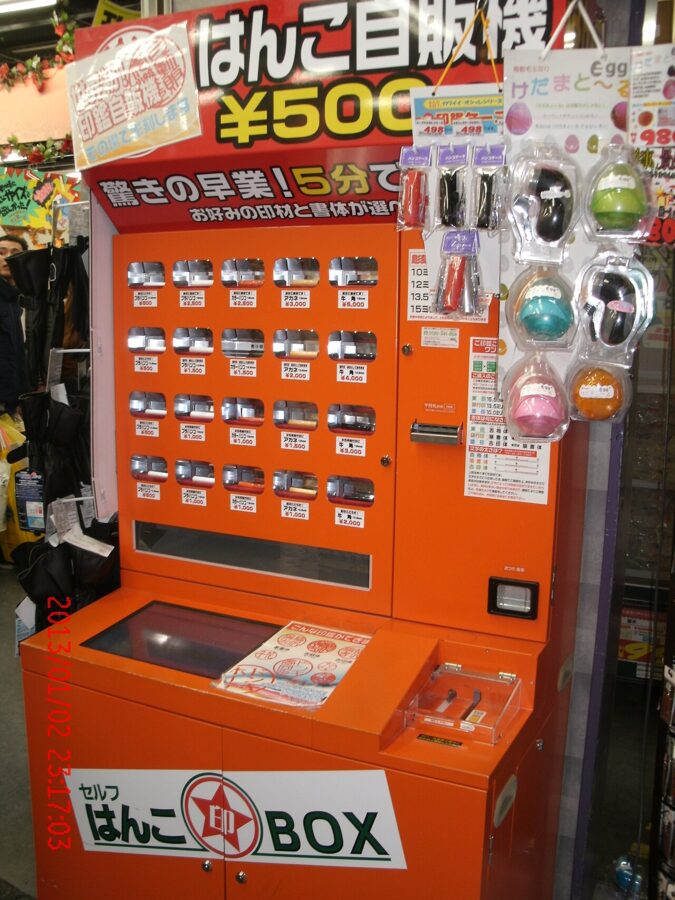
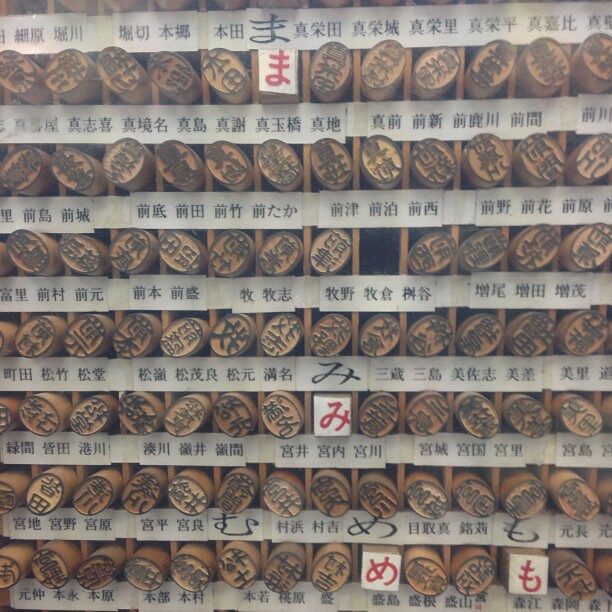
The rack of ready-made name seals in a Japanese stationery shop reads like a surveyor’s notebook. Field, mountain, river, bridge, village: 田, 山, 川, 橋, 村, carved into the ends of little cylinders, sorted by sound so that a Yamada or a Nakamura can find theirs in a minute. Only the name at the top of the national table breaks the pattern: 佐藤, Satō, is not a place at all. Its second character is wisteria, and the wisteria is a family.
The Japanese word for a family name is myōji (名字), “name characters”. The same sound has an older spelling, 苗字, with 苗, a seedling, standing for descendants; it is the spelling the Meiji decrees used. Forms label the box 姓 (sei), with 名 (mei) for the given name, and the Civil Code calls it 氏 (uji), the old word for a clan.
In this article
How many surnames, and the ten everyone meets
Nobody has a final count. Estimates run from about 100,000 to more than 300,000, and the spread comes from one question: what counts as a separate name? Watanabe can be written 渡辺, 渡邊 or 渡邉, and 上村 can be read Uemura or Kamimura. The onomastician Niwa Motoji, whose dictionary made the largest count, put the figure near 300,000.
The top of the list is crowded. By Myoji Yurai Net’s estimates (2026), the ten commonest names below cover about 12 million people, roughly one person in ten. Satō alone accounts for about one in 70.
| Rank | Surname | Reading | What the kanji say | People (approx.) |
|---|---|---|---|---|
| 1 | 佐藤 | さとう Satō | assist + wisteria (the Fujiwara) | 1.80 million |
| 2 | 鈴木 | すずき Suzuki | bell + tree | 1.75 million |
| 3 | 高橋 | たかはし Takahashi | high + bridge | 1.36 million |
| 4 | 田中 | たなか Tanaka | rice field + middle | 1.29 million |
| 5 | 伊藤 | いとう Itō | Ise + wisteria | 1.04 million |
| 6 | 渡辺 | わたなべ Watanabe | crossing + edge | 1.03 million |
| 7 | 山本 | やまもと Yamamoto | mountain + base | 1.01 million |
| 8 | 中村 | なかむら Nakamura | middle + village | 1.01 million |
| 9 | 小林 | こばやし Kobayashi | small + wood | 1.00 million |
| 10 | 加藤 | かとう Katō | Kaga + wisteria | 0.86 million |
All ten are two characters, which is the normal shape. The map is uneven, too. Satō thickens towards the north-east, Suzuki is densest around Shizuoka and Aichi, and Tanaka and Yamamoto lean west. Hokkaido, settled from 1869 by families from Tōhoku and Hokuriku, carries their names, and the Ainu were entered in the new family registers under Japanese surnames.
Okinawa keeps its own list. Higa (比嘉), Kinjō (金城) and Ōshiro (大城) head it, and the old island readings sit under the mainland ones. In the language of the Ryukyu Islands 城 is gusuku, a walled stronghold, so 金城 was once Kanagusuku; in the modern period it became Kinjō or Kaneshiro, closer to mainland ears.
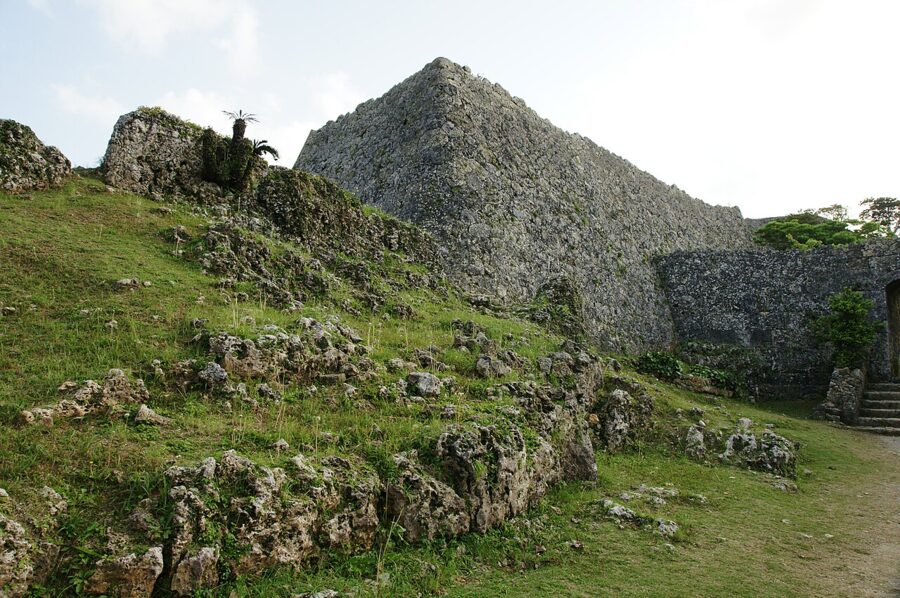
Field, mountain, bridge: what the characters describe
Read the top ten again and most of it is a description of the countryside with a pointer attached. A typical surname takes one thing you could walk to, a field, a hill, a well, and one word of position: above, below, middle, base, mouth.
| Kanji | In surnames | Meaning | Examples |
|---|---|---|---|
| 田 | ta, da | rice field | 田中 Tanaka, 山田 Yamada, 吉田 Yoshida |
| 山 | yama | mountain | 山本 Yamamoto, 山口 Yamaguchi |
| 川 | kawa, gawa | river | 石川 Ishikawa, 中川 Nakagawa |
| 木, 林, 森 | ki, hayashi, mori | tree, wood, forest | 木村 Kimura, 小林 Kobayashi, 森 Mori |
| 村 | mura | village | 中村 Nakamura, 西村 Nishimura |
| 橋 | hashi, bashi | bridge | 高橋 Takahashi, 石橋 Ishibashi |
| 井 | i | well, spring | 井上 Inoue, 石井 Ishii |
| 本 | moto | base, foot | 松本 Matsumoto, 坂本 Sakamoto |
| 島 | shima, jima | island | 中島 Nakajima or Nakashima |
The second column holds the first reading trap. Japanese often voices the first sound of the second word in a compound, rendaku (連濁), so kawa becomes gawa and hashi becomes bashi. Often, not always: 中島 is Nakajima in one family and Nakashima in the next, and both are right.
Most of these names began as place names, and the place names were descriptions first. A family took the name of the hamlet it lived in or the land it held, so 中村 records a village that stood in the middle of something, not a household that chose the word. The gloss of the characters tells you what the ground looked like to whoever named the place, not where your friend’s grandparents farmed. Be wary of English lists of “meaningful” names such as “black swamp”: a real surname has bearers, and many on those lists have none.
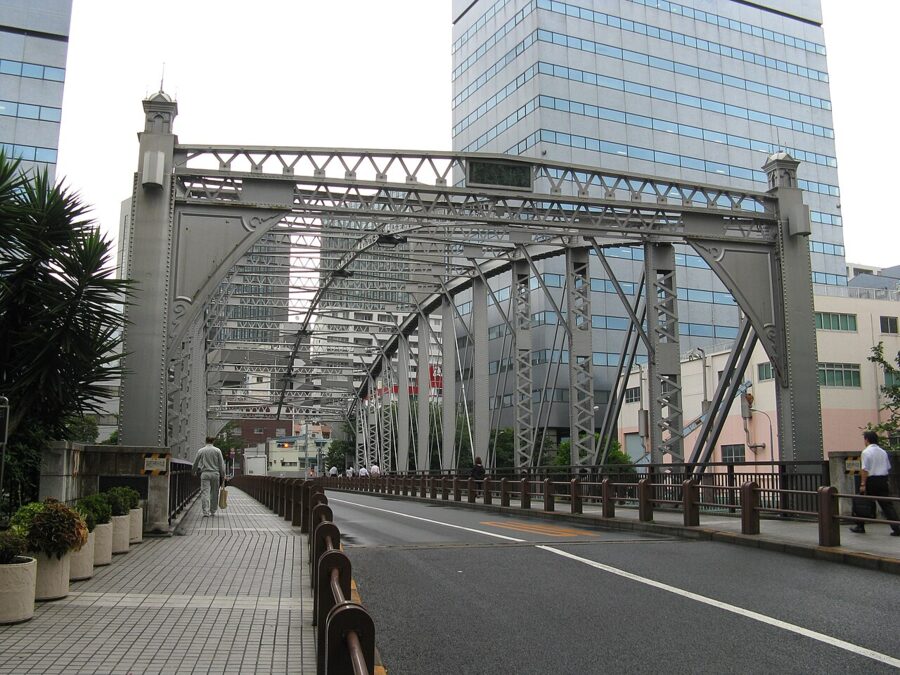
The wisteria names and the Fujiwara
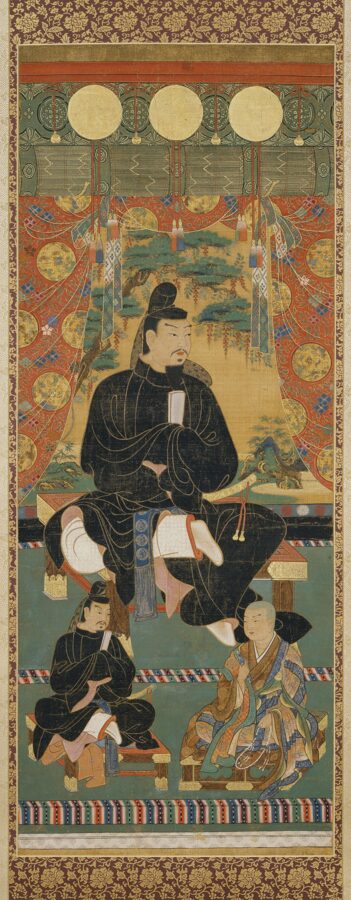
Four of the top ten end in 藤, and the reason is a single court family. In 669 the statesman Nakatomi no Kamatari received a new clan name on his deathbed: Fujiwara (藤原), “wisteria field”. His descendants ran the court for centuries and multiplied, and by the late Heian period there were far too many Fujiwara for the name to tell anyone apart.
The usual account is that branches made new names by pairing 藤 with a character from an office or a province. The dictionaries give 佐藤 as the line of Fujiwara no Kimikiyo, a descendant of the warrior Fujiwara no Hidesato who, like his son and grandson, held the post of saemon-no-jō (左衛門尉): 佐 from the post, 藤 from the clan. 伊藤 is read as the Fujiwara of Ise, 加藤 of Kaga, 近藤 of Ōmi and 遠藤 of Tōtōmi. 斎藤 is said to come from a Fujiwara who headed the office of the Ise high priestess, and 工藤 from one in the palace carpentry office.
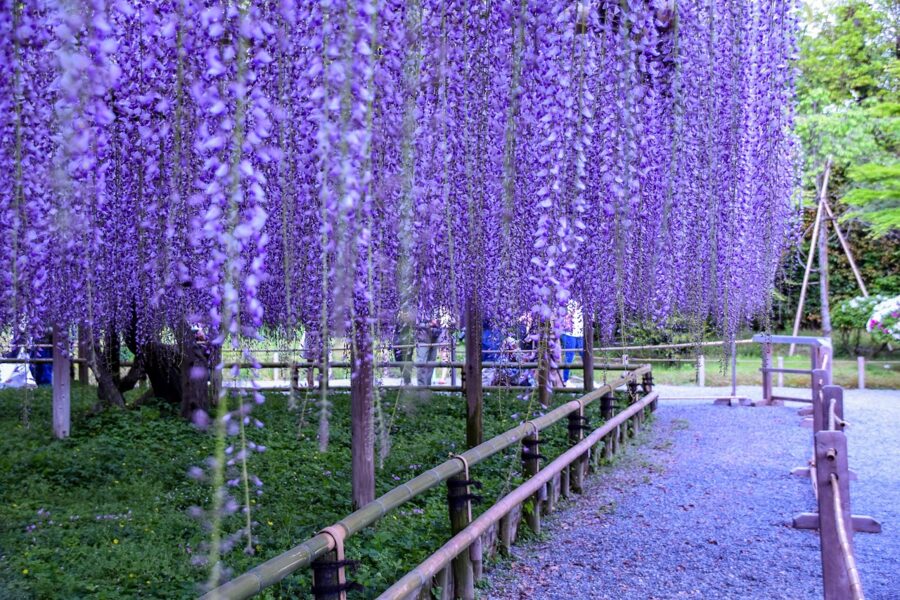
Those are the stories the family trees tell, and they are about the founders. The several million people now named Satō, Itō, Katō and Saitō are not all Fujiwara descendants. Some families claimed a grand line, and in the 1870s, when everyone needed a name at once, a famous one was an easy choice.
Suzuki, Watanabe and Tanaka
Suzuki is “bell tree” on paper, and nobody believes it. The account most sources give starts in Kumano, on the Kii Peninsula, where suzuki is said to have meant rice ears stacked to dry on a pole. A priestly family of the Kumano shrines, the Hozumi (穂積, “piled ears”), carried the name, and as pilgrims and Kumano worship spread across Japan from the late Heian period, so did Suzuki.
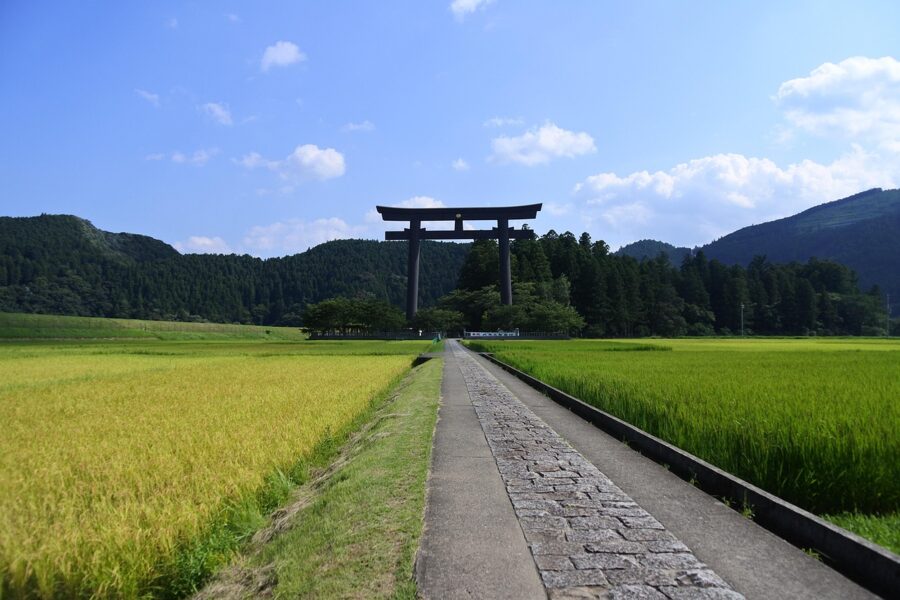
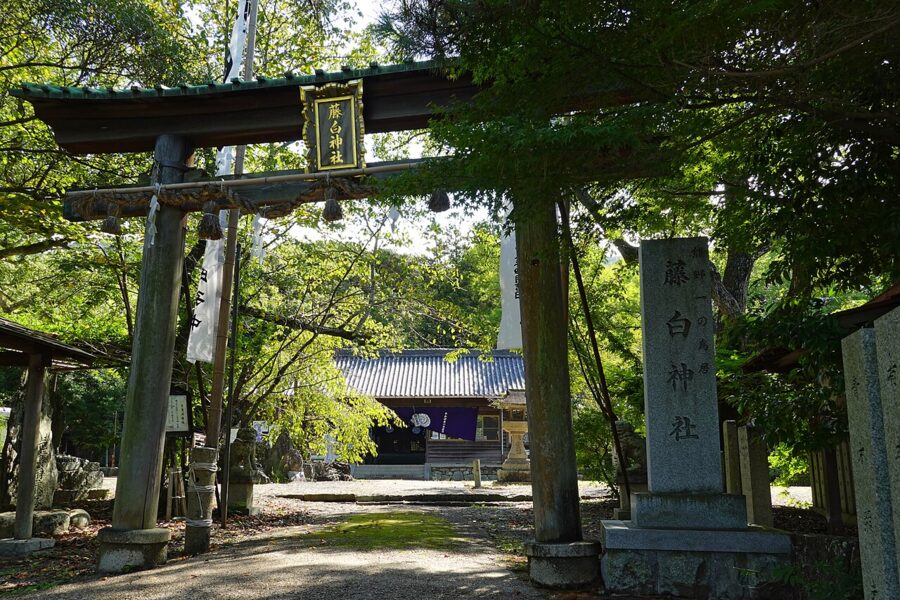
One branch settled at Fujishiro, in present-day Kainan, Wakayama, and Japanese encyclopedias treat it as a main seat of the family. Fujishiro Shrine still stands there.
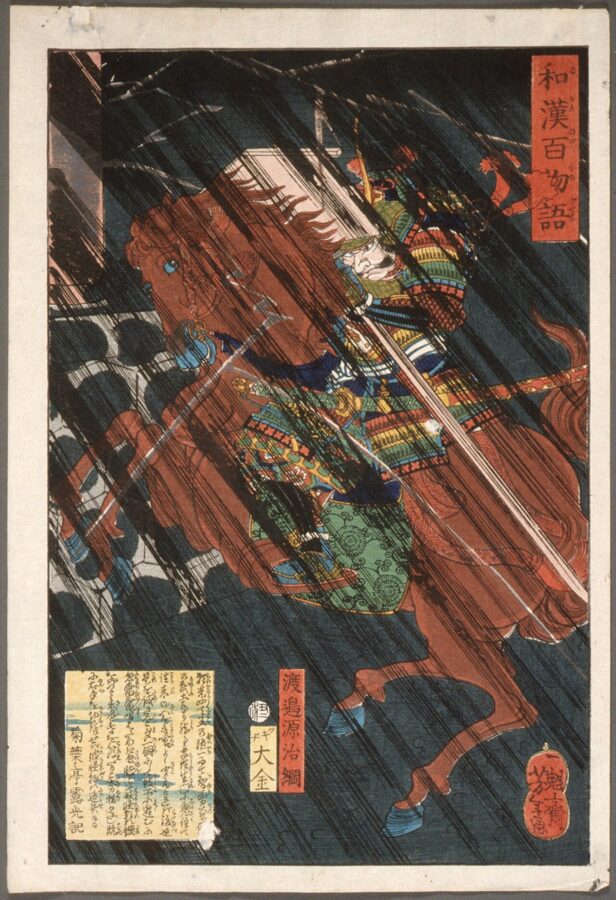
Watanabe is a ferry landing: 渡, to cross, and 辺, the edge. Watanabe was the crossing near the mouth of the Yodo River in Osaka, and the warrior Watanabe no Tsuna, a retainer of Minamoto no Yorimitsu, took his name from it around the year 1000. The older form 邊 and its cousin 邉 survive in many families’ registers, and 邉 alone has dozens of variant forms.
Tanaka needs less explaining: the middle of the fields, a household among the paddies rather than up the slope.
Before 1875: who was allowed a surname
Japan had two kinds of family name. The ancient clan names, uji, such as Minamoto, Taira and Fujiwara, were granted by the court. The emperor, who granted them, had none, and the imperial family still has no surname. Myōji came later, as warrior houses in the Heian and Kamakura periods named themselves after the land they held.
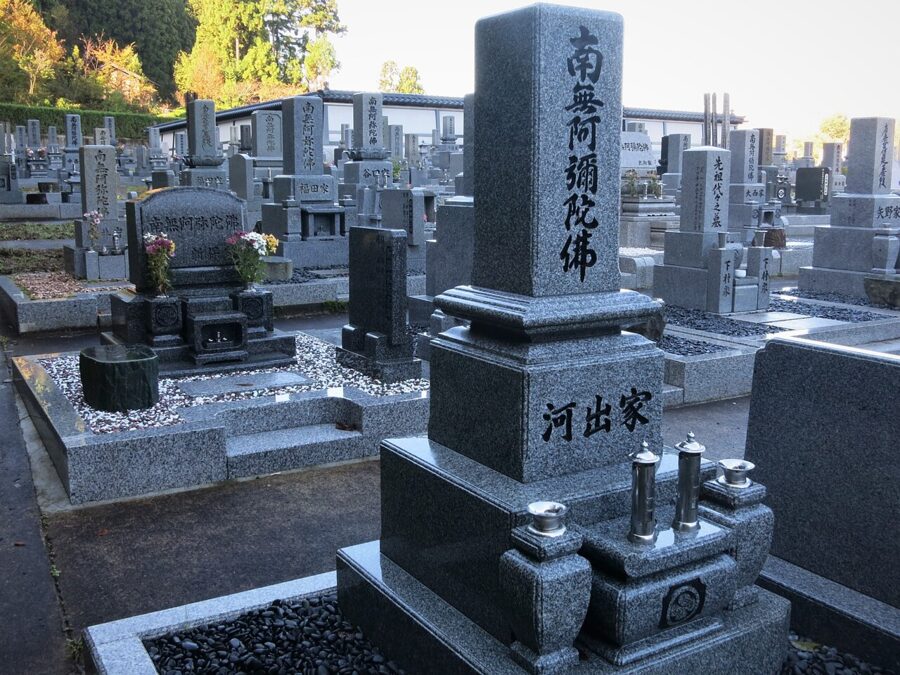
Under the Tokugawa shoguns, using a surname in public was a mark of rank, paired with the right to wear swords in the phrase myōji taitō (苗字帯刀). That has hardened into a belief that farmers and townspeople simply had no surnames. Japan’s National Archives calls this a misunderstanding: non-samurai are recorded with surnames from the Muromachi period on, and many families kept them through the Edo period. They could not use them officially, so village registers listed people by given name and household.
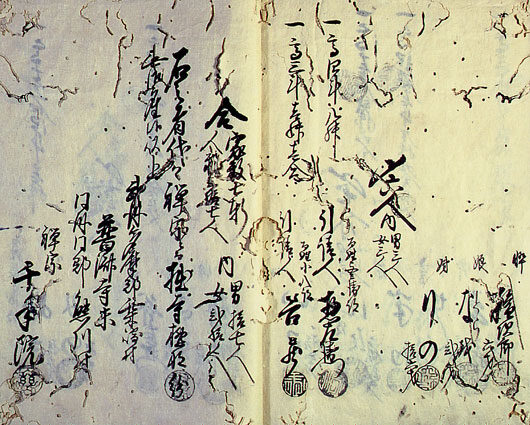
The new government changed that in two steps. On 19 September 1870, in the third year of the Meiji era, a decree allowed commoners to use surnames. Few registered one; the archives note one explanation, that people feared a name on the books would mean more tax. The date is now kept as Myōji no Hi, Surname Day.
So on 13 February 1875 the government made it compulsory. The 1875 decree is two clauses long: from now on everyone must use a surname, and anyone who does not know the surname of their ancestors is to create a new one. The army, which needed names for conscription rolls, is said to have pushed for it.
The archive record is plain: some people asked their temple for a name, and some village offices made up surnames for every household at once. The jollier versions, whole fishing villages named after fish or a registrar naming families after whatever was in view, circulate in books of name trivia. Treat them as stories. Many households simply registered a name they already had, or took the name of their hamlet.
One name, many readings
Every kanji has at least one reading borrowed from Chinese and usually one or more native Japanese ones, and Japanese writing gives no mark to say which applies. Surnames make this worse, because they freeze old readings nobody uses anywhere else. Knowing the common school kanji will not get you through a class register.
Some are fossils. 服部 is Hattori, from hatoribe, the weavers’ guild of the early court. 長谷川 is Hasegawa because old poems called Hatsuse in Nara “the long valley”, 長谷, and the epithet’s characters took the place’s own name, shortened to Hase, as their reading. 日下, Kusaka, went the same way.
Others are riddles. 小鳥遊, “little birds play”, is read Takanashi: where small birds play, there are no hawks, taka nashi. 四月一日, “the first of April”, is Watanuki, “cotton out”, the day the padding came out of winter kimono. Both are real and both are rare, which is why they turn up in every Japanese list of hard names.
Then there is 東海林, “east sea grove”, which most bearers read Shōji and some read Tōkairin. The reverse problem is just as common. Saitō can be 斎藤, 齋藤, 齊藤 or 斉藤, and Abe can be 阿部, 安倍 or 安部. Hearing the name does not give you the spelling, and seeing it does not give you the sound.
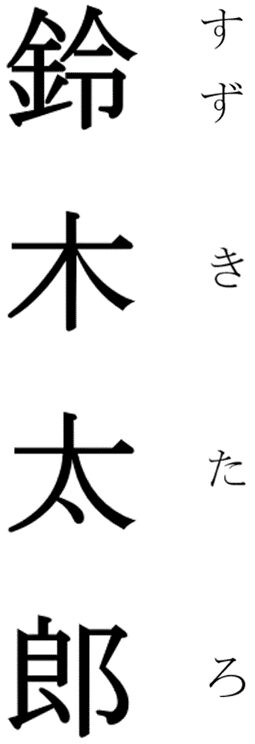
Dictionaries list a special class of readings used only in names, nanori (名乗り). They are mostly for given names: 和 as kazu, 義 as yoshi. Surnames add their own, and 上 alone opens names read Ue, Kami or Uwa. That is why every Japanese form has a second box marked フリガナ for the reading in katakana, or ふりがな in hiragana.
Readings in the family register
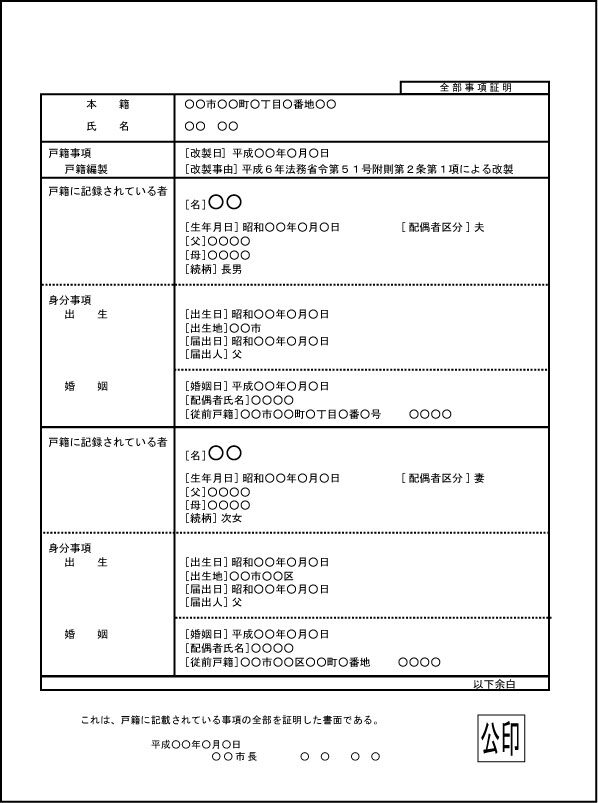
Until recently the family register, the koseki (戸籍), recorded only the characters. An amendment in force from 26 May 2025 added a katakana reading for every surname and given name. Town halls posted each household the reading on file, with until 25 May 2026 to correct it; where nobody wrote in, the notified reading goes into the register, and it can be changed once without a family court.
Family name first, now in English too
In Japanese the family name comes first: Satō Hanako, never Hanako Satō. From the Meiji period on, though, names were usually flipped into Western order in English.
The National Language Council recommended family-name-first romaji in 2000, and little changed. On 25 October 2019 the government agreed that its own documents would use it, starting on 1 January 2020, and asked others to follow where they could. The prime minister of the day became Abe Shinzō in government English. Capitals, ABE Shinzō, remove any doubt.
Practice is still mixed: companies, athletes and many newspapers flip names. In 2025 the government replaced its 1954 romanisation rules with Hepburn-based spellings, and the Agency for Cultural Affairs’ guidance asks that people’s own spellings of their names be respected. That is why one family writes Sato, another Satō and a third Satoh, and none of them is wrong.
Sato-san: how to address someone
Address people by family name plus san (さん): Satō-san, whatever the person’s sex or marital status. Given names are for children, close friends and family. Shops use the more formal sama; teachers and doctors get sensei. Never attach san to your own name.
One surname per marriage
Article 750 of the Civil Code says that a married couple takes the surname of the husband or of the wife, as they decide at marriage. In practice around 95 per cent choose the husband’s. It is not an ancient custom. An 1876 government ruling said a wife kept the surname she was born with; the Meiji Civil Code of 1898 moved her into her husband’s house and its name; and the post-war code of 1947 kept one name per couple but let either spouse’s name be the one.
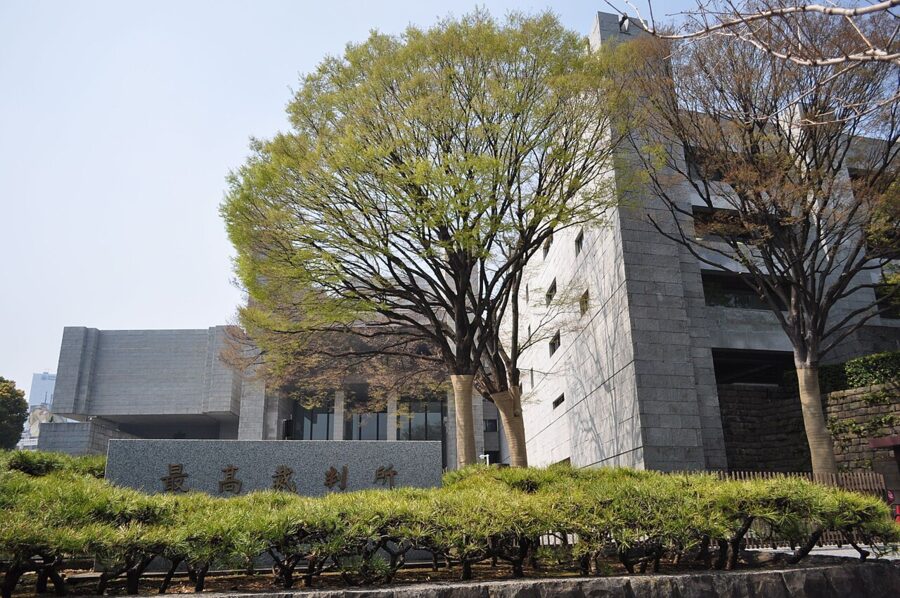
The Supreme Court has twice upheld the rule. On 16 December 2015 the Grand Bench found it constitutional, with five of the fifteen justices finding it unconstitutional. On 23 June 2021 it did so again, with four finding it unconstitutional, and the majority added that the design of the system was for the Diet to decide. The 2021 decision also weighed how far using a maiden name at work softens the burden.
The argument has run for three decades. The Legislative Council, which advises the justice minister, recommended letting couples keep separate surnames in 1996, and the bill never came. The Justice Ministry acknowledges that Japan is the only country that legally requires spouses to share a surname, and a Kyodo poll in May 2025 found 71 per cent in favour of the option. Bills to allow it reached a Diet committee in 2025 and went no further.
The government of Takaichi Sanae has taken the other road: keep one surname in the register and give maiden names used day to day a footing in law. As of late October 2026 that bill had not been submitted, and NHK reported that the government and ruling parties saw little chance of it in the current session.
In 2024 Yoshida Hiroshi, an economist at Tohoku University, put the stakes as a thought experiment: if one name per couple continues and Satō keeps growing at its recent pace, everyone in Japan would be Satō by about 2531. It is arithmetic, not a forecast.
How to read a Japanese name card
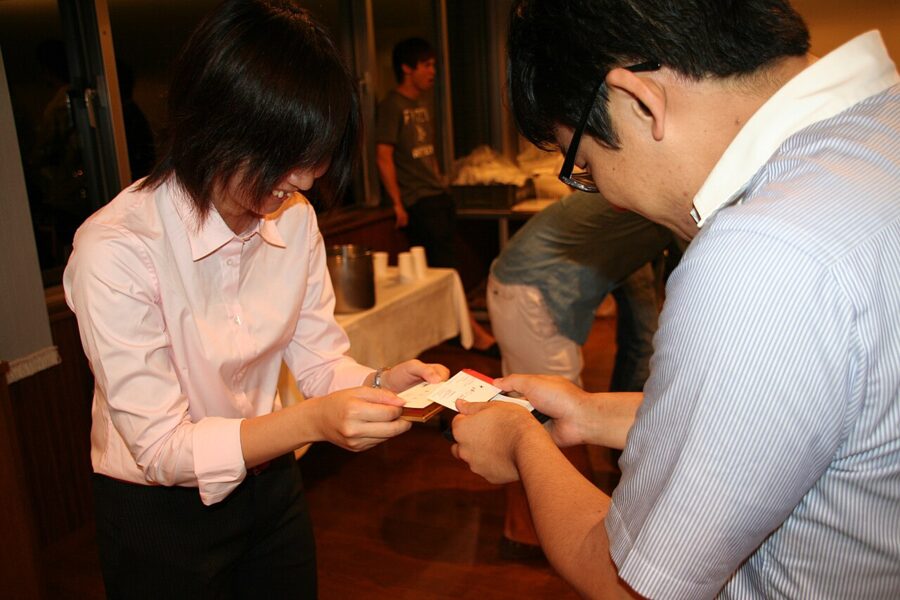
The meishi (名刺), the business card, is where most visitors first meet a Japanese name in writing, and it usually does the work for you:
- The name in kanji, family name first. It is the largest text, usually with a space after the surname: in 佐藤 花子 the first block is the family name.
- The reading. Look for small furigana above the kanji, or a romaji version on the back. The romaji side often flips the order, so look for capitals: SATO Hanako, or Hanako SATO.
- When there is no reading, ask. O-namae wa nan to o-yomi sureba ii desu ka?, “How should I read your name?”, is a normal question that every Shōji has heard.
Take the card with both hands, read it before you put it down, and keep it on the table in front of you through the meeting. Then use the name: Satō-san, not Hanako.
The next card you are handed will probably carry a field, a mountain or a wisteria. Read the two characters before the reading, and you will know what the place looked like a thousand years ago, even if the owner has never seen it.