Food and Drink

A Japanese menu sorts itself once you can read the endings: -yaki is grilled, -don is a bowl of rice with something on top, -nabe is cooked in a pot, -zushi is vinegared rice. The name usually tells you how a dish is made before it reaches the table.

Each dish is read by its name first and then eaten: what goes in it, how it is made, how it tastes and where it is served, with a short home method where one helps. The ingredients and seasonings, the sweets, the tea and the drinks follow the same way.

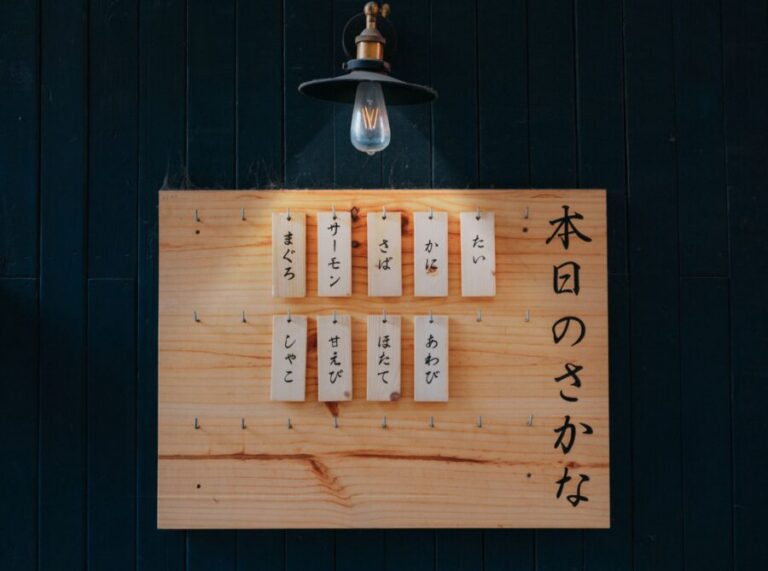
Wooden menu tags written in Japanese hanging on a restaurant wall under a lamp

Japanese Food by Name: Reading the Words on a Menu

How Japanese dish names are built, from the cooking endings -yaki, -age, -ni and -don to the pantry words dashi, shoyu, miso and mirin, plus what washoku and its UNESCO listing mean and the words you need to read a menu.
Start here
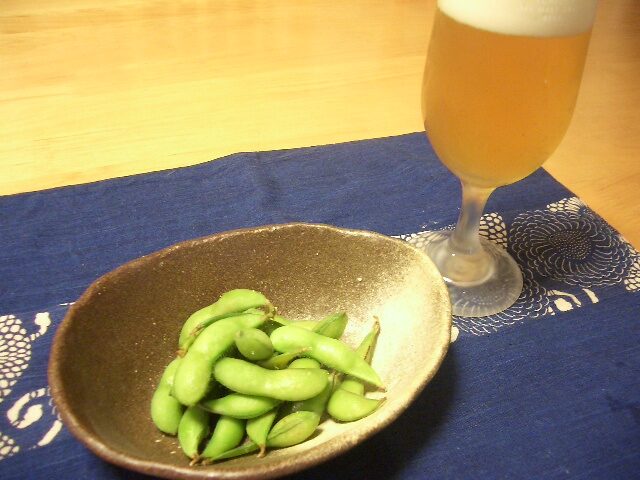
A small dish of boiled edamame beside a glass of beer on a blue tablecloth in Japan

What Is Edamame? The Word, the Bean and How to Eat It

Edamame means branch beans: young soybeans once sold on the stalk. The two kanji taken apart, the autumn bean moon, dadachamame, kurosaki chamame and Tanba black edamame, zunda in Sendai, how to boil them and how the word reached English.

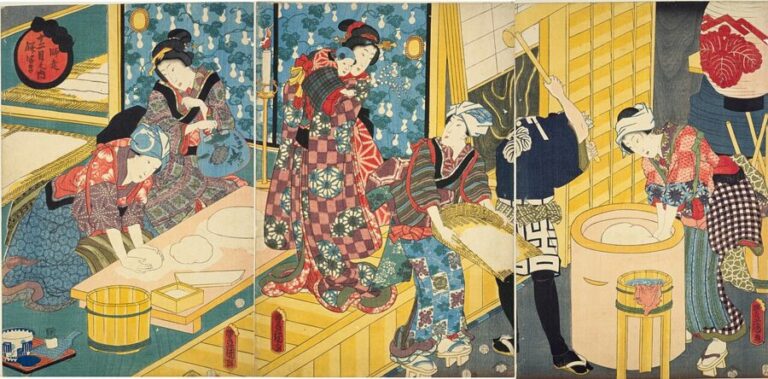
Utagawa Kunisada woodblock triptych of an Edo household pounding mochi in December, 1854

Mochi: Pounded Rice and Everything Made From It

Mochi is glutinous rice steamed and pounded, written with a character that means a wheat cake in Chinese. How it is made, kagami mochi and ozōni at New Year, the sweets from daifuku to dango, savoury mochi, the January choking warnings and where to see it pounded.

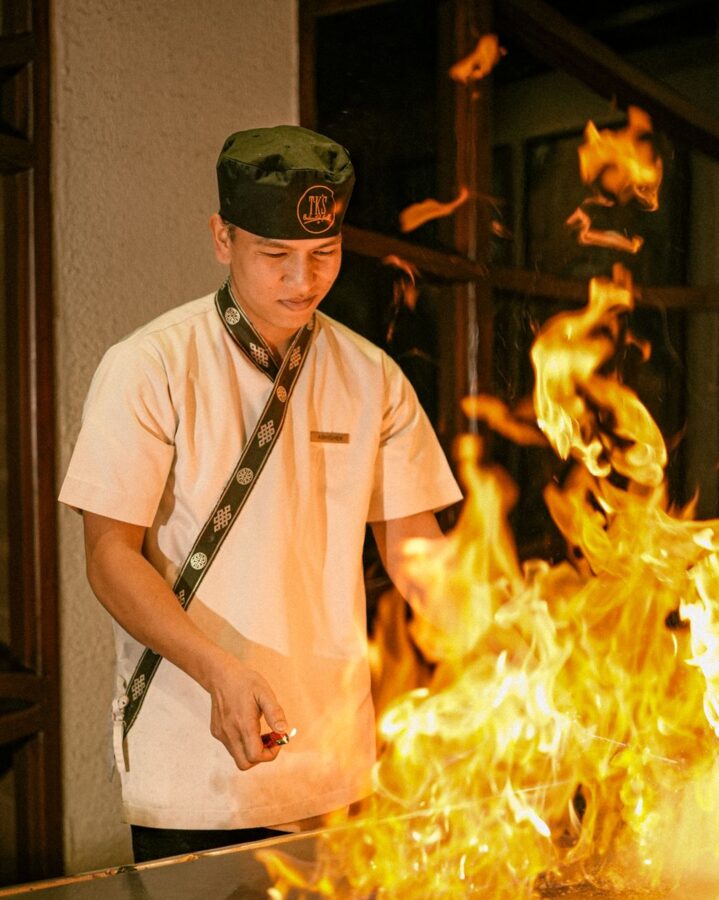
A hibachi chef at an American-style griddle table sending up a burst of flame

Hibachi: the Fire Bowl That Became a Griddle Show

Hibachi (火鉢) is a charcoal brazier, fire plus bowl, that warmed Japanese rooms for centuries. How the word came to mean an American griddle show, what Japan calls teppanyaki, shichirin and robatayaki, and where to see an old one.

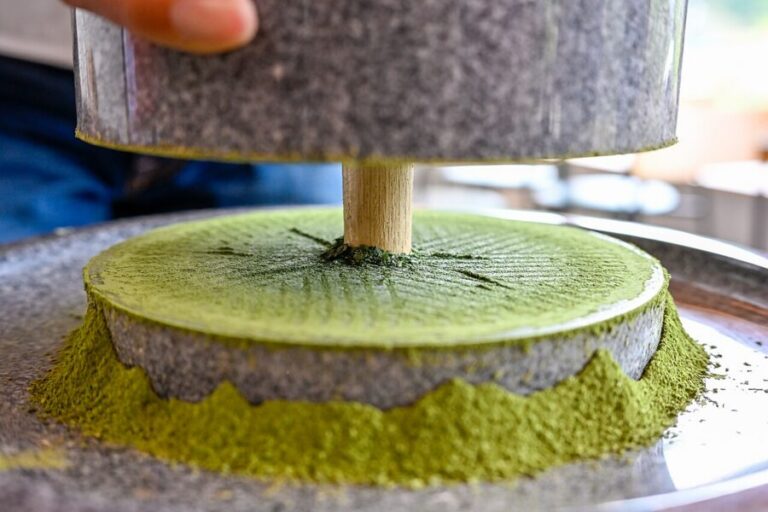
Granite stone mill grinding tencha leaves into fine green matcha powder in Uji, Kyoto Prefecture

Matcha: the Word, the Leaf and the Grades

What 抹茶 means, how shaded tencha is steamed, dried and stone-milled into matcha, where it grows, what "ceremonial grade" does and does not mean, how to whisk usucha and koicha, and what the 2024 to 2026 shortage did to prices.