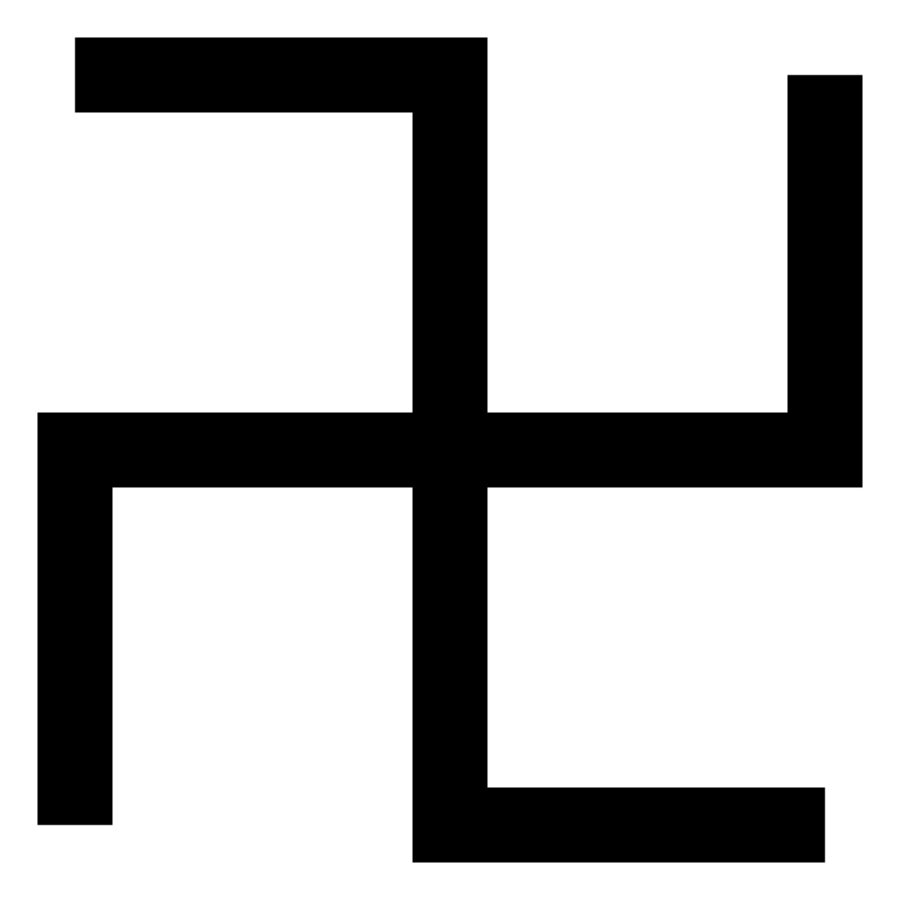
On a Japanese topographic map a Buddhist temple is drawn as 卍, a police box as an X of two crossed batons, and a post office as a circled テ, the first sound of the ministry that ran the mail when the mark was chosen in 1887. Each of them can be read aloud. That is the most useful thing to know about Japanese symbols: most of them began as words, and plenty still are.
Japanese has two words where English makes do with one. A kigō (記号) is a mark that stands in for something by agreement: 〒, a circle for “right”, the green running man over a fire door. A shōchō (象徴) stands for an idea, the way the crane stands for long life. The second word is young: the translator Nakae Chōmin coined it in the 1880s for the French symbole, and the 1947 Constitution uses it in its first article for the emperor, “the symbol of the State”.
In this article
Kanji as symbols: what the tattoo favourites really say
Ask for “the Japanese symbol for strength” and you will be handed 力. It is a real character, one of the kanji of the Japanese writing system, and it does mean power. But a Japanese reader does not see an emblem. They see a word, read ちから (chikara), in the way you would read STRENGTH printed across a stranger’s back.
Each kanji has readings, and many are not words on their own but pieces that only make sense inside compounds. Some are taught to seven-year-olds as kyōiku kanji, the school list; the warrior vocabulary sits in the secondary-school part of the jōyō list. Here are the dozen asked about most, and what they say to someone who reads them every day.
| Kanji | Readings | What it says in Japanese | Before you ink it |
|---|---|---|---|
| 愛 | アイ (ai) | love, affection; 13 strokes, grade 4 | Fine. Simplified Chinese 爱 drops the 心 (heart) inside. |
| 力 | リョク (ryoku), リキ (riki); ちから (chikara) | power, strength; 2 strokes, grade 1 | Badly drawn, it becomes the katakana カ (ka). |
| 夢 | ム (mu); ゆめ (yume) | dream, asleep or awake; 13 strokes, grade 5 | Covers ambition too, as in English. |
| 和 | ワ (wa); やわ.らぐ (yawaragu), なご.む (nagomu) | harmony, peace; also “Japanese”; 8 strokes, grade 3 | Alone, it often reads as “Japan”. |
| 侍 | ジ (ji); さむらい (samurai), はべ.る (haberu) | to wait on a superior; samurai; 8 strokes, secondary school | The root sense is service, not fighting. |
| 忍 | ニン (nin); しの.ぶ (shinobu) | to endure; to hide; 7 strokes, secondary school | In 忍者 (ninja), and in 残忍 (zannin), cruelty. |
| 心 | シン (shin); こころ (kokoro) | heart, mind; 4 strokes, grade 2 | Safe, and a word on its own. |
| 美 | ビ (bi), ミ (mi); うつく.しい (utsukushii) | beauty; 9 strokes, grade 3 | Also in 美味しい (oishii), tasty. |
| 魂 | コン (kon); たましい (tamashii) | soul, spirit; 14 strokes, secondary school | In 大和魂 (yamato-damashii), a phrase with wartime baggage. |
| 勇 | ユウ (yū); いさ.む (isamu) | courage; 9 strokes, grade 4 | Usually met as 勇気 (yūki), courage. |
| 福 | フク (fuku) | good fortune, blessing; 13 strokes, grade 3 | Upside down, it is a Chinese custom. |
| 竜 / 龍 | リュウ (ryū); たつ (tatsu) | dragon; 竜 has 10 strokes, 龍 has 16 | 竜 is everyday Japanese; 龍 the older form. |
侍 and 忍: the two that surprise Japanese readers
侍 is a person (亻) beside 寺, and its first dictionary meaning is to attend a person of rank. The verb saburau, to wait on someone, gave the noun samurai: by name, a retainer. Historians mostly say 武士 (bushi) for the warrior class, so a lone 侍 on a forearm reads a little like “butler” with a sword.
忍 is a blade (刃) over a heart (心). It means to bear pain, and from there to keep out of sight, which is how it got into 忍者. It is “endure”, not “stealth warrior”.
How a kanji tattoo goes wrong
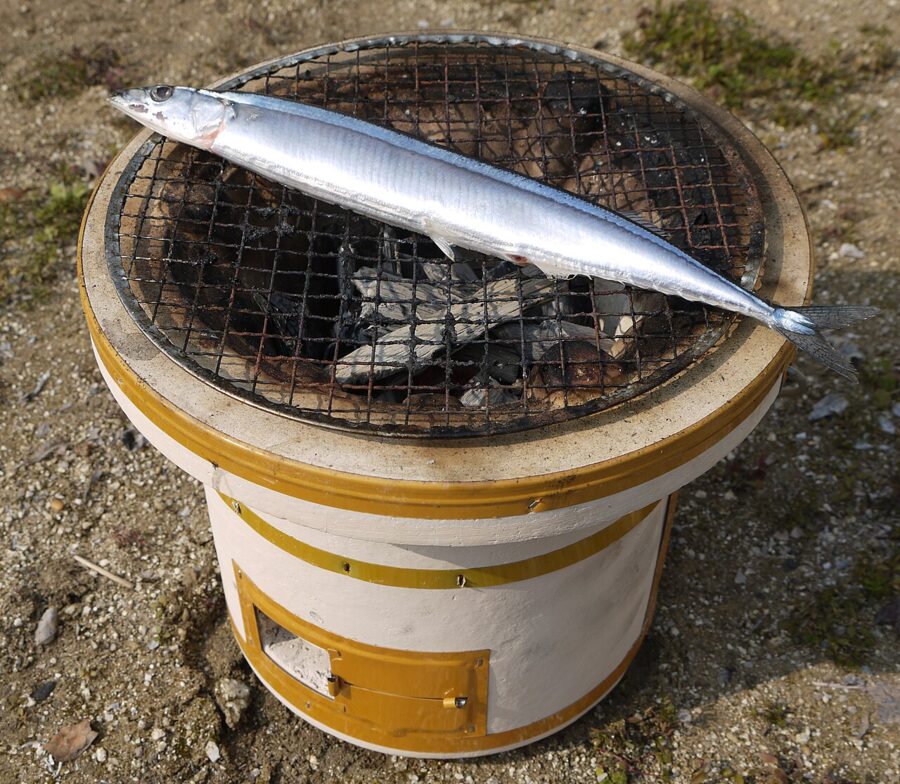
The most famous recent case is a pop singer’s 2019 palm tattoo, 七輪, meant as “seven rings”. Japanese readers know the word shichirin (七輪) as a small clay charcoal stove, the kind you grill fish on. The characters were correct; the word was a different word.
Other failures are quieter: a character in mirror image or missing a stroke, a simplified Chinese form where the Japanese was wanted, two kanji that make no word together. The “Japanese letters” fonts sold online, with 乇 for E and 卂 for A, are real characters picked for their outline, and to a reader they are gibberish.
How to check a character before it is permanent
- Ask for a word, not a letter. Japanese says “courage” as 勇気, not as 勇 on its own.
- Look it up in a published Japanese dictionary, with its kana reading, and read the example compounds.
- Check which language you are writing. 愛 and 爱 are the same word in two scripts; pick one on purpose.
- Have a native reader check the final stencil, at the size and in the font it will be inked.
Map symbols: 卍, the torii and two crossed batons
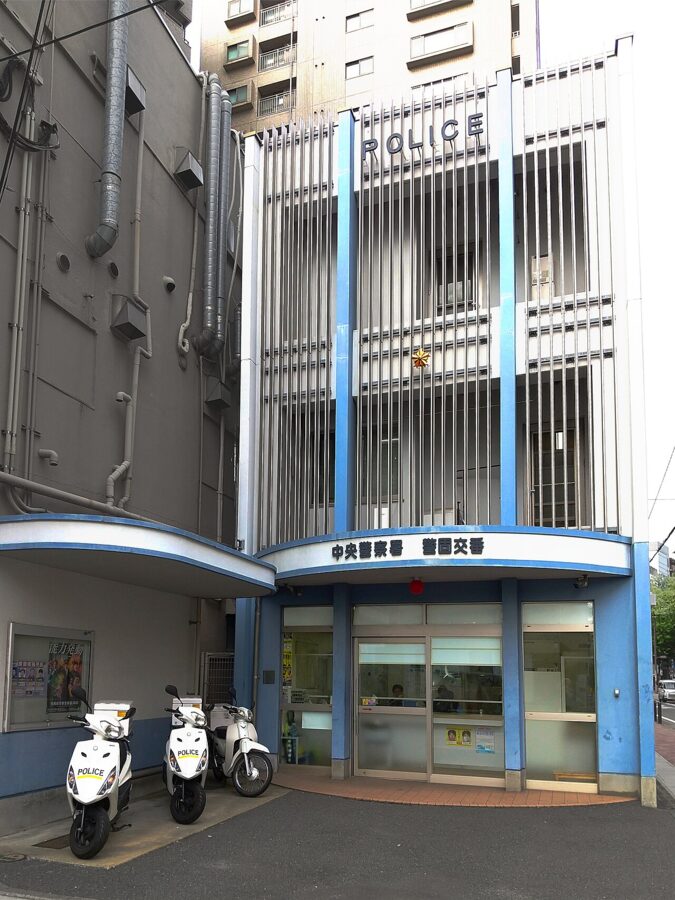
Japan’s map symbols, chizu kigō (地図記号), are set by the Geospatial Information Authority of Japan, and every schoolchild learns them. They are pictures of words. The police box is two crossed six-foot batons, the post office is テ in a circle for 逓信省 (Teishinshō), the old Ministry of Communications, and the hospital is the mark of the old army medical corps.
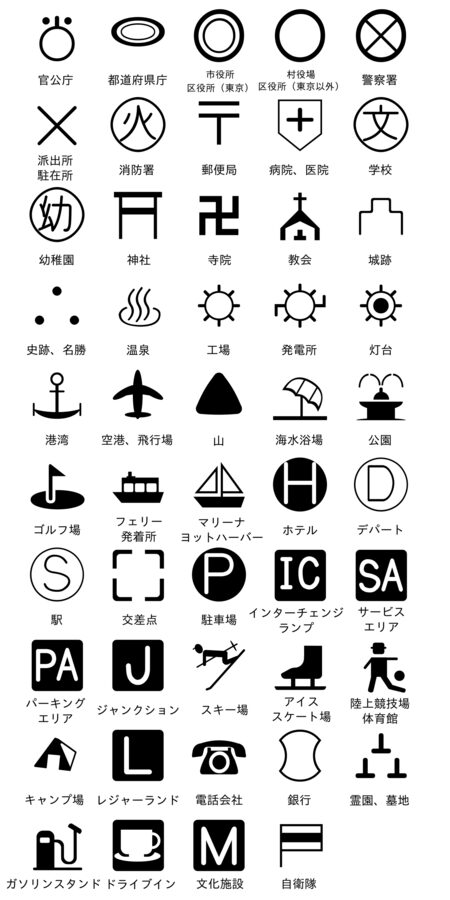
The temple mark is the old Buddhist sign manji (卍). Dictionaries trace it to an auspicious mark on the chest of the Buddha and, before that, of Vishnu, and in Japan it has meant “temple” for centuries. Japan uses the left-turning form, drawn flat. The Nazi emblem is the mirror image, 卐, stood on its corner.
In January 2016, after surveying about 1,000 foreign visitors, embassy staff and students, the GSI published 18 draft symbols for foreign-visitor maps. The draft replaced 卍 with a three-storey pagoda, because so many respondents read it as Nazi. The news travelled abroad, and there was pushback at home. When the final list came out in March 2016 it had 15 symbols and no temple at all, so 卍 stayed the only temple mark the GSI uses.
Other symbols did change for foreign maps. The crossed batons became a saluting officer, the hotel’s H (which also suggests hospital) became a person in bed, the post office an envelope, and the church’s cross gained a building so nobody reads it as a graveyard. The torii and the hot spring stayed. A tourist information symbol joined in July 2017.
The set still grows. A windmill and a nursing home were added in 2006, and in 2019 a tablet for natural disaster monuments, the old stones that record where a tsunami or flood once reached, first printed on 1 September, Disaster Prevention Day.
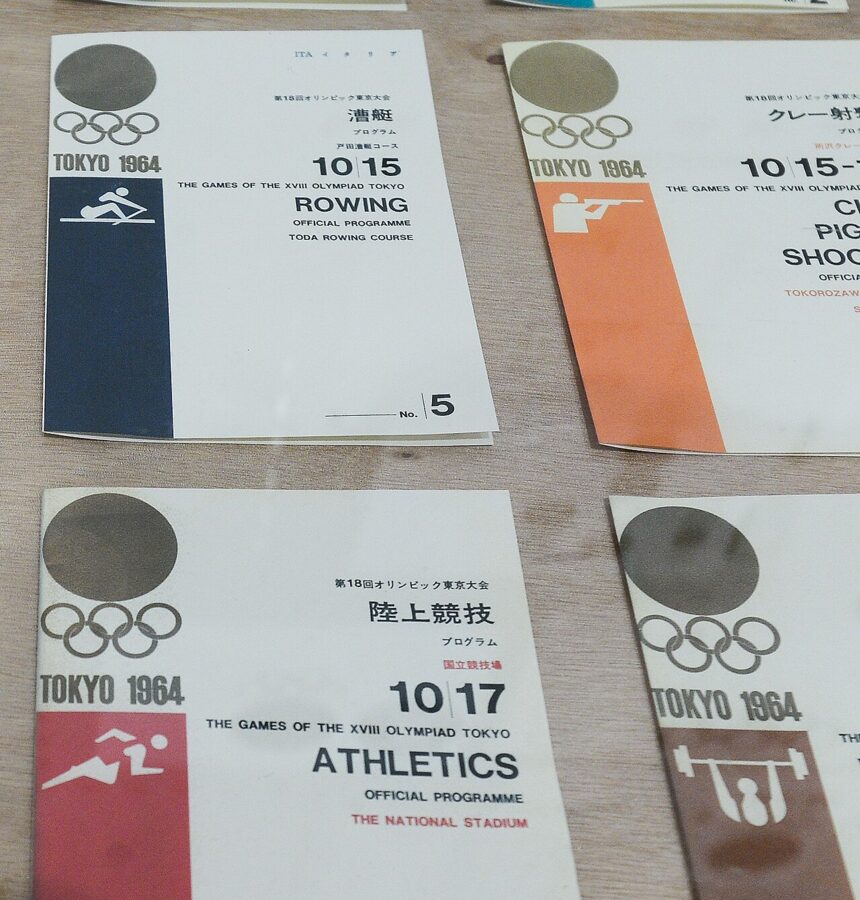
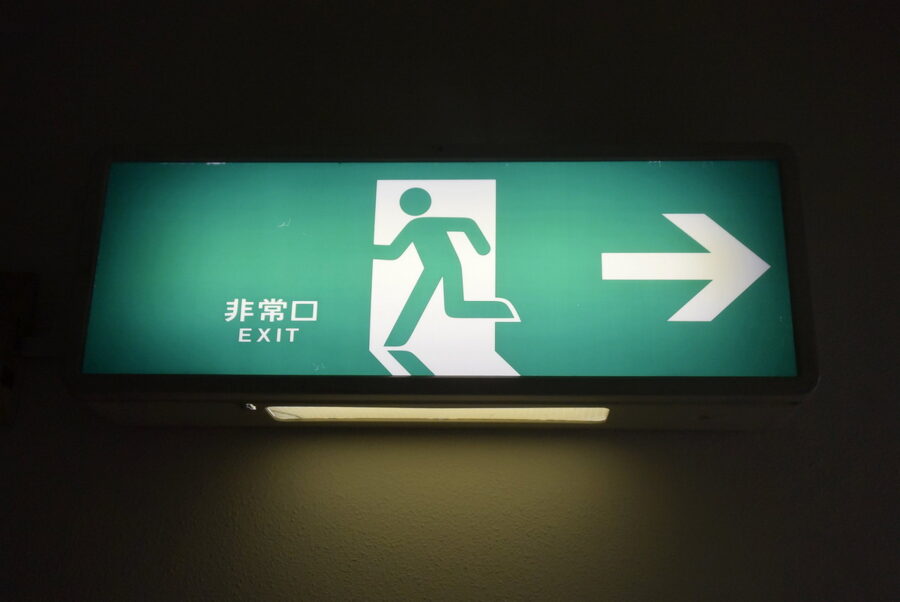
Japan was early to picture signs of the other kind too. For the 1964 Tokyo Olympics a design team around the critic Katsumi Masaru drew a full set of sport and facility pictograms for visitors who could not read Japanese, and the idea spread to every games since. The green running man over Japanese fire exits is now the same figure used in the international safety-sign standard, ISO 7010.
Marks of everyday life: 〒, maru and batsu, 々 and the hanko
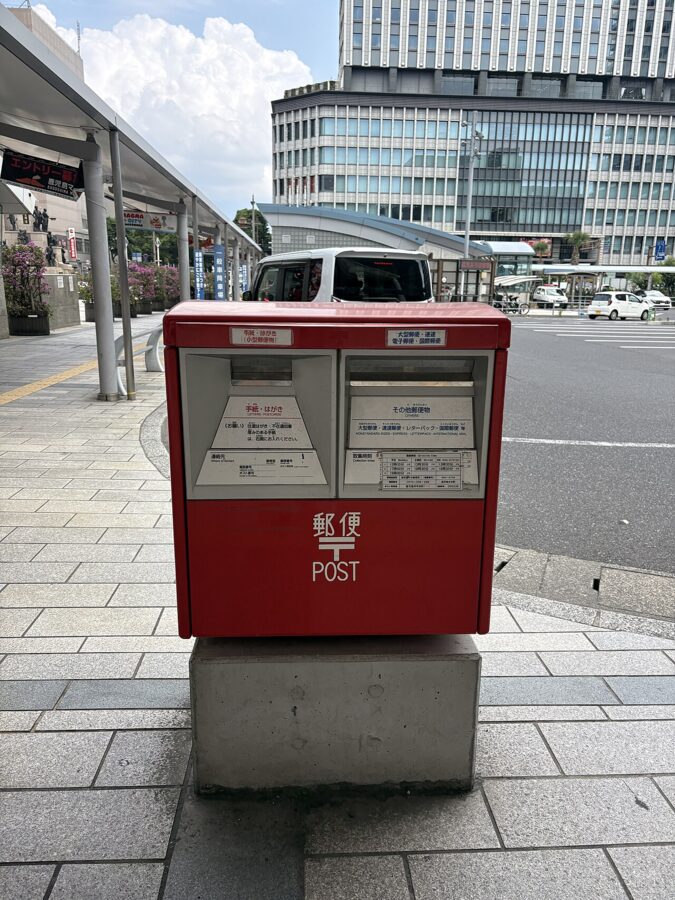
〒 is the yūbin kigō (郵便記号), the postal mark, fixed in 1887. The usual account is that the ministry first announced a plain T, then corrected it within days to 〒, partly because T already meant “postage due” on international mail; sources disagree on the exact dates. The shape itself is read as the katakana テ, the first sound of Teishinshō, with a bar on top. You will see it before every postcode, as in 〒154-0021, and on every red postbox.
Maru and batsu
Maru (丸, ○) means yes and batsu (×) means no. A teacher circles a right answer, and a quiz-show contestant runs to the ○ side or the × side of the studio. △ means “partly”, ◎ “excellent”, and a tick, confusingly, often marks a wrong answer.
The habit ran deep enough that Japanese PlayStations used ○ to confirm and × to cancel, the reverse of everywhere else, until the PS5 brought Japan into line in 2020.
々, the mark that repeats a kanji
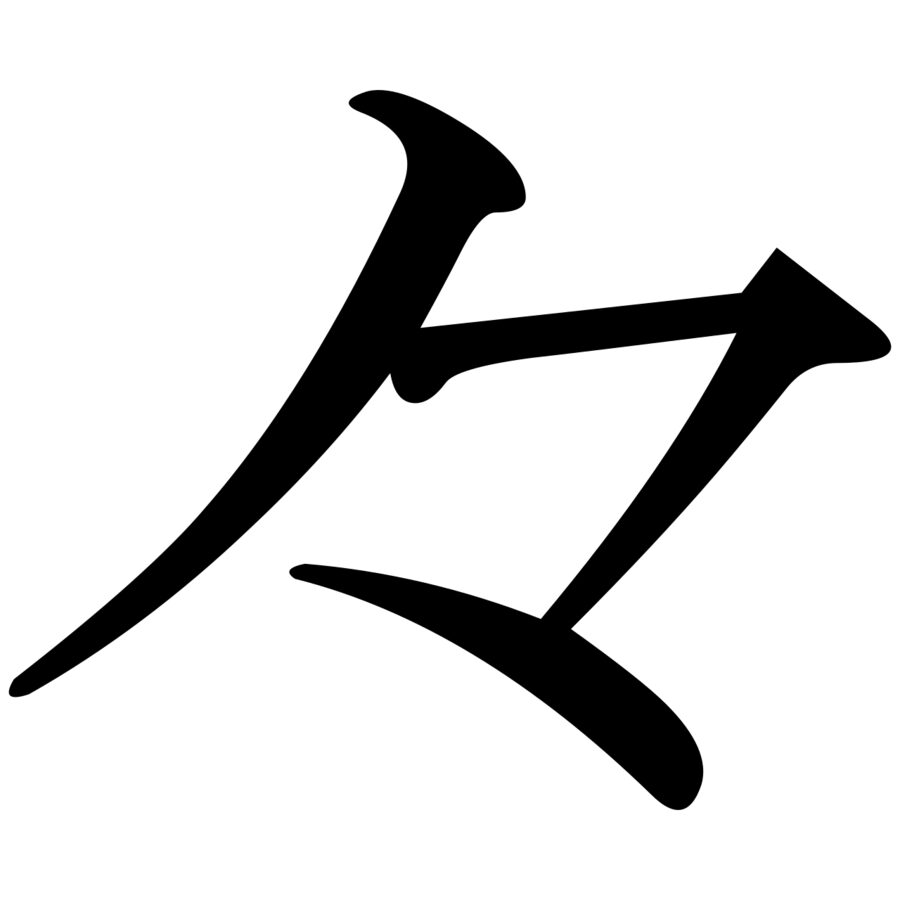
々 is not a kanji, and it has no reading of its own. It repeats the character before it: 人々 is hitobito, people; 時々 is tokidoki, sometimes; 山々 is yamayama, mountains. Because it looks like the katakana ノ and マ run together, people call it noma. Its cousins ゝ and ヽ do the same job for hiragana and katakana, though you rarely see them now outside names.
Calendars have marks too. Weekdays are single kanji, 水 for Wednesday, the day of water, and many still print the old six-day luck cycle, so you can see that a Saturday is taian (大安), good for a wedding.
The hanko seal
A hanko (判子) or inkan (印鑑) is a name seal stamped in red ink where other countries sign. The one that matters is the jitsuin (実印), registered with your city or town office, one per person, and used with a seal certificate for property and notarised deeds. Everyday parcels and office forms get a cheap mitome-in (認め印), and stationers sell racks of them ready-carved with common surnames.
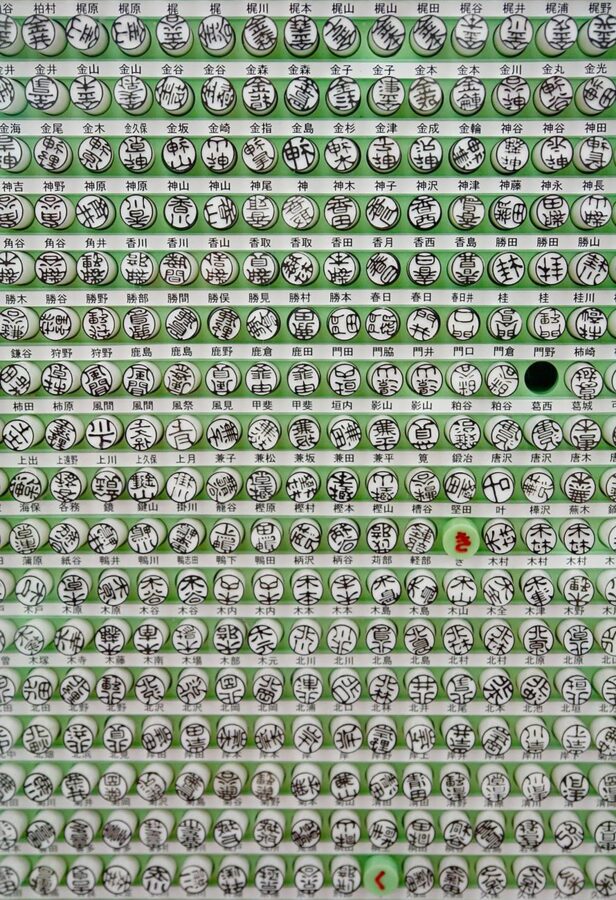
The seal is slowly giving way. In November 2020 the government reported that of 14,992 administrative procedures that asked for a seal, all but 83 would drop the requirement. Those 83 are the ones that need a registered seal: registrations, property and banking.
Wakaba, momiji and yotsuba: the car marks
A new driver in Japan must show the shoshinsha mark (初心者マーク) on the front and back of the car for the first year after getting a licence. It is a chevron, yellow on the left and green on the right, introduced in 1972, and everyone calls it the wakaba (若葉) mark, the young leaf.
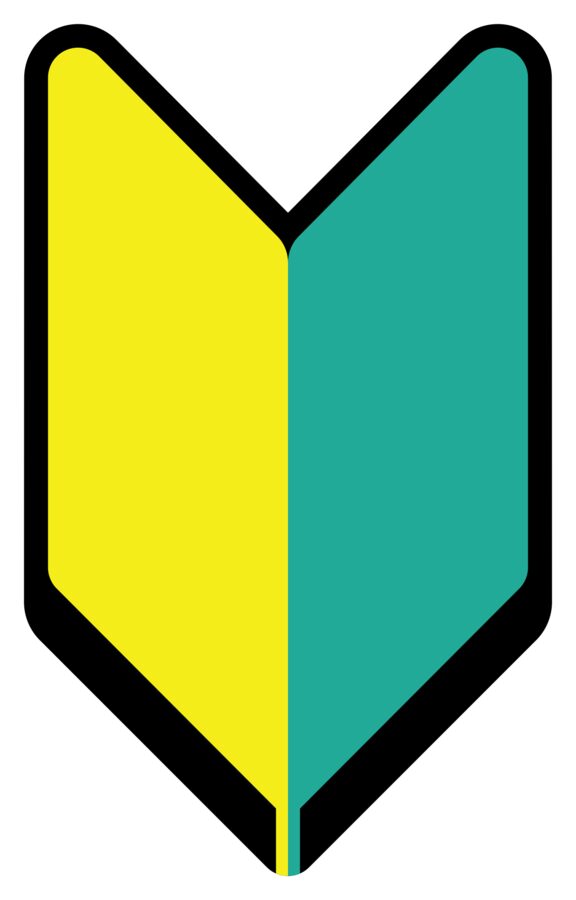
Drivers aged 70 and over are asked to show an older driver’s mark. The first, from 1997, was a teardrop of orange and yellow nicknamed the momiji (紅葉), autumn leaf. In 2011 a four-leaf clover design, the yotsuba (四つ葉), joined it, and both are still legal.
Kamon: the family crest
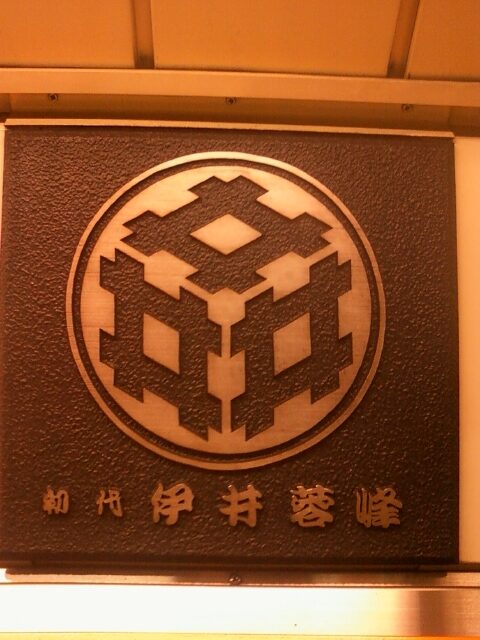
A kamon (家紋) is a family crest, usually a design in a circle. Heian nobles marked their ox carriages with favourite patterns, and warriors put crests on banners to tell friend from enemy. By the Edo period merchants and actors had them too; one Japanese encyclopedia counts about 2,800 designs.
Most families still have one, even if they only see it at funerals. It goes on gravestones, shop curtains and the formal black kimono worn at weddings, with five crests: back, both sleeves, both sides of the chest.
Chrysanthemum and paulownia: the crests of state
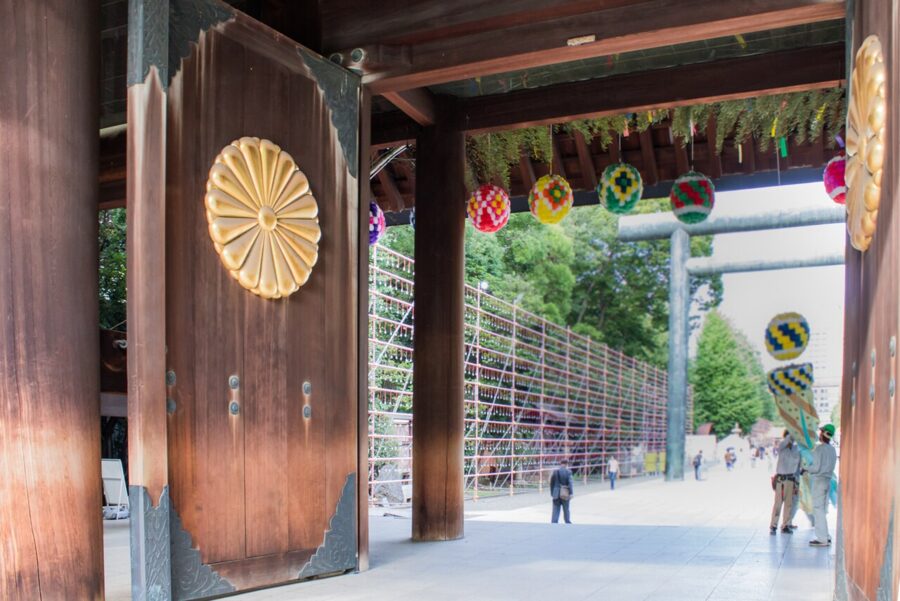
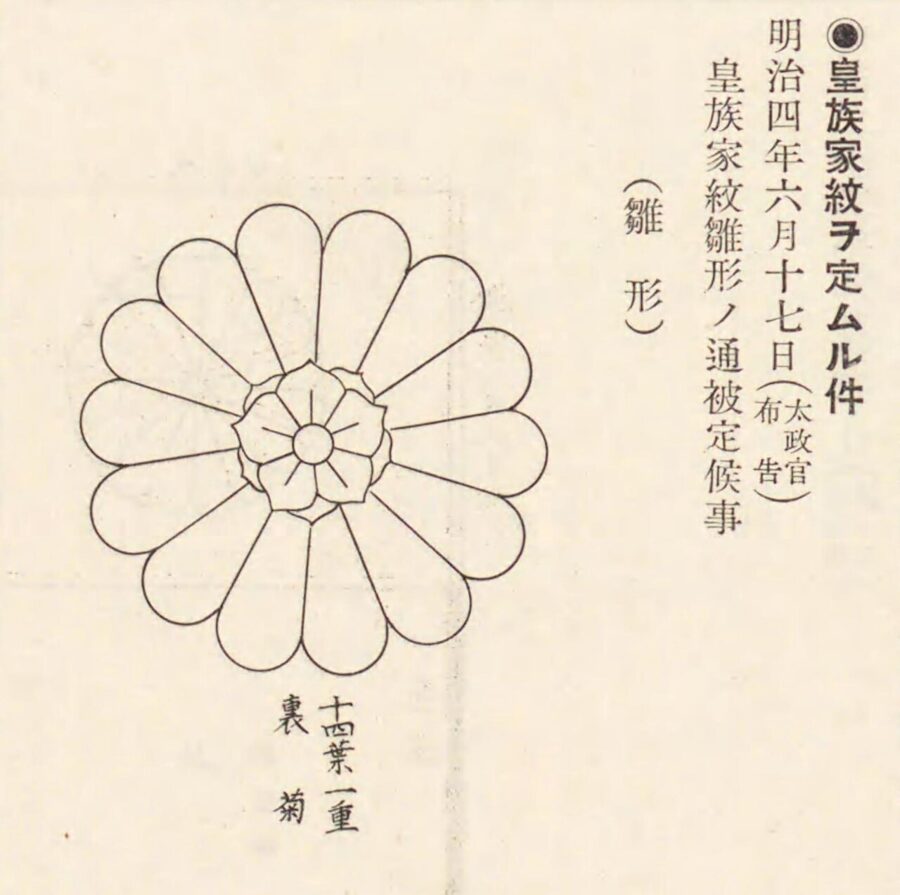
The imperial crest is a chrysanthemum seen from the front with 16 petals and a second row behind, the jūrokuyō yae omotegiku (十六葉八重表菊). Tradition traces it to Emperor Go-Toba, who loved the flower, around 1200. In the 1870s the government reserved the full design for the emperor and gave the rest of the imperial family simpler versions. The Japanese passport carries a single-row 16-petal flower, close to the imperial crest but not the same.
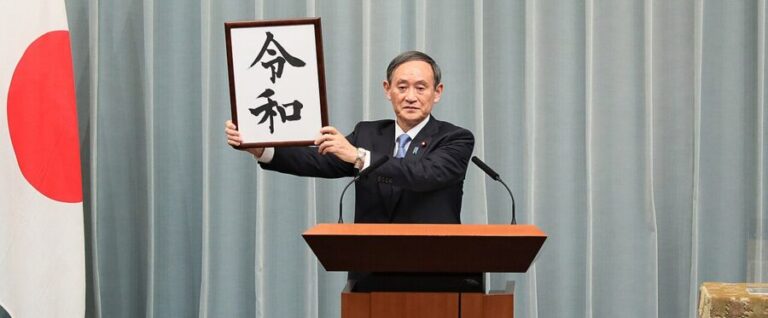
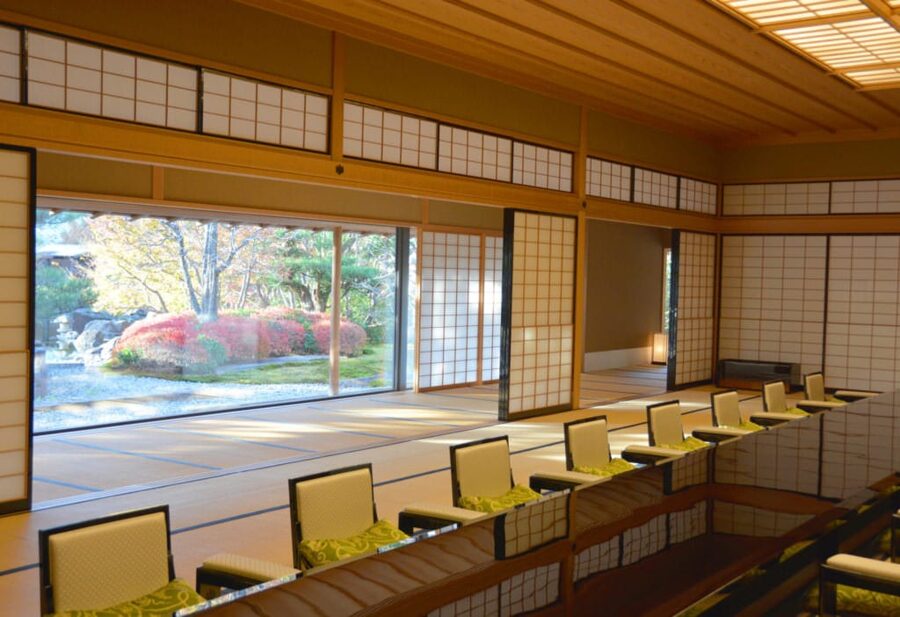
The government’s crest is the paulownia, kiri (桐). The version used by the Cabinet is the goshichi no kiri (五七の桐): three leaves, with seven flowers on the middle stem and five on each side. Emperors once granted it to the warlords they favoured, Toyotomi Hideyoshi among them; today it stands on the prime minister’s lectern and in the state rooms of the official residence.
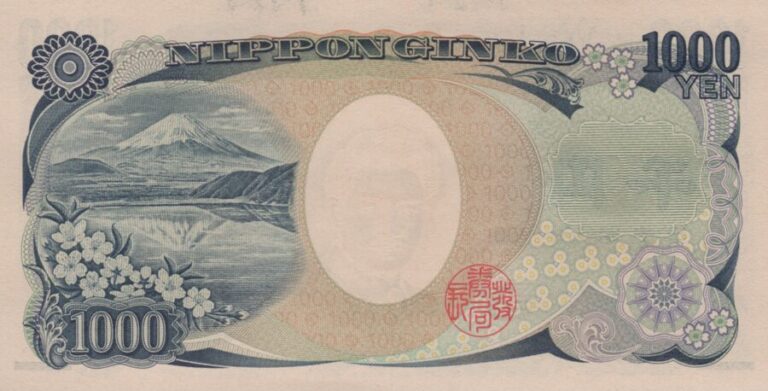
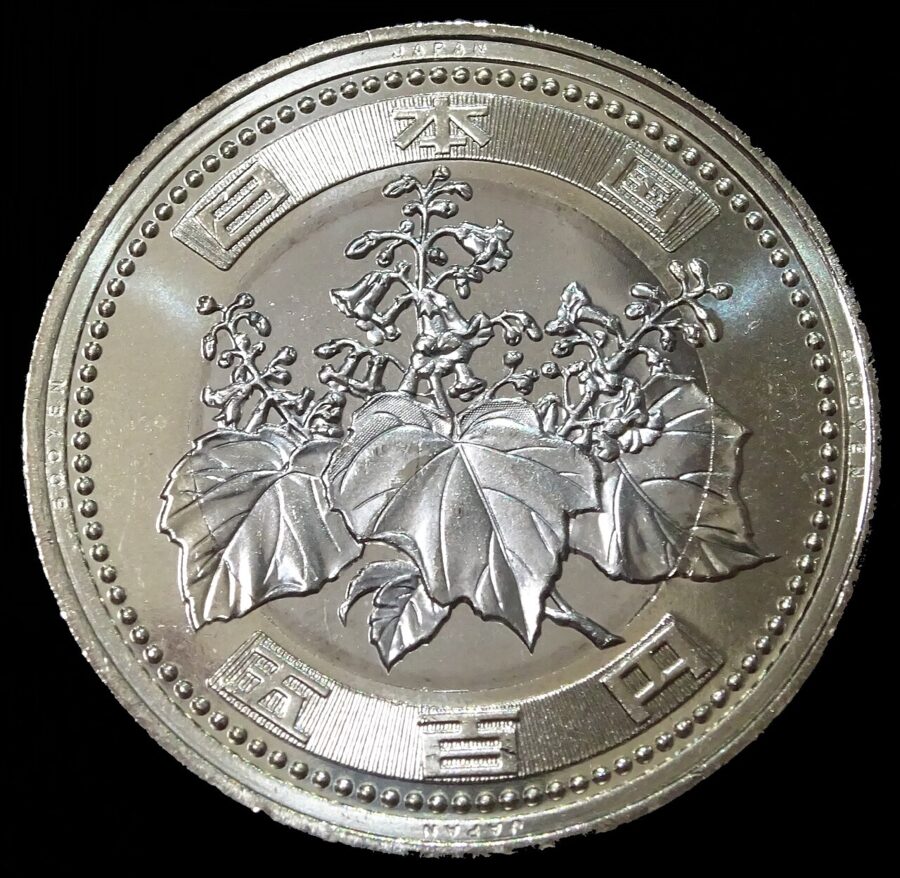
You probably have one in your pocket if you have been to Japan. The 500-yen coin carries paulownia flowers and leaves on its face, and the 100-yen coin carries cherry blossom.
The hollyhock of the Tokugawa
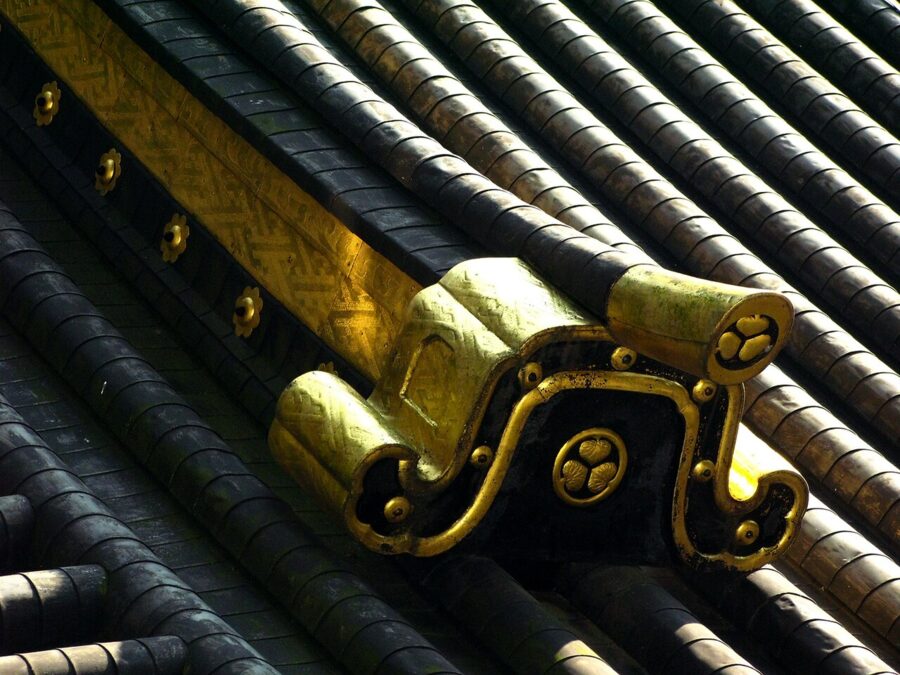
The Tokugawa crest, mitsuba aoi (三つ葉葵), is three leaves of futaba aoi, a wild ginger the Kamo shrines of Kyoto hold sacred, inside a ring. The family used it while still the Matsudaira of Mikawa, and in 1586 Tokugawa Ieyasu barred other families from it, with one exception, the Honda. For 250 years it meant the shogun, and in the TV drama Mito Kōmon one glimpse of it still drops villains to their knees.
Auspicious motifs: crane and turtle, pine, bamboo and plum
The longevity pair comes from a proverb, tsuru wa sennen, kame wa mannen (鶴は千年、亀は万年): the crane lives a thousand years, the turtle ten thousand. It comes from Chinese legend, recorded in the Huainanzi. In Japan the pair turns up on wedding kimono, in Noh and in gardens laid out as a crane island and a turtle island.
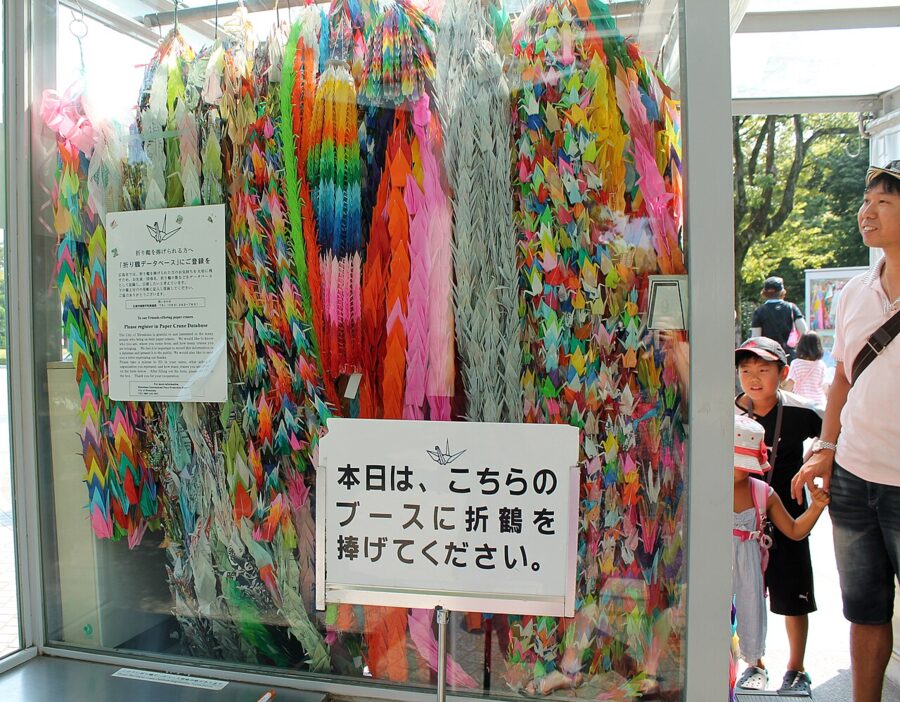
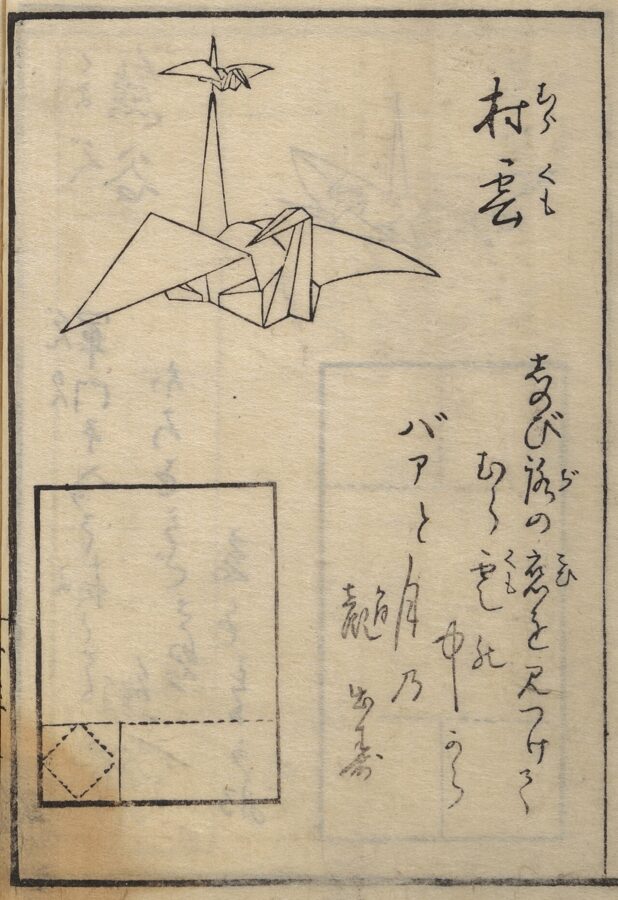
Cranes also fold. Senbazuru (千羽鶴), a thousand paper cranes on strings, is an old wish for recovery or long life; one of the earliest origami books, Hiden Senbazuru Orikata, was printed in 1797. Since the 1950s it has also meant peace, because of Sasaki Sadako, a girl from Hiroshima who folded cranes while dying of leukaemia ten years after the bomb.
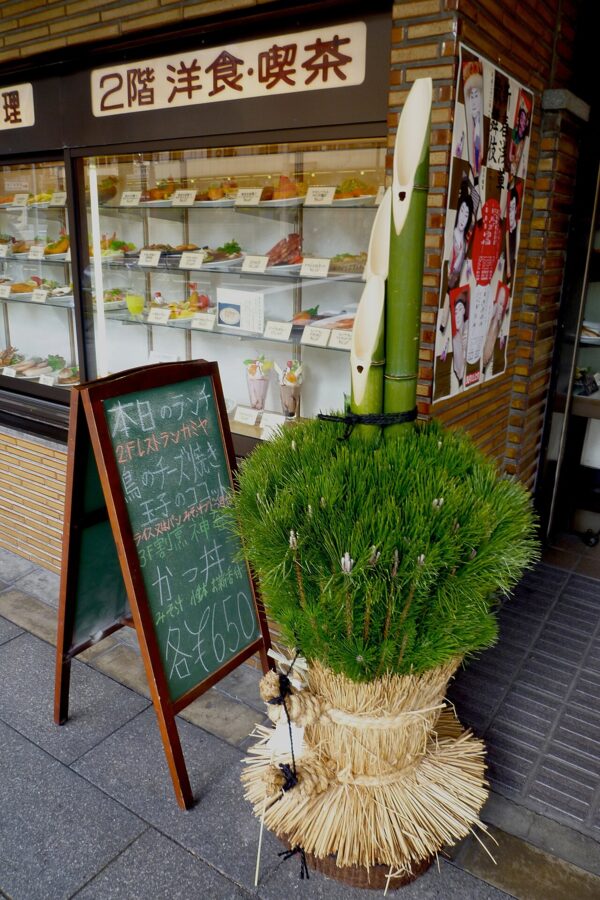
Shōchikubai (松竹梅) is pine, bamboo and plum, the “three friends of winter”: the pine and bamboo stay green through the cold and the plum flowers in it. The three go on New Year decorations and wedding gifts. They also grade things, with matsu at the top: a sushi or eel restaurant may sell a pine, bamboo and plum set, and the cheap one is plum.
Dictionaries even record an eel-shop joke: eel was once grilled to order, so diners waited, and matsu-take-ume became matsu dake ume e, “only waiting, but tasty”.
Fuji, a hawk and an aubergine: the first dream
The first dream of the year, hatsuyume (初夢), was read as a forecast, and the luckiest things to dream of come as a saying: ichi-Fuji, ni-taka, san-nasubi (一富士二鷹三茄子), first Fuji, second a hawk, third an aubergine. Nobody agrees why. One account says these were the famous things of Suruga, the province at Fuji’s foot. Another credits Tokugawa Ieyasu with naming Suruga’s three “high” things: Fuji, Mount Ashitaka, and the price of the first aubergines of the season.
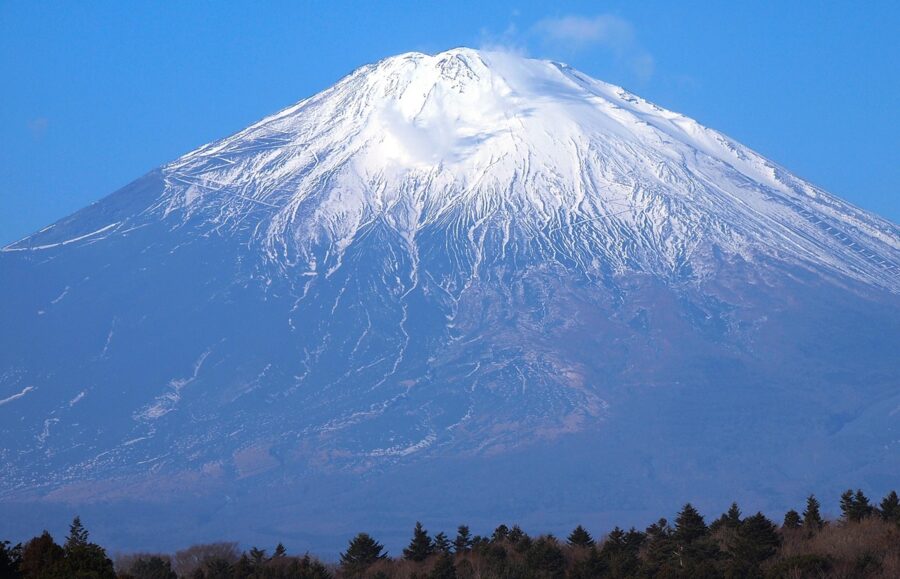
A third reading takes the words apart: Fuji is high and great, the hawk seizes, and nasu sounds like nasu (成す), to achieve. Early uses often stop at Fuji and the hawk, and I suspect the aubergine was added later for the laugh. Fuji’s widening slopes are the suehirogari shape of 八, the lucky eight, and the mountain, the highest in Japan, stands on Honshu.

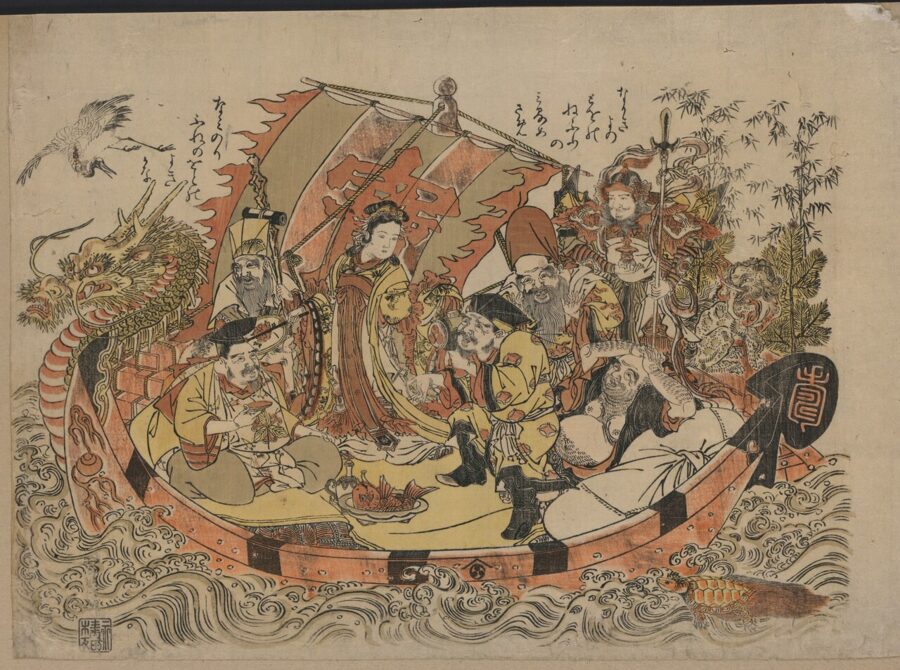
For a good dream, Edo people slept with a picture of the takarabune (宝船), the treasure ship, under the pillow, with the Seven Lucky Gods aboard. Sellers went door to door calling “otakara“, treasure. A bad dream went into the river with the picture next morning.
The Seven Lucky Gods
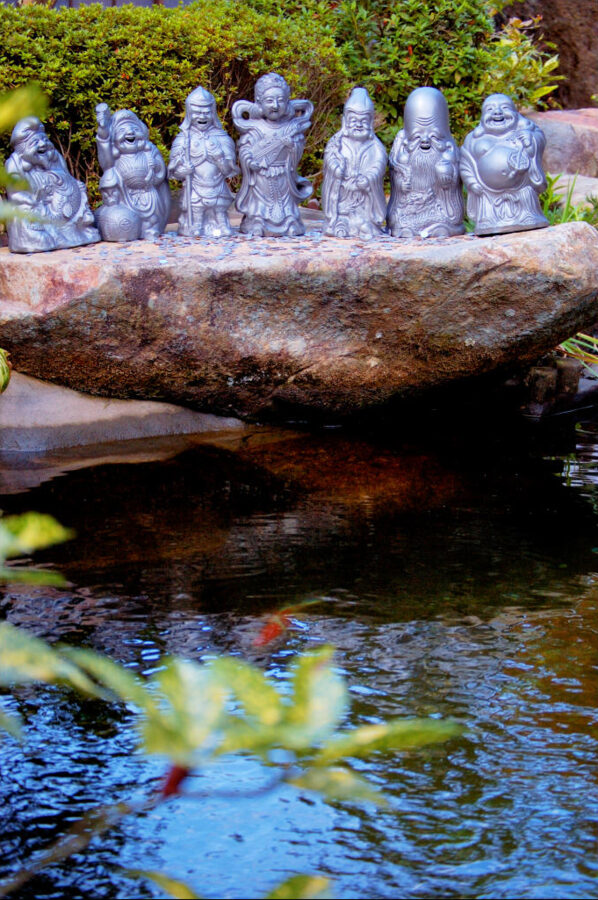
The Shichifukujin (七福神) are a crew put together by merchants. Ebisu, with his fishing rod and sea bream, is the only one native to Japan. Daikokuten, Bishamonten and Benzaiten came from India by way of Buddhism; Hotei, Fukurokuju and Jurōjin are Chinese. Ebisu and Daikoku were paired for trade by the Muromachi period; the seven were a set by the Edo period, when a New Year walk round seven shrines and temples became a habit many towns still keep.
Maneki-neko, the beckoning cat
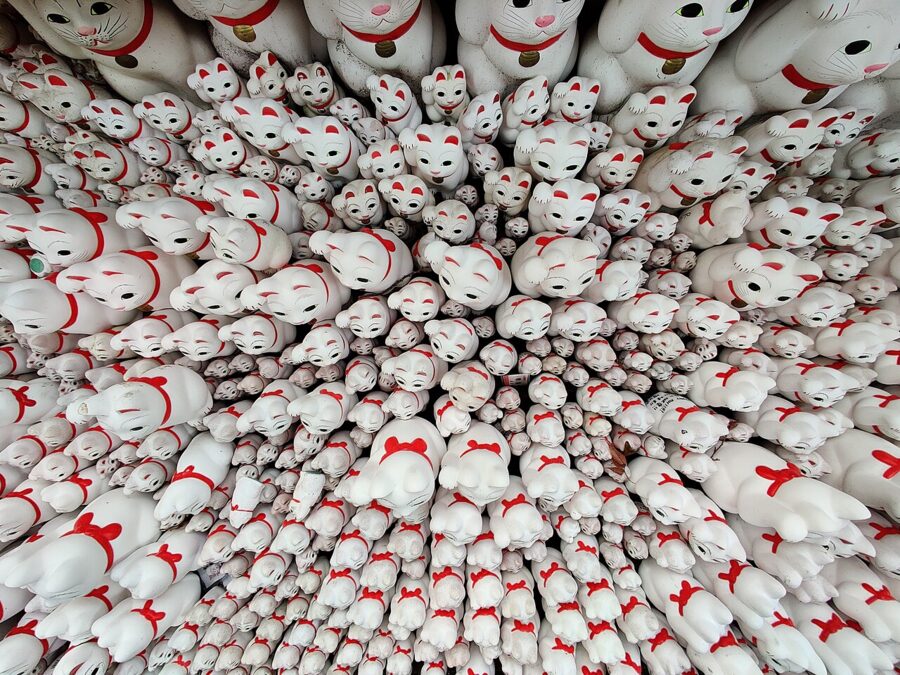
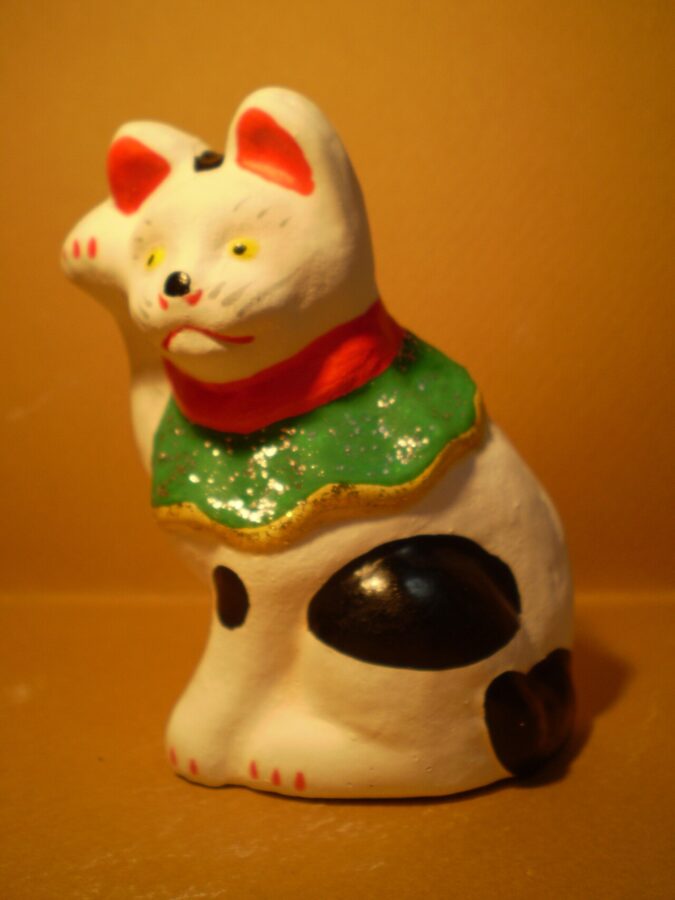
The maneki-neko (招き猫) is a seated cat with one paw raised, and the name is a plain description: maneku, to beckon, and neko, cat. A Japanese beckon is palm down, which is why visitors read it as waving. Shops put it by the door to call in customers and money. The popular rule is that a right paw calls money and a left paw calls people, but dictionaries only say that both kinds exist.
Several places claim the first one. In Edo the cats were made in Imado clay, and one account starts with a brothel in Ryōgoku in the 1780s that set gold and silver cats at its entrance. The best-known story belongs to Gotokuji in Setagaya: a cat at the gate beckoned Ii Naotaka, lord of Hikone, inside just before a storm broke, and his family made the poor temple their own.
Gotokuji is a five-minute walk from Miyanosaka on the Tokyu Setagaya Line. As of November 2026 the grounds are open 6:00 to 17:00 and the temple office sells its cats from 8:00 to 15:00. The temple asks visitors not to write on the cats.
Daruma
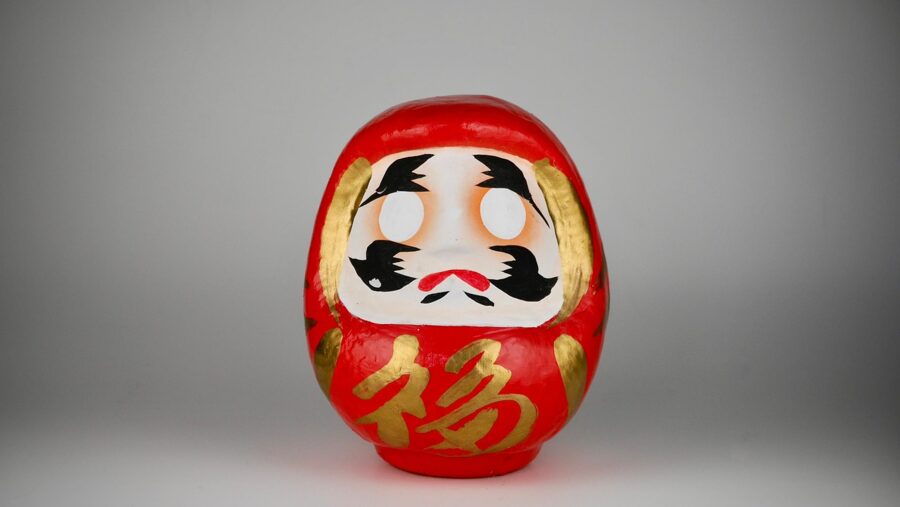
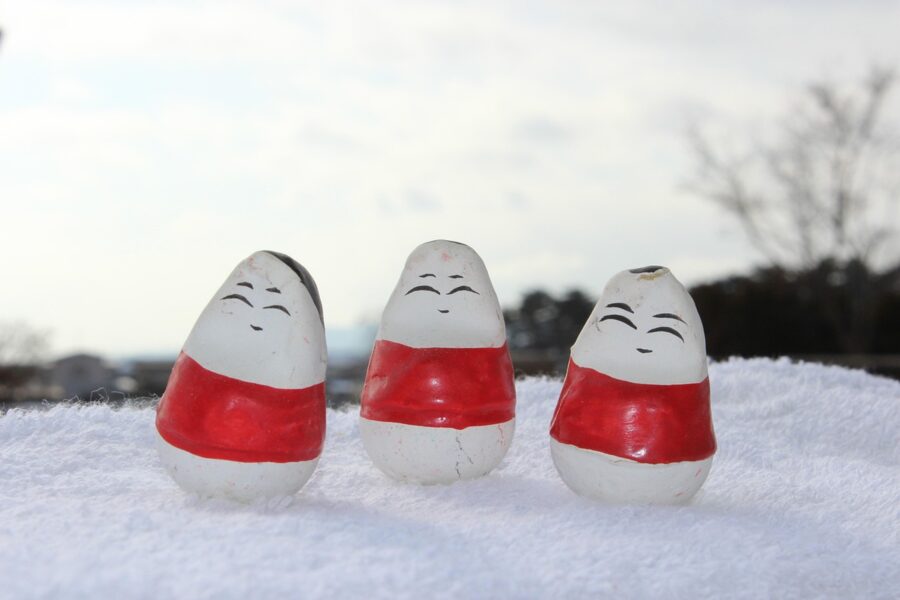
Daruma (達磨) is Bodhidharma, the Indian monk said to have founded Zen in China and to have sat facing a wall for nine years, until, in the folk version, his arms and legs withered. The doll is papier-mâché, legless, red as a monk’s robe and weighted at the bottom so it rights itself when knocked over. Its cousin from Aizu, the okiagari-koboshi (起き上がり小法師), the “little monk who gets up”, makes the same point.
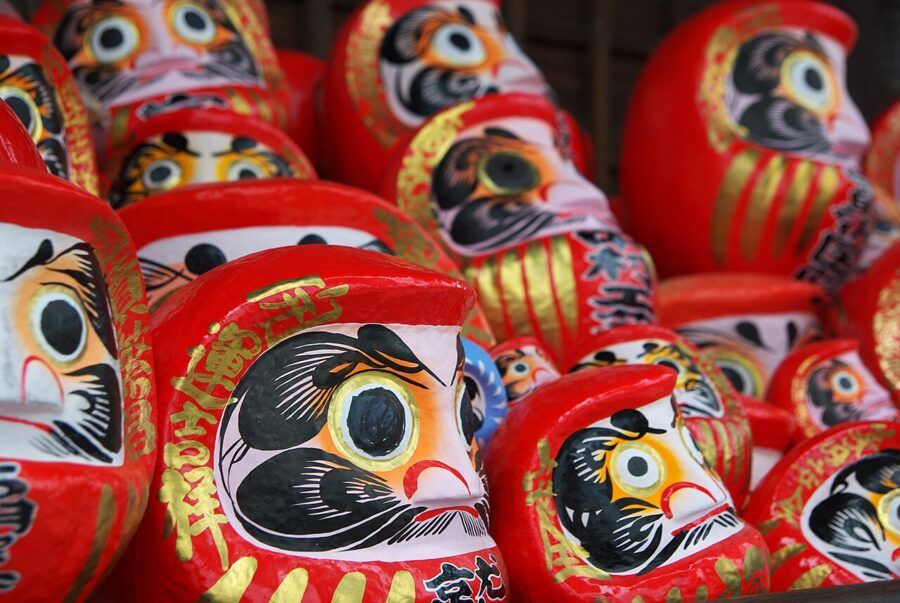
Shōrinzan Daruma-ji in Takasaki calls itself the birthplace of the lucky daruma. After the Mount Asama eruption of 1783 and the famine that followed, its ninth abbot carved a wooden mould from a painting of Bodhidharma by the temple’s founder and taught a farmer in nearby Toyooka village to make the dolls. They sold at the temple’s New Year fair, and still do: the daruma market runs on 6 and 7 January.
The eyes come blank. The temple says to paint the eye on your right as you face the doll when you make the wish, and the other when it comes true or the year passes safely.
Next time you see 卍 on a Japanese map, read it the way the map does: not as a warning but as a word, tera, temple, with a gate and probably a few daruma inside.