Seventeen sounds, one frog, one splash. In the spring of 1686 Matsuo Bashō wrote a verse about a frog jumping into an old pond, and 340 years later it is still the first haiku most Japanese children learn. You can say it in the time it takes the ripples to reach the bank.
The form is haiku (俳句), and its name is younger than its most famous poem. Bashō called his verses hokku (発句), opening verses; the word haiku only settled in the 1890s. Take the word apart and you get the history. Count its sounds the Japanese way and you get the rules.
In this article
俳句: from haikai no ku to haiku
The two characters are a contraction. 俳 stands for haikai (俳諧), comic or unconventional verse, and 句 is a verse, so 俳句 is “a verse of haikai”. The Nihon Daihyakka Zensho entry on haiku finds the word in print in 1663, but for two centuries it meant any verse of a haikai sequence.
Haikai was a party game with literary ambitions. Poets composed renga (連歌), linked verse: one offered a 5-7-5 opening, the next capped it with 7-7, and the chain ran on for 36 or 100 links. Haikai let in the puns, kitchen words and jokes that courtly renga kept out. The opening link, the hokku, was the guest’s greeting to the host, so it named the season and had to stand complete on its own.
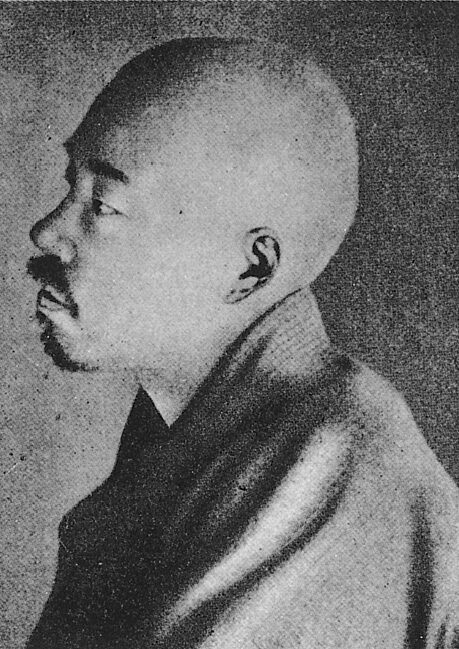
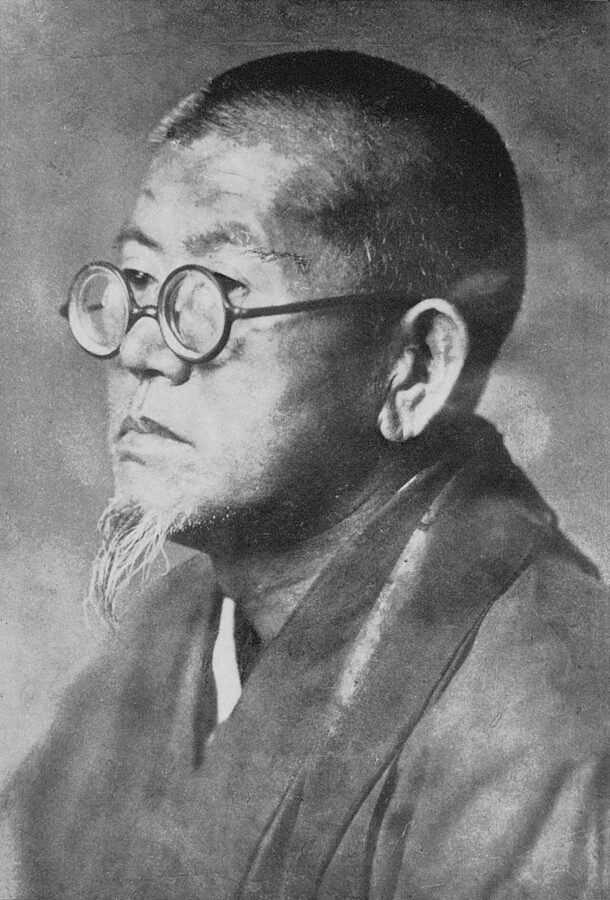
By Bashō’s time poets wrote hokku that never got a second link, and Masaoka Shiki finished the job. In the 1890s he called linked verse a parlour game “not literature”, and his Haikai Taiyō (1895) opens: “Haiku is a part of literature.” He took the old word 俳句 for the stand-alone poem, and by his death the papers used it his way.
So “Bashō’s haiku” is a little anachronistic, and nobody in Japan minds. Haikai gave the form its taste for ordinary things, the hokku gave it the season word and the cut, and Shiki gave it independence.
Seventeen sounds, not seventeen syllables
The 5-7-5 counts on (音), sounds, which linguists call morae. Each kana of hiragana is one beat. A long vowel counts twice, ん and the small っ count once each, and the small ゃ, ゅ, ょ add nothing.
| Line | Kana | Romaji | On |
|---|---|---|---|
| 古池や | ふ・る・い・け・や | furuike ya | 5 |
| 蛙飛こむ | か・わ・ず・と・び・こ・む | kawazu tobikomu | 7 |
| 水のおと | み・ず・の・お・と | mizu no oto | 5 |
An English speaker hears 古池や as three or four syllables; in Japanese it is five even beats, because い and け each take one. Tokyo is the same trap, two syllables in English and four on (と・う・きょ・う). Haiku is three on, ha-i-ku, though English says “HIGH-koo”.
The Japanese writing system shows why the count is easy at home. Write a verse in kana and you can tick off the beats with a finger, which is how children are taught to do it.
Why English haiku come out shorter
An English syllable carries more than an on: “strength” is one syllable wrapped in six consonants. Seventeen English syllables hold far more than seventeen on, so a 5-7-5 English poem runs closer to a Japanese tanka of 31 sounds. Most poets writing haiku in English have stopped counting and write short, long, short, often 10 to 14 syllables in all.
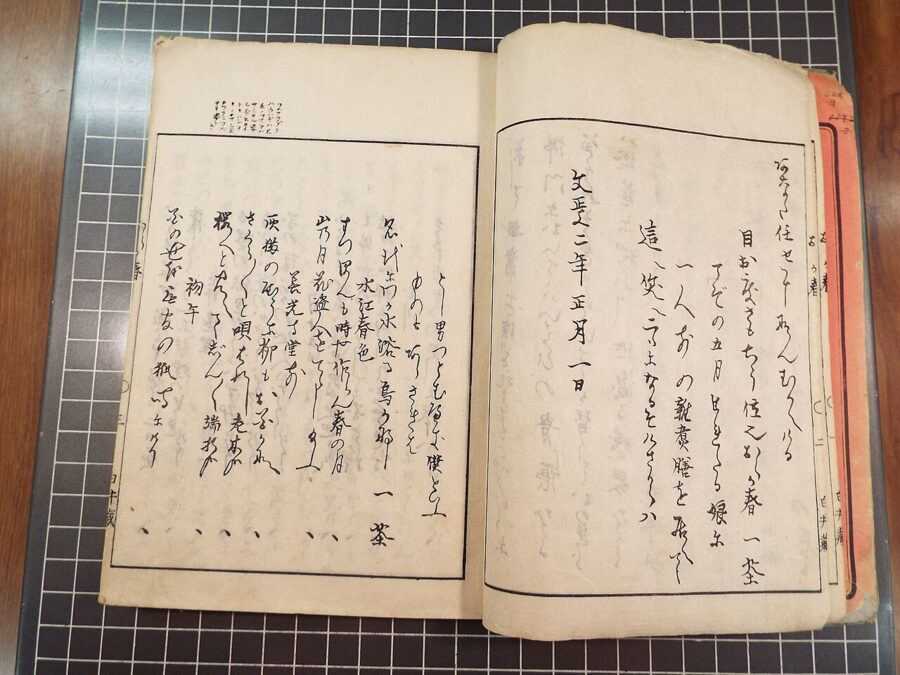
In Japanese a haiku is printed as one line, usually vertical, with no breaks. The three lines belong to translation, which sets out the 5, 7 and 5 so a reader can see the rhythm; poets in English also use one, two or four.
Kigo: the season word and the saijiki
A kigo (季語) is a word fixed by convention to one season. The dictionaries date the term to 1908; before that poets spoke of kidai (季題), season topics. The custom goes back to the hokku’s greeting: you opened a gathering by naming the season you sat in.
Kigo are collected in a saijiki (歳時記), an almanac of season words, usually in five parts: spring, summer, autumn, winter and New Year. Each season is sorted under the same heads (the season itself, sky, land, human life, observances, animals, plants), and each entry gives the word, its variants and example verses.
The seasons follow the old calendar. Spring runs from around 4 February to early May, so August is autumn, Tanabata and the morning glory are autumn words, and plum blossom is spring even in snow.
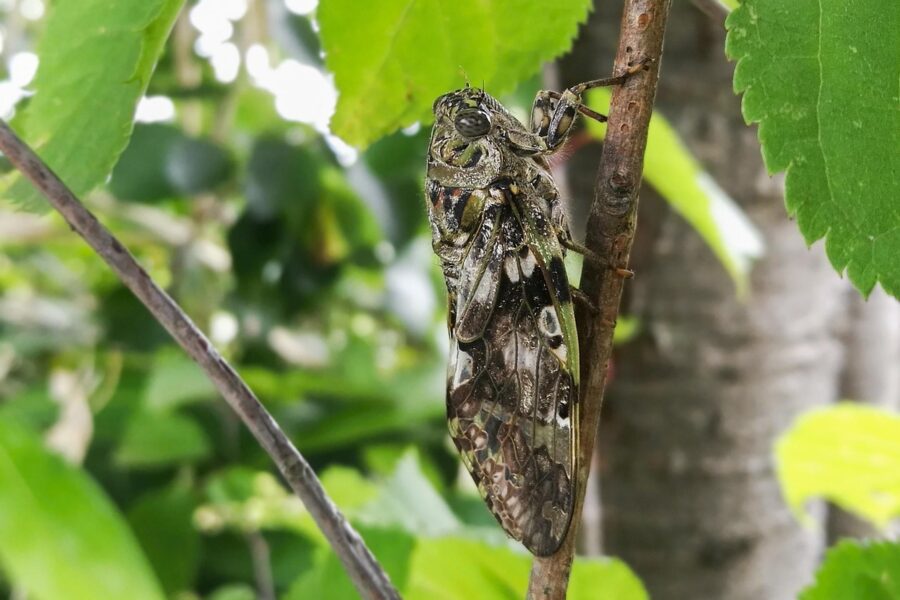
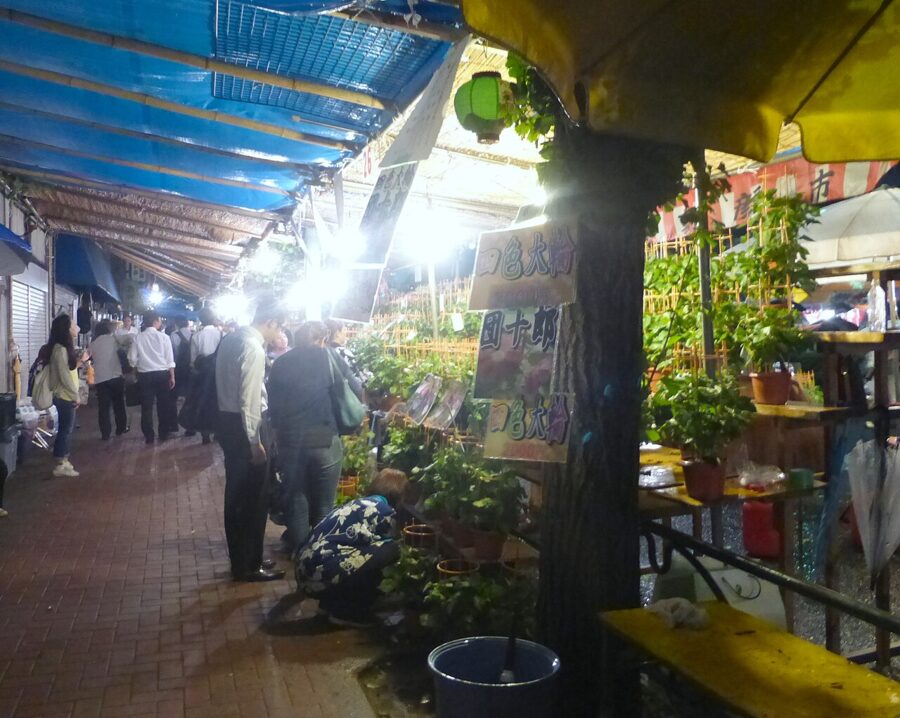
A kigo carries more than a date. Sakura (桜) brings the whole culture of cherry blossoms: parties under the trees, petals falling, things ending too soon. Mochi pounding is a winter word, and New Year has its own section with the other Japanese traditions of the turning year. Two words do a paragraph’s work because every reader shares the almanac.
Not every place matches it. A saijiki built around Kyoto and Tokyo puts cherry blossom in spring while Hokkaido is still under snow, and regional saijiki exist for the north and for Okinawa; the seasons and climate of the islands are wider than one book.
Two season words in one verse is kigasanari (季重なり), and teachers mark it down because the words compete. The textbook exception is Yamaguchi Sodō’s list of early summer pleasures: me ni wa aoba / yama hototogisu / hatsugatsuo, green leaves for the eye, the cuckoo on the hill, the first bonito.
Kireji: the cut
A kireji (切れ字), cutting word, stops the verse or splits it in two. The dictionary defines it as a word that gives a verse a turn or ends it with special force. The three everyone learns:
- や (ya) pauses and points at what came before: furuike ya, the old pond, and now.
- かな (kana) closes with a sigh. Buson: haru no umi / hinemosu notari / notari kana, the spring sea, all day long, rising and falling.
- けり (keri) closes on something noticed as it happens. Takahama Kyoshi: kiri hitoha / hi atari nagara / ochi ni keri, one paulownia leaf, in full sun, has fallen.
The cut exists because the hokku had no verse before it to lean on, so it had to hold two parts inside itself. A Bashō disciple recorded the teaching that without a cutting word a hokku is a mere follow-on verse. Bashō is also reported to have said that, used as cutting words, all 48 kana are cutting words.
In English the cut becomes a dash, a colon or a line break, which is why translations of the frog vary so much. The effect matters more: two things side by side, the link left to the reader. Bashō’s school called it toriawase (取り合わせ), combining.
Haiku that break the rules
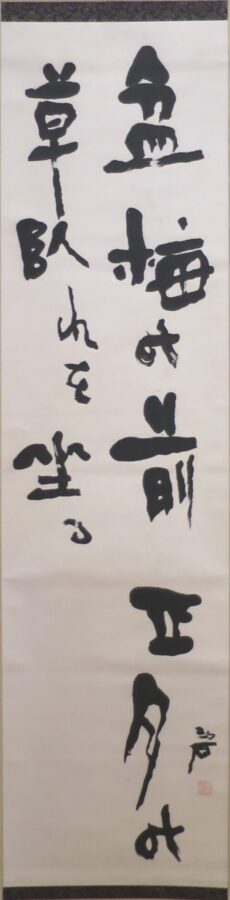
From 1908 a “new tendency” led by Shiki’s pupil Kawahigashi Hekigotō loosened the metre, and Ogiwara Seisensui went on to jiyūritsu (自由律), free-metre haiku with no season word. Its best-known lines are Taneda Santōka’s wakeitte mo wakeitte mo aoi yama (pushing in, pushing in, still blue mountains) and Ozaki Hōsai’s seki o shite mo hitori (even when I cough, alone). Most haiku today still keep the kigo and the 5-7-5.
Four poets, four poems
School textbooks keep coming back to four names, each with one verse every student meets. Bashō’s sabi and his pupil Kyorai’s record of it are in the wabi-sabi article; here the poems speak for themselves.
Matsuo Bashō (1644 to 1694)
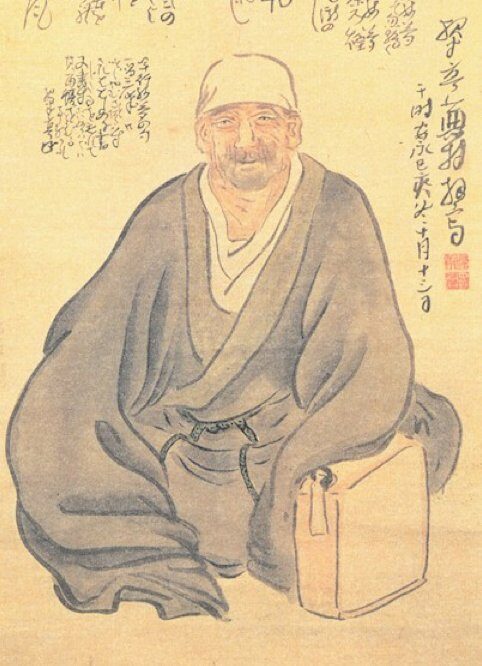
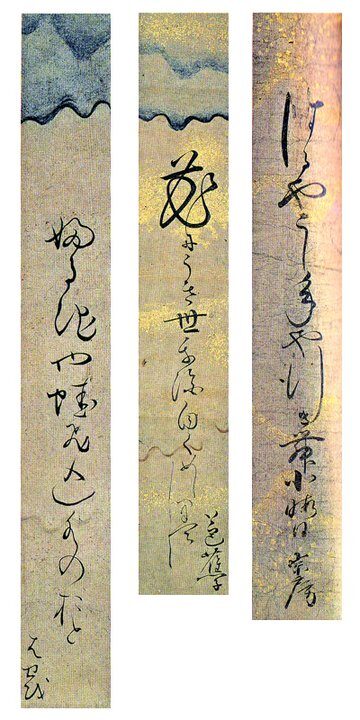
古池や蛙飛こむ水のおと
furuike ya / kawazu tobikomu / mizu no oto
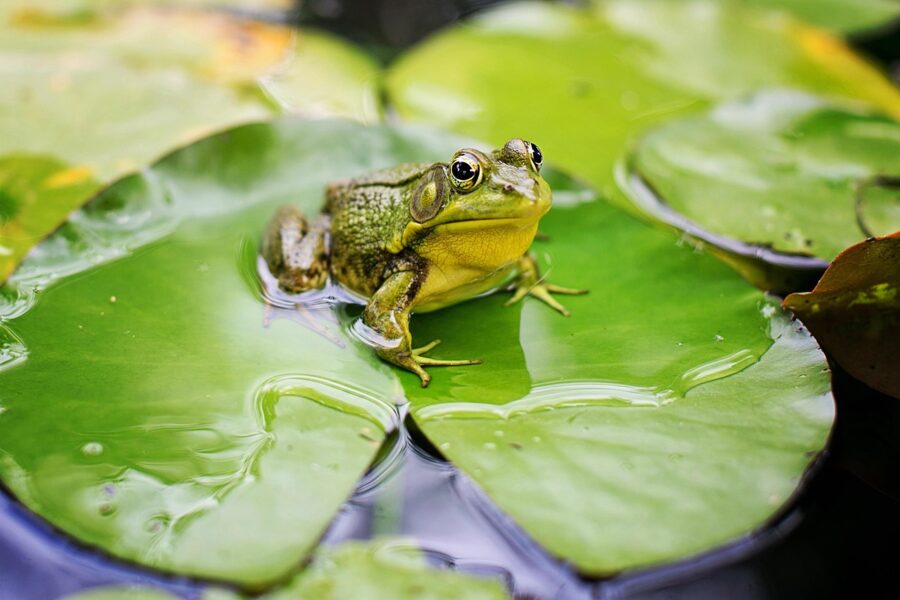
The old pond: a frog jumps in, the sound of water.
Bashō moved to Edo from Iga Ueno and in 1680 settled in a hut across the Sumida in Fukagawa, where a disciple planted a bashō (芭蕉) banana plant that gave him his pen name. The frog verse was written there and printed in 1686 in Kawazu Awase, a frog-verse contest held at the hut. Classical poets had used the frog for its song; Bashō gave it a splash in a neglected pond and made the quiet around it the subject.
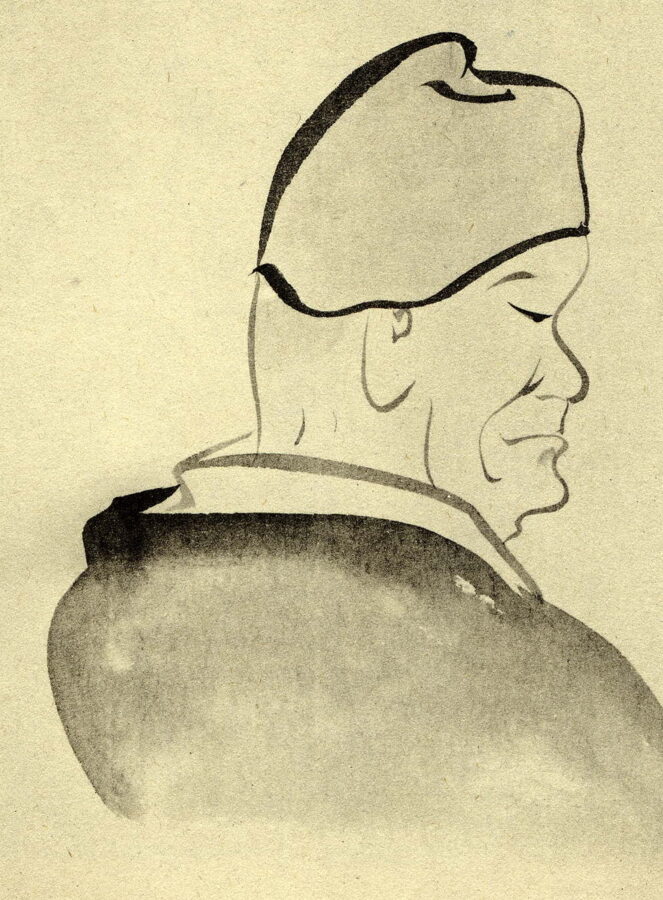
Yosa Buson (1716 to 1784)
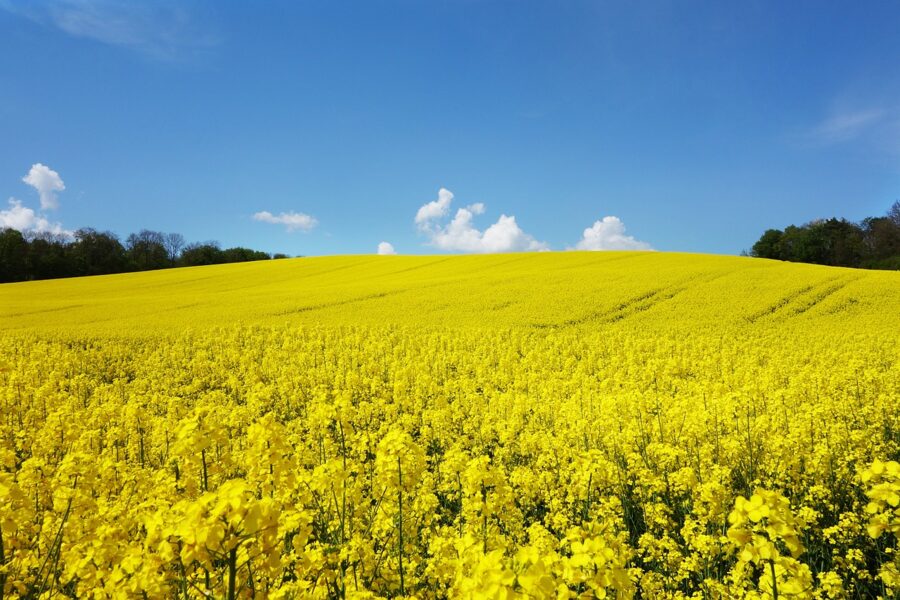
菜の花や月は東に日は西に
na no hana ya / tsuki wa higashi ni / hi wa nishi ni
Rape blossom: the moon in the east, the sun in the west.
Buson was a painter first, and his verses read like pictures. The rape blossom verse of 1774 stands in a yellow field at dusk, moon rising on one side, sun setting on the other. Shiki’s study Haijin Buson (1897) rescued him from Bashō’s shadow as the model of clear, visual haiku.
Kobayashi Issa (1763 to 1828)
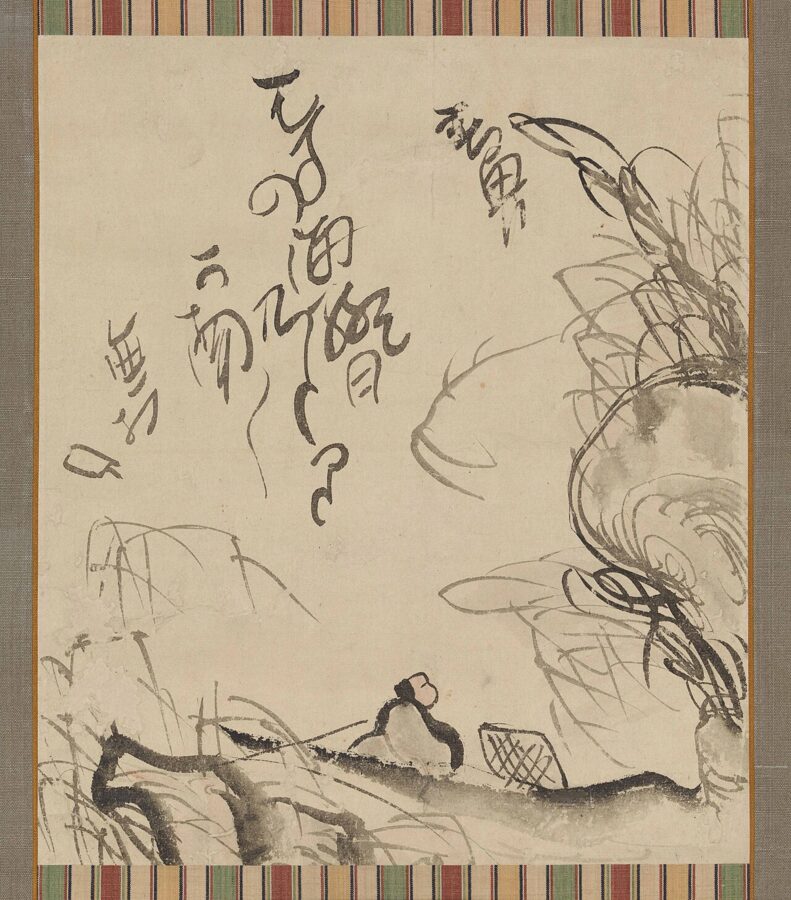
痩蛙まけるな一茶是に有
yasegaeru / makeru na Issa / kore ni ari
Skinny frog, don’t give up! Issa is here.
Issa wrote this in 1816 after watching frogs fight over mates, and it is the other frog every Japanese child knows. Bashō’s frog is a sound in a silence; Issa’s is a small fighter with the poet cheering from the bank. He sided with sparrows, flies, snails and children.
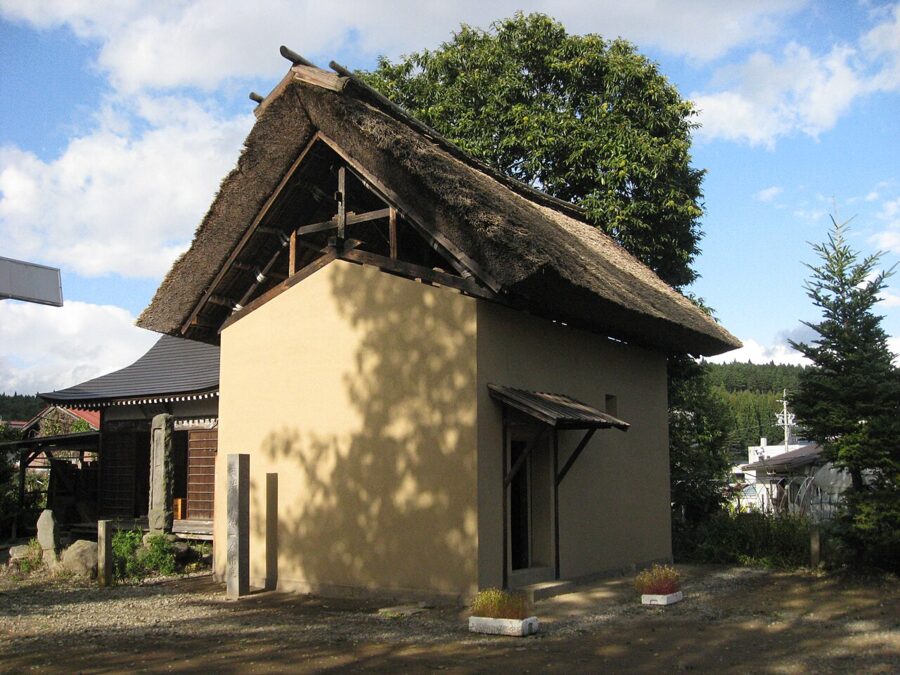
His life explains the tone. He left home in his teens, wandered for decades, fought his half-brother over their father’s land, and lost his wife and children young. Out of that came some 20,000 verses, many funny, many unbearably sad. His death is sometimes dated 1827, because the Japanese year had not yet turned when it was already 1828 in the West.
Masaoka Shiki (1867 to 1902)
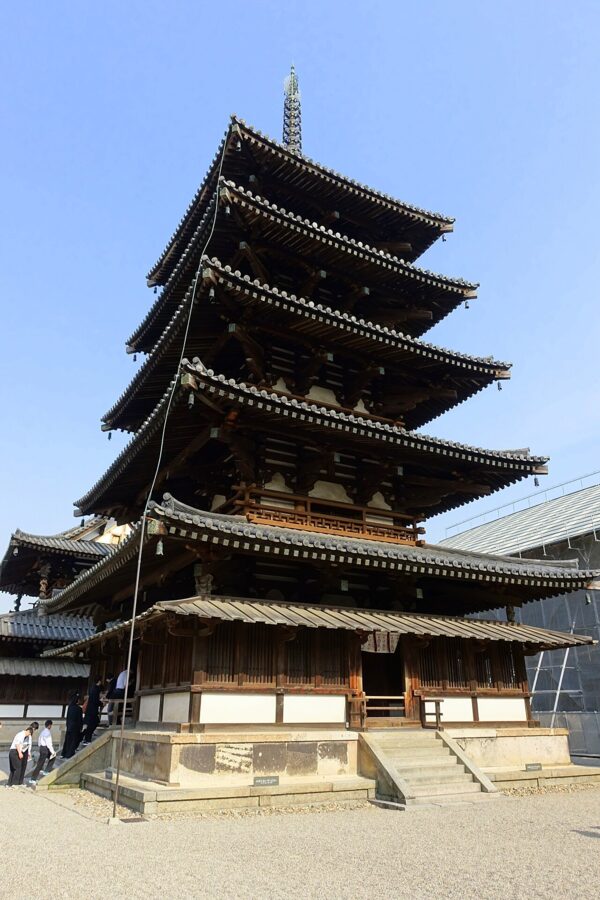
柿くへば鐘が鳴るなり法隆寺
kaki kueba / kane ga naru nari / Hōryūji
I bite into a persimmon, and a bell rings: Hōryūji.
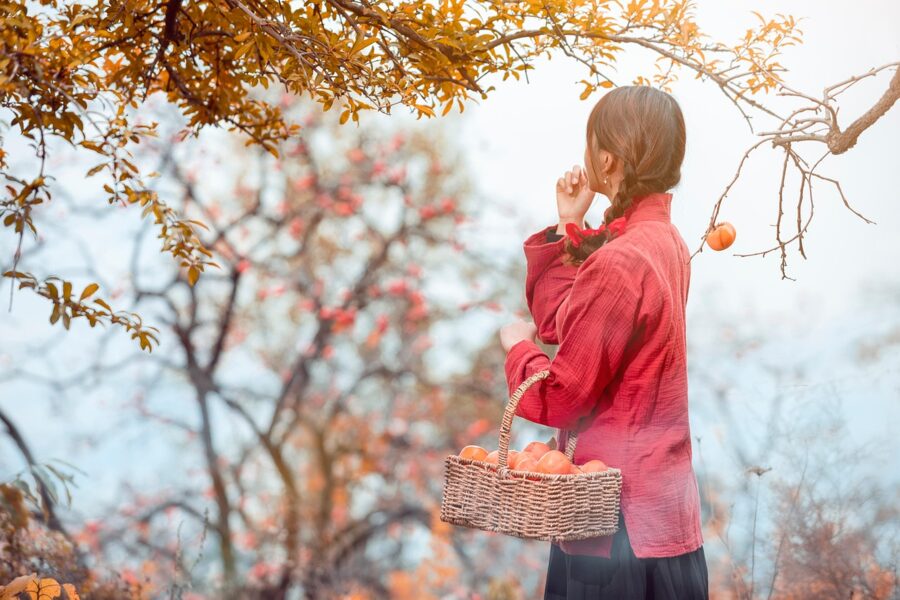
Shiki wrote this in the autumn of 1895, stopping in Nara on his way back to Tokyo after the illness that struck him returning from the war with China. It is shasei (写生), sketching from life, a method he took from the painter Nakamura Fusetsu: a taste, a sound, a place name, nothing explained. The persimmon pins it to autumn and the temple bell adds a thousand years.
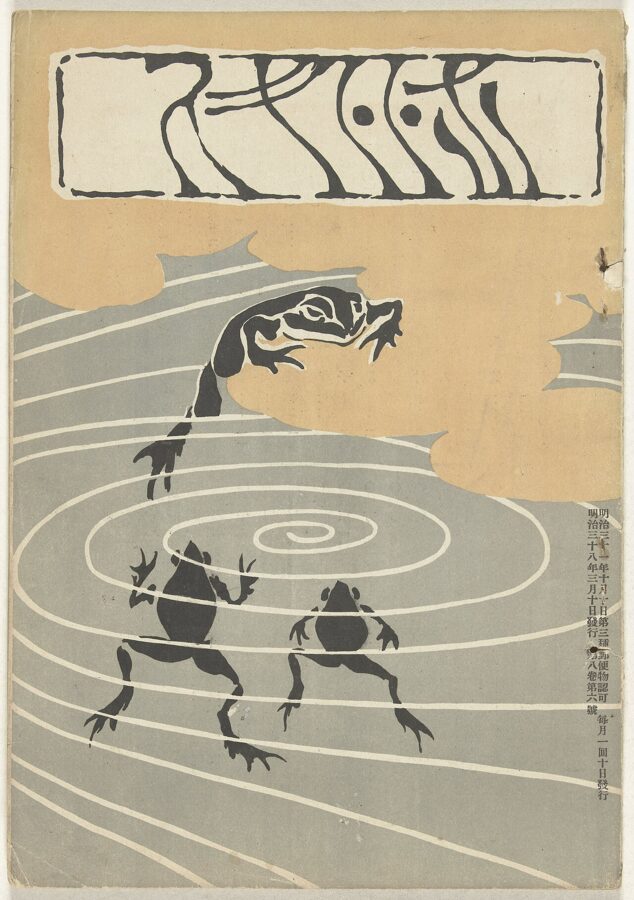
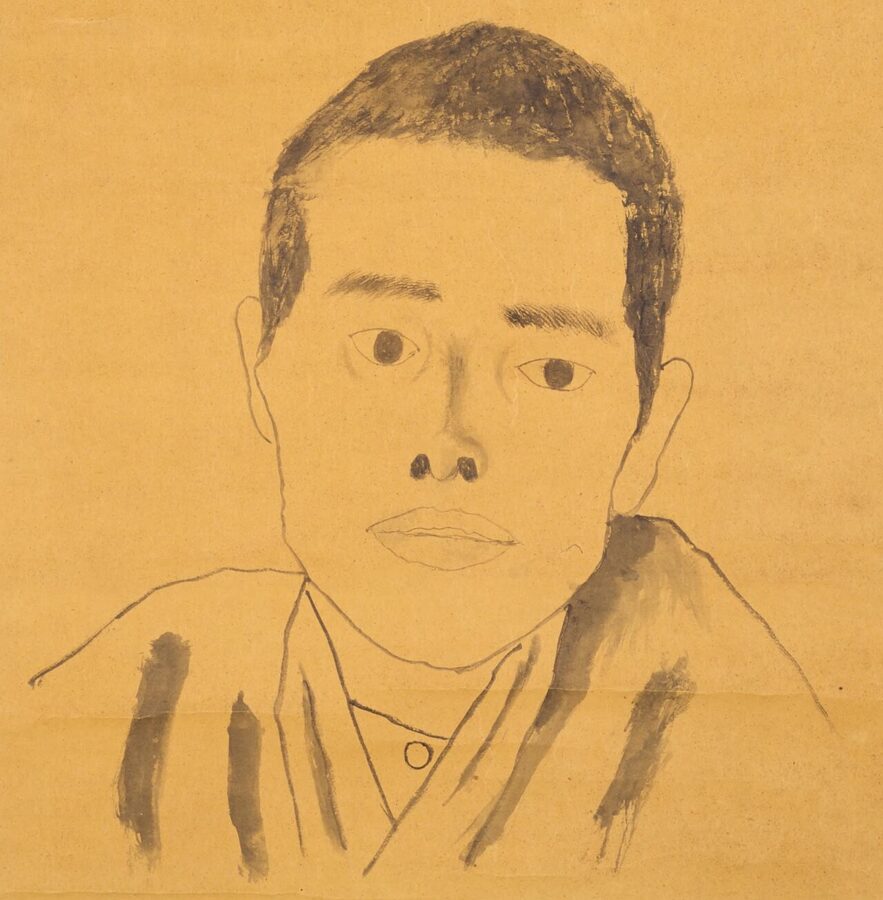
He spent his last years flat on his back in Negishi, guiding the magazine Hototogisu until days before he died at 34. His pupils split modern haiku between them: Takahama Kyoshi for tradition and the season word, Hekigotō for experiment.
Haiku in Japan today
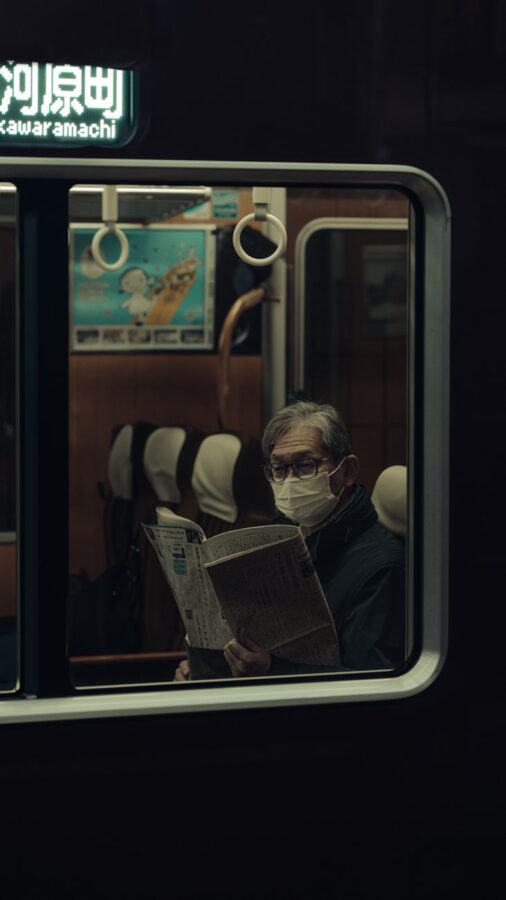
Haiku is not a museum art in Japan. Millions write it who would never call themselves poets, and you meet it in the newspaper, on a tea bottle and on prime-time television in the same week.
Newspapers and NHK
Most papers run a weekly haidan (俳壇), a haiku column filled from readers’ postcards. At the Asahi Shimbun four selectors have each read every entry since 1970 and chosen their own ten, so 40 verses appear each week. NHK’s educational channel runs a weekly haiku programme where the selectors set a season word and read the best entries on air.
Haiku on a tea bottle
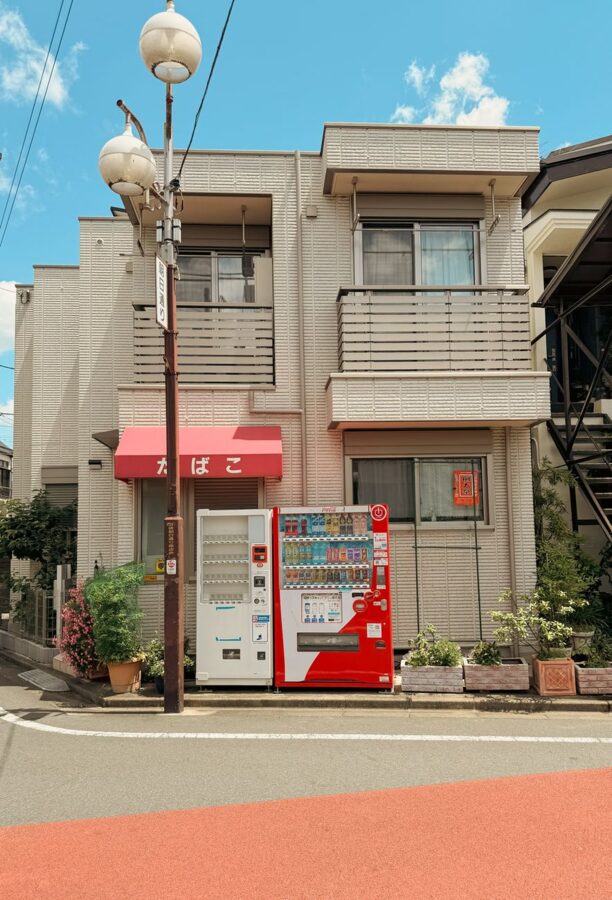
Itoen’s Oi Ocha New Haiku Contest prints winning verses on its green tea bottles, so a commuter at a vending machine gets a poem with the drink. The 37th contest, closed in February 2026, drew 1,739,032 haiku from 452,270 people in 60 countries; the first drew 41,373. Entrants keep a 5-7-5 rhythm but need not use a season word, so many winners read like diary entries, and about 1.58 million entries came from schools.
School haiku
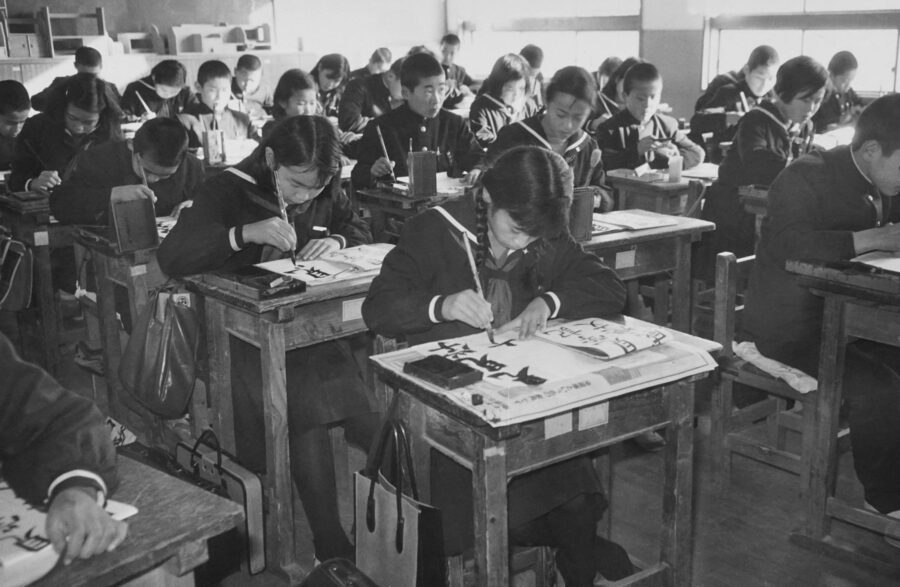
The national curriculum has primary pupils reading aloud and memorising simple haiku and tanka, then writing their own, which is why the frog is shared knowledge. In the 37th Itoen contest 2,793 schools took part.
Prebato and the red pen
Prebato!! (プレバト!!), a Thursday evening variety show from MBS on the TBS network, turned haiku into entertainment. Celebrities write on a set theme, and the haiku teacher Itsuki Natsui ranks them “talented”, “ordinary” or “talentless”, then rewrites their lines in front of them. Moving one word or swapping a kigo lifts a verse a grade, and viewers learn the craft by watching it.
The segment has run for more than a decade and was still on air through 2026. Natsui also sits on the Itoen judging panel, which tells you how close popular haiku and serious haiku are in Japan.
Senryū, the comic twin
Senryū (川柳) keeps the 5-7-5 but drops the season word and the cut, and aims at people instead of nature. The form is named after Karai Senryū, a ward headman in Edo who judged verse-capping contests from 1757; his pen name means “river willow”. A selection he judged came out in 1765 as Yanagidaru, the willow cask, and was a hit.
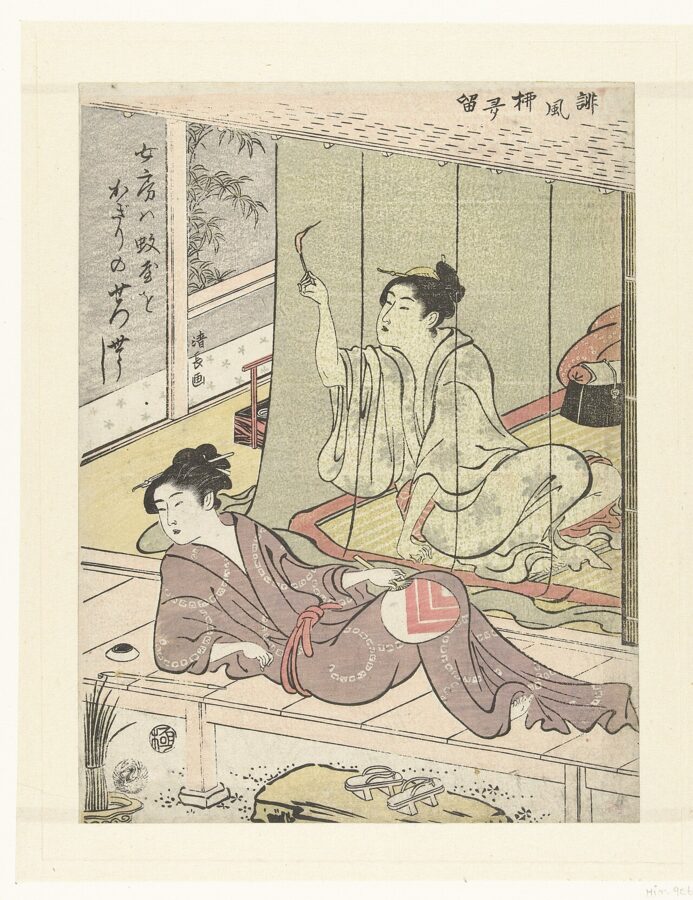
An early verse suits a reader of kanji: ko ga dekite / kawa no ji nari ni / neru fūfu (子が出来て川の字なりに寝る夫婦). A child arrives, and husband and wife now sleep in the shape of 川, two long strokes with a short one between.
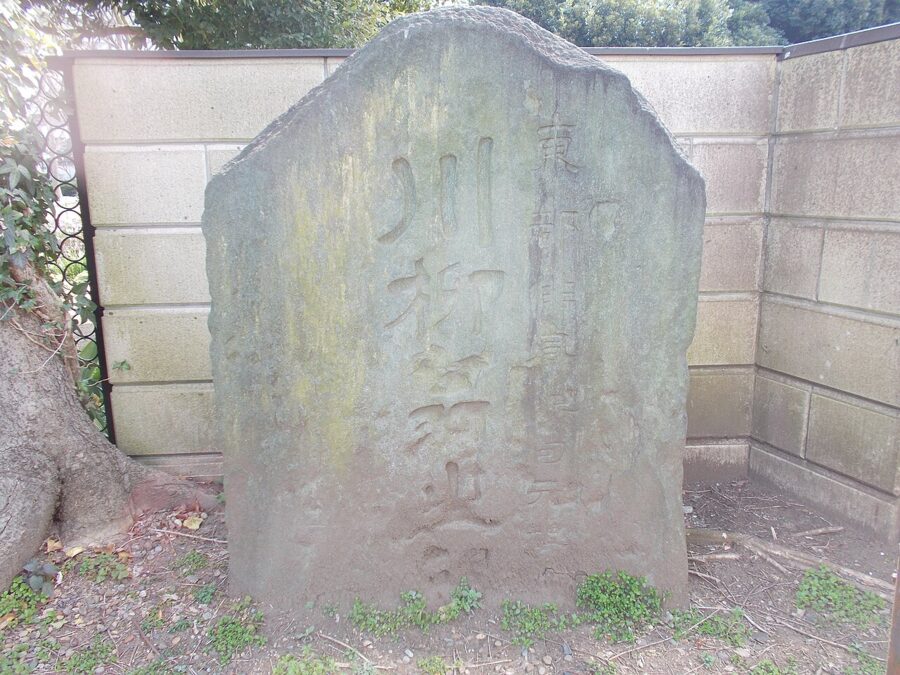
The modern heir is the salaryman senryū contest run by the insurer Dai-ichi Life since 1987, now open to all as Sara-tto Ikku! Watashi no Senryū Konkūru. The 2025 round drew about 54,000 verses, and the public vote announced in May 2026 went to a verse about going cashless and being left penniless when the phone battery dies.
How to write a haiku
- Start with something you noticed today. A sound, a smell, a thing on the windowsill. A thing, not a feeling.
- Find its season. Choose one kigo, or let the thing be the kigo. In English, pick a word that clearly belongs to one season: first snow, cicadas, falling leaves.
- Put two things side by side with a gap between them, and do not explain the link.
- Cut. In Japanese try や or かな; in English, a line break or a colon at the turn.
- Count, then stop counting. Japanese: 5-7-5 on. English: short, long, short.
- Delete the feelings. “Lonely”, “beautiful”, “sad”: if the image is right, the reader supplies them.
- Read it aloud and change one word. That is all a Prebato correction usually is.
To see the season word work, keep two lines and change only the kigo. “The station clock / five minutes fast” is nothing alone. Put “cicadas” in front and you have a stifling platform; put “first snow” and the clock belongs to a dark morning and a train that will be late anyway. Put “cherry blossom” and it is April, with someone in a new suit too early for a first day.
Where to find Bashō today
Three places let you stand where Bashō wrote his best-known verses, all on the route of his 1689 journey, Oku no Hosomichi (奥の細道), The Narrow Road to the Deep North, which set out from Fukagawa.
Fukagawa, Tokyo
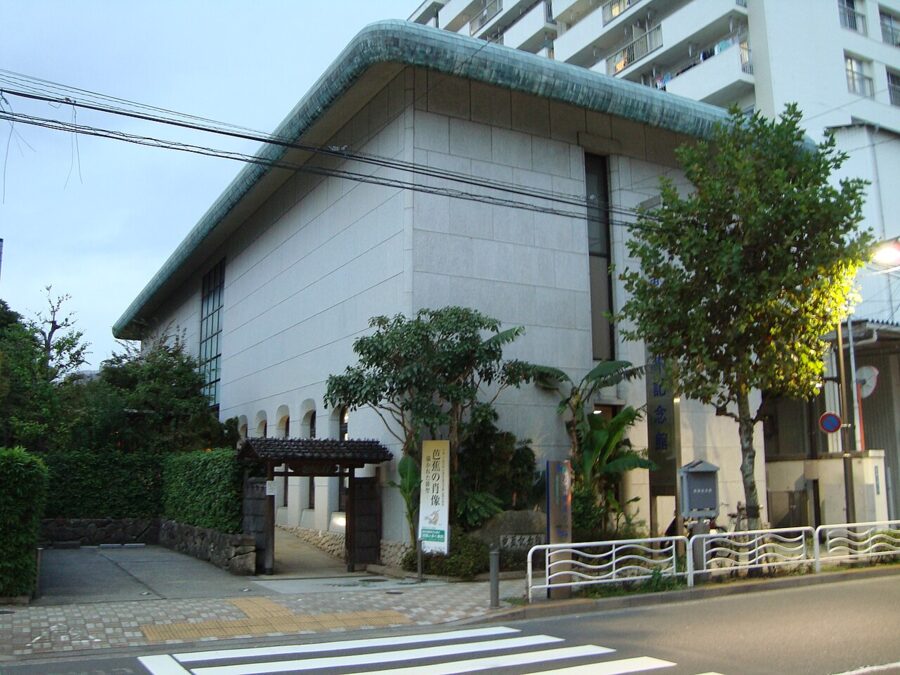
The Koto City Bashō Museum at 1-6-3 Tokiwa is seven minutes from exit A1 of Morishita Station. It opens 9:30 to 17:00 (last entry 16:30), closed on the second and fourth Mondays and over New Year, and adult entry is ¥200 (about $1), as of November 2026. Its exhibition on 340 years of the frog verse runs to 13 December 2026, and the museum closes for repairs from 15 to 18 December.
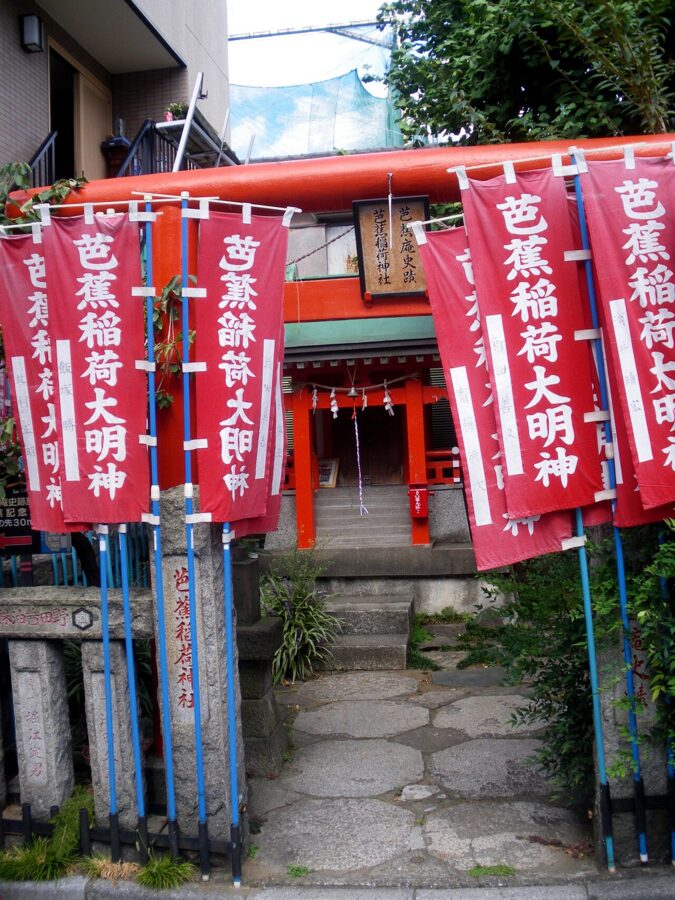
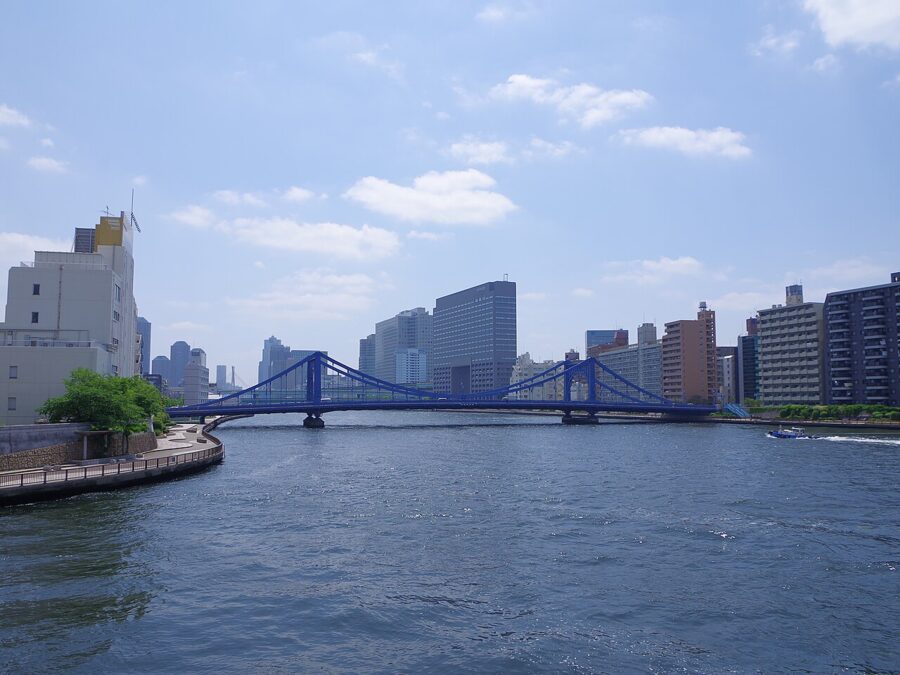
Nearby, on the annexe roof at 1-1-3 Tokiwa, the Bashō-an Historic Site Garden overlooks the meeting of the Sumida and Onagi rivers, free, 9:15 to 16:30. After closing the bronze Bashō turns on his base, lit up over the river.
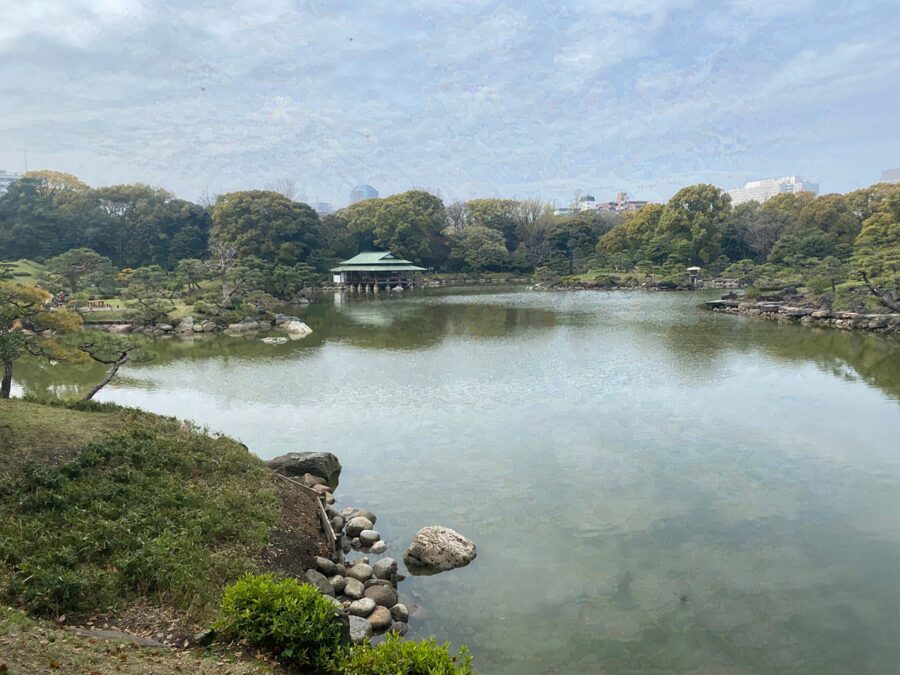
Hiraizumi, Iwate
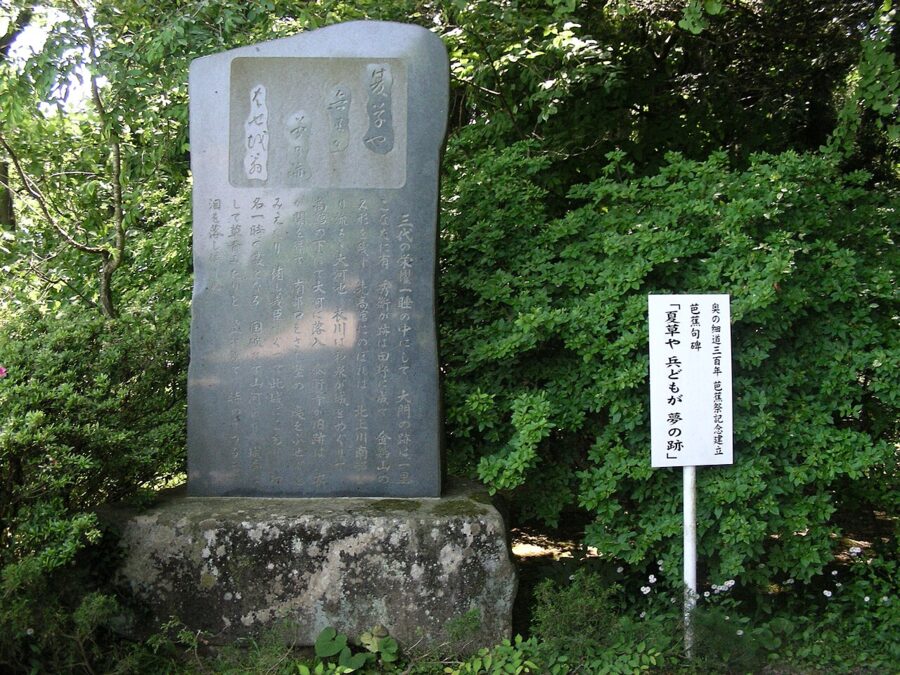
Bashō reached Hiraizumi in 1689, five centuries after its Fujiwara lords fell. On Takadachi hill, where Minamoto no Yoshitsune died, he wrote the summer grasses verse, now carved in stone by the Gikeidō hall.
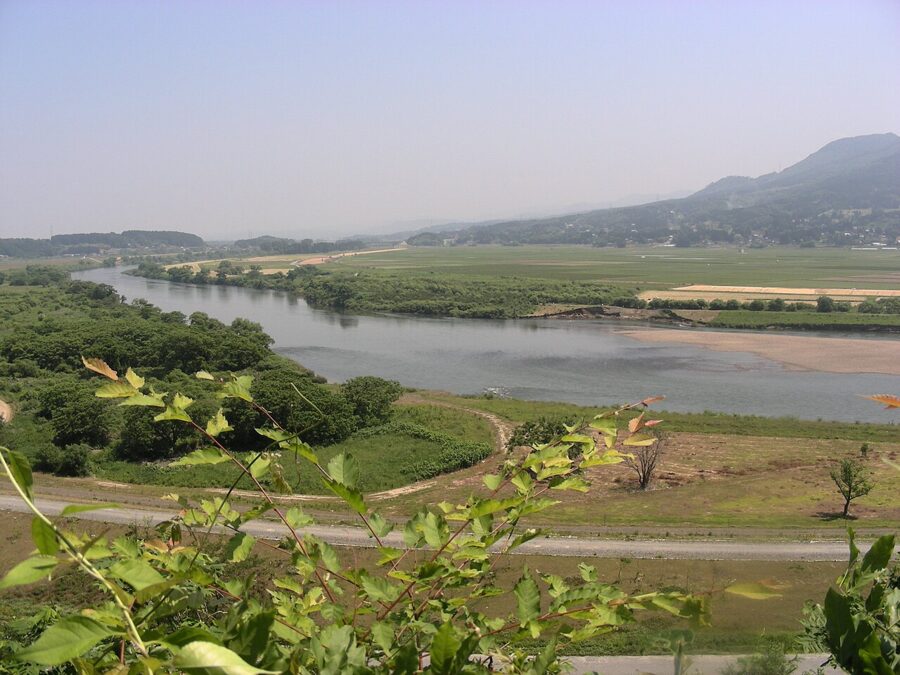
At Chūsonji he saw the golden Konjikidō and wrote of the early summer rains that had spared it. The temple’s standard ticket, ¥1,000 (about $7) for adults as of November 2026, covers the Konjikidō, the treasure house, the sutra hall and the old shelter hall.
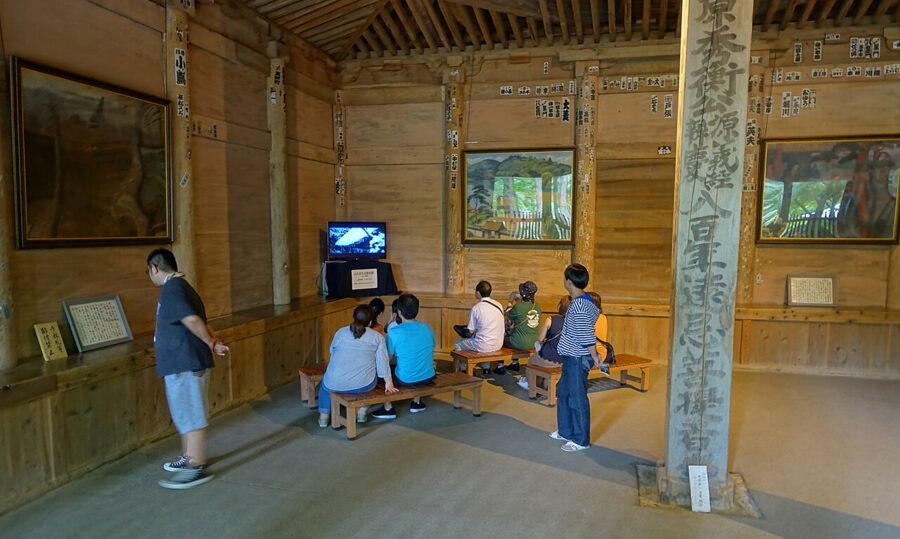
Yamadera, Yamagata
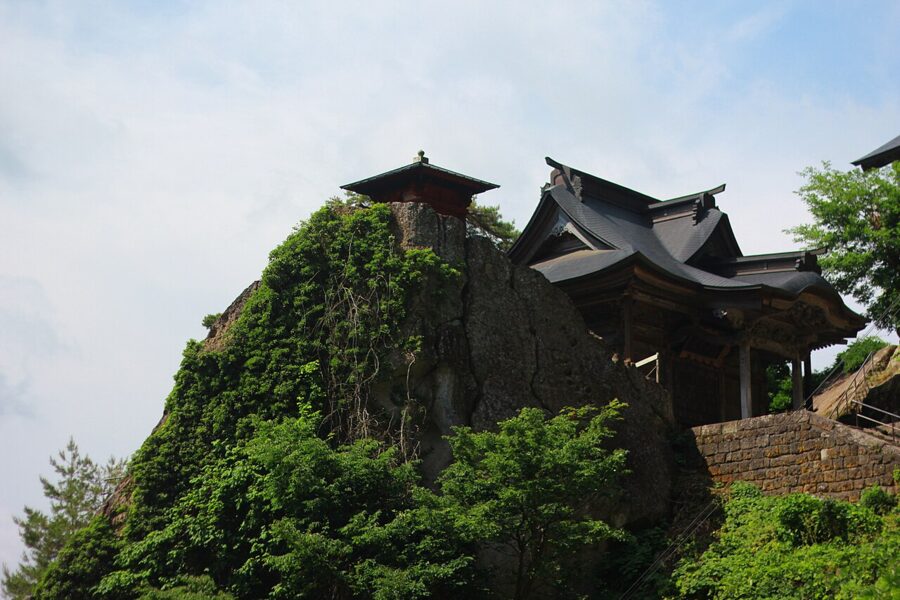
Risshakuji, everyone’s Yamadera, climbs a rock face above JR Yamadera Station on the Senzan Line. Bashō came in the summer of 1689 and wrote shizukasa ya / iwa ni shimiiru / semi no koe: the stillness, soaking into the rocks, the cicadas’ cry.
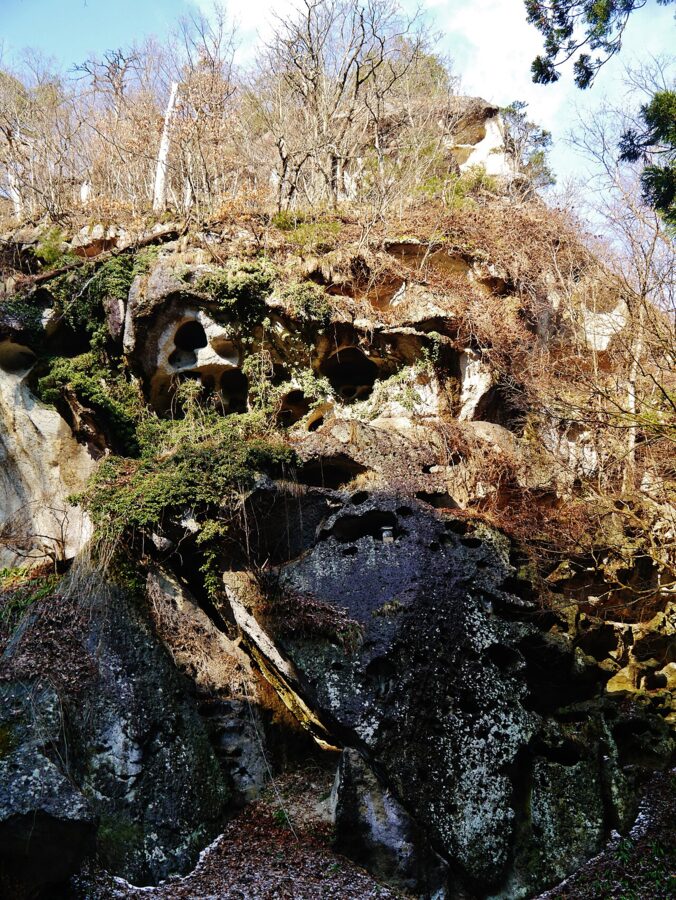
The path to the inner hall is 1,015 stone steps, passing the semizuka (せみ塚), cicada mound, where his followers buried a slip with the verse. Risshakuji charges ¥500 (about $3) for adults, cash only, and opens at 8:00 (8:30 in winter), closing between 15:00 and 16:00 by season, as of November 2026.
Stand by the river in Fukagawa at closing time and count the frog verse on your fingers: five, seven, five. The pond has gone and the frog is a stone in a glass case, but the splash still takes as long as it did in 1686.