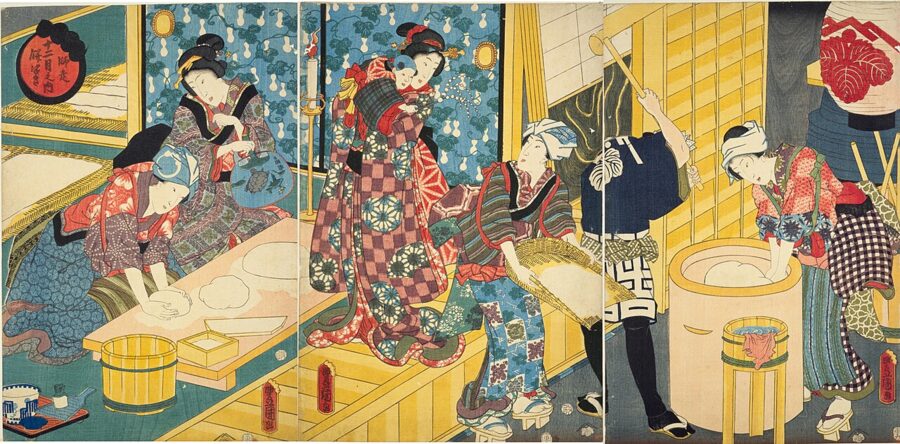
In the last days of December, somewhere in a Japanese neighbourhood, one person lifts a wooden mallet over a mortar of steamed rice while another waits to dart a wet hand in and turn the mass between blows. What they are making is mochi (餅), and the character they write it with meant, in China, a cake of wheat.
That mismatch runs through the whole subject. In Japan mochi is glutinous rice, steamed and pounded until the grains vanish into one elastic dough, and it carries more ceremony than almost any other food. Yet a good share of the sweets sold as mochi contain no pounded rice at all.
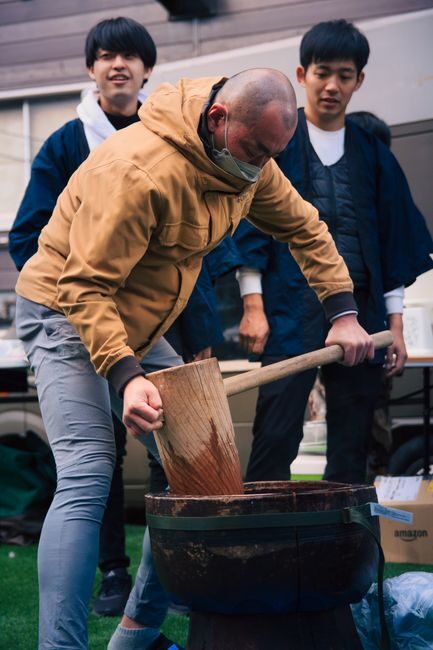
At its plainest, mochi is rice, water and effort. Fresh mochi is about 45 percent water and so dense that, volume for volume, it carries far more energy than a bowl of rice, which made it the food of travellers, soldiers and long winters.
In this article
餅: A Wheat Cake That Became Rice
The character puts 食, food, beside 并, to join, which also lends the sound. The Wamyō Ruijushō, a dictionary of about 934, explains 餅 as flour made to hold together, reads it mochihi, and notes that the flour is wheat. It takes 14 or 15 strokes, depending on how the food radical is drawn, and has been on the jōyō list of everyday kanji since 2010.
In Chinese, 餅 (bǐng) still means a round of wheat dough, and a mooncake is 月餅. So when people ask whether a mooncake is really mochi, the answer is that it carries the older sense of the character. What Japan calls mochi, Chinese mostly calls 糕 or 糍, and Korean calls tteok.
The switch in Japan is old. In The Tale of Genji, written around 1000, the cakes brought to Genji late at night for his wedding are mochii, and they are rice. Where the word itself comes from is less certain: sticky rice (mochi-ii, 糯飯), rice you can carry (mochi-ii, 持飯), and the full moon (mochi, 望) are the usual candidates, and the encyclopedias say none is settled.
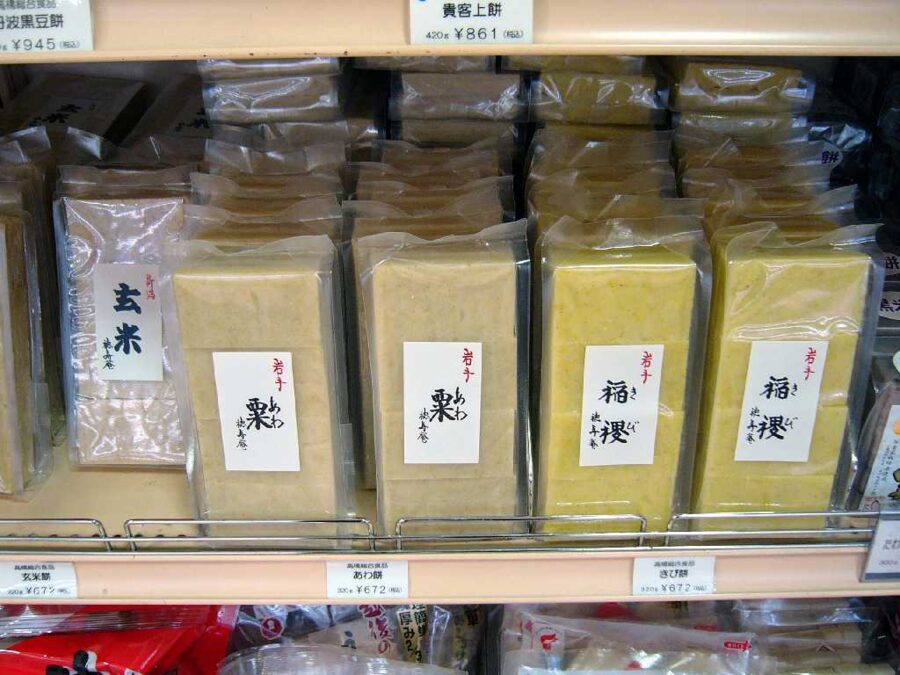
The word also stretches past the rice. The dictionaries on Kotobank define mochi as steamed, pounded glutinous rice, then add that it covers cakes of other grains, of rice flour, and of starches such as kudzu and bracken. Remember that when you reach the sweets.
Mochi-Gome, Mortar and Mallet
The rice is mochi-gome (糯米), glutinous rice, which means sticky; there is no gluten in it. Everyday uruchi (粳) rice, the one in a bowl of Japanese food, is about one-fifth amylose and four-fifths amylopectin, while mochi-gome is almost all amylopectin, the starch that turns to glue when cooked. Drop iodine on a cut grain and ordinary rice stains blue; mochi-gome turns red-brown.
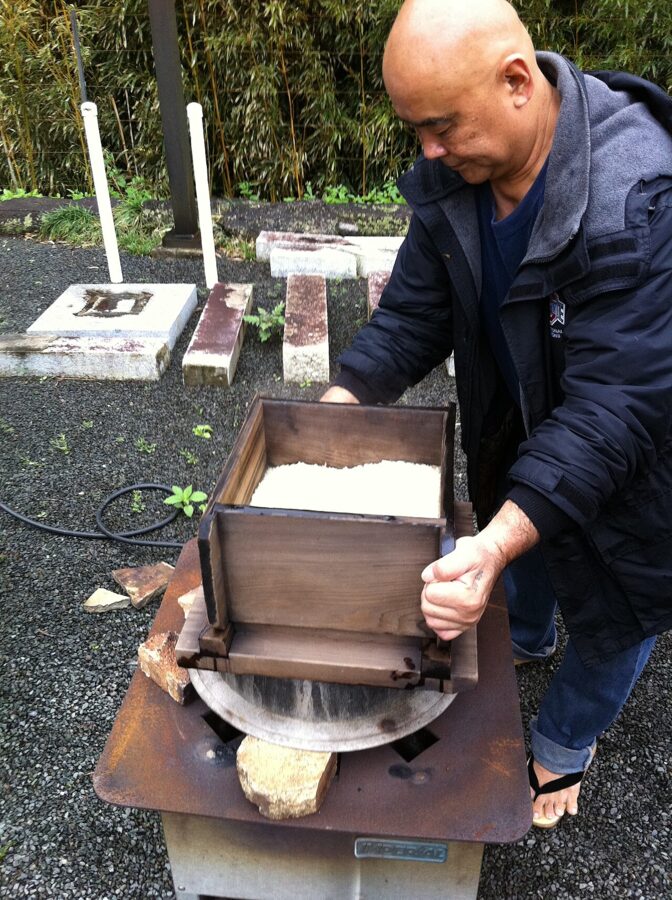
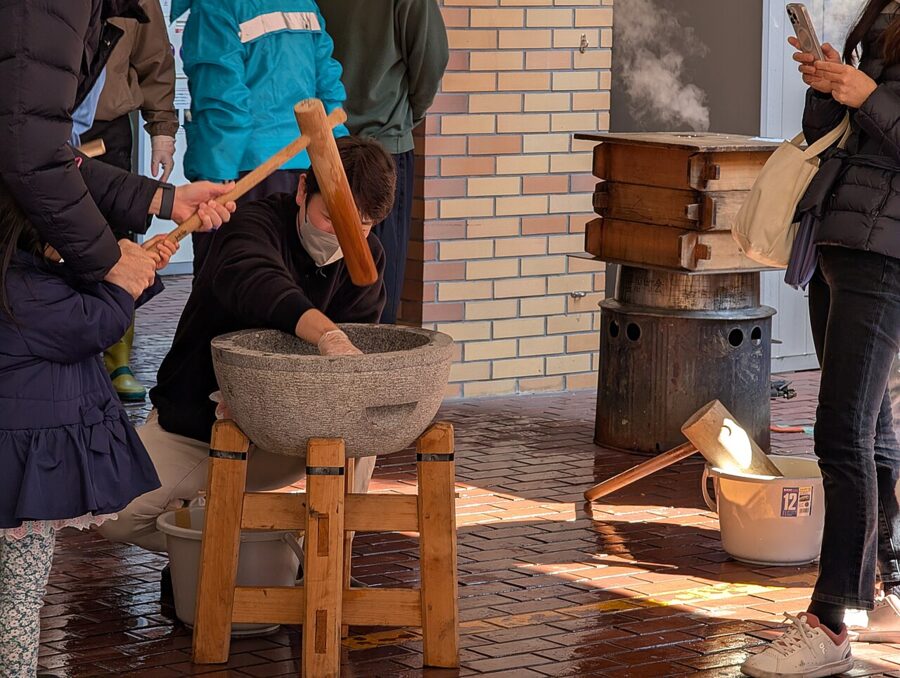
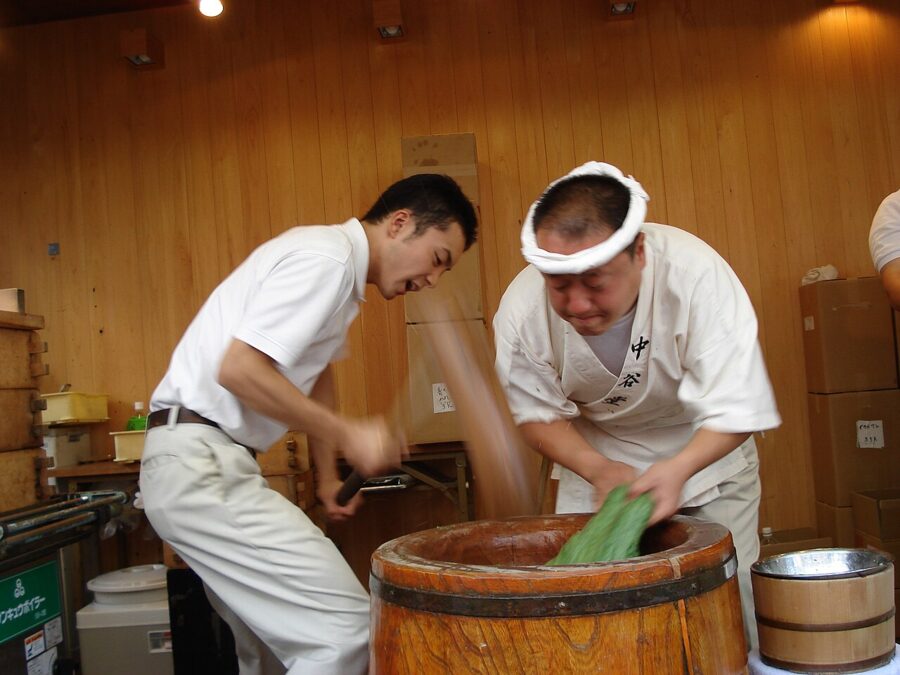
By hand, the rice soaks for eight to twelve hours, steams in stacked wooden seiro (蒸籠), and goes into the usu (臼), a mortar of wood or stone. It is crushed with the kine (杵), the mallet, then pounded in earnest.
The pounding is a two-person job, and the brave one is the second, who wets a hand and folds the dough between blows. Timing is the whole craft. The event is mochitsuki (餅つき), and the shout of “yoisho” with each blow is a December sound in many towns.
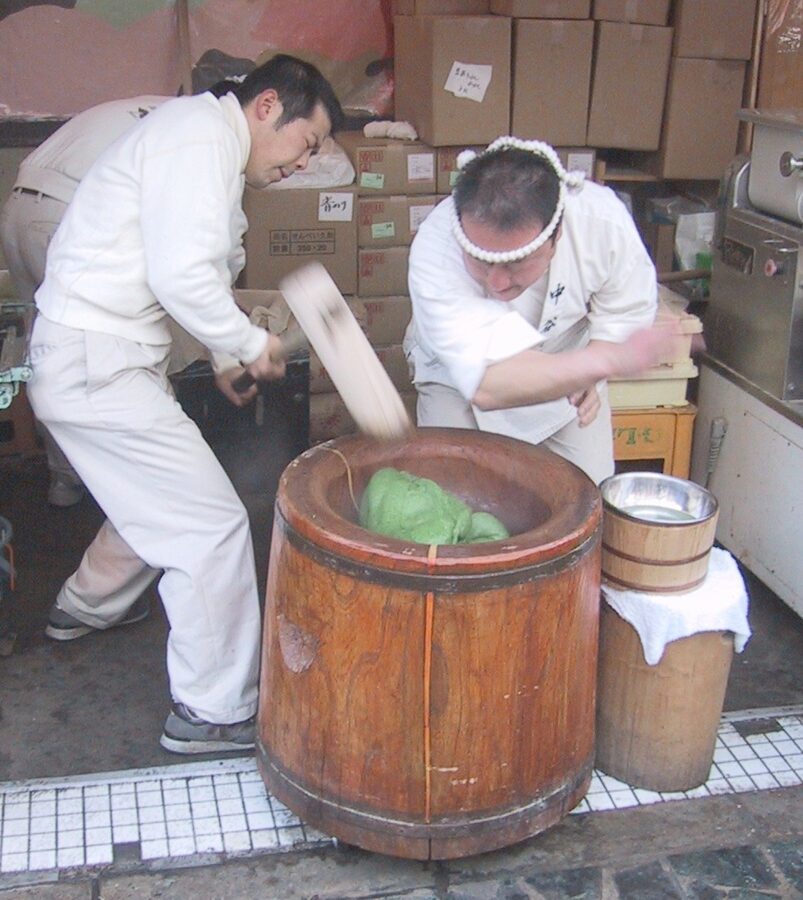
Most home mochi now comes from an electric maker that steams and kneads in one drum, and shops use machines that pound it by the kilo. To my mouth, hand-pounded mochi has more spring, but the gap is smaller than purists claim.
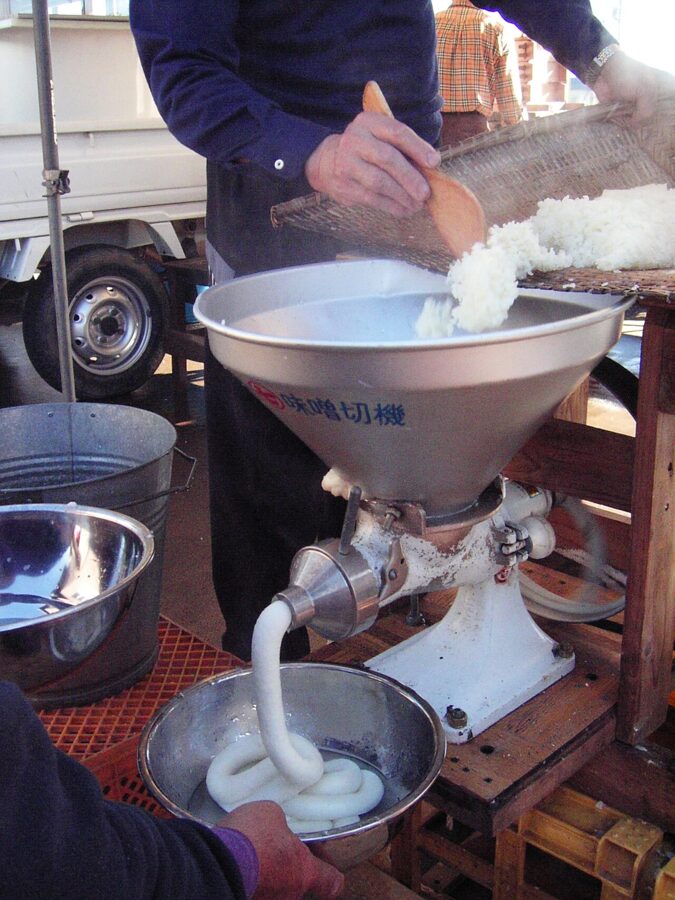
Square in the East, Round in the West
In eastern Japan the warm mochi is rolled into a slab, noshi-mochi (伸し餅), and cut into squares: kiri-mochi (切り餅). In the west each piece is pinched off and rolled into maru-mochi (丸餅), round mochi. The usual explanation for the square is Edo’s crowds, since one slab is faster to cut than hundreds of balls are to roll; it sounds right, and nobody has proved it. The border runs through central Honshu and is not clean.
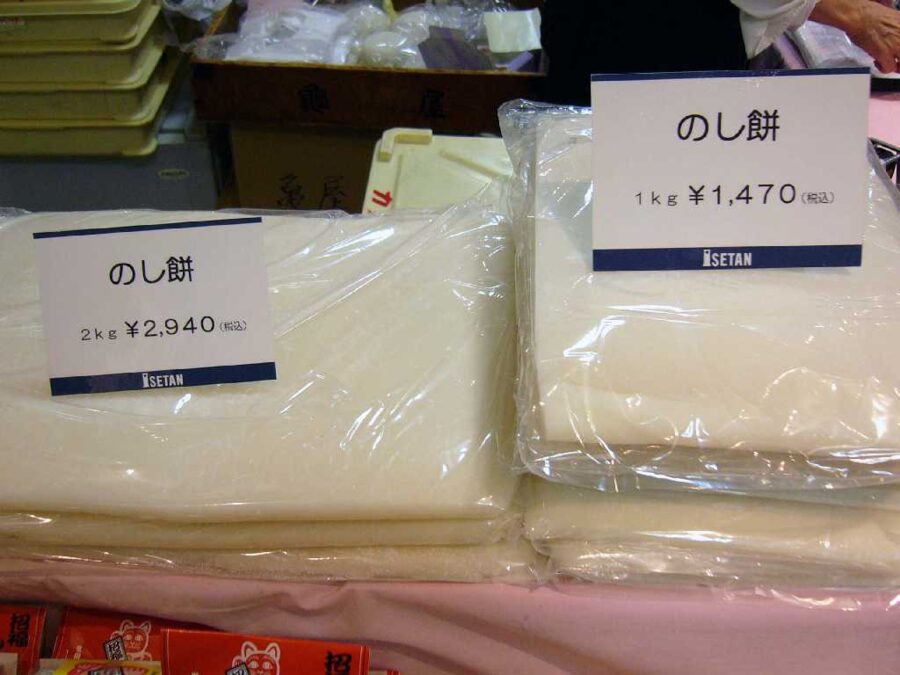
Fresh mochi hardens within a day or two and moulds soon after, so it goes in the fridge for days and the freezer for longer. Vacuum-packed kiri-mochi keeps for months, which is how most households buy it. Old encyclopedias say a little mould can be pared away, then warn that some moulds make aflatoxin; I would throw the piece out.
New Year: Mirror, Soup and Mallet
The pounding belongs to the last days of December, the busiest part of New Year preparation. An old rule names the 28th, because the 29th has a 9, ku, which sounds like 苦, suffering. The first batch is for the gods.
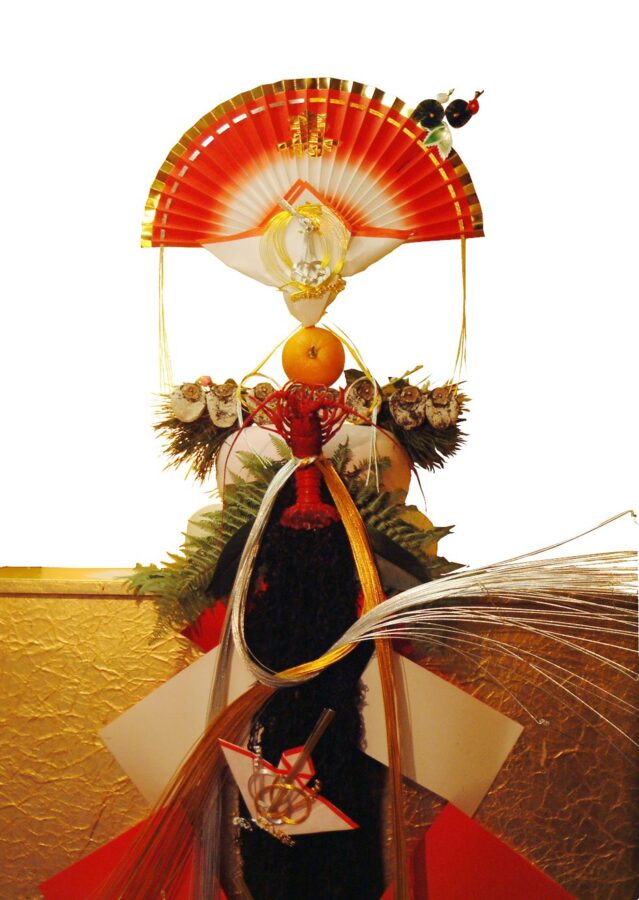
It becomes kagami mochi (鏡餅), mirror mochi: two flat rounds, the smaller on the larger, set out for the god of the incoming year and named for the old round bronze mirrors. On top sits a daidai (橙), a bitter orange, because daidai also means 代々, generation after generation. Kombu is there for yorokobu, to rejoice, and like most of Japan’s lucky symbols, the whole stack is a set of puns.
Ozoni, the Soup That Splits Japan
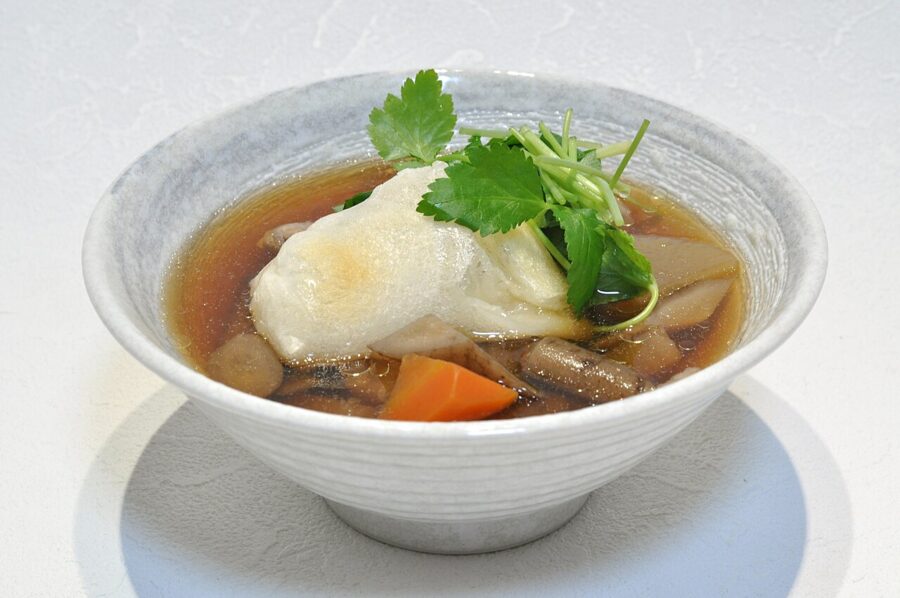
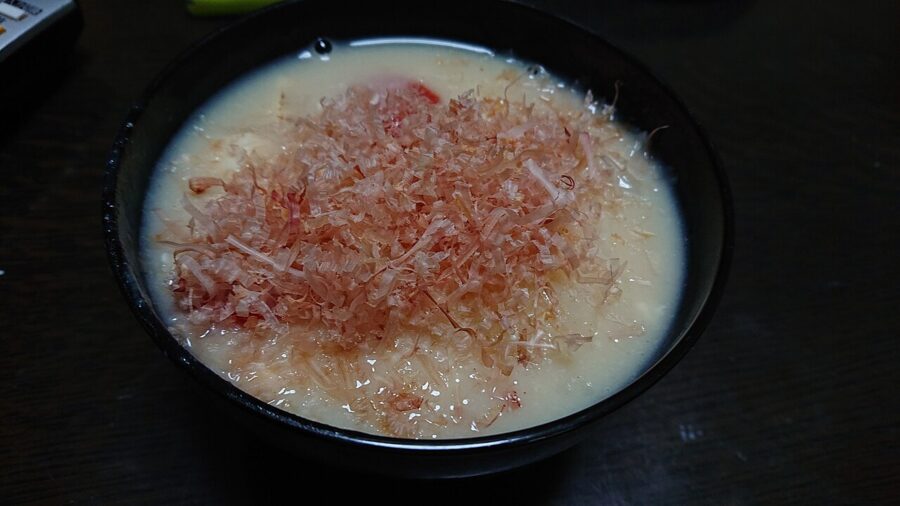
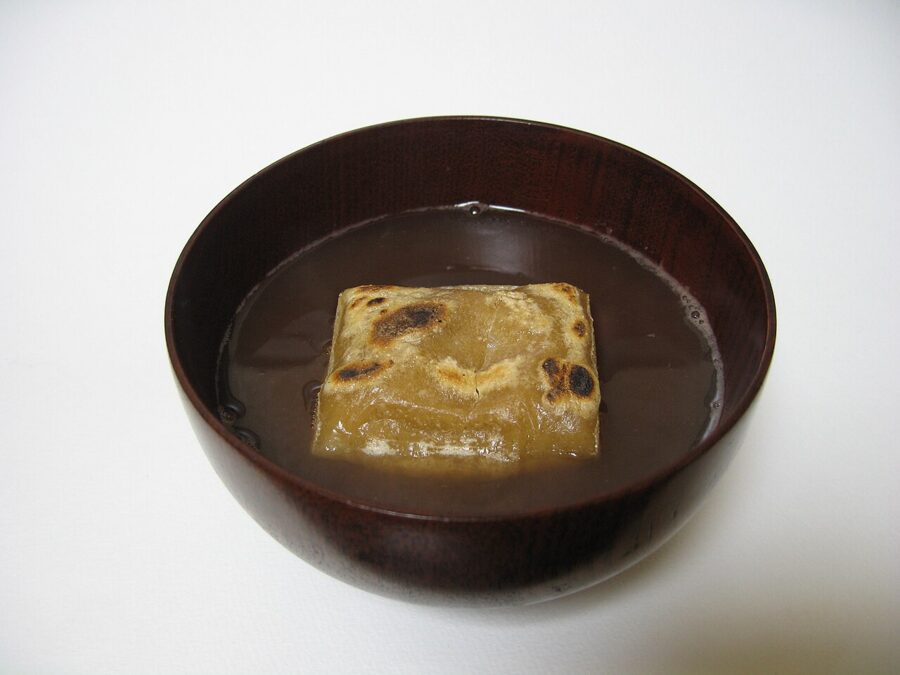
On 1 January the mochi goes into ozōni (お雑煮), the New Year soup, which began as food shared after it had been offered to the gods. Kanto ozōni is clear dashi with soy sauce, grilled kiri-mochi, chicken, greens and a sliver of yuzu. Kyoto’s is white miso, sweet and thick, with round mochi boiled rather than grilled. One story says Edo’s samurai shunned miso because miso o tsukeru, to get miso on something, means to botch it; the encyclopedia that tells it calls it a theory.
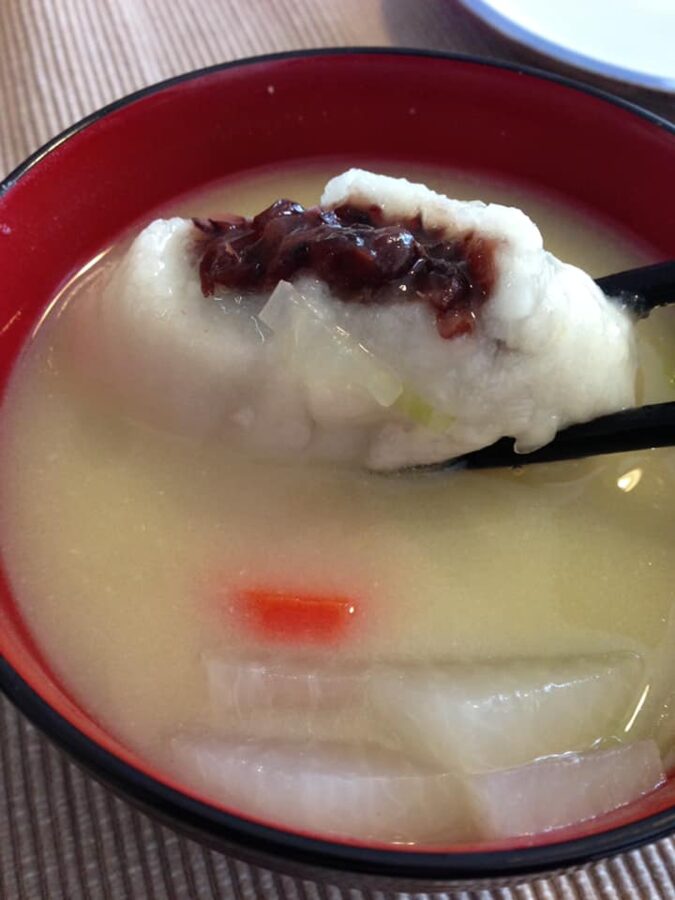
The exceptions are better still. Kagawa fills round mochi with sweet bean paste and serves it in white miso; the agriculture ministry’s page on Kagawa’s an-mochi zōni traces it to Sanuki’s prized white sugar, eaten once a year from about the Meiji era. In eastern and central Tottori, ozōni is round mochi in sweet azuki soup. Hokkaido adds salmon and roe, Hiroshima oysters.
Some families eat no mochi at all on New Year’s Day. Folklorists have recorded this “New Year without mochi” in places between Kanto and Shikoku, where taro soup or buckwheat comes first, and read it as upland farmers honouring the crops they grew.
Kagami Biraki on 11 January
The kagami mochi comes down on 11 January in kagami biraki (鏡開き), the opening of the mirror. It was once the 20th, and the usual account, given as a theory, is that the date moved because the shogun Iemitsu died on the 20th of a month. Nobody cuts it, since a blade suggests cutting ties: the hard rounds are broken by hand or mallet, and called “opened” because “break” is a word to avoid at a celebration.
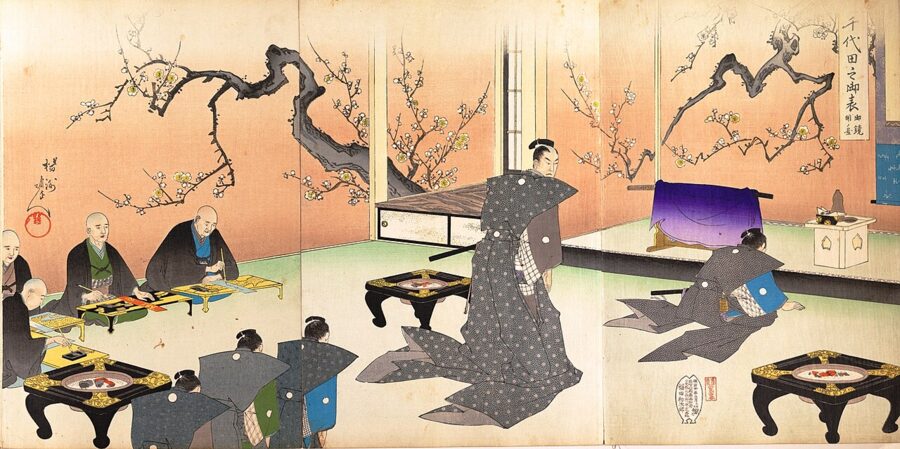
The pieces go into ozōni or shiruko (汁粉), sweet red bean soup, and martial arts halls still end their winter training that way. Kagami biraki is a New Year season word in haiku too.
The Sweets, From Daifuku to Dango
Most mochi outside New Year comes as wagashi (和菓子), Japanese sweets, usually with anko (餡子), sweet bean paste. Some are pounded mochi-gome. Some only borrow the name.
Daifuku, the Big Belly That Became Good Luck
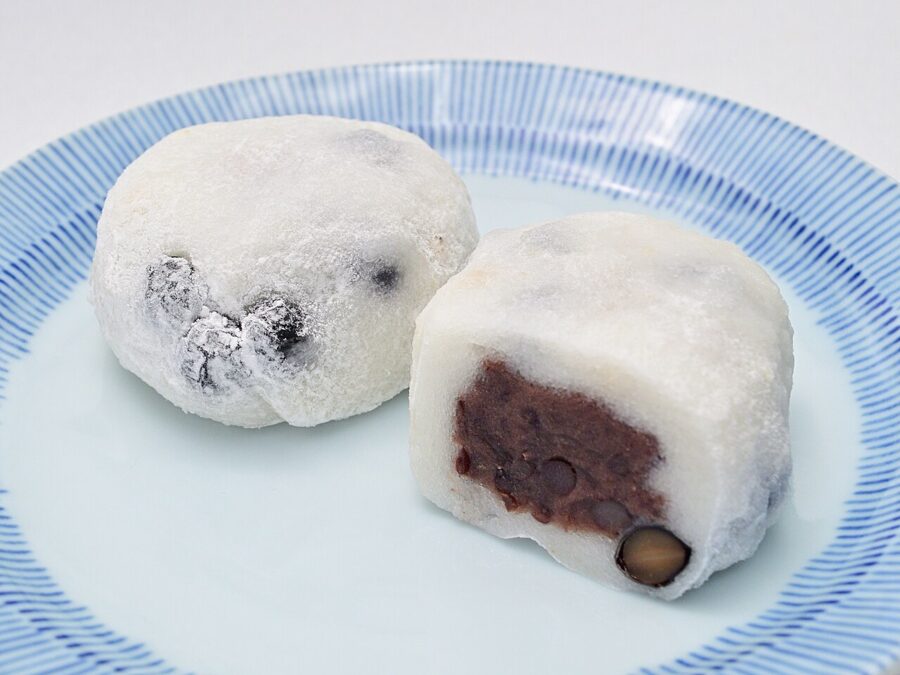
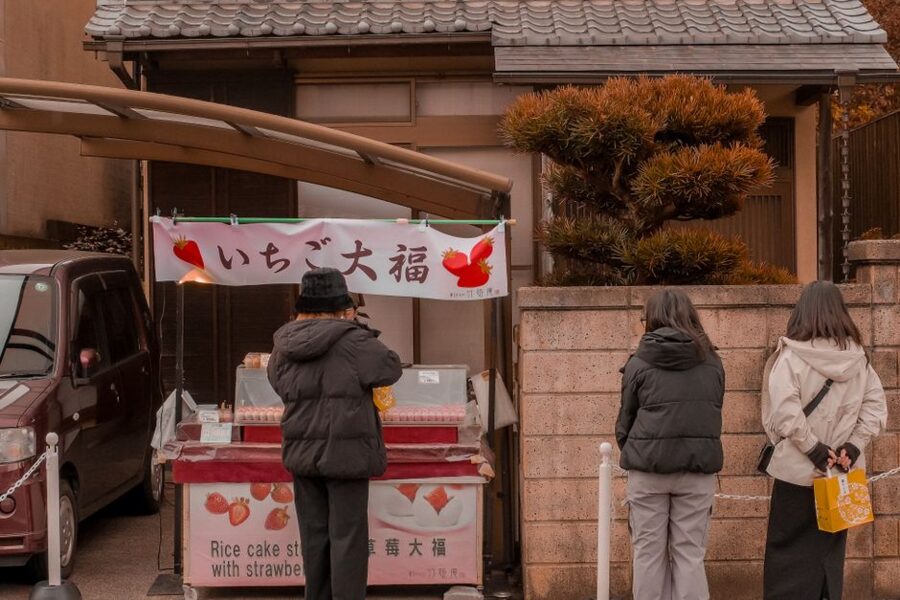
Daifuku (大福) is a thin skin of mochi round a ball of bean paste, and its history is in its name. In the Edo period it was harabuto-mochi, fat-belly mochi; the belly became 大腹, daifuku, and the characters changed to 大福, great good fortune. By the 1790s hawkers grilled it on braziers in Edo’s streets at night, filled with salted bean paste; sugar came later.
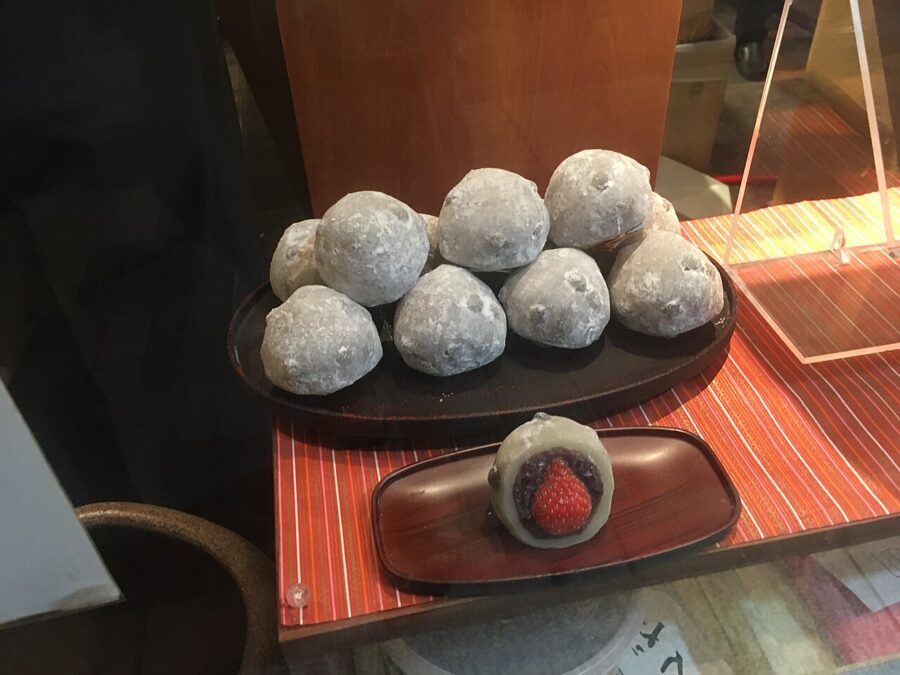
Ichigo daifuku (苺大福), with a whole strawberry inside, is younger than it looks. Several confectioners claim it, all in the mid-1980s, and the claim repeated most often is a Shinjuku shop’s version of 1985.
Sakura Mochi, East and West
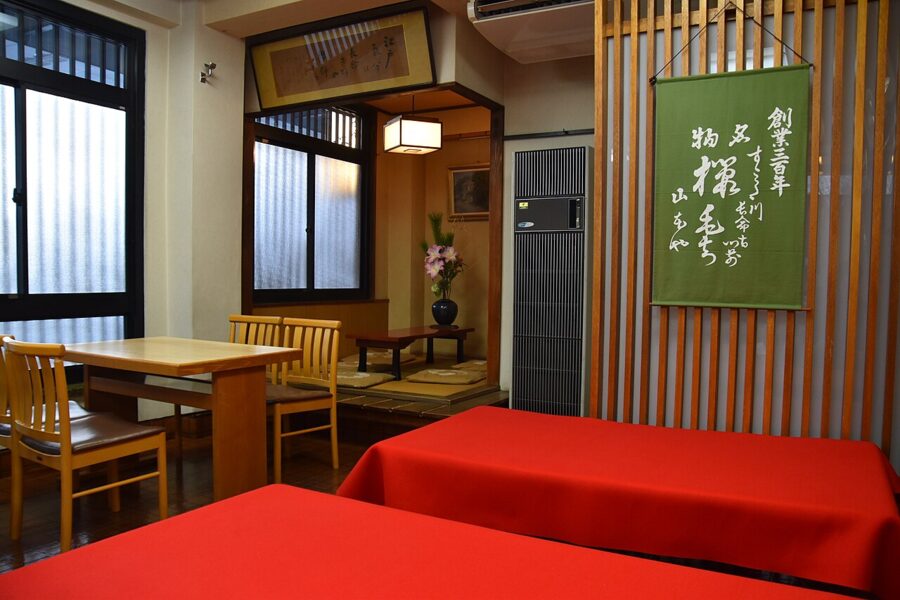
Sakura mochi (桜餅) comes wrapped in a salted cherry leaf while the cherry blossoms are out, in two forms that share little but the leaf. The Kanto kind was first sold in 1717 at Chōmeiji temple in Mukōjima, Tokyo, by Yamamoto Shinroku, and his shop, Yamamoto-ya, still makes it. Its cake is a thin pancake of wheat flour and water, so the best-known mochi in Tokyo is, in the old Chinese sense, a proper 餅.
As of November 2026 the shop opens 8:30 to 18:00, closed Mondays and Tuesdays; one costs ¥300 (about $2) to take away or ¥500 (about $3) to eat in. Eat it the same day, and take the leaves off, the shop says, so their scent stays on the cake.
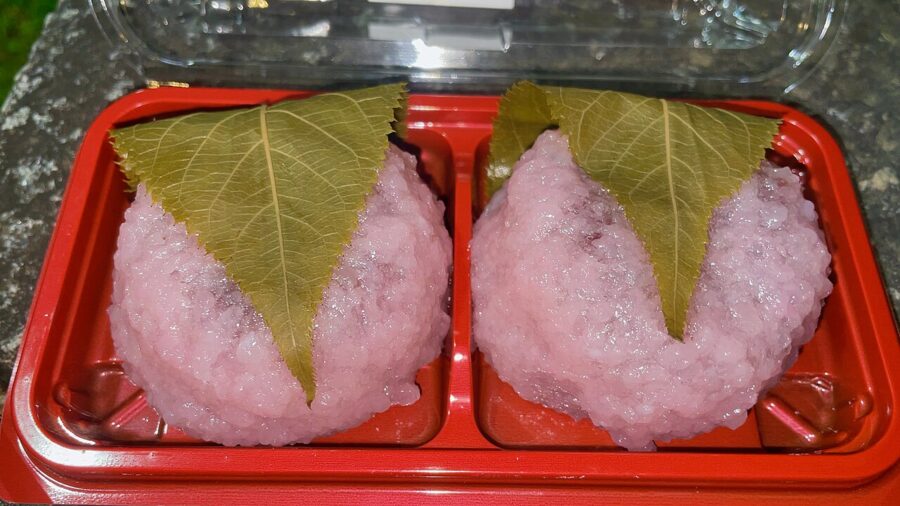
In Kansai, sakura mochi means dōmyōji: glutinous rice steamed, dried and cracked, then steamed again, tinted pink and wrapped round the paste. The rice is named after Dōmyōji, a nunnery in Fujiidera, Osaka, whose nuns made it as a keeping food.
Kusa Mochi and Kashiwa Mochi
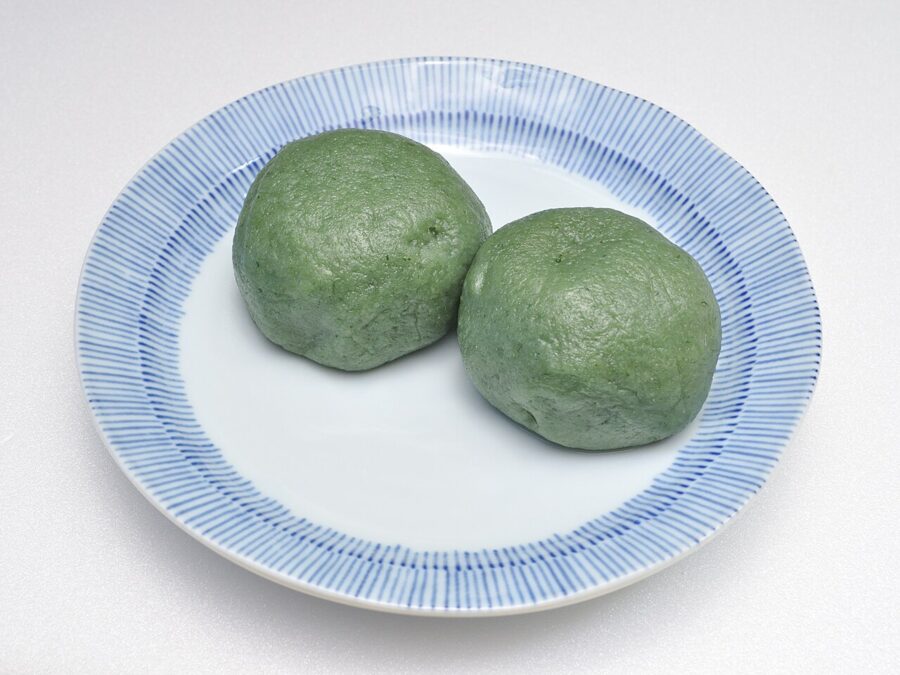
Kusa mochi (草餅), grass mochi, is green with yomogi (蓬), mugwort, pounded into the dough. A court record of 850 has women gathering cudweed for it on the third day of the third month; mugwort took over in the Muromachi period, and it is still a sweet of the Doll’s Festival.
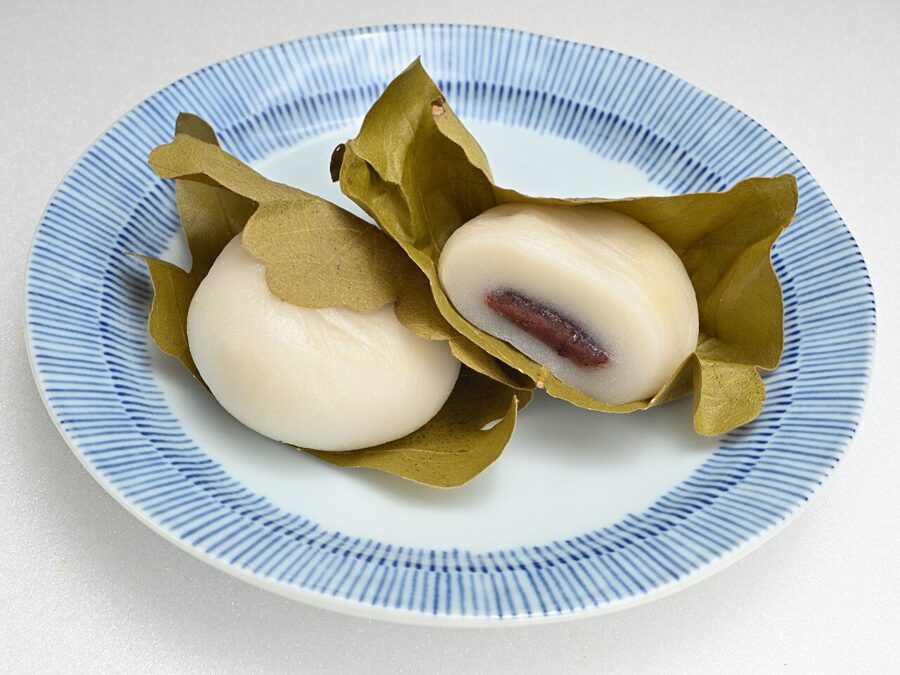
Kashiwa mochi (柏餅) belongs to Children’s Day on 5 May. The kashiwa oak keeps its old leaves until new ones come, so the leaf stands for an unbroken family line. The dough is usually ordinary rice flour, not mochi-gome, and the wrapping is a code: bean paste with the leaf’s underside out, miso paste with the glossy side out.
Warabi Mochi and Dango: Mochi Without the Rice
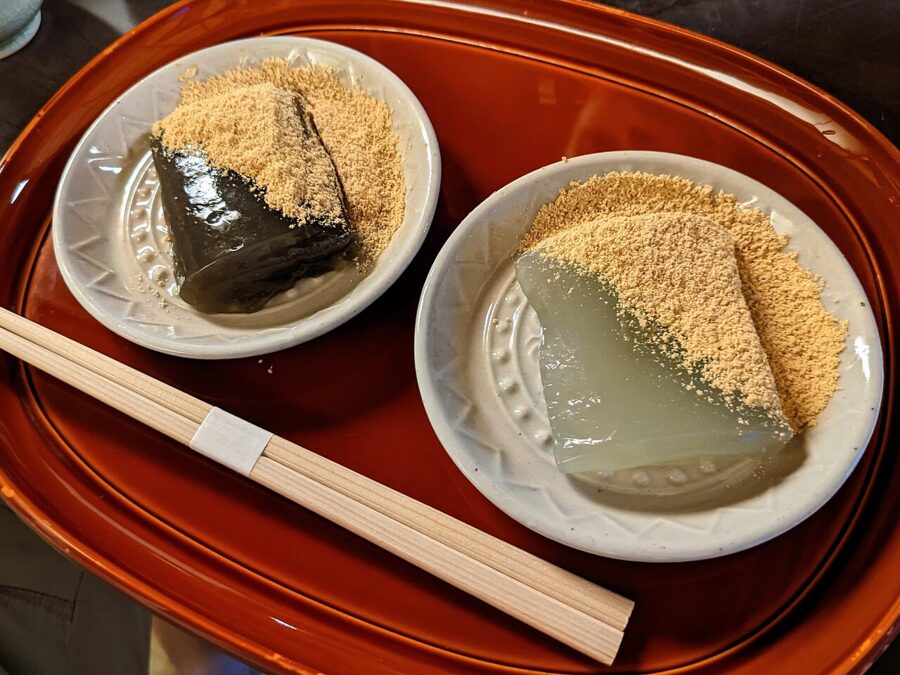
Warabi mochi (わらび餅) has no rice at all. It is starch from bracken root, cooked with sugar and water until clear, cooled and rolled in kinako (きな粉), roasted soybean flour. Real bracken starch is scarce, so most is made with sweet potato starch instead. With a bowl of matcha on a hot day, it is the mochi I would choose.
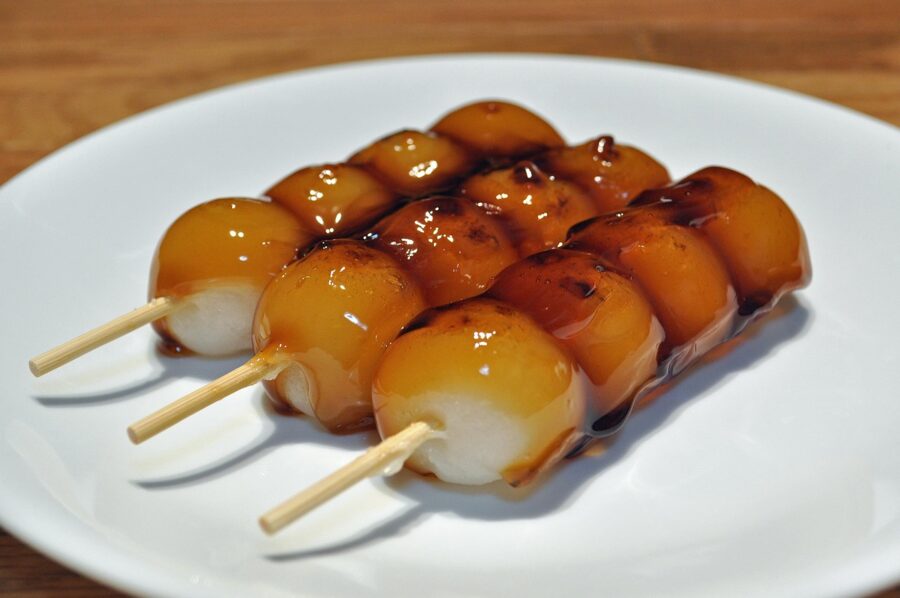
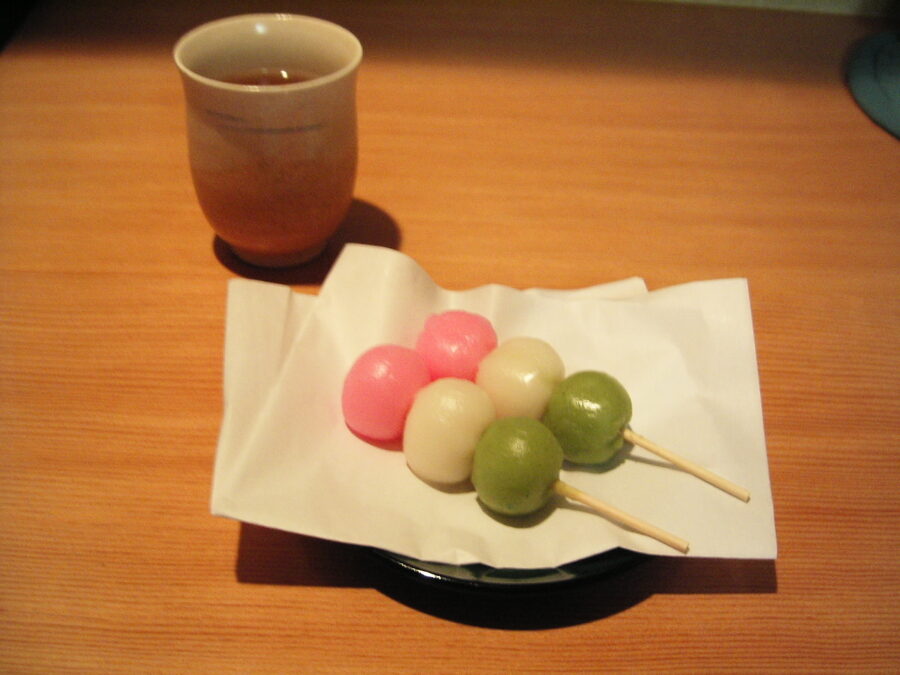
Dango (団子) are rice-flour dumplings on a skewer, and mitarashi dango, grilled in a sweet soy glaze, is tied by legend to Shimogamo Shrine in Kyoto. The proverb hana yori dango, dumplings over flowers, says what most people at a spring picnic are there for.
Mochi Ice Cream Was Invented Twice
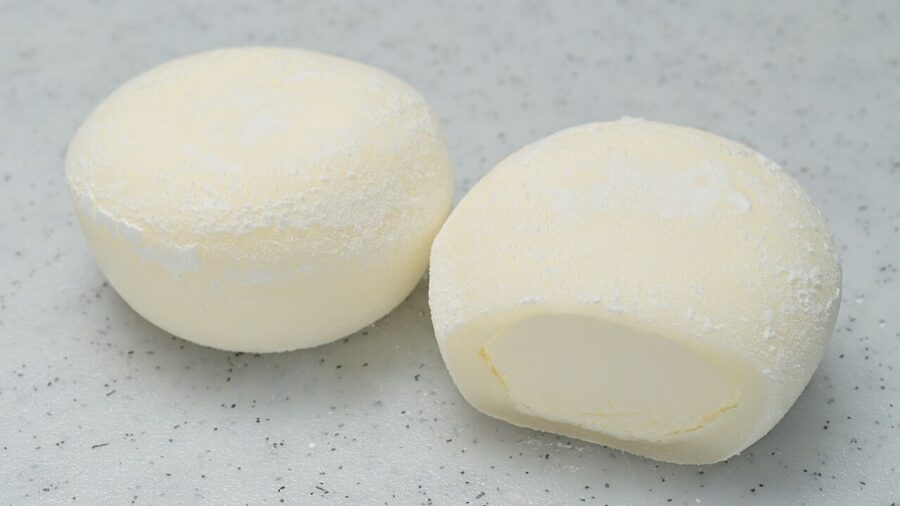
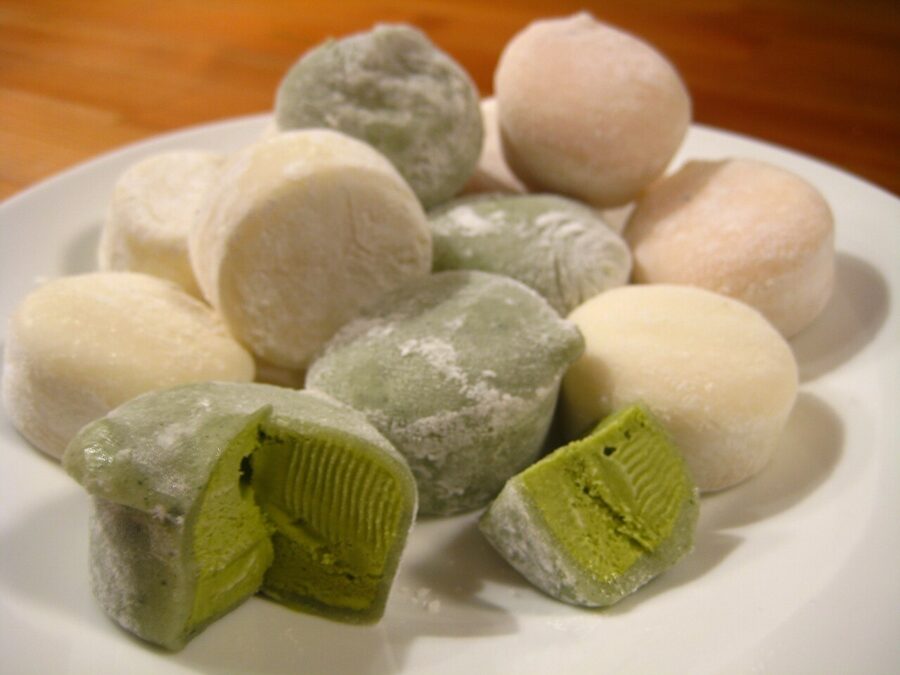
Lotte launched Yukimi Daifuku, vanilla ice cream in soft mochi, in October 1981 as a winter ice cream, and is relaunching it for its 45th anniversary in late November 2026. The small, many-flavoured balls in American freezers came separately, from Mikawaya in the Little Tokyo district of Los Angeles, where Frances Hashimoto developed them in the early 1990s. The version most of the world knows is American, built on a Japanese one.
Savoury Mochi: Grilled, Dusted, Dropped in Soup
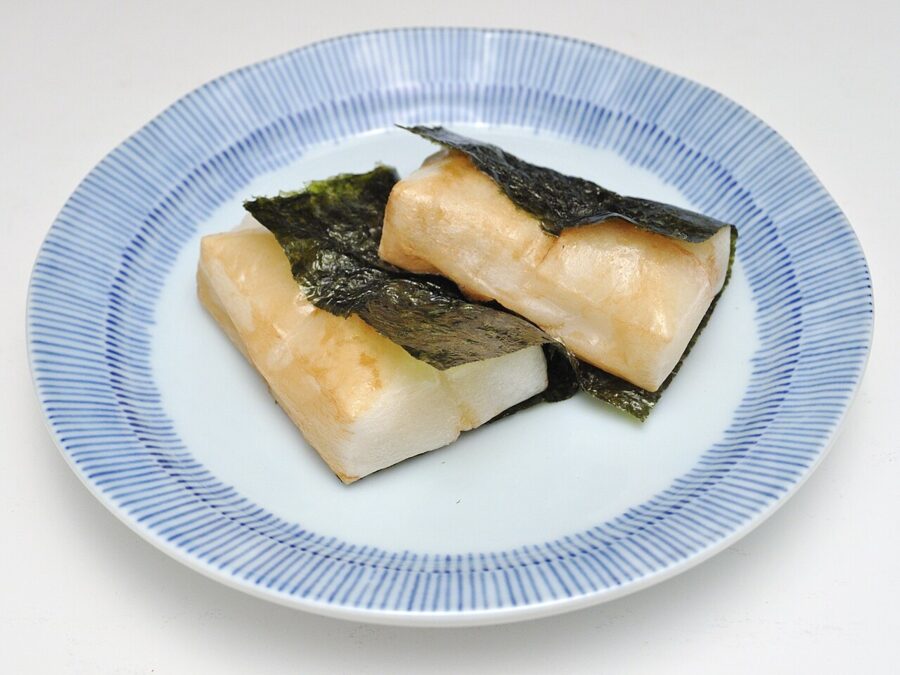
Away from the sweet shop, mochi is a staple you grill. A square of kiri-mochi on a net over a flame puffs and splits in minutes, crisp outside and molten inside, and the old hibachi was made for the job. Brush it with soy sauce, wrap it in nori, and it is isobe-yaki (磯辺焼き), named for the rocky shore where seaweed grows.
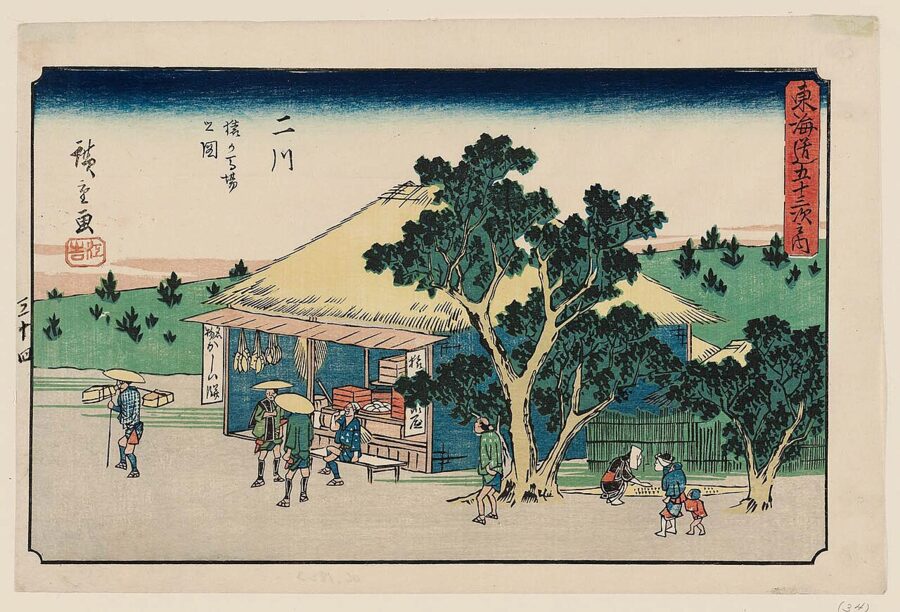
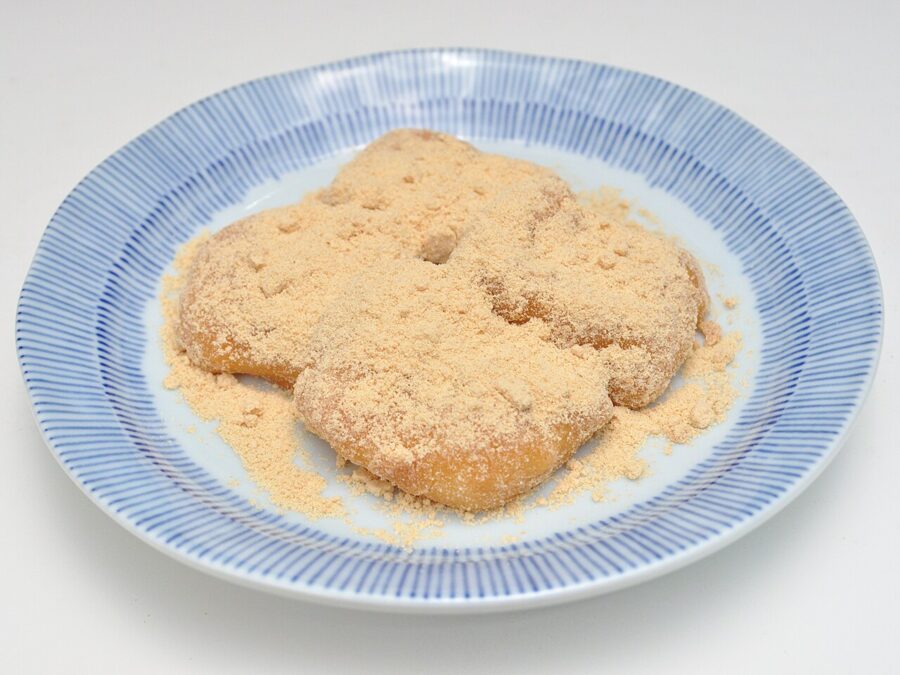
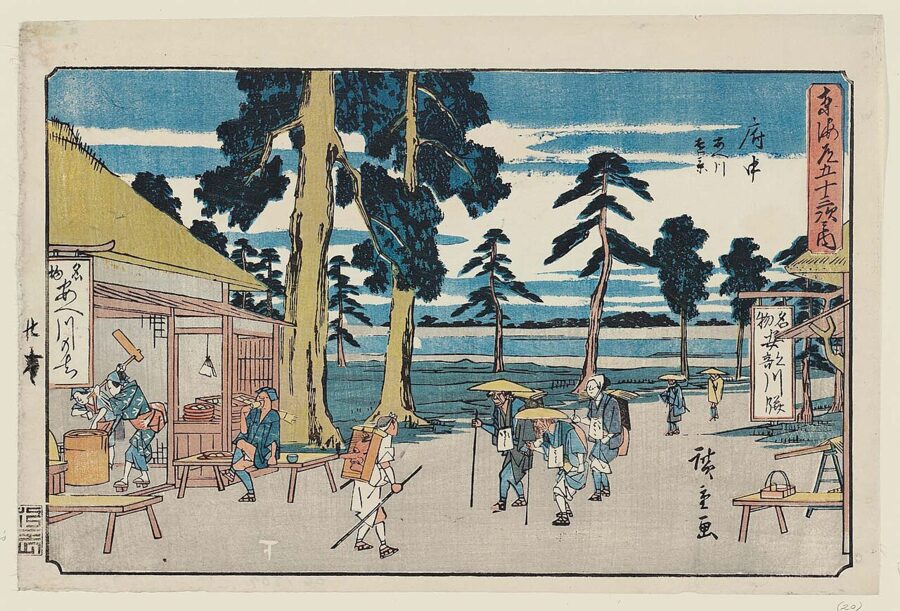
Roll it in sugared kinako and it is abekawa mochi (安倍川餅), after the Abe River in Shizuoka, where Tōkaidō teahouses sold it to travellers waiting at the ford; Jippensha Ikku’s comic road novel mentions it in 1809.
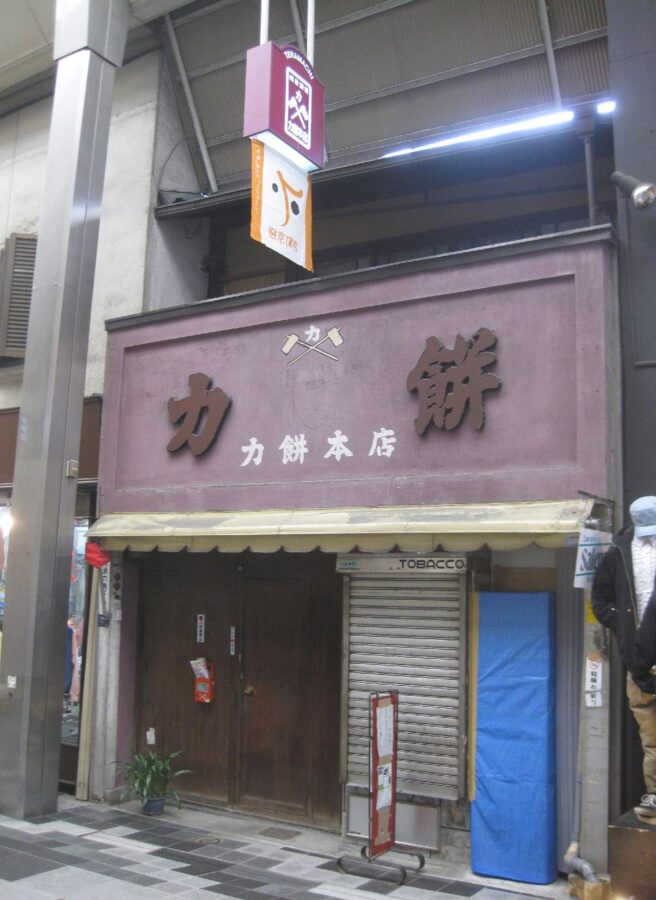
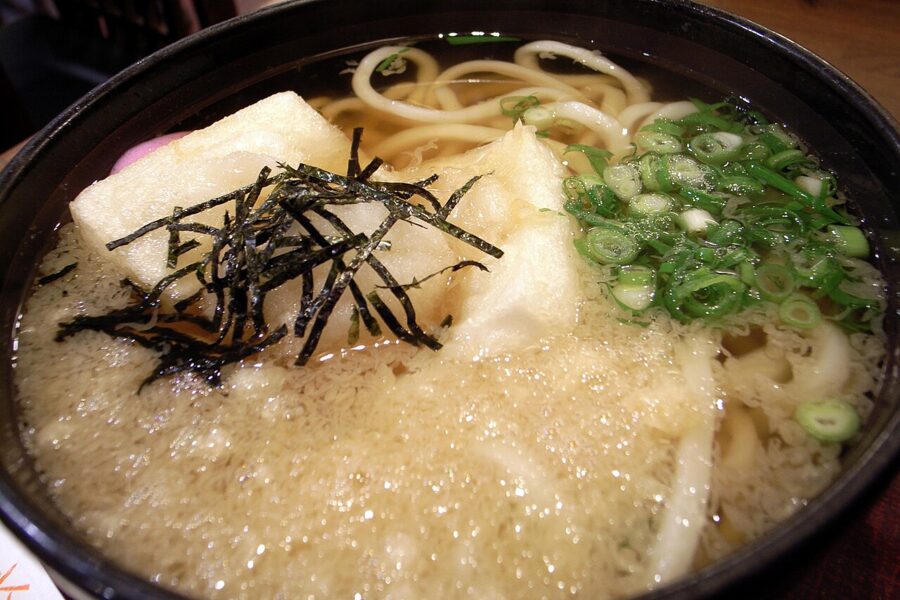
In noodle shops it tops chikara udon (力うどん), strength udon, named for the strength mochi sold at Edo-period mountain passes to put legs under walkers. In winter it also goes into hot pots, and into oden inside a pouch of fried tofu.
The Warning Every January
Every winter the Tokyo Fire Department reminds people that mochi chokes. From 2020 to 2024 its ambulances took 338 people to hospital after choking on mochi or similar foods such as dango; more than nine in ten were 65 or older, most of them in their eighties. January alone accounted for 135 cases and December for 42, and about seven in ten patients were judged moderate or worse.
Its advice on mochi, updated on 12 December 2025, is simple: cut it small, chew slowly, drink tea or soup first, and watch older people and small children at the table. If someone cannot breathe or speak, shout for help, call 119 and start firm blows between the shoulder blades.
Where to See Mochitsuki
The easiest place to see mochi pounded is a residential neighbourhood in late December, when community halls, shopping streets, shrines and schools hold mochitsuki, often with free tastings. Look at the notice board outside the local hall. If you ask, you may be offered the mallet; leave the turning to someone who has done it before.
For mochitsuki on any day, go to Nara. Nakatanidō, five minutes’ walk from Kintetsu-Nara Station, pounds mugwort mochi at high speed in front of the shop, ten to fifteen times a day, in the style of the owner’s home village in the Yoshino mountains. There are no set times, though most pounding falls between midday and late afternoon; it opens 10:00 to 19:00 and shuts early when it sells out (as of November 2026).
For mochi as a feat of strength, Daigo-ji in Kyoto holds Godairiki-san every 23 February, when competitors lift giant kagami mochi, 150 kg for men and 90 kg for women, and hold them as long as they can. The 2026 contest started at 11:00 for men and 13:00 for women; check the temple’s notices for 2027.
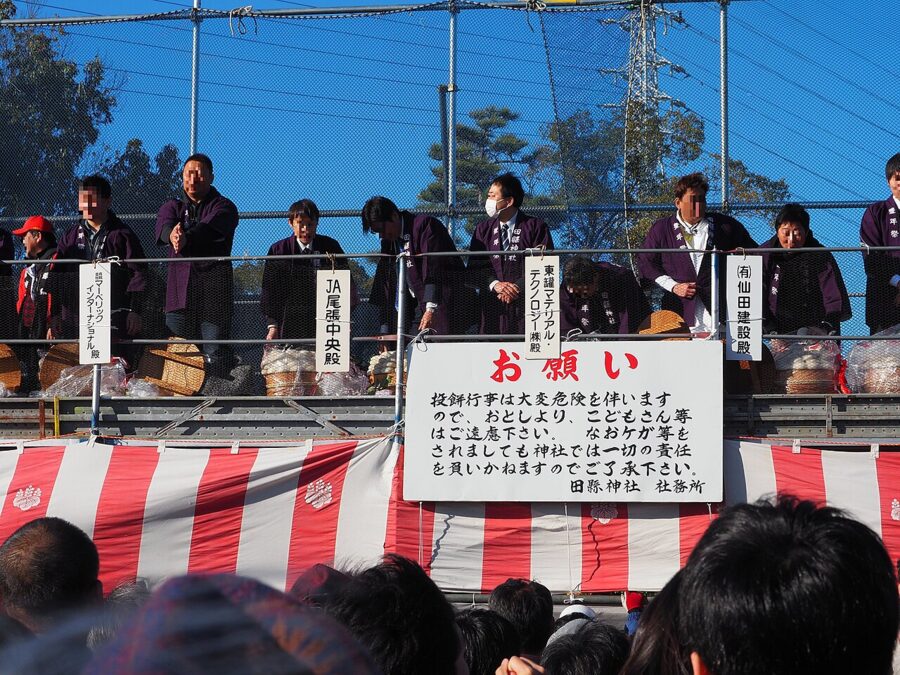
And for mochi as luck, look for mochi-maki (餅まき), when mochi is thrown from a new house’s frame or a shrine stage to a crowd holding bags open. A child’s first birthday has its own, isshō-mochi (一升餅), nearly 2 kg carried on the back, because isshō, one measure of rice, also means a whole life.
Next time you hold a square of kiri-mochi over a flame and watch it split, look at the character on the packet. In China it still means a cake of wheat; a mallet coming down on hot rice every December is what made it mean mochi.