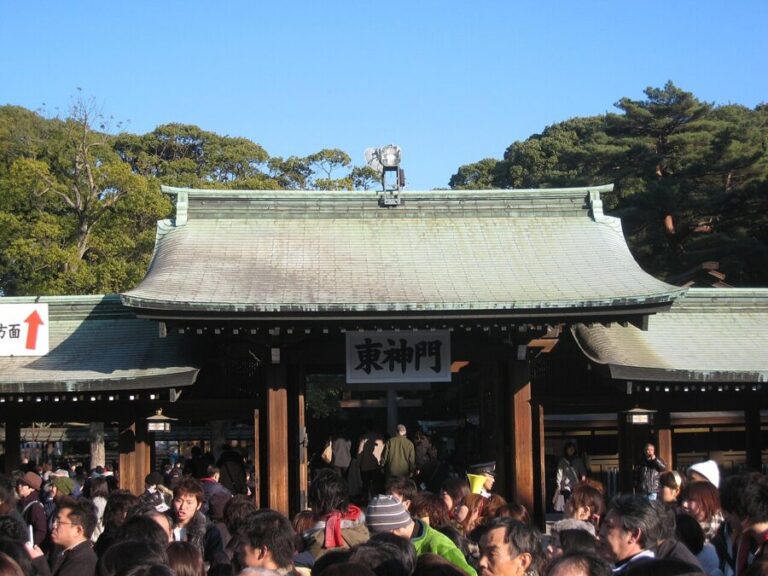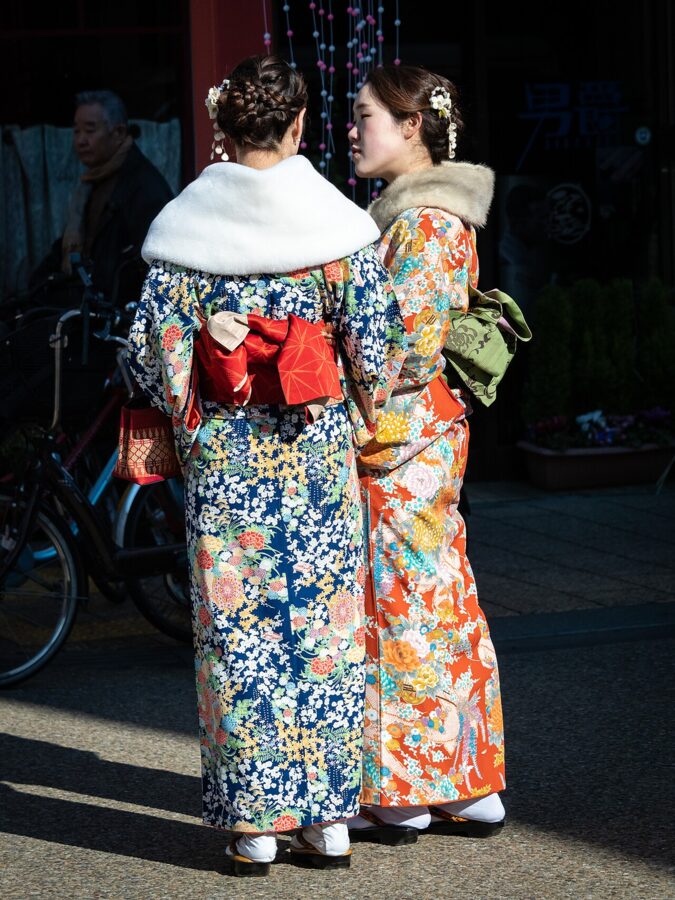
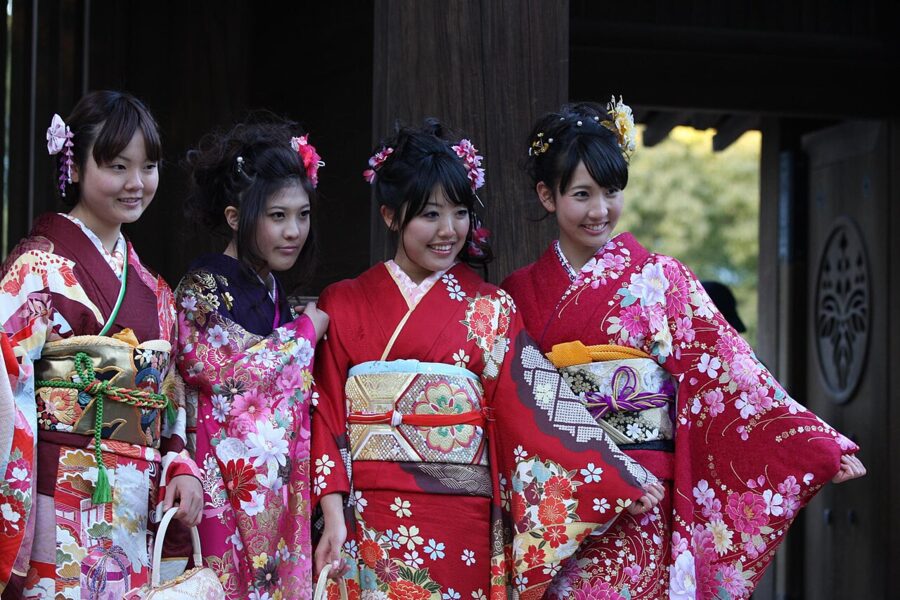
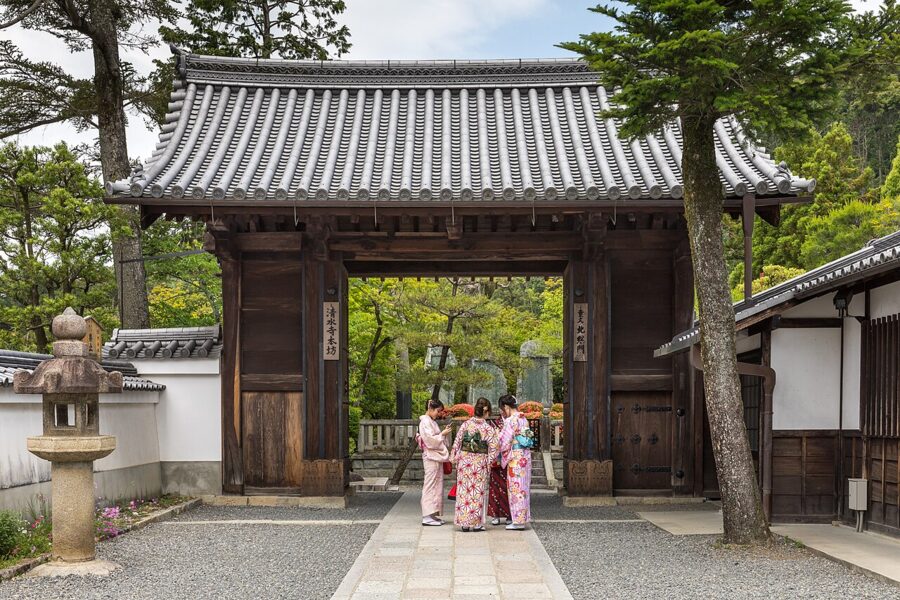
On Coming of Age Day, the second Monday of January, the lanes of Asakusa and the gravel at Meiji Shrine fill with 20-year-olds in furisode (振袖), silk sleeves swinging nearly to the knee. It is the most formal kimono an unmarried woman can wear. The word for it could hardly be plainer.
Kimono (着物) is two characters: 着, ki, from the verb to wear, and 物, mono, a thing. A thing to wear. For about a thousand years that is all it meant, and the story of how it came to mean one particular silk robe is also the story of the robe.
In this article
Ki and mono: a word that once meant any clothes
The first character, 着, is read ki in kiru (着る), to put on clothes, the kanji followed by a hiragana ending, and chaku when it means to arrive, as on train timetables. It has 12 strokes. The second, 物, is the everyday word for a physical thing, eight strokes, and both sit on the kyōiku kanji list for the third year of school.
Put together, they make a word with no fashion in it. The Nihon Kokugo Daijiten gives its first sense as anything you wear, and its oldest example comes from the Nihon Shoki of 720. The Jesuits’ Japanese-Portuguese dictionary of 1603 lists it as kirimono, and a Tokyo rakugo storyteller of 1893 shortens it to kimon.
The second sense, Japanese clothing as opposed to Western, only arrives with the West. The dictionary’s first witness is James Curtis Hepburn’s Japanese-English dictionary of 1867, the year before the Meiji era began. Kimono narrowed because something else needed a name beside it.
Wafuku, yofuku and gofuku
The formal pair is wafuku (和服) and yōfuku (洋服). 洋 is the ocean, by extension the West across it; 和 is the old name for Japan, the same wa as in washoku. The imported clothes were named yōfuku first, the encyclopedias say, and the old ones became wafuku in reply. The earliest example the dictionary gives for wafuku is from 1886, by the novelist Tsubouchi Shōyō, arguing for reform of Japanese dress.
Today kimono covers both senses, but in ordinary use it means the nagagi (長着), the long robe itself, without the jacket or underlayers.
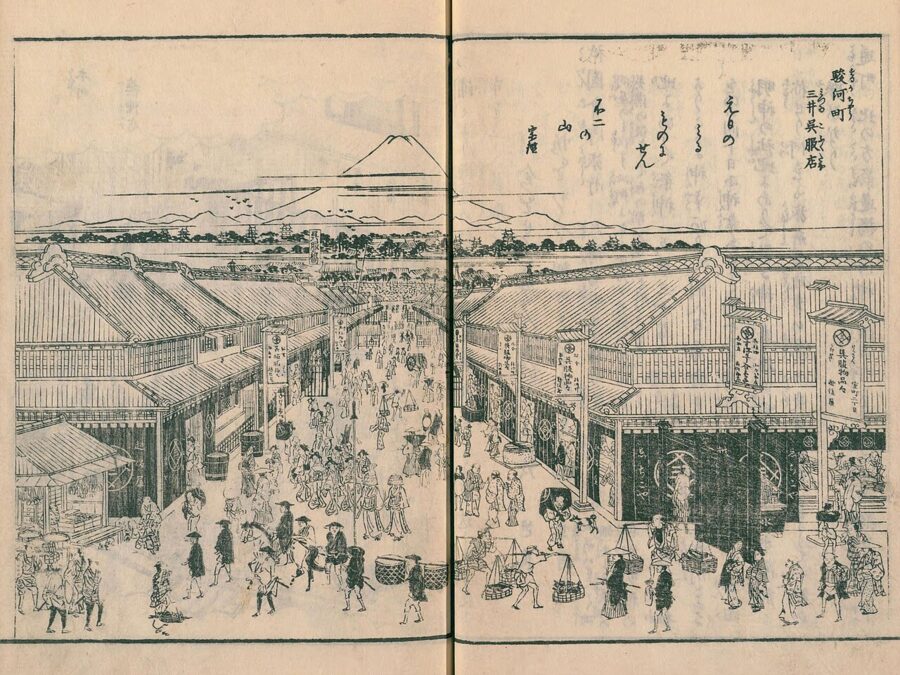
The third word belongs to the trade. Gofuku (呉服) means clothes of Wu, the Chinese kingdom whose weavers, tradition says, came to Japan in the reigns of the emperors Ōjin and Yūryaku. By the Edo period gofuku meant silk cloth, sold apart from futomono (太物), the cotton and hemp. A kimono shop is still a gofukuya.
From underwear to outer robe: how the kosode became the kimono
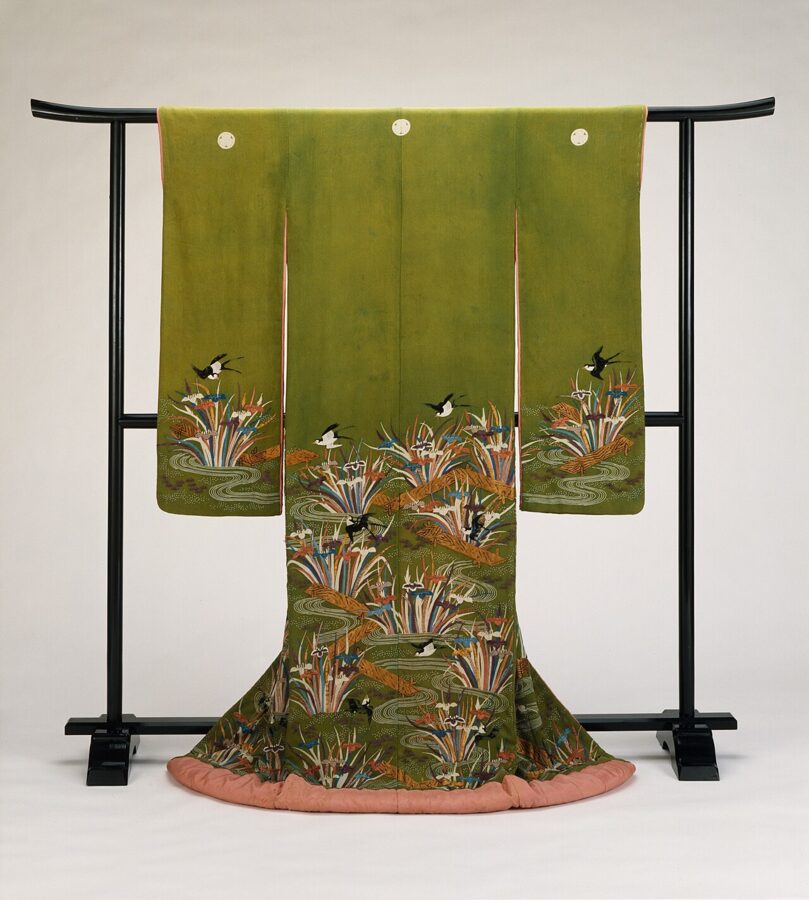
The kimono’s ancestor is the kosode (小袖), the “small-sleeved” robe. Until the end of the Heian period, in the late 12th century, it was underwear, worn beneath the many wide-sleeved layers of court dress. In the Kamakura period the top layers began to drop away, and by the Muromachi period the trousers went too, leaving the kosode worn alone and tied with a narrow sash. That, the Heibonsha encyclopedia says, is the point from which you can fairly call it a kimono.
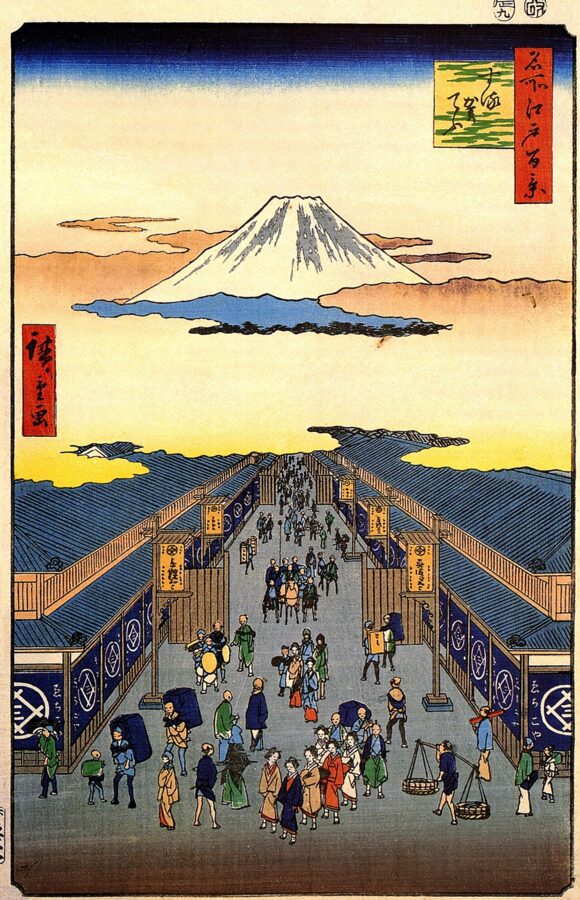
Edo did the rest. Men’s robes stayed fairly plain and were ranked by fabric: figured silks for the great, hemp and cotton for most people, and farmers forbidden anything finer than tsumugi. Women’s robes turned into canvases, and fashion came from the pleasure quarters and the kabuki stage, changing, an Edo handbook noted, every five or eight years.
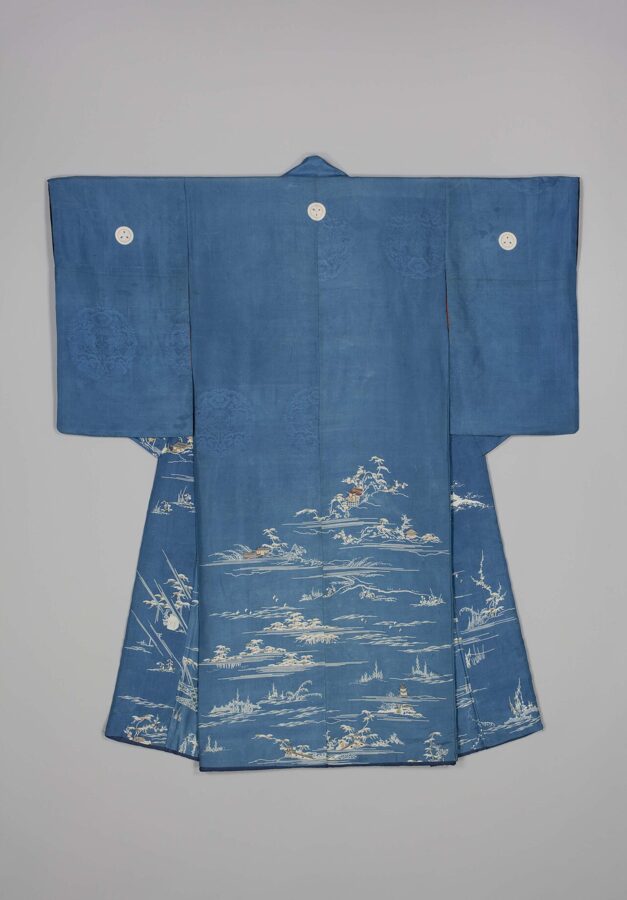
You will read that a shogun once banned the kimono. He did not: in 1683, under the fifth shogun, Tokugawa Tsunayoshi, women were forbidden three luxuries, cloth woven with gold thread, embroidery and all-over tie-dye. By 1689 embroidered orders were allowed again up to a set price, and painted, paste-resist yūzen dyeing flourished in the same decades.
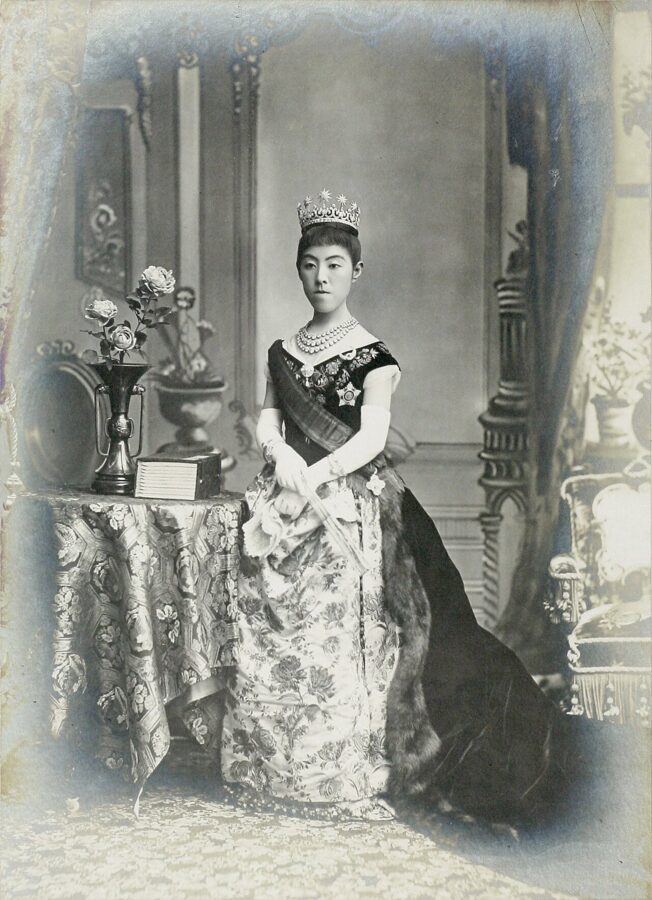
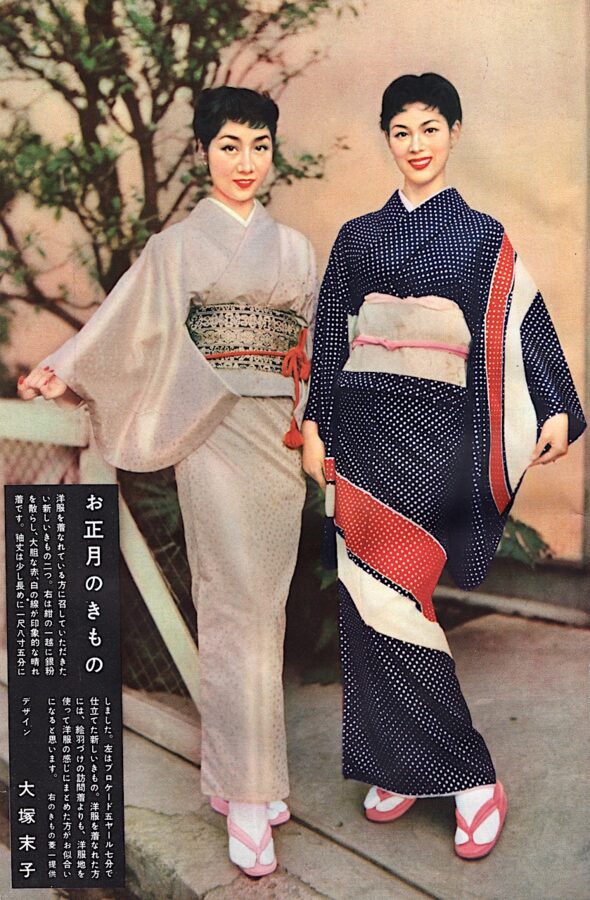
Meiji changed men first: soldiers, officials and students went into Western clothes in that order, and by 1889 even the Empress was photographed in a European gown. Women kept the kimono far longer, though schoolgirls took up the hakama after 1899 and wartime rules cut sleeves short. Only after 1945 did it become what it is now, clothing for ceremonies, hobbies and summer nights.
The kinds of kimono, from most formal to everyday
All kimono share one pattern, cut from a single bolt of cloth about 36 cm (14 in) wide and 11 m long, in straight panels with nothing thrown away. What separates a wedding robe from a summer one is the decoration, the fabric and the number of family crests.
| Kind | Japanese | Who wears it, and when | How to spot it |
|---|---|---|---|
| Kurotomesode | 黒留袖 | Married women; the couple’s mothers at weddings | Black, five crests, pattern only at the hem |
| Furisode | 振袖 | Unmarried women; Coming of Age Day, weddings | Sleeves to the calf or lower |
| Irotomesode | 色留袖 | Married or not; weddings, ceremonies | As kurotomesode, on a coloured ground |
| Hōmongi | 訪問着 | Anyone; weddings as a guest, parties | One picture flowing across the seams |
| Tsukesage | 付け下げ | A quieter hōmongi | Motifs point upwards, not joined across seams |
| Iromuji | 色無地 | Tea, school ceremonies; with a black obi, mourning | One plain colour; crests set the rank |
| Komon | 小紋 | Outings, lessons, lunch with friends | A repeated pattern over the whole robe |
| Tsumugi | 紬 | Everyday and travel, however fine | Woven pattern, nubbly silk |
| Yukata | 浴衣 | Summer festivals, fireworks, inns | Unlined cotton, no underkimono |
Furisode
Furisode means “swinging sleeves”. The original swing was an opening under the arm, left unsewn on children’s robes to let heat out; at 18 a woman had it sewn shut, and her sleeve became a tomesode (留袖), a “fastened sleeve”. In the early 1800s obi grew to about 40 cm wide, too wide to tie over a sewn sleeve, so the openings stayed and the names drifted to length instead. Long sleeves became furisode, short ones tomesode, and tomesode came to mean the married woman’s formal robe.
Sleeves grew all through the Edo period, from about 45 cm in the 1600s to over a metre by the 1850s. Today an ōfurisode has sleeves of about 105 cm (41 in), a chūfurisode about 95 cm and a kofurisode about 85 cm. Brides wear the longest; the chūfurisode is the usual choice for Coming of Age Day.
Tomesode
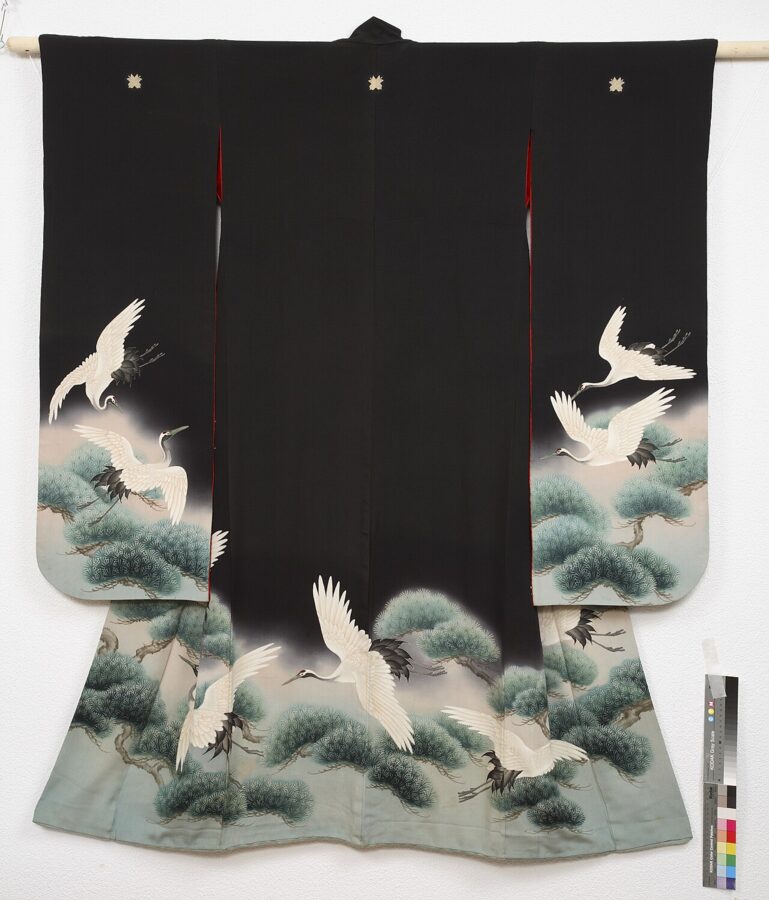
The kurotomesode (黒留袖) is black silk crepe with five white crests and a pattern only along the hem, worn by married women of the family at a wedding. On a coloured ground it becomes an irotomesode (色留袖), which with three or one crests can also be worn by a guest.
Homongi, tsukesage and iromuji
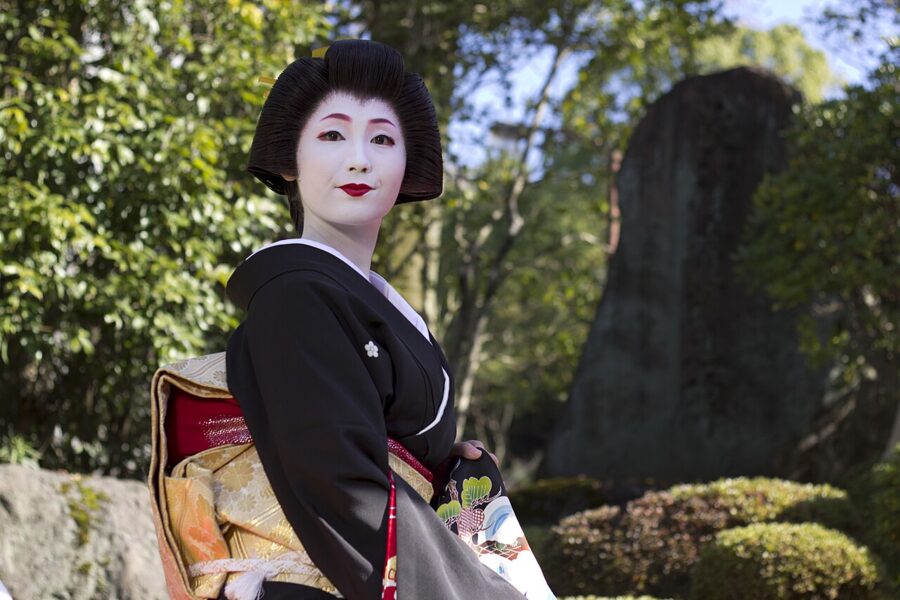
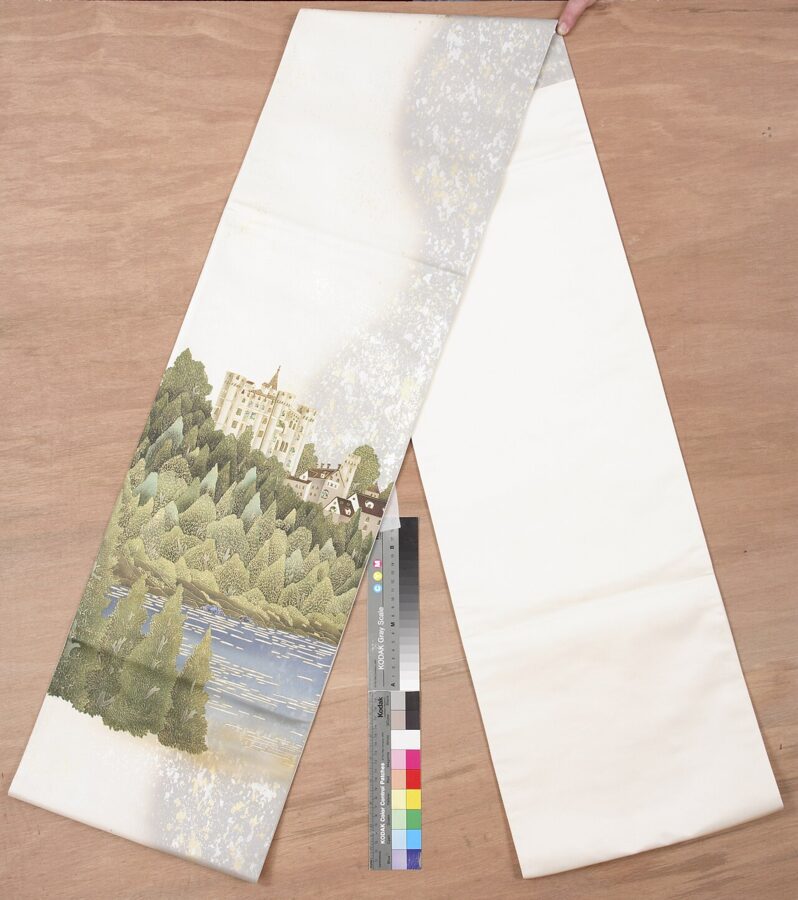
Hōmongi (訪問着) means “visiting wear”. Its pattern, called eba (絵羽), is drawn on the tacked-together robe before dyeing, so a branch can cross from sleeve to body without a break. It suits a friend’s wedding, a tea gathering or a New Year visit, married or single.
The tsukesage (付け下げ) is dyed on the bolt, its motifs placed so they all point upwards once sewn, and reads as a hōmongi with the volume turned down. The iromuji (色無地) is a single colour other than black, with no pattern at all. Its rank comes entirely from crests: plain, it sits with the casual kimono; with one crest it is semi-formal; with three or five, it outranks a hōmongi without crests.
Komon and tsumugi
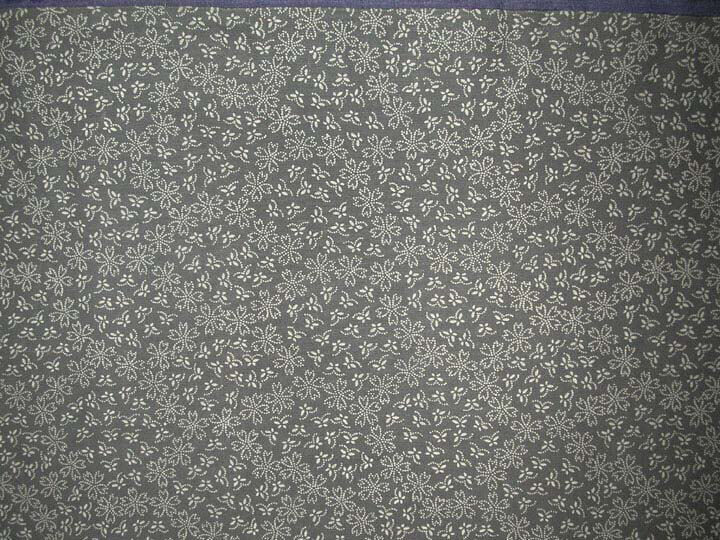
Komon (小紋), “small pattern”, is any kimono stencil-dyed with a repeat over the whole cloth, so the motifs run every which way. It is the kimono for going out. The finest kind, Edo komon (江戸小紋), uses dots so small the robe looks plain from across a room, and in Tokyo it is treated almost as an iromuji.
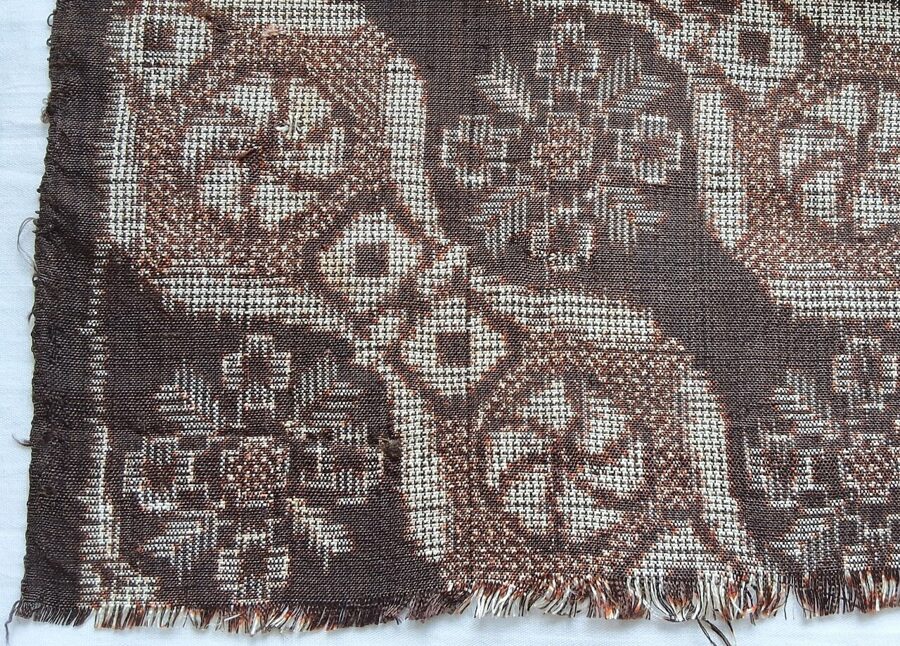
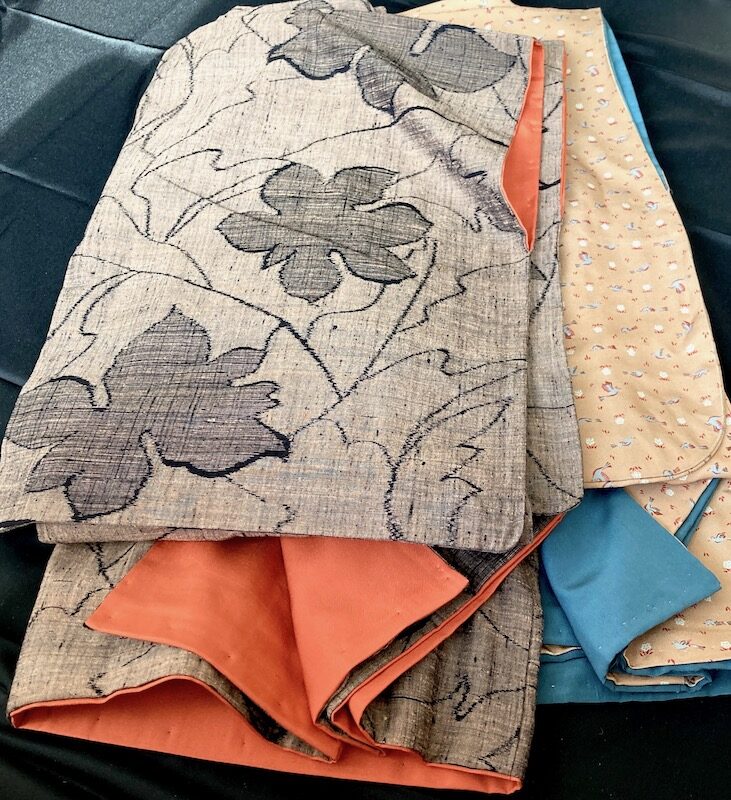
Tsumugi (紬) is woven silk, the threads dyed before they reach the loom, and it began as cloth spun from broken cocoons and floss too poor to reel. That origin fixes its place: however long a fine tsumugi took to weave, it is still wrong for a wedding. Yūki tsumugi from Ibaraki and Tochigi is on UNESCO’s intangible heritage list.
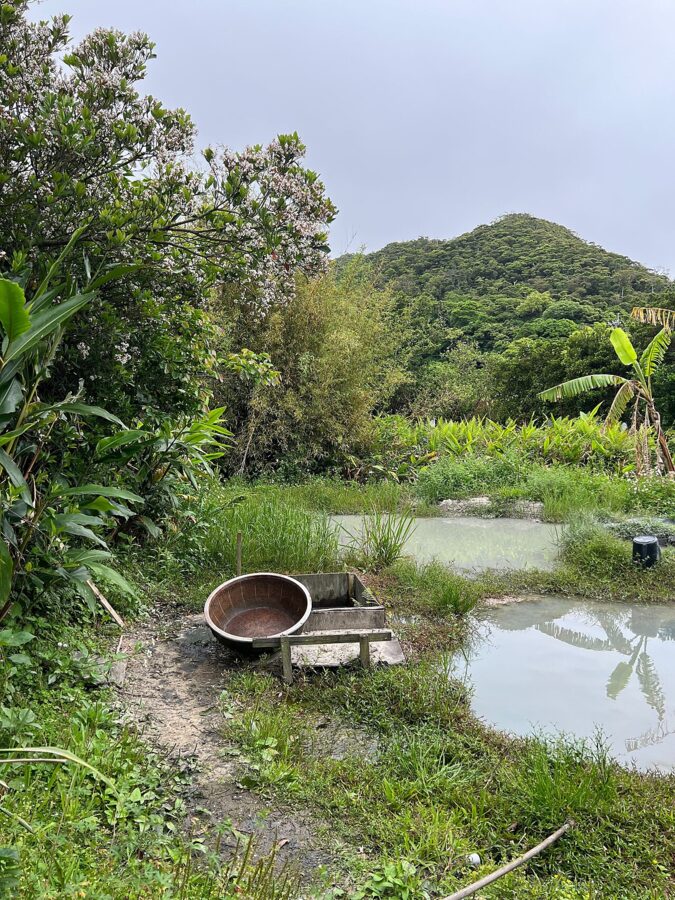
The best known is Ōshima tsumugi from Amami Ōshima, south of Kyushu, whose threads are dyed many times in a bark dye and then in the island’s iron-rich mud until they turn a deep, glossy brown.
Yukata
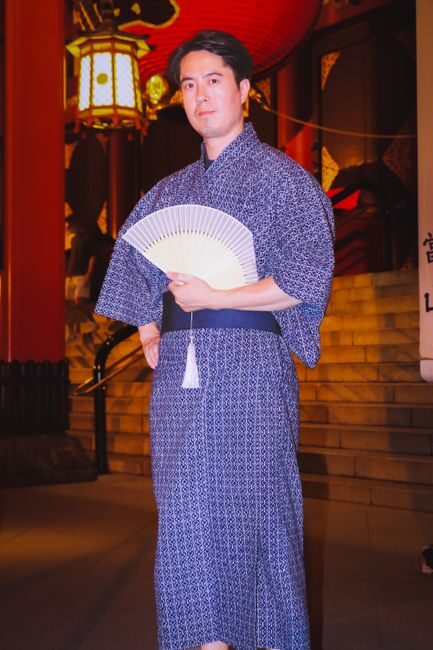
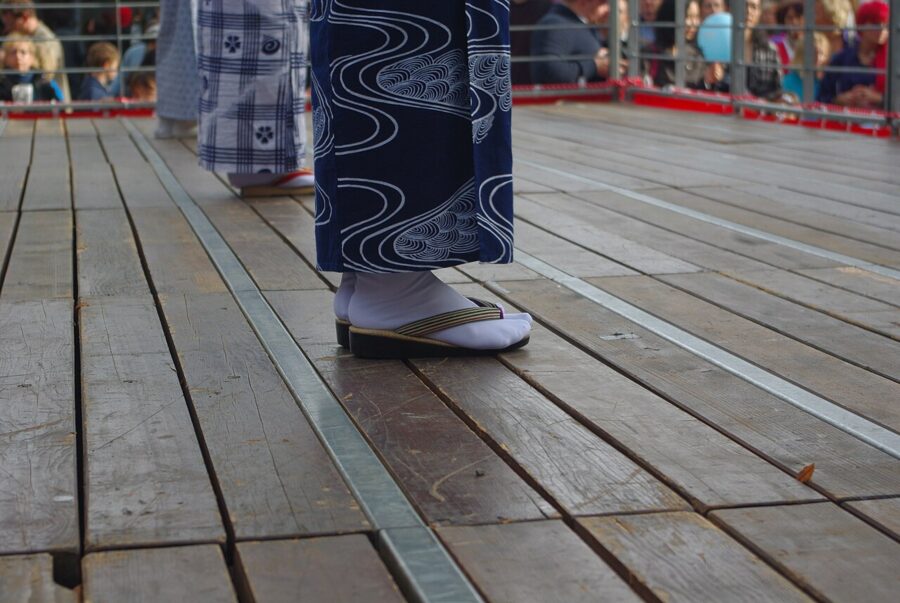
Yukata (浴衣) is short for yukatabira, a bathing robe, and the first character says so: 浴 is to bathe. It is unlined cotton, dyed in indigo and white in the classic versions, worn on bare skin with bare feet in wooden geta (下駄). Bashō listed a yukata among the few things he carried on the road north in 1689, and it is still what a ryokan leaves folded on your futon.
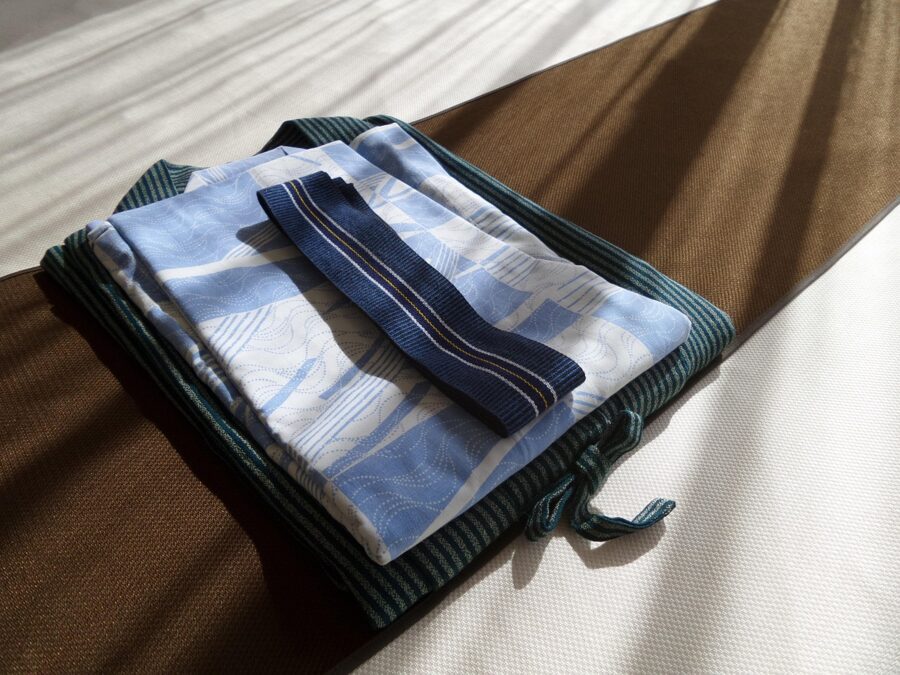
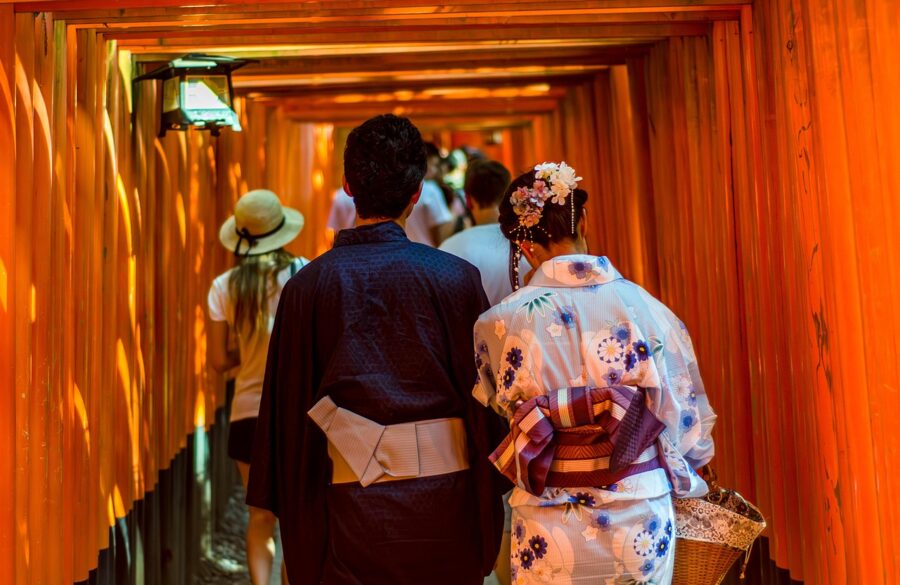
Outside, the yukata is the one kimono anyone can wear without advice: summer festivals, fireworks, a riverside evening. Women tie a hanhaba obi (半幅帯), a half-width sash; men a soft heko obi (兵児帯).
Men’s kimono and hakama
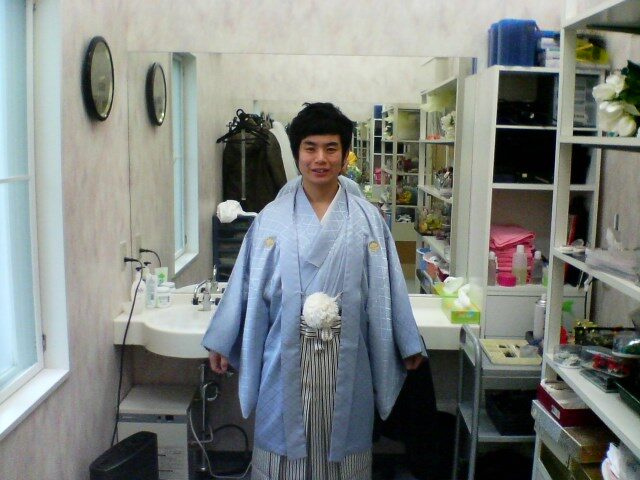
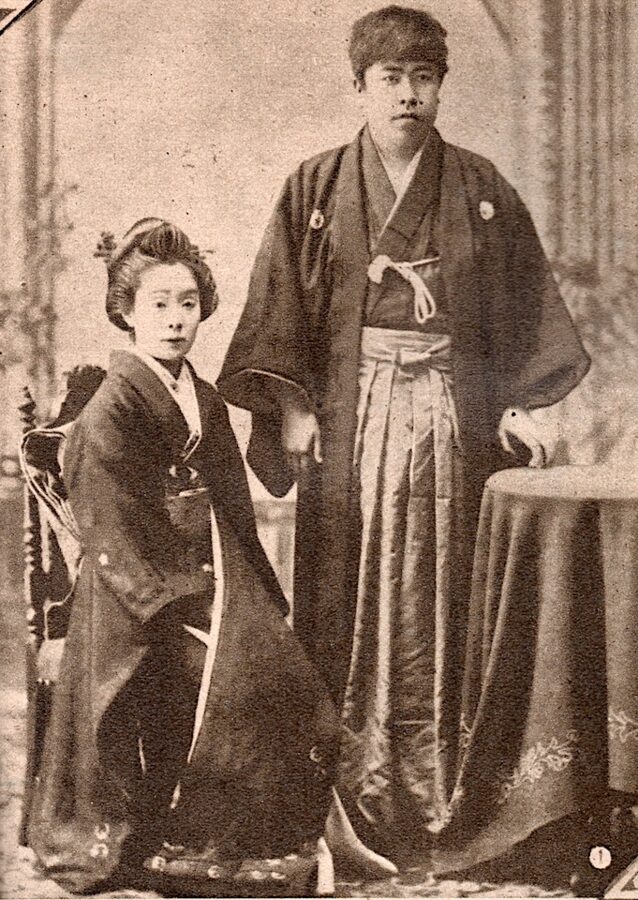
Men’s kimono have kept closer to the old kosode, with short sleeves sewn shut, sober colours and no tuck at the waist. The most formal outfit is the montsuki haori hakama (紋付羽織袴): a black silk kimono and jacket carrying five family crests, over striped hakama (袴), the pleated divided skirt. It is what a groom wears at a shrine wedding, and what some young men choose for Coming of Age Day.
The rules: left over right, seasons, colour and crests
Left over right, always
Everyone, men and women alike, wraps the right side of the kimono against the body first and lays the left over it. Seen from the front, the collar makes a small “y”. The Japanese name trips English speakers: it is migimae (右前), “right front”, because the right panel goes on first, nearer the body. The court chronicle Shoku Nihongi records the order that made it law for everyone in 719, following Chinese practice, where the reverse was the mark of the steppe peoples.
The reverse, hidarimae (左前), is for the dead, who are dressed in a white robe closed right over left. The same word means a business going under, a sense recorded by 1659. A last twist: the dictionaries note that Western women’s clothes close the hidarimae way, so habits learned from blouses lead some women wrong. Rental staff check before you leave; dressing yourself, look down: the left side goes on top.
Awase, hitoe and usumono
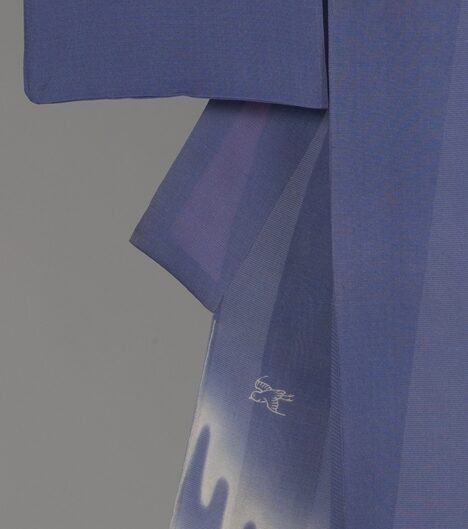
A kimono follows the seasons by its construction. From October to May you wear awase (袷), lined; in June and September hitoe (単衣), unlined; in July and August usumono (薄物), the open weaves ro and sha (紗) that let air through. Ro is formal enough for a summer wedding. With hotter springs and autumns, more people now wear hitoe outside its two months, and the rule has loosened to match.
Colour, motif and age
Rank in men’s kimono ran by fabric; in women’s it ran by age, and still does. By the late Edo period a girl’s hem pattern could rise seven sun (about 21 cm), a young wife’s five and a woman in middle age three; red, once worn by both sexes, had become a colour for women and girls. Today the rule is looser but the direction is the same: brighter and bigger when young, quieter with the years.
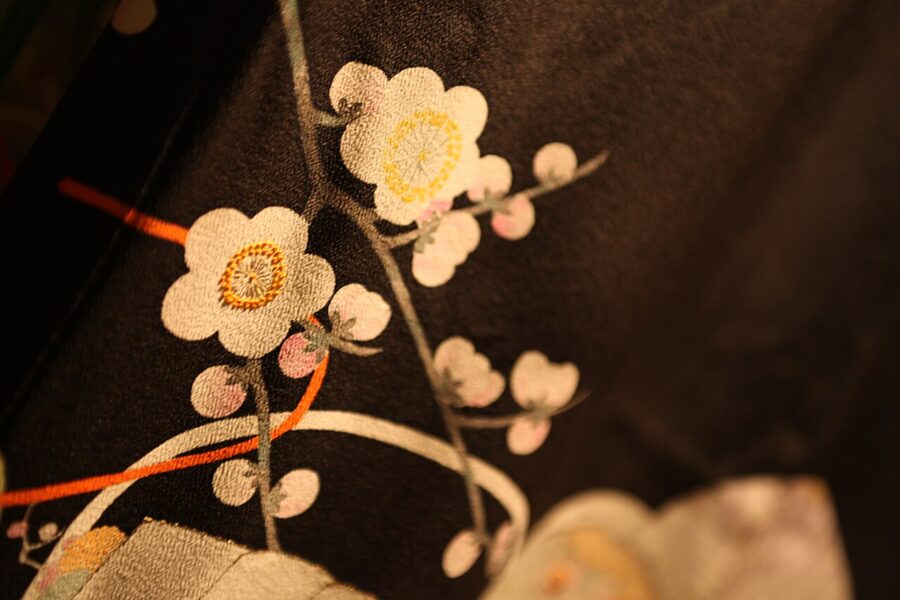
Motifs keep the calendar. Plum is for late winter, cherry blossom for spring, maples for autumn, and kimono people like to wear a flower just before it opens rather than after. Pine, bamboo and cranes are good for any season, which is why they cover so many wedding robes.
Crests
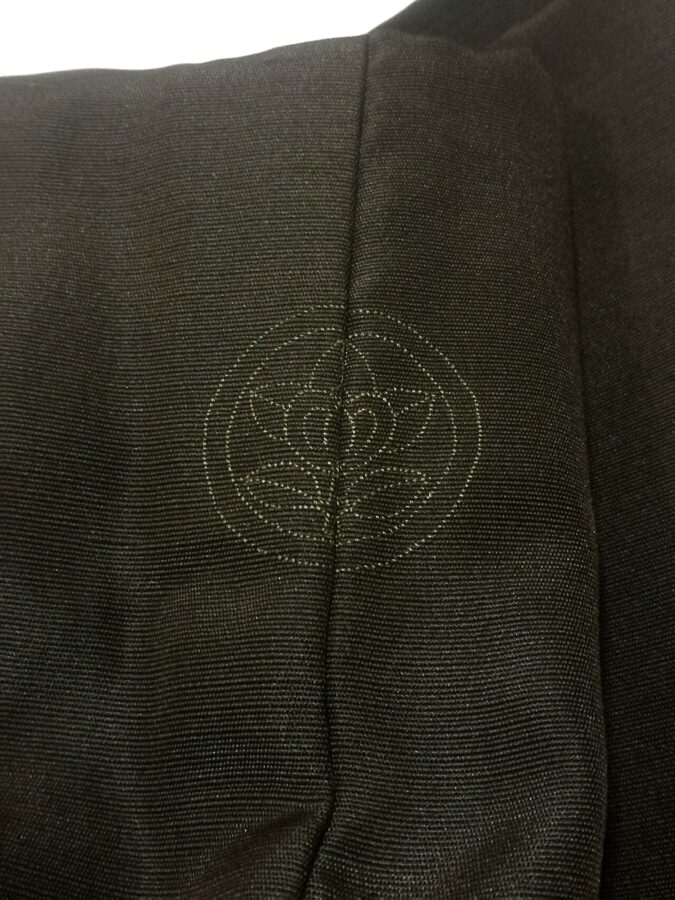
A kamon (家紋), a family crest, is a small circle of white, dyed or embroidered, and the count sets the rank. Five crests (one on the back, one on each sleeve, two on the chest) is full formal dress; three is a step below; one is semi-formal. A crest outlined rather than filled, a “shadow” crest, is the most casual of all.
Parts of a kimono, and the obi
The parts have names you will hear in any rental shop. A woman’s kimono is made about 20 cm longer than she needs, and the extra is folded up under the obi.
| Part | Japanese | What it is |
|---|---|---|
| Sode | 袖 | The sleeve |
| Tamoto | 袂 | The hanging pouch of the sleeve, a pocket for a handkerchief or phone |
| Migoro | 身頃 | The body panels, front and back |
| Okumi | 衽 | The narrow front panel that makes the overlap |
| Eri, tomoeri | 衿, 共衿 | The collar and the overcollar that protects it |
| Miyatsuguchi | 身八つ口 | The opening under a woman’s arm |
| Ohashori | おはしょり | The fold of extra length tucked under the obi |
The obi
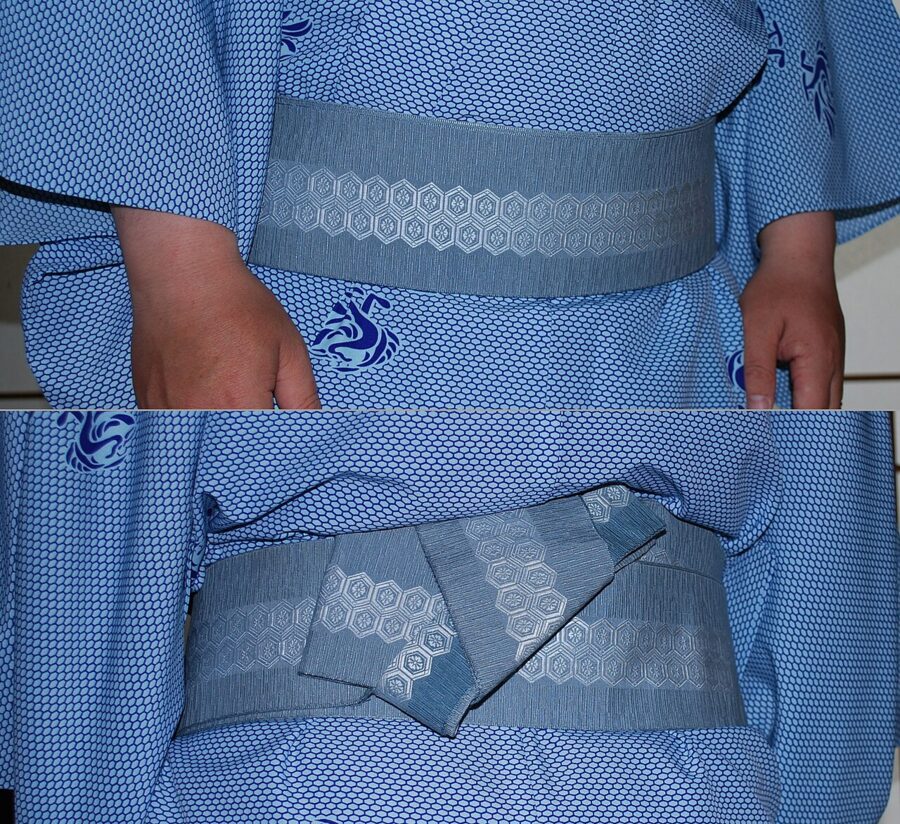
The obi is where a kimono spends its money. The heavy maru obi (丸帯), patterned on both sides, was the old formal sash and is now mostly bridal; the lighter fukuro obi (袋帯), woven as a tube, replaced it for formal wear. For everyday the woman’s sash is the Nagoya obi (名古屋帯), full width where the knot shows and folded in half around the waist. Dictionaries trace it to Nagoya around 1920, to Koshihara Haruko, founder of a girls’ school, whose odd-looking sash a clerk at a local draper’s spotted and put on sale.
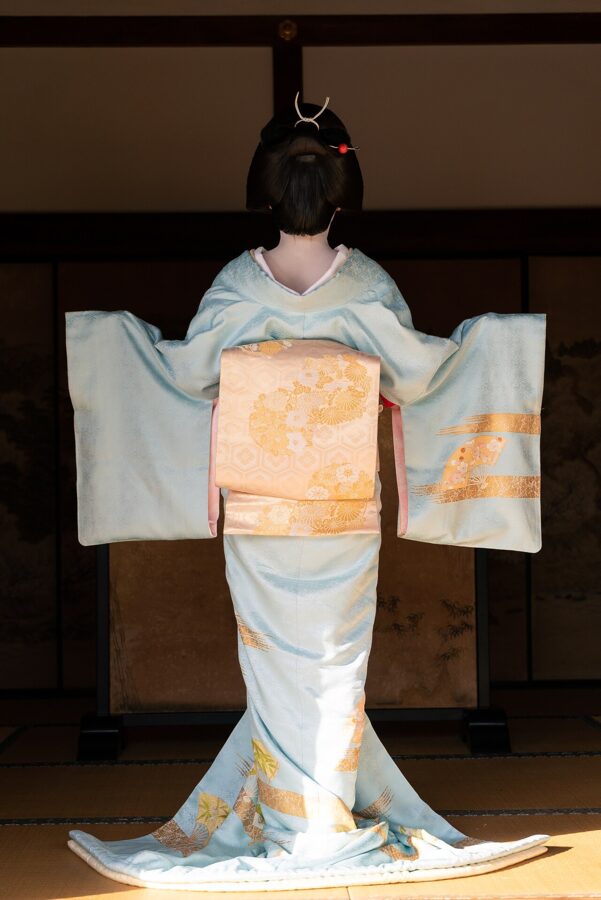
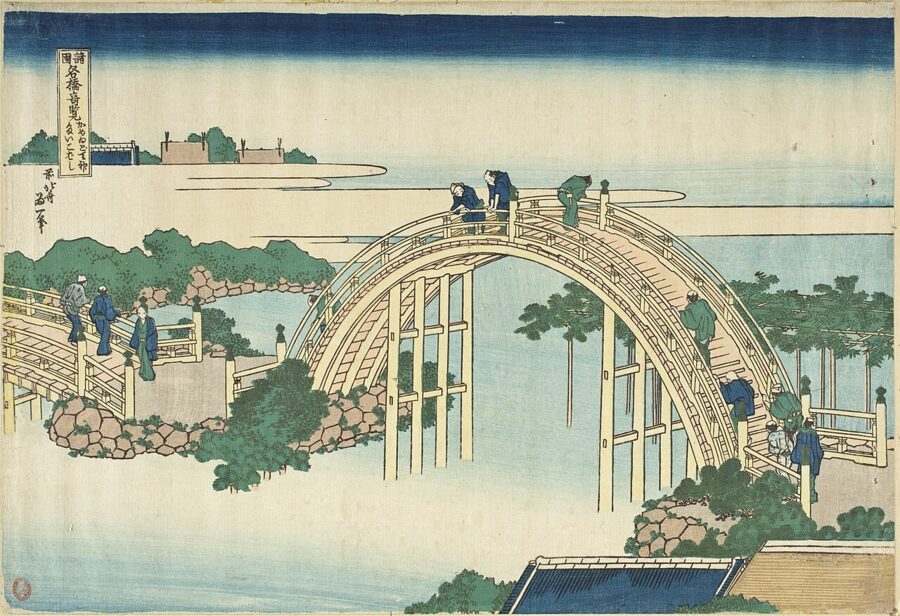
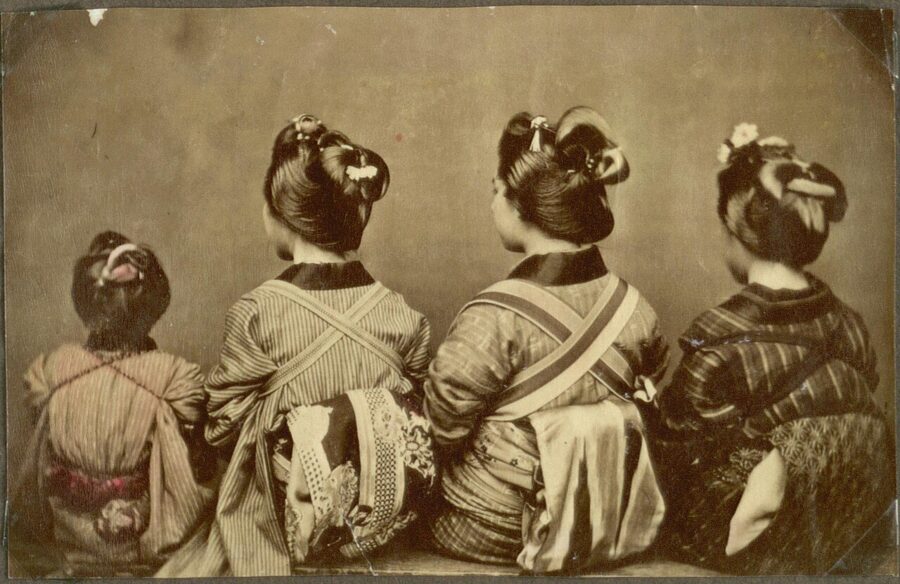
Most married women tie the taiko musubi, the “drum knot”, a neat square box at the back; a double layer of it is the formal version. It spread in the early 19th century, and the popular story says it copies the arched drum bridge at Kameido Tenjin in Edo, first tied by geisha for the bridge’s reopening. It is a good story, and I would treat it as one.
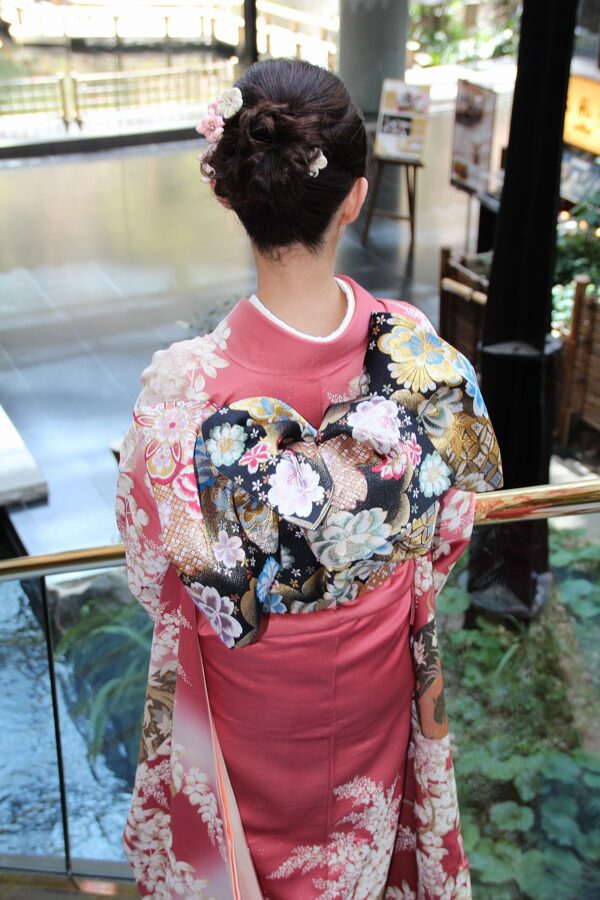
Furisode get the showy knots: bows, folded fans, sparrows with spread wings. Men have two choices: the stiff kaku obi (角帯), about 10 cm wide, for anything formal, and the soft heko obi for yukata and lounging.
Kitsuke: putting one on
Dressing in kimono is kitsuke (着付け), the same 着 again, and Japan has whole schools for it. In brief, for a woman:
- Underwear, then the nagajuban (長襦袢), the long underkimono, whose white collar edge shows at the neck.
- The kimono, right side in, left over. Hem at the ankle, a cord at the hips.
- The extra length folded up into the ohashori, a second cord under the bust and a firmer sash over it.
- The collar drawn back from the nape: a little bare neck is the point.
- The obi, with a board in front, a pad to shape the knot, a silk scarf, the obiage (帯揚げ), over the pad and a braided cord, the obijime (帯締め), to hold it all.
Then tabi (足袋), split-toe socks, and zōri (草履), flat sandals. A practised dresser makes it look quick; alone, the first time, it takes far longer.
Kimono today
The kimono trade is a fraction of what it was. Its peak is commonly put at about ¥1.8 trillion in 1981 (about $12 billion at today’s rate). Yano Research estimates retail sales in 2025 at ¥203 billion (about $1.3 billion), down 4.2 per cent on 2024, with ¥195 billion (about $1.26 billion) forecast for 2026. Yano blames rising prices: many kimono are made abroad from imported materials, and the weak yen and higher wages have reached the shop floor.
That figure leaves out rentals. Coming of Age Day fell on 12 January in 2026; the next one is 11 January 2027. The legal age of adulthood dropped from 20 to 18 on 1 April 2022, but the ceremony is each town’s to arrange, and most kept it for 20-year-olds, often under a new name, the “gathering of twenty-year-olds”.
Renting one in Kyoto or Asakusa
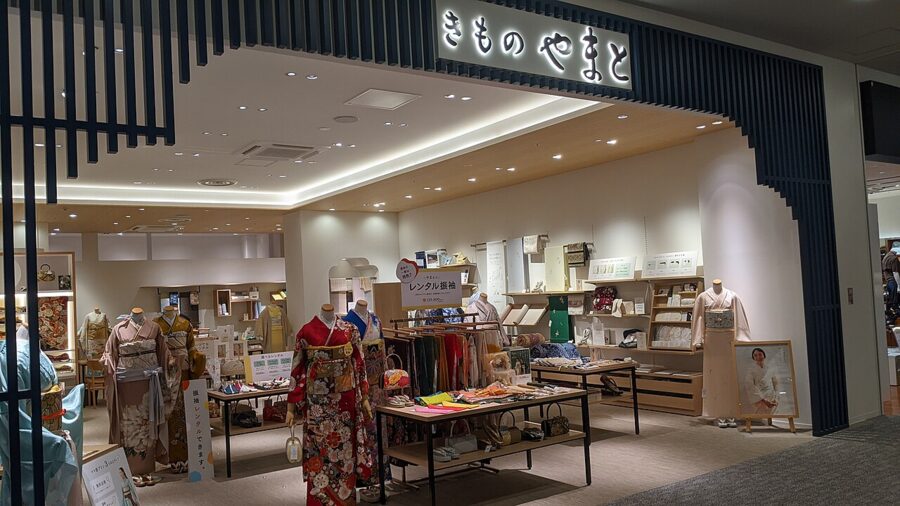
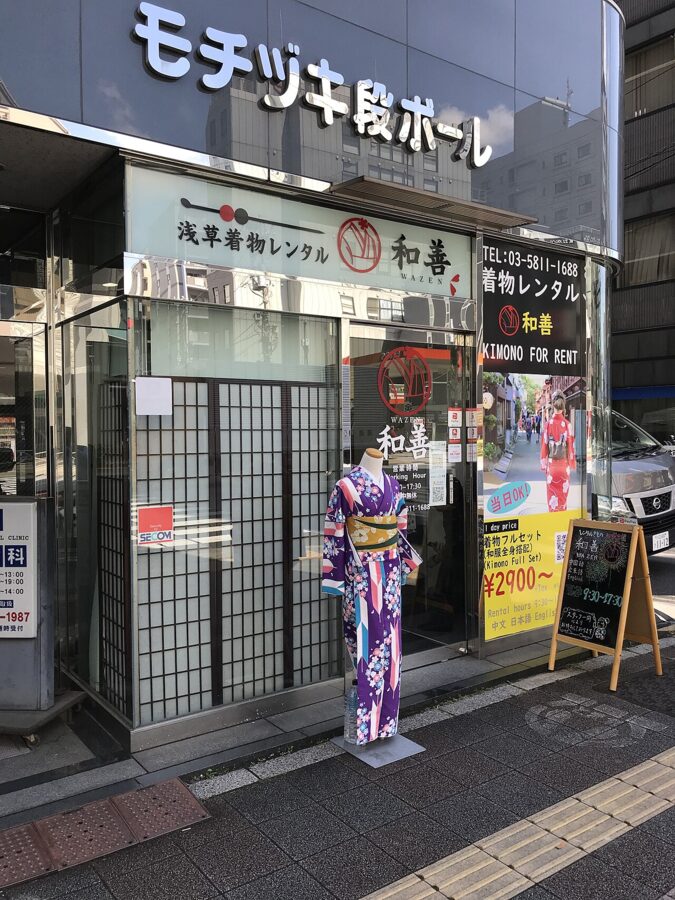
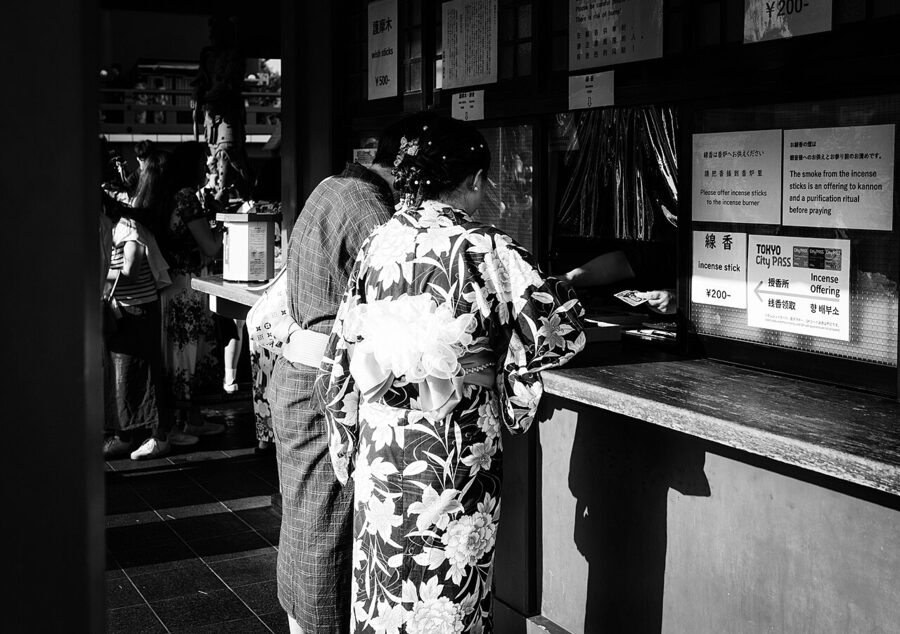
Rental shops cluster near Kiyomizu-dera, Gion and Fushimi Inari in Kyoto and around Sensō-ji in Asakusa; the basic price normally covers the kimono, obi, bag, the underlayers and the dressing. Two examples, as of November 2026, from the shops’ own pages:
| Shop | Where | From | Hours and return |
|---|---|---|---|
| Okamoto, set plan | Kyoto: Kiyomizu, Gion, Yasaka, Kōdai-ji, Fushimi Inari, Arashiyama | ¥3,278 with tax (about $21); hair set ¥2,200 (about $14) | 9:00 to 18:00; back by 17:50; next-day, hotel or other-branch return options |
| wargo Asakusa | Tokyo: Asakusa Yokocho building, 4th floor, a minute from the Tsukuba Express station | ¥3,300 with tax (about $21), hair set included, online | 10:00 to 18:00; back by 18:00; next-day return ¥1,100 (about $7) |
Book online, where it is cheaper, and allow 45 to 90 minutes from arrival to walking out of the door dressed.
Wearing a rental well
- Trust the overlap. A mirror selfie shows it reversed; the robe is still right.
- Take small steps. The hem is meant to stay closed, and zōri slip on long strides.
- Mind the sleeves. Hold one back with the other hand when you reach for chopsticks or the purification ladle.
- Sit forward. Perch on the front of a chair so you do not crush the knot.
- Keep it for the street. A rental is sightseeing wear; a wedding needs the right kind, properly dressed.
Where to see the great ones
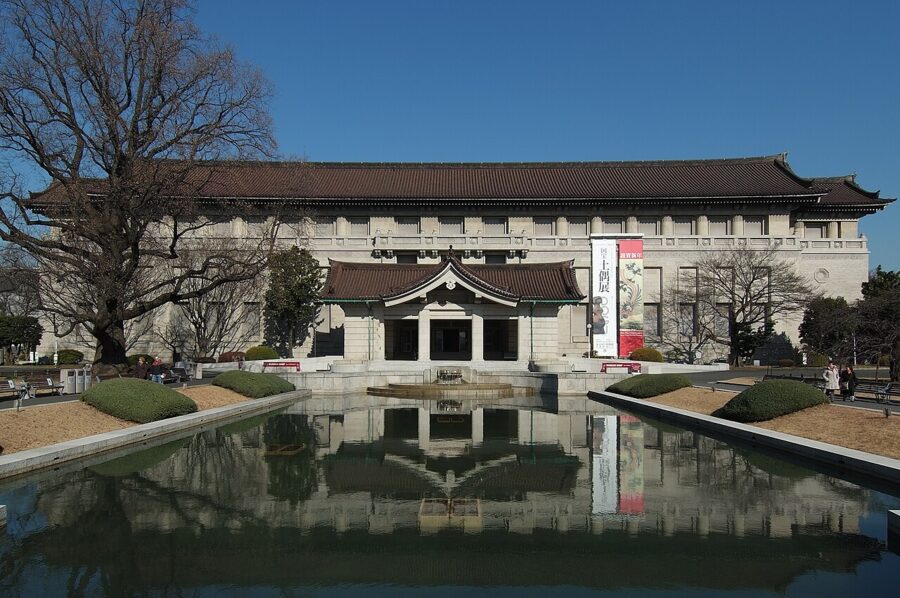
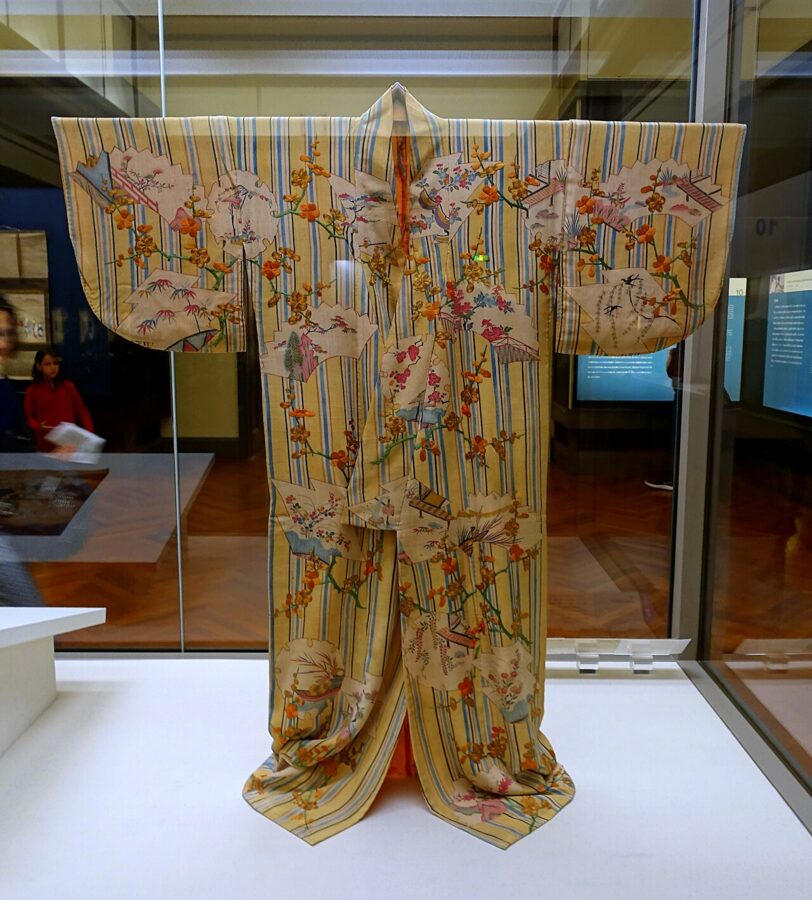
To see what all this was for, go to the Tokyo National Museum in Ueno. Room 10 of the Honkan, the main building, is given to costume, and the museum holds more than 300 Edo-period kosode, shown a few at a time because silk fades. It opens 9:30 to 17:00, to 20:00 on Fridays and Saturdays, and closes on Mondays (or the next day after a Monday holiday) and from 26 to 31 December 2026. Adults pay ¥1,000 (about $6), as of November 2026.
Next January, watch the furisode crowd at Meiji Shrine or in Asakusa and remember the word on all those sleeves. Underneath the silk, the crests and the knots, kimono still says only what it said in 720: a thing to wear.