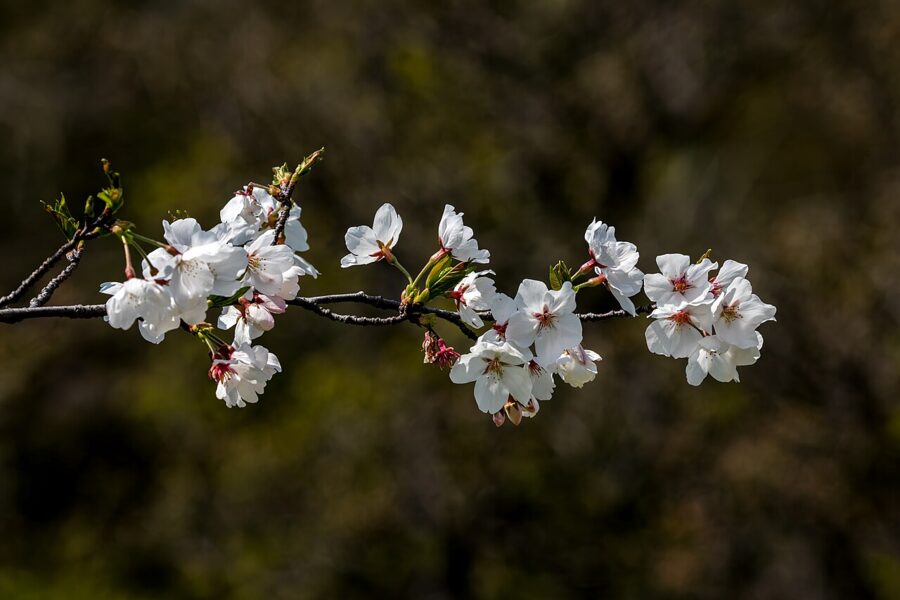
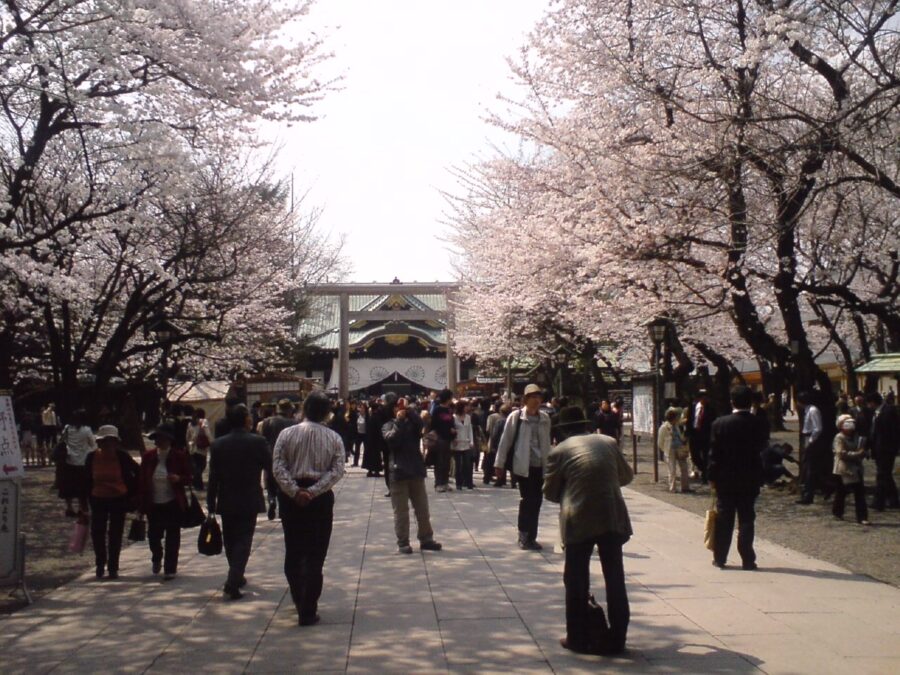
On 19 March 2026, staff from the Japan Meteorological Agency stood under one particular tree in the grounds of Yasukuni Shrine, counted at least five open flowers, and declared that Tokyo’s cherries had bloomed. It was five days ahead of the average. The announcement has a name, kaika sengen (開花宣言), the flowering declaration, and it leads the evening news.
The tree is a sakura (桜). In English the word has come to mean a pink cloud on a postcard; in Japanese it names the tree itself, and behind it stand a dozen wild species, hundreds of garden kinds, one cloned cultivar that covers the country, and a word for every stage from bud to the last petal on the water.
In this article
- The word: 桜, 櫻 and where sakura came from
- Wild cherries: the ten, and the eleventh
- Somei-yoshino: one tree, copied millions of times
- Other kinds, by the calendar
- From plum to cherry: how hanami began
- The sakura front and the sample trees
- Words for the blossom
- Sakura you can eat and drink
- Trees worth the journey
The word: 桜, 櫻 and where sakura came from
The character is read sakura on its own and ō in compounds such as ōka (桜花), cherry blossom. It has ten strokes and is taught in grade 5 of the kyōiku kanji list. On the left sits 木, tree, as in most tree names; the right side is a shortened form of 嬰.
The full form 櫻 puts two 貝, shells, over 女, woman, and the character dictionary Jitsū reads 嬰 as a woman with a necklace of shells. In Chinese 櫻 first named a cherry grown for its fruit, glossed in Japanese as the bush cherry yusuraume (ゆすらうめ). Japan borrowed it for its own flowering trees, and the postwar script reforms made 桜 the standard, one of many such shortcuts in the Japanese writing system.
The spoken word is older than any character, and its origin is not settled. Japanese dictionaries give three main accounts:
- Saku + ra. Saku (咲く), to bloom, with the plural suffix -ra: “the blooming ones”. The most widely repeated account.
- Sa + kura. Sa as the rice-field god who comes down in spring, kura as a seat: the tree where the god sits. Popular in books on folk religion, thin on evidence.
- Konohanasakuya-hime. The goddess of blossoming trees in the eighth-century chronicles, whose name holds sakuya. More likely the goddess took her name from blooming than gave one.
I would bet on the first, and not much. What is certain is that by the Heian period hana (花), flower, on its own meant cherry blossom in poetry.
Wild cherries: the ten, and the eleventh
The Forestry and Forest Products Research Institute counted ten wild cherry species in Japan in 2014. In March 2018 it announced an eleventh, the first new wild cherry described from Japan in about a hundred years. Three of the older ten carry most of the story.
Yamazakura, the mountain cherry
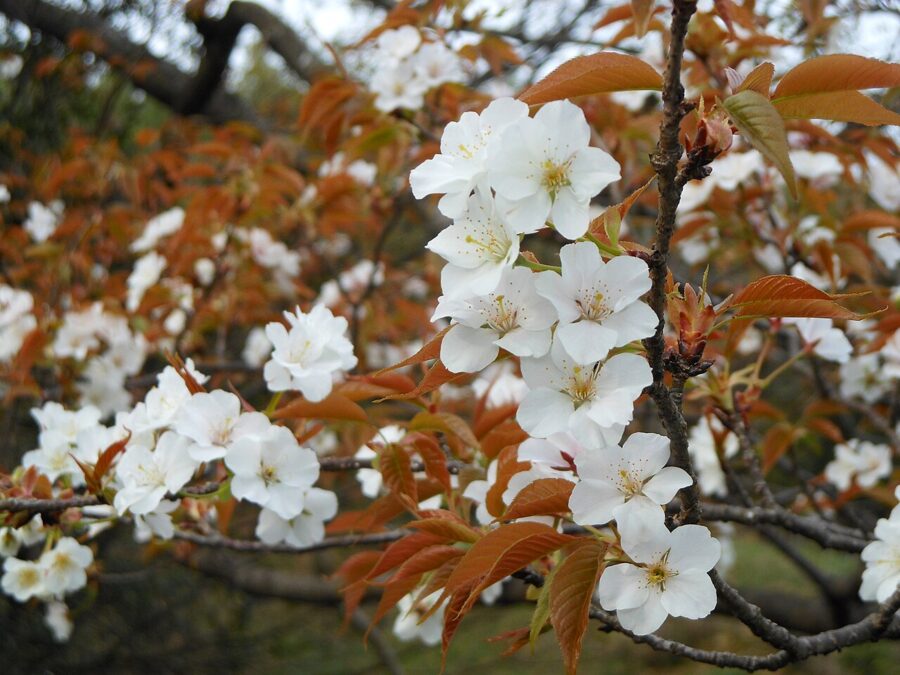
Yamazakura (山桜) grows wild from southern Tohoku to Kyushu, and until the Edo period it simply was the Japanese cherry. Its flowers open with reddish young leaves, white against copper. Every tree is a seedling with its own timing, so a mountainside of them flowers in patches over two or three weeks.
Oshimazakura, the island cherry
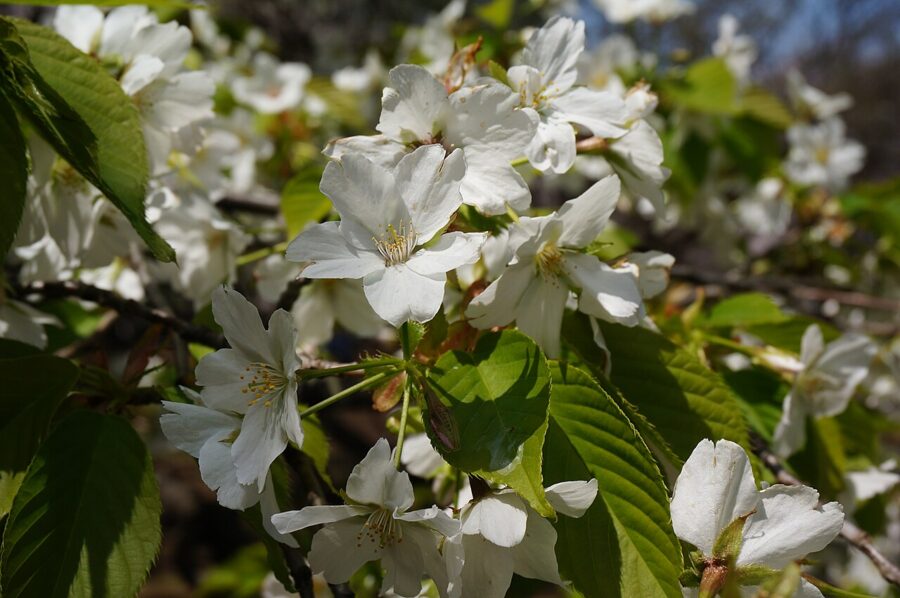
Ōshimazakura (大島桜) comes from the Izu islands and the Izu coast: large, scented white flowers, big green leaves and enormous vigour. The vigour went into Somei-yoshino, and the soft leaves, salted, wrap almost every sakuramochi in Japan.
Edohigan, the long-lived one
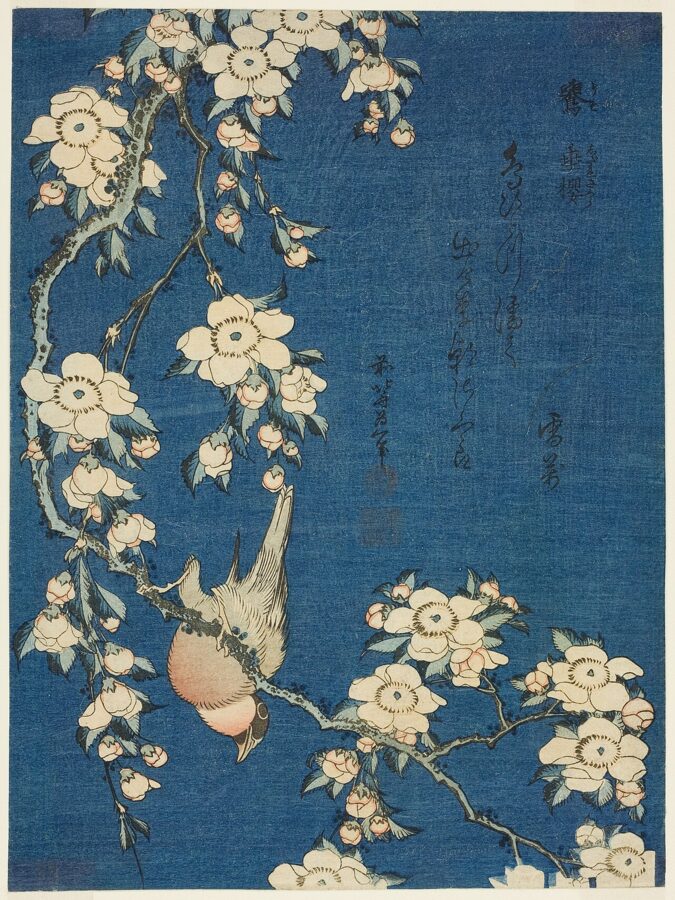
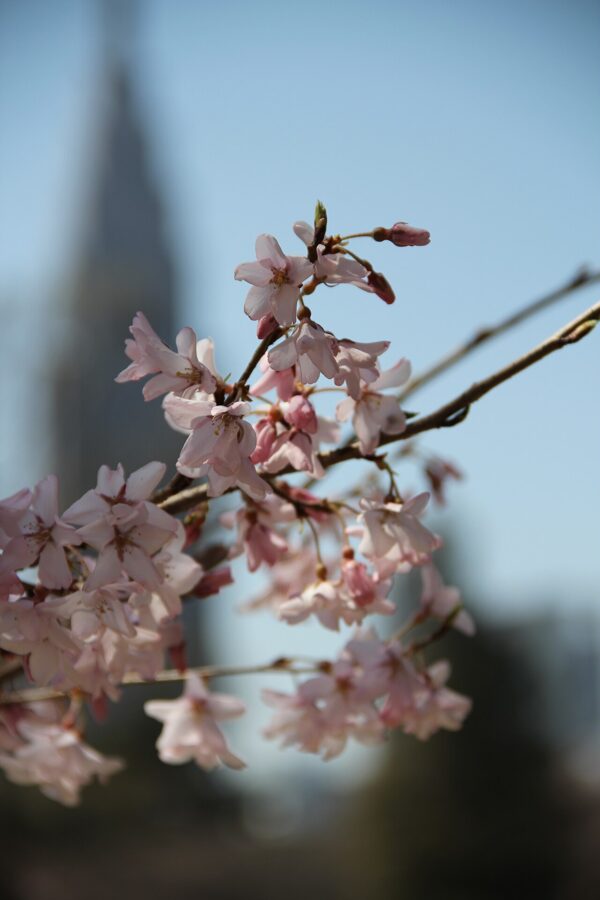
Edohigan (江戸彼岸) is named for higan, the spring equinox week, around which it tends to flower. Its blossoms are small and pale, its calyx swollen like a little urn, and it outlives every other Japanese cherry. The ancient named trees on wooden crutches are nearly all edohigan, and the weeping cherry, shidarezakura (枝垂桜), is an edohigan with drooping branches.
Kumanozakura and the rest
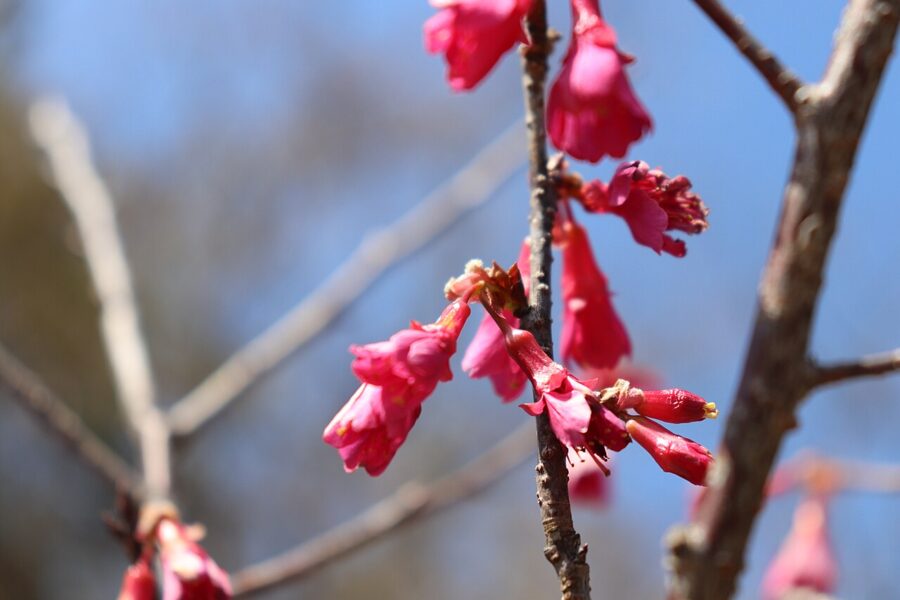
The newcomer, kumanozakura (熊野桜), was identified by the institute’s botanist Katsuki Toshio and colleagues in the southern Kii Peninsula, where it had passed for yamazakura. It flowers before Somei-yoshino, and the town of Kihō in Mie planted it in 2019 as a local alternative to the clone. The others include ōyamazakura (大山桜) of the snowy north, the little mamezakura (豆桜) of the Fuji foothills, and kanhizakura (寒緋桜), also called hikanzakura, of Okinawa, which some lists count as an early introduction.
Garden kinds are harder to count. The institute’s cherry preservation forest at Tama, Hachiōji, begun in 1966, holds about 1,800 trees in some 500 lines, each line a group from one source checked by DNA. Many descend from the Arakawa embankment in Tokyo, planted in 1886 with 78 kinds and 8,000 trees from old Edo estates.
Somei-yoshino: one tree, copied millions of times
The tree on almost every school ground, riverbank and castle moat in Japan is Somei-yoshino (染井吉野). Five pale petals open on bare grey branches before any leaf, so a row in full bloom is all flower. It grows fast, takes to almost any soil and flowers young, which is exactly what a Meiji city or a postwar school wanted.
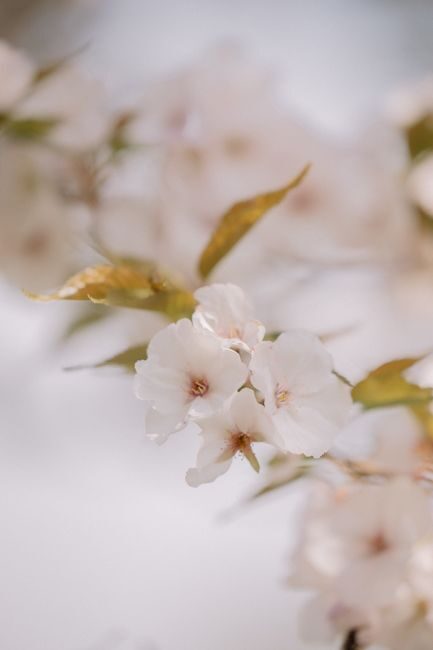
A village of gardeners
Somei was a village on the northern edge of Edo, now Komagome in Toshima ward, full of nurseries supplying samurai estates. Late in the Edo period its gardeners sold a new cherry as Yoshino-zakura, borrowing the fame of Yoshinoyama in Nara. But Yoshino’s cherries are yamazakura.
In 1900 the naturalist Fujino Yorinaga, studying the “Yoshino” trees in Ueno Park, saw that they were a distinct kind and named them Somei-yoshino after the gardeners’ village. The botanist Matsumura Jinzō gave it a scientific name the next year. So Somei-yoshino and the cherries of Yoshino are different trees, and the name was changed to say so.
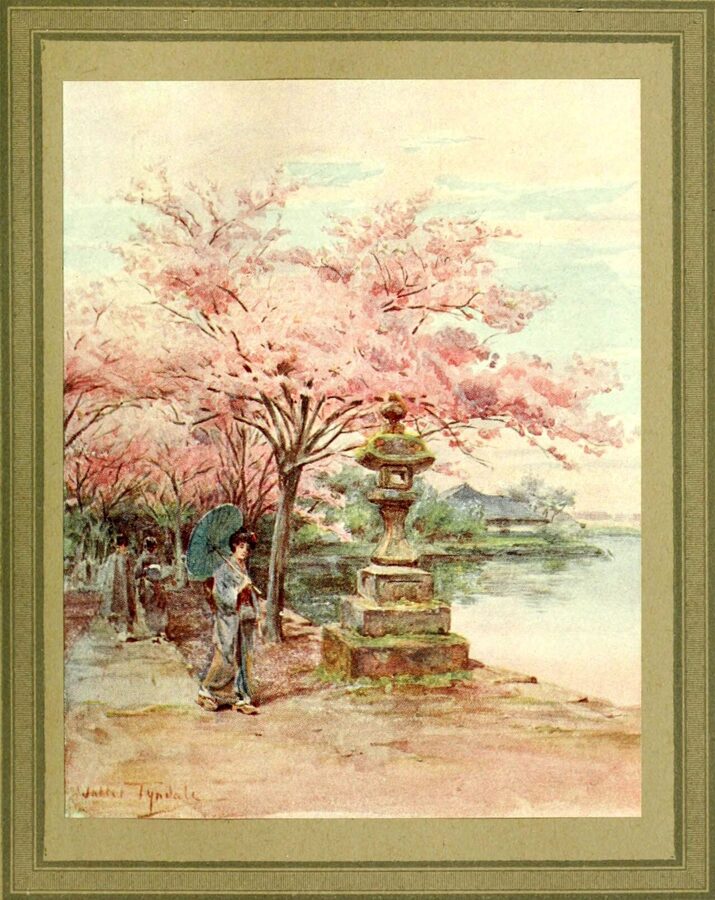
Two parents and a genome
Who made the cross is not recorded. In 2019 a team from Shimane University, Kyoto Prefectural University and the Kazusa DNA Research Institute read its genome and confirmed the long-suspected parents, edohigan and ōshimazakura, whose lines split about 5.52 million years ago and met again in a cross made more than a hundred years ago. In 2022 the Kazusa team compared Somei-yoshino from 46 places in 19 prefectures and found that one tree in Ueno Park sat closest to the original.
Why every tree is the same tree
Somei-yoshino cannot come true from seed: it is self-incompatible, so any seedling is something else. Every one has been grafted, often onto ōshimazakura rootstock, which makes the national population one plant in millions of pieces. A clone answers warmth the same way everywhere, so trees in one place open and fall together, and differences between Tokyo and Sendai are differences of climate, not tree. That is why the weather service measures spring with it.
Its reputation for dying at about 60 does not survive the old trees. The Forestry and Forest Products Research Institute calls Somei-yoshino long-lived, able to pass a hundred years with care, and points to trees in Kaiseizan Park, Kōriyama, planted around 1878. Old trees do need pruning, root space, and treatment for witches’ broom, trunk rot and the invasive red-necked longhorn beetle. Newer plantings increasingly use other kinds, such as Kawazu-zakura and the double weeping yaebenishidare (八重紅枝垂).
Other kinds, by the calendar
Because the kinds flower at different times, the cherry season on Japan’s islands runs four months, starting in January in Okinawa and ending in May in eastern Hokkaido.
| Kind | Japanese | Flowers | Usual bloom |
|---|---|---|---|
| Kanhizakura | 寒緋桜 | Deep pink bells | January to February, Okinawa |
| Kawazu-zakura | 河津桜 | Deep pink, large | Early February to early March, Izu |
| Edohigan, shidarezakura | 江戸彼岸・枝垂桜 | Small, pale pink | A few days before Somei-yoshino |
| Somei-yoshino | 染井吉野 | Pale pink, before leaves | Late March in Tokyo (average 24 March) |
| Yamazakura | 山桜 | White, with red leaves | Early to mid April at Yoshinoyama |
| Yaezakura such as Kanzan | 八重桜・関山 | Double, deep pink | Mid to late April |
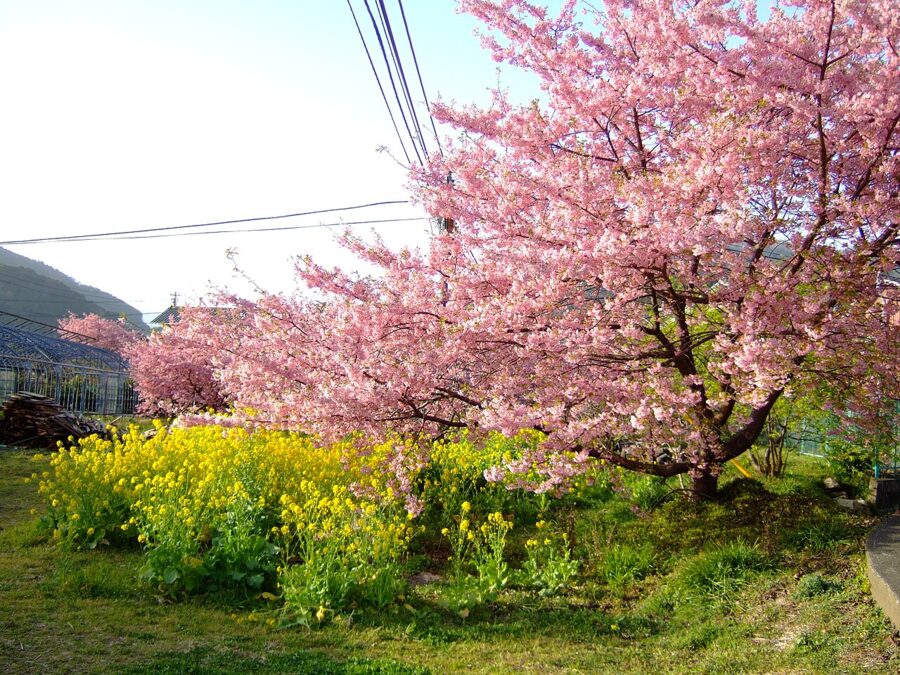
Kawazu-zakura (河津桜), found as a seedling in Kawazu on the Honshu coast of Izu in 1955, is generally thought to be a natural cross of ōshimazakura and kanhizakura. About 850 line the Kawazu River and some 8,000 stand across the town.
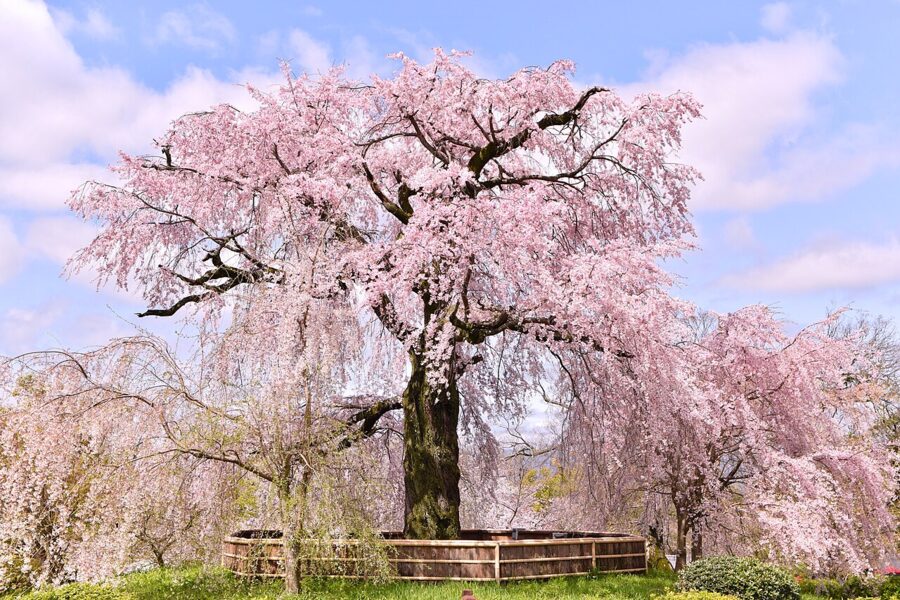
Weeping cherries are temple and garden trees, planted singly to be seen from all sides; the weeper is thought to be the oldest cultivated cherry, grown since the Heian period.
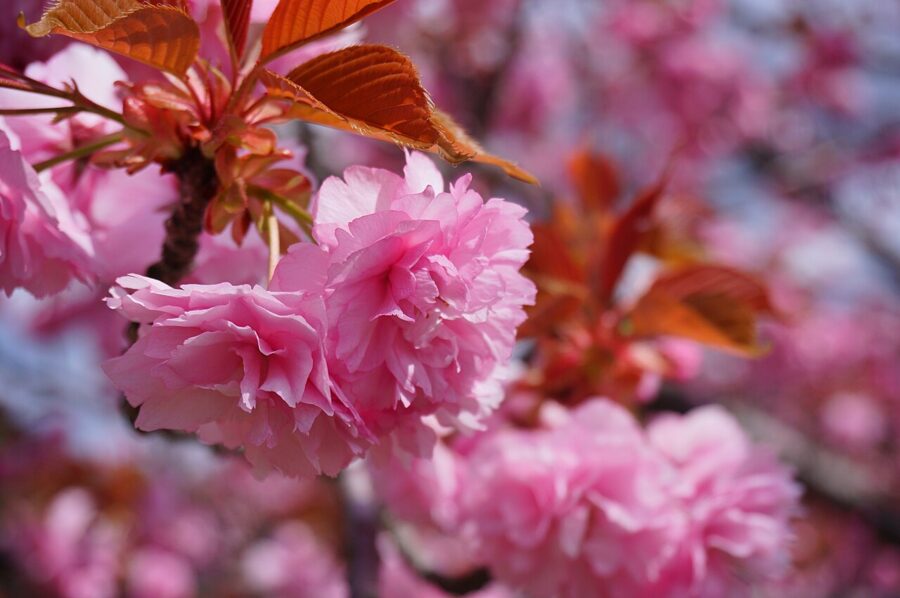
The double cherries, yaezakura (八重桜), come last. The commonest, Kanzan, opens deep pink when the Somei-yoshino are already in leaf. The poet Ise no Taifu praised the yaezakura of old Nara in the Hyakunin Isshu, and the Nara-no-yaezakura is still the prefecture’s flower.
From plum to cherry: how hanami began
The first flower Japanese poets loved was the Chinese plum. The eighth-century Man’yōshū has 118 plum poems against 44 on cherry. By the Kokinshū of about 905 the cherry fills the spring books, often under the plain word hana.
The change came at court. Emperor Saga held a flower banquet under cherries in the early ninth century, and hanami (花見), flower viewing, came to mean poetry and wine under the trees. Ariwara no Narihira put its anxious pleasure into one poem: if there were no cherries in the world, how calm the heart would be in spring.
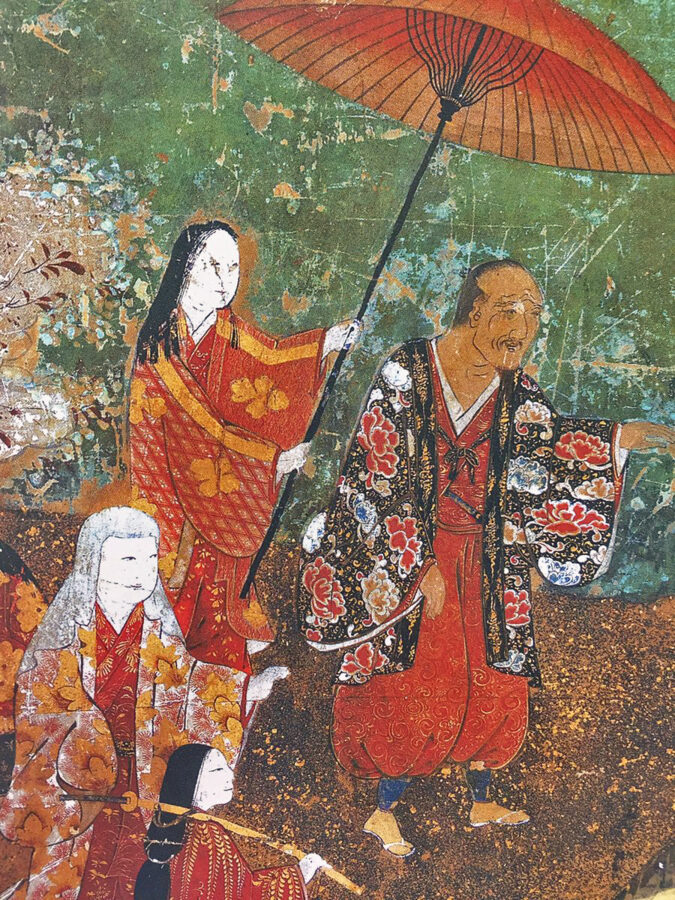
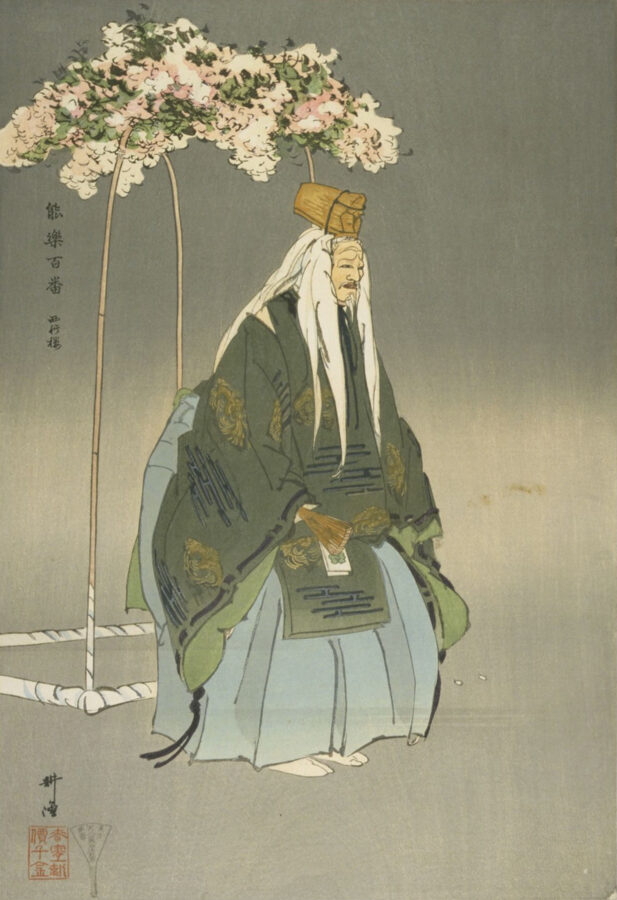
The monk-poet Saigyō, who lived for years in a hut above Yoshino, wrote the poem many Japanese people can finish for you: let me die in spring, under the blossom, around the full moon of the second month. He died in 1190, close to that full moon.
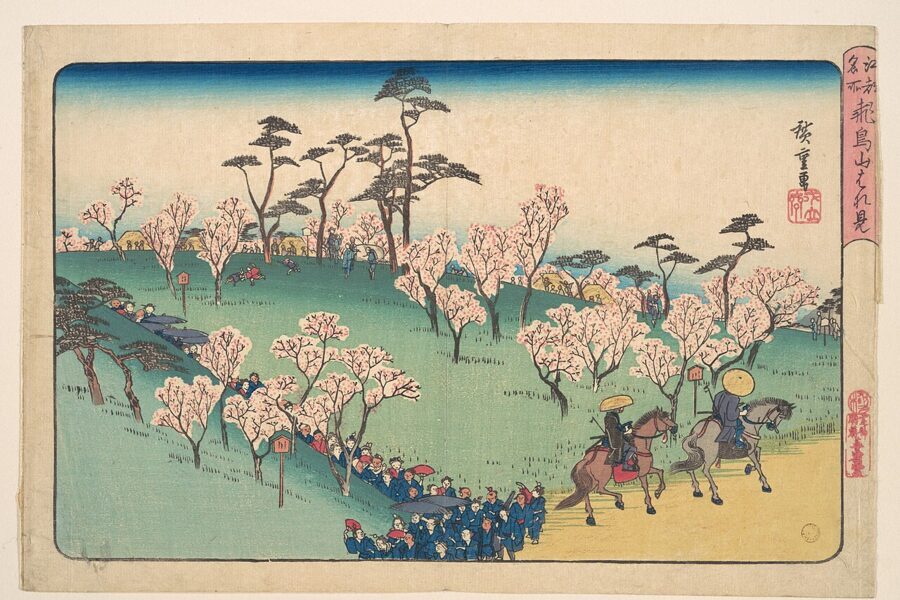
Hanami as a crowd belongs to Edo. The shogun Tokugawa Yoshimune planted cherries on Asukayama hill and along the Sumida River in the 1720s for the townspeople, who came with picnic boxes, sake, music and their best kimono.
The ideas around the blossom are easy to flatten. The scholar Motoori Norinaga made mono no aware (物の哀れ), being moved by things, central to classical literature, and the brief cherry was his favourite example. His best-known poem compares the Japanese heart to yamazakura glowing in the morning sun: brightness, not falling.
The darker reading came later. From the Meiji period the state tied falling petals to soldiers dying young, and in 1944 the first special-attack units took their names from Norinaga’s poem. That is part of the cherry’s history, not the whole of it. For most Japanese people the tree means April, the new school and working year; it is on the 100-yen coin and countless school badges, one of the commonest Japanese symbols.
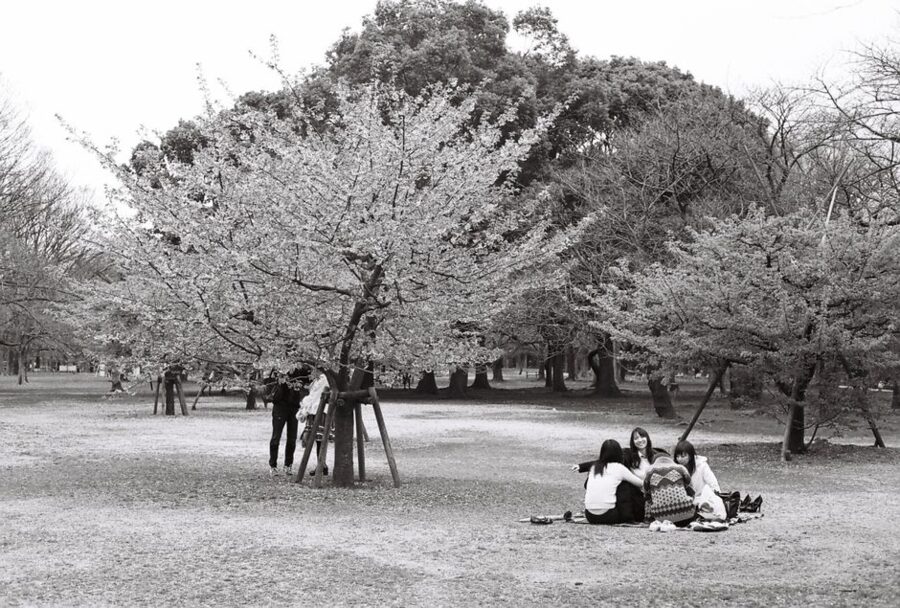
The sakura front and the sample trees
Every spring the weather service draws the sakura zensen (桜前線), the cherry front, a line of equal flowering dates moving north and uphill with the warming air, as good an example of weather turned into a word as the Japanese climate offers.
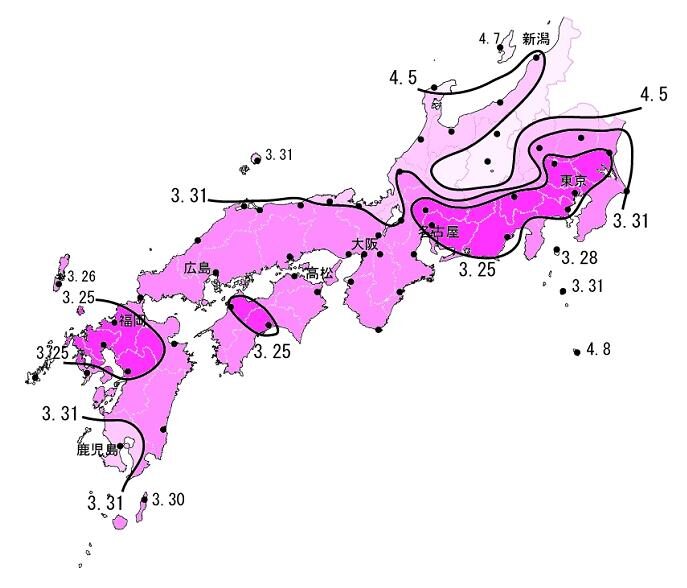
The front is built from sample trees, hyōhonboku (標本木), one per observatory, usually a Somei-yoshino. By the agency’s rules a tree has flowered when five or six blossoms are open, and is in full bloom, mankai (満開), when about 80 percent of its buds have opened. Where Somei-yoshino grows poorly it watches kanhizakura in the southwestern islands and ezoyamazakura (蝦夷山桜) in parts of Hokkaido.
At the end of 2020 the agency stopped most of its plant and animal observations and kept six plants: plum, cherry, hydrangea, susuki grass, ginkgo and maple. The 2026 flowering dates show the front’s reach:
| City | Flowered in 2026 | Average (1991 to 2020) |
|---|---|---|
| Naha (kanhizakura) | 18 January | 16 January |
| Tokyo | 19 March | 24 March |
| Kyoto | 23 March | 26 March |
| Fukuoka | 24 March | 22 March |
| Sendai | 31 March | 8 April |
| Aomori | 13 April | 22 April |
| Sapporo | 18 April | 1 May |
| Kushiro (ezoyamazakura) | 3 May | 16 May |
The right-hand column is an ordinary year. The middle one is 2026, when the north ran nearly two weeks early.
Words for the blossom
A tree that changes this fast collects words:
- Gobu-zaki (五分咲き), half open; forecasters count bloom in tenths.
- Hanagumori (花曇り), the hazy, overcast sky of cherry season.
- Hanabie (花冷え), the cold snap while the trees are in flower, which keeps the blossom on longer.
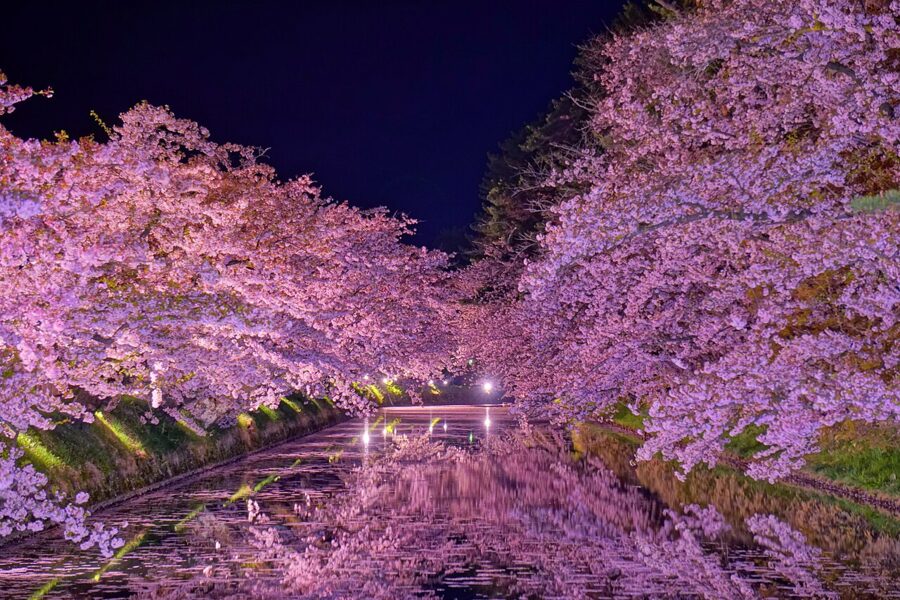
- Yozakura (夜桜), cherries at night, now under floodlights or lanterns.
- Hanafubuki (花吹雪), a flower blizzard: petals torn off by a gust.
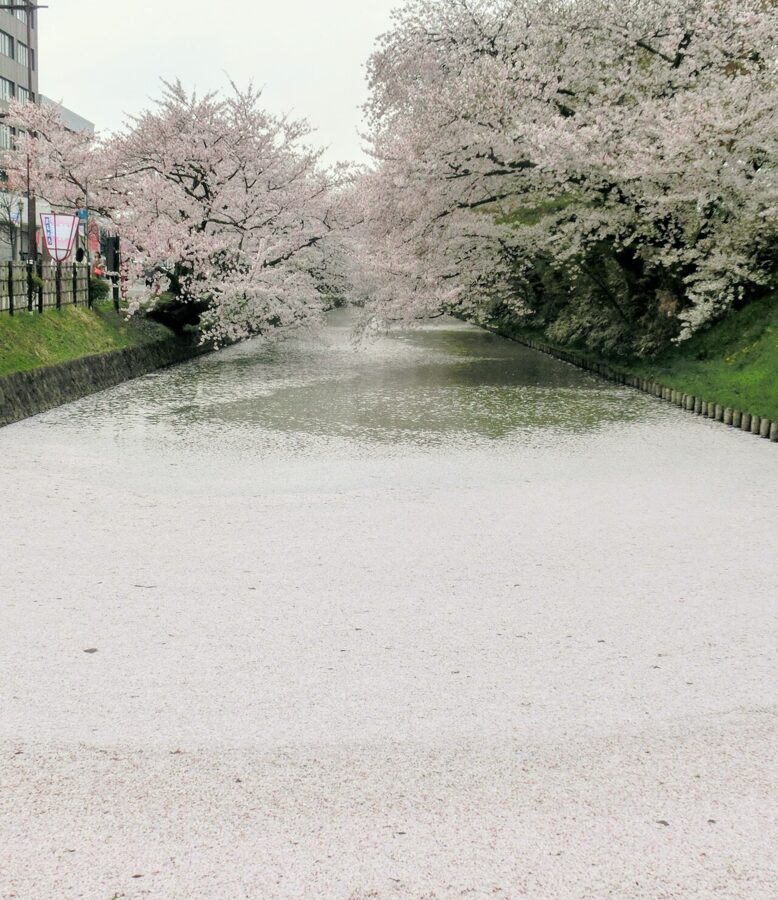
- Hanaikada (花筏), a flower raft of fallen petals on a river or moat.
- Hazakura (葉桜), the cherry in leaf; in haiku a fresh early-summer word, not a disappointment.
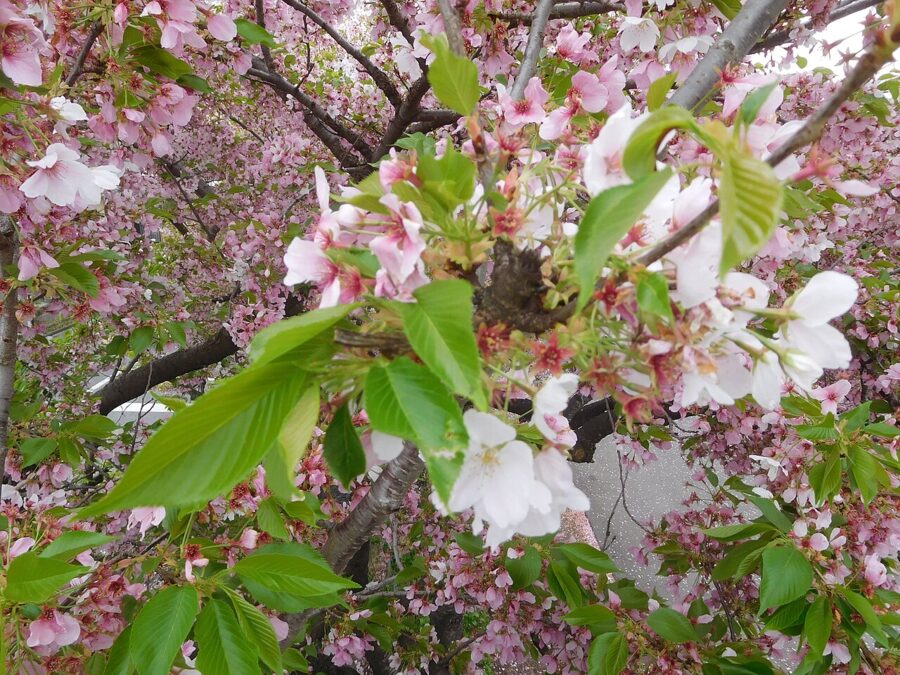
The palest pink is sakura-iro (桜色). Two uses have wandered off: sakura-niku (桜肉) is horse meat, usually explained by its colour, and サクラ in katakana is a shill, traced by dictionaries to Edo theatre hands who watched for free, like a crowd at the cherries.
Sakura you can eat and drink
The ornamental trees bear little worth eating; the summer sakuranbo (さくらんぼ) come from European sweet cherries grown in orchards, above all in Yamagata. What gets eaten from the flowering cherry is the leaf and the blossom, salted.
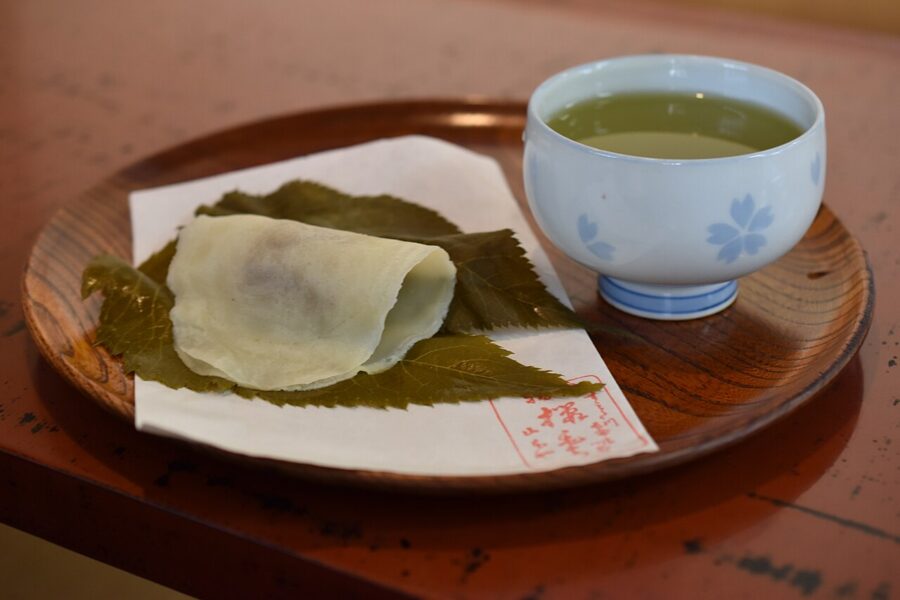
Sakuramochi
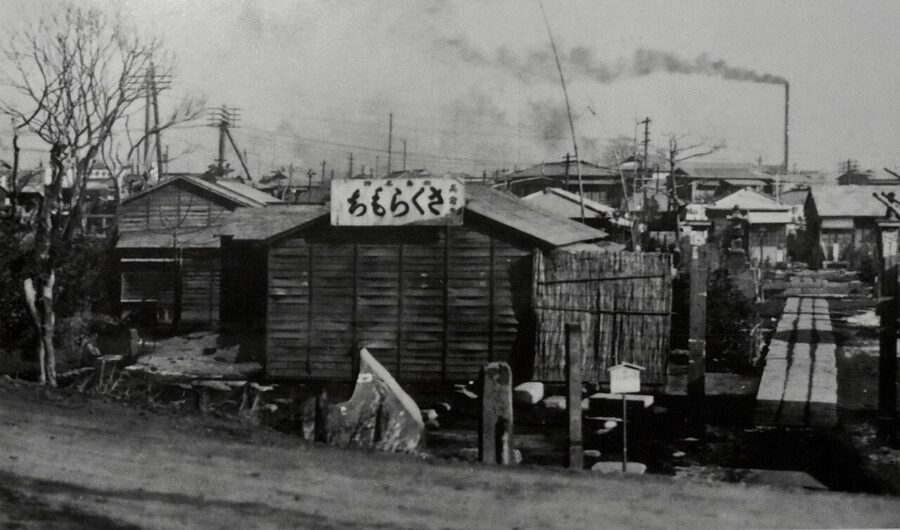
Sakuramochi (桜餅) is the spring sweet of the Japanese food calendar, in two kinds. The Tokyo kind comes from Yamamoto-ya, founded in 1717 by Yamamoto Shinroku, gatekeeper of Chōmeiji temple in Mukōjima, who salted leaves from the Sumida embankment cherries and wrapped rice cakes in them for the crowds.
The shop still stands by the river, and its leaves now come from ōshimazakura grown in Matsuzaki, west Izu. As of November 2026 it opens 8:30 to 18:00, closed Mondays and Tuesdays; one to take away is ¥300 (about $2), or ¥500 (about $3) to eat in with green tea. A bowl of matcha suits it as well.
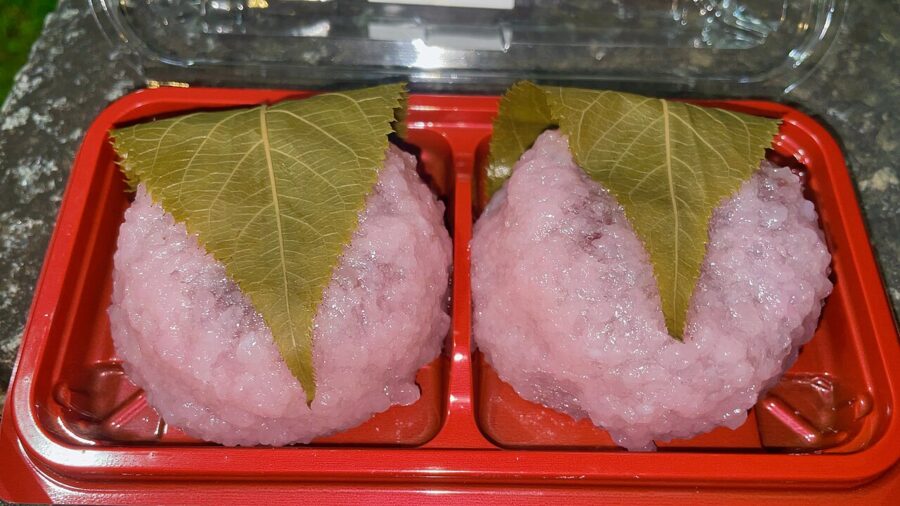
West of the mountains a sakuramochi is Dōmyōji (道明寺): coarse, steamed glutinous rice, dyed pink, around the bean paste. The name comes from Dōmyōji, a nunnery near Osaka known for the dried rice that gives the sweet its grainy bite.
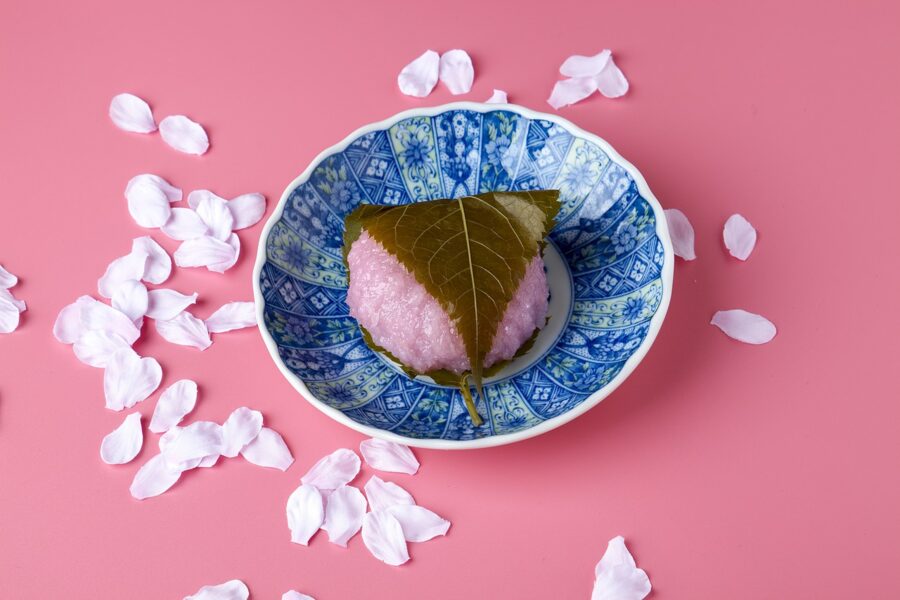
The flavour called “sakura” is the leaf’s. Salting releases coumarin, the aromatic of tonka beans and new-mown hay, and that almond-like scent is what sakura sweets and lattes imitate. The flowers taste mostly of salt.
Salted blossoms and sakurayu
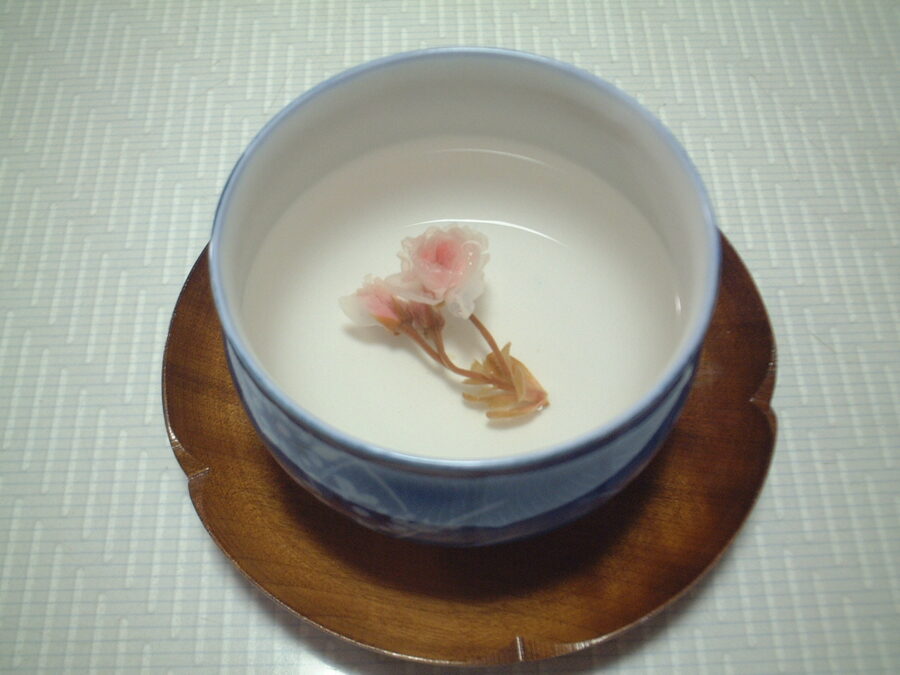
Salted flowers, sakura no hanazuke (桜の花漬け), are made from double cherries, mostly Kanzan, picked as buds from mid-April. According to the agriculture ministry’s guide to traditional foods, Odawara, Hadano and their surroundings in Kanagawa produce 80 to 90 percent of Japan’s supply, cured with salt and white plum vinegar for three weeks to a month.
One in a cup of hot water makes sakurayu (桜湯), served instead of tea at weddings because the flower slowly opens in the cup. The same flowers go into rice and onto sweet bean buns.
Trees worth the journey
Most Japanese cities do Somei-yoshino well on a moat or river walk. These are places where the tree itself, or a whole hillside of them, is the reason to go.
Miharu Takizakura, Fukushima
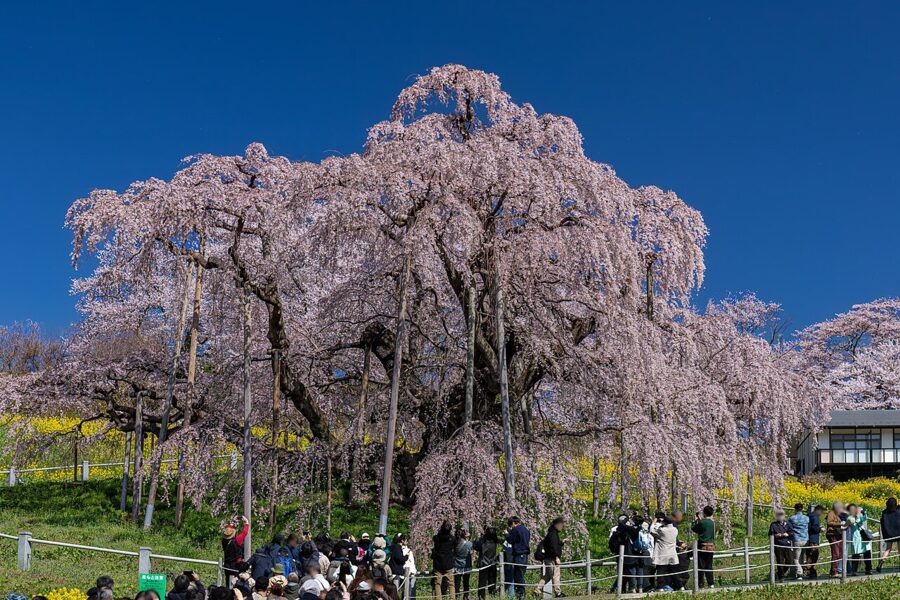
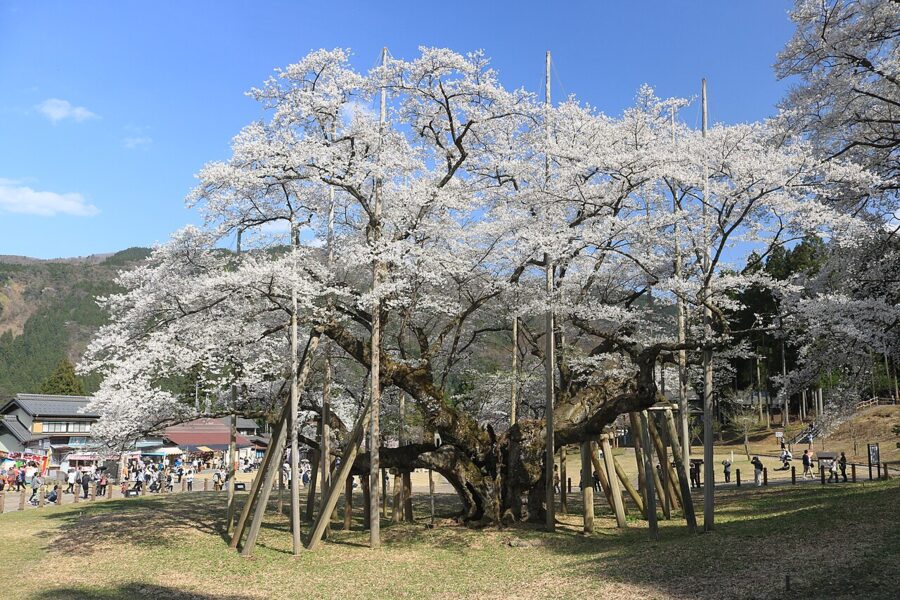
The “waterfall cherry” of Miharu is a single weeping edohigan in a field, estimated at over a thousand years old: 13.5 m (44 ft) high, 11.3 m round at the base, its branches spreading up to 14.5 m. In 1922 it became the first cherry designated a national natural monument.
In 2026 it flowered on 2 April and reached full bloom on 6 April. A viewing fee of ¥500 (about $3) is collected during the flowering, with junior high students and younger free; Miharu station is about 13 minutes from Kōriyama by JR, with a seasonal bus to the tree.
Yamataka Jindai-zakura and the other great trees
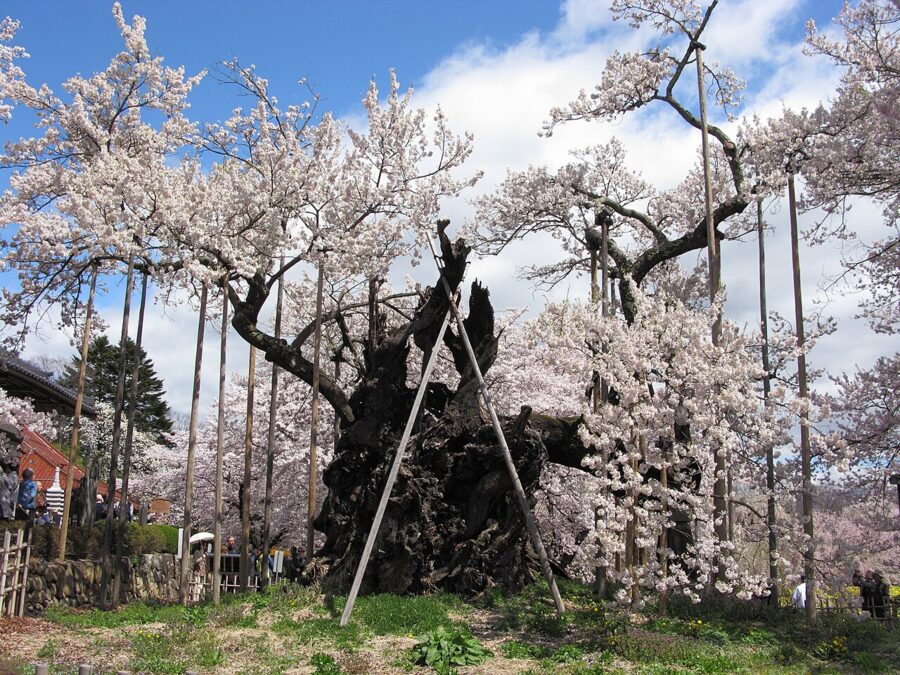
Takizakura is one of the three great cherries of Japan. The second is the Yamataka Jindai-zakura at Jissō-ji temple in Hokuto, Yamanashi, an edohigan said to be 1,800 or 2,000 years old, 10.3 m tall and 13.5 m round at the roots. Legend has Yamato Takeru planting it. Much of the trunk is dead, and it flowers from what remains in late March and early April.
The third is the Usuzumi-zakura of Motosu, Gifu, whose petals are said to turn the grey of thinned ink, usuzumi (薄墨), as they fall.
Yoshinoyama, Nara
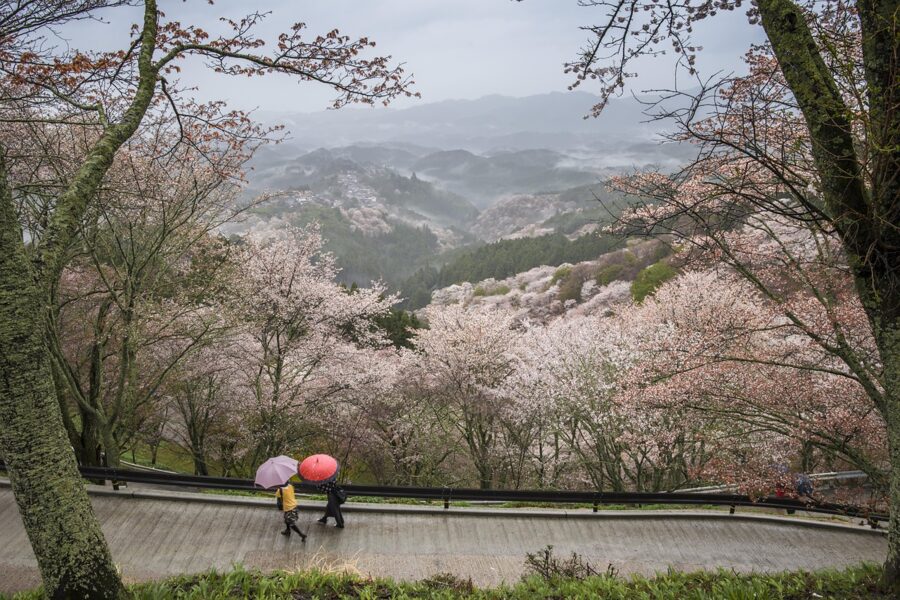
Yoshinoyama is a ridge covered with about 30,000 cherries, nearly all yamazakura, and the country’s most famous cherry hill for a thousand years. Tradition says the ascetic En no Gyōja carved the mountain’s deity, Zaō Gongen, from cherry wood, and pilgrims planted cherries as offerings ever after. The trees flower in four bands up the slope, Shimo, Naka, Kami and Oku Senbon, usually through the first half of April, and the mountain is part of a 2004 UNESCO World Heritage listing.
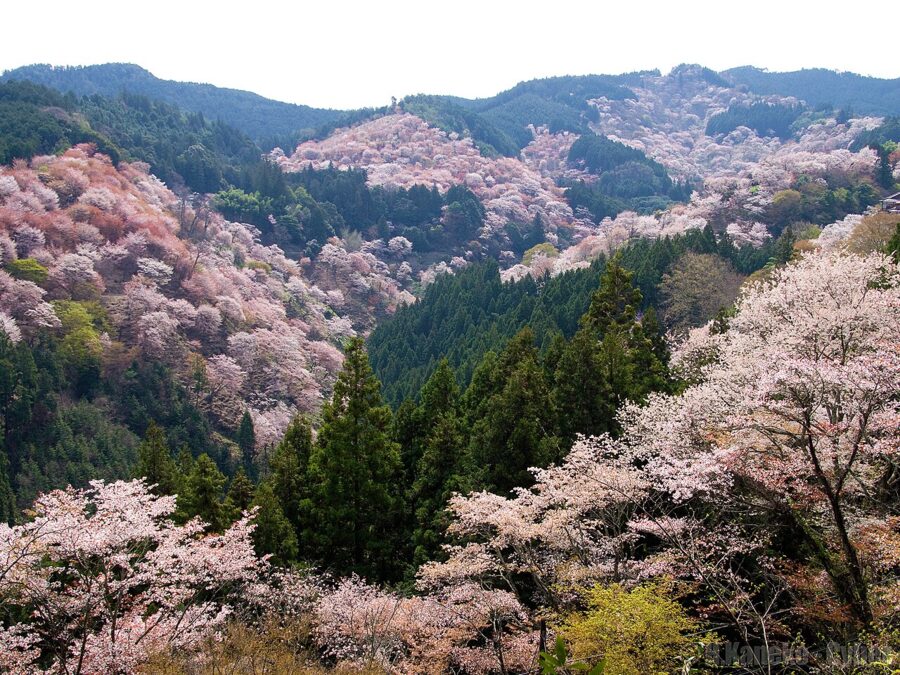
These are wild trees, each on its own timing among copper leaves. After rows of Somei-yoshino the mountain looks untidy for a minute, and then makes the clones look like wallpaper.
Hirosaki Park, Aomori
Hirosaki has about 2,600 cherries around its castle and moats, including what is often called Japan’s oldest Somei-yoshino, planted in 1882. The city prunes them with techniques taken from the apple orchards around the town, leaving each bud carrying several flowers, so the branches are denser with blossom than in most parks.
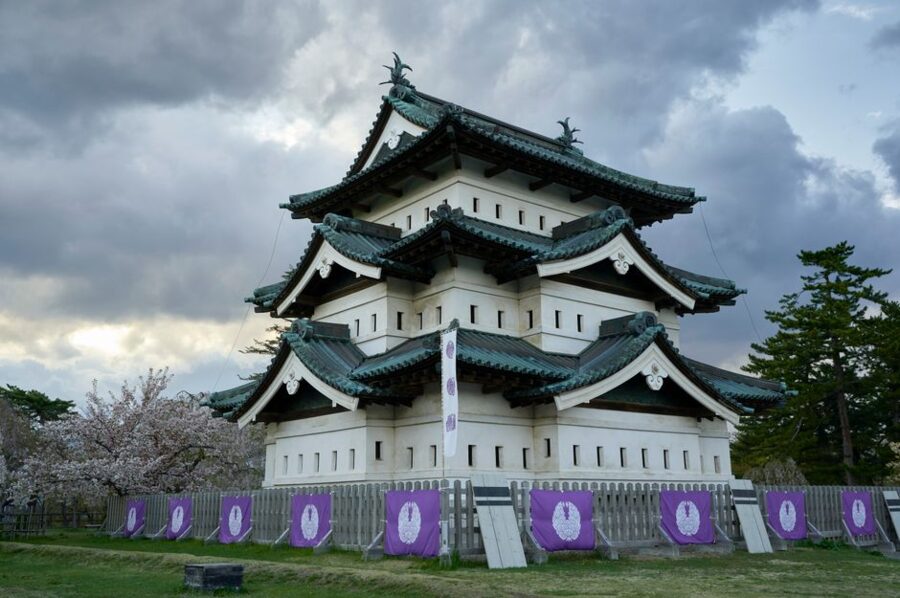
The 2027 festival is set for 16 April to 5 May. Most of the park is free; the castle’s inner enclosure and the botanical garden each charge ¥320 (about $2) for adults during the festival.
Kakunodate, Akita
In Kakunodate’s old samurai quarter roughly 400 weeping cherries hang over black board fences, 162 of them listed together as a national natural monument. Local tradition traces them to saplings in a Kyoto bride’s trousseau in the 17th century. Along the Hinokinai River, a 2 km tunnel of Somei-yoshino planted in 1934 flowers at about the same time.
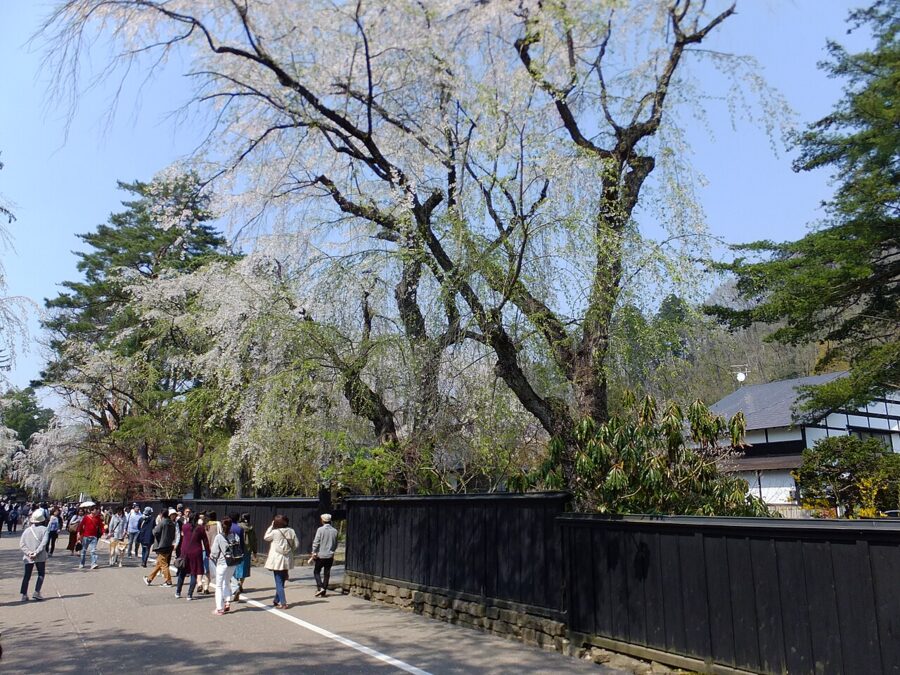
If you can choose only one, choose by the tree: Miharu for one great old cherry, Yoshino for a mountain of wild ones, Hirosaki for Somei-yoshino at its best, Kakunodate for weepers over old walls.
And if you are in Tokyo in late March, walk to Yasukuni Shrine and find the tree with a little fence and a crowd of cameras. When five or six flowers open on it, the city’s spring begins. It is a Somei-yoshino, a cutting of a cutting of one Edo gardener’s tree, and every other cherry in the city opens with it.