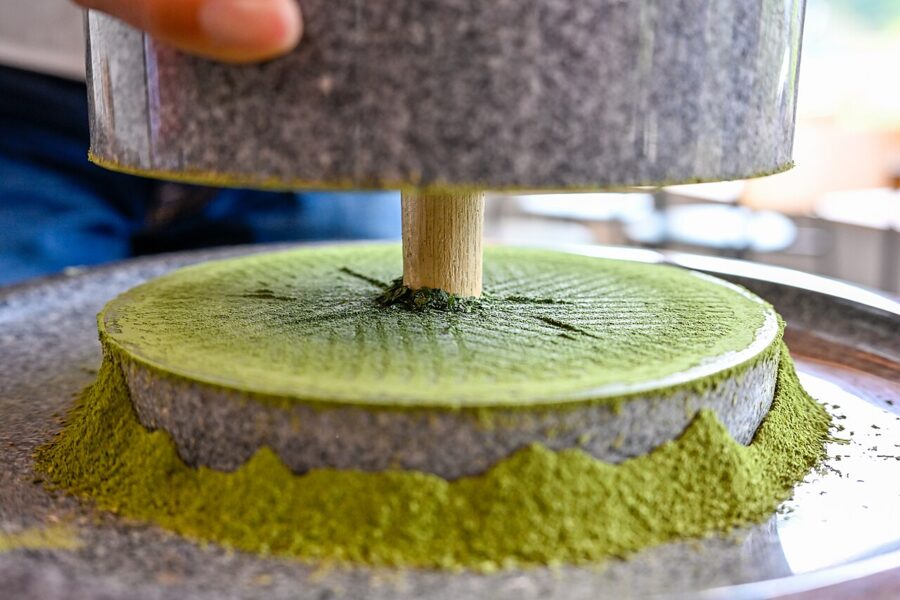
The first character of 抹茶 is the one a Japanese clerk uses to strike a name off a register: 抹消, masshō, deletion. Before it meant erasing, it meant rubbing, and that is the sense in matcha (抹茶). Tea, rubbed between two stones until it is finer than flour.
That one word now covers a lot of ground. It is the bitter, frothy bowl at the centre of the tea ceremony, the green in a Kit Kat, and the powder in an iced latte in London or Bangkok. In 2025 Japan exported more green tea by value than in any year before, and most of it left the country as powder.
In this article
抹 and 茶: what the name says
抹 (matsu, eight strokes, one of the jōyō kanji of everyday Japanese writing) joins the hand radical 扌 to 末, the tip or end of something. Dictionaries give it three meanings that run into each other: to rub, to smear, to erase. You meet it in 抹消 (deletion) and 一抹 (ichimatsu), a single brushstroke’s worth, as in “a trace of unease”. 茶 (cha) is the plain word for tea, nine strokes, one of the second-grade characters on the kyōiku kanji list.
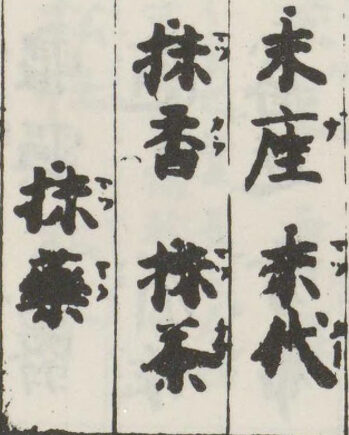
So the usual English gloss, “powdered tea”, is close but not exact. Powder on its own is 末, and Chinese texts did write 末茶 for tea reduced to dust; the Japanese spelling uses the rubbing character instead. A 1559 copy of the Kundaikan Sōchōki, a shogun’s guide to fine objects, writes 抹茶壺, “matcha jar”, and glosses it suri-cha-tsubo: the rubbed-tea jar. Some people, at least, said it that way.
The dictionaries on Kotobank agree on the thing itself: young tea leaves, specially grown and dried, ground in a mill, used above all in chanoyu (茶の湯), the tea ceremony, and served thick or thin. They also keep an older name, hikicha (碾き茶), “milled tea”.
That 碾 is the key to the second word you need. It means a millstone, and the dried leaf that goes into the mill is tencha (碾茶), “millstone tea”: flat green flakes like crumbled seaweed. Grind it and it becomes matcha. Grind anything else and, under Japanese labelling rules, it doesn’t.
From Song bowls to Uji
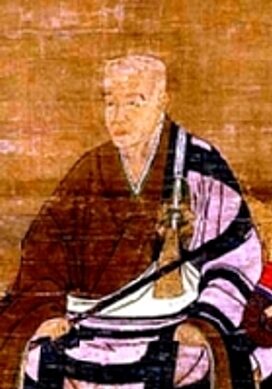
Whisked powdered tea is Chinese. Under the Song dynasty, tea was ground, sifted into a bowl and beaten with hot water using a bamboo whisk, and Japanese monks learned to drink it in Chinese monasteries. The monk Eisai came home from his second trip in 1191 with the habit, and in 1214 he presented the shogun Minamoto no Sanetomo with his Kissa Yōjōki (喫茶養生記), a short book on drinking tea for health.
Eisai’s pupil Myōe planted tea at Kōzan-ji in Togano’o, north-west of Kyoto, and plants were later set out in Uji. By the 15th century the Ashikaga shoguns favoured Uji tea and its named gardens. China, meanwhile, gave up the powder: a Ming edict of 1391 ended the pressed-cake tribute tea, steeped leaf took over, and whisked tea survived in Japan.
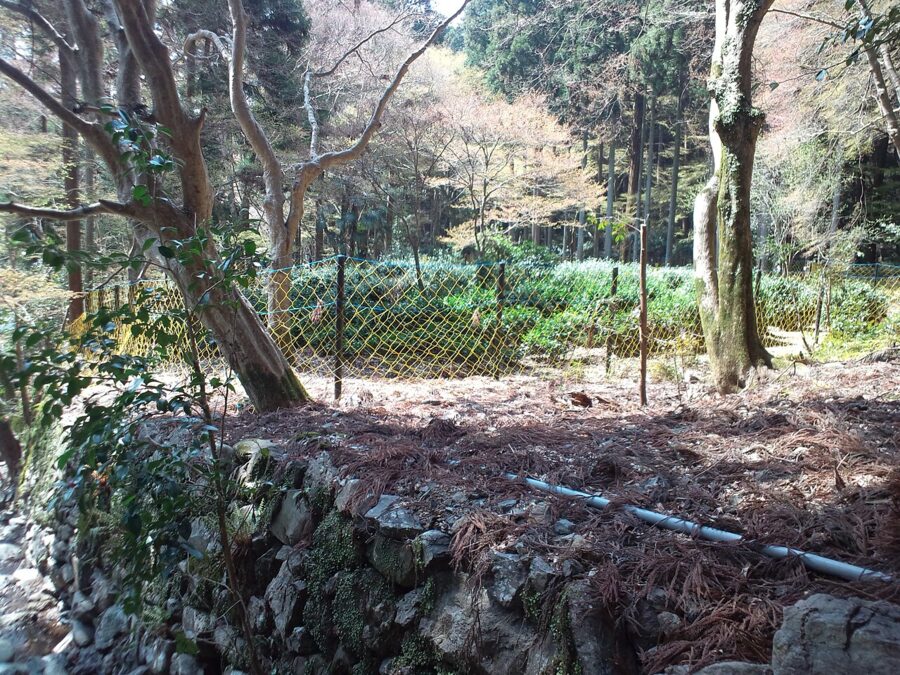
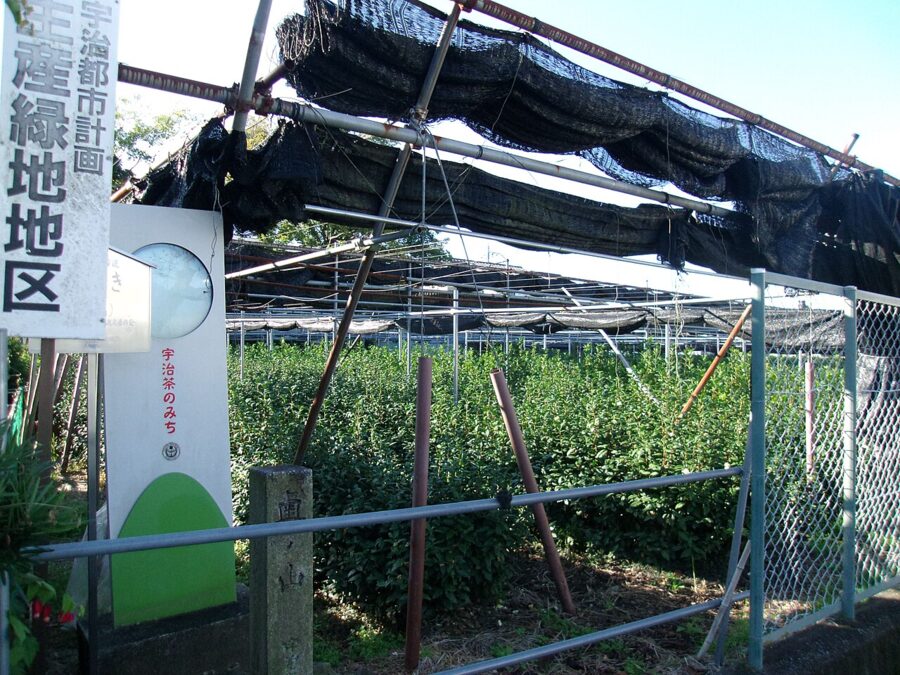
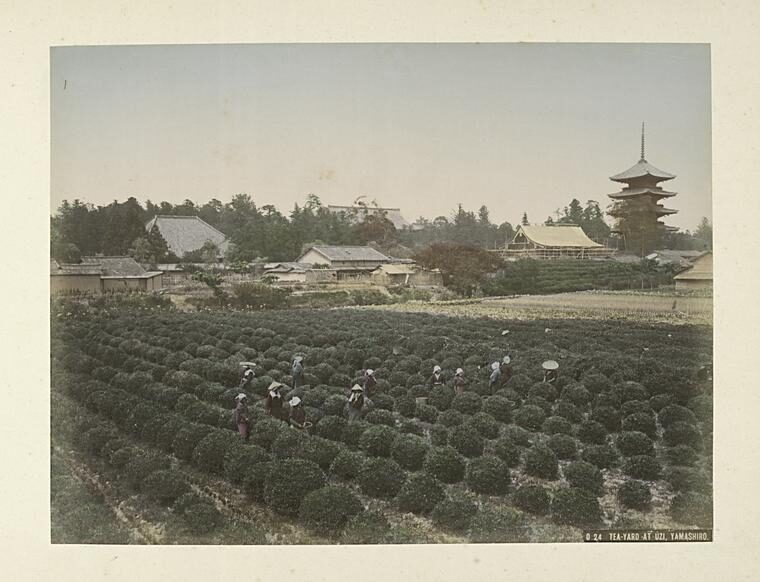
The change that made matcha green came in Uji. Growers began covering their bushes with reed and straw before the spring picking, first, it seems, against the late frosts that Japan’s climate can still deliver in April. The Nipponica encyclopaedia dates shade-grown matcha leaf to the late 16th century; a 2019 soil study of old Uji fields puts the start of shading no later than the first half of the 15th. Before that, matcha was brownish, and Japanese still calls brown 茶色, “tea colour”.
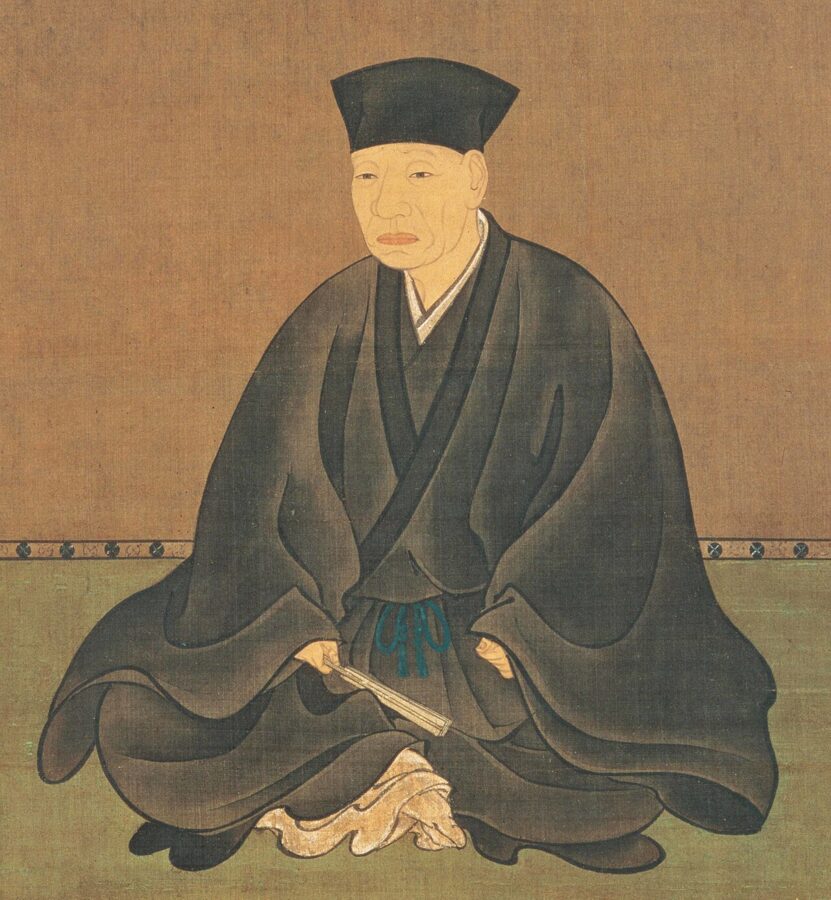
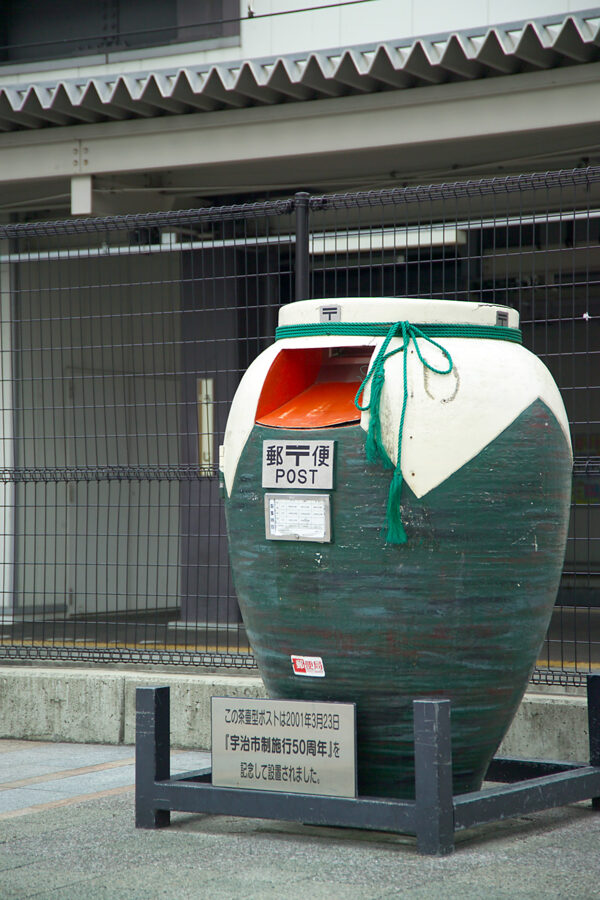
Sen no Rikyū (1522 to 1591) and the masters before him turned drinking it into the austere art of chanoyu. Under the Tokugawa shoguns, Uji’s licensed tea masters held a monopoly on shade-grown tea, and every year from 1633 to 1866 a procession carried sealed jars of new tencha to Edo, the Ochatsubo Dōchū. Lords were expected to make way for it.
When the shogunate fell in 1868, matcha lost its best customers and Uji its monopoly. Shading spread to other districts, and in the early 20th century the tencha drying machine replaced paper trays over charcoal.
Shade, steam, stone: how tencha is made
Three weeks in the dark
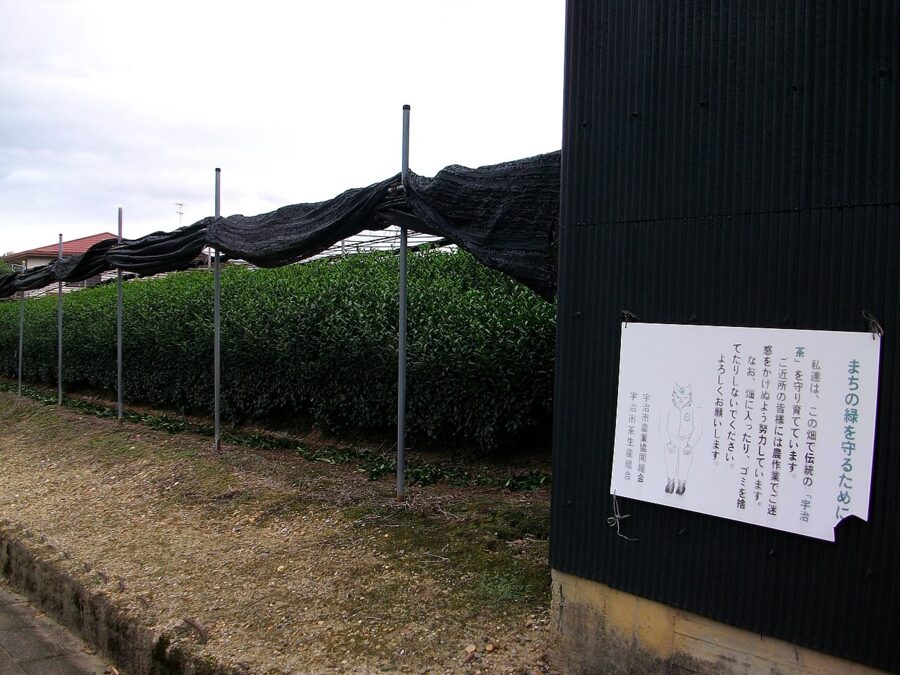
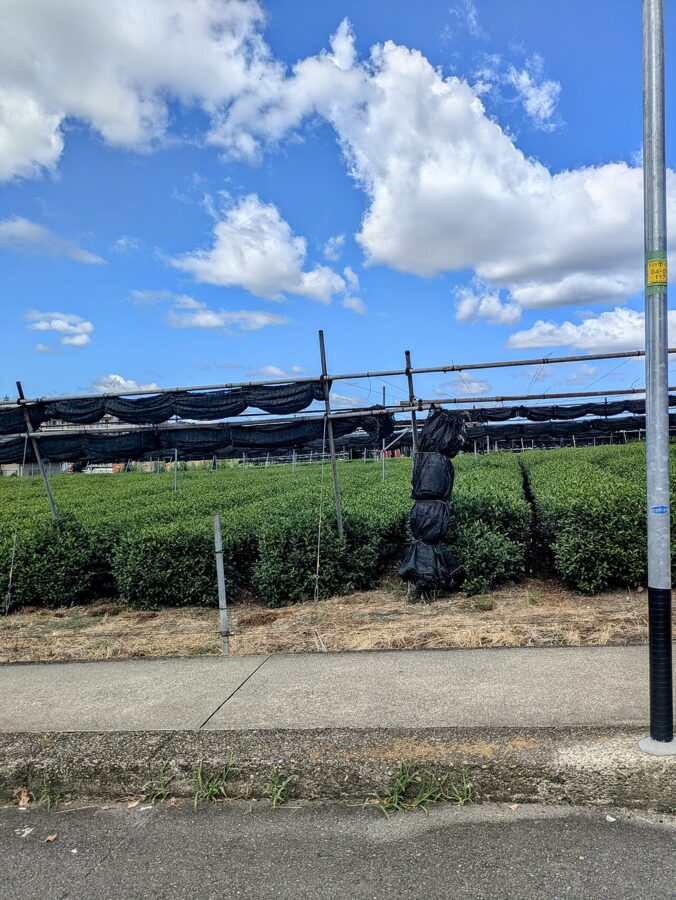
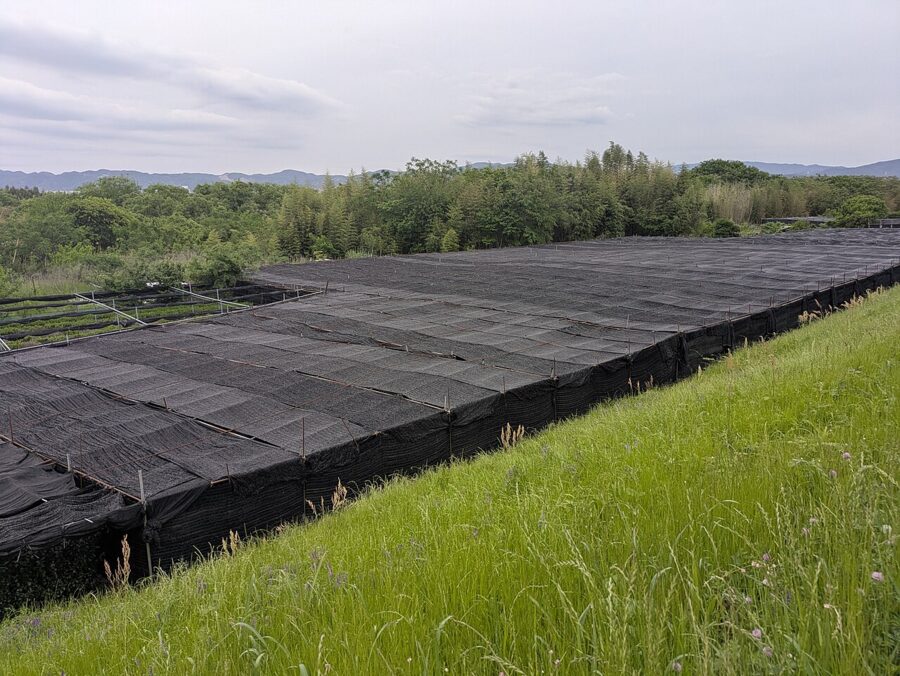
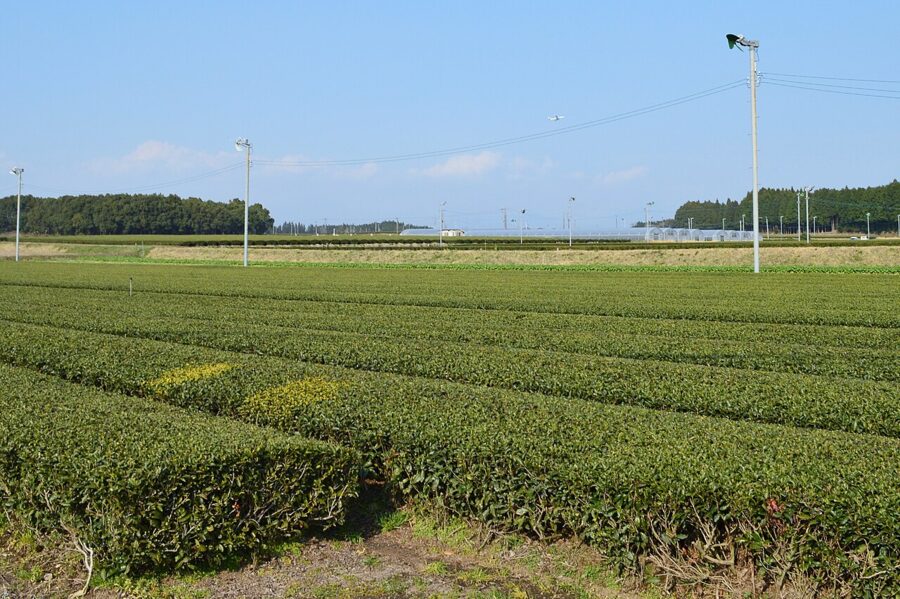
Japan’s farm ministry describes tencha as tea picked from fields covered for about two to three weeks before harvest with reed screens (yoshizu), rush mats (komo) or synthetic cloth, usually on a frame of poles. The old Uji way puts reed blinds and straw on a high frame; most farms now pull black cloth over frames or straight onto the hedges.
Shade does two things you can taste and see. With less light, the leaf turns less of its theanine, the amino acid behind matcha’s savoury sweetness, into the catechins that make tea bitter. And it builds more chlorophyll, which is where the colour comes from. Shaded tea also has its own smell, ōika (覆い香), “covered aroma”, often compared to fresh nori.
Steamed, dried, never rolled
Sencha is steamed, then rolled into needles. Tencha is steamed and simply dried, laid loose in a tencha furnace (碾茶炉, tencharo). That is the whole difference, and the official definition rests on it. The rough leaf is then cut, the stems and veins picked out, and the flakes sifted to size for the mill.
The mill
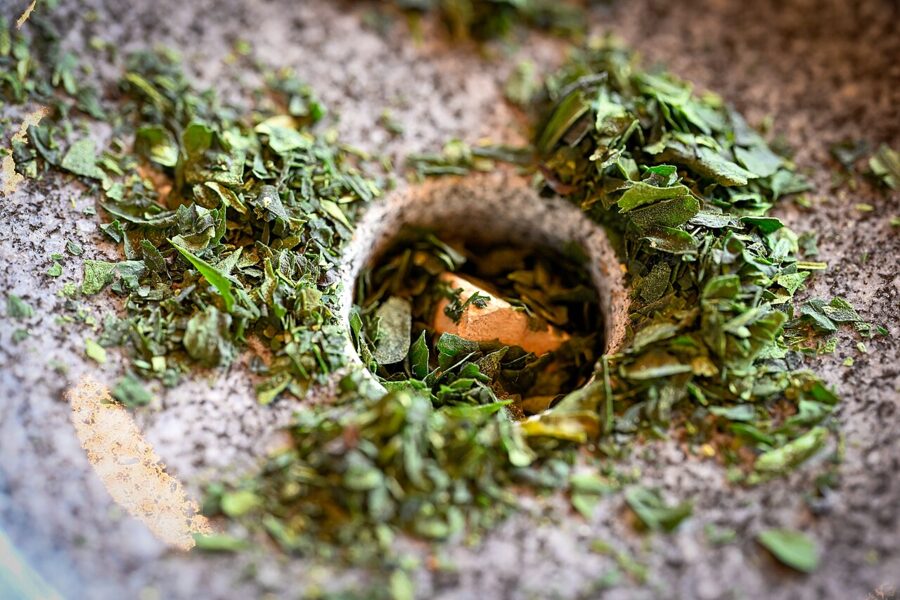
The flakes go through granite mills turned slowly by motor, each making only a little powder an hour. Popular accounts say the slowness keeps the tea cool. The Kyoto Prefectural Tea Industry Research Institute measured the stones: they warm to about 50°C over eight hours of grinding, tasters scored the matcha higher as the mill warmed, and the samples held more of the compound behind that seaweed aroma. I’d take that as a reason to trust the stone, not to fear heat.
Where it grows, and how much
Uji is the name on the tin, but by tonnage Kagoshima now leads. Figures from the Japan Tea Central Public Interest Association, published in Kagoshima Prefecture’s June 2026 review of its tea industry, show how the map moved:
| Prefecture | Tencha 2021 (t) | Tencha 2024 (t) | Share of Japan, 2024 |
|---|---|---|---|
| Kagoshima | 1,007 | 2,150 | 40% |
| Kyoto | 710 | 1,068 | 20% |
| Shizuoka | 442 | 611 | 11% |
| All Japan | 3,211 | 5,336 | 100% |
The ministry’s October 2026 tea report puts the 2025 crop at 6,278 tonnes, about 3.2 times the 2014 figure, in the same order: Kagoshima, Kyoto, Shizuoka. Even so, tencha was only 8.6% of Japan’s 2025 tea.
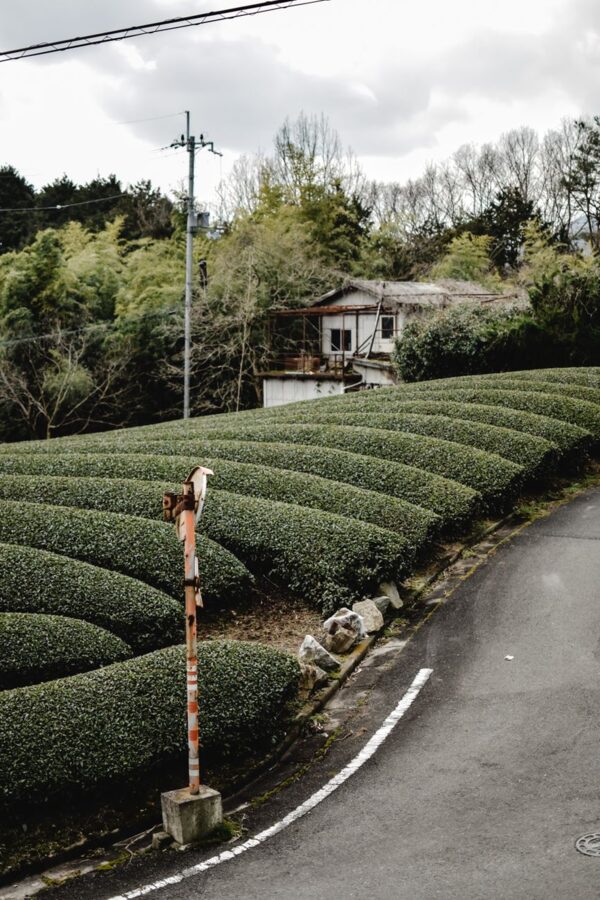
“Uji” on a label is not a promise that the leaf grew in Uji. The definition the ministry gives for Uji tea is leaf grown in Kyoto, Nara, Shiga or Mie, finished by Kyoto firms in Kyoto by methods from the Uji district. It is a regional style, not a postcode.
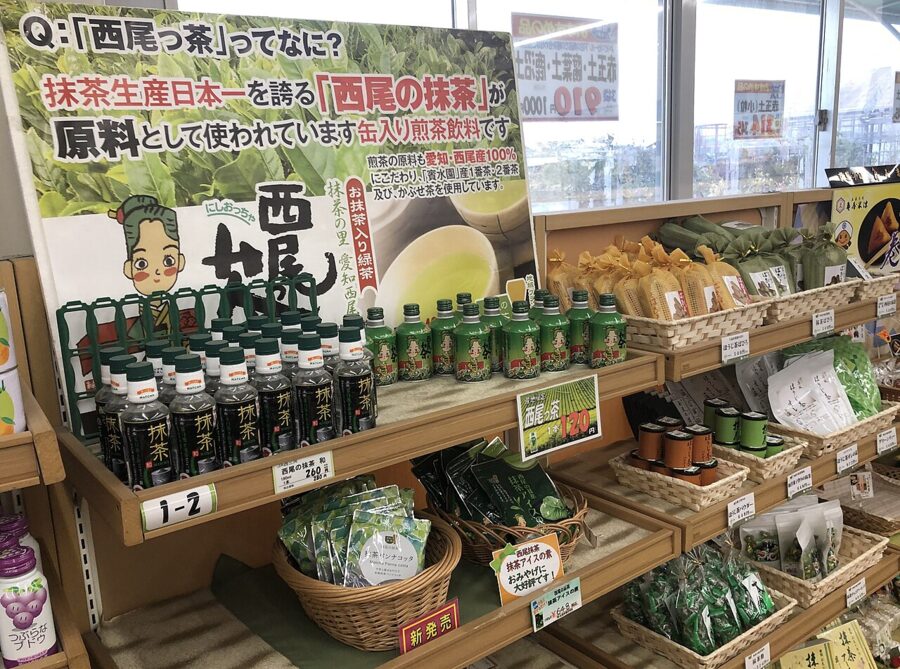
Nishio, in Aichi Prefecture, is the other old name. In 2017 “Nishio no Matcha” became the only matcha with a Japanese geographical indication, and in February 2020 the first product ever to leave the register, at the growers’ own request: the traditional method made it too expensive to sell against cheaper powder.
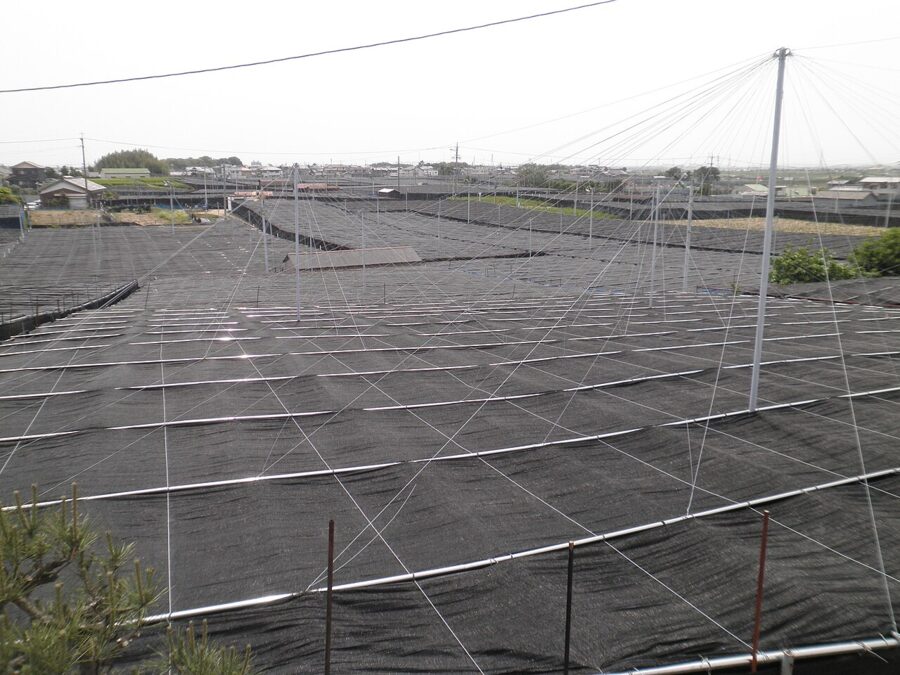
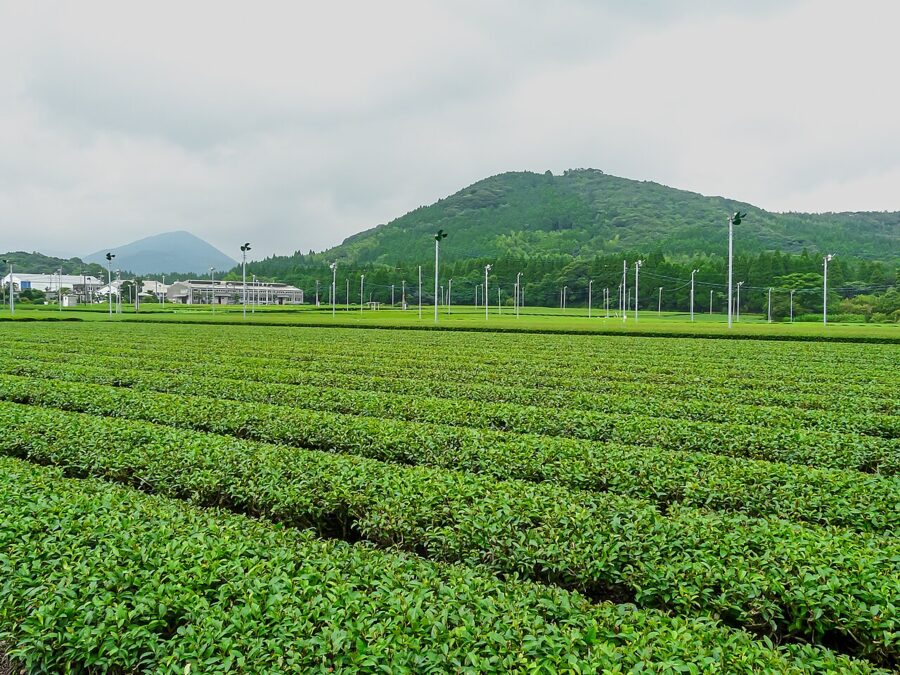
Kagoshima’s rise is the big story. On wide, flat fields big growers can mechanise everything, and the prefecture says about 73% of its tea leaves as unfinished leaf, for firms elsewhere to finish, grind and sell under their own names. In 2024 and 2025 it passed Shizuoka as Japan’s largest tea prefecture overall. Uji, Nishio and Shizuoka are on Honshu; the powder in your latte may have started 500 km further south-west.
Grades, labels and the word “ceremonial”
Japan defines what matcha is, not how good it is. Labelling rules say matcha is tencha ground fine in a mill; tea that is simply pulverised is funmatsucha (粉末茶), powdered tea, and customs counts both as “powdered green tea”. Nothing in those rules mentions “ceremonial”, “premium” or “culinary”. Those are export words chosen by each seller, and two tins with the same one can hold very different tea.
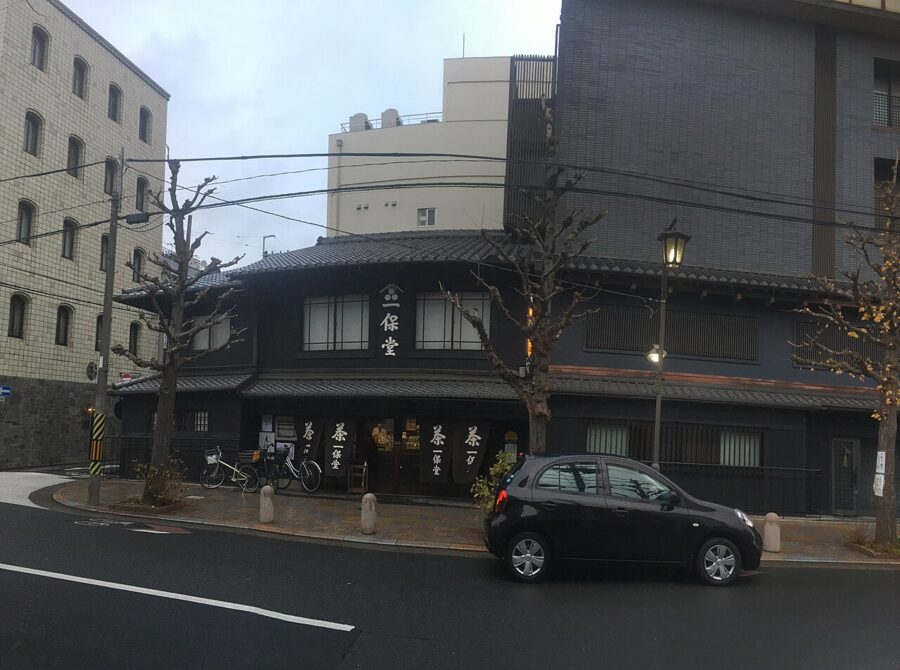
In Japan the shop names the blend instead. Many of Ippodo’s still end in -mukashi or -no-shiro, an echo of Edo-period blends such as Hatsu-mukashi presented to the shogun. The shop tells you which suit koicha and which usucha, and the price tells you the rest.
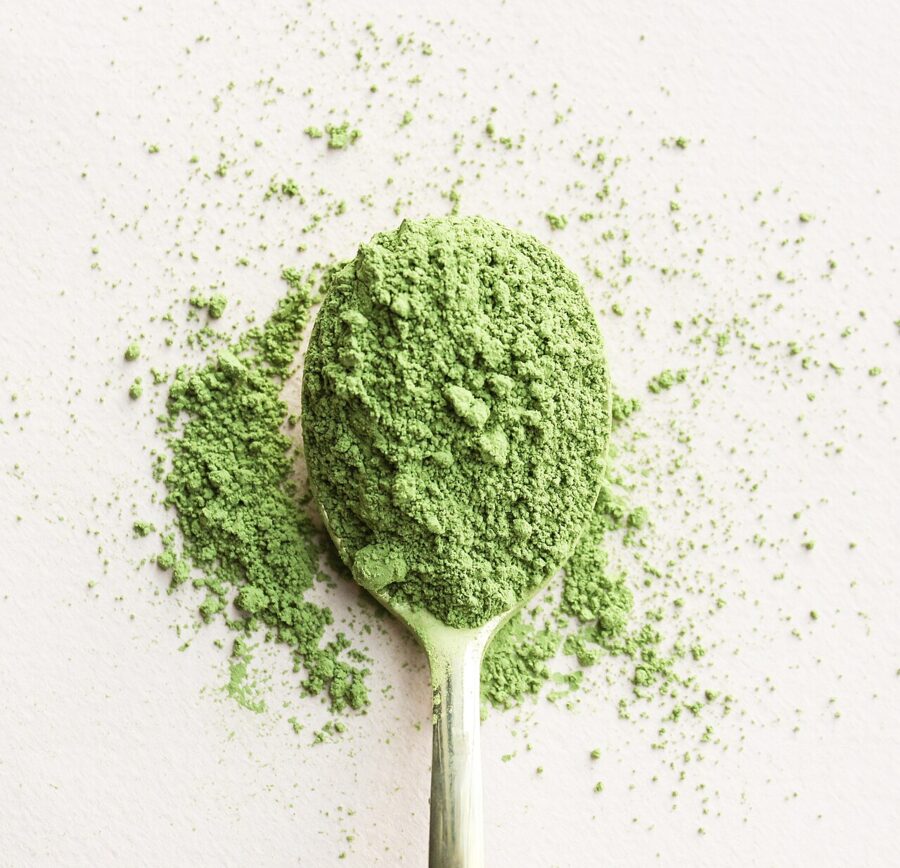
Reading a tin, I’d check the colour, as above, and then the ingredients, which should read 抹茶, or 碾茶 for the leaf; “green tea powder” is a different product. Next, the origin, which since 10 July 2026 can carry the new “Japanese Tea” geographical indication, aimed partly at Chinese-made powder sold as “Uji matcha”. And the size: matcha goes stale within weeks of opening, so buy 20 g or 40 g at a time.
Usucha and koicha
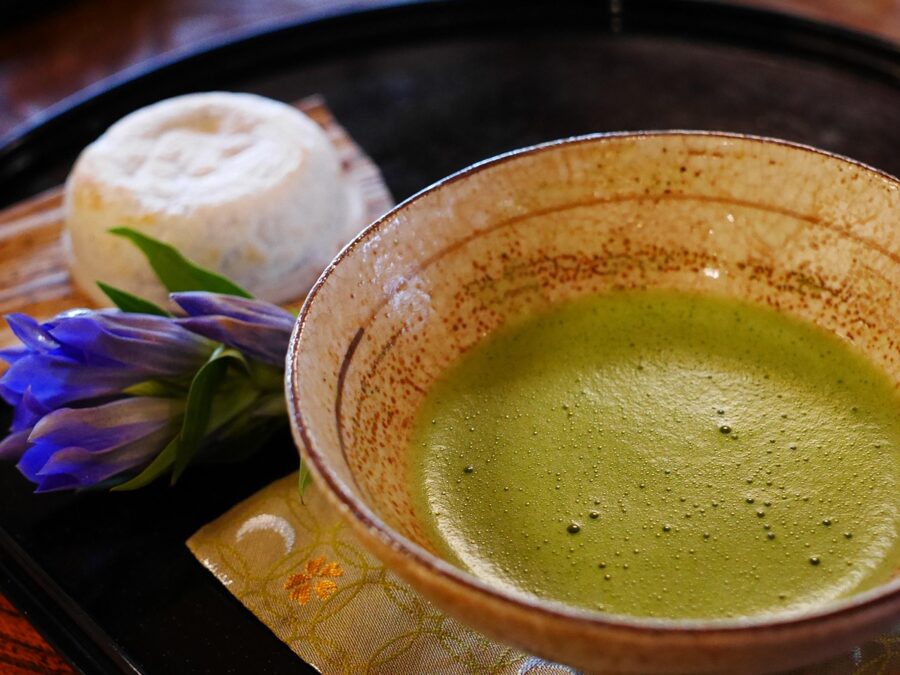
The tea ceremony serves matcha two ways. Usucha (薄茶), thin tea, is whisked to a froth and drunk from your own bowl. Koicha (濃茶), thick tea, uses twice the powder in half the water, is kneaded slowly into something like warm paint, and at a formal gathering is passed from guest to guest in one bowl. Koicha shows every flaw, so shops keep their best blends for it.
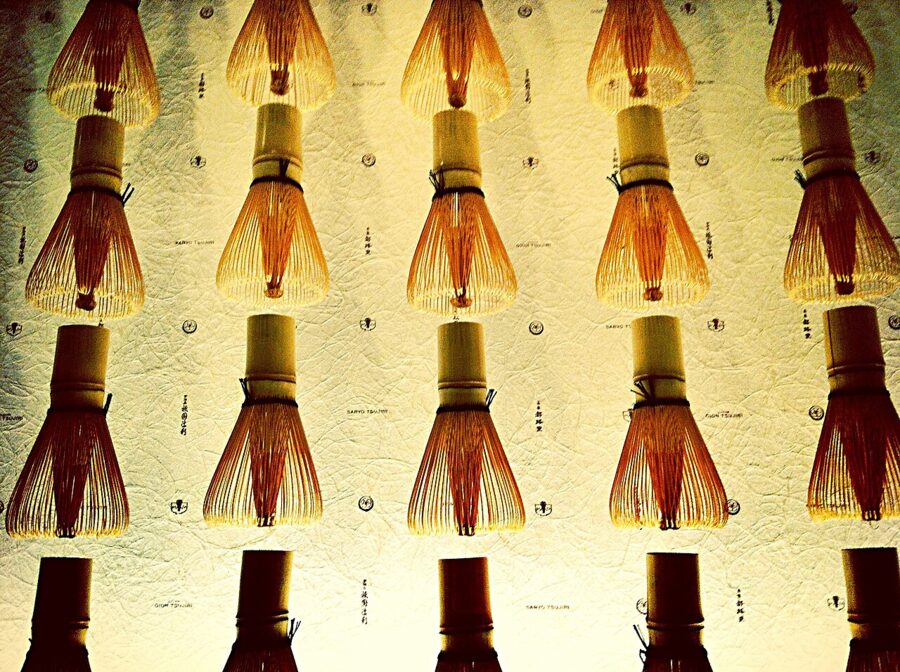
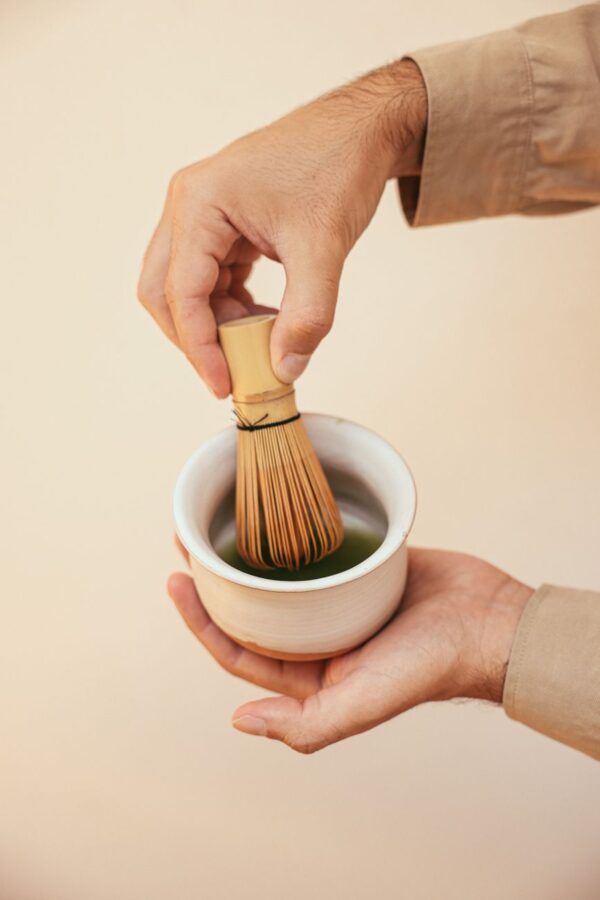
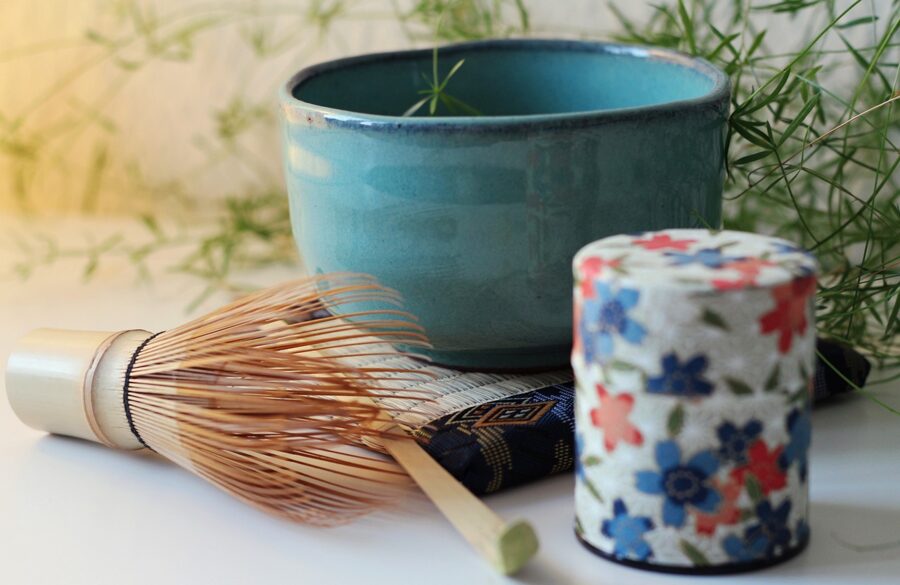
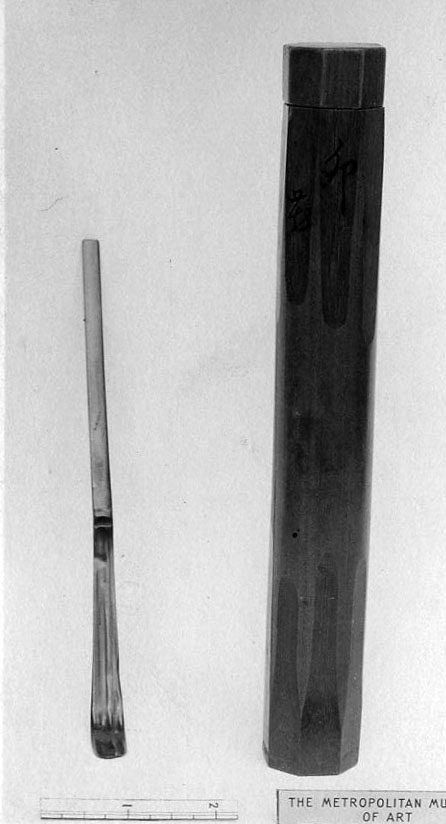
You need a chawan (茶碗), the bowl; a chasen (茶筅), the bamboo whisk; and a chashaku (茶杓), the bamboo scoop. Ippodo’s basic usucha method is the one I’d follow at home:
- Sift 2 g of matcha into the bowl (one level teaspoon, or about one and a half heaped scoops).
- Pour in 60 ml of water at 80°C.
- Whisk hard for about 15 seconds, then drink it straight away.
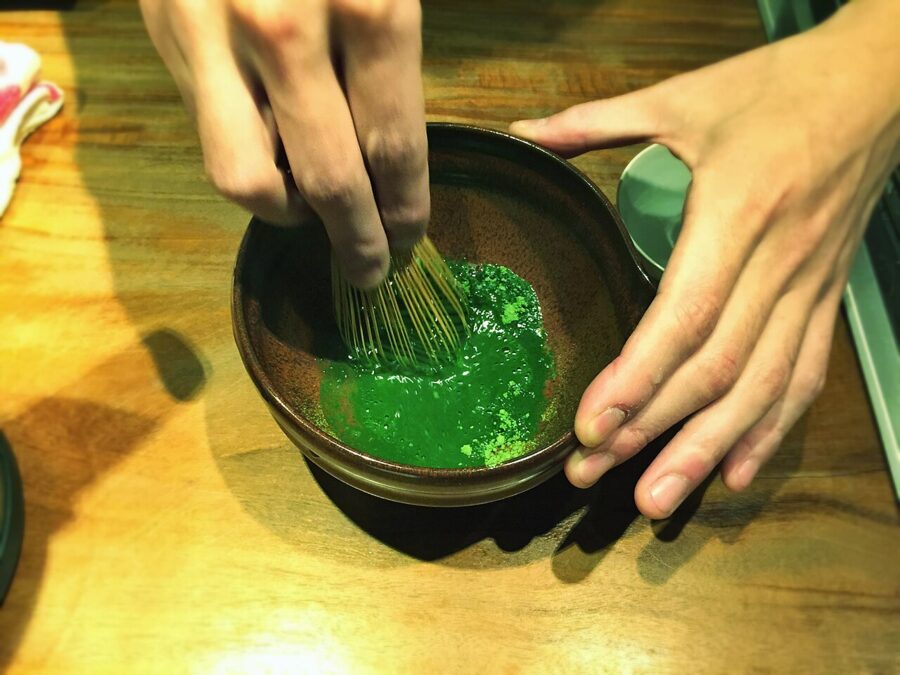
For koicha, the same shop uses 4 g with 30 ml at 80°C, mixed slowly. Sift every time, because matcha clumps. Whisk from the wrist, not the arm: a fast back-and-forth stroke with the tines just off the bottom, a few slower strokes across the top to break the big bubbles, then lift out from the centre. Circles only stir it, and boiling water scorches it.
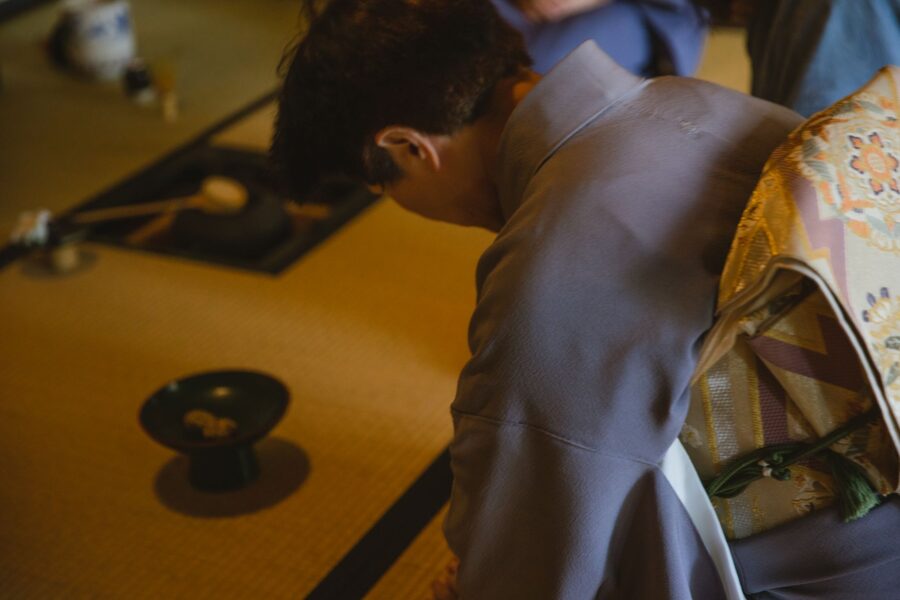
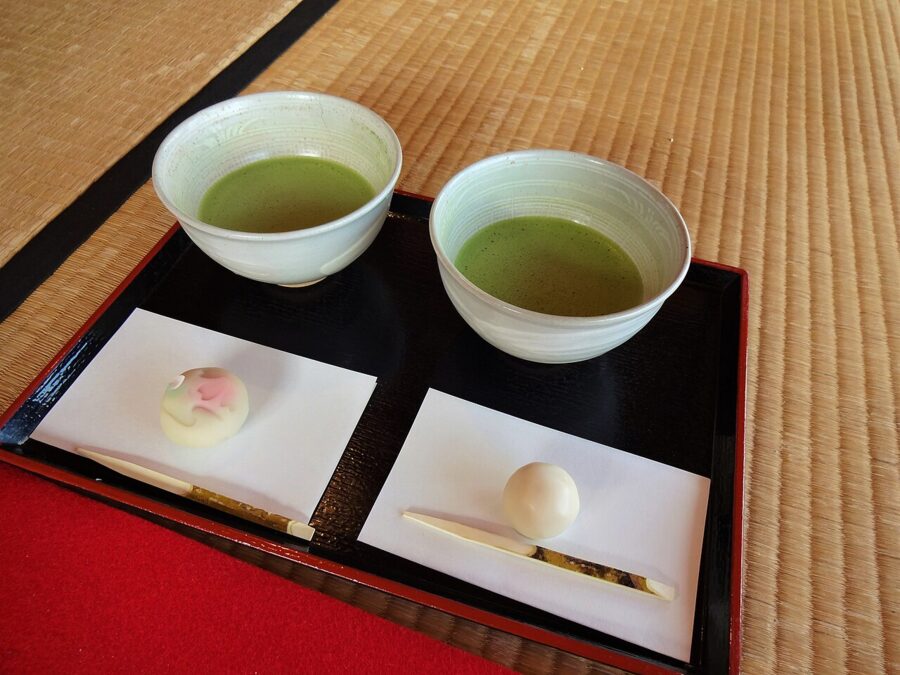
In a tea room the sweet comes first, so the sugar is still on your tongue when the bitterness arrives. A guest’s part is short: bow, turn the bowl so you don’t drink from its front, drink in a few sips, wipe the rim with your fingers. You don’t need a kimono to do it.
Matcha in sweets and lattes
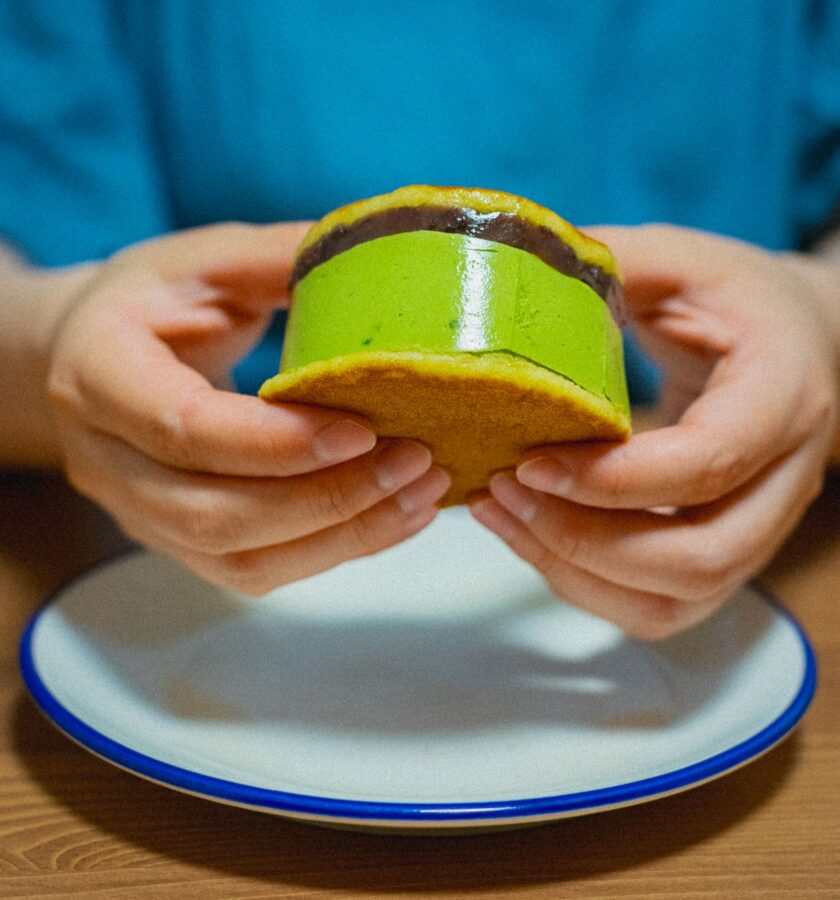
Most matcha never sees a tea bowl. It goes into Japanese food of every kind: ice cream, roll cakes, chocolate, soba, and matcha-jio, green tea salt for tempura. In spring it shares the counter with sakura flavours; in summer it goes over kakigōri shaved ice as syrup or foam.
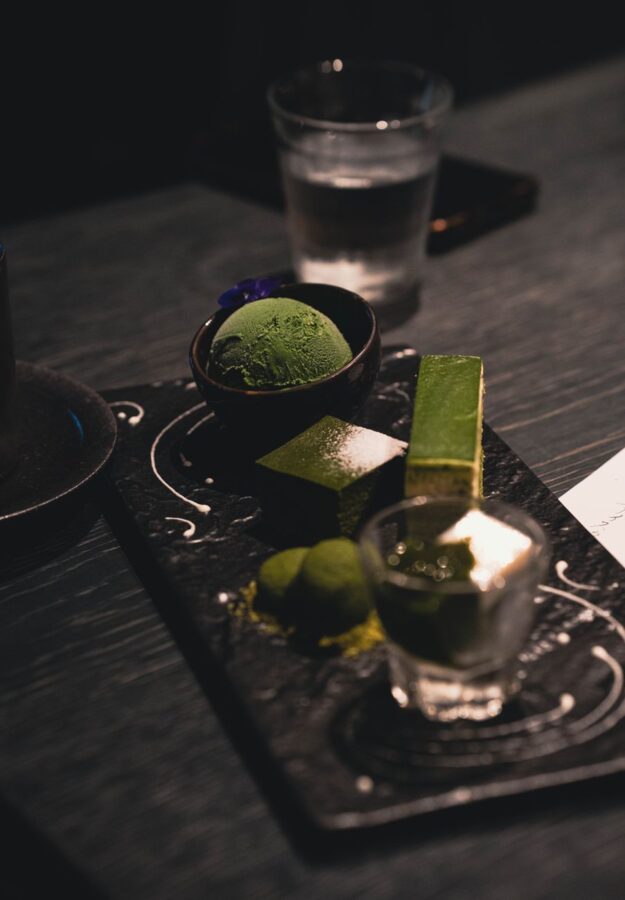
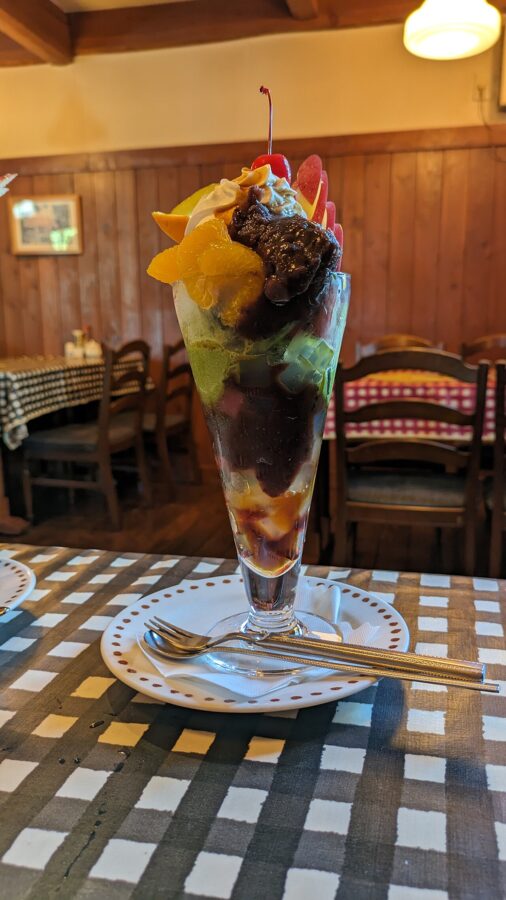
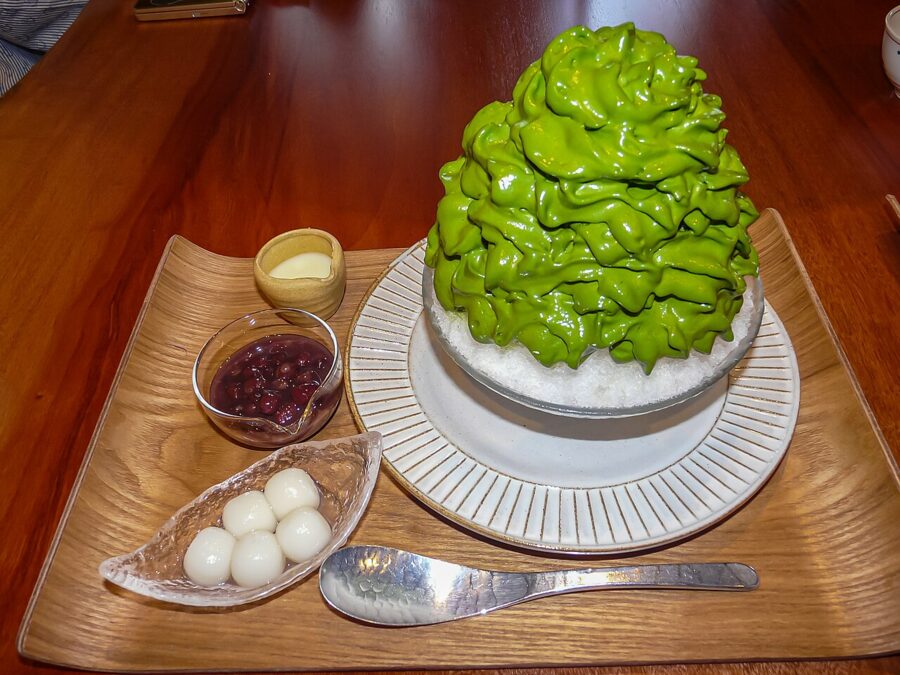
Bitterness is why it works. A sweet made with good matcha should taste of tea, grassy and slightly drying; cheap versions taste of sugar and colour, and some get their green from additives. Bakers usually pick a cheaper, later-picked powder with more bite, which stands up to milk, butter and heat.
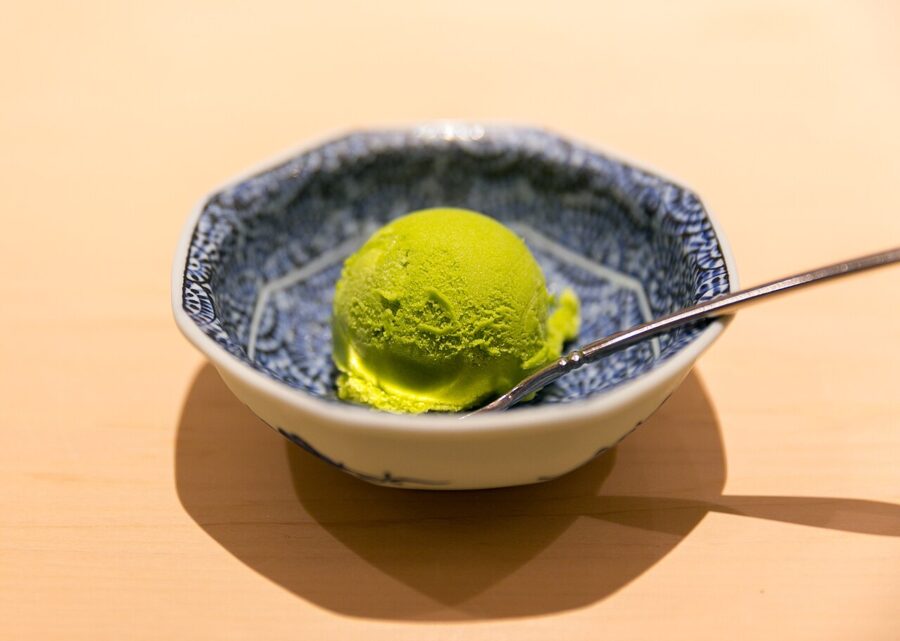
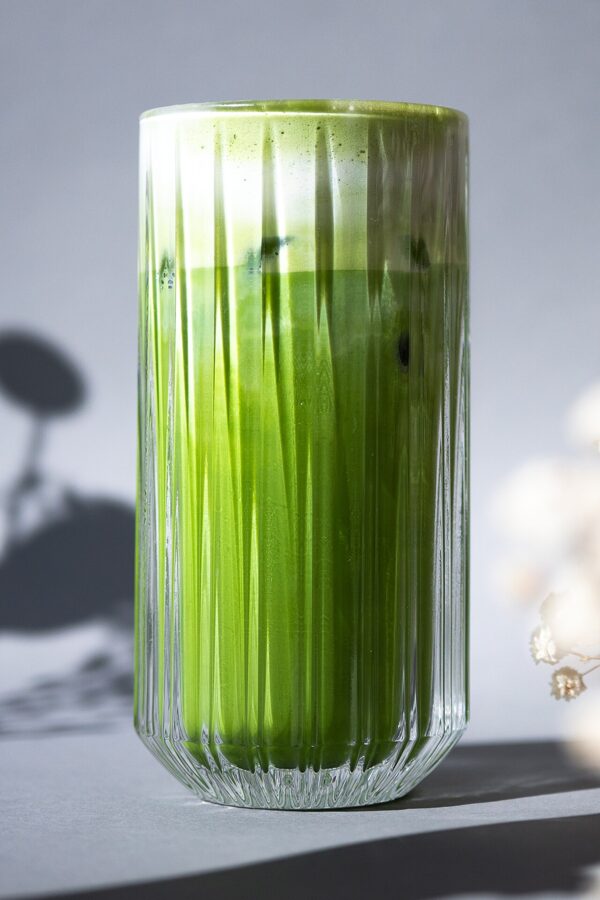
The latte drove the boom. When Osaka Customs looked at powdered tea exports from the Kansai ports in December 2025, exporters said the powder going to every country was mostly matcha, much of it for lattes. It’s a good drink, and also the easiest place to hide stale or low-grade powder. At home, buy a powder sold for lattes and save the expensive tin for the bowl.
The shortage, 2024 to 2026
Japan exported 8,798 tonnes of green tea worth ¥36.4 billion (about $240 million) in 2024, then 12,612 tonnes worth ¥72.1 billion in 2025: double the value in a year. Powdered tea, mostly matcha, made up 69% of the 2025 volume and 84% of the value, and the United States was the largest buyer. By August 2026, exports for the year had reached ¥67.4 billion, still ahead of 2025’s pace.
Supply couldn’t keep up. A hot, dry summer in 2024 thinned the new shoots, and trade press reported in July 2025 that tencha was trading at more than 2.5 times the year before. The ministry’s average 2025 price for tencha was ¥8,562 a kilogram, against ¥1,746 for sencha. Ippodo’s February 2026 notice put Kyoto’s average producer price for machine-picked tencha at ¥14,141 a kilogram, 2.6 times the year before.
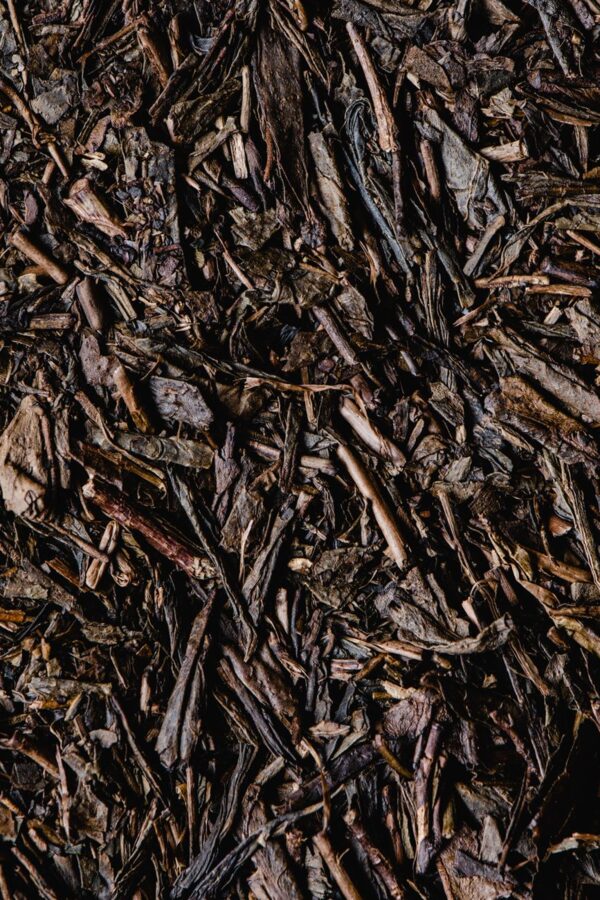
More farms are switching, but new bushes need at least five years to their first harvest, and growers are leaving faster than they arrive. The farm census counted 37,617 farms growing tea for sale in 2005 and 7,726 in 2025, and 63% of the people working them were 65 or older. Shaded bushes often skip the second picking, so bancha and hōjicha ran short instead, and in March 2026 Ippodo dropped several hōjicha products from its online shop.
Prices have not come back down. The ministry reported that 2026 first-flush tea sold for about twice the previous year’s price in Kagoshima and about 70% more in Shizuoka; Ippodo expected matcha to hold near 2025 levels. I could not find a confirmed figure for Kyoto’s 2026 tencha. Competition is coming: Kagoshima’s review lists plans in China’s Guizhou province for 8,000 tonnes of matcha a year.
Caffeine and health, stated carefully
Because you drink the whole leaf, matcha carries more caffeine than steeped green tea. Japan’s Food Safety Commission gives 3.2 g per 100 g of matcha, so a 2 g usucha holds about 64 mg and a 4 g koicha about 128 mg. It lists brewed coffee at 60 mg per 100 ml, sencha at 20 mg, and gyokuro at a striking 160 mg. Europe’s food safety authority considers up to 400 mg a day safe for most healthy adults, and 200 mg in pregnancy.
Matcha also contains theanine, and small trials, a few dozen people at a time, have found theanine with caffeine sharpens attention a little more than caffeine alone. That’s a long way from the claims on tins. The often-quoted “137 times the antioxidants” comes from a 2003 lab paper comparing matcha with one cheap Chinese green tea; against other green teas, it found about three times as much EGCG, the main catechin.
In Japan, most health wording on tea comes through a system in which the firm, not the state, takes responsibility for the claim; by September 2026, 64 teas on sale carried catechin claims of that kind. Tea’s tannins can reduce the iron you absorb from plant foods, so drink it between meals if that matters to you. Otherwise a bowl or two a day is a caffeinated drink with some plant compounds in it, no more.
Where to drink it in Uji
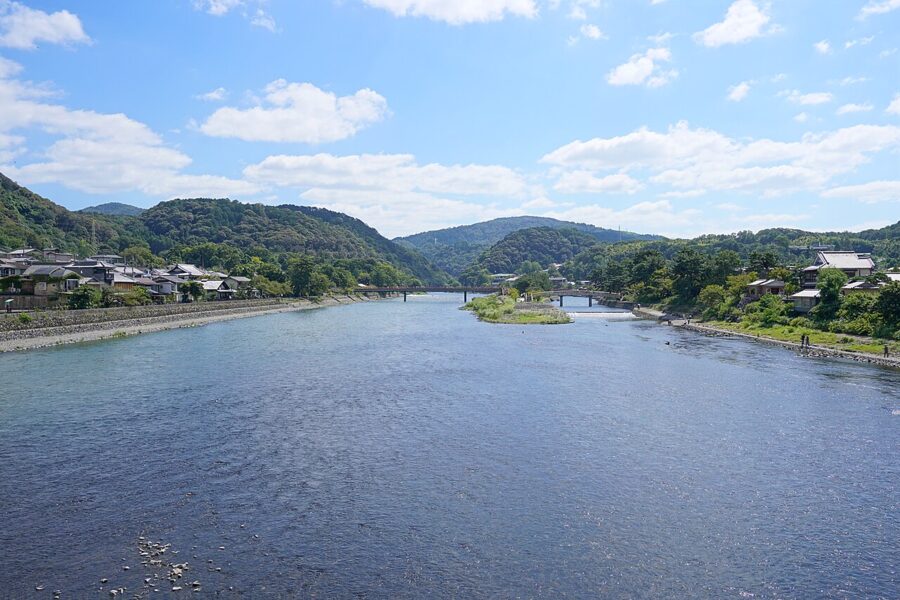
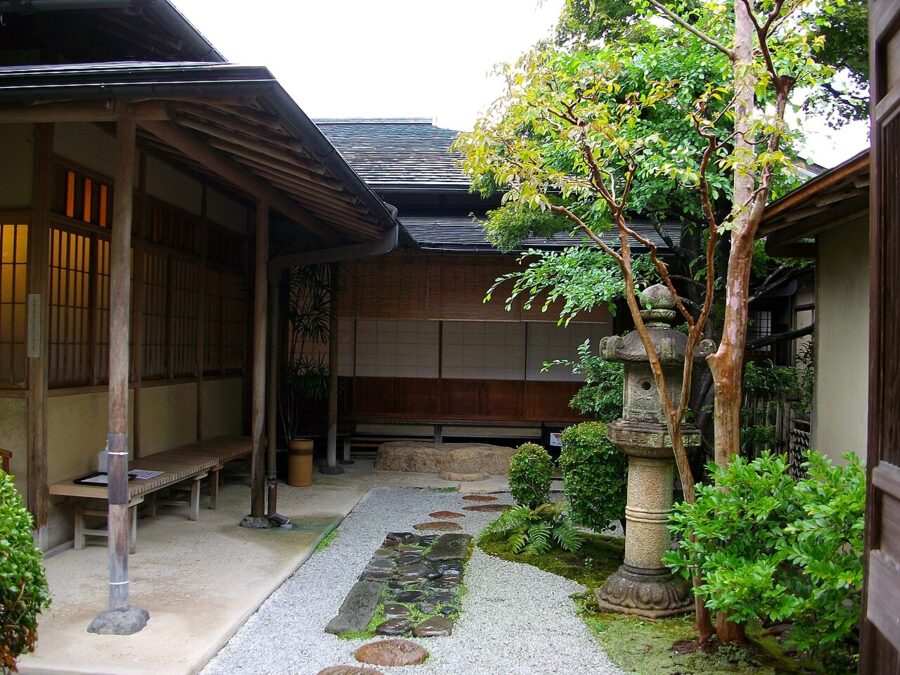
The simplest place to drink matcha where the shade-growing began is Taihōan (対鳳庵), the tea house run by Uji City beside the Uji River, near Byōdō-in. As of April 2026, a bowl of usucha costs ¥1,500 (about $10), and a koicha-and-usucha set ¥4,000, booked three days ahead (price list). It opens 10:00 to 16:00, last matcha seating 15:30, and closes from 21 December to 9 January and on the last day of each month (the day before, if that falls on a weekend or holiday).
Sit down, eat the sweet, and turn the bowl. Then look at the powder left at the bottom: tea leaf, rubbed between stones until it is almost gone, which is all the first character ever promised.