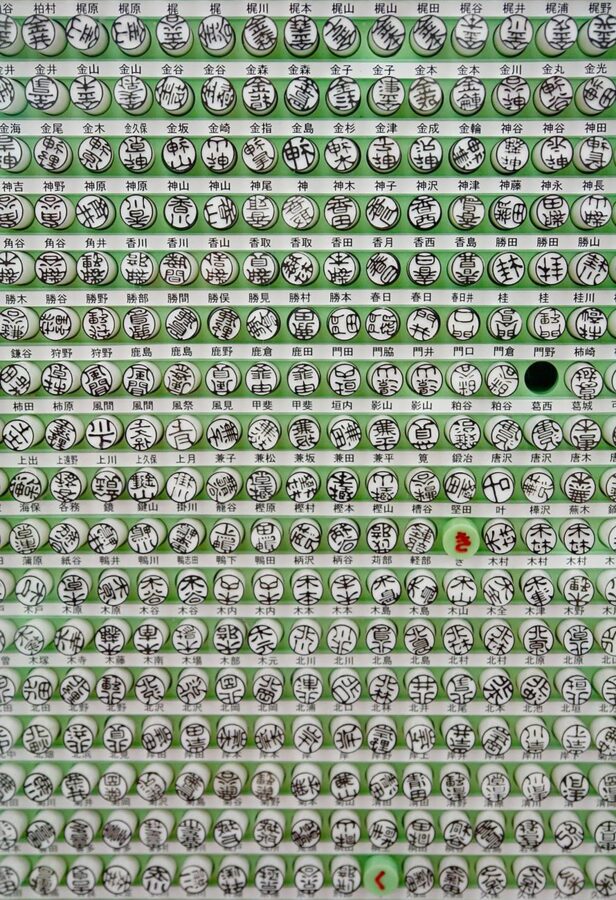
Buy an ice cream at the convenience store by the station, pay with a travel card, and the Japanese sentence that says so runs through four writing systems without a single space: 駅前のコンビニでアイスを買って、Suicaで払った。 Kanji carry the station and the buying, hiragana the grammar, katakana the borrowed words, and roman letters the name on the card. A Japanese reader takes it in at a glance, the way you read “I paid £3 for 2 coffees” without noticing that it mixes letters, digits and a symbol.
Japanese has a name for this way of writing: kanji kana majiri bun (漢字仮名交じり文), text with kanji and kana mixed together. 漢字, kanji, are the Han characters; 仮名, kana, the “borrowed names”, are the two scripts that write sound; 交じり, majiri, is the mixing; 文, bun, the text. Novels and tax forms alike are written this way, and the government’s 2022 guidance on official writing takes the kanji-and-hiragana version as its starting point.
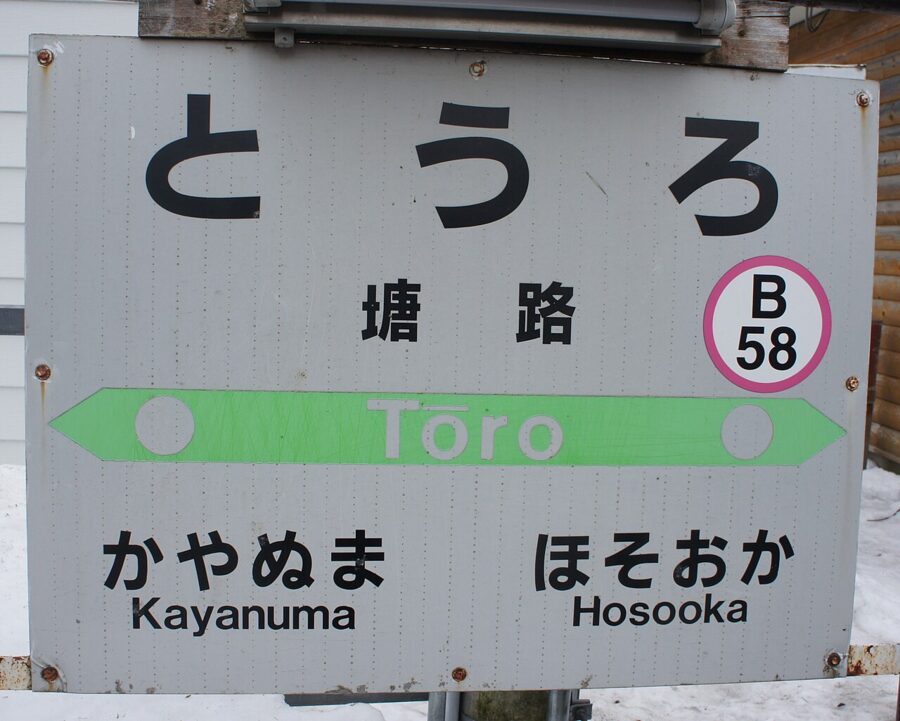
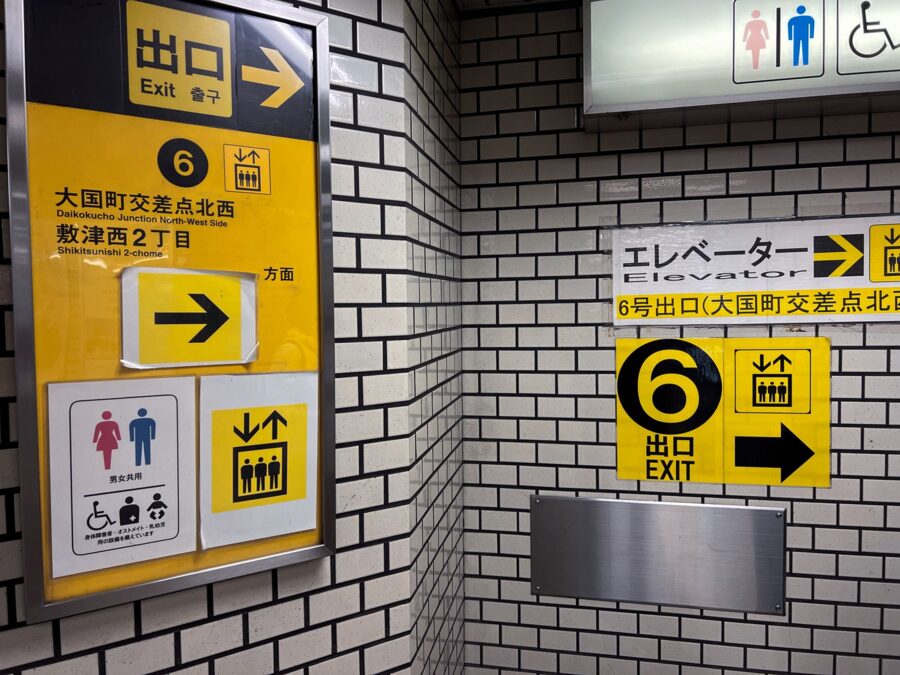
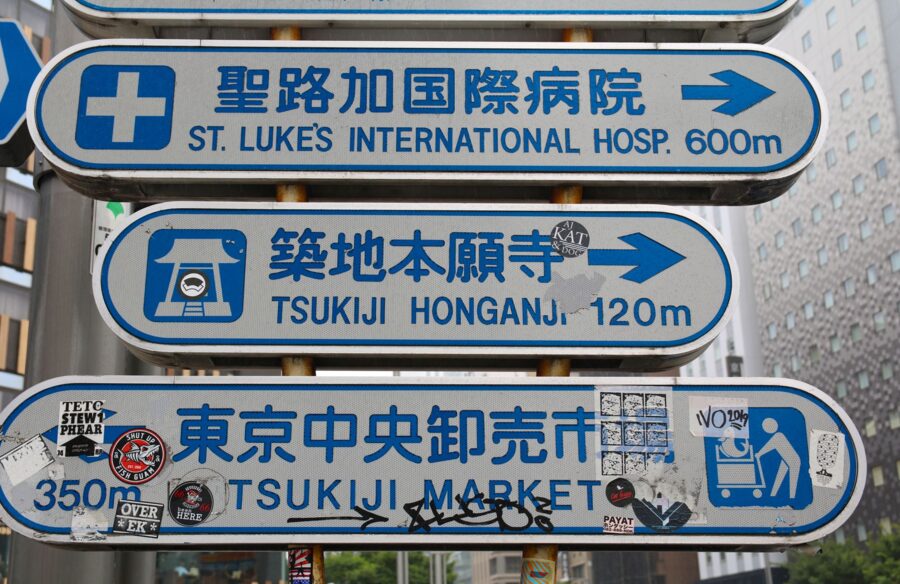
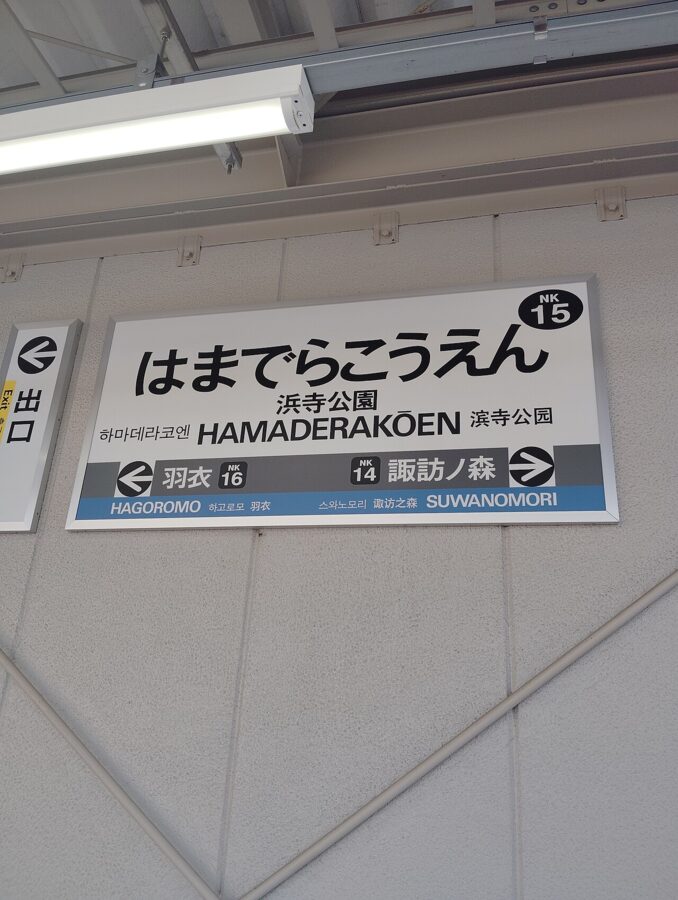
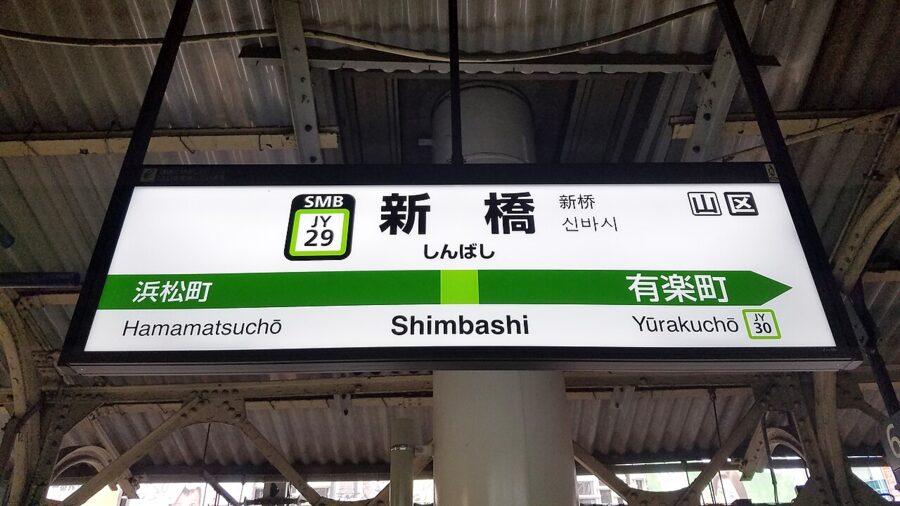
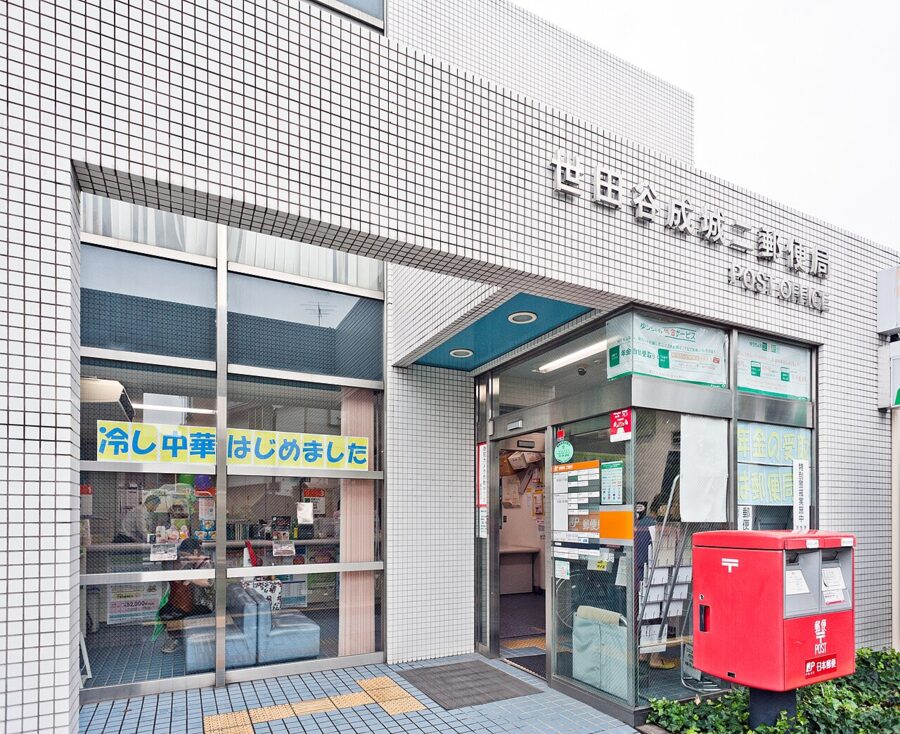
Station boards are the easiest place to watch the system come apart. The kana tells you how to say the name, the kanji tells a Japanese reader which name it is, and the romaji is there for everyone else. None of the three would do the whole job alone, which is the short answer to why Japanese never settled on one.
In this article
One sentence, four scripts
Here is the sentence again, slowly. 駅前のコンビニでアイスを買って、Suicaで払った。 Ekimae no konbini de aisu o katte, Suika de haratta. “I bought an ice cream at the convenience store by the station and paid with my Suica.”
| Piece | Script | Reading | Its job |
|---|---|---|---|
| 駅前 | kanji | えきまえ, ekimae | “station front”, a noun carried by its meaning |
| の | hiragana | no | particle tying 駅前 to the next word |
| コンビニ | katakana | konbini | clipped from “convenience store” |
| で | hiragana | de | particle: where it happened |
| アイス | katakana | aisu | ice cream, clipped from “ice” |
| を | hiragana | o | marks the thing bought; written を, said o |
| 買って | kanji + hiragana | かって, katte | 買 carries “buy”; って makes it “bought, and…” |
| 、 | punctuation | the comma, tōten (読点) | |
| Suica | roman letters | suika | JR East’s travel card, as the company spells it |
| で | hiragana | de | particle again, here “by means of” |
| 払った | kanji + hiragana | はらった, haratta | 払 carries “pay”; った makes it past |
| 。 | punctuation | the full stop, kuten (句点) |
The kanji sit on the words that carry meaning, the hiragana on the parts that make the sentence work, and the katakana on the two words borrowed from English. Even inside one word the scripts split the labour: in 買って the kanji is the verb’s root and the hiragana its tense.
Now write it in hiragana alone: えきまえのこんびにであいすをかって、すいかではらった。 It is readable, slowly, and slightly absurd, because すいか is also suika (西瓜), a watermelon. You have just paid for an ice cream with fruit.
What each script does
Kanji: the meaning
Kanji (漢字) came from China and still work as they do there: each character stands for a meaning and, usually, a word or part of one. What changed in Japan is the reading. Most kanji have an on’yomi (音読み), a reading borrowed from Chinese, and a kun’yomi (訓読み), the native word fitted to it. 水 is スイ, sui, in 水曜日, Wednesday, and みず, mizu, when it is just water.
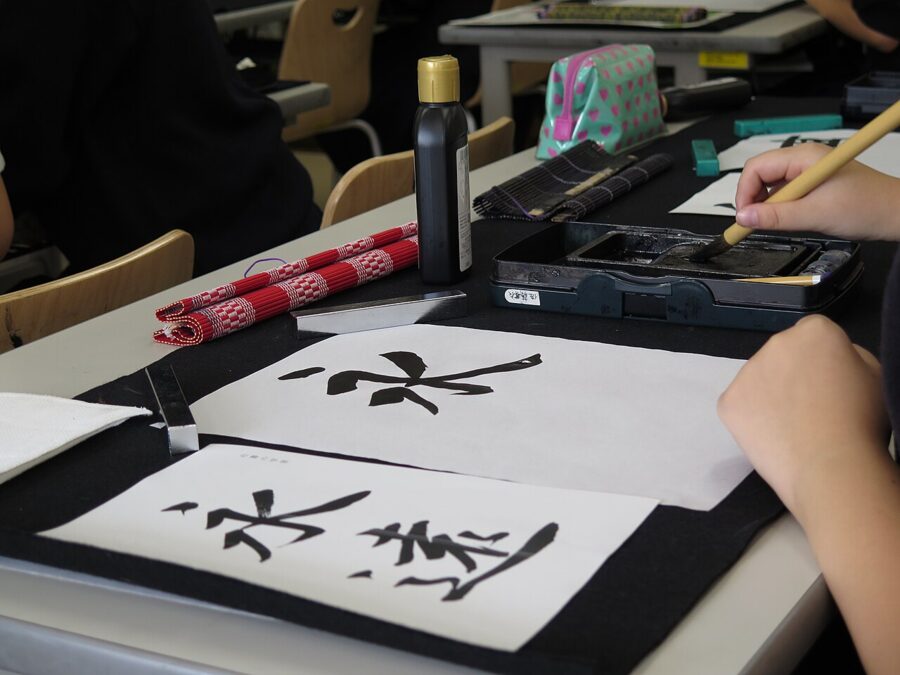
Kanji do the heavy lifting: nouns, the roots of verbs and adjectives, names of people and places. Often the characters explain the word: 着物 is a “wearing thing”, which is all kimono meant before it came to mean one garment. They also break text into words, since Japanese leaves no spaces. A run of kanji followed by a little hiragana is usually a word and its ending, and a practised eye reads by that rhythm.
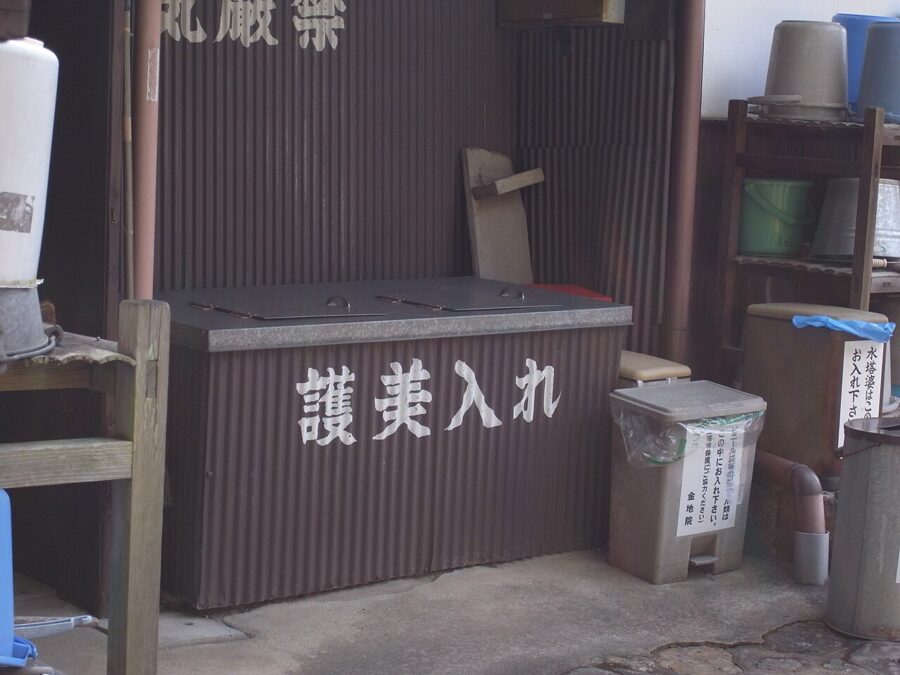
Characters can still be borrowed for sound alone, or for a joke. A temple in Kyoto labels its rubbish bin 護美入れ, gomi-ire, writing gomi (rubbish) with 護, protect, and 美, beauty. Spelling like this is called ateji (当て字), and Japanese signs are full of it.
Hiragana: the grammar
Hiragana (平仮名) is the round, looping script, 46 letters each standing for a syllable. It writes the particles (は, を, の, で), the endings of verbs and adjectives, and native words whose kanji is rare or missing. Children learn it first, so picture books are written almost entirely in it. Writers also reach for it for softness: さくら on a sweet shop’s sign looks gentler than sakura written 桜.
Katakana: the borrowed and the loud
Katakana (片仮名) writes the same 46 sounds in sharp, straight strokes. Its main job today is the loanword: コーヒー for coffee, パン for bread (from Portuguese), アルバイト for a part-time job (from German Arbeit). It also writes foreign names, manga sound effects, plant and animal names in science, and any word a writer wants to stand out, the way English uses italics.
Learners often ask which kana is harder. Hiragana comes first because you need it on every line, but I think katakana gives more trouble in the long run: you see less of it, and some pairs differ only by the angle of a stroke, シ (shi) and ツ (tsu), ソ (so) and ン (n). A few katakana look like kanji, and some really are related. ハ was cut from 八, eight, and ニ from 二, two; カ only resembles 力 (power), having come from the left half of 加.
Why not write it all in kana?
Because Japanese has few sounds and many words that share them. こうえん, kōen, can be a park (公園), a lecture (講演), a performance (公演) or sponsorship (後援). Kanji settle that at a glance and also mark where words begin, the job spaces do in English. Kana-only text is slow going for an adult, which is why it stays in children’s books.
Romaji, the script on the signs
The fourth script is the roman alphabet, rōmaji (ローマ字). It is not used to write Japanese for Japanese readers. It is used for station and road signs, passports, brand names (Suica, Mazda), abbreviations like JR and NHK, and typing, which is where most Japanese people use it every day.
Hepburn, kunrei and the 2025 rewrite
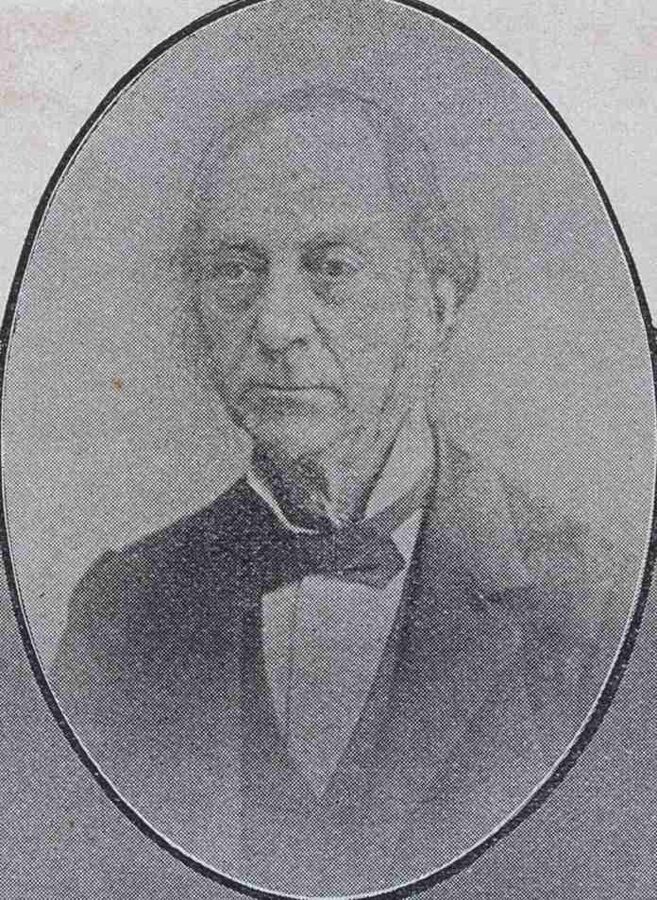
The spelling most foreigners know is Hepburn, named after James Curtis Hepburn, an American missionary doctor whose Japanese-English dictionary used it in its third edition of 1886. It spells by English sounds: し is shi, ち is chi, つ is tsu, ふ is fu.
The rival system followed the kana grid instead, so the さ row ran sa, si, su, se, so. As kunrei-shiki (訓令式) it became official before the war, and a Cabinet notice of 1954 put it in the first of two tables, with Hepburn spellings tolerated in a second. Schools taught it; signs, passports and almost everyone else used Hepburn. For 71 years the official rule and real life disagreed.
That ended in 2025. On 20 August the Council for Cultural Affairs delivered a revised spelling, and the government adopted it as a new Cabinet notice that year, replacing the 1954 one. The Agency for Cultural Affairs’ notes on the new romaji rules sum it up as one table instead of two, built on the spellings people actually use: shi, chi, tsu, fu, ji.
It is not pure Hepburn, though. ん is always n, so the new rule writes Shinbashi where the JR board says Shimbashi, and a doubled consonant always doubles its first letter, so まっちゃ becomes maccha. Settled spellings are not asked to change, and the agency’s own examples are judo and matcha, along with names like Mazda.
Macrons, passports and road signs
Long vowels are the messiest part, and the new notice allows two answers: a macron (Tōhoku), or the vowels written out as the kana spell them (Touhoku, from とうほく). The “oh” spelling long familiar from athletes’ shirts was not adopted, though anyone who uses it in their own name keeps it. Particles are written as said, so は is wa and を is o.
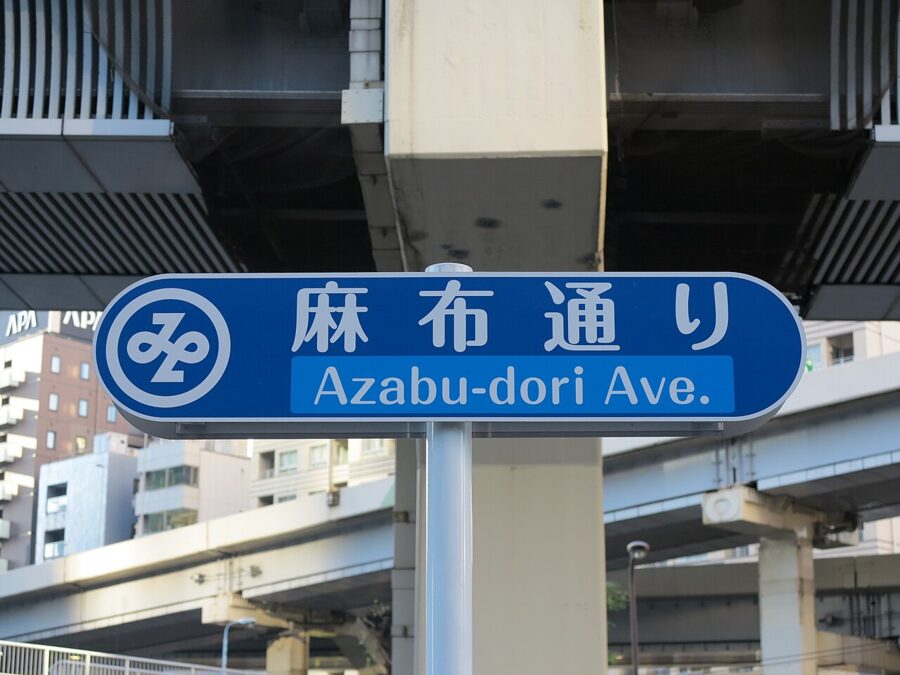
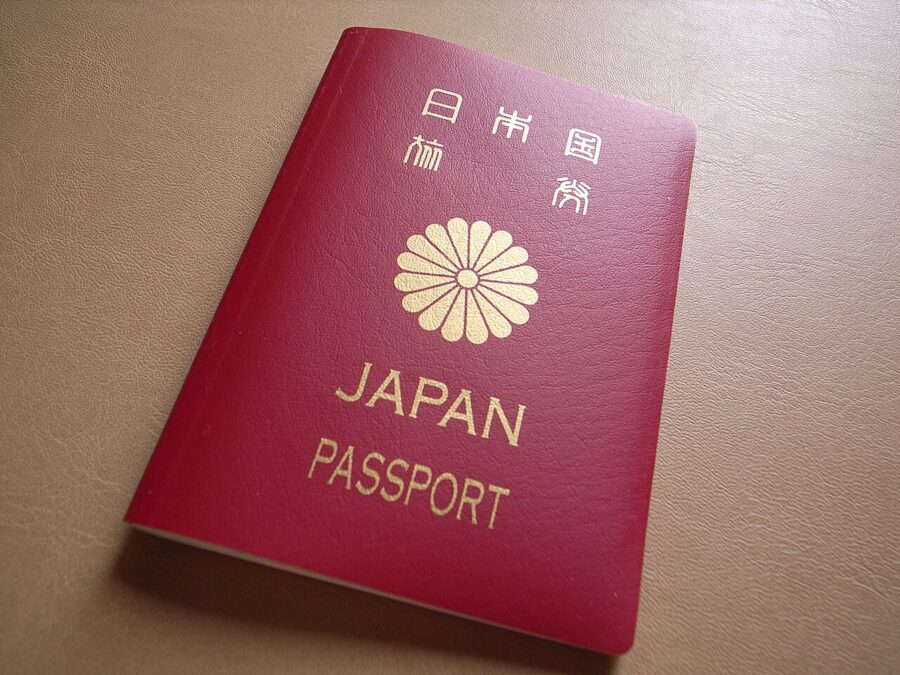
Passports keep their own Hepburn rules, which leave long vowels unmarked, so Ōno becomes ONO, and the agency’s notes say fields like this are not asked to change. So one place can be Tōkyō in a dictionary, Tokyo on a road sign and TOKYO in a passport, and all three are correct.
Borrowed characters: how the scripts began
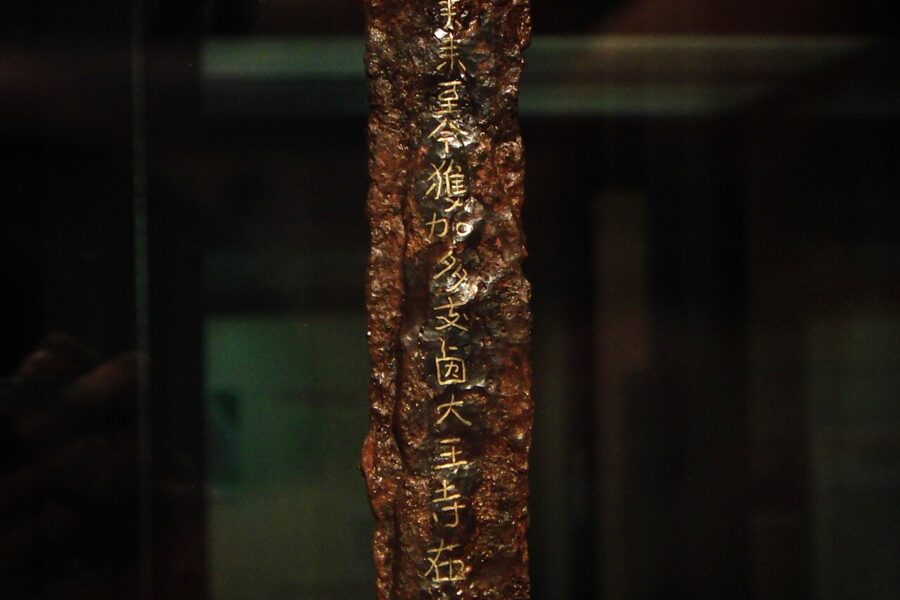
Japanese was spoken long before it was written, and writing arrived as Chinese, a language with different grammar and different sounds. The first trick was to use characters for sound alone. An iron sword from the Inariyama burial mound in Saitama, inlaid with gold characters probably in 471, spells a king’s name, Wakatakeru, as 獲加多支鹵.
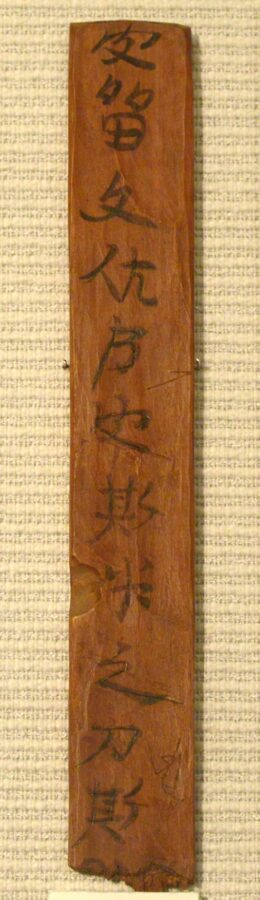
Writers grew bolder. A wooden tablet dug up at the Naniwa Palace site in Osaka in 2006, dated to the mid-7th century, carries a line of verse written entirely in characters used for sound: 皮留久佐乃皮斯米之刀斯, harukusa no hajime no toshi, “the year of spring grass beginning”. Osaka City describes it as the oldest known sentence written this way.
The system is called man’yōgana (万葉仮名), after the Man’yōshū (万葉集), the 8th-century anthology of about 4,500 poems that used it heavily. It worked, but slowly: one syllable could take a ten-stroke character, and several characters might stand for the same sound.
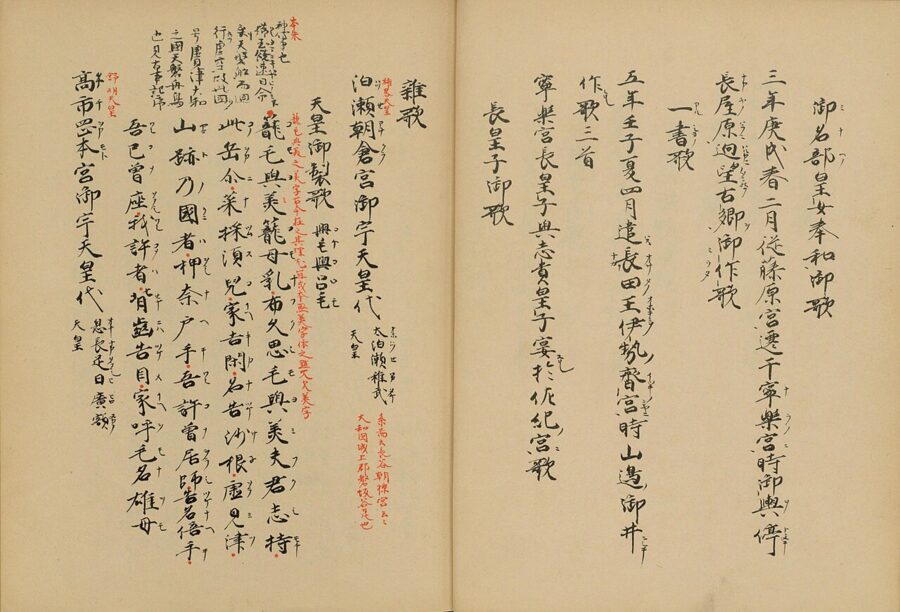
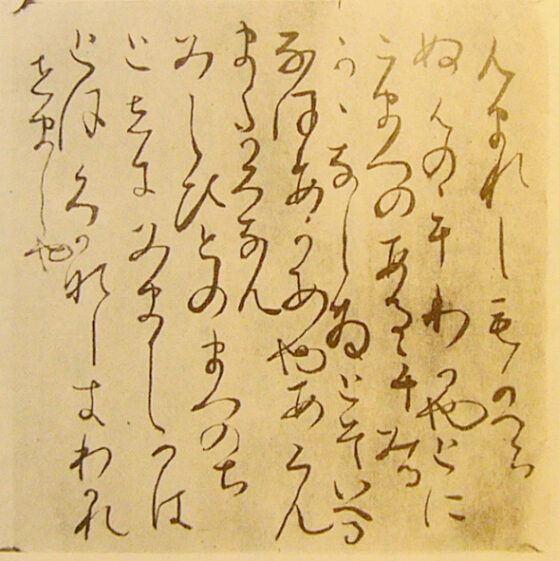
Over the 9th century two shortcuts grew out of it. Monks reading Chinese sutras jotted readings in the margins with fragments of characters, which became katakana. Sound-characters written fast with a brush wore down into cursive shapes that became hiragana: 安 into あ, 以 into い. Which came first is a common question in Japan, and the fair answer is that both belong to the same century.
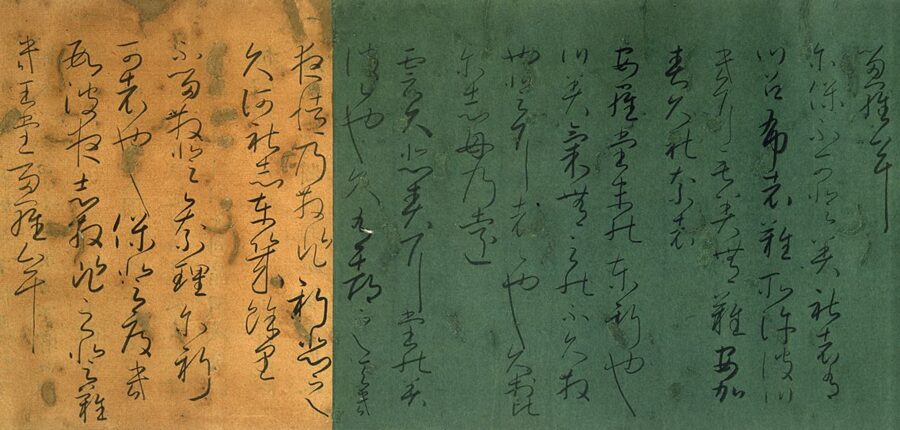
Hiragana gave Japan its first great prose. Ki no Tsurayuki wrote the Tosa Nikki (土佐日記) around 935 in kana, posing as a woman because kana was then the women’s hand, and Murasaki Shikibu wrote The Tale of Genji in it two generations later.
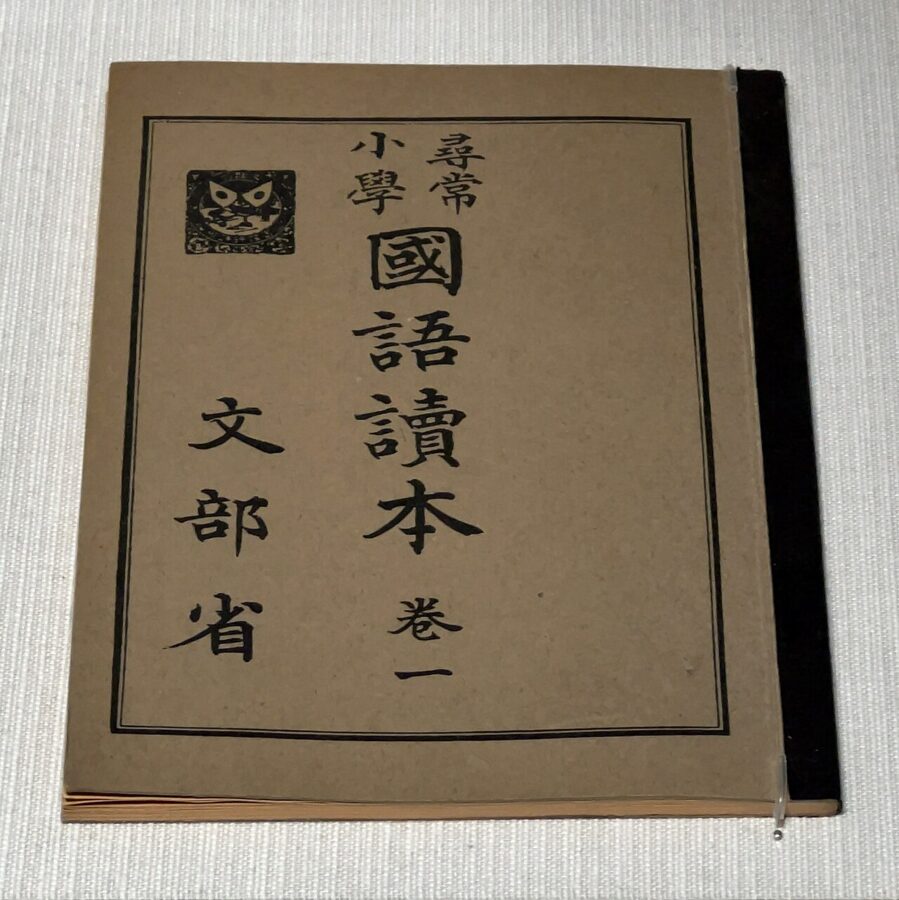
The modern system is younger than it looks. In 1900 the Ministry of Education fixed one hiragana shape per sound. In 1946 the post-war government limited everyday kanji to 1,850 and set modern kana spelling, and in 1949 it simplified many character forms: 國 became 国, 學 became 学, 讀 became 読.
Up and down, right to left
Which way books, papers and screens run
Japanese can be written two ways. Tategaki (縦書き) runs in columns from top to bottom, starting at the right of the page and moving left. Yokogaki (横書き) runs in lines from left to right, like this one.
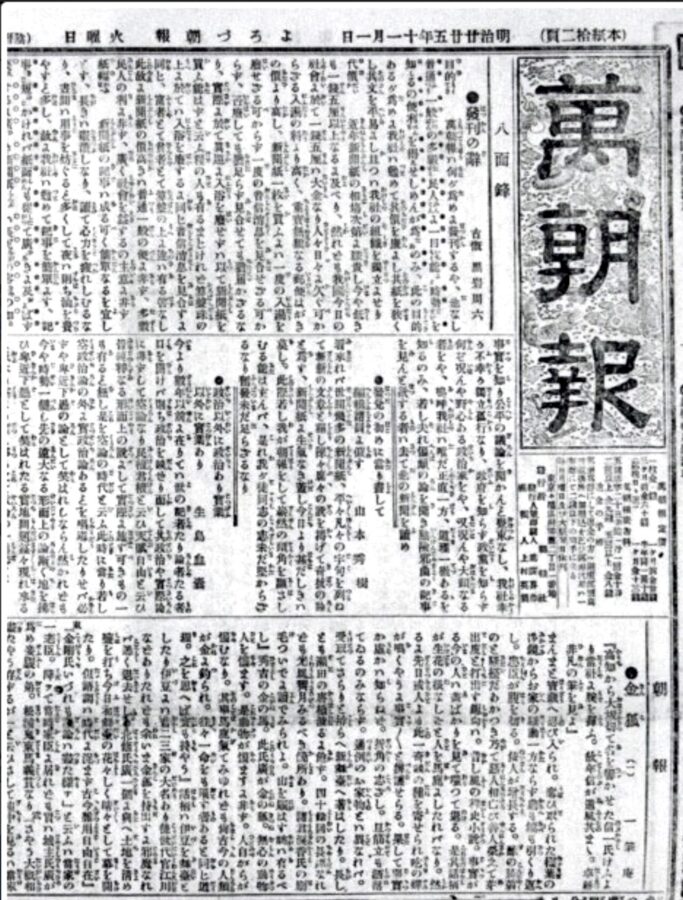
Vertical is the default for novels, newspapers, manga and the Japanese-language textbook at school. A vertical book opens from what a Western reader would call the back, spine on the right, and manga panels run right to left to match. Horizontal rules maths and science, anything heavy with numbers or English, websites and phones, and government documents, written left to right since a 1952 rule that the 2022 guidance kept.
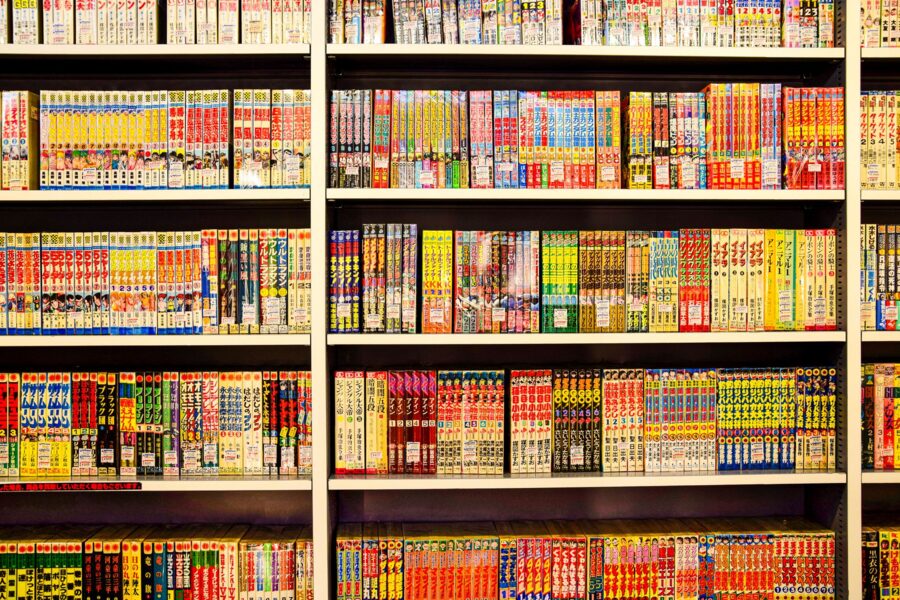
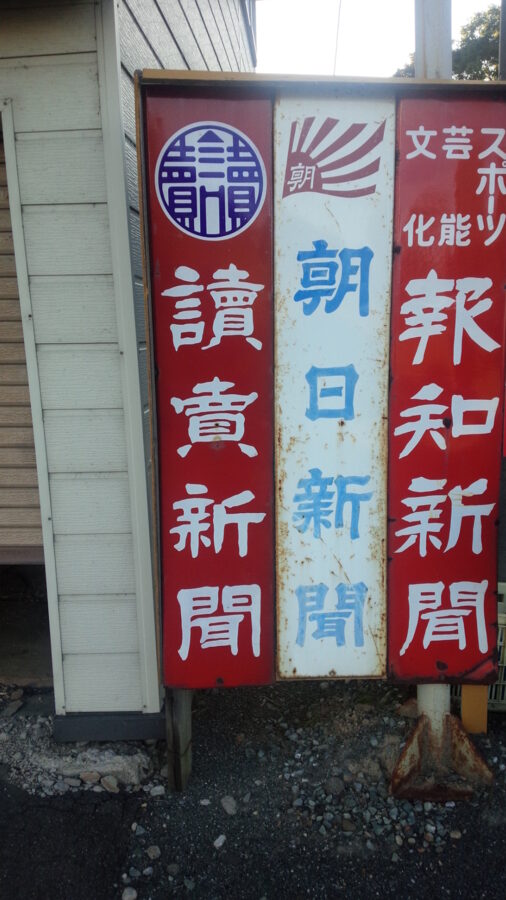
Signs can go either way, and old ones could go a third. Before the Second World War, a horizontal line on a shop front often ran right to left, which was really vertical writing with one character per column. It survives on old buildings, gateposts and temple boards.
Rules that only vertical text has
Turning text on its side changes some marks. The katakana long-vowel bar ー stands upright. The comma and full stop move to the top right of their square, small kana like っ shift right, and brackets turn ninety degrees. Numbers become kanji numerals (二〇二六年) or upright digits, two of them squeezed side by side into one square.
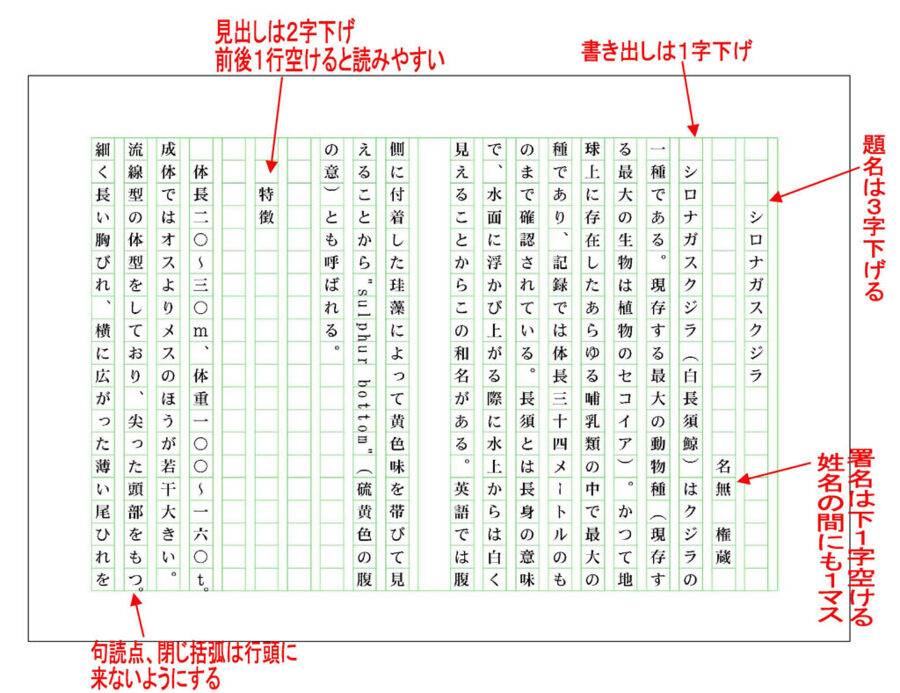
One more rule works in both directions: kinsoku (禁則), “prohibition”, which keeps a full stop, a closing bracket or a small kana from starting a line. Japanese typesetting software applies it automatically. You only notice it when a badly set page breaks it.
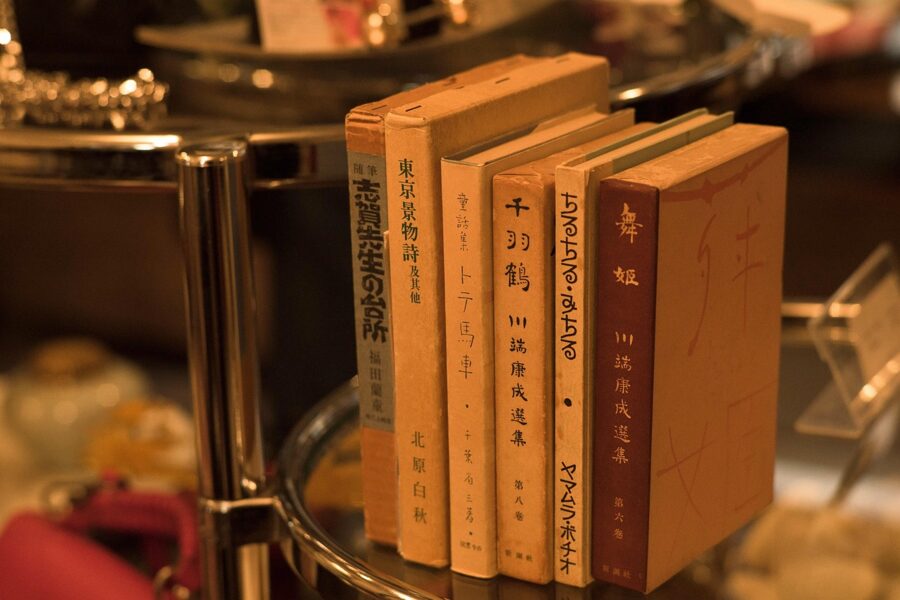
Furigana, okurigana and the marks between
Kanji have one weakness: you cannot sound out a character you have never met. The fix is furigana (振り仮名), small kana printed beside a kanji to give its reading, from 振る, furu, in its sense of allotting, as you allot numbers to a list. Printers also call it rubi (ルビ), after “ruby”, the British printers’ name for type five and a half points high.
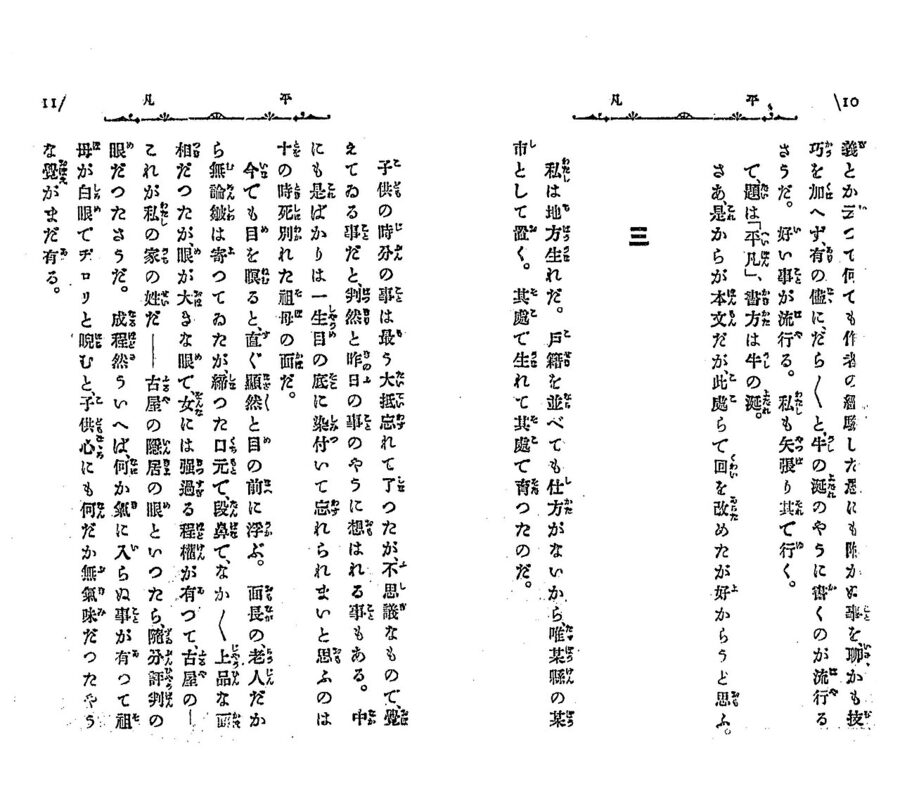
Today furigana is selective: children’s books, rare kanji in newspapers, names, and any reading a writer chooses that a reader would not guess. Since 26 May 2025 it has also been part of the law, with the family register recording how each name is read. Under the Ministry of Justice’s furigana rules, a new baby’s reading must be one generally accepted for its characters, which rules out the wilder readings some parents have chosen.
Okurigana (送り仮名), “sent-along kana”, are the hiragana endings after a kanji, like the って in 買って. They also tell you which reading the kanji takes: 上 is a in 上がる (agaru, to go up) and nobo in 上る (noboru, to climb). A Cabinet notice of 1973 sets the rules, and people still bend them.
The punctuation is short: 。 ends a sentence, 、 marks a pause, and 「 」 are quotation marks, with 『 』 for book titles. ・ separates foreign names, as in マルコ・ポーロ, Marco Polo, and 々 repeats the kanji before it, so 人々, hitobito, is “people”. The rest of the marks a reader meets are in the guide to Japanese symbols.
One rule changed recently. From 1952 the government’s horizontal documents used a Western comma instead of 、; the 2022 guidance made 、 the norm, keeping the comma as an option if a document sticks to one.
How many characters does a reader need?
The kana are quick: 46 hiragana and 46 katakana, plus two dots that change a sound (か ka, が ga). Kanji are the long road. The jōyō kanji (常用漢字) list has had 2,136 characters since the Cabinet notice of 30 November 2010, and it guides laws, official papers, newspapers and broadcasting. Children learn 1,026 of them at primary school, the kyōiku kanji, and the rest at secondary school.
Names add more. Parents may also choose from the jinmeiyō kanji (人名用漢字) kept by the Ministry of Justice: 864 since June 2026, when 勒 was added after a family won in court, the first addition since 2017. Computers carry more again: the basic Japanese character set, JIS X 0208, has 6,355 kanji, and its successor, JIS X 0213, has 10,050.
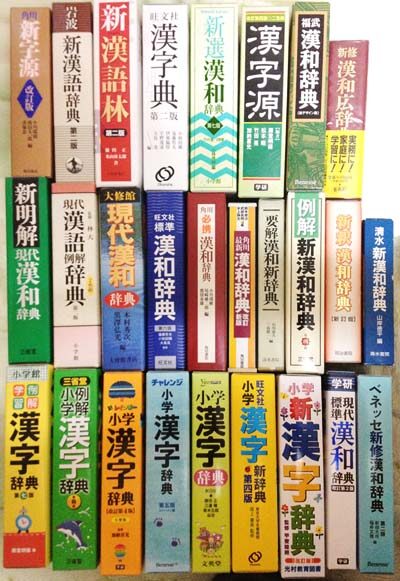
And the famous 50,000? Morohashi Tetsuji’s Dai Kan-Wa Jiten, the largest kanji dictionary, lists about that many, most of them variants or rarities from old Chinese texts. No one reads them all. A reader who knows the jōyō list can get through a newspaper, and furigana catches most of the rest.
If you only learn ten, learn the numbers, on every price tag and calendar: 一, 二, 三, 四, 五, 六, 七, 八, 九, 十, read ichi, ni, san, yon (or shi), go, roku, nana (or shichi), hachi, kyū, jū. The first three take one, two and three strokes, about as kind as kanji get.
Typing it
On a keyboard
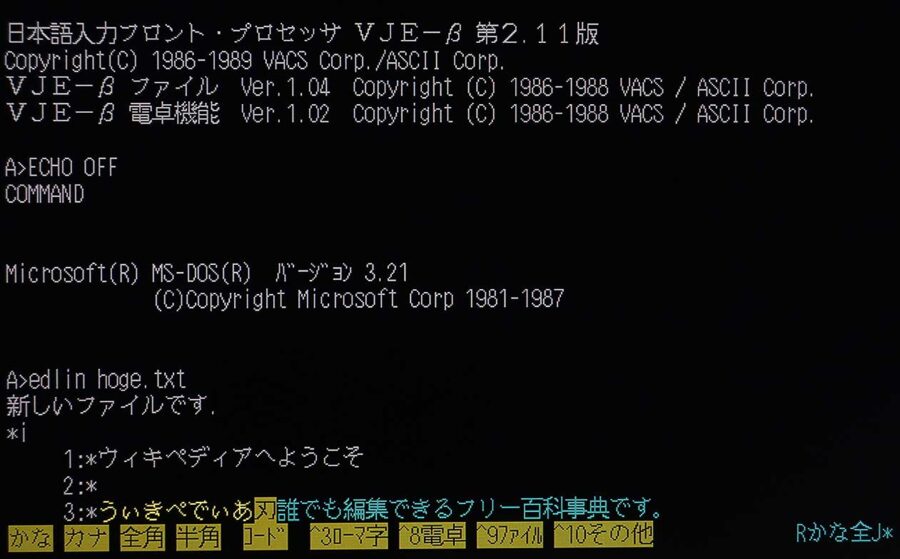
Nobody types Japanese by picking from thousands of characters. You type the sounds and software turns them into the right mix of scripts. Most people use romaji input: type k-a-t-t-e, see かって appear, press the space bar, and the input method offers 買って. Press again for 勝って (won) or 刈って (cut), and pick the one you meant.
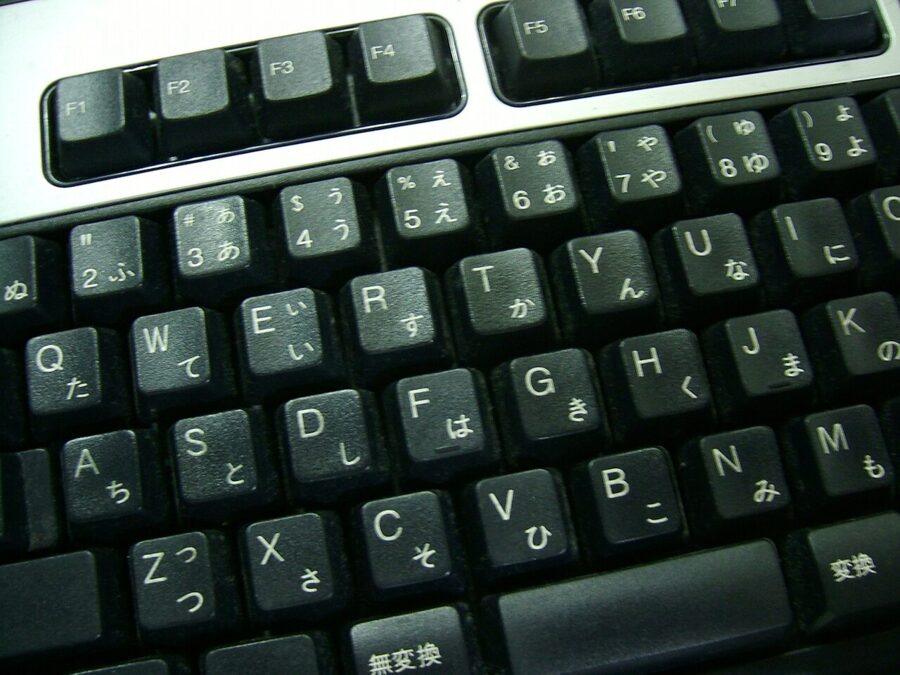
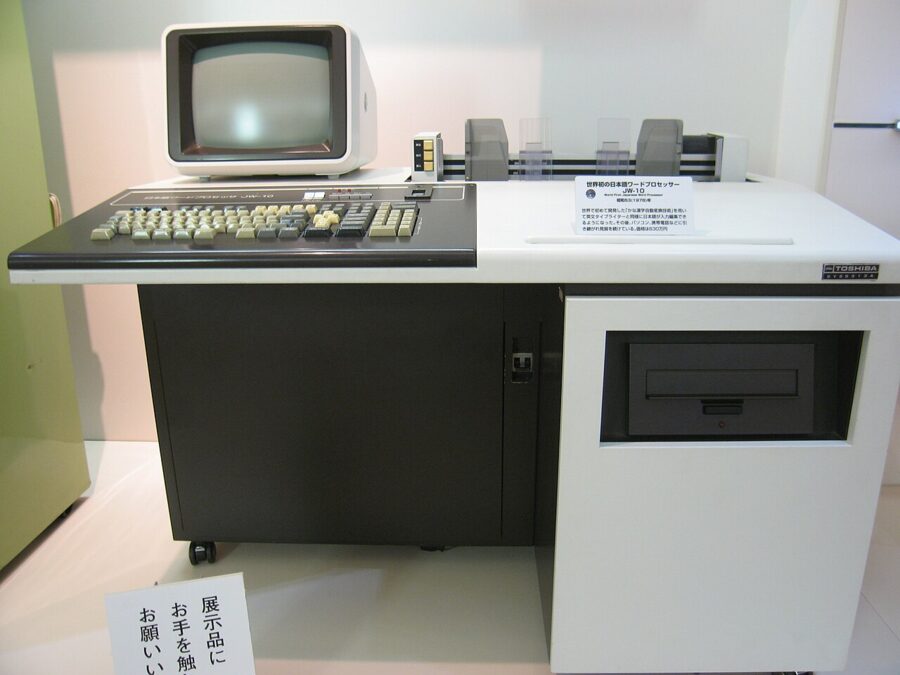
The step that makes this work is kana-kanji henkan (かな漢字変換), kana-to-kanji conversion, and it is younger than you might think. Before it, a Japanese typewriter meant a tray of a couple of thousand pieces of type and a trained operator. A Toshiba team led by Mori Ken’ichi unveiled the first Japanese word processor, the JW-10, in autumn 1978: about 220 kg, converting kana to kanji automatically, and now an IEEE milestone.
Romaji input follows kana spelling, not the new romanisation, and the agency’s notes say outright that the 2025 rules ask no change there. So people still type w-o for を and h-a for the particle は, though the official romaji for both is now o and wa.
On a phone
Phones went their own way. Flip phones put the kana rows on the number keys, あ on 1 through わ on 0, and you pressed た once for ta, twice for chi, three times for tsu. Japanese call it toggle input, and a generation of teenagers got very fast at it with one thumb.
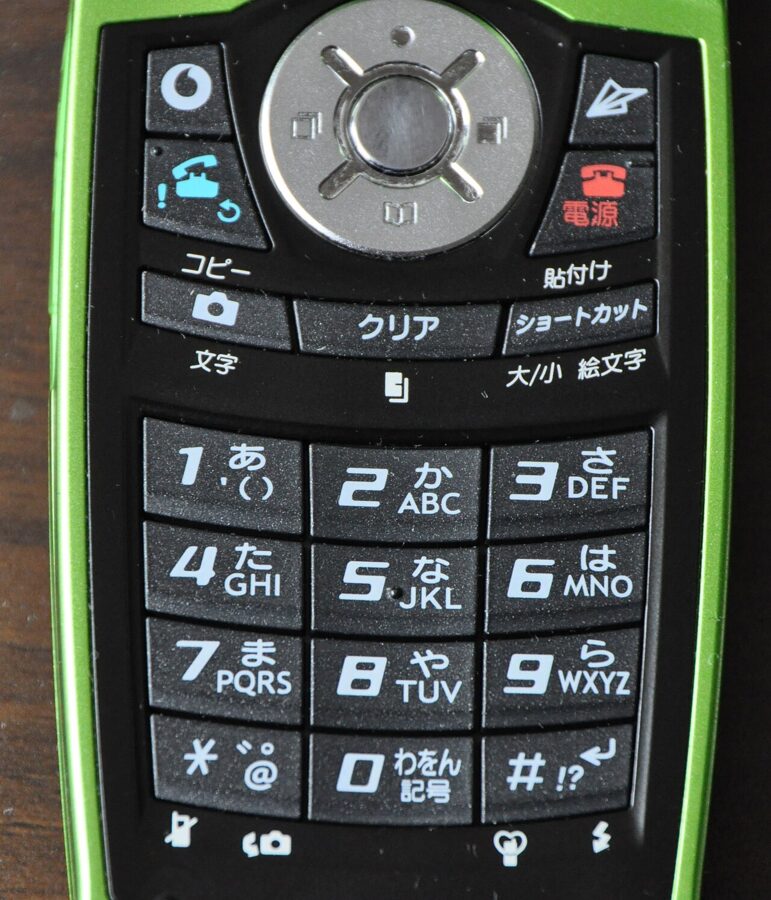
Smartphones kept the ten keys and added the flick. Touch あ and its row appears around your thumb: slide left for い, up for う, right for え, down for お. Each kana is one gesture, and predictive conversion offers whole words before you finish.
Back at the convenience store by the station, the receipt prints the ice cream in katakana and the card in roman letters, with kanji and hiragana holding the rest together. Read the next station board the same way: kana on top for the sound, kanji for the name, romaji for you.