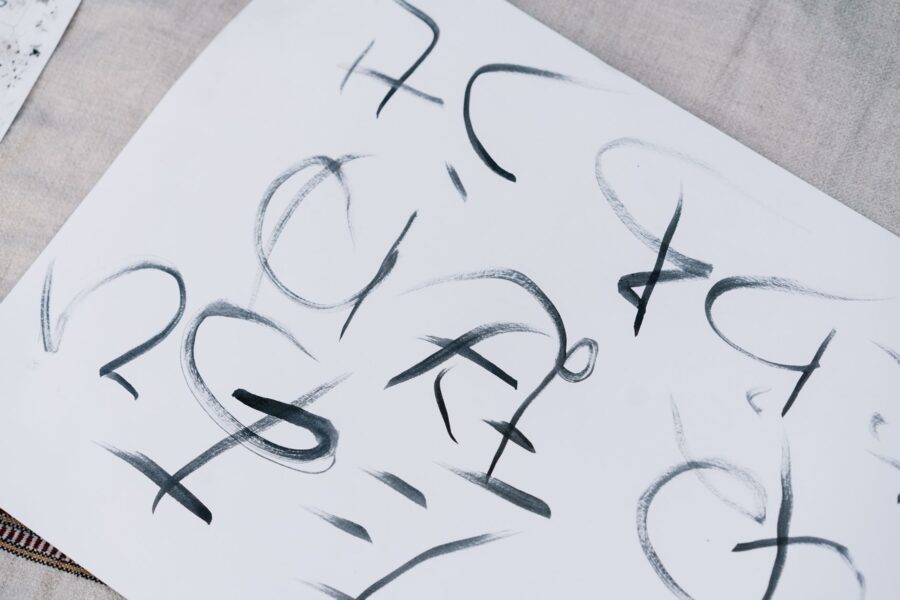
Write the character 安 quickly with a soft brush, a few thousand times, over a couple of centuries, and it stops looking like a woman under a roof. It becomes あ, the first letter of every Japanese dictionary. Each of the round, looping shapes in Japanese text started that way: a Chinese character, worn smooth by hands in a hurry.
The script is called hiragana (平仮名). The Nihon Kokugo Daijiten glosses hira (平) as “without corners, common and easy”. Kana (仮名) comes from karina, “borrowed letters”, the opposite of mana (真名), the “true letters” that were Chinese characters. The name says it twice: ordinary, and not quite the real thing.
Today hiragana is the script Japanese children learn first, and it carries every verb ending and particle. It sits beside katakana, the angular sister script for loanwords, and the kanji that carry most of the meaning. Its story runs from 8th-century poetry to a single government table in 1900.
In this article
Man’yogana: Chinese characters used for their sound
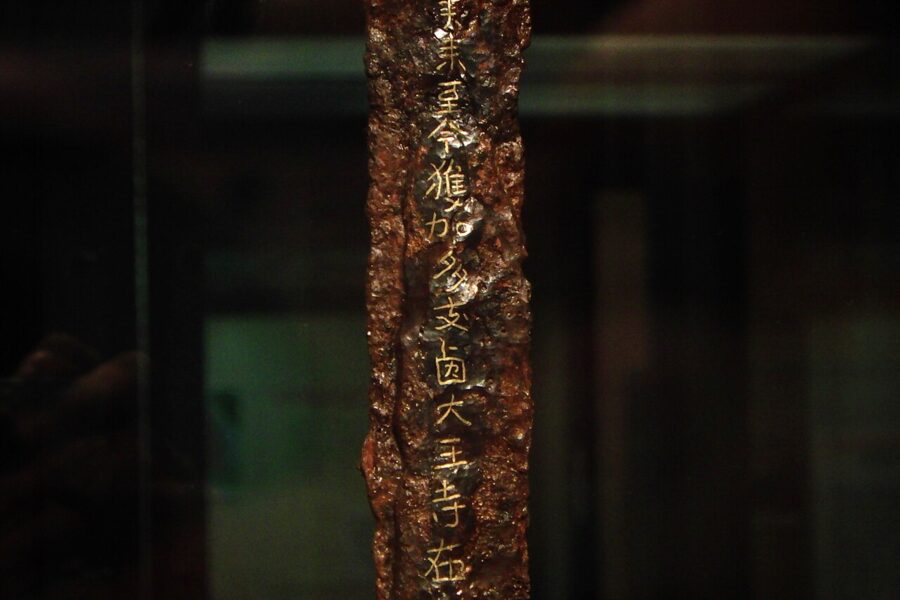
Japan had no script of its own when Chinese writing arrived. Kanji fitted Chinese, but Japanese words run to several syllables and bend at the end with grammar. Scribes solved the problem of names the way Chinese translators had handled Sanskrit: they picked characters for their sound and ignored their meaning. Sword inscriptions of the 5th and 6th centuries already do it.
The method is named after the Man’yōshū (万葉集), the 8th-century anthology of some 4,500 poems that uses it most freely. Man’yōgana (万葉仮名) writes ame, heaven, as 阿米, and kokoro, heart, as 許己呂: three characters, three sounds, no meaning carried over. Some borrow a character’s Chinese reading, some its Japanese one: 木 stands for ki because a tree is ki.
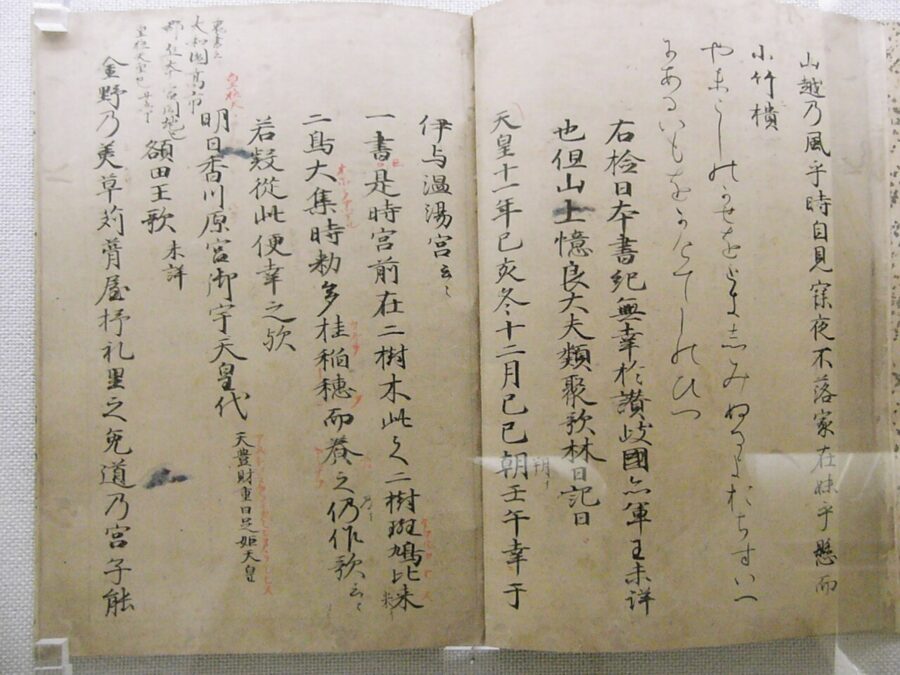
The poets also played. The Daijisen dictionary lists shishi spelled 十六, because four fours make sixteen, and kuku as 八十一, nine nines. The verb ide, “to come out”, appears as 山上復有山, “a mountain on a mountain”, because 出 looks like two stacked. These riddles show how far the writing had come loose from meaning.
The cost was effort: a full character per syllable, and a dozen candidates for each sound. Something had to give, and it gave in the hand of whoever was writing fastest.
From cursive kanji to hiragana
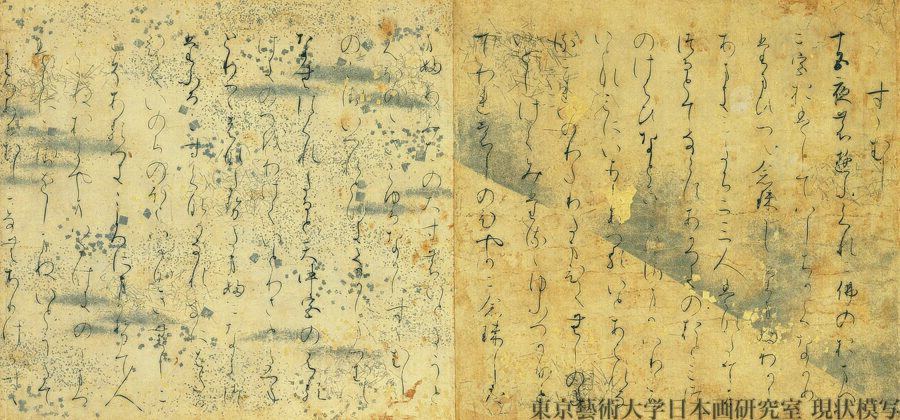
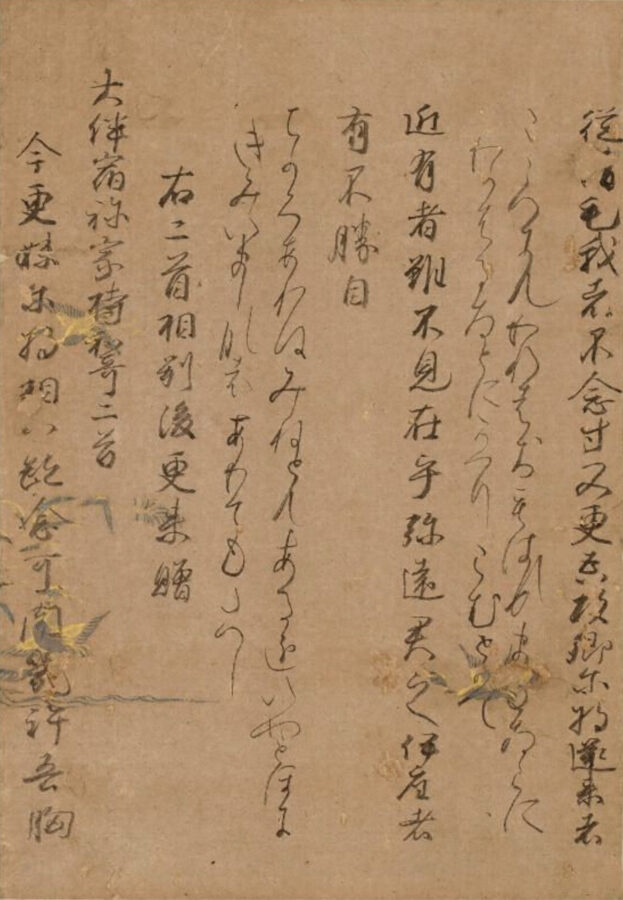
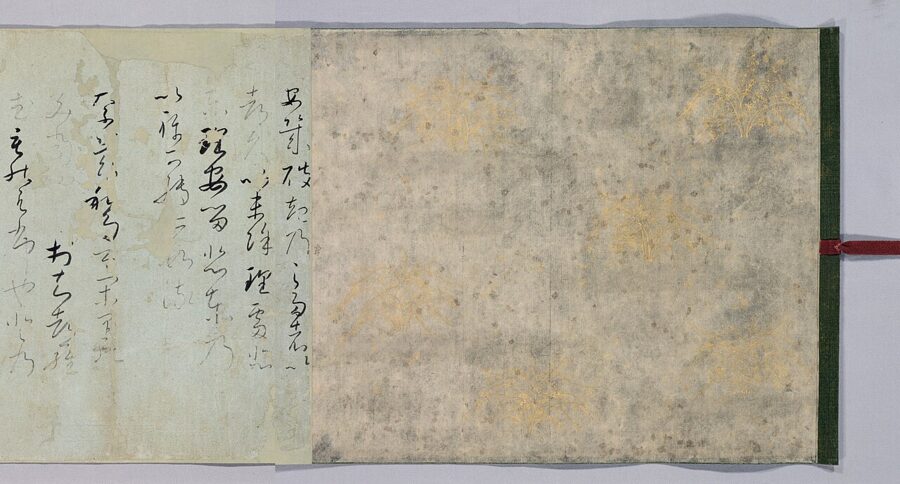
Chinese characters have a cursive style, sōsho (草書), “grass writing”, in which strokes run together. Two letters from about 762 kept in the Shōsōin storehouse at Nara already write man’yōgana in simplified, run-together shapes. The next stage is sōgana (草仮名), man’yōgana in full cursive, still kanji to a trained eye. Hiragana is what is left when the simplification goes one step further.
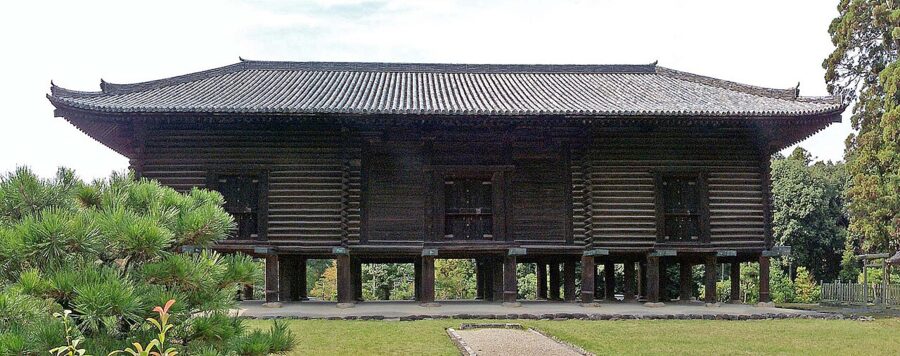
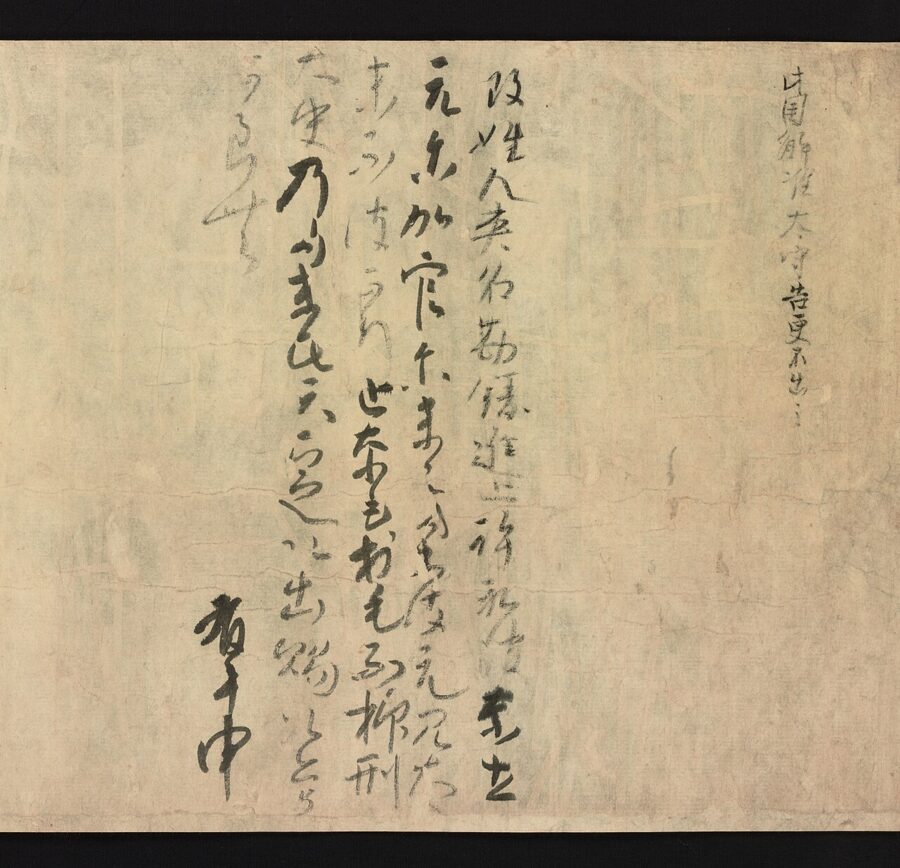
The Heibonsha encyclopedia dates extreme cursive forms to the mid-9th century, probably by clerks in government offices and great temples. By the late 800s today’s shapes were in place, though each sound still had several.
Not invented by Kukai
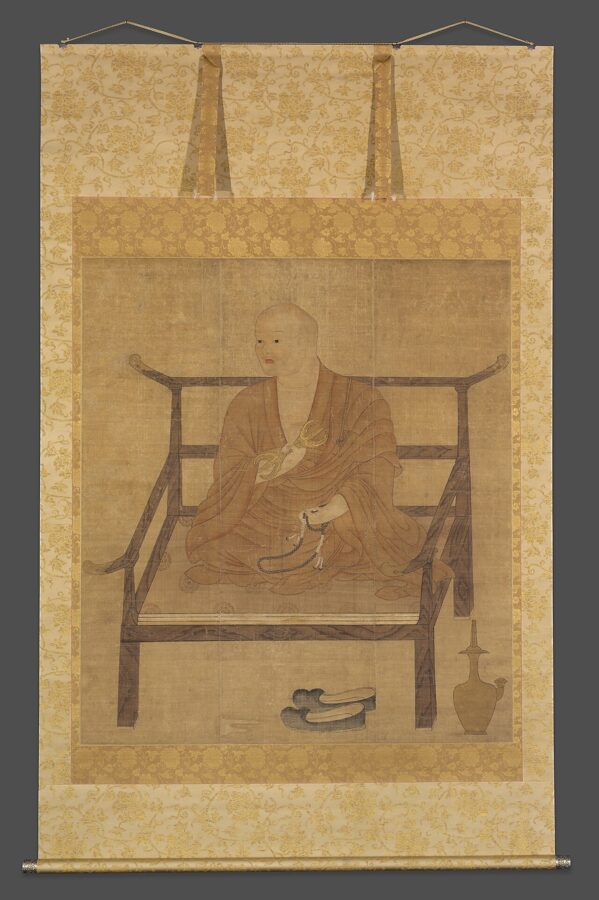
From about the 12th century a story spread that the monk Kūkai (774 to 835) invented hiragana and wrote the iroha poem to teach it. Every dictionary I checked rejects it: the earliest hiragana post-date him by decades, and the poem cannot be as old as he was. Hiragana had no inventor; many hands wore it into shape.
The kanji inside each letter
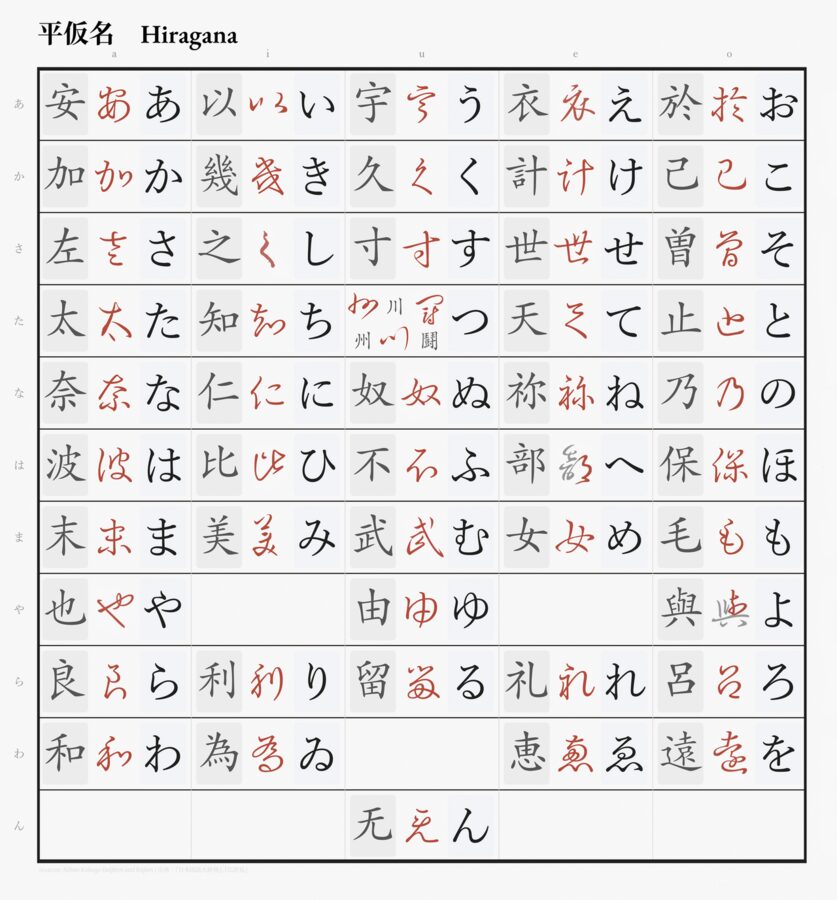
The table follows the Nipponica encyclopedia and the Nihon Kokugo Daijiten. つ is traced to 川 or 州, and the dictionaries call it open. ち comes from 知, while katakana チ comes from 千. And the question Japanese searchers keep asking, “where does み come from?”, has a pretty answer: 美, “beauty”.
| Line | a | i | u | e | o |
|---|---|---|---|---|---|
| (vowels) | あ 安 | い 以 | う 宇 | え 衣 | お 於 |
| k | か 加 | き 幾 | く 久 | け 計 | こ 己 |
| s | さ 左 | し 之 | す 寸 | せ 世 | そ 曽 |
| t | た 太 | ち 知 | つ 川 or 州 | て 天 | と 止 |
| n | な 奈 | に 仁 | ぬ 奴 | ね 祢 | の 乃 |
| h | は 波 | ひ 比 | ふ 不 | へ 部 | ほ 保 |
| m | ま 末 | み 美 | む 武 | め 女 | も 毛 |
| y | や 也 | ゆ 由 | よ 与 | ||
| r | ら 良 | り 利 | る 留 | れ 礼 | ろ 呂 |
| w | わ 和 | ゐ 為 | ゑ 恵 | を 遠 | |
| n | ん 无 |
Read across and some letters become obvious once you know: い keeps the two halves of 以, and め is 女 run together in a single movement. Others, like へ from 部, keep a single stroke. Katakana kept one piece of the character instead, which is why ハ comes from 八 while は comes from 波.
Onnade, “the women’s hand”
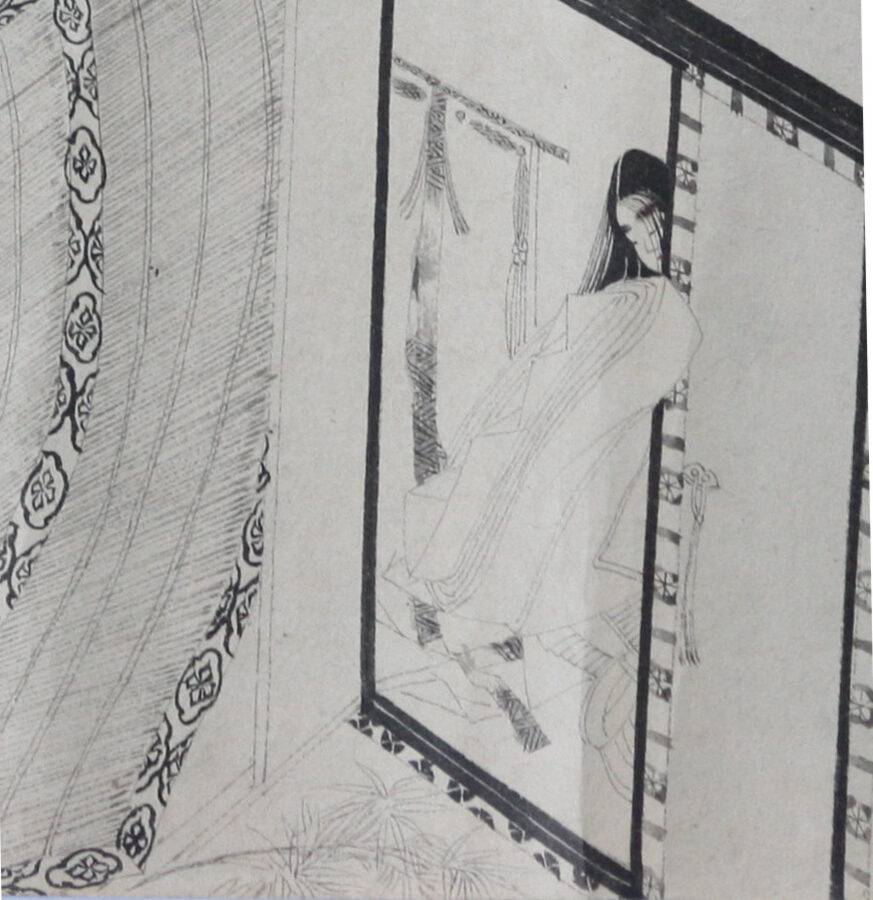
The Heian court had a word for the new script: onnade (女手), the women’s hand. Its opposite was otokode (男手), the men’s hand, which meant kanji. The word first turns up in the Kagerō Diary, around 974, and again in the Tale of Genji, in a chapter where the characters compare one another’s calligraphy.
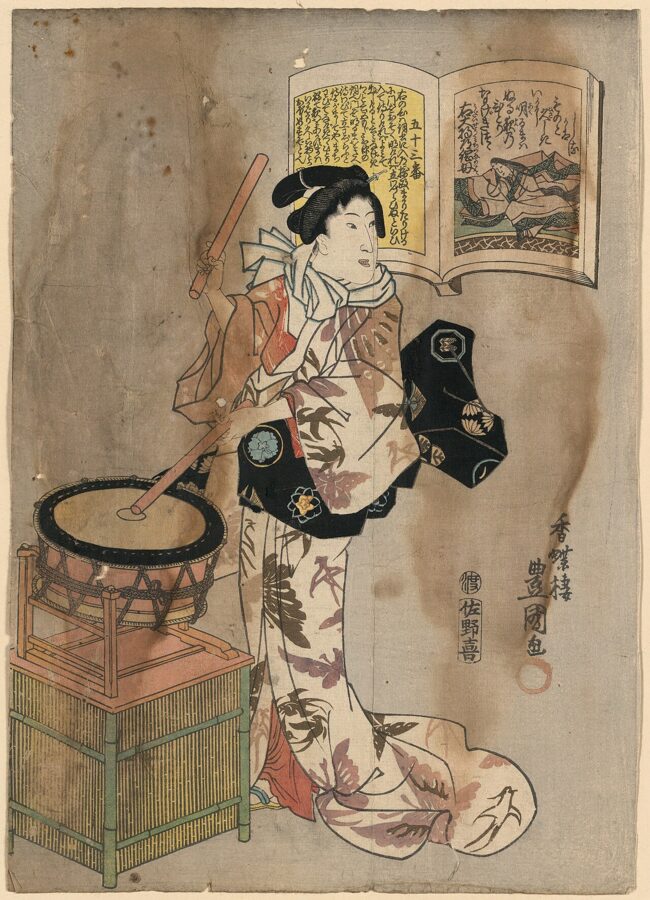
The label had a basis. Official writing in the early Heian period was Chinese, and Chinese learning was a male career. Women were rarely taught it, so kana became the script of their letters and poems, and men used kana when writing to women.
A man writing as a woman
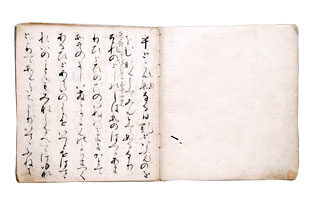
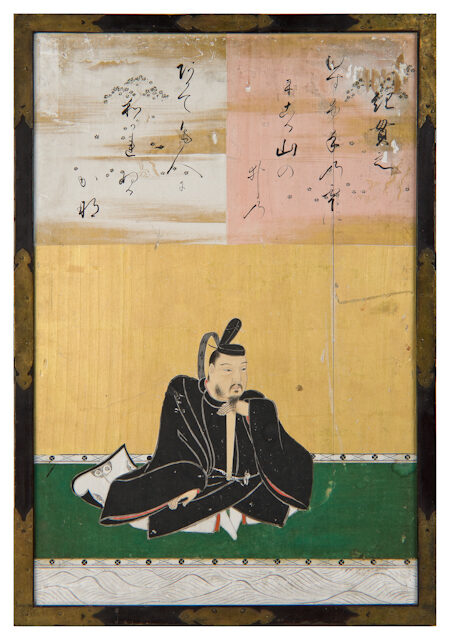
The most famous use of the label is a disguise. In 935 the poet Ki no Tsurayuki, returning to Kyoto from a governorship in Tosa (now Kochi), wrote up the 55-day journey in kana and gave the narration to a woman in his party. The Tosa Diary opens with the trick in plain sight:
男もすなる日記といふものを、女もしてみむとてするなり。
The diary is a thing men write, I hear; I mean to see whether a woman can write one too.
Men’s diaries were kept in Chinese. As a woman, Tsurayuki could write in kana about grief for a daughter lost in Tosa, greedy boatmen and poems. It is counted as the first literary diary in kana.
Kana goes official
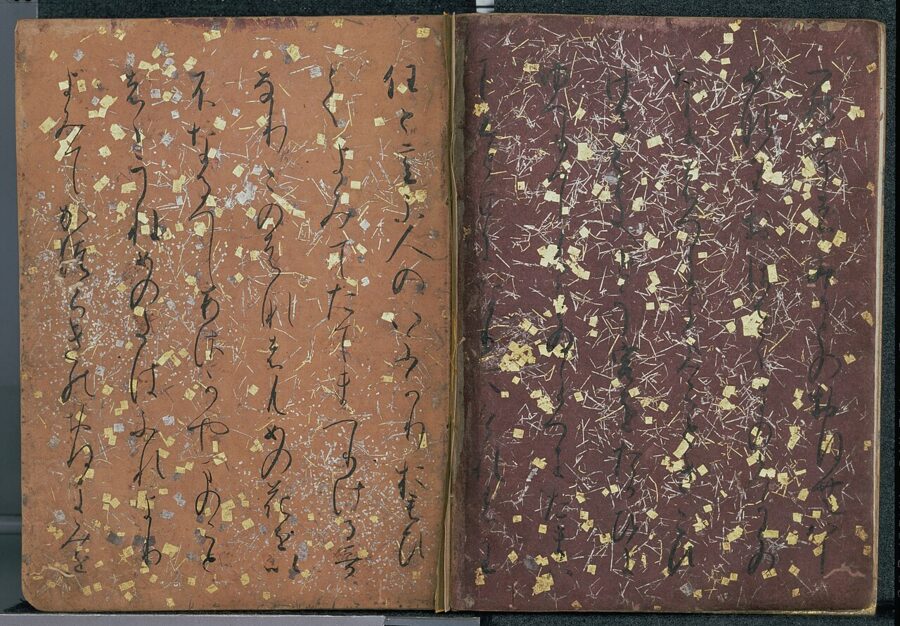
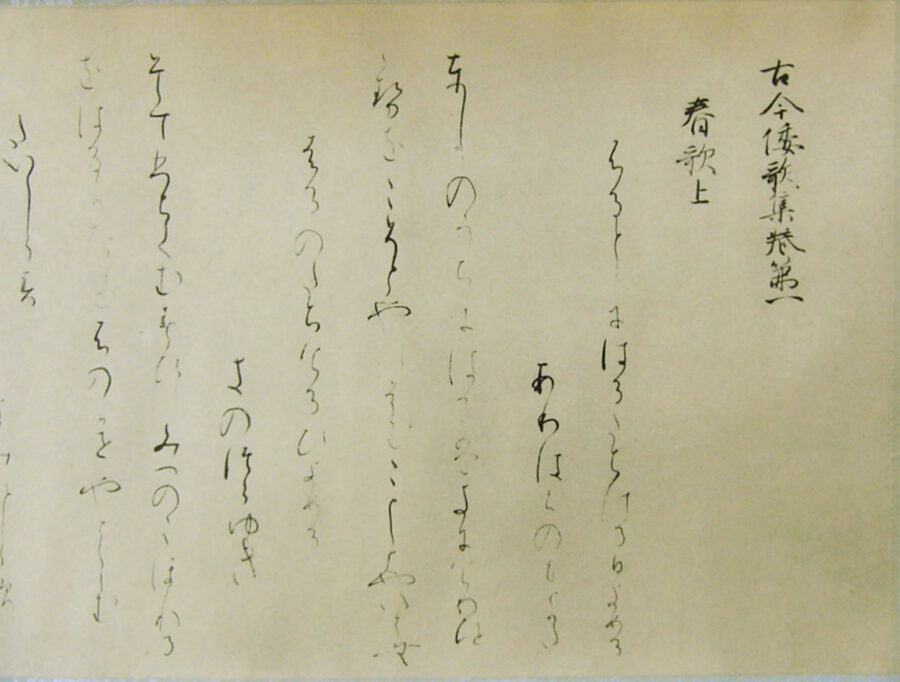
Thirty years earlier, in 905, the emperor had ordered the Kokin Wakashū, the first imperial anthology of Japanese poetry. Tsurayuki was a chief compiler, and the whole anthology was written in kana, opening with his kana preface. Heibonsha’s encyclopedia calls this the moment the “borrowed letters” first gained public standing.
What the label does not mean
“Women’s script” does not mean women invented hiragana or owned it. The Nipponica encyclopedia argues that it was probably developed by male clerks and scholars, and the Britannica Japan entry says flatly that women used it but it was never theirs alone. Men wrote kana poems, kana letters, and in Tsurayuki’s case a kana book. Nor were all women shut out of Chinese: Murasaki Shikibu, author of the Tale of Genji, read it well enough to hide the fact at court.
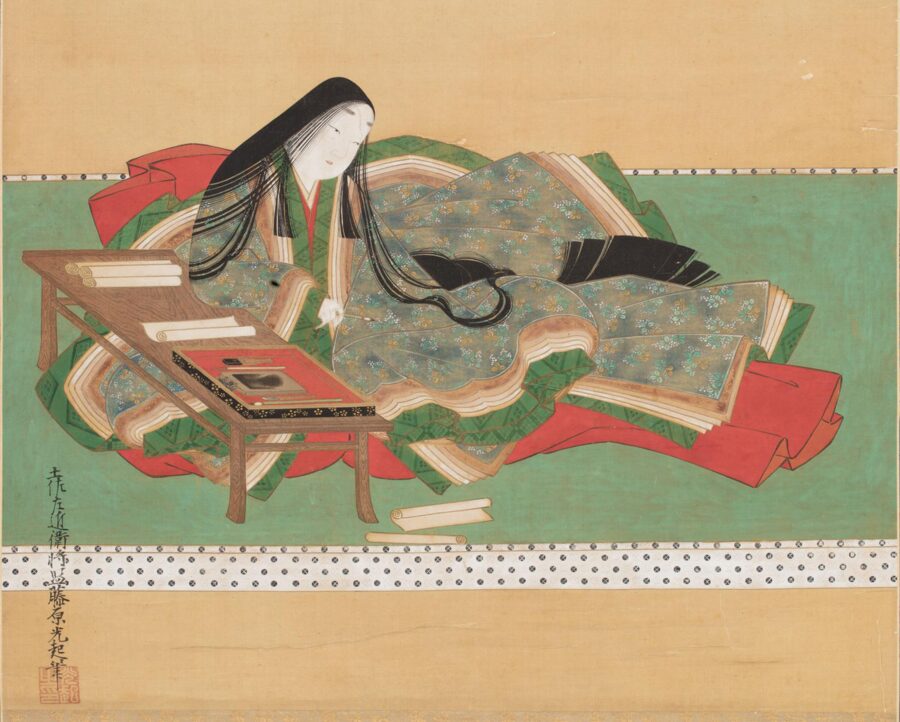
What the women of the court did do was use the script better than anyone. Sei Shōnagon’s Pillow Book, from the turn of the 11th century, and Murasaki’s Genji are both kana prose, and they are the reason kana became a literature and not just a convenience.
Two orders: iroha and gojuon
Hiragana has had two orders: an old poem and a newer grid. Japan switched from one to the other only in the late 19th century.
The iroha poem
The iroha (いろは) uses all 47 kana of its day exactly once. Read with the voicing restored, it is a Buddhist poem about impermanence:
いろはにほへと ちりぬるを
わかよたれそ つねならむ
うゐのおくやま けふこえて
あさきゆめみし ゑひもせす
Colours are fragrant, yet they scatter. In this world of ours, who lasts for ever? Crossing today the deep mountains of existence, I will dream no shallow dreams, nor be drunk.
The oldest copy is in a sutra glossary of 1079. The poem gives away its age: it has one e, while the older ametsuchi (あめつち) has 48 letters because it still separates e and ye. That distinction faded in the 10th century, so the iroha is mid-Heian, probably by a monk studying sounds.
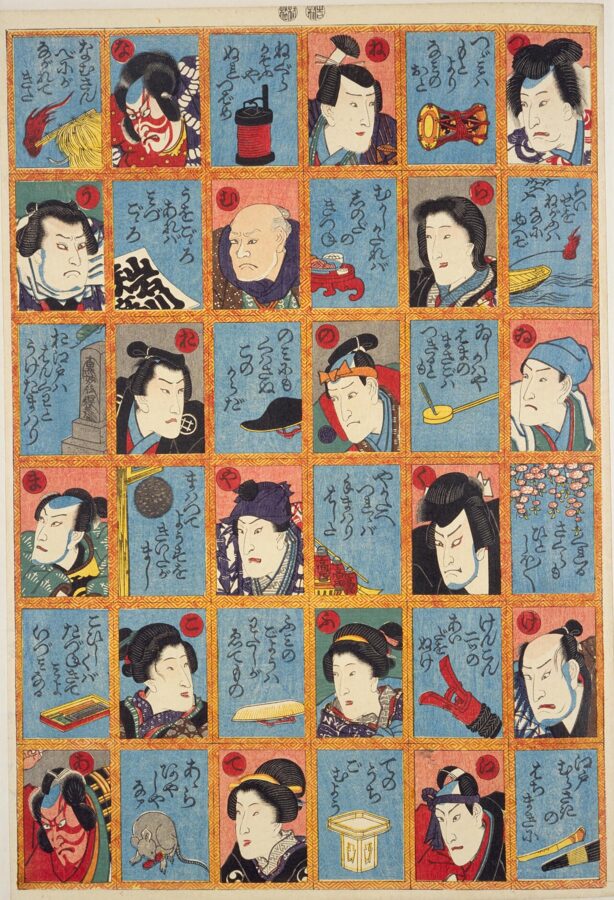
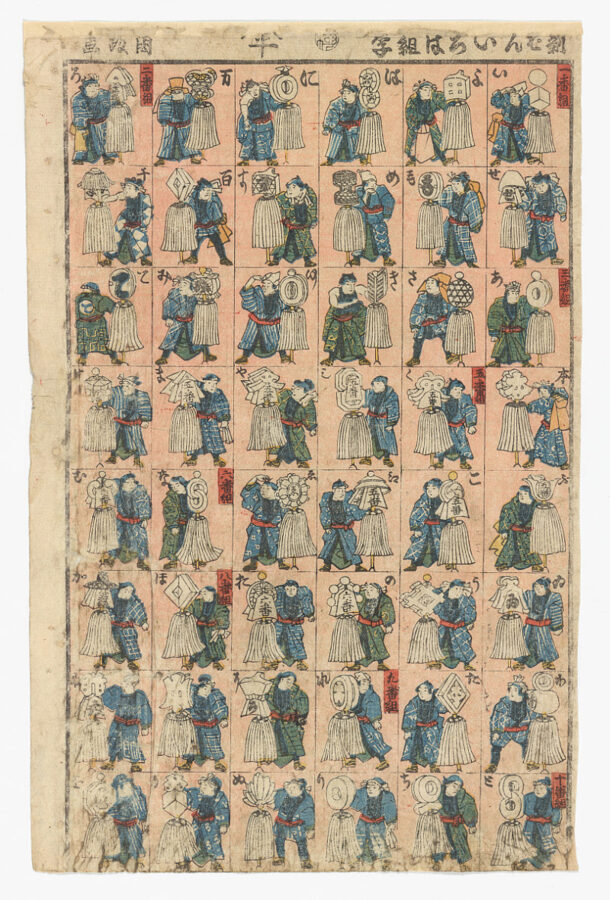
For eight centuries the iroha was the alphabet song and the filing system: dictionaries followed it, and Edo’s fire brigades were named by its letters. The phrase iroha no i still means the very first step.
The gojuon grid
The gojūon (五十音), “fifty sounds”, lays the kana out in five vowel rows and ten consonant columns: あいうえお, かきくけこ, and on to わ. Its oldest form, in a sutra glossary at Daigo-ji in Kyoto, dates from 1004 to 1028. It probably grew from monks’ study of Sanskrit phonetics or Chinese rhyme spelling, which is why it is so tidy.
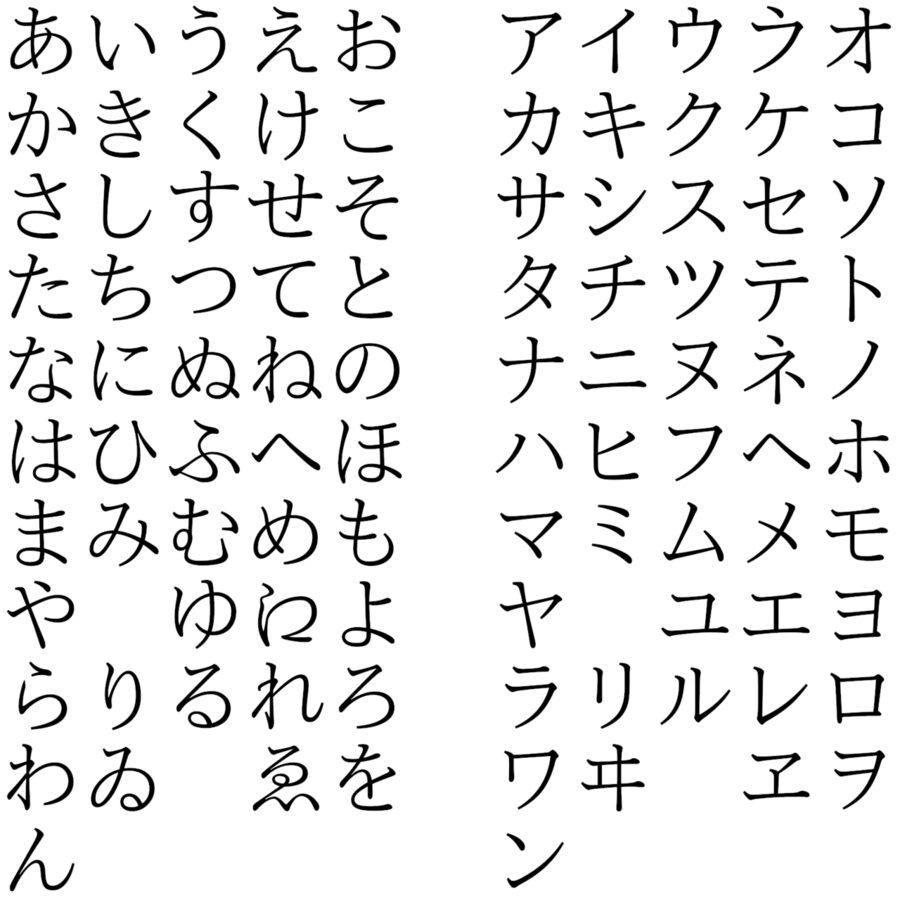
Count the chart and you will not find fifty letters. A popular story says five fell out of use; they were never there. As the dictionaries explain, the grid holds the same 47 kana as the iroha, with い, う and え each appearing twice to fill the y and w lines, and ん was tacked on later because it fitted nowhere. The name gojūon dates from the Edo period.
Is there a Japanese alphabet from A to Z? This is the nearest thing: since the Meiji era, gojūon order from あ to ん has replaced the iroha in dictionaries and registers.
1900: one shape for each sound
For most of its history hiragana had no fixed letter for each sound. A writer could draw a from 安 or from 阿. Nipponica’s account is that variants multiplied from the 11th century, as calligraphy prized variety.
That ended with the schools. On 21 August 1900 the Ministry of Education issued the Elementary School Ordinance Enforcement Regulations (小学校令施行規則), and its Table 1 printed one hiragana and one katakana for each sound: the 47 of the iroha plus ん. Printers followed, and every other form became hentaigana (変体仮名), “variant kana”: any kana not in the table.
One later reform trimmed the set. The 1946 modern kana usage dropped ゐ and ゑ, which had sounded like い and え for centuries, leaving 46. The rules in force now, the Modern Kana Usage of 1986, still keep three old spellings for particles: は read wa, へ read e, and を read o. That is why “hello”, こんにちは, ends in は: it was once the start of a sentence, “as for today”.
The war changed the classroom too: before it, children met katakana first, and since then they have started with hiragana.
Hentaigana on shop signs
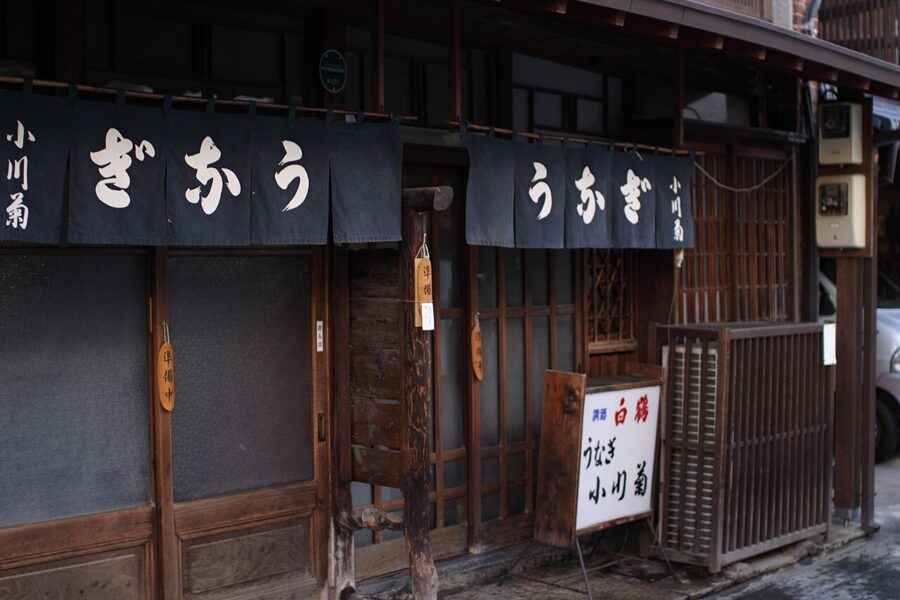
The 1900 table pushed the variants out of print, not out of sight. They live on wherever a shop wants to look old. The Tokyo Metropolitan Archives’ guide to reading old documents sends beginners to exactly these places.
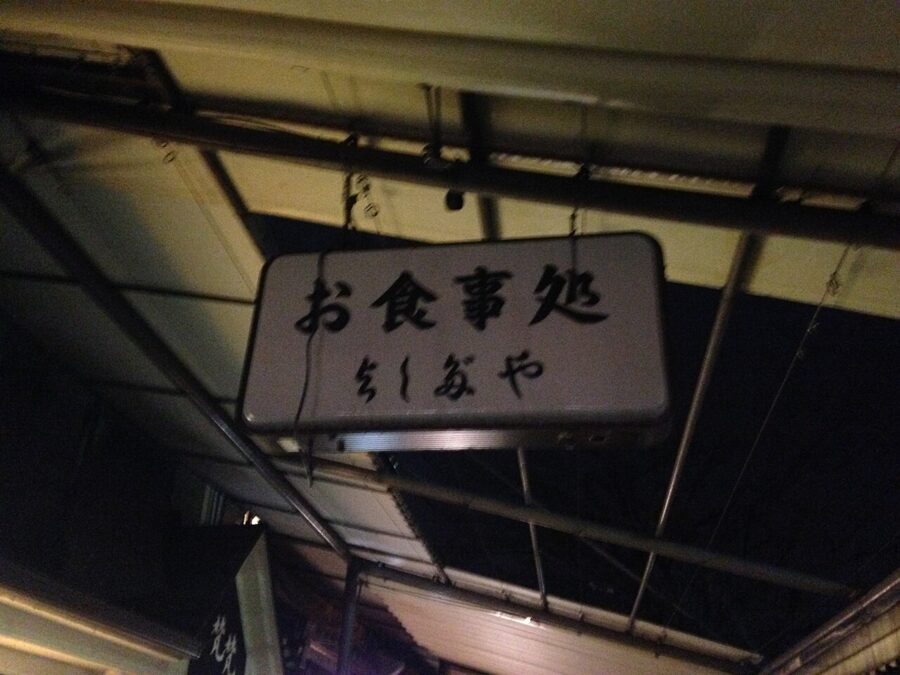
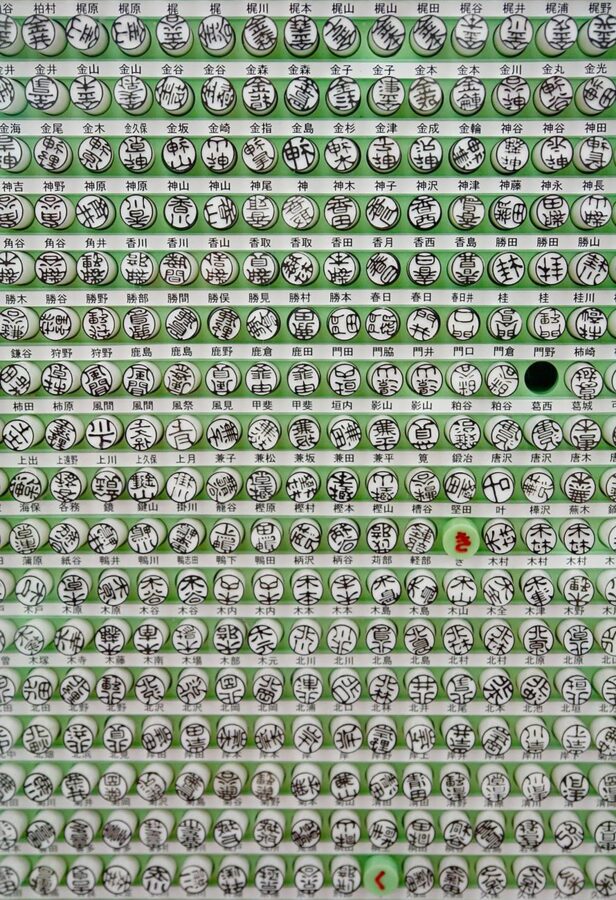
The classic is the soba curtain. Many shops write soba as 楚者 with voicing dots, a そ drawn from 楚 and a ば drawn from 者. The archives’ guide adds the eel banner with a な from 奈, the dumpling box that spells dango with 多 and 古, and the chopstick sleeve printed 御手茂登, otemoto, “by your hand”.
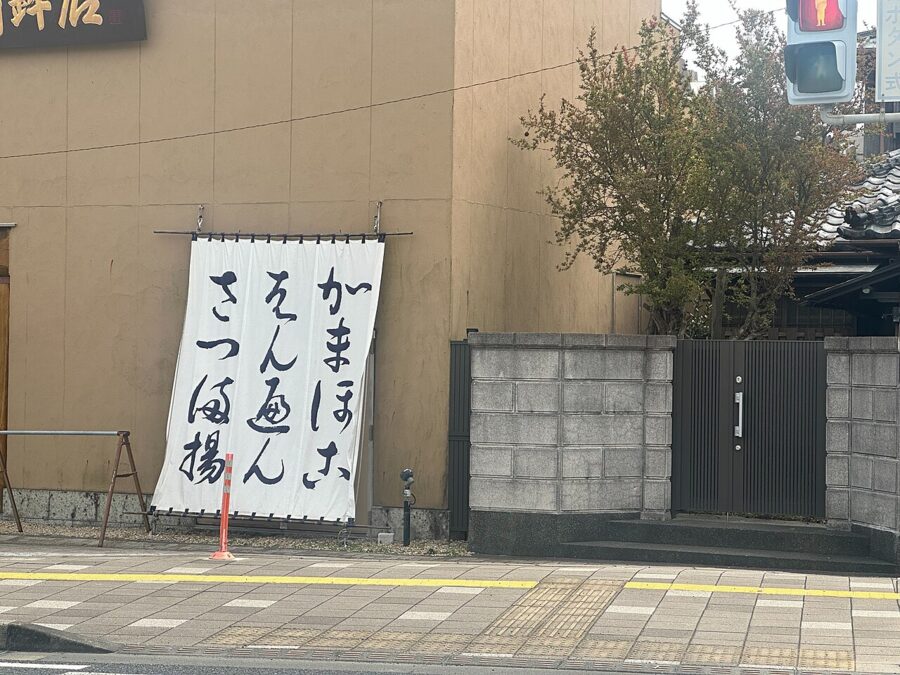
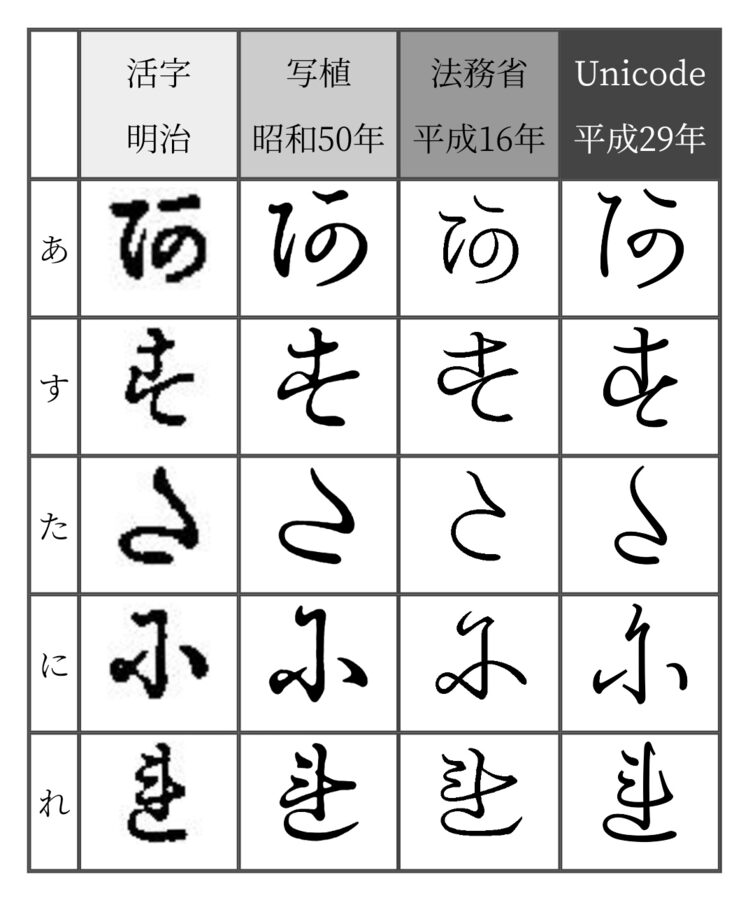
The Heibonsha encyclopedia sorts the variants three ways: forms from the same kanji but less simplified, forms simplified differently, and forms from a different kanji altogether. In 2017 Unicode 10.0 added 285 hentaigana, so they can now be typed and searched. The sound ha alone has eleven, two of them from 者.
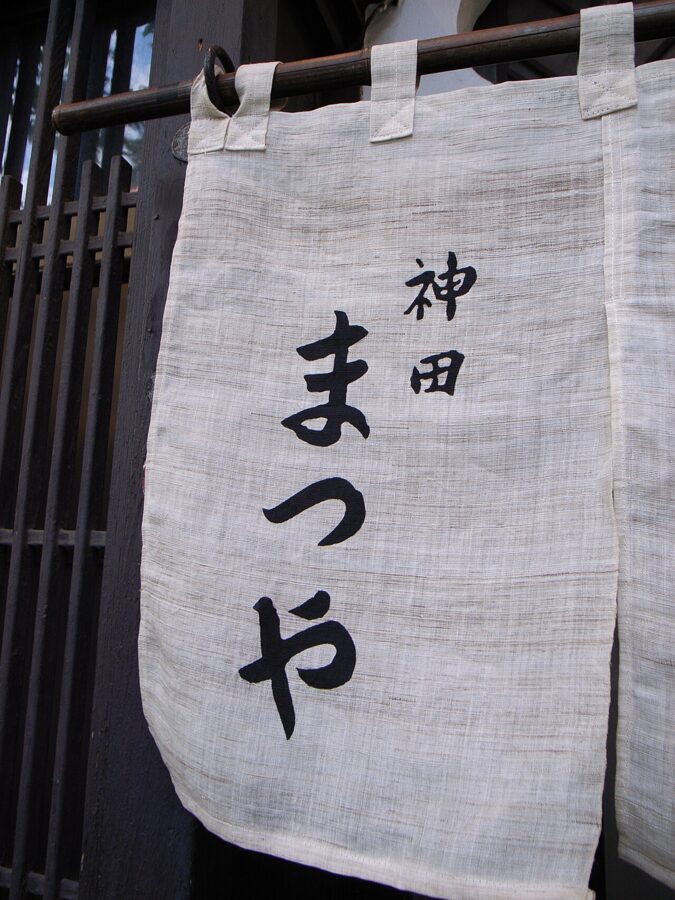
Hiragana also travelled south. The Omoro Sōshi (おもろさうし), the songs of the Ryukyu kingdom compiled by the Shuri court between 1531 and 1623, is written in hiragana with a few kanji, spelling Okinawan sounds that Japanese kana were never designed for.
What hiragana does in a sentence today
In any Japanese newspaper the three scripts share every line: kanji carry nouns and stems, katakana loanwords, and hiragana does the joining. Take 私は本を読みました, “I read a book”: 私, 本 and 読 are kanji, and は, を and みました are hiragana.
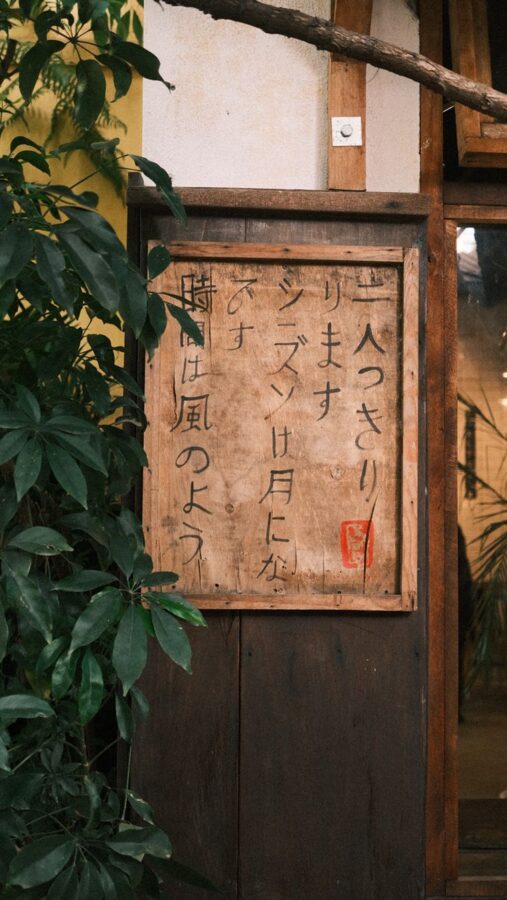
Okurigana: the endings
A kanji gives a verb its meaning but cannot show its grammar, so the changing tail is written in hiragana. These are okurigana (送り仮名), “sent-along kana”, and the 1973 Cabinet rules set where the kanji stops: 書く, 書かない, 書きます, with 書 fixed and the hiragana changing. Adjectives whose stem ends in し send it in kana as well, as in 著しい.
Many words with a kanji spelling are written in hiragana anyway, because the kanji looks stiff or rare. “Thank you”, ありがとう, has a kanji spelling, 有難う, that hardly anyone uses in an ordinary note.
Particles
The small words that mark each noun’s role are always hiragana: は for the topic, が for the subject, を for the object, に for a destination, の for “of”. This is where the 1986 exceptions live: you write は and read wa.
Furigana: reading help
Hiragana also sits beside kanji as furigana (振り仮名), small kana that tell you how to read them. It began as reading marks in 9th-century Chinese texts, ran thick through Edo fiction, and was discouraged after the 1946 kanji reforms. Today it marks rare names and characters, and nearly everything printed for children.
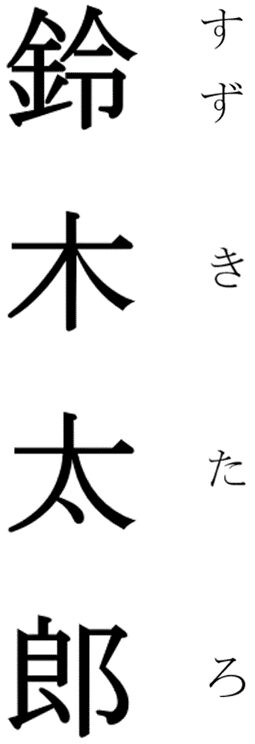
As children learn kanji, the furigana falls away grade by grade. The 1,026 kyōiku kanji (the 2020 list) taught in primary school are why a picture book and a novel for twelve-year-olds look so different. A word like 水, water, is written みず for the youngest readers and in kanji from the first year of school.
The chart today
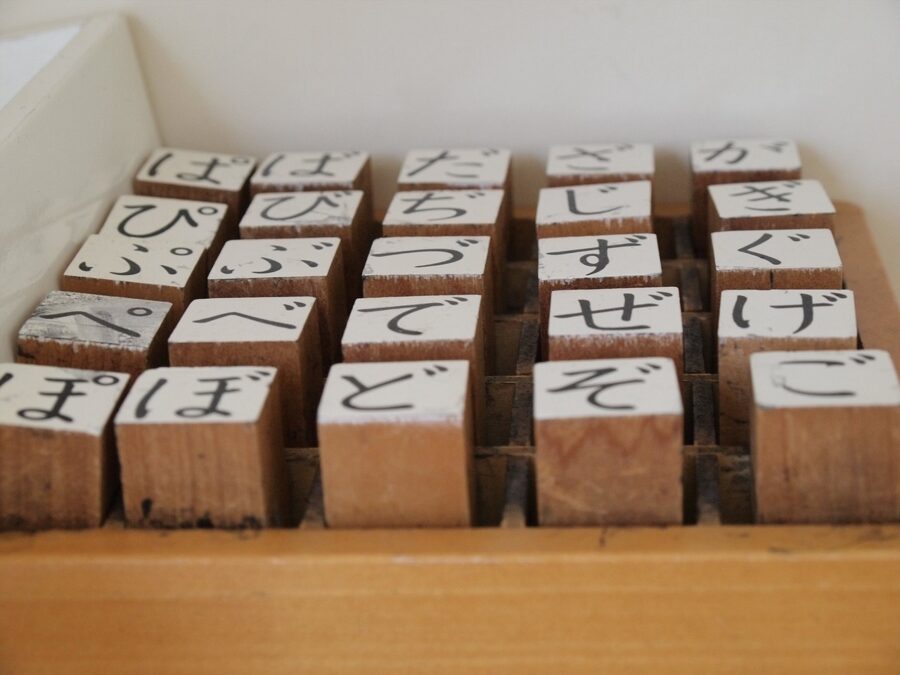
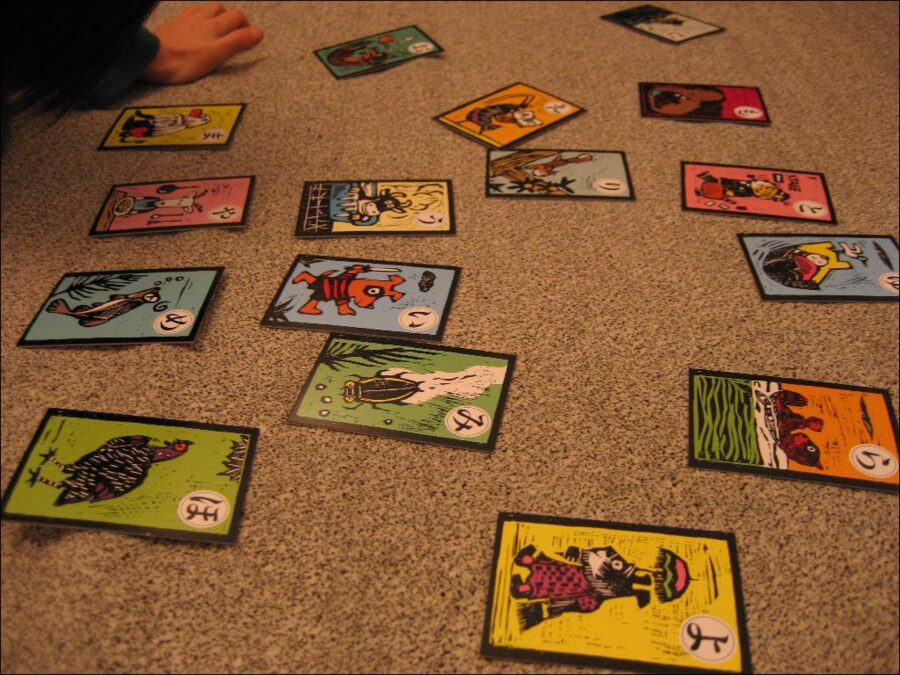
Modern hiragana has 46 basic letters, the gojūon grid without ゐ and ゑ. Add two dots, dakuten (濁点), and か becomes が; add a small circle, handakuten (半濁点), and は becomes ぱ. Small ゃ, ゅ and ょ after an い-column letter make one syllable, as in きょう, “today”. A small っ doubles the next consonant, as in がっこう, school.
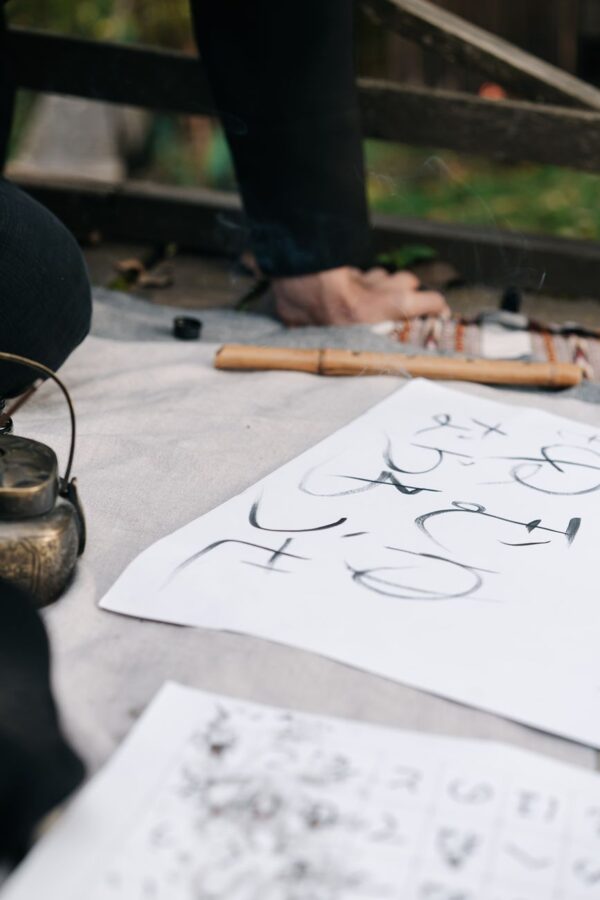
Hiragana also sets a tone. Signs and menus use it to sound soft or homely, and kanji to sound formal: the Heian choice between the plain letters and the true ones.
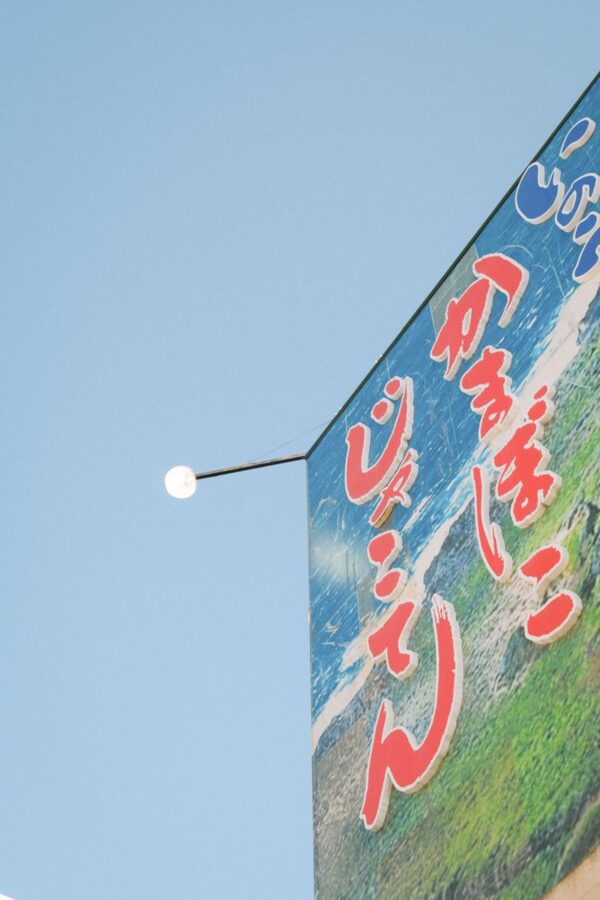
Next time you pass a soba shop, look at the curtain before you go in. If the そ looks wrong and the ば has grown an extra stroke, you are reading hiragana as it was before 1900, and somewhere inside each letter is a Chinese character that a hurried hand once wore smooth.