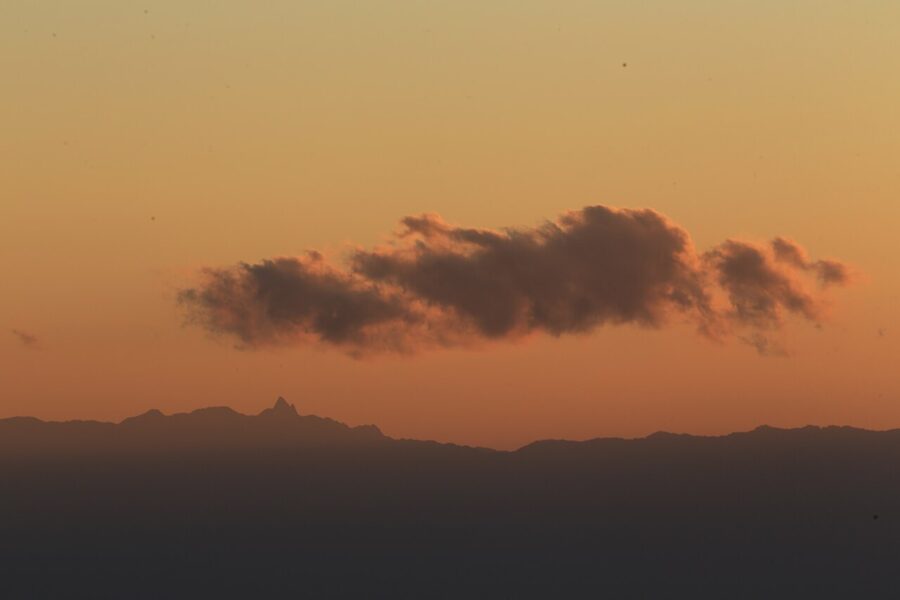
In the last week of November the old almanac gives the weather a five-day name: 虹蔵不見, niji kakurete miezu, “the rainbows hide and are not seen”. It is the first of three short seasons inside shōsetsu (小雪), “small snow”, which in 2026 began at 16:23 on 22 November by the National Astronomical Observatory’s reckoning. The sun is low, the air off the continent is dry, and the rainbows of summer showers are gone until spring.
The habit of naming weather this finely is built into the word for climate itself. Kikō (気候) joins two units of the old Chinese calendar: 気, the fifteen-day solar term, and 候, the five-day season. The Nihon Kokugo Daijiten gives exactly that origin, so every Japanese weather report about “climate” quietly names the old almanac.
The words come thick because the weather does. A chain of islands about 3,000 km long, with a cold continent to the west, a warm ocean to the east and mountains down the middle, gets snow walls and coral reefs in the same week. This is that climate read the way Japanese people talk about it: through its winds, rains, storms, currents and the names of the year.
In this article
A long country with two coasts
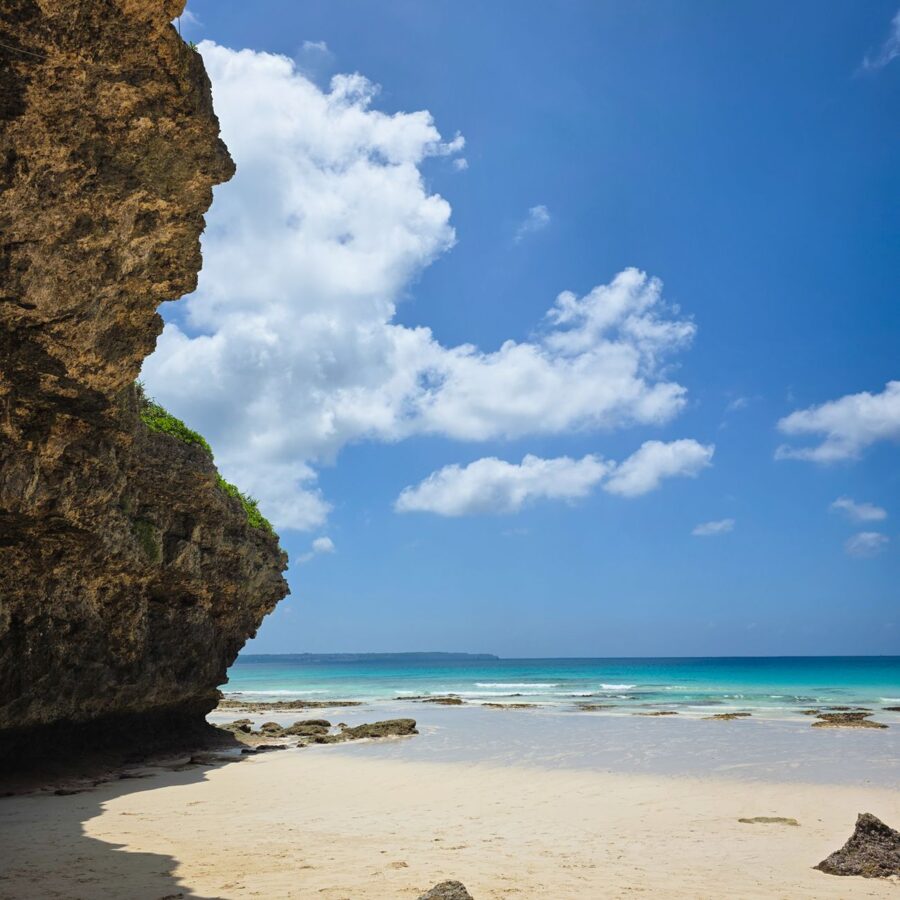
Japanese school geography divides the country into six climate zones. Hokkaido is subarctic, with long winters and no proper rainy season. Down the west of Honshu runs the Nihonkai-gawa (日本海側), the Sea of Japan side, grey and snowy in winter, while the Taiheiyō-gawa (太平洋側), the Pacific side, has dry, sunny winters and wet summers. Then come the inland basins of the Central Highland, the sheltered Seto Inland Sea and the subtropical Ryukyu Islands.
The Japan Meteorological Agency’s 1991 to 2020 normals show how far apart they sit. I find the January sunshine column the most telling, because it shows the mountain wall at work.
| City (zone) | January mean | August mean | Rain and snow a year | January sunshine |
|---|---|---|---|---|
| Sapporo (Hokkaido) | −3.2°C | 22.3°C | 1,146 mm | 90 hours |
| Kanazawa (Sea of Japan side) | 4.0°C | 27.3°C | 2,402 mm | 62 hours |
| Tokyo (Pacific side) | 5.4°C | 26.9°C | 1,598 mm | 193 hours |
| Matsumoto (inland basin) | −0.3°C | 25.1°C | 1,045 mm | 173 hours |
| Takamatsu (Seto Inland Sea) | 5.9°C | 28.6°C | 1,150 mm | 141 hours |
| Naha (Ryukyu Islands) | 17.3°C | 29.0°C | 2,161 mm | 93 hours |
Kanazawa’s wettest month is December, at 301 mm, when Tokyo gets 58 mm. Matsumoto, ringed by the Japanese Alps, is the driest city in the table and swings from below freezing in January to an average August high of 31.4°C.
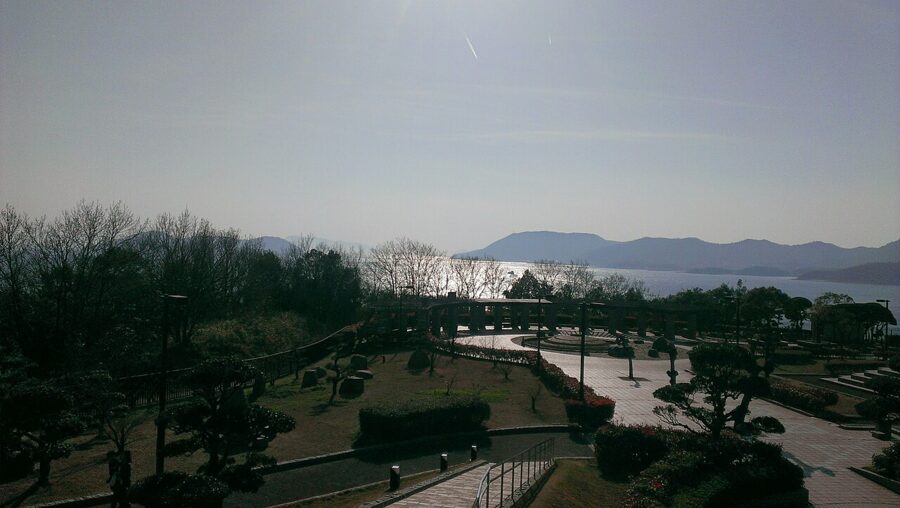
The Seto Inland Sea is sheltered twice, by the mountains of Chugoku to the north and Shikoku to the south, so both monsoons arrive wrung out. Kagawa, short of rivers, dug thousands of irrigation ponds, tameike (ため池), for its rice. The sea’s own weather word is yūnagi (夕凪), the evening calm when the sea breeze has died and the land breeze has not begun.
The JMA’s own notes for visitors use four broader bands. The six-zone map is the one Japanese children draw, and the one that explains why crossing Honshu in January feels like changing countries.
West high, east low: the winter monsoon
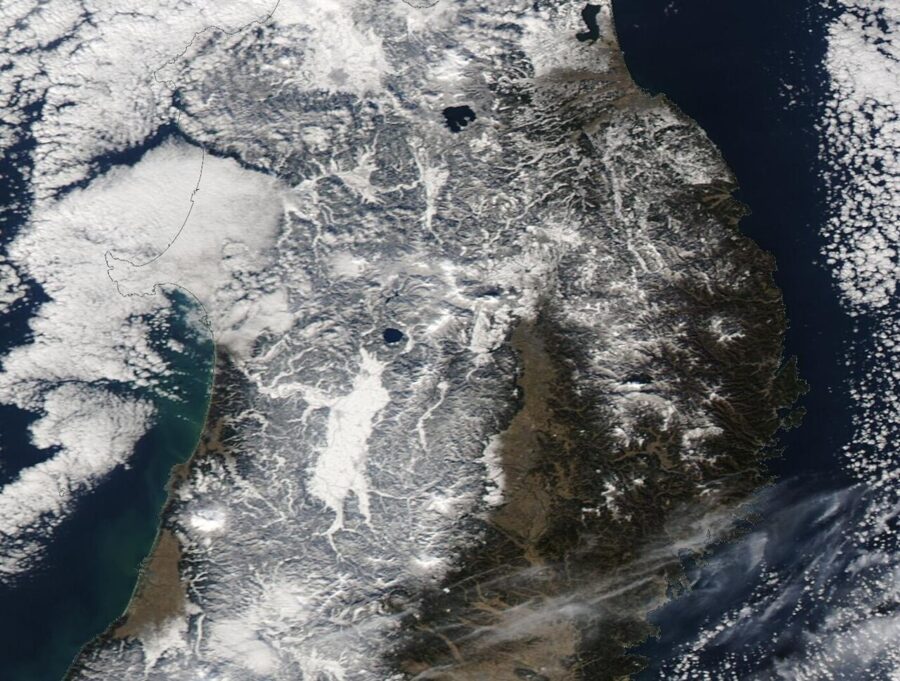
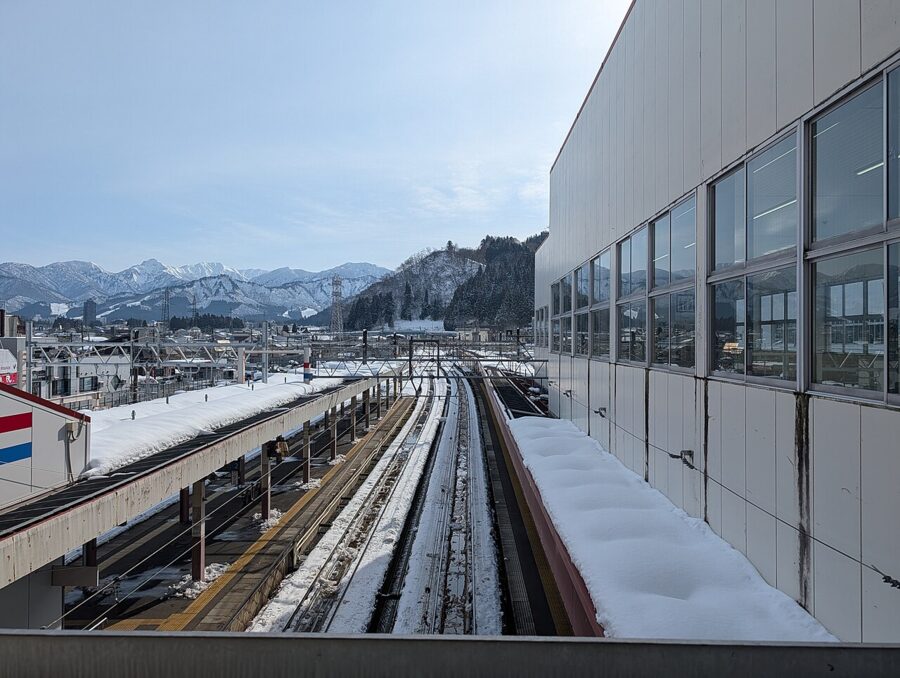
Every winter forecast leans on four characters: seikō tōtei (西高東低), “west high, east low”. High pressure builds over Siberia, a low deepens east of Japan, and between them the kisetsufū (季節風), the seasonal wind, blows from the north-west. The wind leaves the continent cold and dry, crosses a Sea of Japan kept warm by the Tsushima Current, and drops its new moisture as snow against the western mountains.
Yukiguni, the snow country
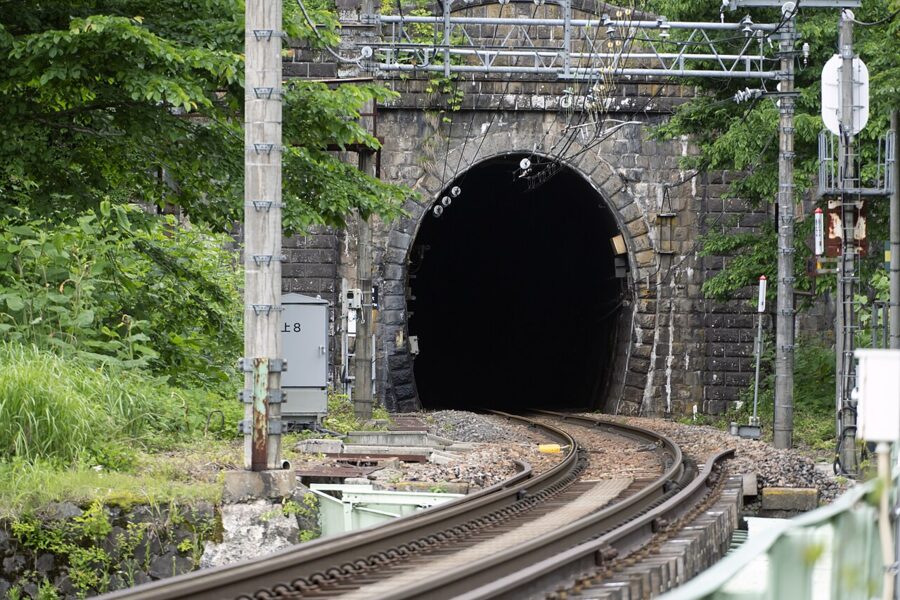
Yukiguni (雪国), snow country, was a regional word before Kawabata made it a novel. His book opens with a night train coming out of a long tunnel under the mountain border into white. The tunnel is the Shimizu Tunnel on the Joetsu Line, and the town beyond it is Yuzawa.
The law has its own term. Under a special act of 1962 the government designates gōsetsu chitai (豪雪地帯), heavy-snow areas, which cover about 51% of Japan’s land and 15% of its people, by the land ministry’s count. More than half the country is officially snow country.
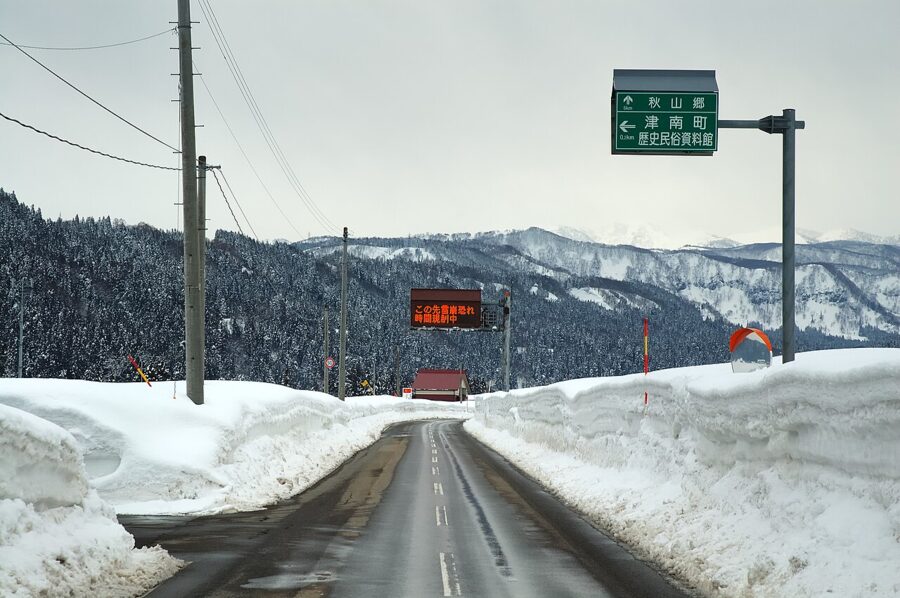
The deepest snow ever measured in Japan was 1,182 cm (38 ft 9 in) on Ibukiyama, on the Shiga and Gifu border, on 14 February 1927. Among today’s stations the record is 566 cm at Sukayu in the Hakkoda mountains of Aomori, on 26 February 2013. Aomori City, a prefectural capital on the sea, averages 567 cm of snowfall a winter.
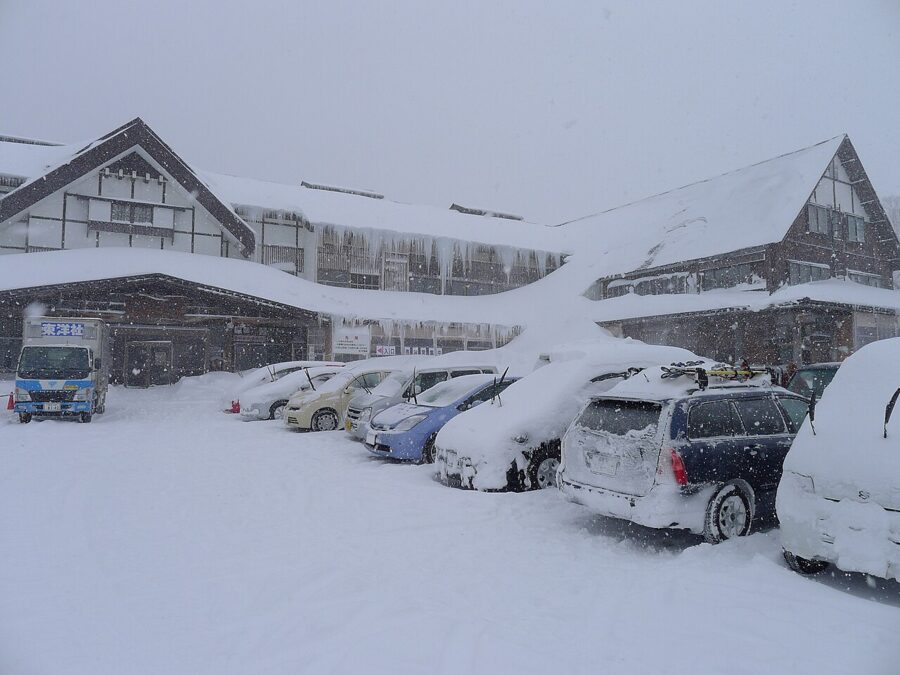
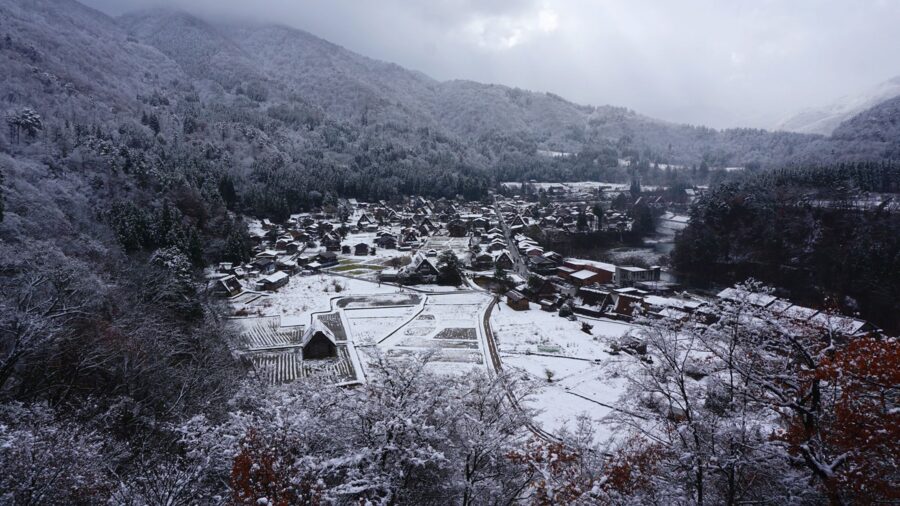
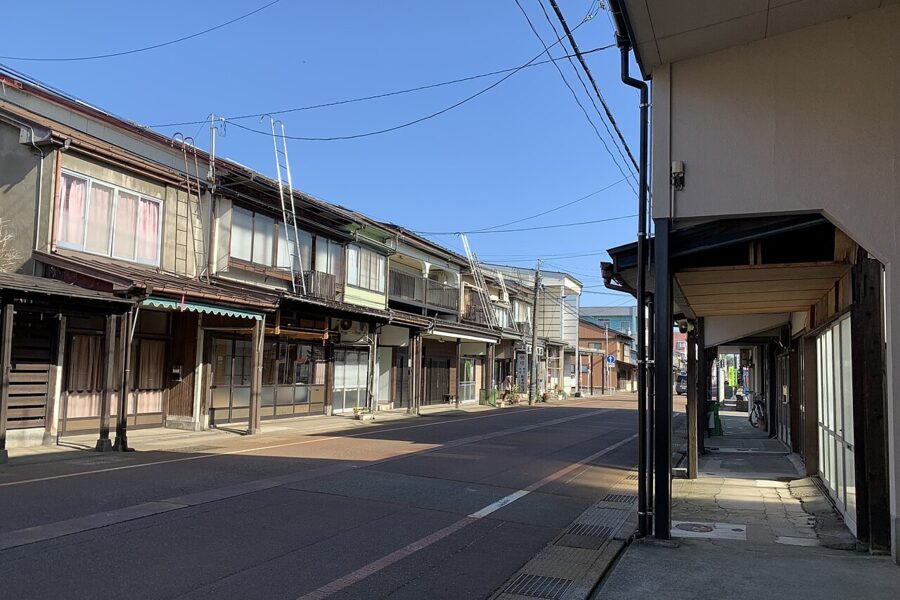
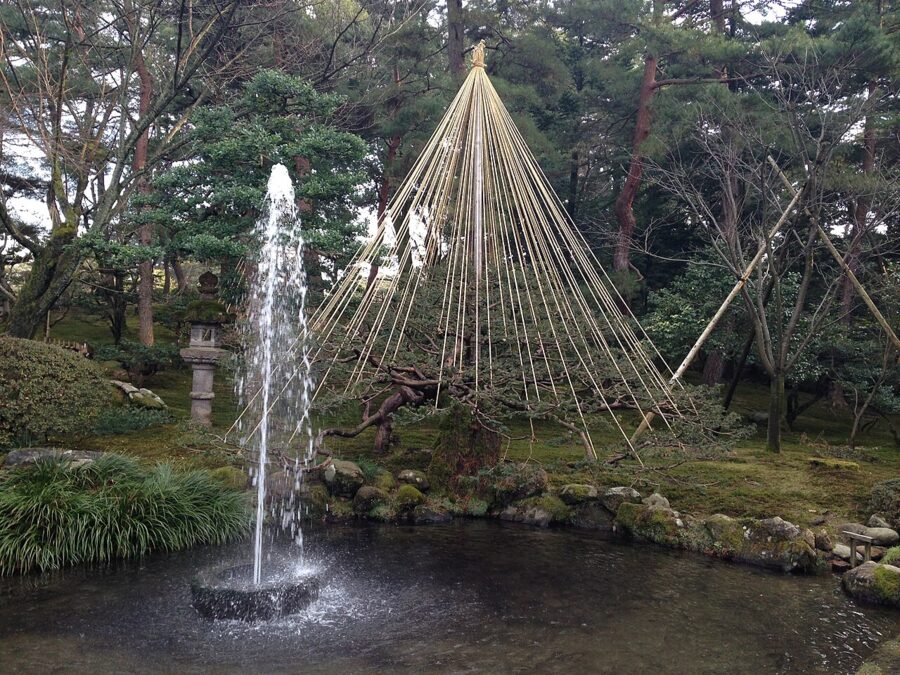
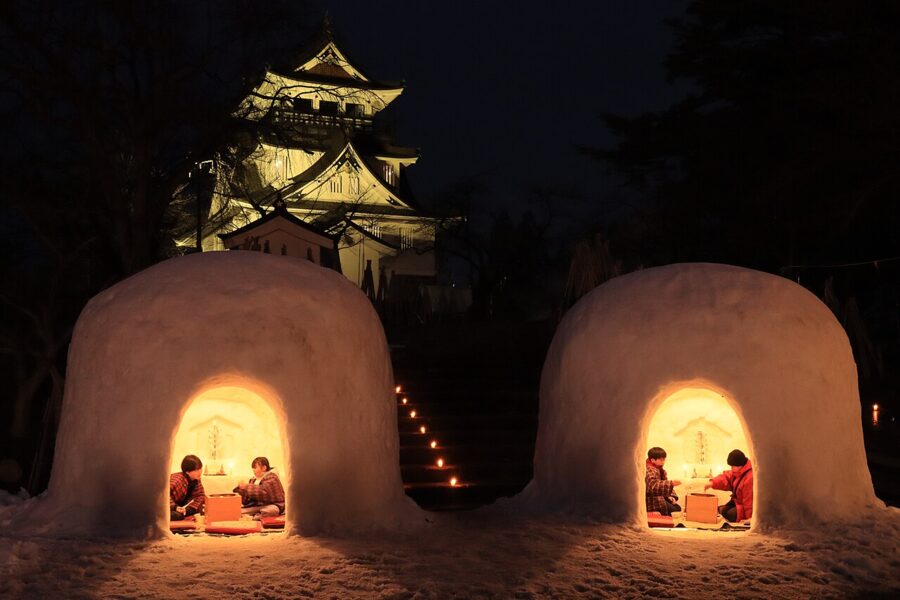
Snow country built its towns around the problem. In Takada, in Joetsu, shop fronts carry gangi (雁木), covered wooden walkways that keep a path open under the snow. Kanazawa’s gardeners rig yukitsuri (雪吊り), cones of rope that hold pine branches up under wet snow, at Kenroku-en from early November. In Yokote, in Akita, people build kamakura (かまくら), snow huts with a small altar to the water god inside.
The dry side of the mountains
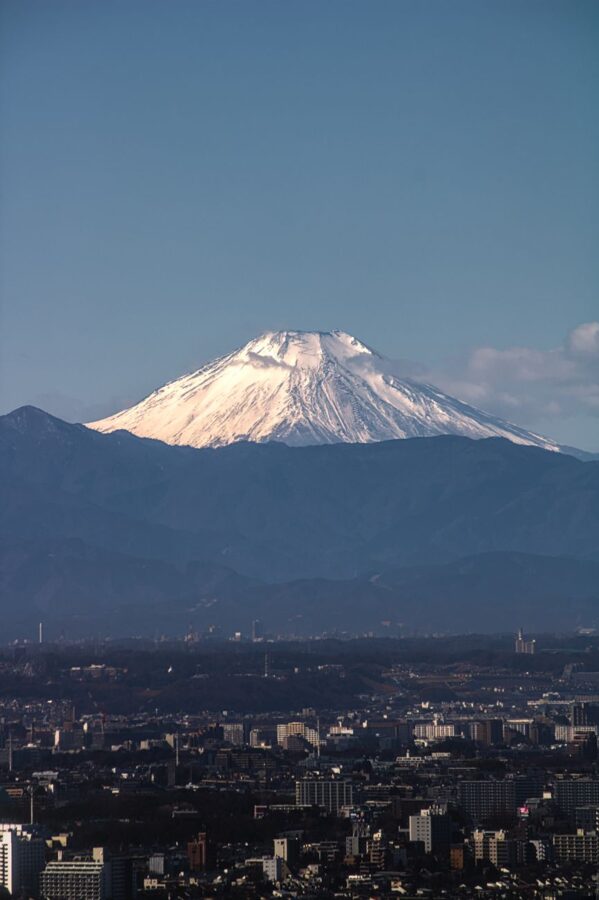
Emptied of its snow, the monsoon falls down the far side of the mountains as a cold, dry gale, karakkaze (空っ風), “empty wind”, which Gunma is famous for. Tokyo gets the cloudless winter that makes January its sunniest month.
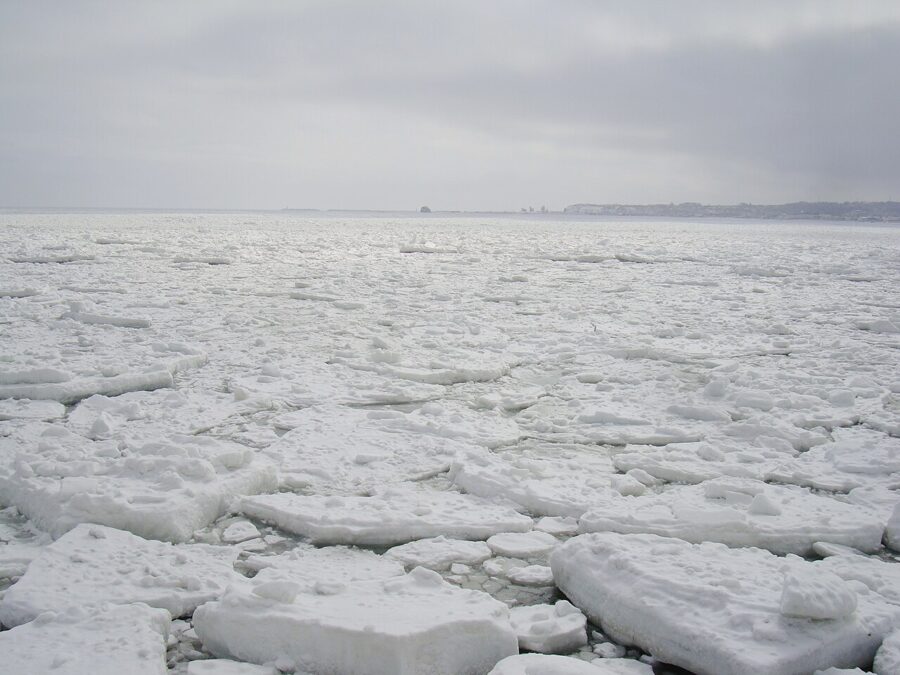
At the northern edge, the cold makes its own coastline. Ice from the Sea of Okhotsk drifts south and fills the bays of Hokkaido’s north-east coast in late winter: ryūhyō (流氷), drift ice.
The first wind of spring and the cherry front
Spring arrives by wind before it arrives by flower. Haru ichiban (春一番), “spring number one”, is the first warm, strong southerly of the year, and the JMA counts it only between risshun (立春), the start of spring, and shunbun (春分), the equinox. In 2026 those fell on 4 February and 20 March.
The term began as a fishermen’s warning. The Britannica Japan entry on haru ichiban tells of 53 fishermen from Gōnoura, on Iki, drowned in a spring gale in 1859, after which the first southerly of spring took the name there. Newspapers picked it up from the late 1950s.
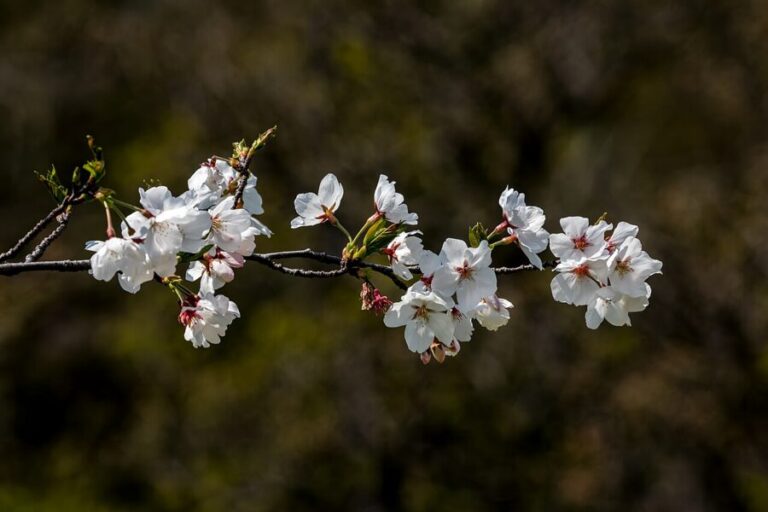
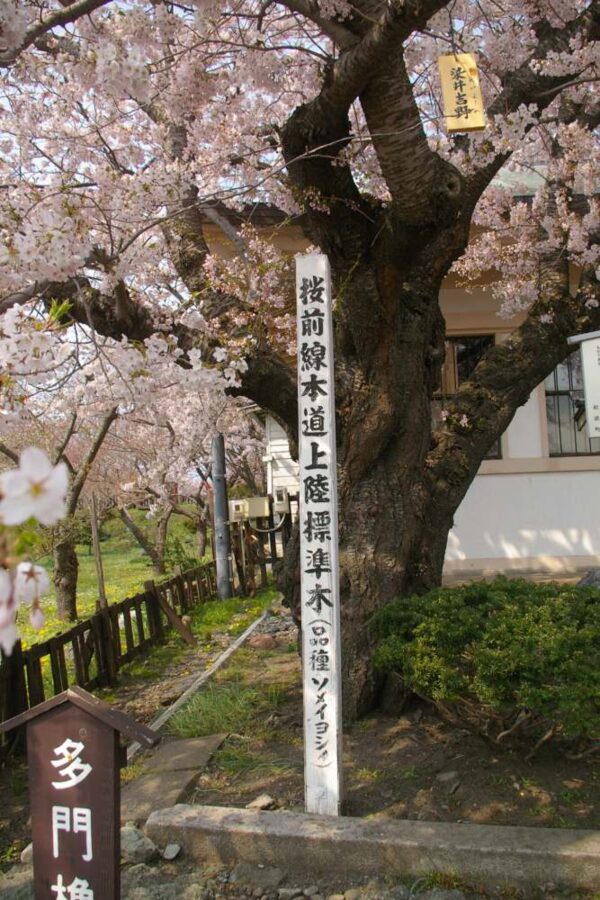
Then the sakura zensen (桜前線), the cherry-blossom front, moves up the map. The JMA watches a specimen tree, hyōhonboku (標本木), in each city and declares kaika (開花), opening, when five or six blossoms are out. In a normal year, its records show, Fukuoka opens on 22 March, Tokyo on 24 March, Sendai on 8 April and Sapporo on 1 May.
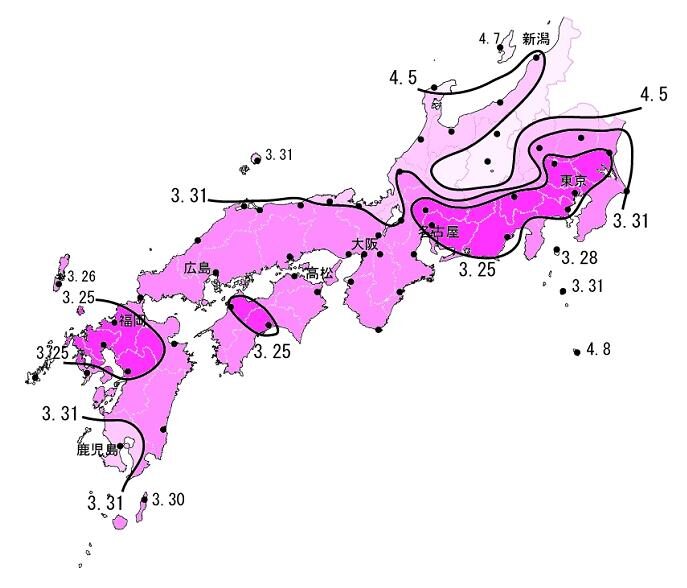
The far ends watch different trees. Naha’s deep-pink hikan-zakura (緋寒桜) normally opens on 16 January, and Kushiro’s Ezo mountain cherry on 16 May: four months for one front to cross one country. In 2026 it ran early, reaching Tokyo on 19 March and Sapporo on 18 April.
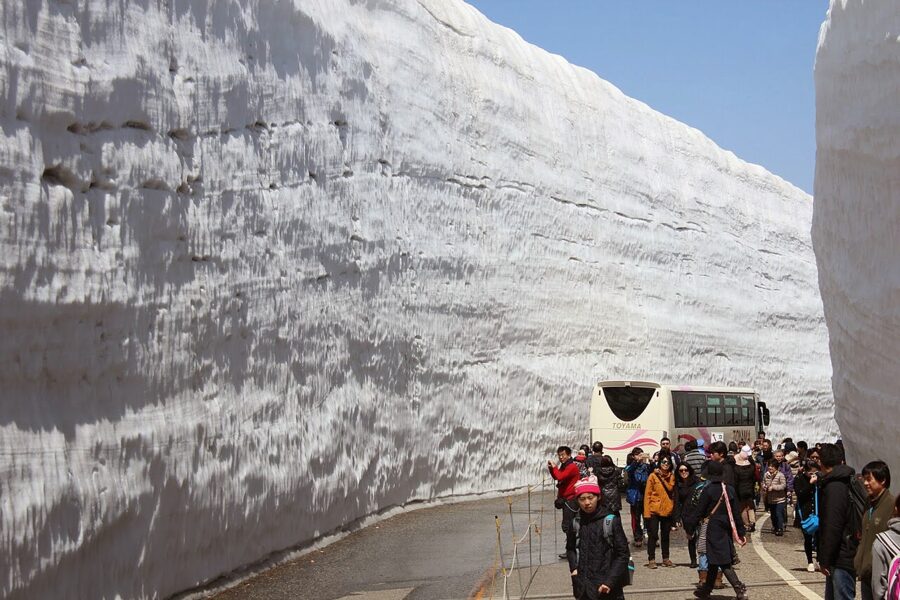
High in the Northern Alps the winter’s snow outlasts the blossom. On the Tateyama Kurobe Alpine Route in Toyama, the road is cut each spring through the drifts, and its walls, Yuki-no-Otani, “the valley of snow”, tower over the buses.
Tsuyu, the plum rain
Between spring and summer comes a season English has no word for. Tsuyu (梅雨) is written “plum rain”, and the dictionaries agree on the main reason: it falls as the plums ripen. The Daijisen and the Nihon Kokugo Daijiten add a second account, that it is the season when things go mouldy, and Nipponica notes it was once also written 黴雨, “mould rain”.
The reading tsuyu is harder to pin down. Mypedia gives two accounts, from 露, dew, or from tsuiyu, to spoil, and the big dictionaries decline to choose. Forecasters read the characters as baiu, and the front is the baiu zensen (梅雨前線).
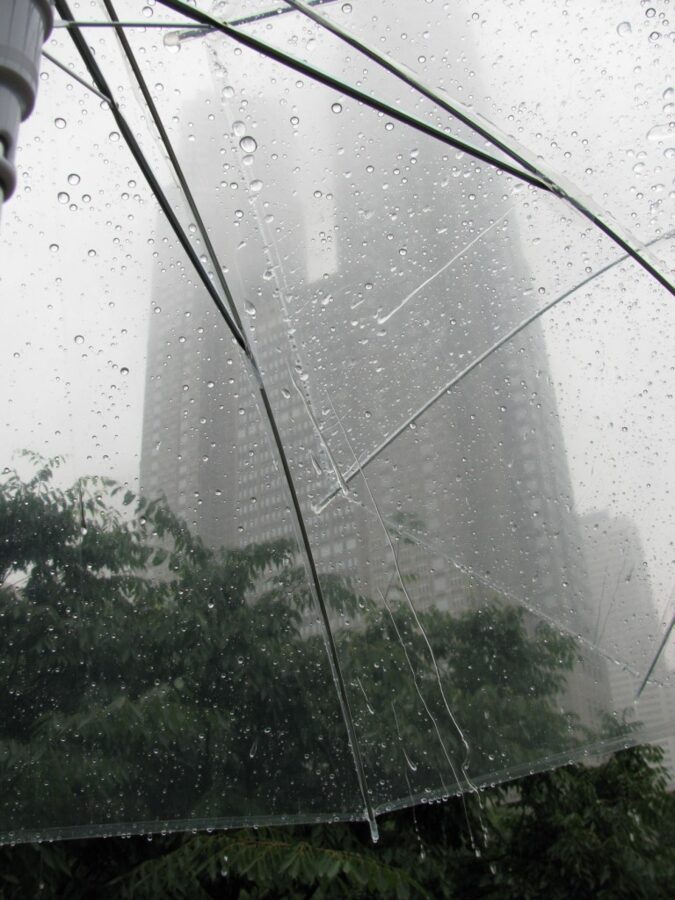
The front is a stalemate. Cool, damp air from the Okhotsk high meets warm, wet air from the Pacific high, and the boundary stalls across southern Japan for weeks. As the Pacific high strengthens it pushes the front north, so tsuyu starts and ends in the south first.
The JMA declares the start, tsuyu-iri (梅雨入り), and end, tsuyu-ake (梅雨明け), for 12 regions, first provisionally and then, in September, as a confirmed date. Hokkaido is not among them; its wet Junes are called Ezo tsuyu (蝦夷梅雨), but no rainy season is declared there.
| Region | Normal start | Normal end | 2026 (confirmed) |
|---|---|---|---|
| Okinawa | 10 May | 21 June | 4 May to 29 June |
| Southern Kyushu | 30 May | 15 July | 20 May to 12 July |
| Kinki | 6 June | 19 July | 2 June to 9 July |
| Kanto-Koshin | 7 June | 19 July | 2 June to 19 July |
| Hokuriku | 11 June | 23 July | 20 June to 3 August |
| Northern Tohoku | 15 June | 28 July | 21 June to 3 August |
Normals are the 1991 to 2020 averages. The year before was the odd one: in 2025 the season ended in Kinki on 27 June and in Kanto-Koshin on 28 June, the earliest ends since records began in 1951.
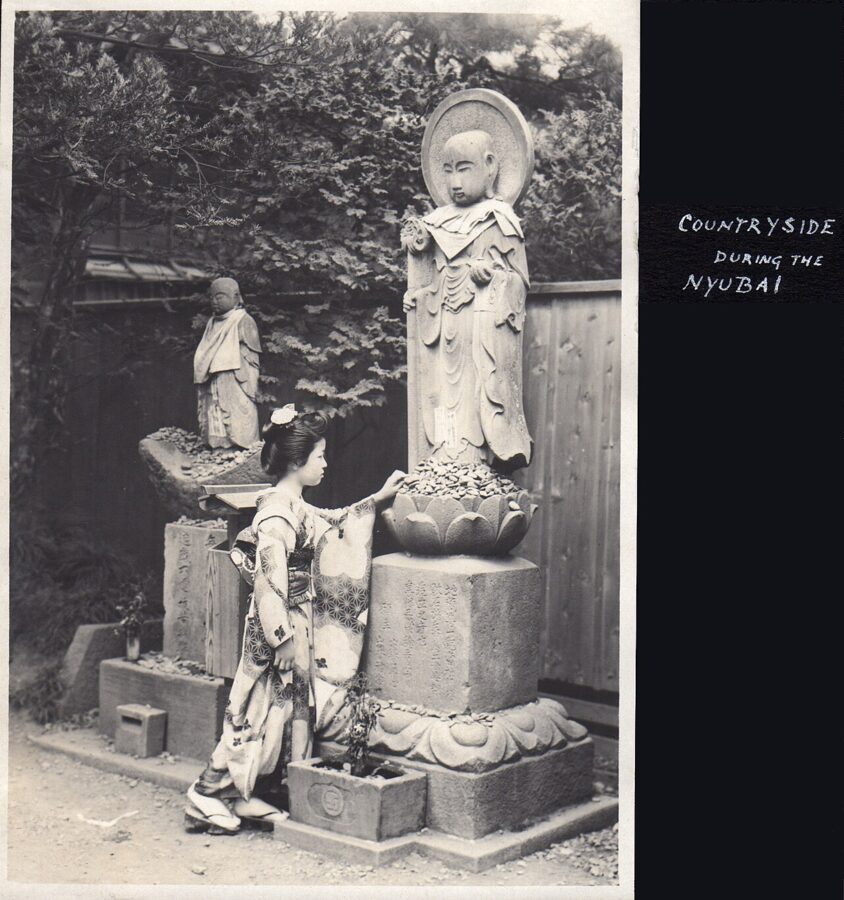
Two older words trip up modern readers. Under the lunar calendar the rains fell in the fifth month, so tsuyu was also samidare (五月雨), and Matsuo Bashō‘s haiku of 1689 is a rainy-season poem: 五月雨をあつめて早し最上川, “gathering the fifth-month rains, how fast it runs, the Mogami”. And satsuki-bare (五月晴れ), now a fine day in May, first meant a clear break in tsuyu.
How hot is a kokushobi?
When tsuyu ends, the Pacific high settles in and the heat is counted in named steps, set out in the JMA’s temperature terms. A natsubi (夏日), summer day, reaches 25°C; a manatsubi (真夏日), “true summer day”, 30°C; a mōshobi (猛暑日), “fierce-heat day”, 35°C, a term added in 2007.
In April 2026 the list grew again. After three summers of record heat, the JMA polled the public on a name for a day of 40°C or more and chose kokushobi (酷暑日), “cruel-heat day”, as its announcement of 17 April 2026 explains. The Japan Weather Association had used the word since 2022, and the first official kokushobi came in July, in Gifu.
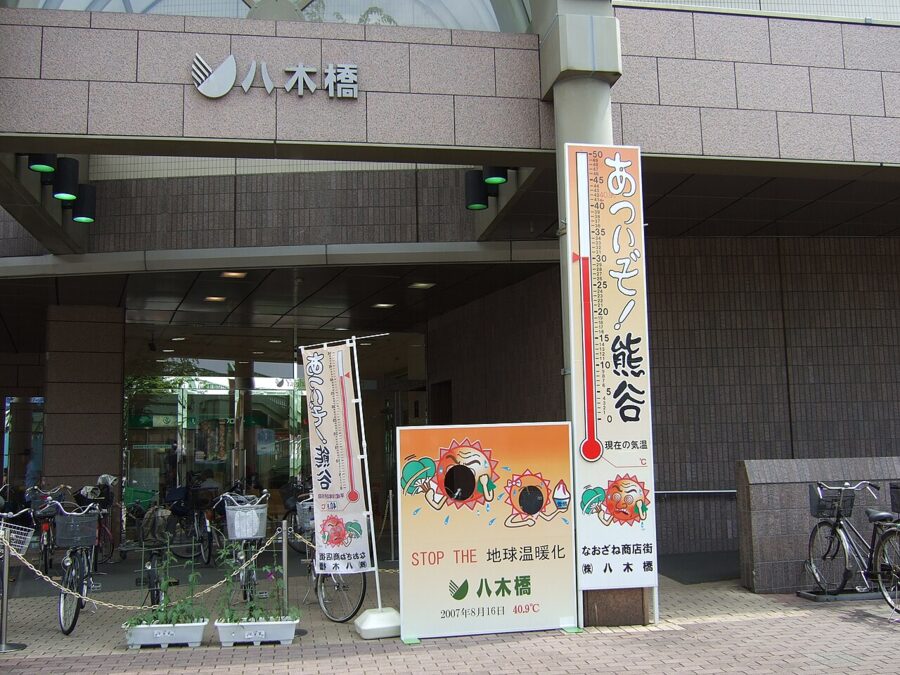
The national record table is now almost all recent: 41.8°C at Isesaki in Gunma on 5 August 2025, then 41.4°C at Shizuoka and at Hatoyama in Saitama the same week. The night has its own word, nettaiya (熱帯夜), “tropical night”, one that never drops below 25°C, which the JMA uses in forecasts but does not keep as a statistic.
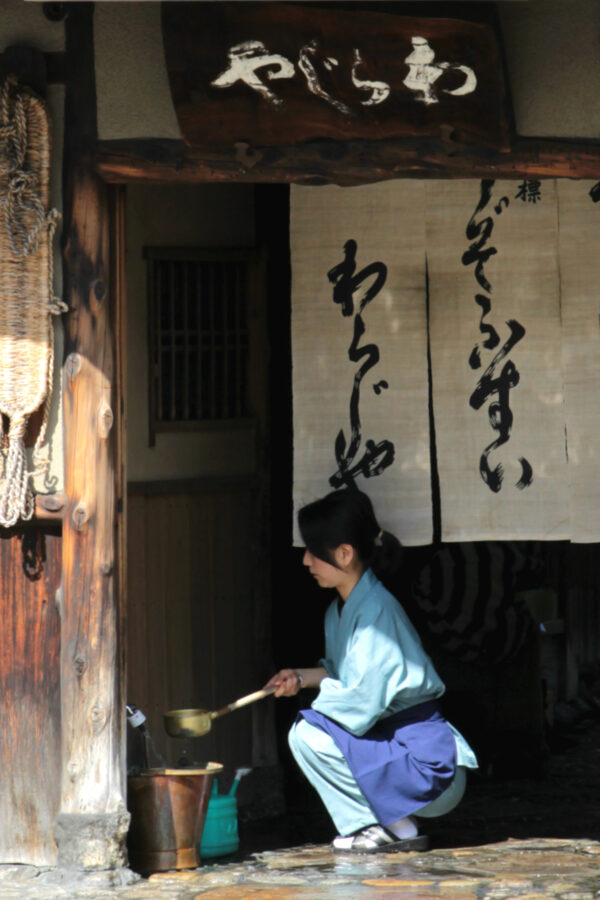
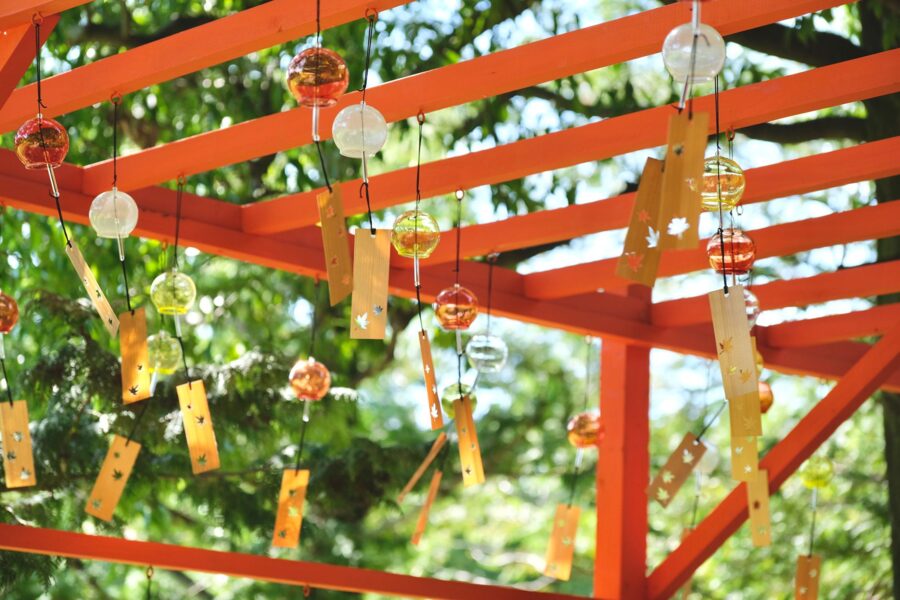
Older answers work on the senses: the glass fūrin (風鈴), wind bell, whose sound makes a breeze felt, and cold noodles and shaved ice from the summer side of Japanese food. Tohoku’s Pacific coast has the opposite problem in yamase (やませ), a cold, damp easterly off the sea that can chill the rice paddies for weeks.
Typhoons by number
Edo-period writers called great storms 颶風, and early Meiji texts wrote タイフーン or 大風. The meteorologist Okada Takematsu defined 颱風 in 1907, and in 1946 the character 颱 left the official kanji list and became the simpler 台: taifū (台風). The dictionaries leave its origin open, between an echo of “typhoon” and Arabic tūfān and a word for storms that hit Taiwan. The older Japanese word is lovelier: nowaki (野分), “the wind that parts the fields”, which names a chapter of The Tale of Genji.
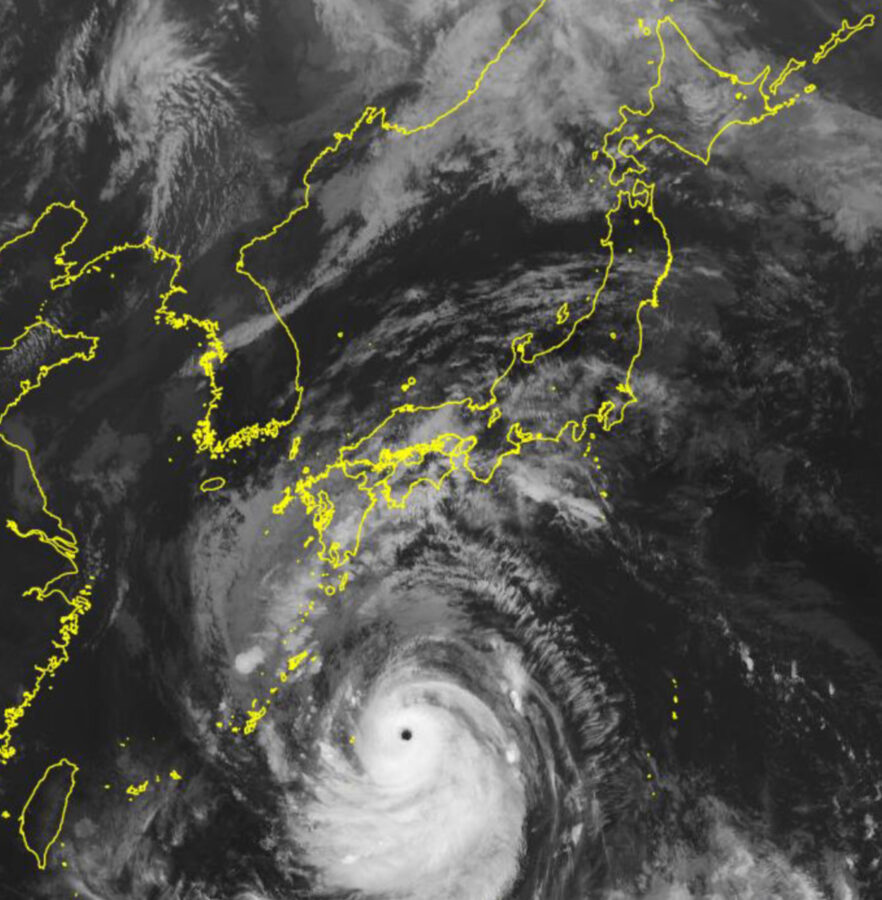
A typhoon is a tropical cyclone in the north-western Pacific with winds of at least 17.2 m/s. The JMA numbers them in order of formation from 1 January. Since 2000 each also takes the next of 140 names from the Typhoon Committee, but Japanese broadcasters stick to numbers.
Japan’s own names on the list are constellations, chosen because a star sign offends nobody: Koinu, the little dog; Kujira, the whale; Koto, the zither, for Lyra; Yamaneko, the lynx. A truly destructive storm can get a Japanese name from the JMA itself, as Hagibis did: the East Japan Typhoon of Reiwa 1 (2019).
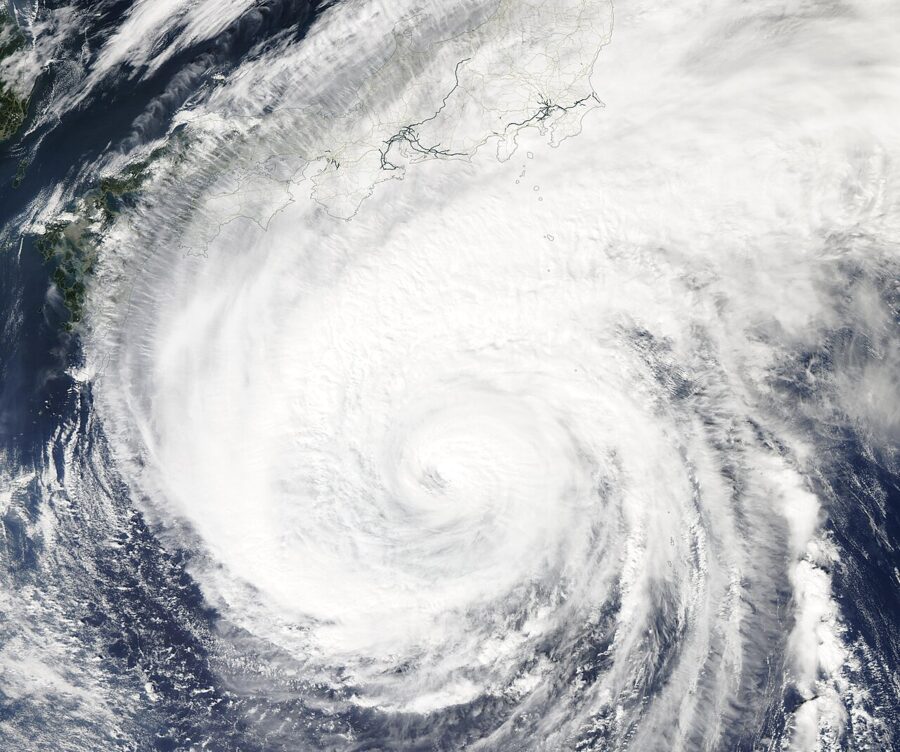
The 1991 to 2020 averages give 25.1 typhoons a year, 11.7 that come within 300 km of a Japanese weather station and 3.0 that make jōriku (上陸), landfall. Landfall means the centre crossing the coast of Hokkaido, Honshu, Shikoku or Kyushu; a storm straight over Okinawa only “passes”.
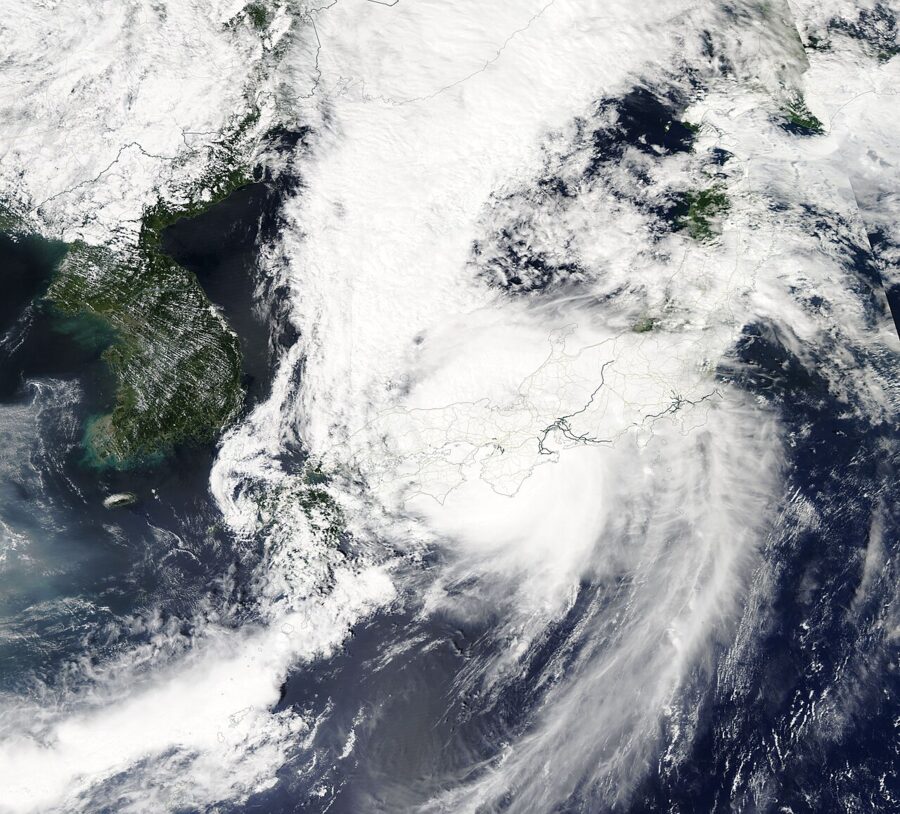
August and September are the peak, and the record year was 2004, with 10 landfalls. For 2026 the JMA’s provisional count, as of mid-November, is three, two of them in June. Farmers kept their own date for the danger: nihyaku tōka (二百十日), the 210th day counted from risshun, which fell on 1 September in 2026.
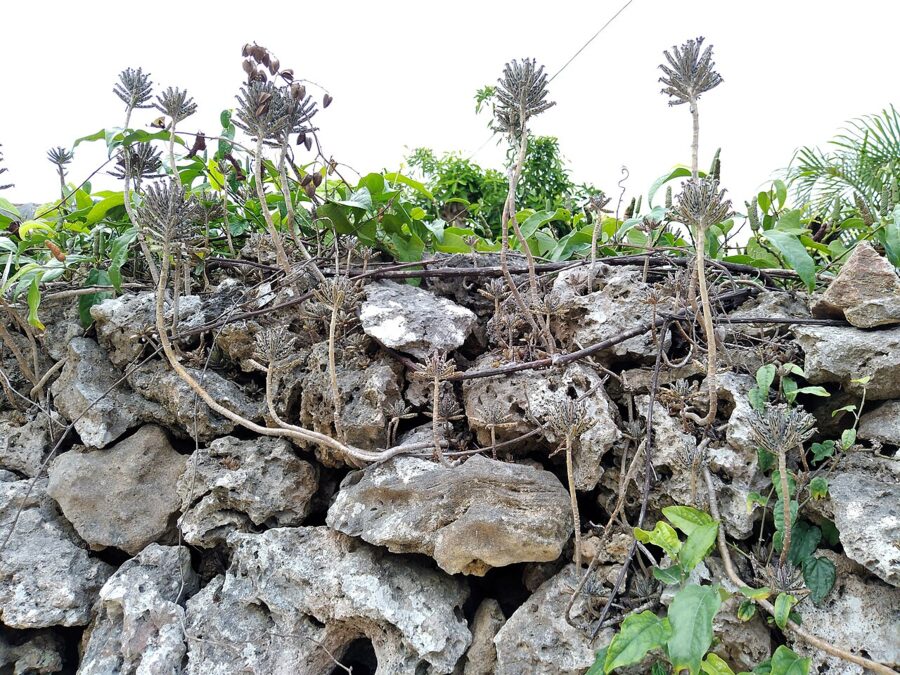
In the south, houses answer typhoons in stone. Yaeyama villages wall each plot with coral limestone and mortar their heavy red roof tiles down.
The black current and the parent current
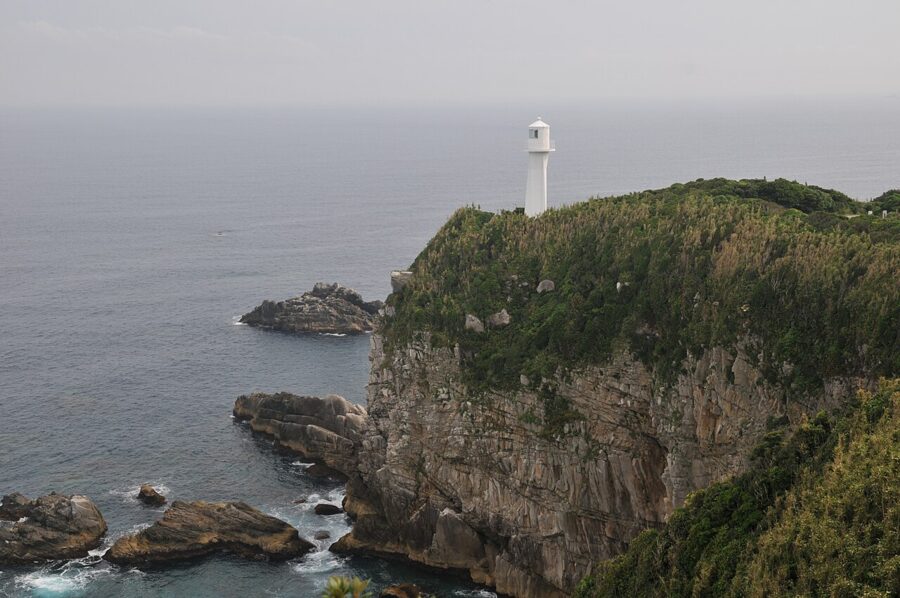
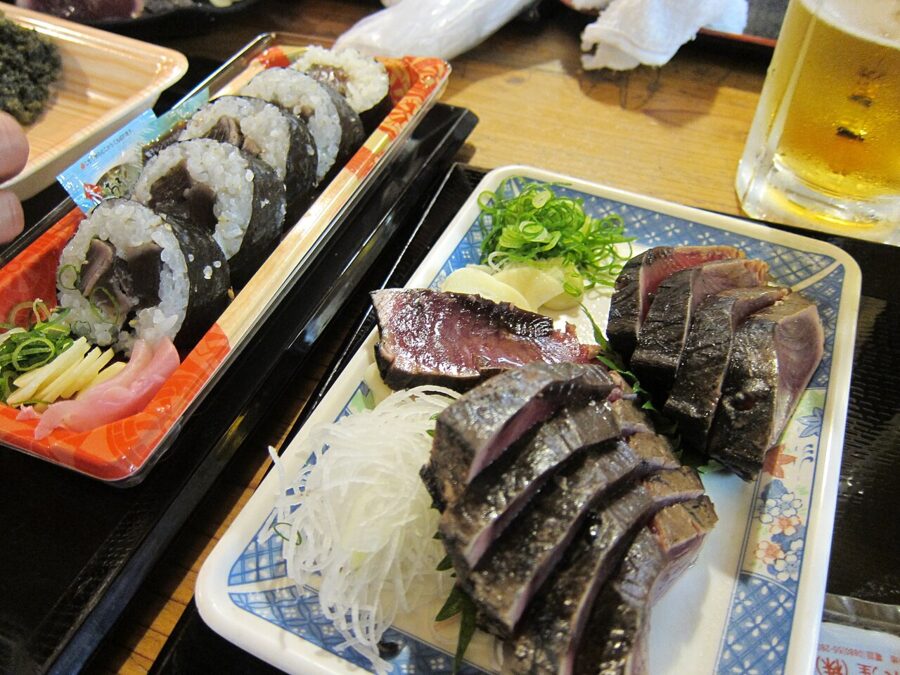
The Kuroshio (黒潮), “black tide”, flows up from east of the Philippines and along the Pacific coast of Kyushu, Shikoku and Honshu before turning out to sea off Kanto. The Heibonsha encyclopedia, quoted on Kotobank, explains the name by colour: offshore the clear, salty water looks indigo-black beside the paler coastal sea. It runs at three to five knots in its core, near 30°C at the surface in summer, and it carries the katsuo, skipjack, north each spring.
Sometimes the current swings far south off the Kii Peninsula in the daidakō (大蛇行), the “great meander”. The last one began in August 2017 and, the JMA announced on 29 August 2025, ended that April after seven years and nine months, the longest since 1965.
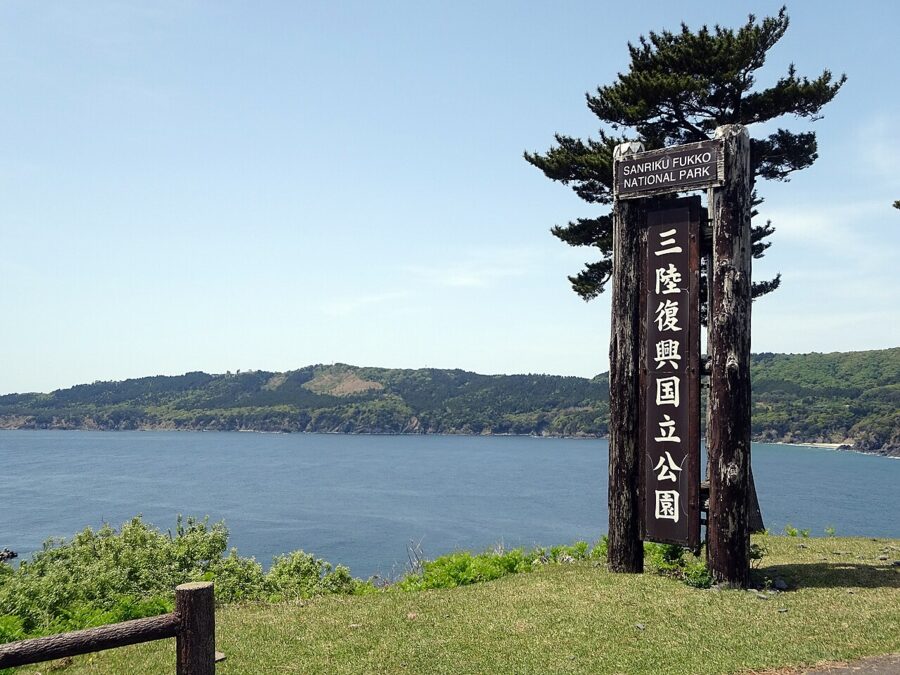
From the north comes the Oyashio (親潮), “parent tide”. The dictionaries give one reason for the name: its cold water, an order of magnitude richer in nutrients than the Kuroshio, raises fish and seaweed as a parent raises children. It runs down past Hokkaido to Sanriku with saury, squid, salmon and kelp, and when it stays strong into summer it feeds the yamase.
Naming the year: 24 terms and 72 seasons
The calendar behind the word kikō splits the sun’s year into 24 sekki (節気), solar terms of about fifteen days, and each term into three kō (候) of about five days. The scheme is Chinese and follows the sun, so its dates stay put on the modern calendar. Here are the 24 for 2026, from the National Astronomical Observatory of Japan.
| Term | Reading | Meaning | 2026 |
|---|---|---|---|
| 小寒 | shōkan | lesser cold | 5 Jan |
| 大寒 | daikan | greater cold | 20 Jan |
| 立春 | risshun | spring begins | 4 Feb |
| 雨水 | usui | rain water | 19 Feb |
| 啓蟄 | keichitsu | insects wake | 5 Mar |
| 春分 | shunbun | spring equinox | 20 Mar |
| 清明 | seimei | clear and bright | 5 Apr |
| 穀雨 | kokuu | grain rain | 20 Apr |
| 立夏 | rikka | summer begins | 5 May |
| 小満 | shōman | lesser fullness | 21 May |
| 芒種 | bōshu | grain in ear | 6 Jun |
| 夏至 | geshi | summer solstice | 21 Jun |
| 小暑 | shōsho | lesser heat | 7 Jul |
| 大暑 | taisho | greater heat | 23 Jul |
| 立秋 | risshū | autumn begins | 7 Aug |
| 処暑 | shosho | heat abates | 23 Aug |
| 白露 | hakuro | white dew | 7 Sep |
| 秋分 | shūbun | autumn equinox | 23 Sep |
| 寒露 | kanro | cold dew | 8 Oct |
| 霜降 | sōkō | frost falls | 23 Oct |
| 立冬 | rittō | winter begins | 7 Nov |
| 小雪 | shōsetsu | lesser snow | 22 Nov |
| 大雪 | taisetsu | greater snow | 7 Dec |
| 冬至 | tōji | winter solstice | 22 Dec |
The terms were written for northern China, which is why “autumn begins” on 7 August in a Tokyo heatwave. The five-day seasons were easier to fix, and Japan rewrote them. Shibukawa Harumi, the astronomer behind the Jōkyō calendar of 1685, the first made in Japan, replaced the Chinese set with one suited to Japanese birds, plants and weather.
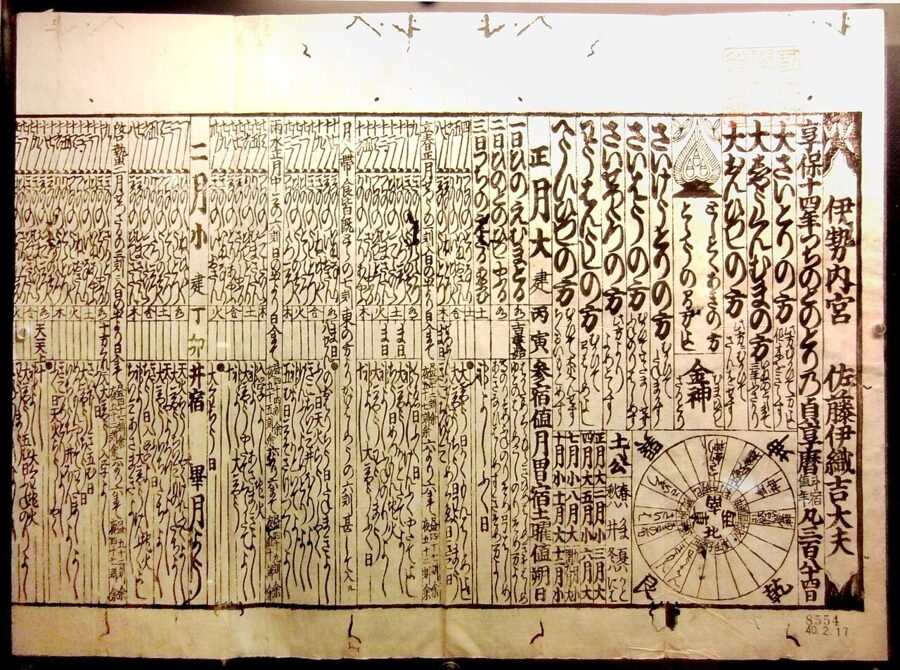
The changes read like a field notebook. China’s first season of the equinox, “the swallows arrive”, became 雀始巣, “sparrows begin to nest”, followed by 桜始開, “cherry blossoms begin to open”. And in mid-June, where China had “a songbird falls silent”, Japan wrote 梅子黄, ume no mi kibamu, “the plums turn yellow”: the plums of the plum rain.
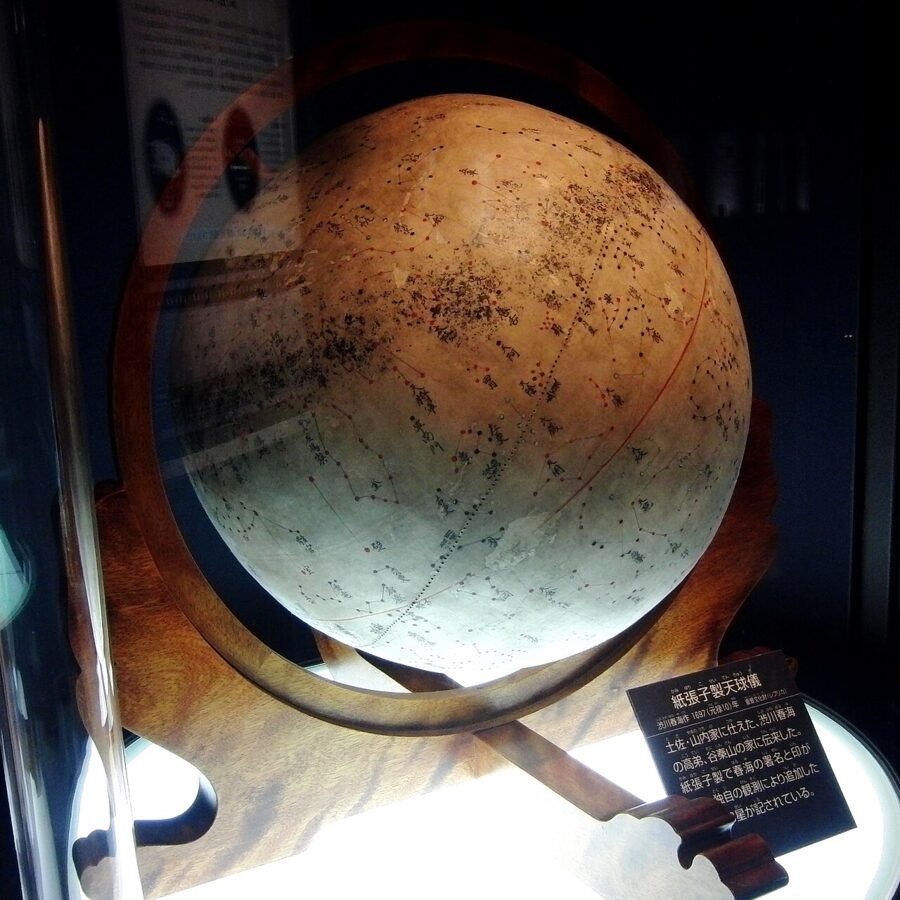
Nipponica records a further revision in 1755, and the Japanese set stayed in the government almanac until 1883. The 72 names printed on calendars today mostly follow that Meiji almanac.
Season words in haiku and on the street
A traditional haiku carries a kigo (季語), a season word, and the saijiki (歳時記) that lists them follows the sekki, not the thermometer. Spring runs from risshun, so haru ichiban is a spring word. Autumn starts on 7 August, the day summer greeting cards switch to zansho mimai, “lingering heat” cards.
A visitor hears a few season words in plain speech. Koharu-biyori (小春日和), “little spring weather”, is a mild, still day in late autumn, “little spring” being the old tenth month. Kogarashi (木枯らし), “tree-withering”, is the first hard northerly of late autumn, announced as “kogarashi number one” just as February’s wind is “spring number one”.
On about 27 November the hidden rainbows give way to 朔風払葉, kitakaze konoha o harau, “the north wind sweeps the leaves away”, which is the kogarashi by its older name. Across Japan’s islands, from Okhotsk ice to coral, no one of them is true everywhere at once.
Look at the sky on a clear late-November afternoon in Tokyo. The light is low and gold, the air is dry, and there is no rainbow anywhere. The almanac’s name for those five days is older than the Japanese calendar that kept it, and it is still right.