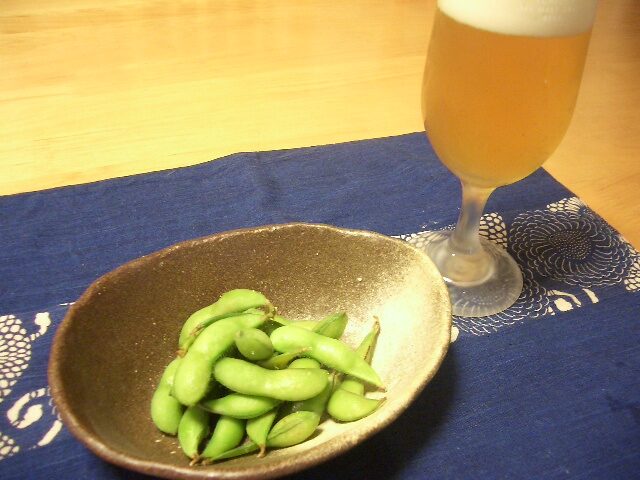
Order a beer at an izakaya on a hot evening and a bowl of green pods often reaches the table before the glass is half empty. The menu calls them 枝豆, and the two characters describe how the beans were once sold rather than what they are: eda, branch, and mame, bean. They are soybeans, the same plant that ends up as tofu, miso and soy sauce, picked while the pods are still green and the beans soft.
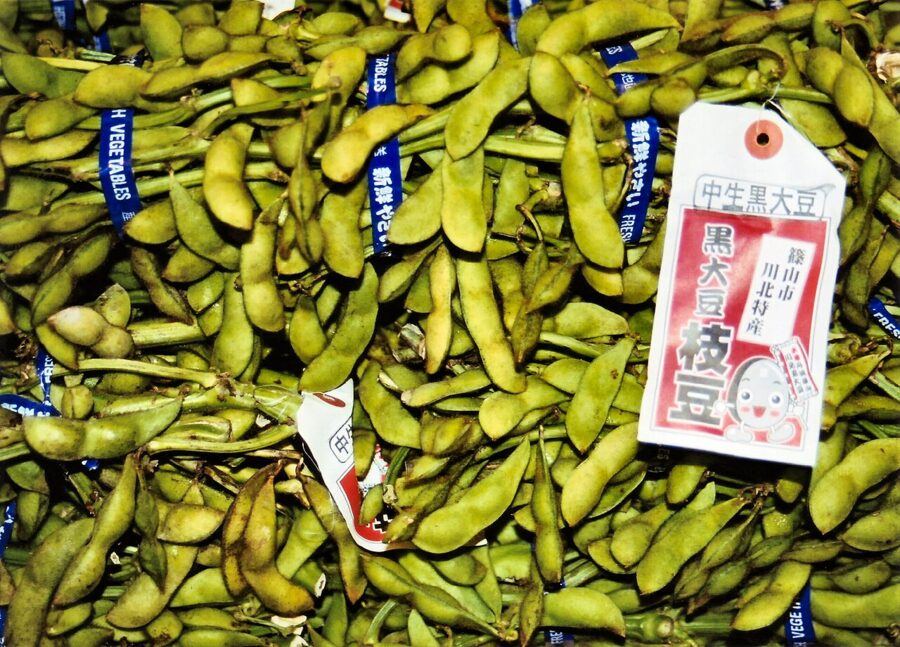
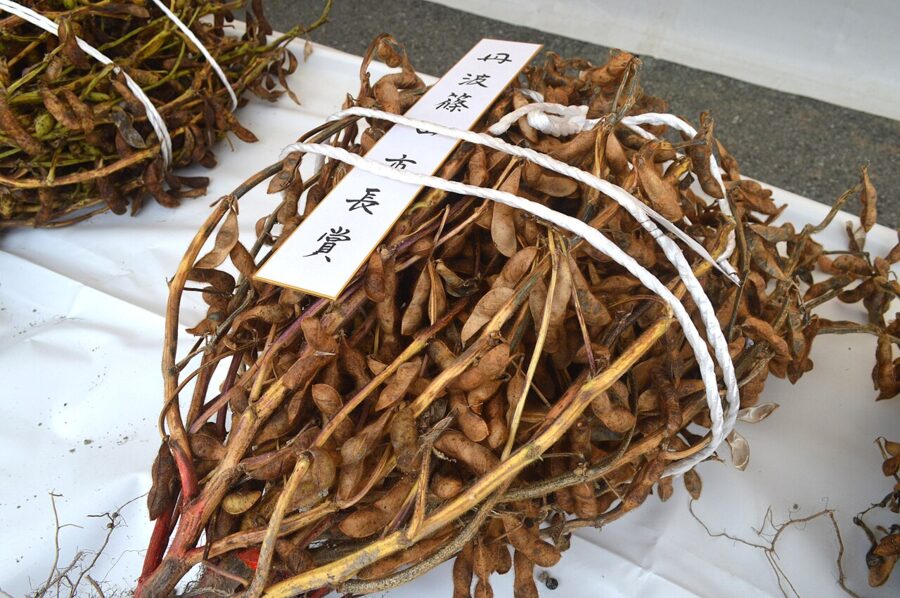
Edamame was sold on the stalk for centuries, and in a few places it still is. In Tamba-Sasayama each October, farm stands sell bundles of black-soybean plants, pods and leaves and all, and the city warns drivers of traffic jams. English kept only the sound of the word; in Japanese the branch is still in the name.
In this article
枝豆: A Branch and a Bean
枝 (eda) sets 木, tree, beside 支, a hand holding a twig, which also lends the sound shi. It has eight strokes and is taught in grade 5 of the kyōiku kanji. 豆 (mame) began as a drawing of a footed offering dish and was borrowed for “bean” because the words sounded alike in Chinese; seven strokes, grade 3.
In 枝豆 both take their native readings; put 大, big, before 豆 and read it the Chinese way, and you get daizu (大豆), the soybean. The oldest example the Nihon Kokugo Daijiten cites shows the two words meeting: a verse by Saitō Tokugen in the haikai handbook Kefukigusa (1638) writes 枝大豆, “branch soybeans”, and glosses it to be read edamame.
枝大豆は今宵月毛の馬草哉
Branch soybeans: tonight, fodder for the moon-pale horse
I read it as a moon-viewing joke: tsukige (月毛), “moon hair”, is a pale cream horse coat, so the beans laid out for the moon become fodder. The pun needs edamame to belong to the autumn moon already.
Heibonsha’s encyclopedia adds an older nickname, tanokuro-mame (田畦豆), paddy-ridge beans, because farmers grew them on the narrow earth banks between rice fields.
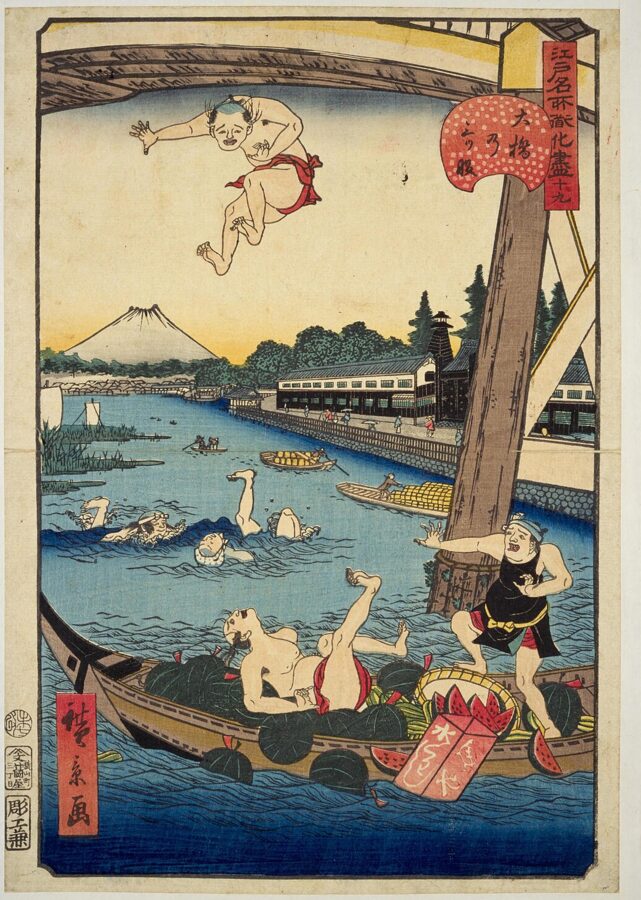
By the late 18th century the branch beans had a street trade in Edo. Ōta Nanpo, comic poet and shogunate official, wrote that it began in the Meiwa era (1764 to 1772), when labourers were filling in the Nakazu shoal at Mitsumata on the Sumida River and vendors came to sell them boiled edamame. After that, Edo summers had their edamame sellers. The era name fixes it to the decade of Edo’s first full-colour prints.
The Same Plant as Tofu, Miso and Soy Sauce
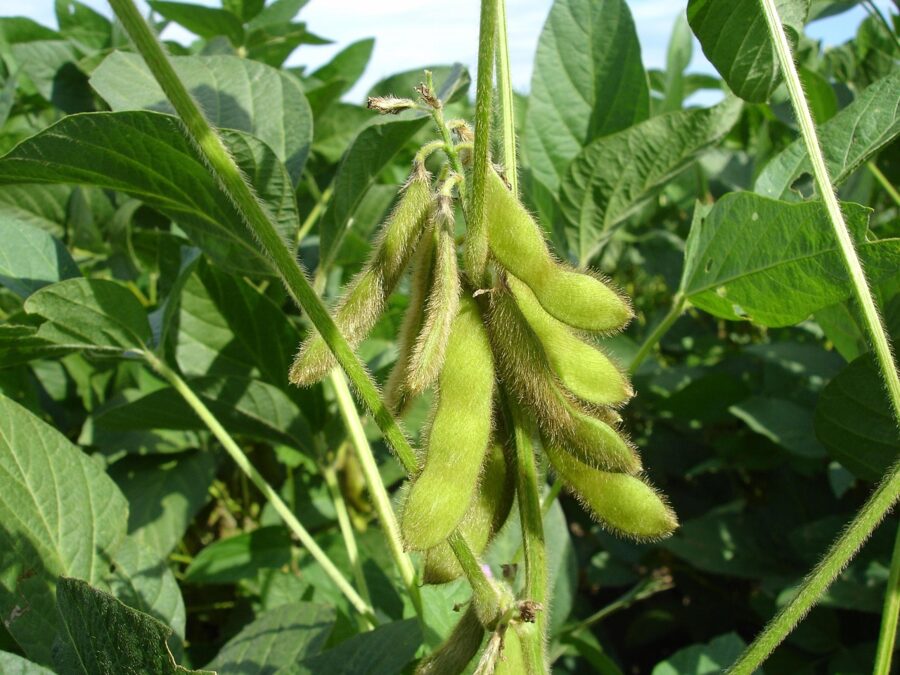
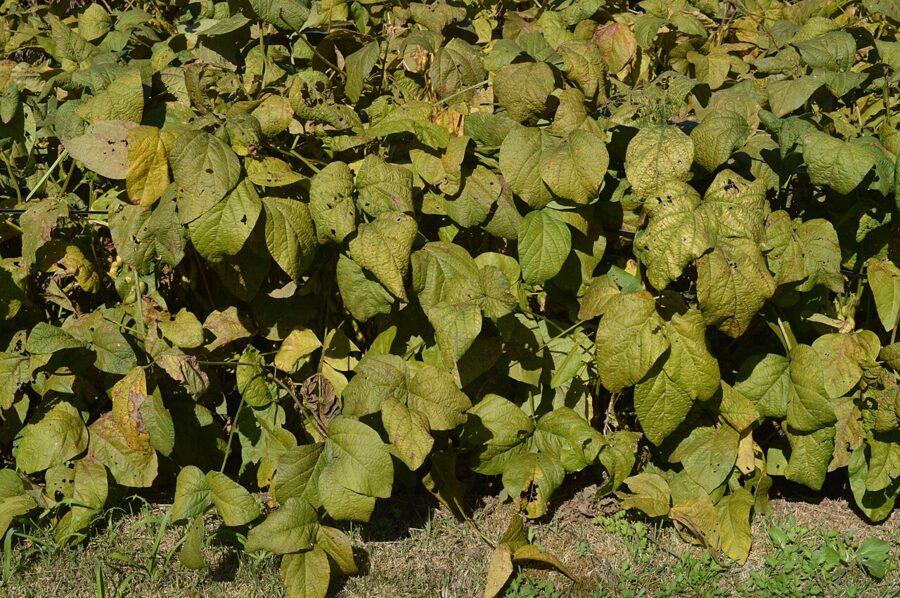
Edamame is not a separate species. It is Glycine max, the soybean, harvested while the pods are green; leave the plant standing and the pods yellow, dry and rattle, and the beans inside become the daizu that Japan turns into tofu (豆腐), miso (味噌), soy sauce, nattō (納豆) and much of the rest of Japanese food. Japan’s food composition tables file edamame under vegetables, not pulses: botanically a bean, in the kitchen a vegetable.
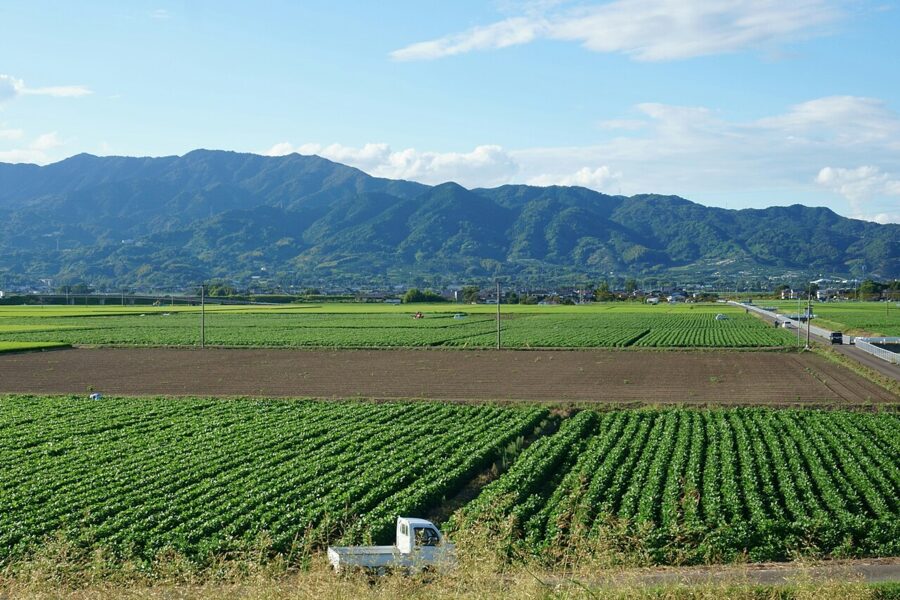
Varieties differ, though. Heibonsha notes that edamame varieties often differ from the soybeans grown for grain, and Shogakukan’s encyclopedia describes what growers want: early, short-stemmed “summer” soybeans and, for big-city markets, bright green pods with sparse white hairs and large beans. Regional heirlooms break those rules, and the most prized of them have brown hairs.
A Summer Snack Filed Under Autumn
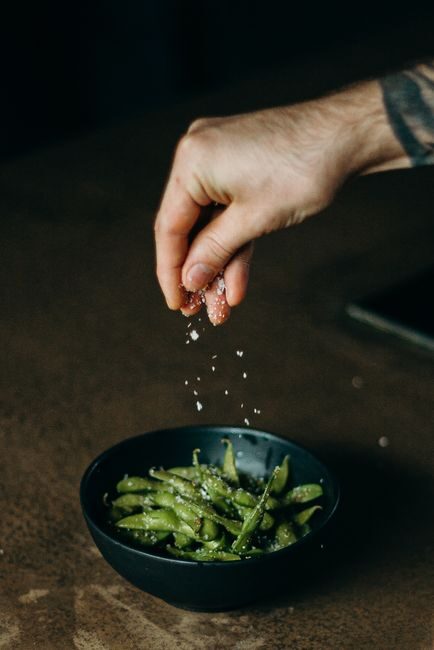
Edamame is eaten hardest in July and August, with beer, but in haiku it is an autumn word. The Daijisen dictionary marks it as a kigo (季語), season word, for autumn, and the Kigosai online saijiki files it under all three months of the season. The example the Daijisen quotes is by Saitō Sanki:
枝豆の真白き塩に愁眉ひらく
Pure white salt on the edamame: my knotted brow unknits
The reason is the old calendar. On the 13th night of the ninth lunar month people held a second moon-viewing, and the offering was fresh edamame. The night is still called mame-meigetsu (豆名月), the bean moon, and edamame earned a second name, tsukimi-mame (月見豆), moon-viewing beans. Shogakukan’s encyclopedia says plainly that this used to be their season.
Heibonsha’s encyclopedia records that in some places it was the one night you could take beans from a neighbour’s field without blame. In 2026 the bean moon, also called jūsan’ya (十三夜), fell on 23 October.

Greenhouse growing has since stretched the market season from about April to December, and frozen pods cover the rest of the year. The poets’ calendar of Japan’s seasons did not move with it.
Three Famous Beans
Most supermarket edamame is sold with no variety named. Three regional kinds have names every Japanese shopper knows.
| Name | Where | Season | What marks it |
|---|---|---|---|
| Dadachamame (だだちゃ豆) | Tsuruoka, Yamagata | Late July to mid-September | Brown fuzz on the pods; an Edo-period heirloom |
| Kurosaki chamame (くろさき茶豆) | Kurosaki, Nishi-ku, Niigata City | Early July to early September | First edamame with a Geographical Indication (2017) |
| Tanba black edamame (丹波篠山黒枝豆) | Tamba-Sasayama, Hyogo | About three weeks from early October | Large pods of the black Tanba-guro bean, sold on the stalk |
Dadachamame, Tsuruoka
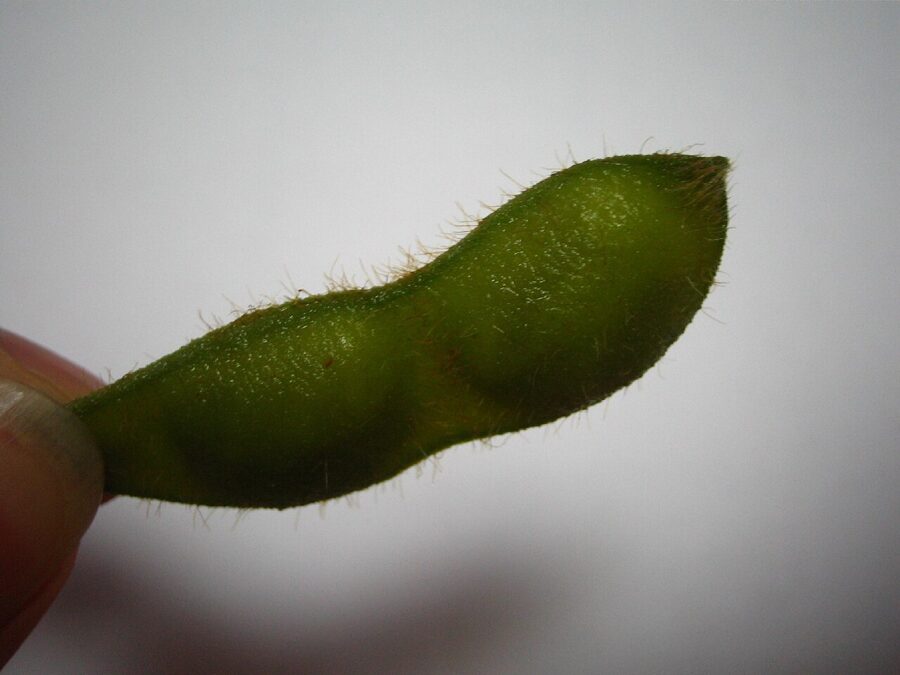
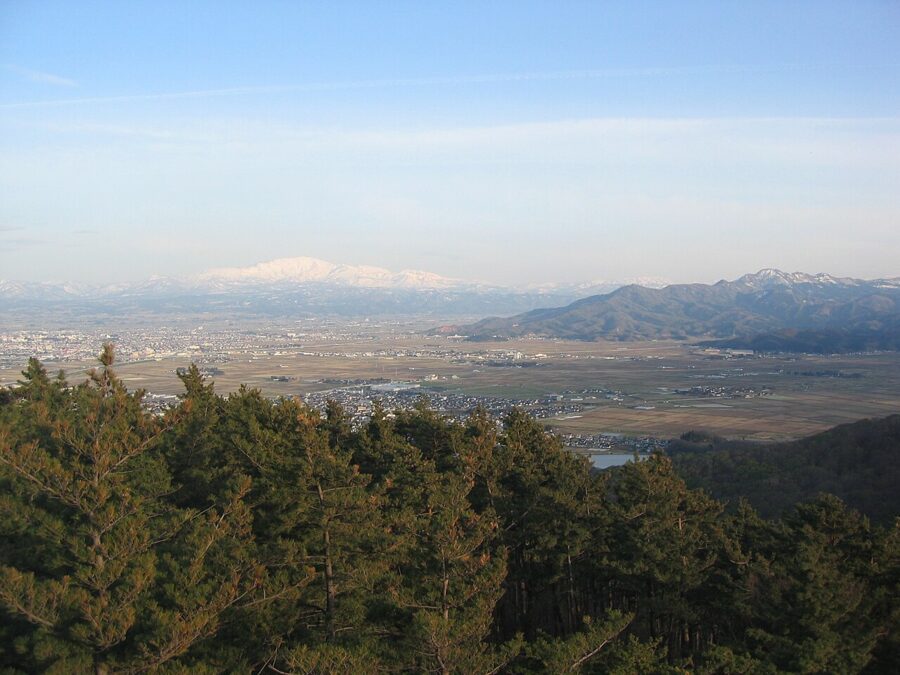
Dadachamame (だだちゃ豆) are the edamame of Tsuruoka, at the southern end of the Shonai Plain on the Sea of Japan side of Honshu. Dadacha is Shōnai dialect for father, and JA Tsuruoka, the farmers’ cooperative that ships them, describes them as an heirloom kept by local growers since the Edo period. The pods carry brown hairs, and the selling point is a deeper sweetness and a scent that fills the kitchen as they boil.
The name has a story I treat with care. Locally it is told that a lord of Shōnai, served the beans, asked which dadacha‘s beans they were, and the question stuck; the cooperative sells its crop as 殿様のだだちゃ豆, “the lord’s dadachamame”. It may be true. It is also exactly the kind of tale that grows around a good product.
The cooperative ships in four waves: the very early beans in late July, early beans in early to mid August, the main crop (honmame) in mid to late August and the late beans in early to mid September. Tsuruoka is also a UNESCO Creative City of Gastronomy.
Kurosaki Chamame, Niigata
Down the coast in Niigata City, kurosaki chamame (くろさき茶豆) descends from Tsuruoka seed. Niigata City’s account is that in the early Shōwa era a farmer’s daughter from Kodaikata, now in Nishi-ku, married into Tsuruoka and brought chamame seed home on a visit. The village adapted it, and when seed was bred and shared out from the mid-1960s, Kurosaki’s village head named it. Cha (茶) is tea, and by extension brown.
In April 2017 kurosaki chamame became the first edamame registered under Japan’s Geographical Indication scheme, which ties the name to the Kurosaki district. The city gives its shipping season as early July to early September. Niigata plants more land to edamame than any other prefecture: 1,390 hectares in 2025.
Tanba Black Edamame, Tamba-Sasayama
The third is a black soybean picked green. Tanba-guro (丹波黒), the very large black bean simmered sweet for New Year osechi, originated in what is now Tamba-Sasayama in Hyogo, and harvested partway to ripeness it becomes kuro-edamame (黒枝豆), black edamame. The city calls the beans large and sweeter than ordinary edamame, the tourism association adds a dense, floury bite, and the harvest lasts only two to three weeks.
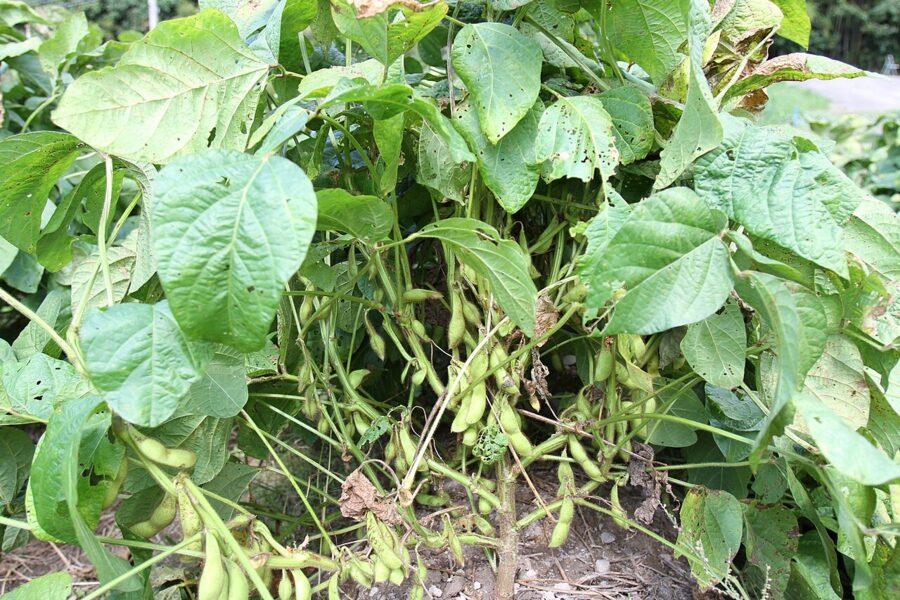
Sales open on a set day each October, the kaikin (解禁), and the city warns of traffic jams for the three weeks or so that follow. In 2026 the opening day was 8 October. If you want to eat edamame where the word still means what it says, go then: the stands sell the beans on the branch.
How Japan Eats Them
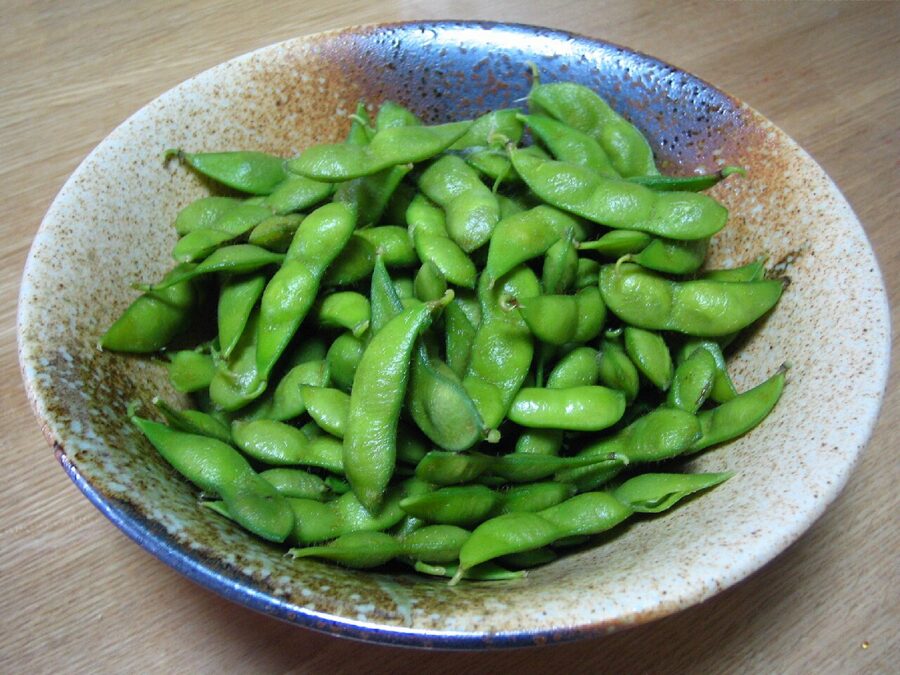
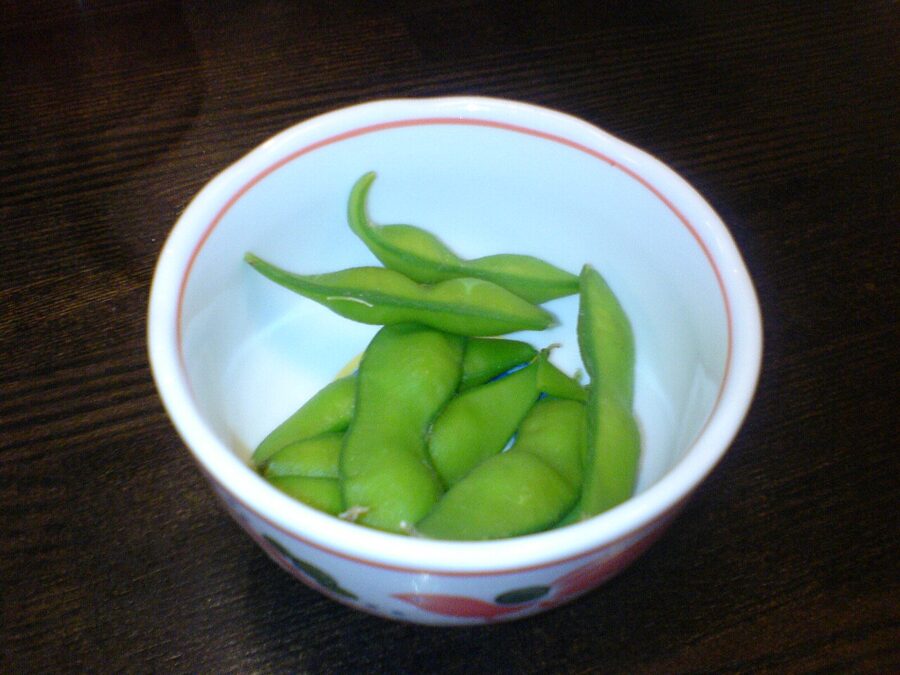
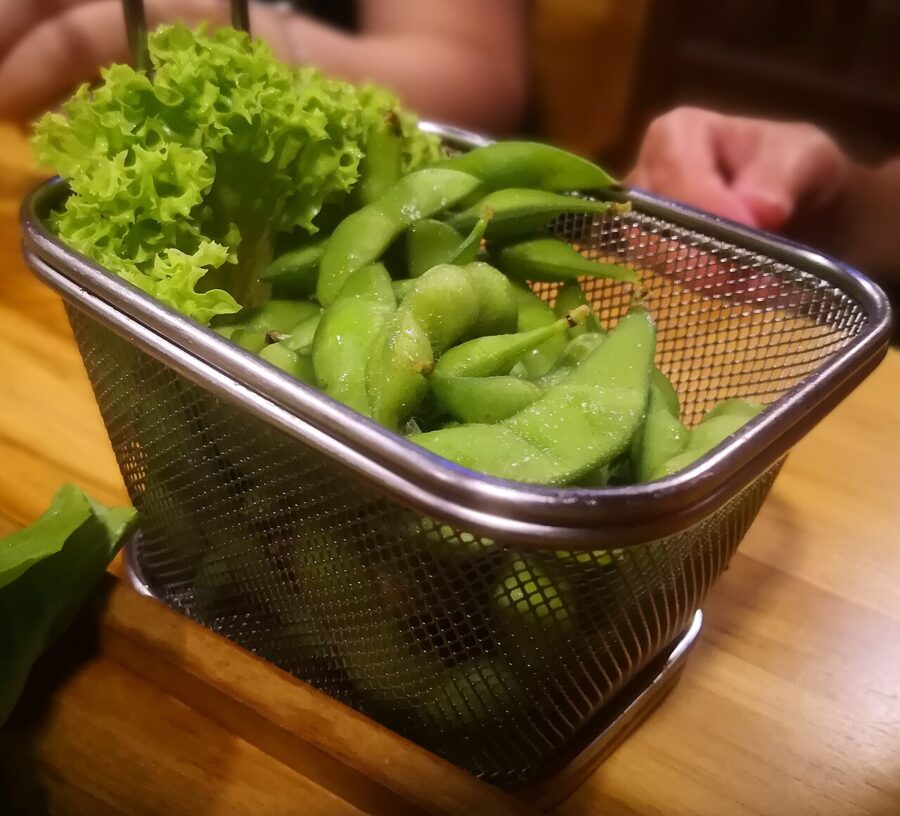
Mostly, plainly. Boiled, salted and eaten warm or cool, edamame is the default tsumami (つまみ), the thing you pick at with a drink. You hold a pod to your lips and squeeze, the beans pop into your mouth, and the empty pod goes into a second dish. The pods themselves are not eaten.
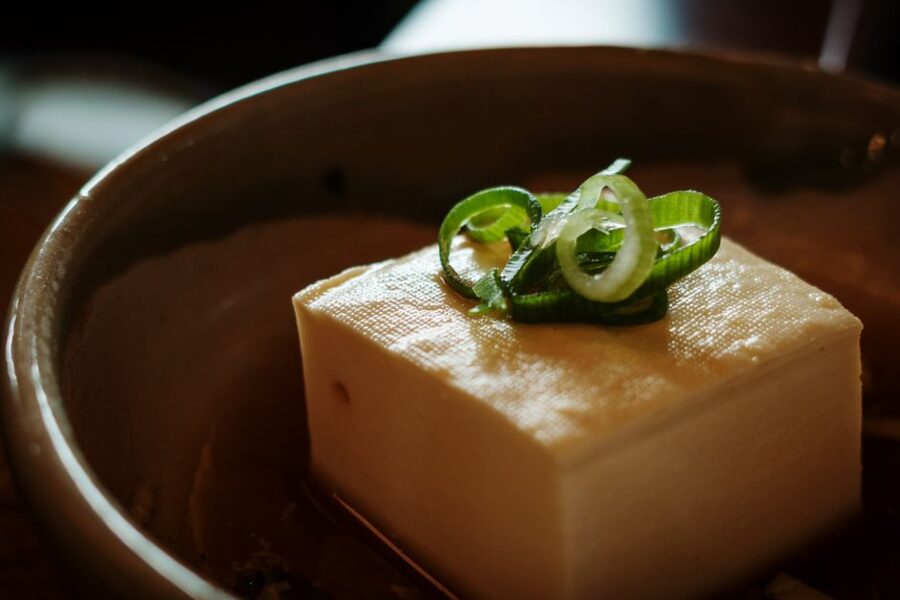
Shelled, the beans go into edamame gohan (枝豆ご飯), rice cooked or tossed with them and salt, into kakiage fritters, into dressed salads and into edamame-dōfu (枝豆豆腐), a green “tofu” made from the beans alone, which Heibonsha’s encyclopedia praises for its colour and flavour. Confectioners use them too, and the best known of those sweets comes from Sendai.
Zunda, Sendai’s Green Paste
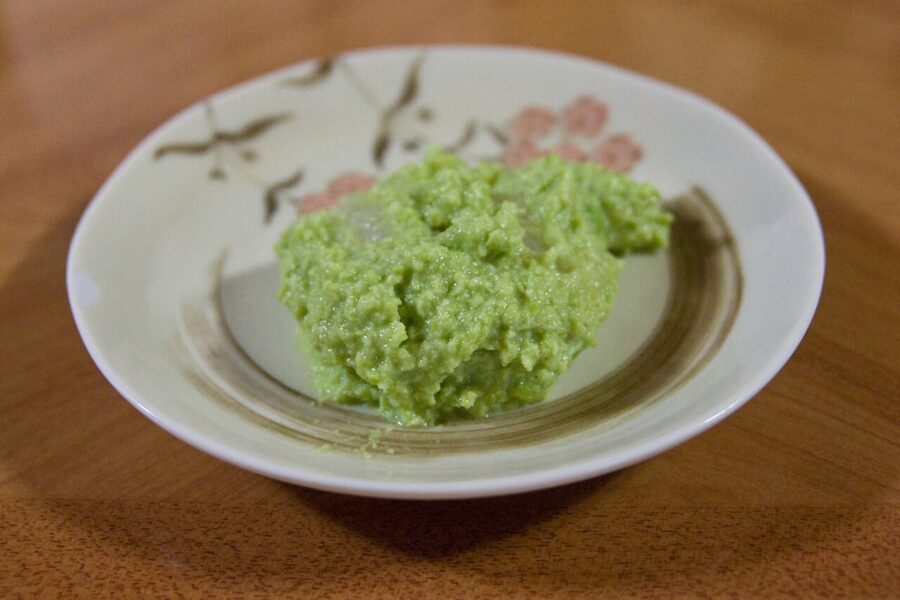
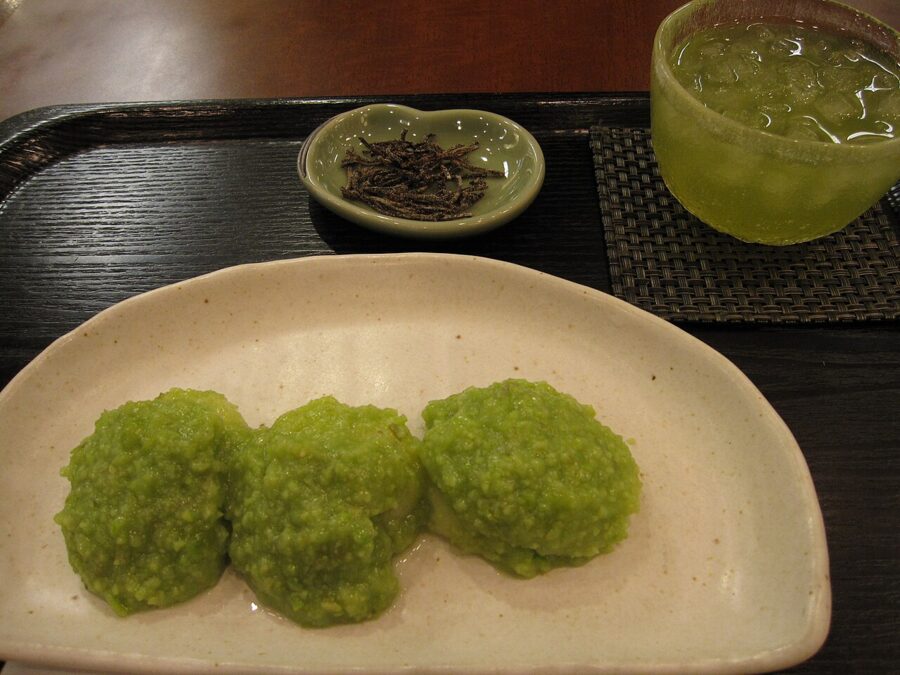
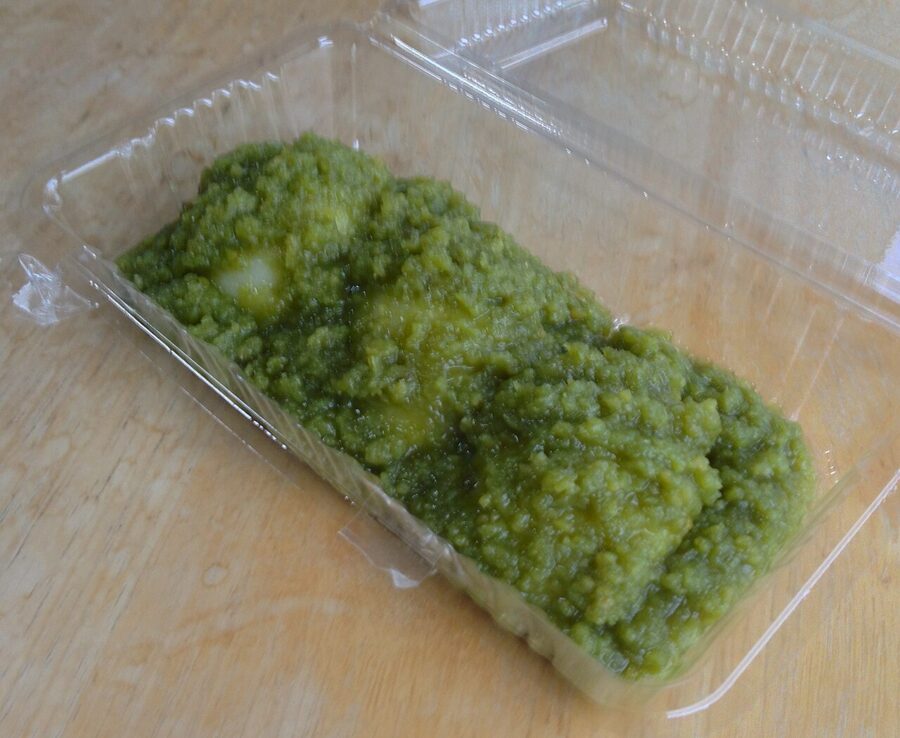
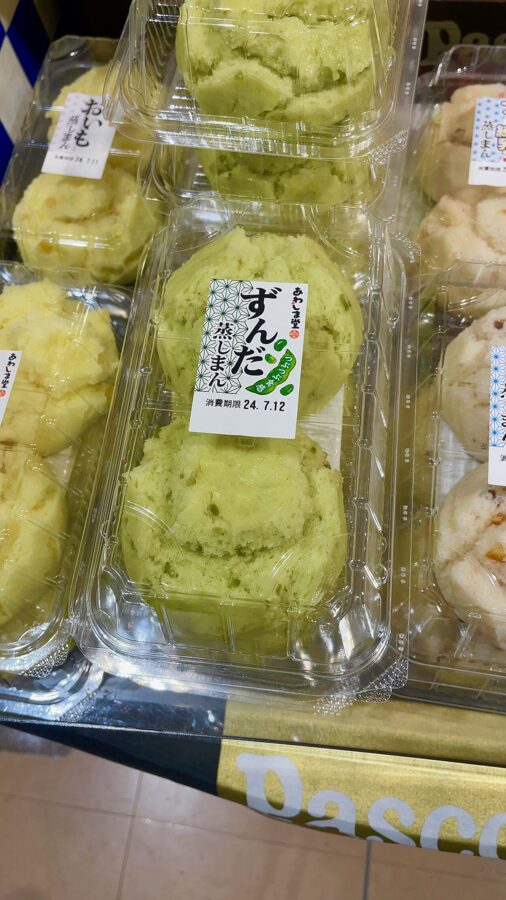
Boil edamame, pop the beans out of their pods and thin skins, crush them coarsely and season with sugar and a little salt, and you have zunda (ずんだ). Spread over soft rice cakes it becomes zunda mochi, which Miyagi and Yamagata both claim, though the Daijisen notes it is made across Tohoku. Shops in Sendai and Shiogama served it in season, Shogakukan’s encyclopedia says, but mostly it was made at home for guests, often beside walnut and sesame mochi as a three-colour plate.
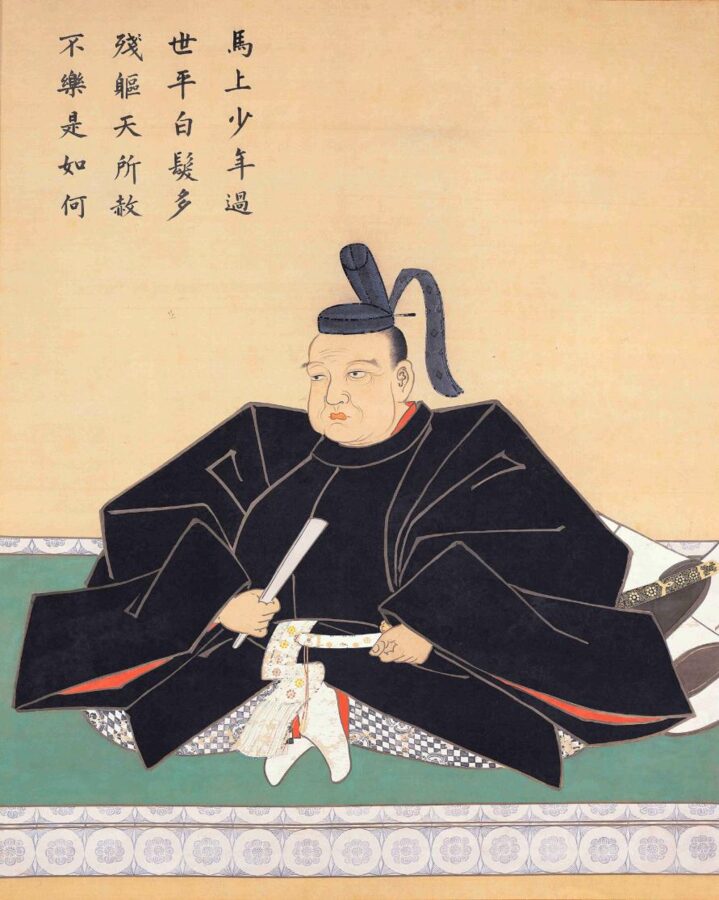
Where the name comes from is disputed, and the accounts are worth setting side by side. The dictionaries treat zunda as a form of jinda (糂粏), an old word for rice-bran paste that also covers this mashed-bean dressing. A dictionary of regional products calls the likeliest source zuda (豆打), “bean-beating”, for the pounding. The best-known story says Date Masamune, lord of Sendai, crushed edamame with the hilt of his field sword, his jin-dachi (陣太刀), on campaign; it is told as a legend, and I have found no early source for it.
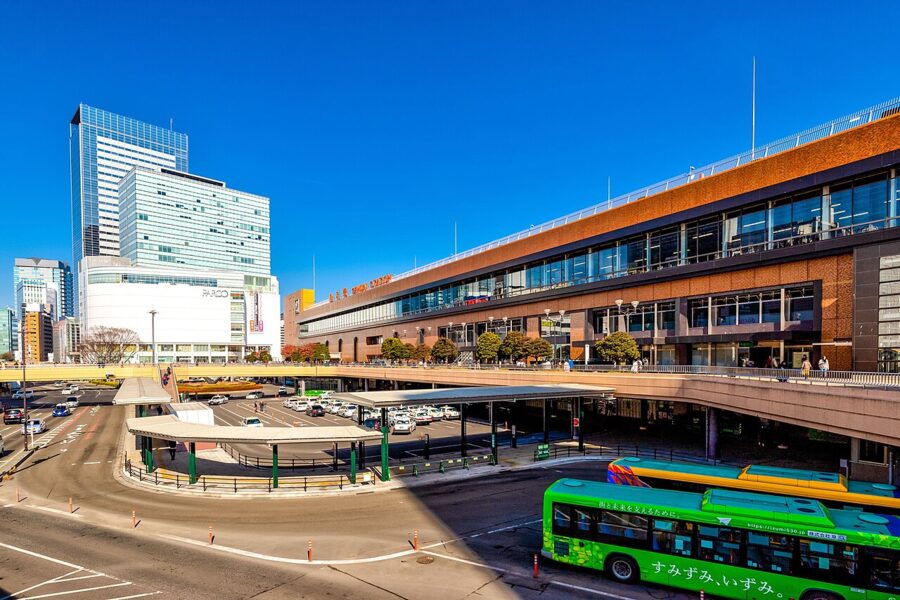
Sendai Station is the easiest place to meet it now. Zunda Saryo, the zunda brand of the Sendai confectioner Kashō Sanzen, lists counters on the station’s second and third floors (as of November 2026), and its zunda shake, vanilla with zunda blended through, became its signature by word of mouth. I would order the mochi first; the shake makes more sense on the train.
Boiling Them the Japanese Way
Frozen edamame sold in Japan has already been boiled and salted, so it only needs thawing. Fresh pods take about ten minutes, and the Japanese home method rests on three habits.
- Trim and rub. Snip a sliver off one end of each pod so the salt can get in, then rub the pods firmly with a good handful of salt, shiomomi (塩もみ), to strip the fuzz and season them.
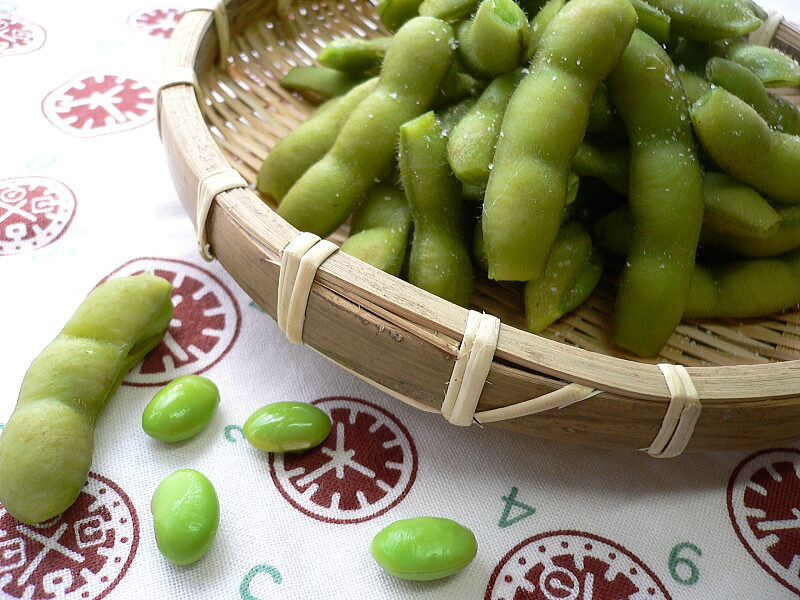
- Boil hard in salty water. Bring plenty of water to a rolling boil, salted to about the saltiness of the sea, add the pods with their salt, and boil for three to five minutes. Bite a bean at three: it should be tender with a little resistance.
- Drain, don’t rinse. Tip them into a colander and spread them out to cool in the air, fanning them if you like. Rinsing washes the salt away and leaves them watery.
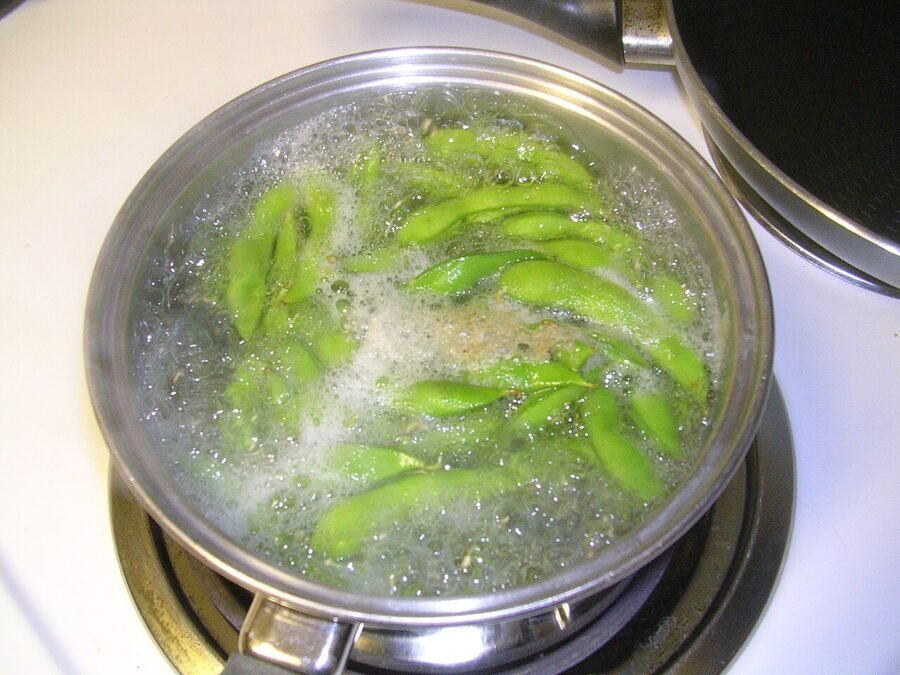
Some farmers swear by starting the pods in cold water, mizu kara, from 水, with less water and a lid; it works, but needs more watching. Big black edamame from Tanba need longer than ordinary pods, so taste rather than time them. Don’t eat edamame raw: raw soybeans contain proteins that hinder digestion, which cooking destroys.
Factories do the same at scale. In Taiwan, the pods for Japan’s frozen edamame go into brine at about 98°C for two and a half minutes and are then cooled in stages so the shells don’t split open.
Nutrition, Plainly
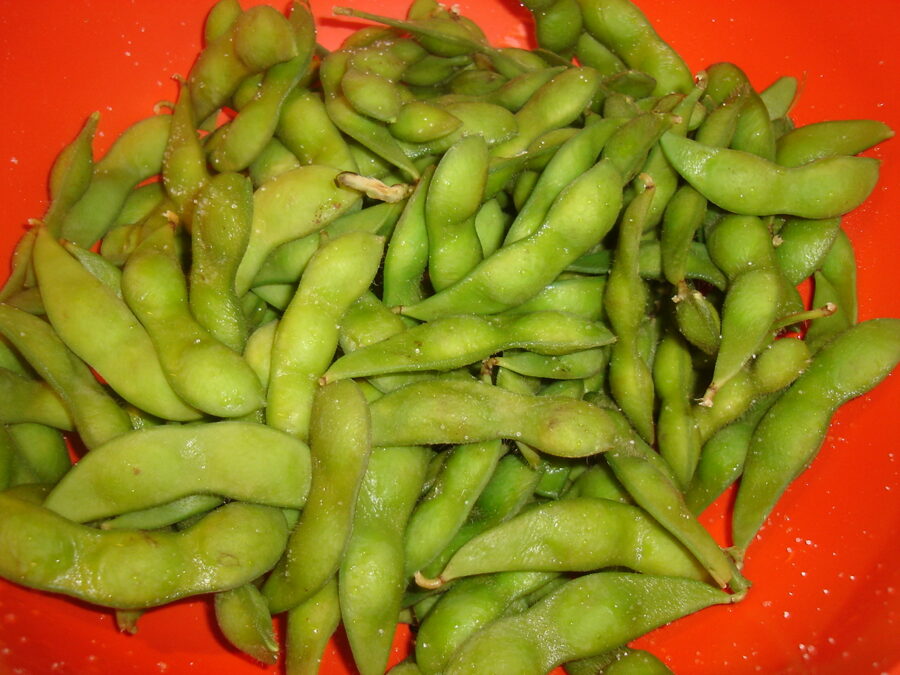
Japan’s Standard Tables of Food Composition (eighth edition, 2023 supplement) give these figures for 100 g of the beans, pods removed. Half the weight of boiled edamame bought in the pod is pod.
| Per 100 g of beans | Raw | Boiled |
|---|---|---|
| Energy | 125 kcal | 118 kcal |
| Protein | 11.7 g | 11.5 g |
| Fat | 6.2 g | 6.1 g |
| Dietary fibre | 5.0 g | 4.6 g |
| Folate | 320 μg | 260 μg |
| Vitamin C | 27 mg | 15 mg |
That is a lot of protein for a vegetable. Boiling costs some vitamin C and folate, and the salt, added twice, is the thing to watch.
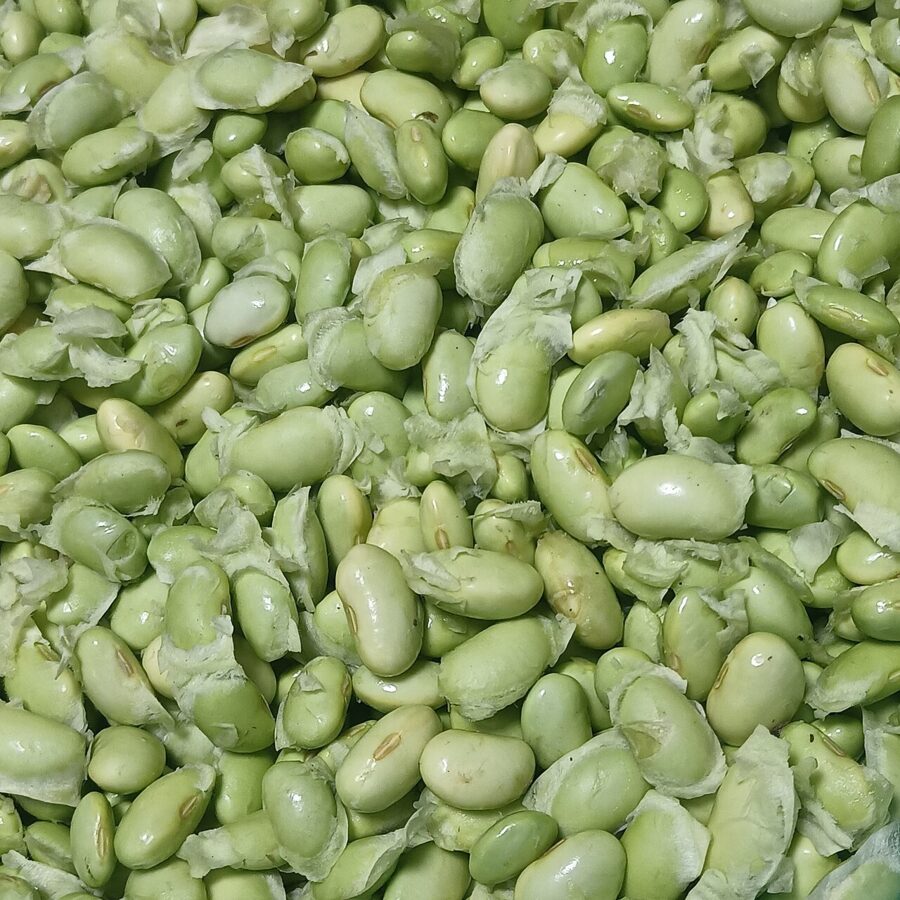
Edamame Abroad: The Word and the Frozen Pod
English took the word whole. Merriam-Webster dates its first known use to 1951, gives the plural as edamame or edamames, and traces it to eda, branch, plus mame, beans. English speakers usually stress the third syllable, ed-uh-MAH-may, where Japanese gives the four beats e-da-ma-me equal weight.
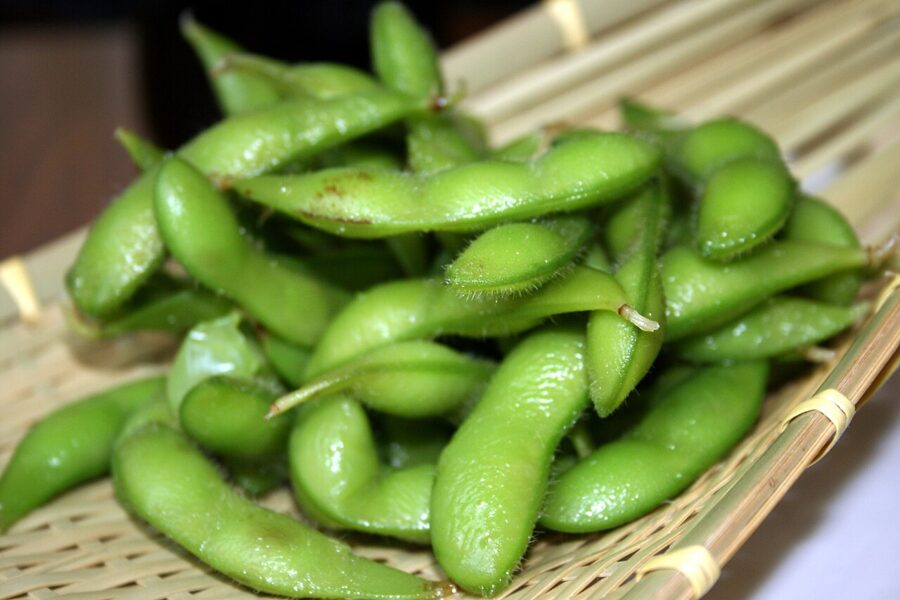
Much of the edamame eaten in Japan is not Japanese either. The Agriculture and Livestock Industries Corporation, a government agency, puts national demand at about 130,000 tonnes a year and says roughly half is met by imported frozen pods. Imports peaked at about 78,000 tonnes in 2019, fell as restaurant demand dropped during COVID-19 and have hovered near 65,000 tonnes since; Taiwan and China each supply around 40 percent, with Thailand and Indonesia behind them.
Taiwan’s trade began with Japan’s shortfall. It planted Japanese varieties on trial in 1969 and shipped its first 60 tonnes of frozen edamame to Japan in 1971; today a local variety, Kaohsiung No. 9, covers about 70 percent of the area. Japan’s 6 percent tariff on frozen edamame is one thing Taiwan’s frozen-food association would like gone.
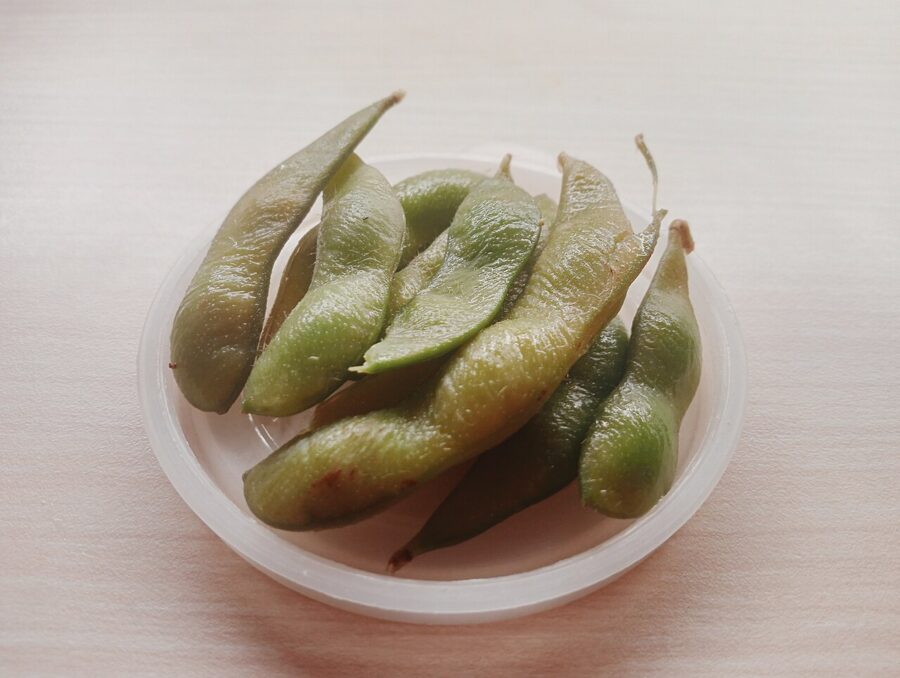
The home crop is slowly shrinking. In 2025 Japan harvested 57,800 tonnes from 11,700 hectares, down from 71,500 tonnes in 2021, according to the Ministry of Agriculture, Forestry and Fisheries. Hokkaido grew the most, 6,930 tonnes, then Gunma and Chiba.
That also explains why fresh edamame is rarely cheap. The season is short, the pods lose freshness within hours of picking (Taiwan’s factories aim to freeze them within four), and the price of imported frozen pods has been rising with growers’ costs and the weak yen.
Next time a bowl of pods comes with the beer, look at the menu. The characters say branch and bean, and in Tamba-Sasayama each October the branch is still attached.