Ask for a sweet potato in Kagoshima and you may hear it called karaimo (唐芋), the Chinese potato. Ask in Tokyo and it is satsuma-imo (薩摩芋), the potato from Satsuma, the old province that is now western Kagoshima. Each side names the thing after the place it came from, one step back down the road.
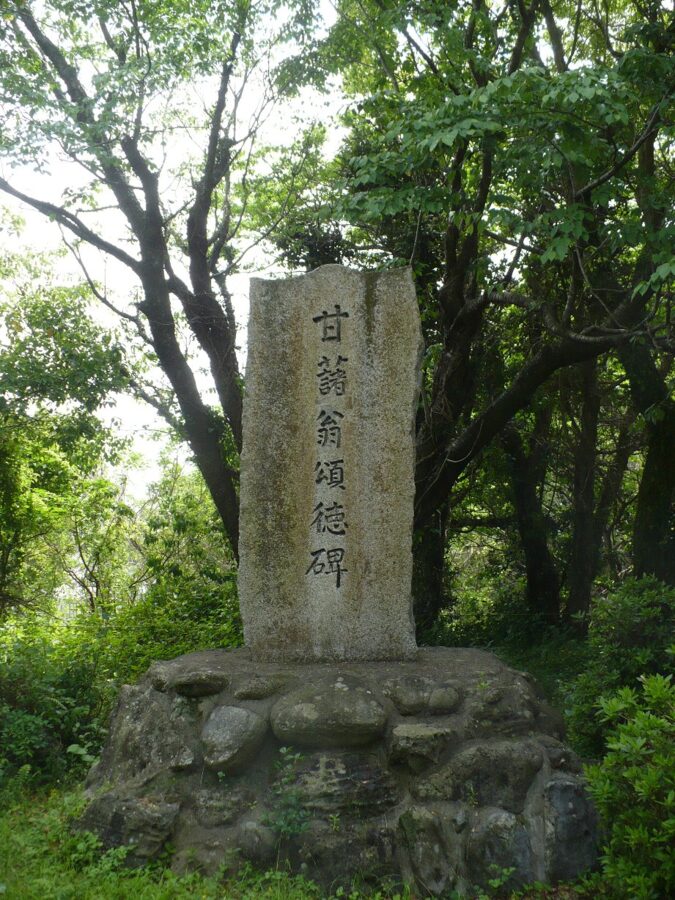
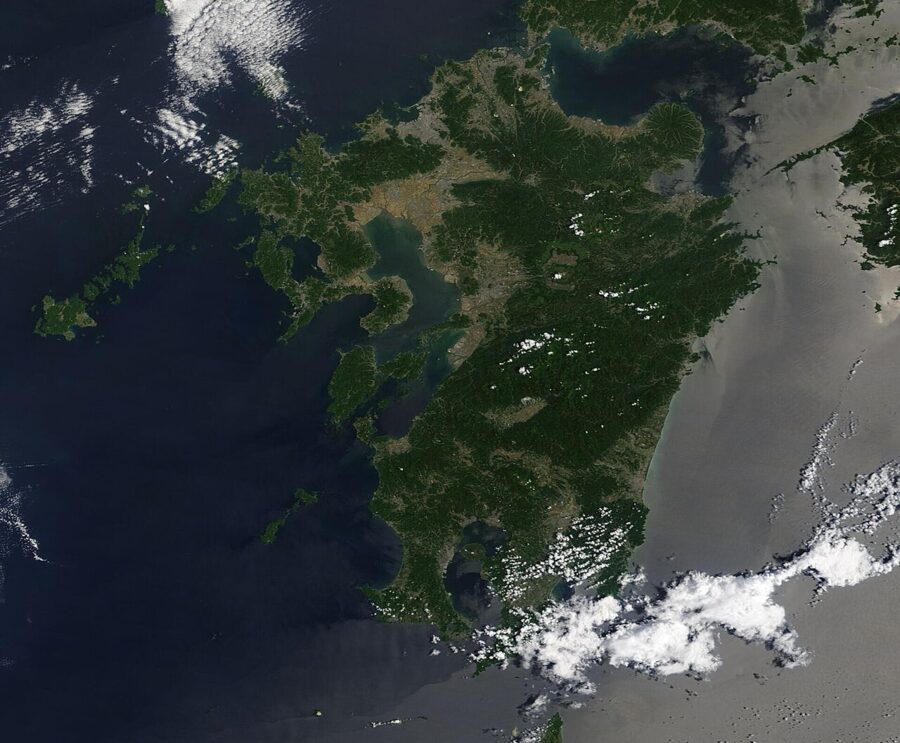
Satsuma is one of nine. The south-western of Japan’s main islands is Kyūshū (九州), “nine provinces”, and the nine were real, with borders, governors and taxes. The Meiji reforms abolished them, but the names stayed on sweet potatoes, porcelain, dialects and trains, and they are still the quickest way into the island.
In this article
The name: nine provinces on one island
九 is nine, read kyū or ku, two strokes, taught in the first year of primary school. 州 is a river with dots for the sandbanks between its streams; it meant an islet first and a province second, and it is one of the third-grade kyōiku kanji.
The word is older than its Japanese meaning. In China, 九州 was the whole country, the nine regions of the legendary Emperor Yu, and a Japanese poem of 814 in the Ryōunshū uses it for all of Japan. The Nihon Kokugo Daijiten’s first citation for the island is an entry of 1185 in the Azuma Kagami, the shogunate’s chronicle, handing “the matters of 九州” to the general Minamoto no Noriyori.
The nine, and the seven prefectures now
Six of the nine come in pairs. The old lands of Tsukushi, Toyo and Hi were each cut in two, and the half nearer the capital took 前, “front”, the far half 後, “back”. So Tsukushi gave Chikuzen and Chikugo, Toyo gave Buzen and Bungo, and Hi gave Hizen and Higo.
The south was all Hyūga at first. Satsuma was carved out of it around 702, and in 713, by the chronicle Shoku Nihongi, four districts were cut away to make Ōsumi. The islands of Iki and Tsushima were provinces too, which is why the official circuit, the Saikaidō (西海道), “western sea road”, always had more than nine members.
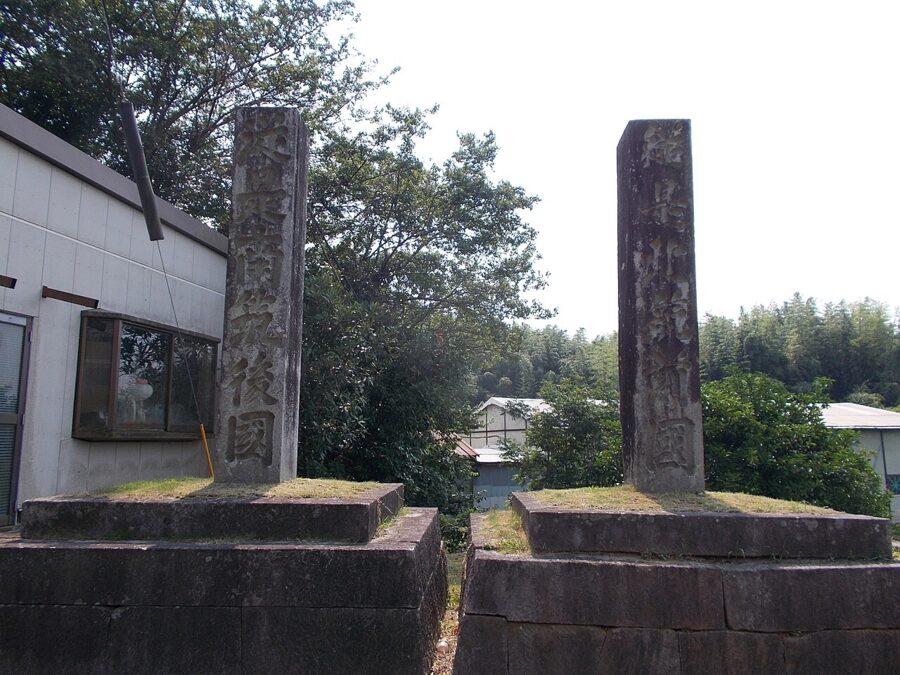
| Province | Kanji | Reading | Today |
|---|---|---|---|
| Chikuzen | 筑前 | ちくぜん | Northern and western Fukuoka |
| Chikugo | 筑後 | ちくご | Southern Fukuoka |
| Buzen | 豊前 | ぶぜん | Eastern Fukuoka and northern Ōita |
| Bungo | 豊後 | ぶんご | Most of Ōita |
| Hizen | 肥前 | ひぜん | Saga and mainland Nagasaki |
| Higo | 肥後 | ひご | Kumamoto |
| Hyūga | 日向 | ひゅうが | Miyazaki, with a corner of Kagoshima |
| Ōsumi | 大隅 | おおすみ | Eastern Kagoshima, Tanegashima, Yakushima |
| Satsuma | 薩摩 | さつま | Western Kagoshima |
Iki and Tsushima went to Nagasaki.
Tsukushi and Chinzei: the older names
The Kojiki of 712 calls the island Tsukushi no shima (筑紫島), one body with four faces: Tsukushi, Toyo, Hi and Kumaso. The Heibonsha encyclopedia notes that Tsukushi began as a small place near today’s Chikushino and spread to the whole north, then the whole island. Where the word came from nobody knows; an old gazetteer offered three stories built on tsukusu, to use up, and the encyclopedia calls all three forced.
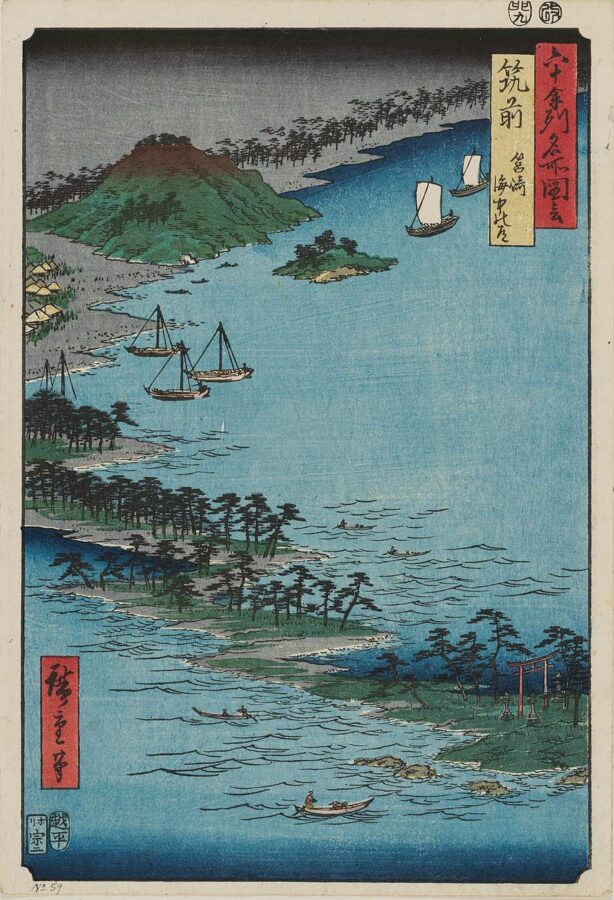
The other old name is Chinzei (鎮西), “pacifying the west”, and it has a date. In 743 the Dazaifu government was briefly renamed the Chinzeifu, and the name stuck to the island; the Kamakura shogunate later ruled Kyushu through a Chinzei magistrate in Hakata.
The island in numbers
Kyushu is the third-largest island in Japan, 36,780.84 km² on the Geospatial Information Authority’s survey of 1 July 2026: about a sixth of Honshu, twice Shikoku. The seven prefectures counted 12,373,566 people in the 2025 census, a fraction over one in ten of everyone in Japan.
Fukuoka city had 1,662,793, about 50,000 more than in 2020 and the third-largest gain of any municipality. Kitakyushu, at the other end of the same prefecture, lost 35,437, the largest fall anywhere.
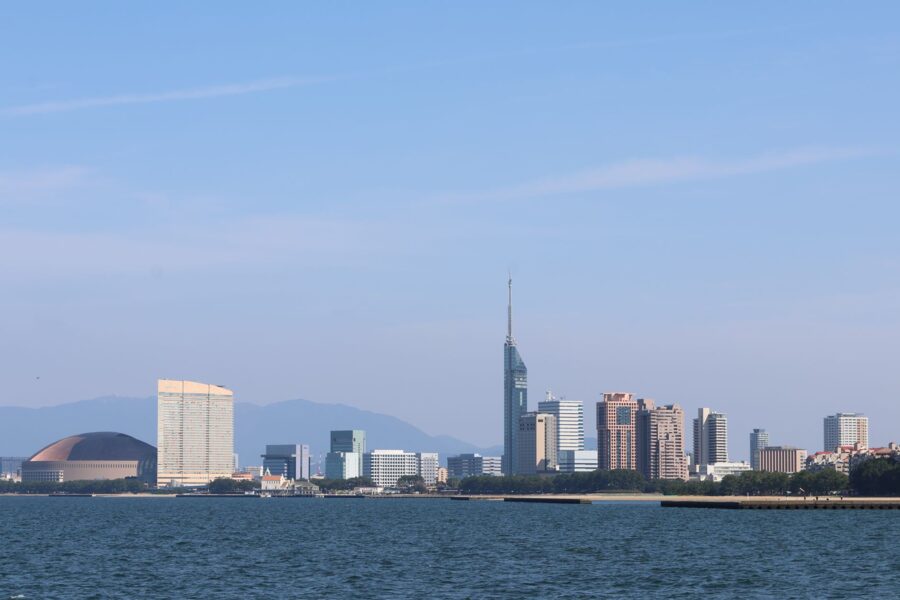
Is Okinawa part of Kyushu? Not the island, but often the region: geography books group the seven prefectures with Okinawa as the Kyūshū chihō (九州地方). The Ryukyu islands were a kingdom until 1879, and few people in Naha would say they live in Kyushu.
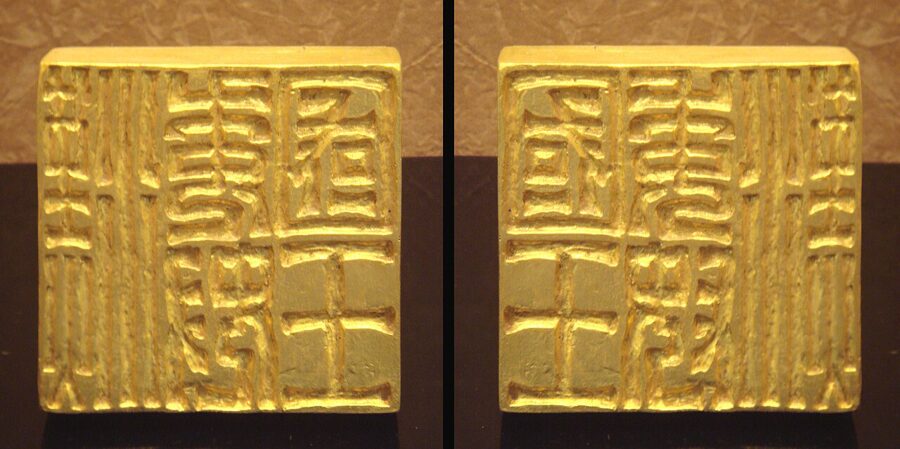
Is Fukuoka the oldest city in Japan? No city can prove that, but Fukuoka has very old paperwork. In 1784 a farmer on Shikanoshima, at the mouth of Hakata Bay, dug up a gold seal inscribed 漢委奴國王, “King of Na of Wa, of Han”.
The Book of the Later Han records a seal sent to the king of Na in 57 CE. That makes Na, on the plain where Fukuoka stands, one of the first places in the archipelago with a dated record. The 委 is an old spelling of 倭, Wa, one of the old names of Japan.
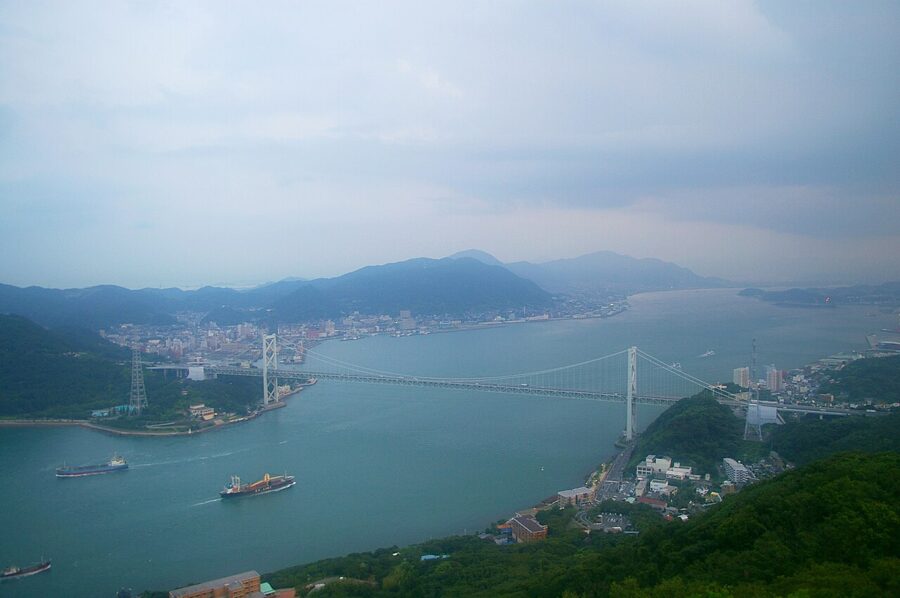
To the north-east, Kyushu almost touches Honshu across the Kanmon Strait, named for the 関 of Shimonoseki (下関) and the 門 of Moji (門司). A railway tunnel has run under it since 1942, the first undersea railway tunnel in Japan; road tunnels, the Kanmon Bridge of 1973 and the Shinkansen’s tunnel followed.
Volcanoes and hot springs
The Japan Meteorological Agency lists 17 active volcanoes in Kyushu, the small islands south of Kagoshima included.
Aso: a caldera with towns inside
Aso is a ring, not a peak. The JMA gives the Aso caldera as 17 km by 25 km, left by four enormous eruptions between about 270,000 and 90,000 years ago. Rice fields, railways and the town of Aso sit on its floor, and the active cone, Nakadake, rises in the middle.
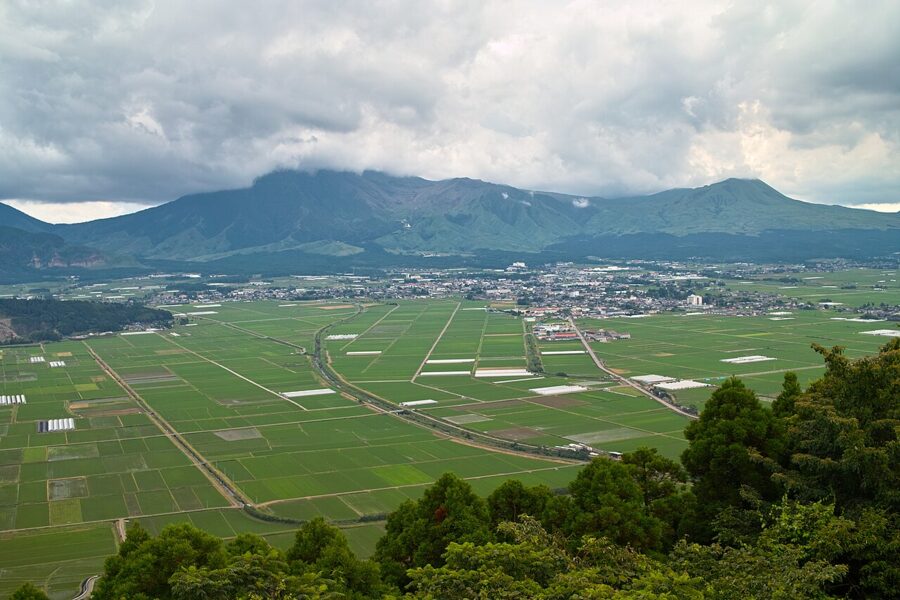
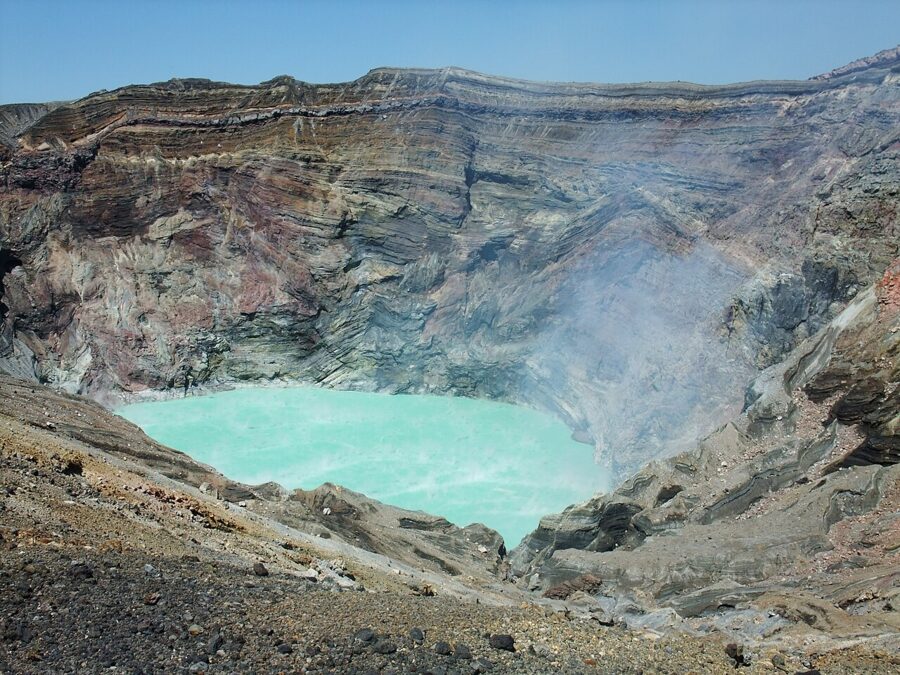
Aso has its own words. When Nakadake’s first crater is quiet it fills with a hot green lake, the yudamari (湯だまり), “pool of hot water”. When it wakes, the lake boils away and the crater throws out black, sandy ash that people around the mountain call yona (ヨナ).
Sakurajima: the island that became a peninsula
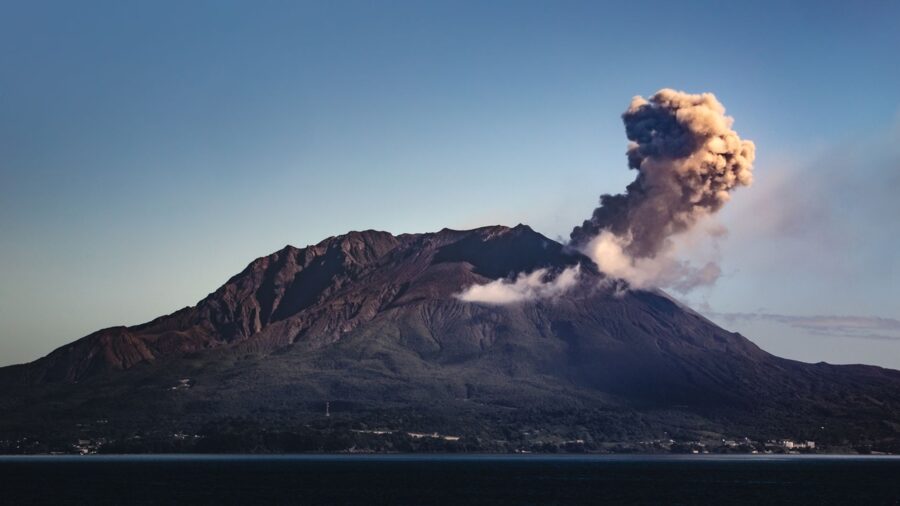
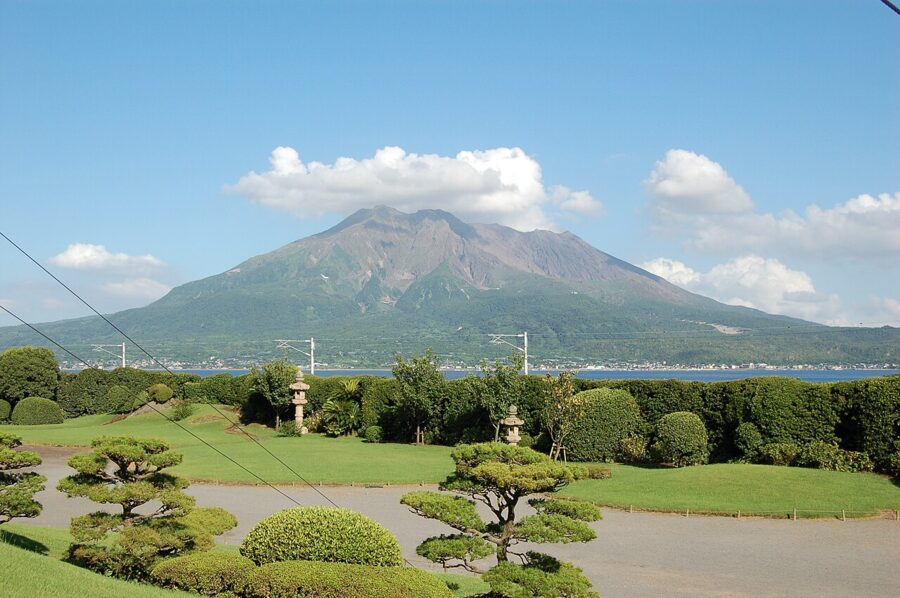
Sakurajima (桜島), “cherry island”, sits in Kagoshima Bay, a short ferry ride from the city. It was an island until January 1914, when the Taishō eruption poured out enough lava to close the eastern channel and join it to the Ōsumi Peninsula. The eruption and the earthquake that came with it killed 58 people.
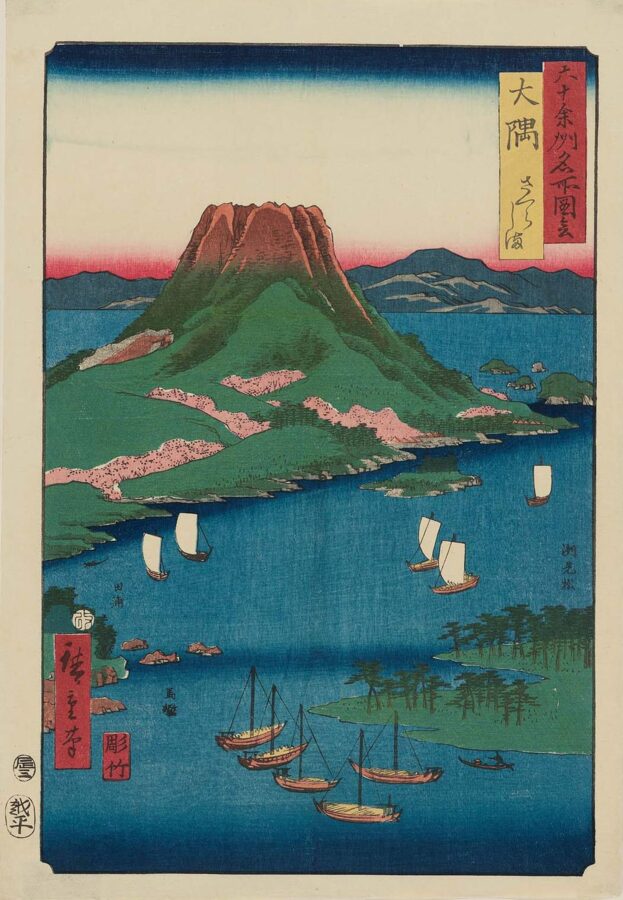
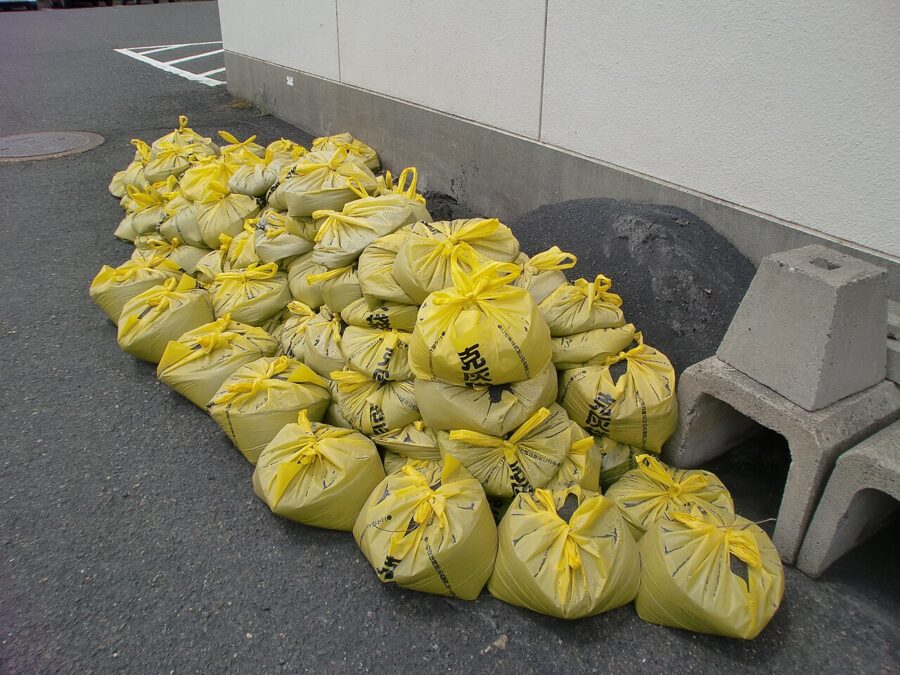
The summit crater has been erupting since 1955, a 2 km zone around the craters is closed, and the JMA posts a bulletin on the volcano twice a week. The ash falls on Kagoshima mostly in summer, when the wind turns easterly, and the city hands out yellow bags for it, kokuhaibukuro (克灰袋), “bags for overcoming ash”.
Unzen: Shimabara’s disaster, Higo’s trouble
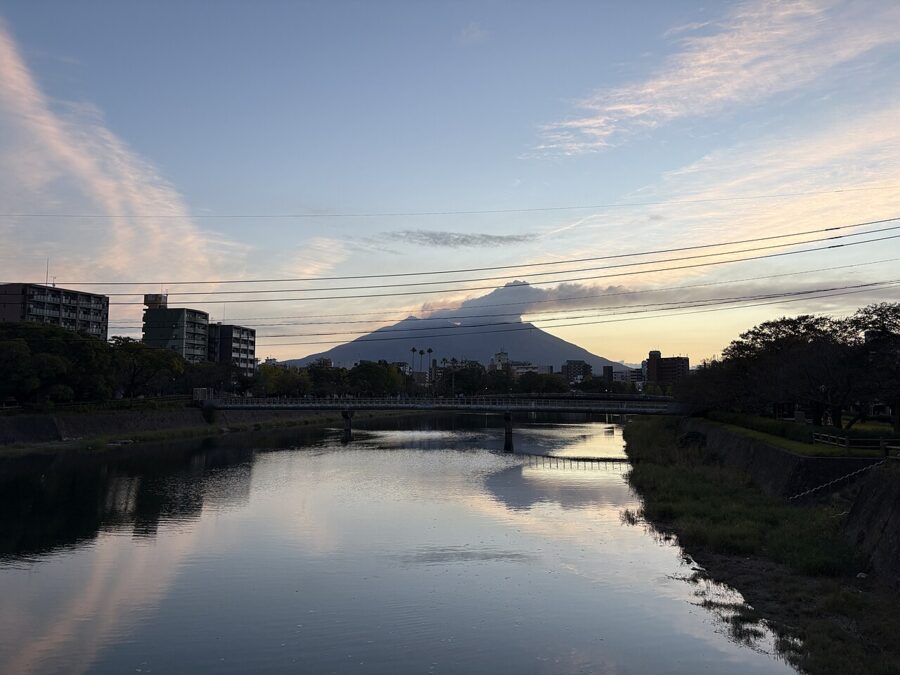
In 1792 an earthquake at Unzen brought down the face of Mayuyama into the Ariake Sea, and the tsunami crossed to the Higo coast; about 15,000 people died. The saying it left, Shimabara taihen, Higo meiwaku (島原大変肥後迷惑), “Shimabara’s catastrophe, Higo’s trouble”, still names the province on the far shore.
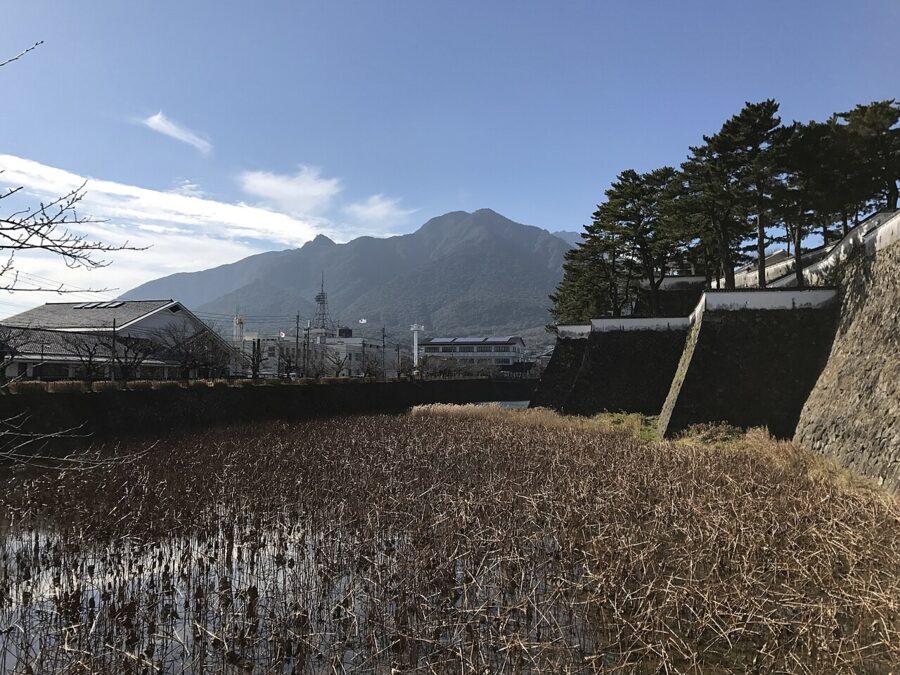
The mountain woke again in November 1990. A lava dome grew on Fugendake and kept collapsing into pyroclastic flows, and on 3 June 1991 one of them left 43 people dead or missing. What remained is Heisei Shinzan (平成新山), “the new mountain of Heisei”, 1,483 m (4,865 ft) high and named for the era it was born in.
Kirishima: where the gods came down
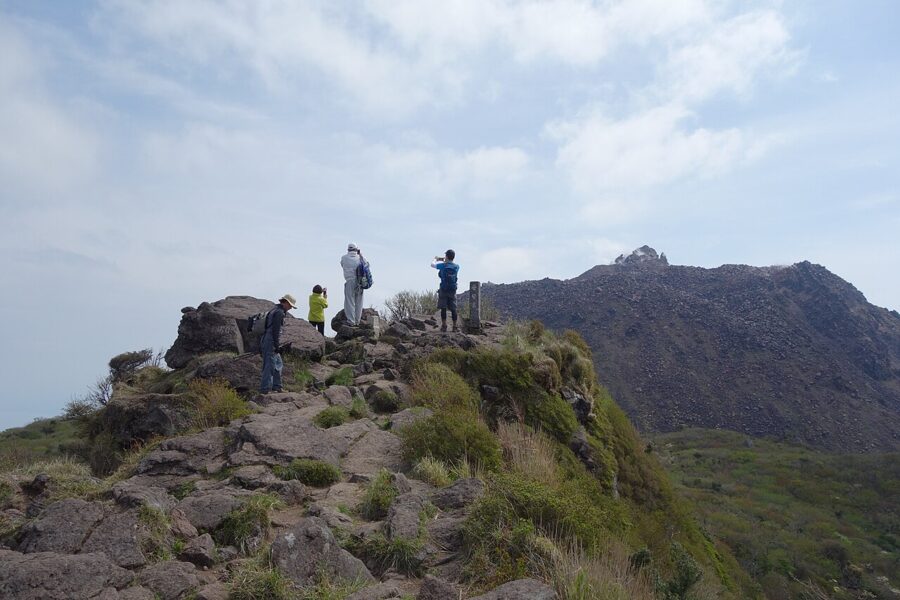
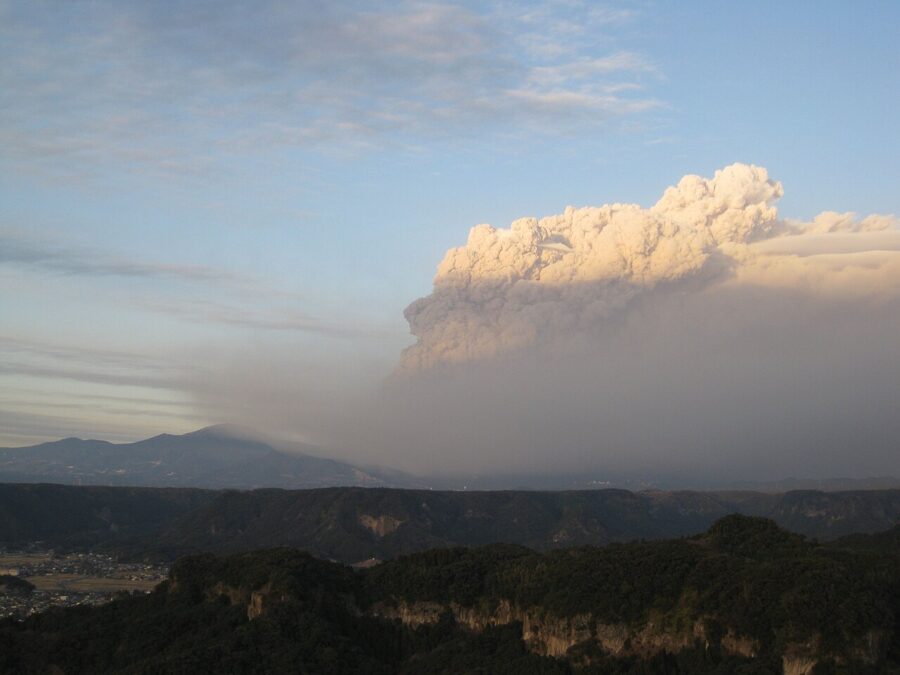
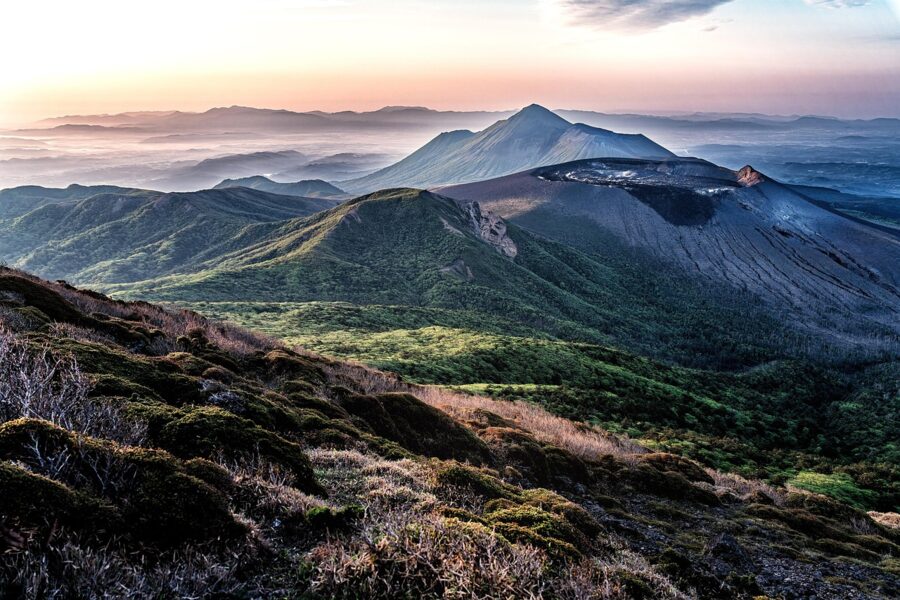
The Kirishima range straddles old Hyūga and Ōsumi. The chronicles set the descent of Ninigi, grandson of the sun goddess, on its peak of Takachiho-no-mine, and its Shinmoedake is among the busiest volcanoes in Japan. It erupted in 2011, in 2018 and again from 22 June 2025, when a plume on 28 August rose 5,500 m above the crater rim before the activity died down in September.
Beppu and Yufuin, in brief
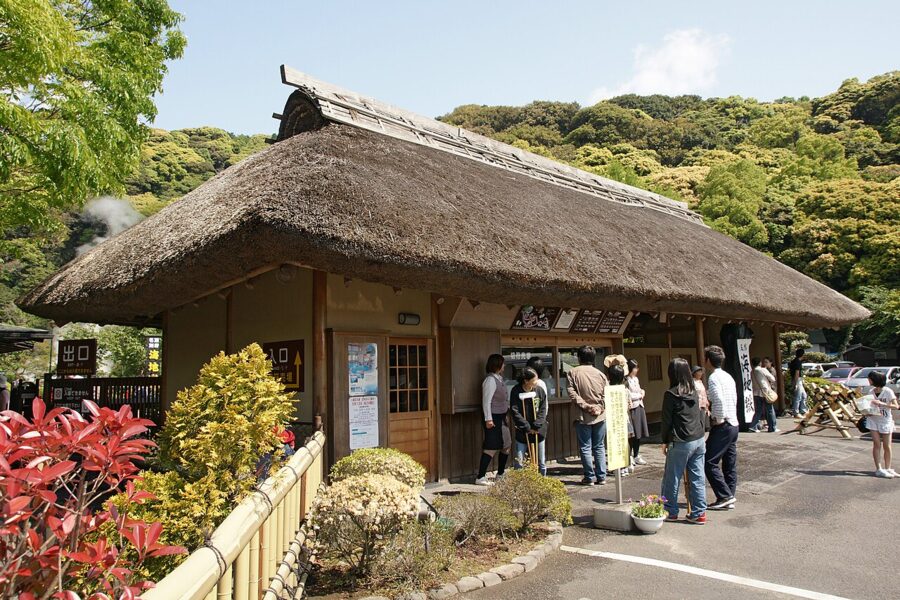
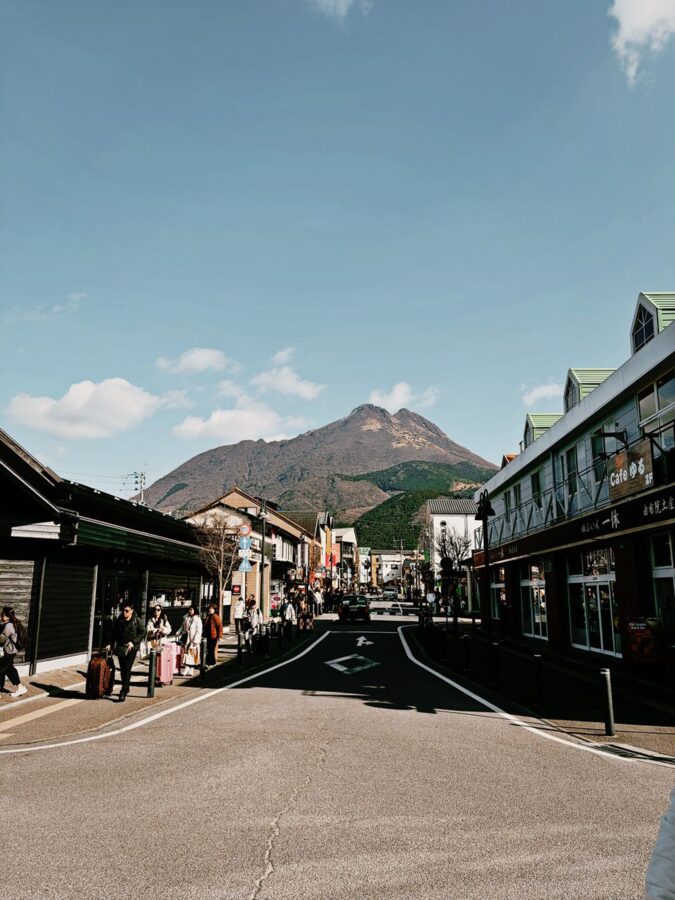
All that heat comes up as water. Ōita, old Bungo, calls itself onsen-ken (おんせん県), the hot-spring prefecture, and has long topped the national tables for the number of springs and the volume they give. Beppu’s boiling pools are jigoku (地獄), hells; Yufuin, over the hill, is the quieter spa town under the double peak of Yufudake.
Door to the continent
From Fukuoka, Busan is closer than Osaka. For most of Japanese history, whatever came from the mainland, rice, writing, Buddhism, envoys and invaders, came through Kyushu first.
Dazaifu: the distant court
The government that ran Kyushu and received foreign envoys sat at Dazaifu, inland from Hakata, and the Man’yōshū poets called it tō no mikado (遠の朝廷), “the distant court”. After Japan’s defeat in Korea at Hakusukinoe in 663, a great earth dyke, the Mizuki, “water castle”, was thrown across the plain to guard it. The office is written 大宰府 in history books; the city and its shrine use 太宰府, one dot apart.
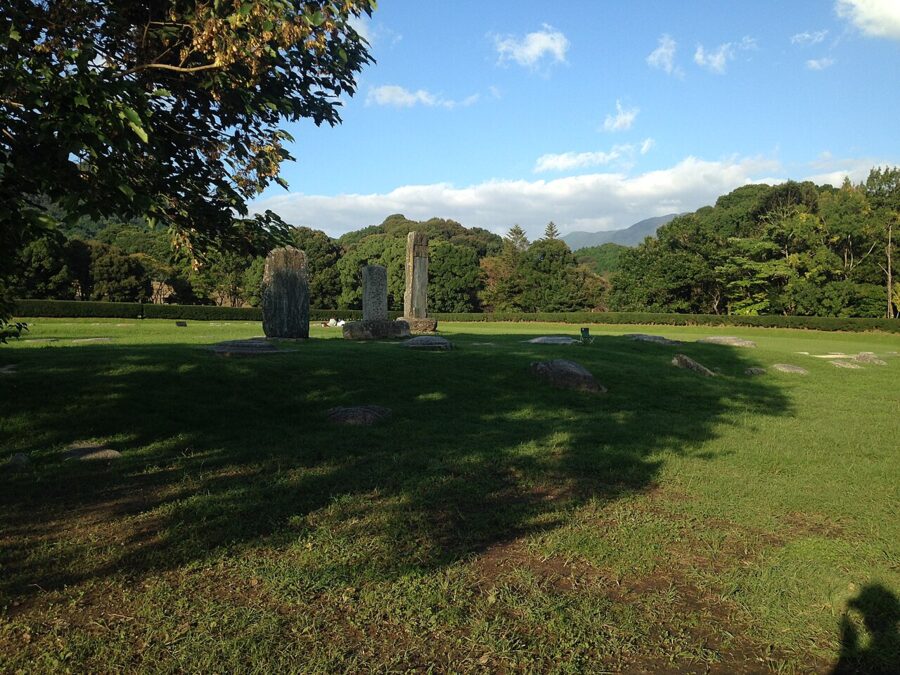
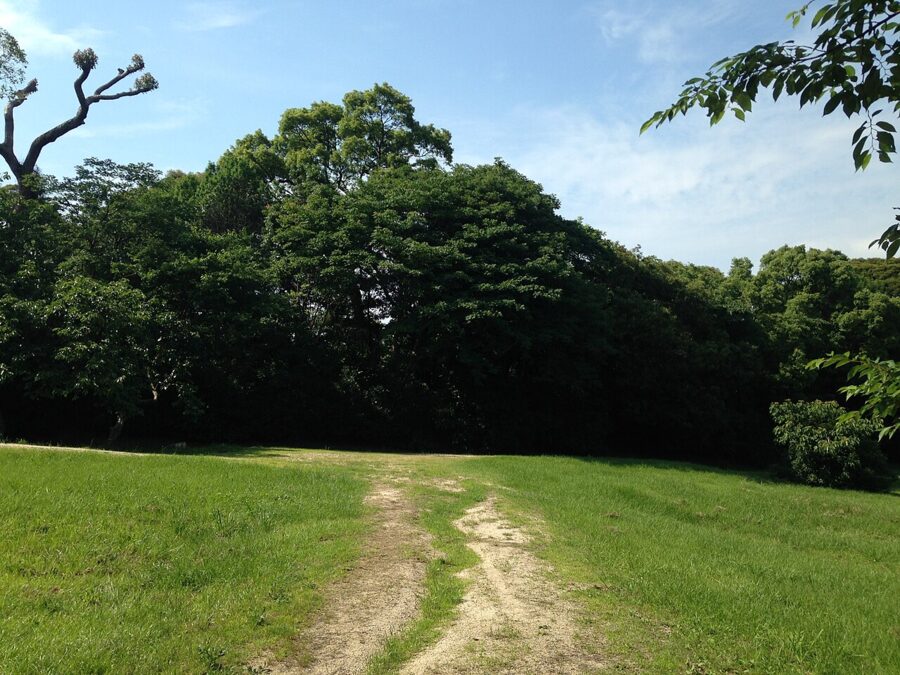
Dazaifu is in everyday Japanese twice over. In 730 the governor, Ōtomo no Tabito, held a plum-viewing party here, and the preface to its 32 poems supplied 令 and 和 for Reiwa in 2019, the first Japanese era name drawn from a Japanese book. And in 901 the scholar Sugawara no Michizane was exiled here, died two years later and became Tenjin, the god of learning, whose shrine fills with students before every exam season.
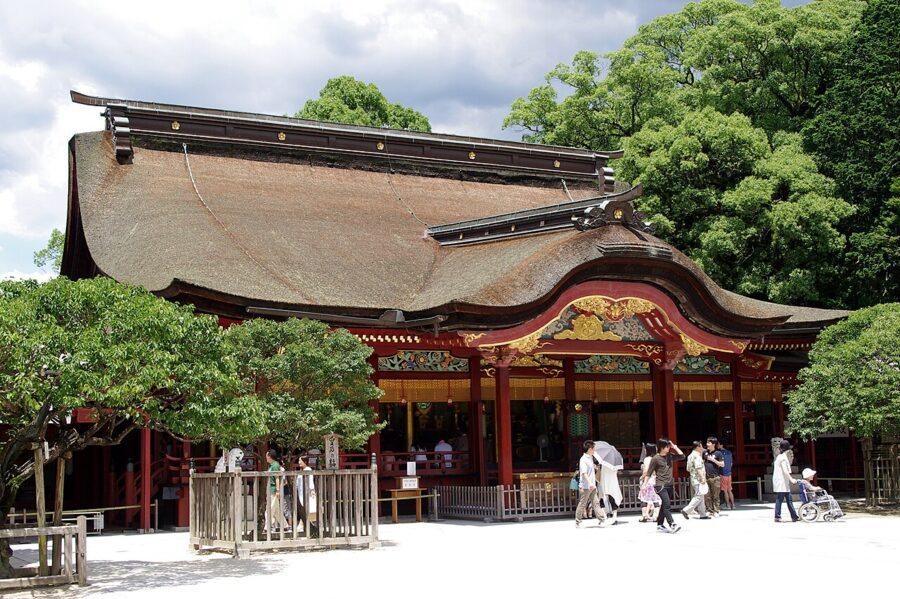
Dazaifu Tenmangu closed the front of its main hall to worshippers in spring 2023 for the hall’s Reiwa restoration and reopened it on 19 September 2026. The Mongols came this way too, landing at Hakata Bay in 1274 and 1281; the storms that wrecked their fleets were remembered as kamikaze (神風), the wind of the gods.
Nagasaki and Dejima
Portuguese ships began trading at Nagasaki in 1571. When the shogunate turned against Christianity it built Dejima, “the island that sticks out”, a fan-shaped artificial island finished in 1636 to keep the Portuguese in one place. They were expelled in 1639, and from 1641 until 1859 the Dutch East India Company’s men lived there instead, the only Europeans allowed to trade.
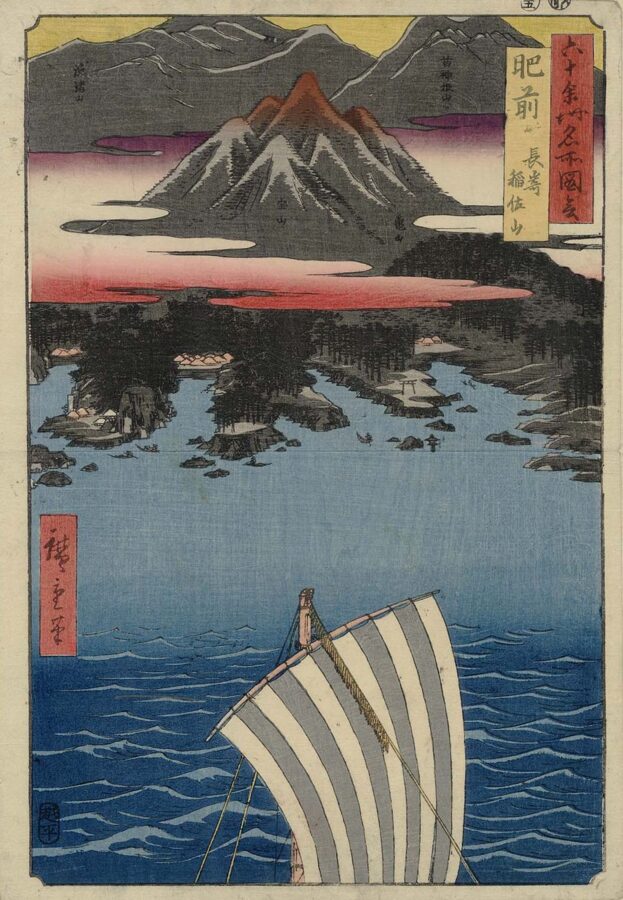
Japanese still carries Dutch words that crossed Dejima’s bridge: garasu (ガラス, glass), bīru (ビール, beer) and randoseru (ランドセル), the school backpack, from ransel, all written in katakana. The rebuilt Dejima is open every day from 8:00 to 21:00 (last entry 20:40), and adults pay ¥1,100 (about $7), as of November 2026.
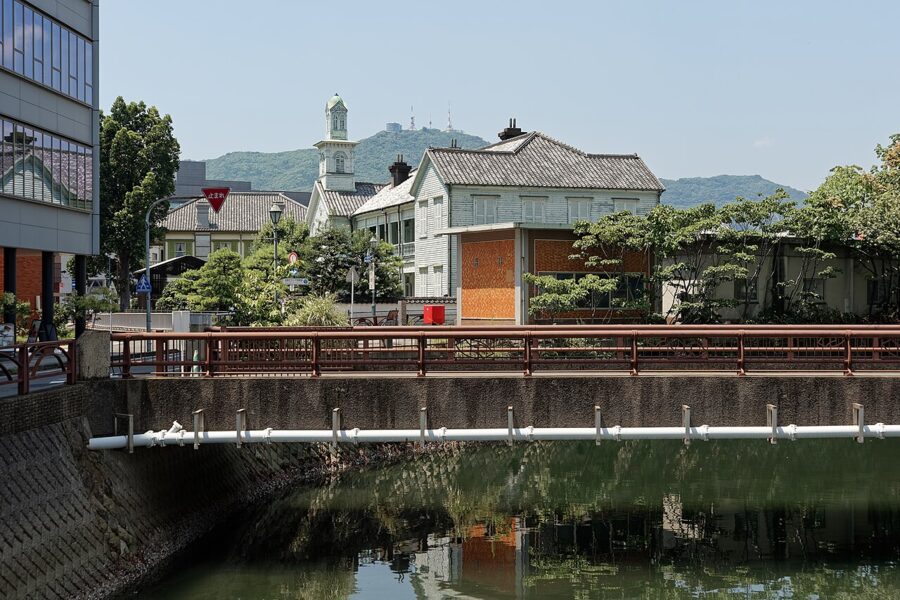
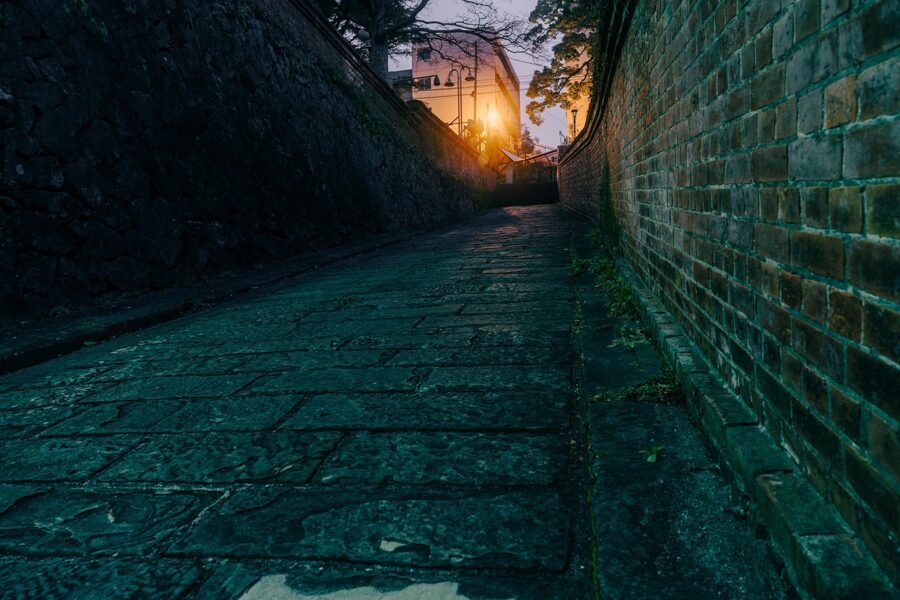
Satsuma
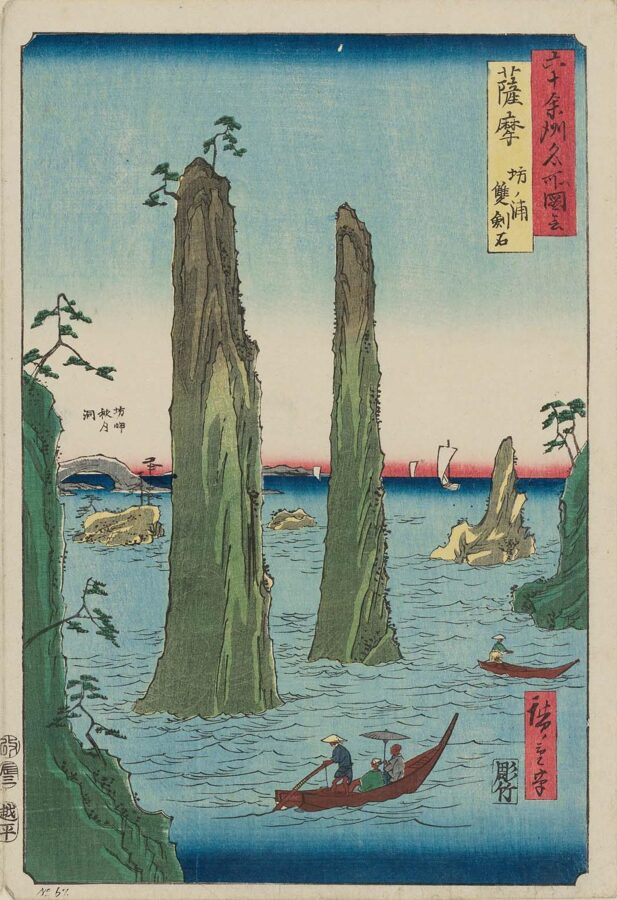
At the far end of the island, the Shimazu family ruled Satsuma for nearly seven centuries. In 1609 Satsuma invaded the Ryukyu kingdom and kept it as a hidden vassal. In the 1850s Shimazu Nariakira built some of Japan’s first Western-style factories at the Shūseikan, and in 1866 Saigō Takamori and Ōkubo Toshimichi joined Chōshū in the alliance that brought down the shogunate.
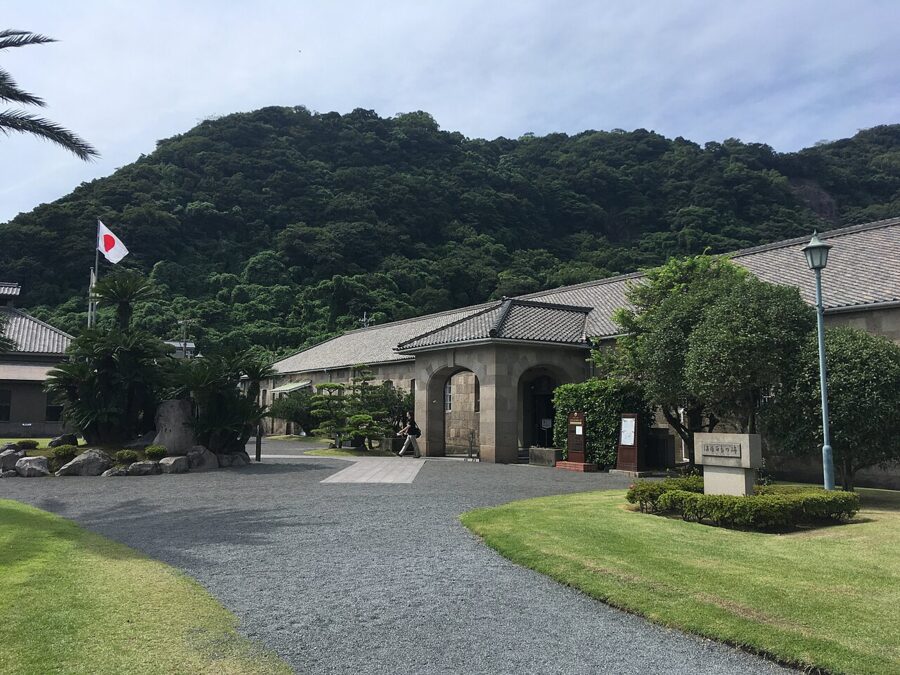
Next door is Sengan-en, the Shimazu Japanese garden that borrows Sakurajima as its backdrop. The province name itself went further than any samurai. In English a satsuma is a mandarin named after it, while Japanese calls the same fruit unshū mikan (温州みかん), after Wenzhou in China: each language credits another coast, like the sweet potato.
How Kyushu talks
The old provinces still map the island’s speech. Linguists divide Kyūshū-ben (九州弁), Kyushu dialect, into three groups named by stitching together the provinces’ first characters: Hōnichi (豊日) for Buzen, Bungo and Hyūga; Hichiku (肥筑) for Hizen, Higo, Chikuzen and Chikugo; and Satsugū (薩隅) for Satsuma and Ōsumi.
What most Japanese people hear as “Kyushu speech” is Hichiku. Adjectives end in -ka, so good is yoka and cold is samuka; “because” is -ken, and “but” is batten. Hōnichi, across the mountains, sounds closer to the Inland Sea dialects of Honshu and Shikoku.
Hakata-ben
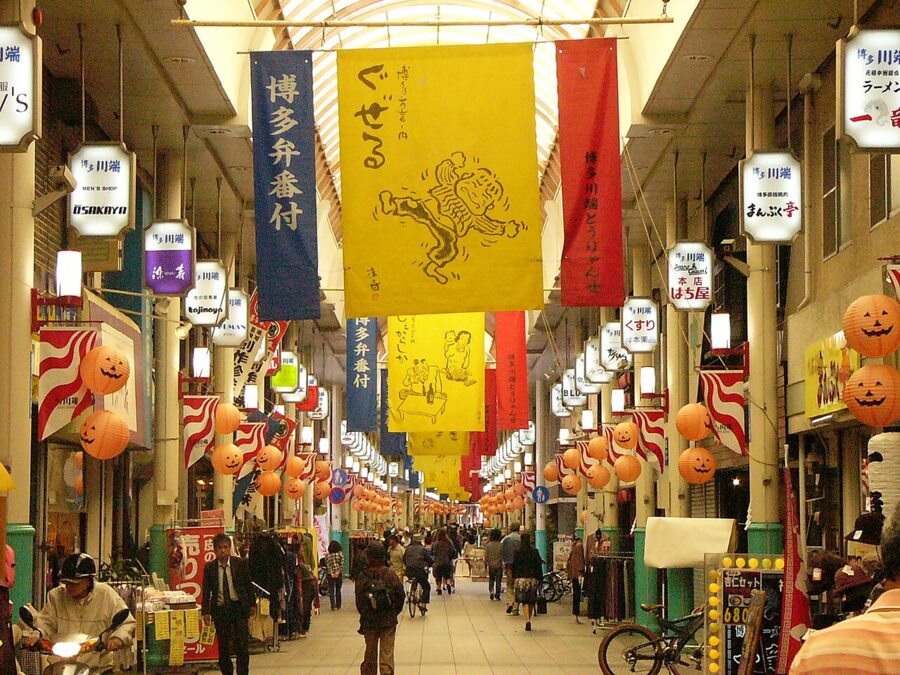
Fukuoka’s dialect is the one people imitate. Suitō yo (好いとうよ), “I like you”, is a favourite on Hakata souvenirs, and questions end in a soft -to, as in nan shiyō to, “what are you doing”. The favourite party piece is tottotto (とっとーと), “is this seat taken”, which sounds like a hiccup until you see totte iru no worn smooth inside it.
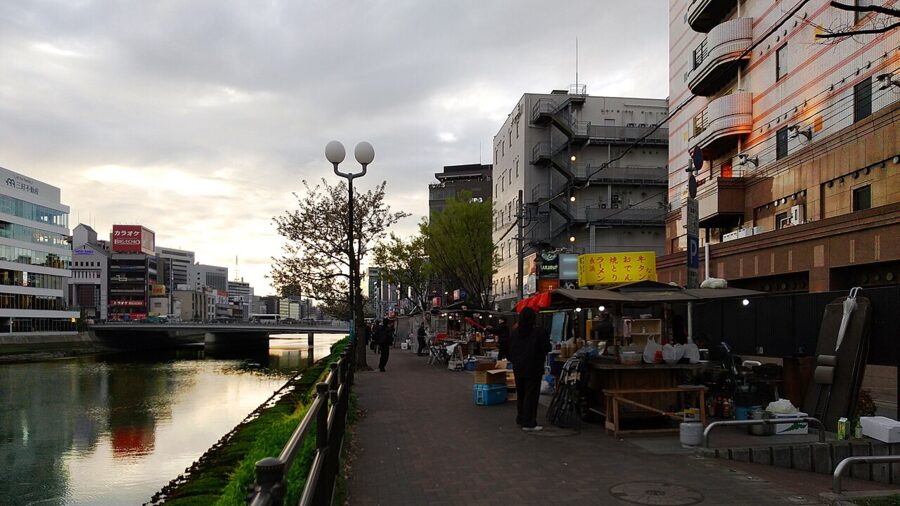
The emphatic endings -bai and -tai are what television uses to say “Kyushu”. In Fukuoka itself, by most descriptions, younger speakers have largely swapped them for -tchan, as in mottō-tchan ne, “you’ve got it, haven’t you”.
Kagoshima
Satsugū is the hard one, and in it Kagoshima is Kagonma. Final syllables collapse into a catch in the throat, so kutsu (shoe), kubi (neck), kuchi (mouth), kugi (nail) and kushi (comb) can all come out as one clipped kuʔ.
The words are worth learning anyway. Oyattosā is “thanks for your hard work”, the end-of-day greeting. Daiyame, from dareyame, is the evening drink, usually sweet potato shōchū, and explains itself: dare, tiredness, yame, stopping. Gennē, embarrassing, is a squeezed-down gei ga nai, “no style”.
Food words
Many of Kyushu’s dishes are named for what is in them. The wider Japanese food story has its own page; these are the island’s four big words.
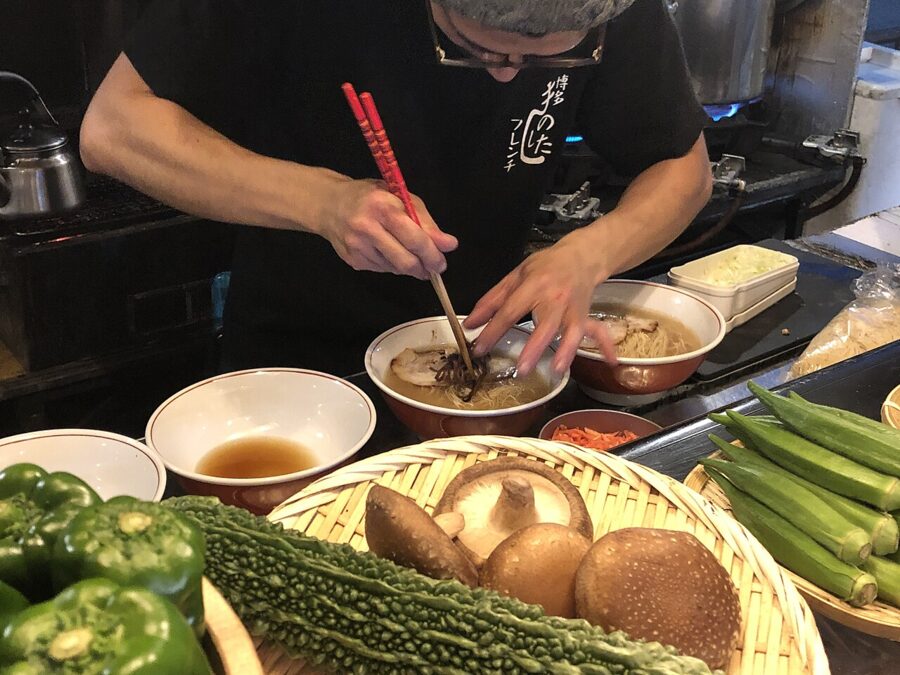
Tonkotsu (豚骨) is “pork bone”, and tonkotsu ramen comes in a soup of pork bones boiled hard until it turns milky. Kurume, in old Chikugo, claims the first bowl, from a street stall called Nankin Senryō in 1937, when the soup was still clear. Hakata’s version uses very thin noodles that soften fast, so people order them firm and call for a kaedama (替え玉), a second serving of noodles into the same soup.
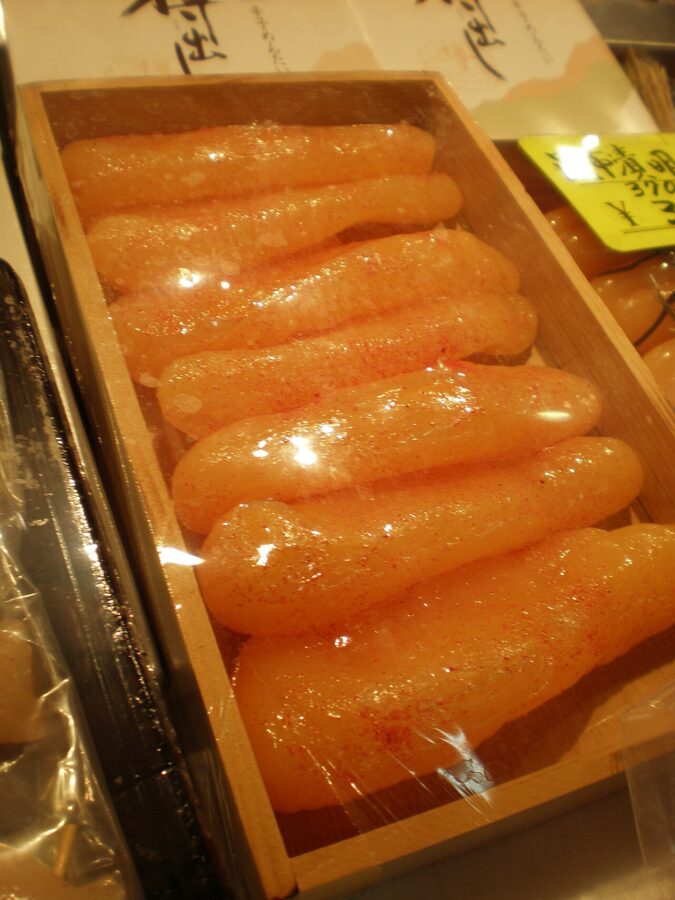
Mentaiko (明太子) is pollock roe cured with chilli, and its name came over the strait with it: mentai is from Korean myeongtae, walleye pollock, and 子, child, is the roe. The Korean pickle was adapted in Hakata after the Second World War, and the spicy karashi mentaiko is now the city’s standard souvenir.
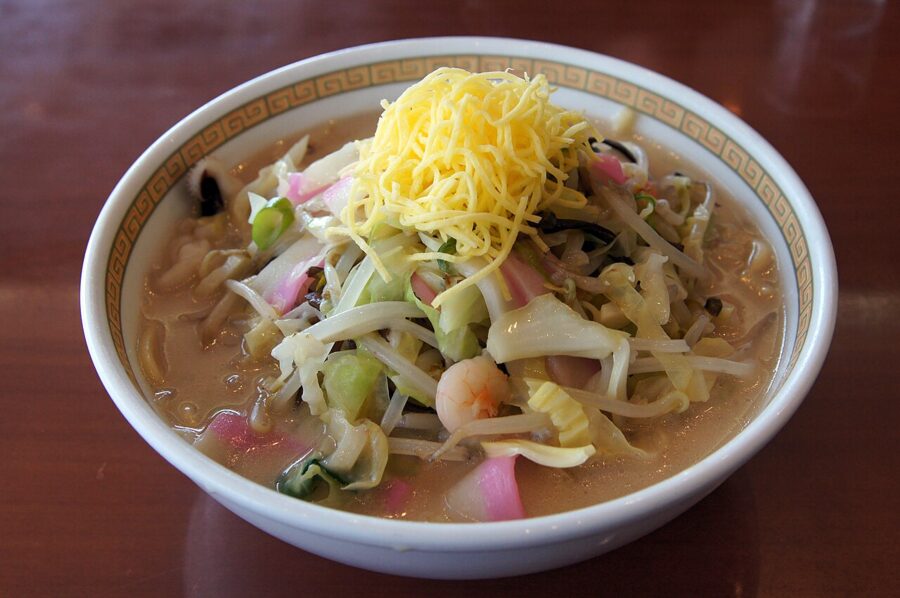
Champon (ちゃんぽん) is Nagasaki’s noodle soup: thick noodles in pork and chicken broth under cabbage, pork, squid and prawns. Shikairō, a Chinese restaurant in Nagasaki, says its Fujianese founder Chen Pingshun created it in 1899 as a cheap, filling meal for Chinese students. In everyday Japanese chanpon also means any jumble, as when people mix their drinks.
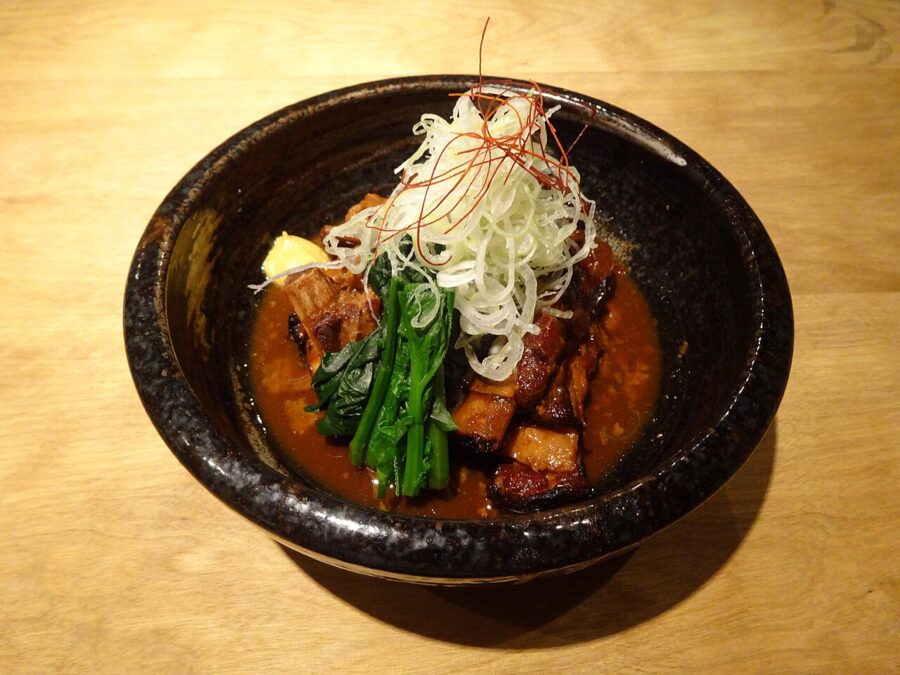
Kurobuta (黒豚), black pig, is Kagoshima’s pork, and on a menu the word promises fattier, sweeter meat; I would have it as shabu-shabu, where the fat shows. In Kagoshima, tonkotsu is not soup at all but bone-in ribs stewed in shōchū, miso and brown sugar. Miyazaki answers with chikin nanban (チキン南蛮), fried chicken in sweet vinegar under tartare sauce. Nanban (南蛮), “southern barbarian”, was the old word for the Portuguese, and in cooking it came to mean vinegar and chilli.
Getting there
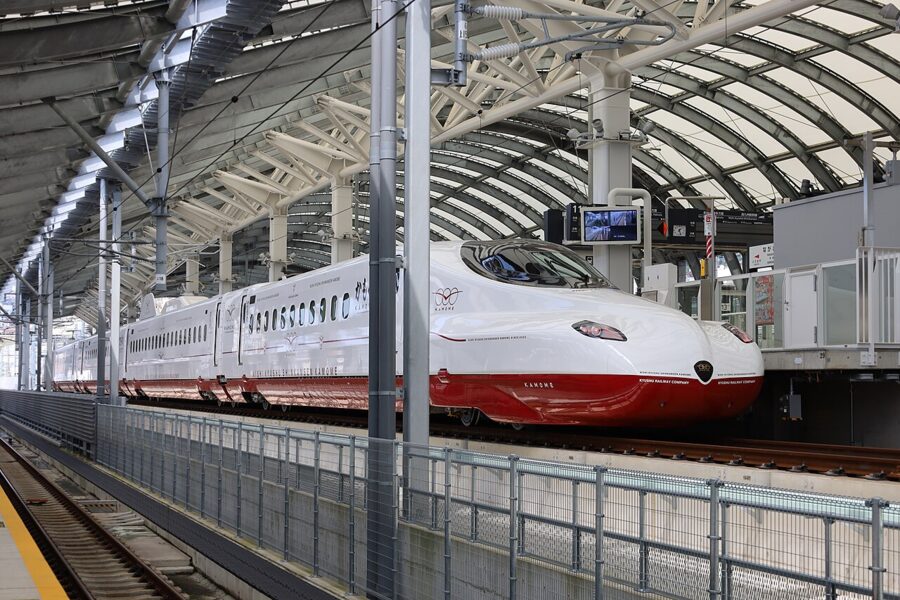
The Sanyō Shinkansen runs from Shin-Osaka through the Kanmon tunnel to Hakata in about two and a half hours on the fastest Nozomi; from Tokyo it is about five. The Kyushu Shinkansen continues south to Kagoshima-Chūō, and since September 2022 the Nishi-Kyushu Shinkansen has run to Nagasaki from Takeo-Onsen, where passengers from Hakata change trains across the platform.
From Tokyo, flying is quicker. Fukuoka Airport is two subway stops from Hakata, and every other prefecture has an airport with flights to Tokyo. I would fly one way and take the train the other, because the railway is where the old map shows through. Kyushu’s weather is warmer and wetter than Tokyo’s, and the rainy season reaches it weeks earlier.
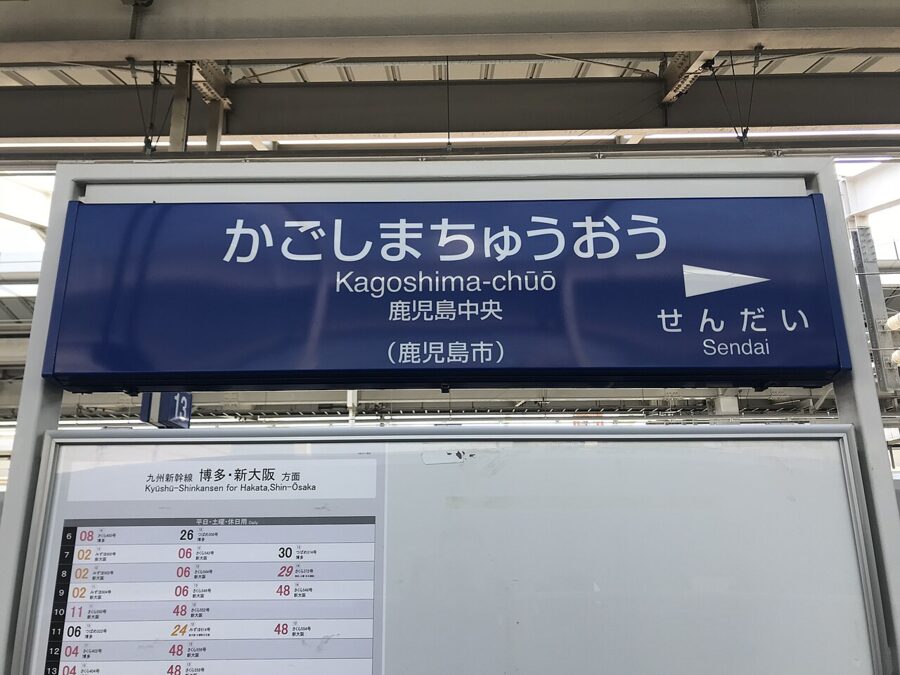
Ride the Kyushu Shinkansen from Hakata to Kagoshima-Chūō and you cross five of the nine provinces in well under two hours: Chikuzen, a corner of Hizen at Shin-Tosu, Chikugo, Higo and Satsuma. At the far end, ask for a sweet potato. If the answer is karaimo, you are in the province that gave the rest of Japan its word for it.